

Spanish dialogue with translation · A2 · 12 lines
¿Qué dice la casera? What does the landlady say?
Comic · 11 panels
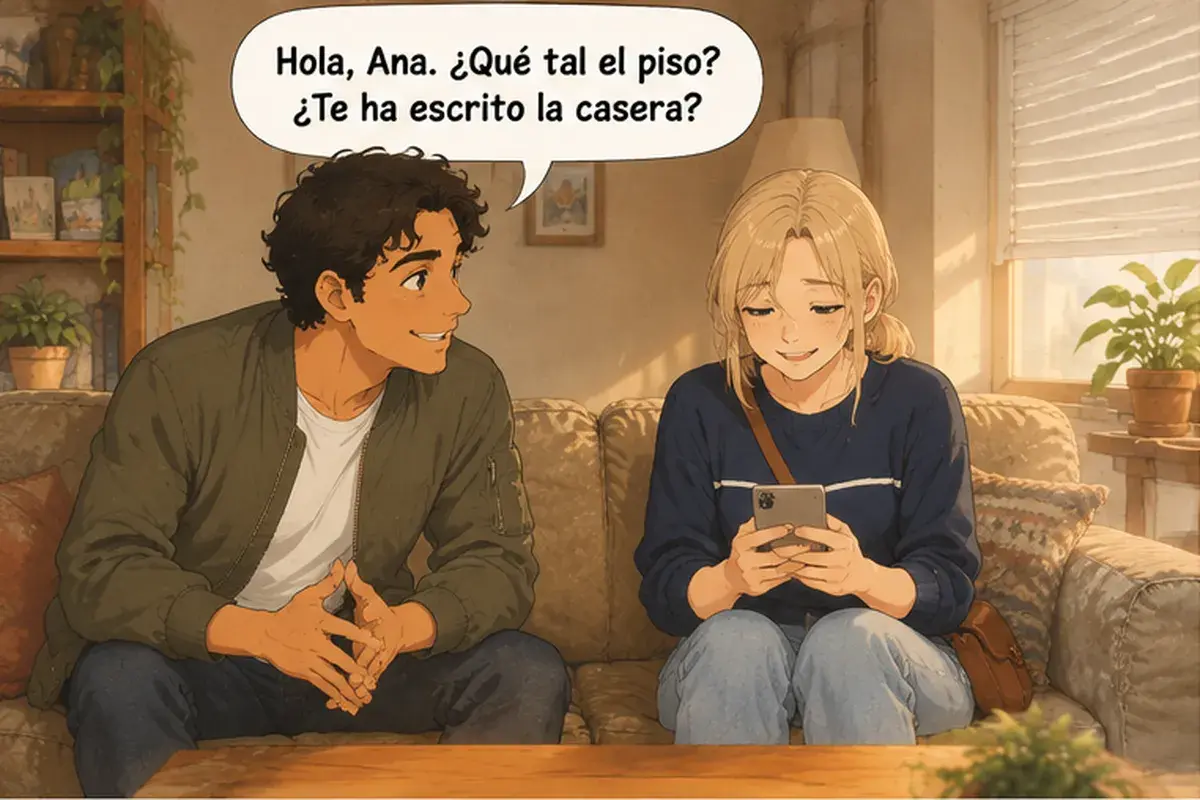
- Pablo
Hola, Ana. ¿Qué tal el piso? ¿Te ha escrito la casera?
Hi, Ana. How's the apartment? Has the landlady written to you?
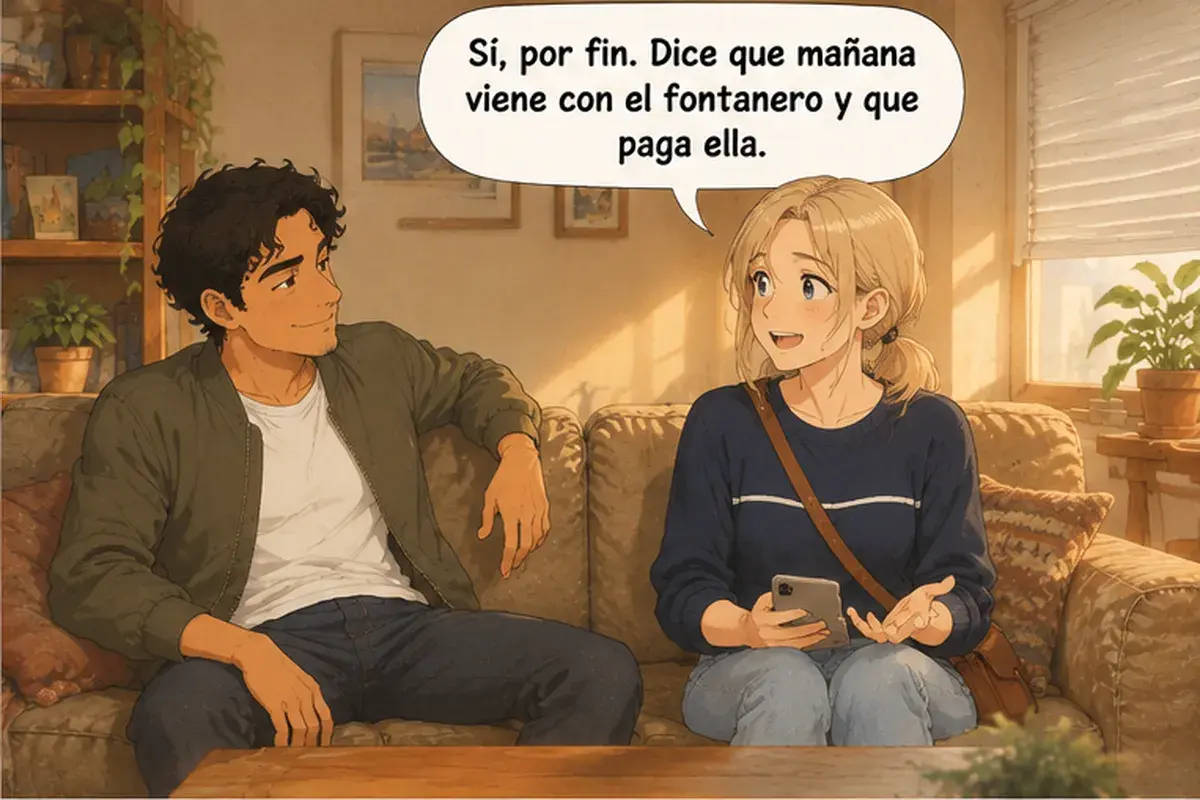
- Ana
Sí, por fin. Dice que mañana viene con el fontanero y que paga ella.
Yes, finally. She says she's coming tomorrow with the plumber and that she's paying.
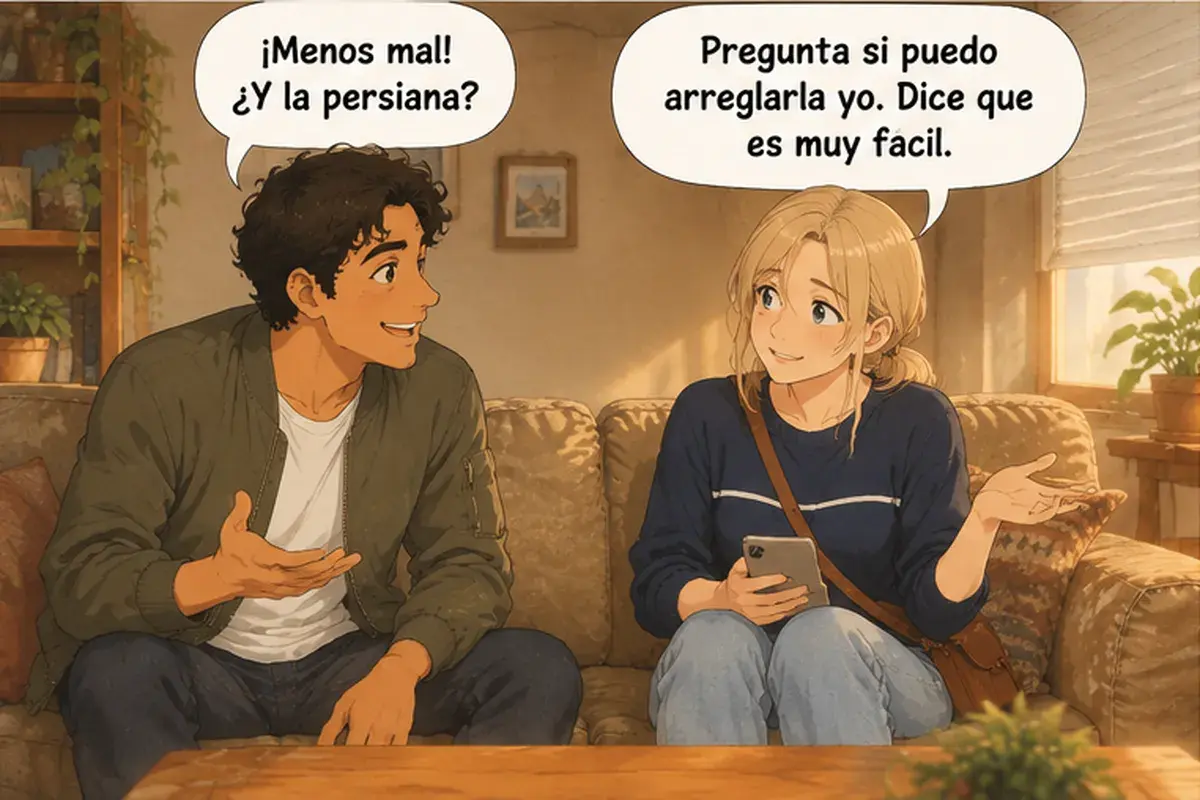
- Pablo
¡Menos mal! ¿Y la persiana?
Thank goodness! And the blind?
- Ana
Pregunta si puedo arreglarla yo. Dice que es muy fácil.
She asks if I can fix it myself. She says it's very easy.
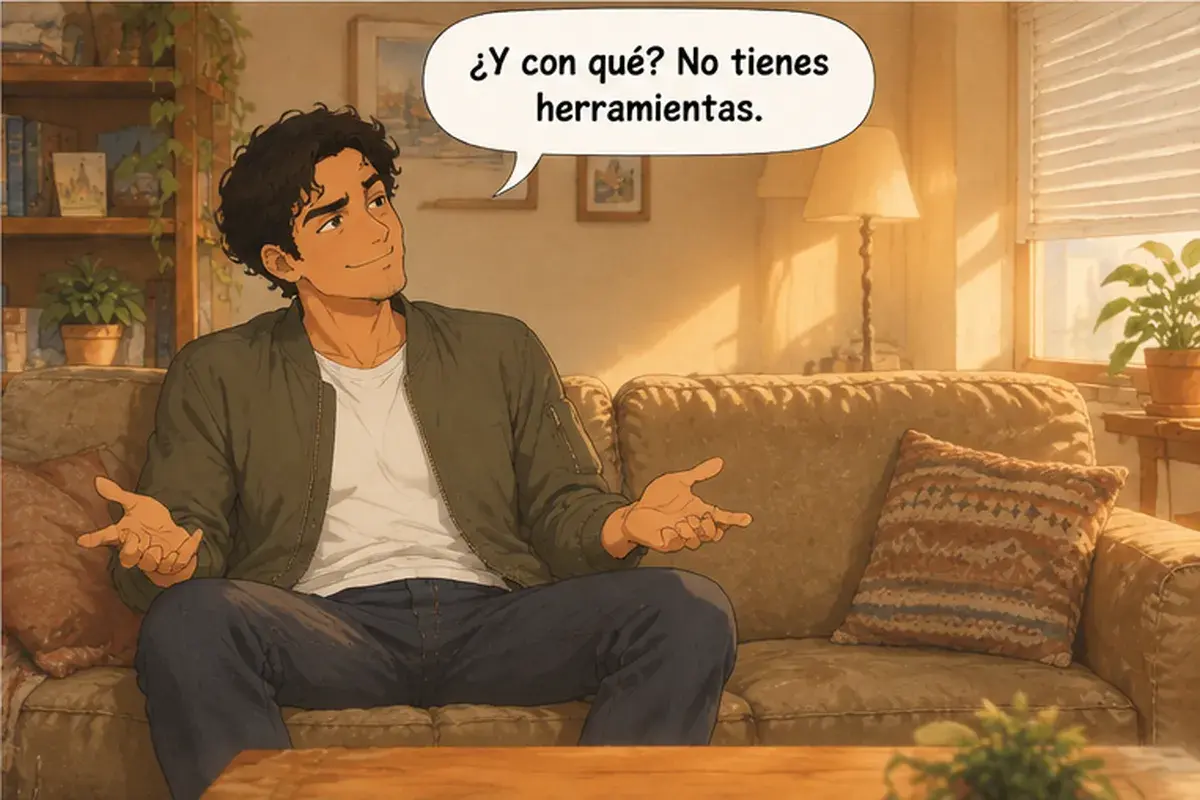
- Pablo
¿Y con qué? No tienes herramientas.
And with what? You don't have any tools.
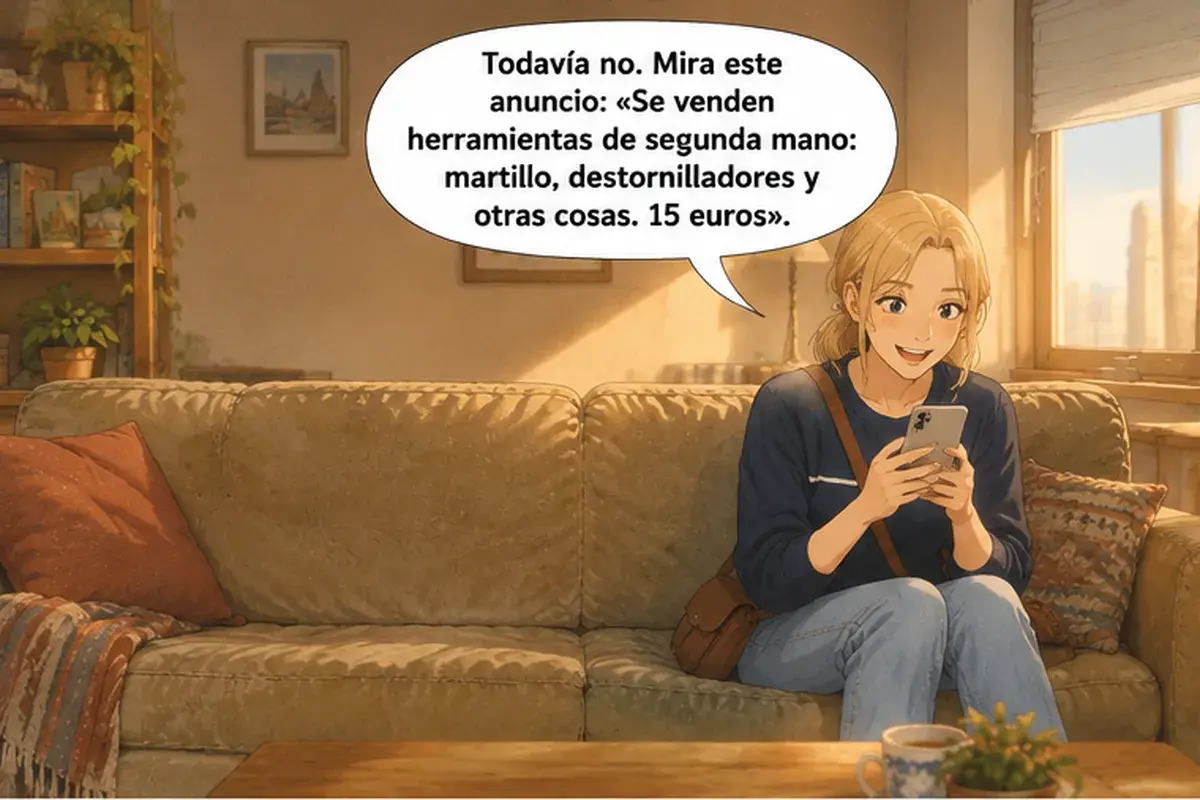
- Ana
Todavía no. Mira este anuncio: «Se venden herramientas de segunda mano: martillo, destornilladores y otras cosas. 15 euros».
Not yet. Look at this ad: "Secondhand tools for sale: hammer, screwdrivers and other things. 15 euros."
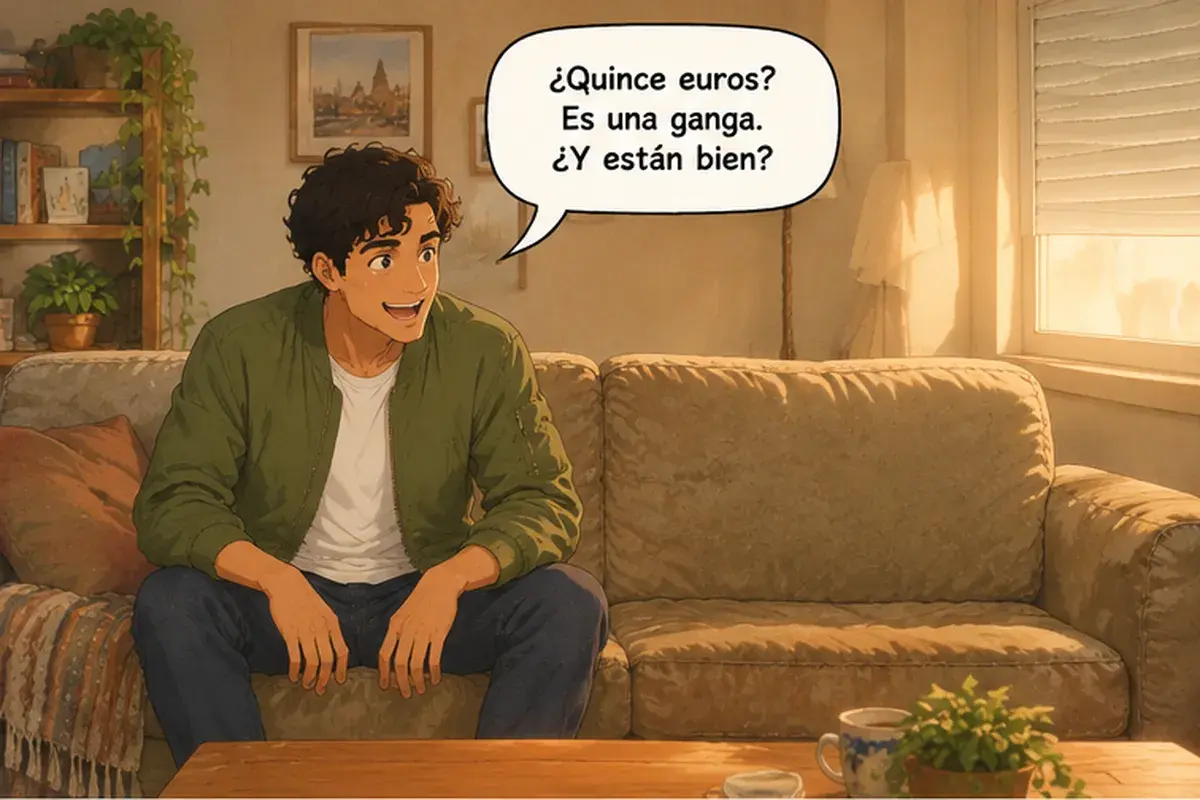
- Pablo
¿Quince euros? Es una ganga. ¿Y están bien?
Fifteen euros? That's a bargain. And are they in good shape?
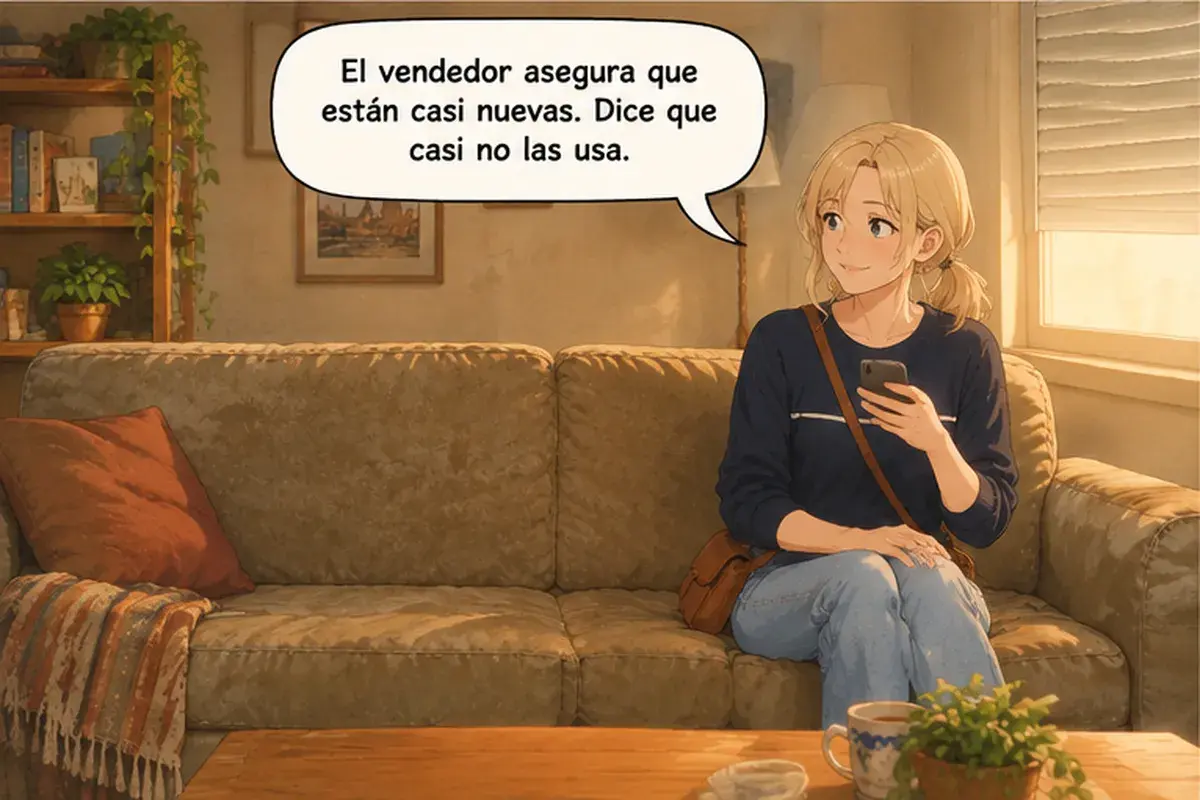
- Ana
El vendedor asegura que están casi nuevas. Dice que casi no las usa.
The seller insists they're almost new. He says he hardly uses them.
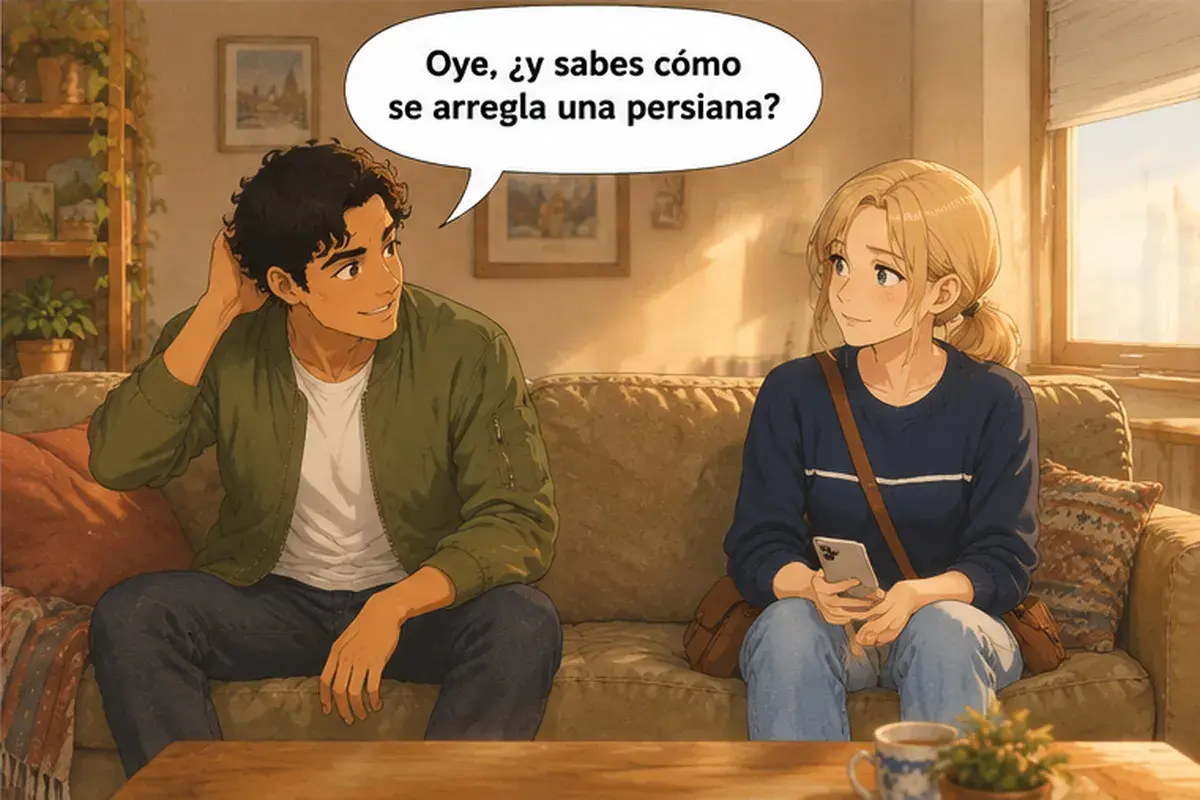
- Pablo
Oye, ¿y sabes cómo se arregla una persiana?
Hey, do you know how to fix a blind?
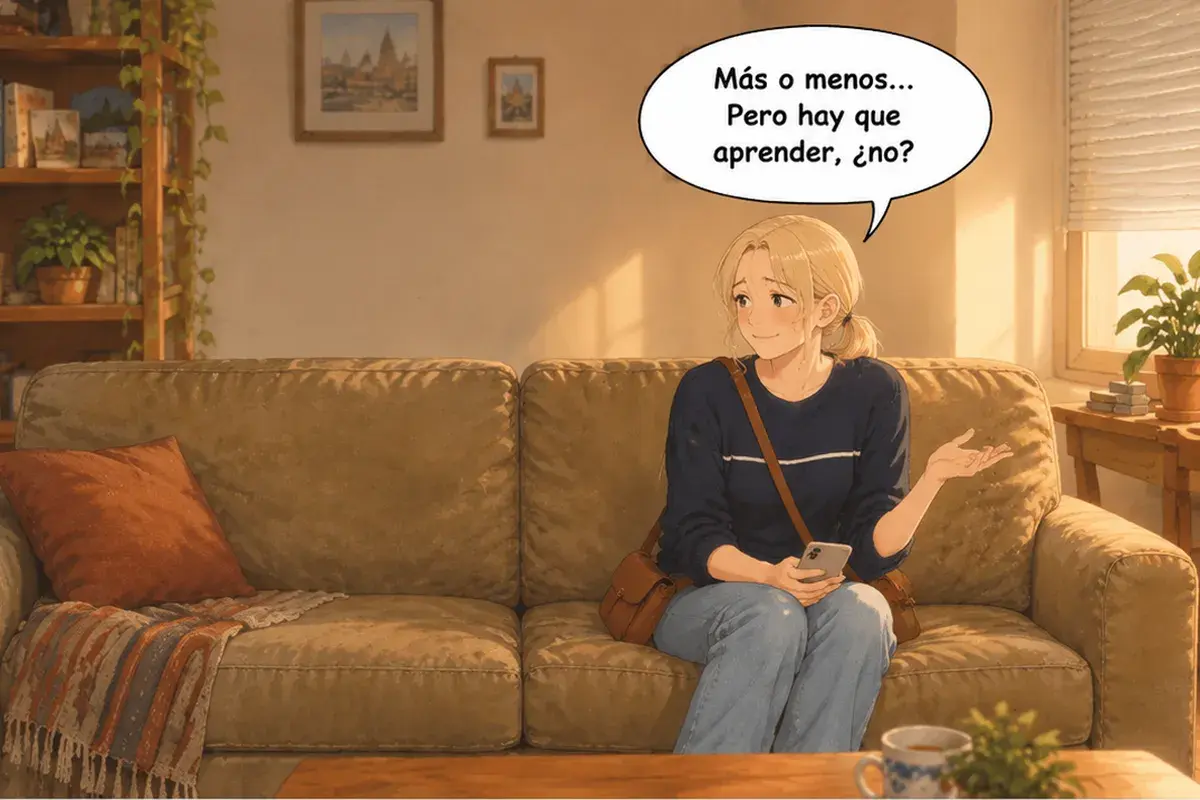
- Ana
Más o menos… Pero hay que aprender, ¿no?
More or less… But you have to learn, right?
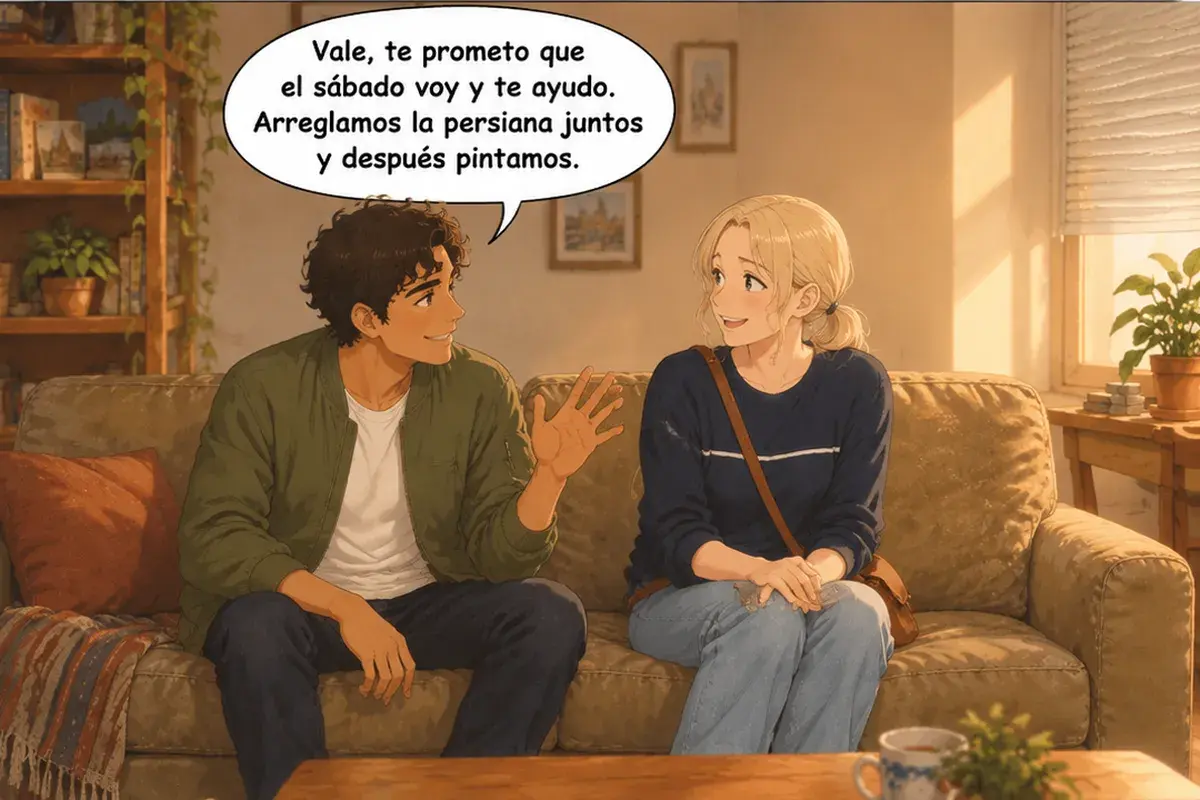
- Pablo
Vale, te prometo que el sábado voy y te ayudo. Arreglamos la persiana juntos y después pintamos.
OK, I promise I'll come over on Saturday and help you. We'll fix the blind together and then we'll paint.
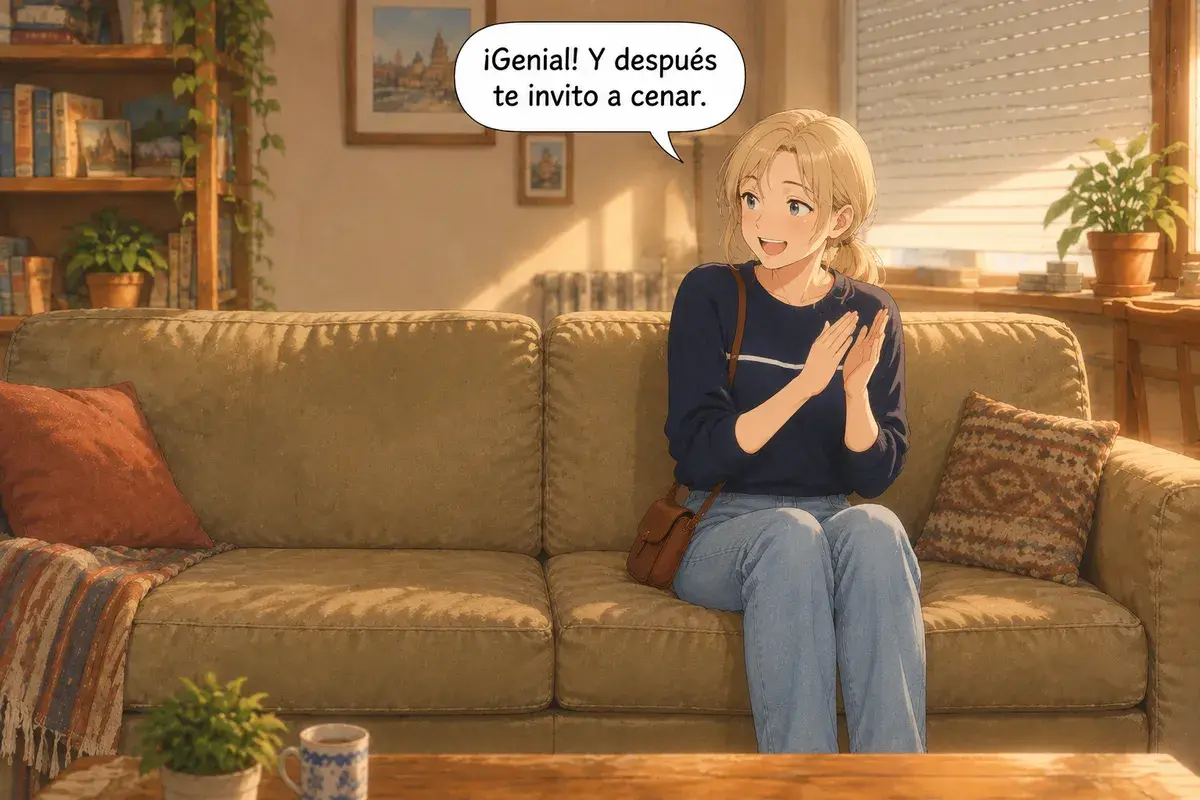
- Ana
¡Genial! Y después te invito a cenar.
Great! And afterward I'll buy you dinner.
Grammar for this text
Dice que / pregunta si. Dice que mañana viene con el fontanero y que paga ella — she says she's coming tomorrow with the plumber and that she's paying. Pregunta si puedo arreglarla yo — she asks if I can fix it myself: si here means "if" or "whether". Arreglarla = arreglar + la (la persiana).
Se venden herramientas — "tools for sale". Se vende is a set phrase from ads: se + vende (from vender, to sell), word for word "is sold". This impersonal se comes at B1 (unit 7). One thing — se vende piso, several things — se venden herramientas. You'll often see de segunda mano (secondhand) next to it. ¿Sabes cómo se arregla una persiana? works the same way — "do you know how to fix a blind?", word for word "how a blind is fixed".
Hay que aprender — "you have to learn": hay que + infinitive, without saying who.
Te prometo que… voy y te ayudo — "I promise I'll come and help you": after prometo que, Spanish uses the normal present tense where English says "I'll".
Oye — "hey", "listen": this is how you get a friend's attention. It's the tú command of oír (to hear), like mira from mirar (unit 6).
Words and grammar of the unit: Explain what's broken.
Learn the words from the texts with flashcards
In the app, you can tap any word in a text to see its translation, forms and examples, and new words stick with flashcards. 15 minutes a day.
Start for freeEverything is open for free. No card needed to sign up.