

Spanish dialogue with translation · A2 · 12 lines
¡Qué cotilla eres! You're such a gossip!
Comic · 10 panels
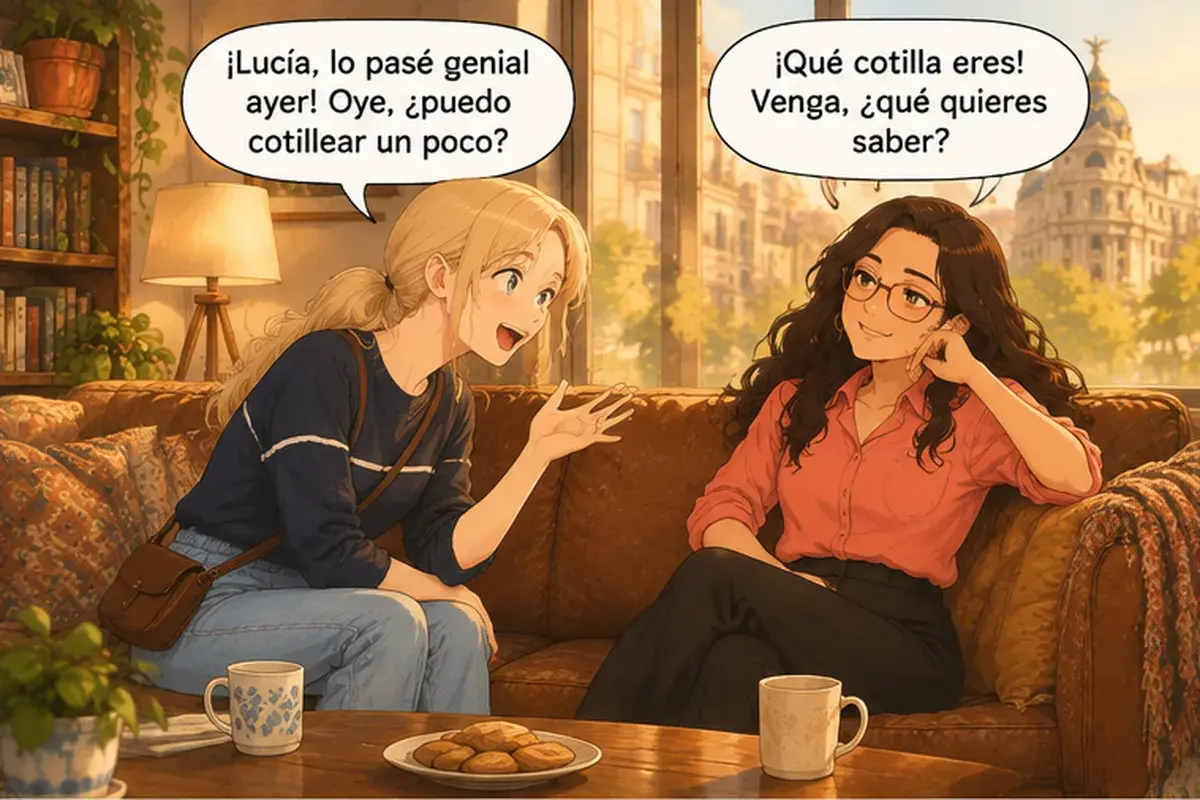
- Ana
¡Lucía, lo pasé genial ayer! Oye, ¿puedo cotillear un poco?
Lucía, I had a great time yesterday! Hey, can I gossip a little?
- Lucía
¡Qué cotilla eres! Venga, ¿qué quieres saber?
You're such a gossip! Come on, what do you want to know?

- Ana
El chico alto que habló toda la noche con Paula, ¿es su novio?
The tall guy who talked to Paula all night: is he her boyfriend?
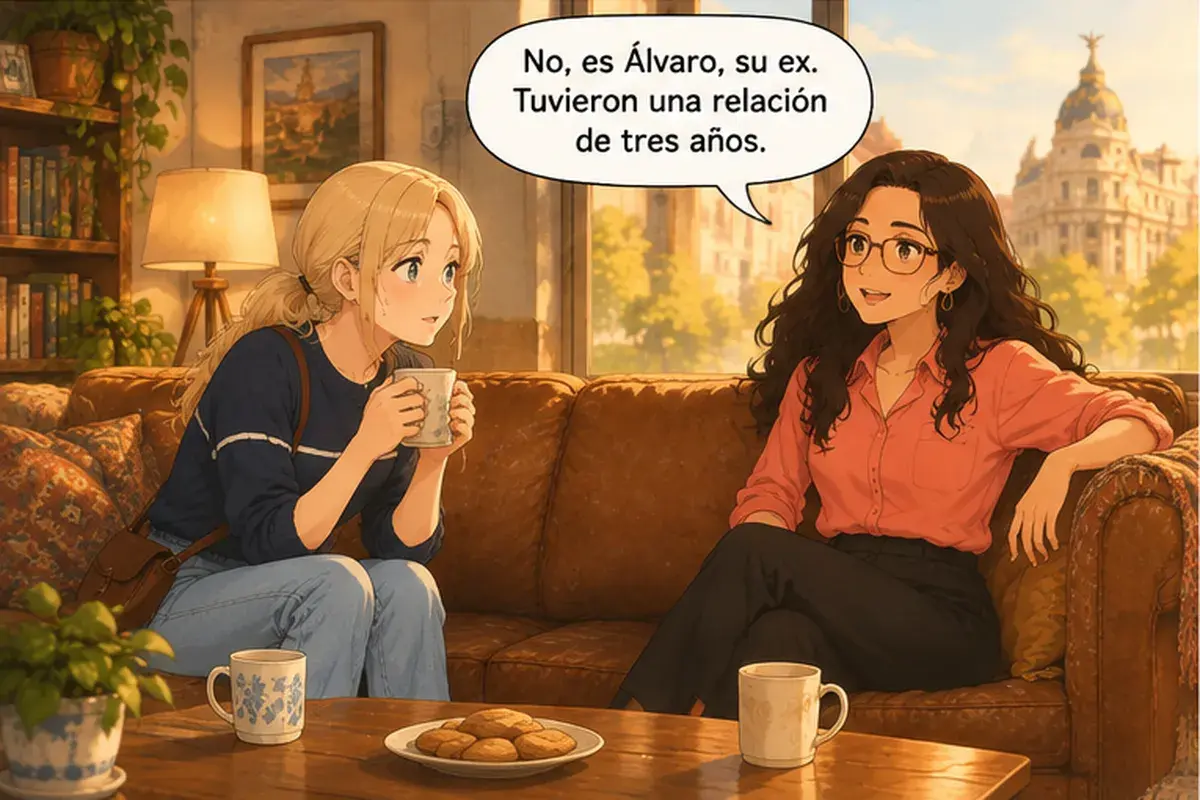
- Lucía
No, es Álvaro, su ex. Tuvieron una relación de tres años.
No, that's Álvaro, her ex. They had a three-year relationship.
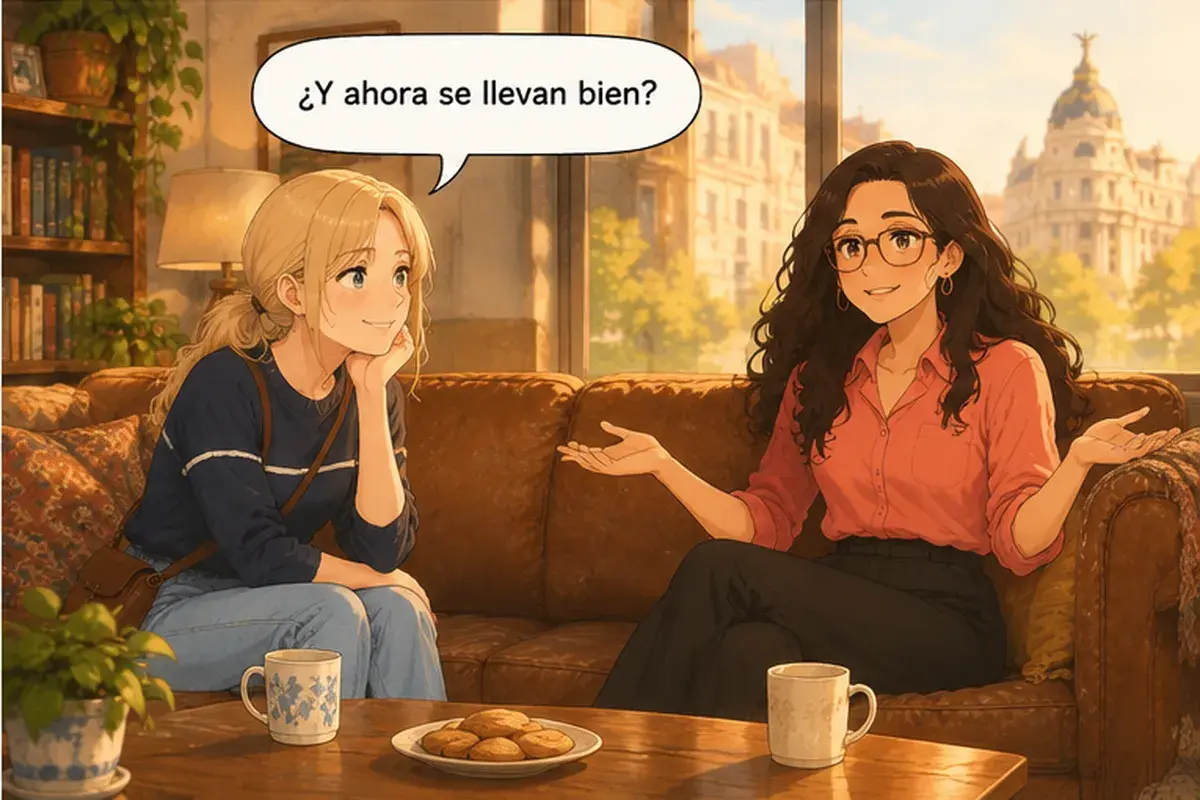
- Ana
¿Y ahora se llevan bien?
And do they get along well now?
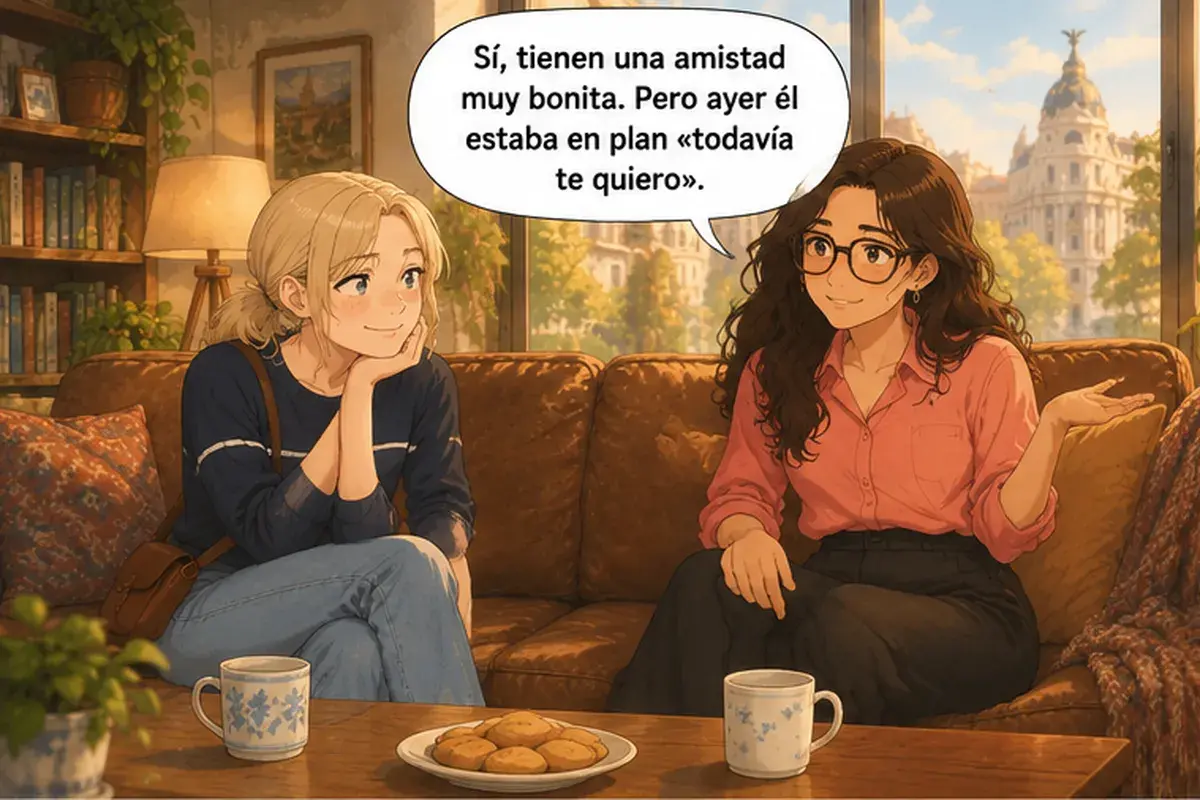
- Lucía
Sí, tienen una amistad muy bonita. Pero ayer él estaba en plan «todavía te quiero».
Yes, they have a really nice friendship. But yesterday he was all like, "I still love you."

- Ana
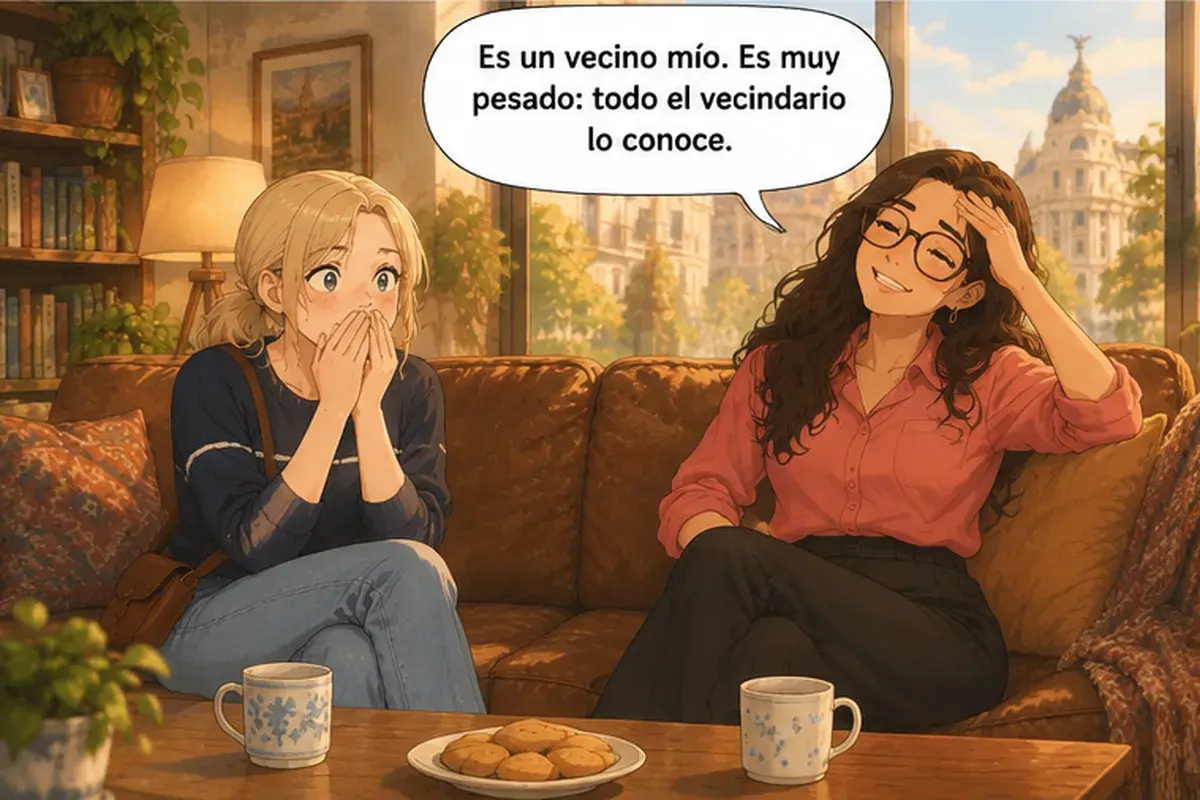
¡Qué fuerte! ¿Y el chico de la barba que quería ligar con todas?
No way! And the guy with the beard who wanted to hit on every girl?
- Lucía
Es un vecino mío. Es muy pesado: todo el vecindario lo conoce.
He's a neighbor of mine. He's really annoying: the whole neighborhood knows him.
- Ana
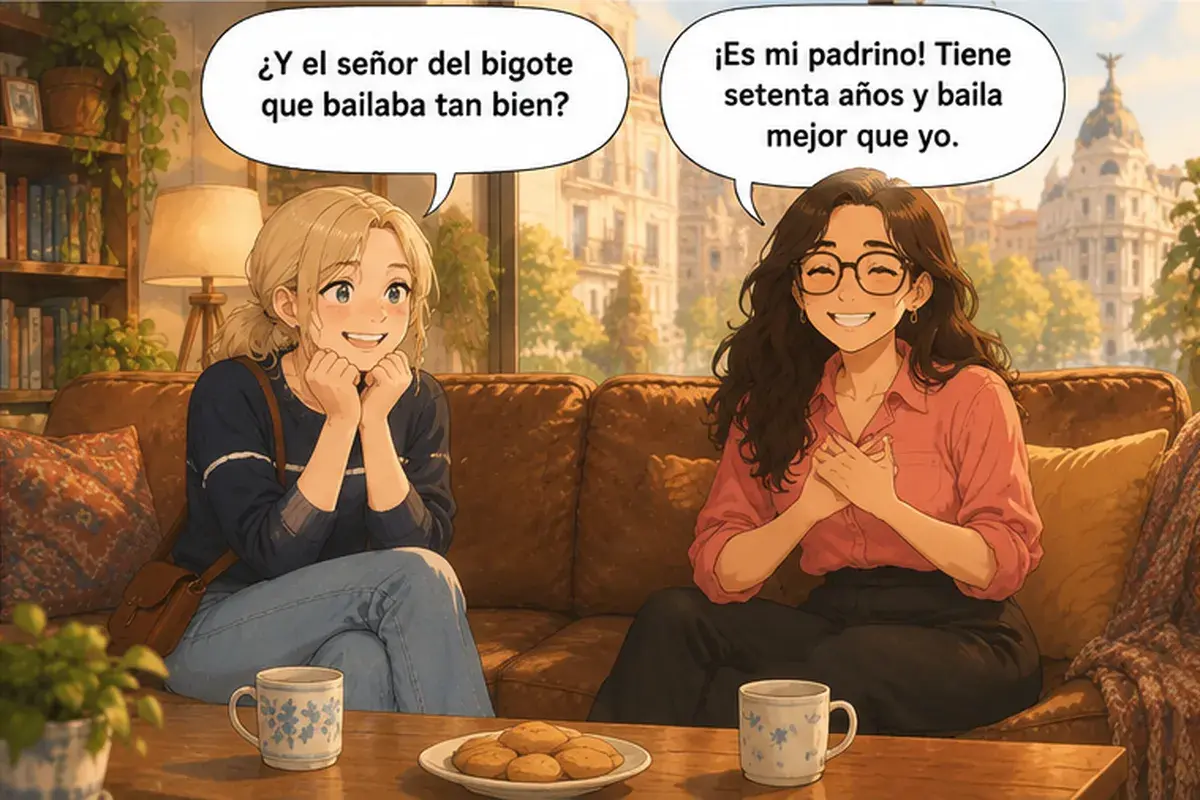
¿Y el señor del bigote que bailaba tan bien?
And the man with the mustache who was dancing so well?
- Lucía
¡Es mi padrino! Tiene setenta años y baila mejor que yo.
That's my godfather! He's seventy and he dances better than I do.

- Ana
Me encantan tus cotilleos. ¿Tienes más?
I love your gossip. Do you have any more?

- Lucía
Muchos, pero escribir tanto es un rollo. ¿Quedamos esta tarde y charlamos?
Lots, but writing so much is a drag. Should we meet up this afternoon and chat?
Grammar for this text
The two friends are texting the morning after the party.
Words just for friends. Almost all the vocabulary here is colloquial Spanish from Spain: cotillear (to gossip), cotilla (a gossip), cotilleos (gossip), ligar (to hit on someone, to flirt), pesado (annoying, a pain), un rollo (a drag). With friends it sounds natural; at work, in writing and with strangers people don't talk like this.
En plan «…» — young people's "he was like…": estaba en plan «todavía te quiero» — he was all like, "I still love you". It's slang, also just for friends.
Que — who. El chico alto que habló toda la noche con Paula, el chico de la barba que quería ligar, el señor del bigote que bailaba tan bien — this is how Spanish explains who you mean. A feature goes with de + article: de la barba — with the beard, del bigote — with the mustache.
Un vecino mío — a neighbor of mine.
Tuvieron — they had, the preterite of tener. Te quiero — I love you: querer means both "to want" and "to love".
Oye — hey, listen: the tú command of oír (to hear). Venga — come on: in form it's the usted command of venir (to come), but between friends it's just a word to push someone along, not "come".
Words and grammar of the unit: Introduce your friends at a party.
Learn the words from the texts with flashcards
In the app, you can tap any word in a text to see its translation, forms and examples, and new words stick with flashcards. 15 minutes a day.
Start for freeEverything is open for free. No card needed to sign up.