
Spanish story with translation · A2 · 15 lines
Una palabra equivocada The wrong word
Comic · 8 panels

La semana pasada fui a una tienda del centro para comprar un regalo.
Last week I went to a store downtown to buy a present.
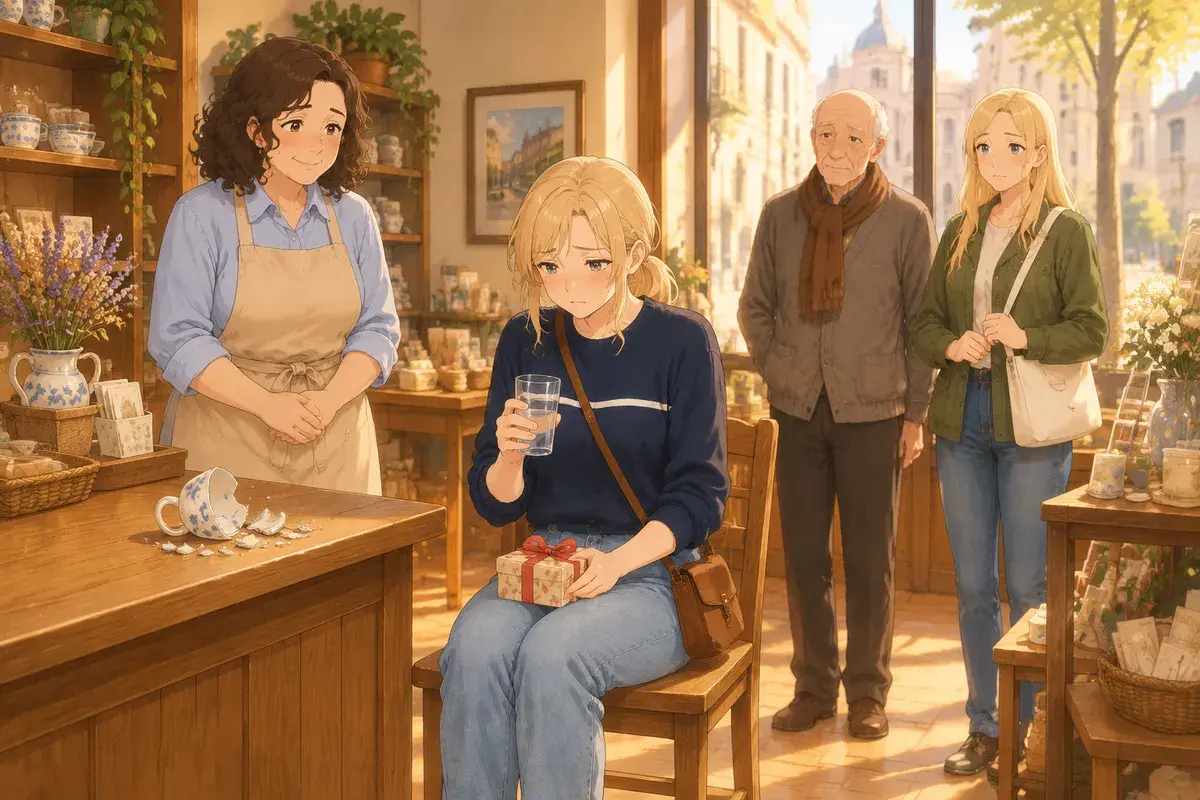
Vi unas tazas muy bonitas en el mostrador. Cogí una y, sin querer, la rompí.
I saw some very pretty cups on the counter. I picked one up and broke it by accident.
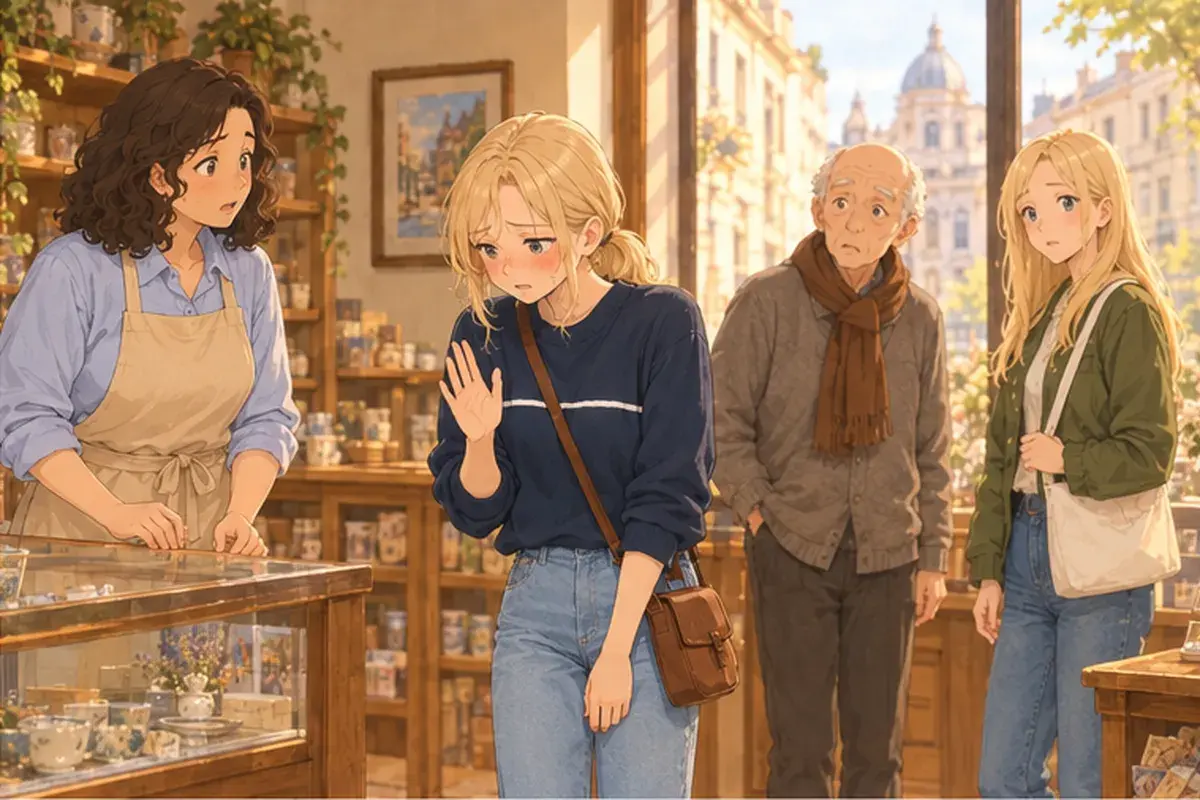
Todos los clientes me miraron. Me dio mucha vergüenza.
All the customers looked at me. I was really embarrassed.
Pedí perdón a la dependienta. Muy nerviosa, pronuncié esta frase: «Lo siento, estoy muy embarazada».
I apologized to the saleswoman. Very nervous, I pronounced this sentence: "I'm sorry, I'm very pregnant." (woman speaking)
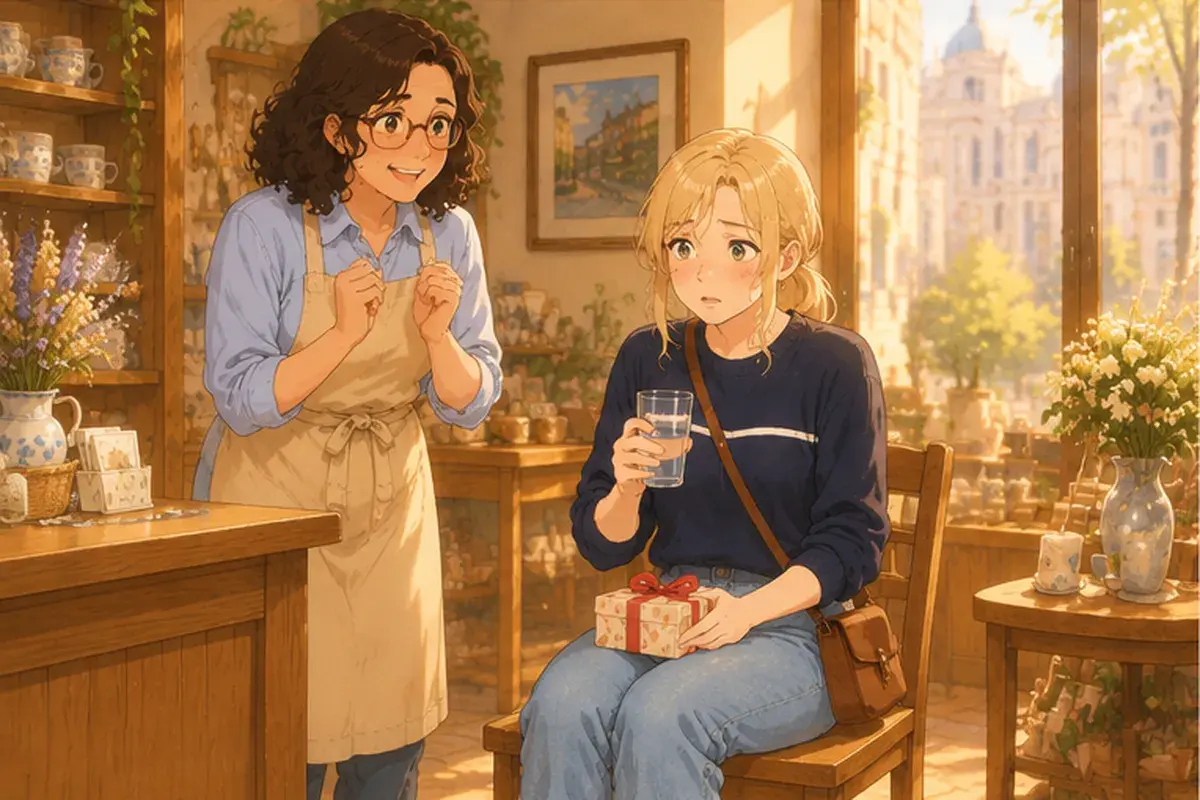
Entonces sucedió algo muy raro. La dependienta me miró sorprendida: «¡Enhorabuena!»
Then something very strange happened. The saleswoman looked at me in surprise: "Congratulations!"
No me dejó pagar la taza. Me dio una silla, un vaso de agua y un regalo pequeño «para el bebé».
She didn't let me pay for the cup. She gave me a chair, a glass of water and a small present "for the baby."
¿Qué bebé? No entendí nada, pero no hice preguntas: di las gracias y salí.
What baby? I didn't understand anything, but I didn't ask any questions: I said thank you and left.
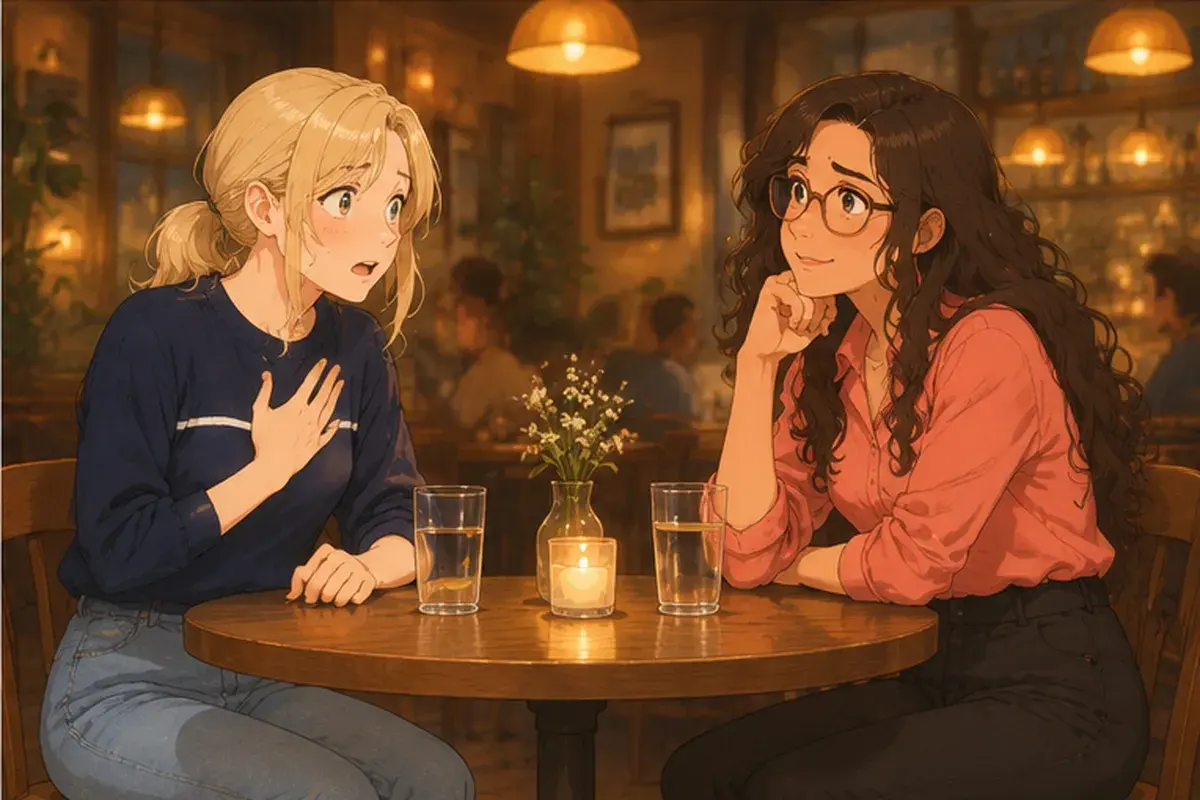
Por la tarde estuve en un bar con Lucía y conté toda la historia.
In the afternoon I was at a bar with Lucía and told the whole story.
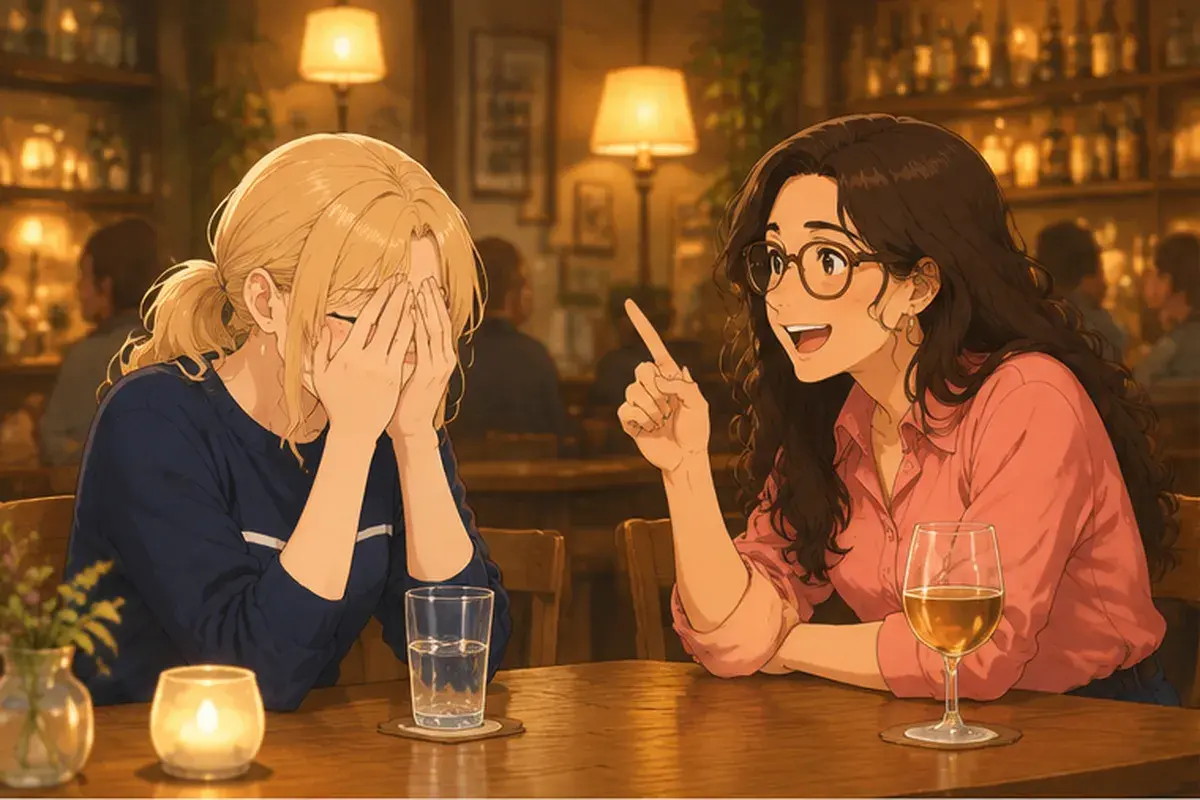
Lucía me explicó el error. «Embarazada» no significa «avergonzada»: ¡significa que vas a tener un bebé!
Lucía explained the mistake to me. "Embarazada" doesn't mean "avergonzada": it means you're going to have a baby!
¡Qué vergüenza! Resulta que confundí una palabra española con una inglesa y metí la pata.
How embarrassing! It turns out I mixed up a Spanish word with an English one and put my foot in it.
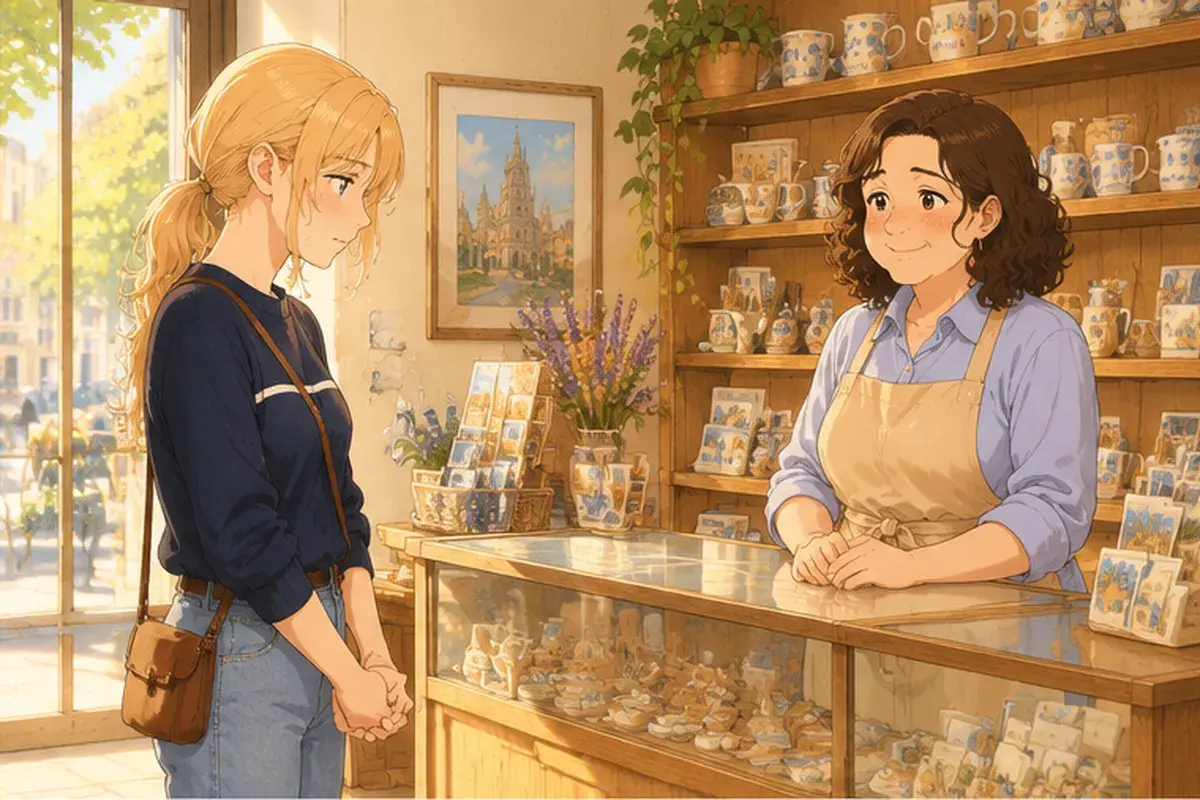
Dos días después fui otra vez a la tienda: tuve que aclarar el malentendido.
Two days later I went to the store again: I had to clear up the misunderstanding.
«En realidad no estoy embarazada», expliqué. «Estoy avergonzada. Lamento la confusión».
"Actually, I'm not pregnant," I explained. "I'm embarrassed. I regret the confusion." (woman speaking)
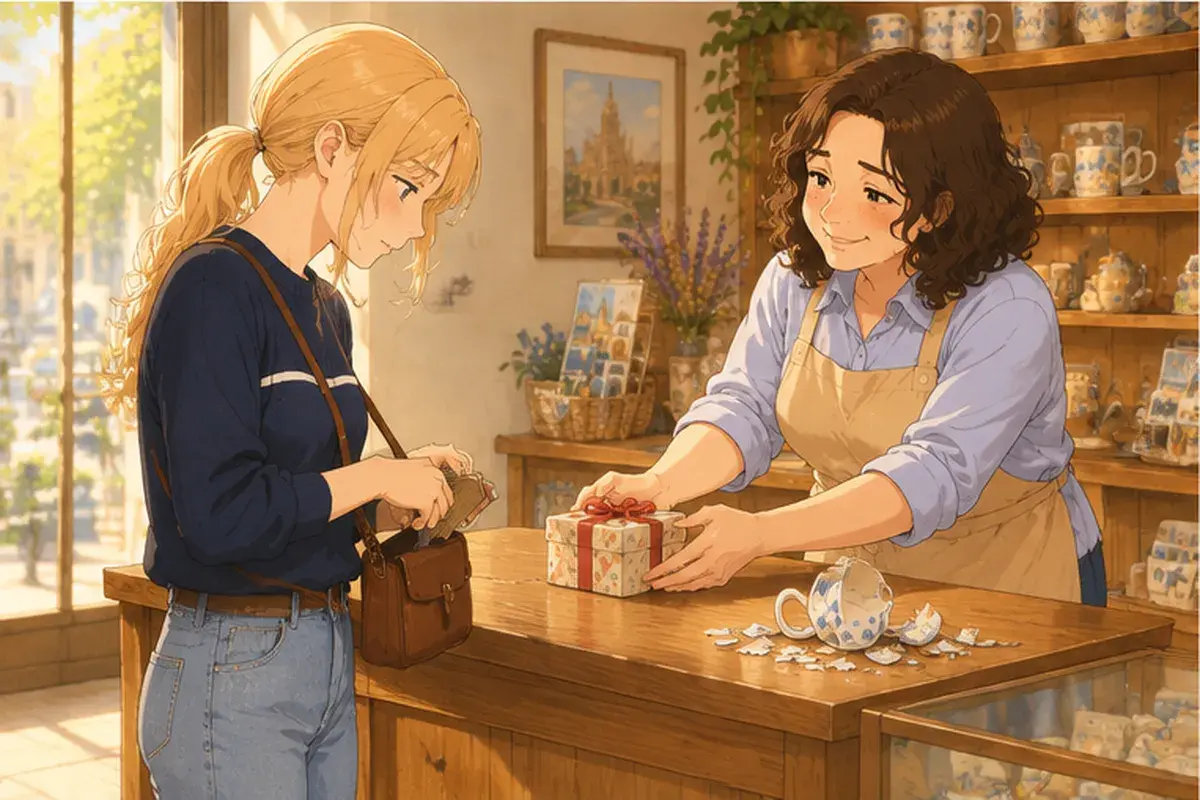
La dependienta fue muy amable: «No pasa nada, es un error muy típico».
The saleswoman was very kind: "It's OK, it's a very common mistake."
Pagué la taza rota. ¿Y el regalo «para el bebé»? Ella no lo cogió: «Es para usted».
I paid for the broken cup. And the present "for the baby"? She didn't take it: "It's for you." (formal)

Lucía todavía se ríe de mí. Fue un error ridículo, pero nunca voy a olvidar esa palabra.
Lucía still laughs at me. It was a ridiculous mistake, but I'm never going to forget that word.
Grammar for this text
A false friend. Embarazada looks like English "embarrassed", but it means "pregnant". "I'm embarrassed" in Spanish is estoy avergonzada or me da vergüenza.
Me dio mucha vergüenza — "I was really embarrassed", word for word "it gave me a lot of embarrassment". Dio is the preterite of dar. The same verb in its literal meaning: me dio una silla — "she gave me a chair".
Fui and fue. Fui a una tienda — "I went to a store" (ir: a and a place come next). Fue muy amable, fue un error ridículo — "she was", "it was" (ser).
Di las gracias — "I said thank you": dar las gracias. No hice preguntas — "I didn't ask any questions": in Spanish you "make" questions (hacer preguntas). Tuve que + verb — "I had to".
Sin querer — "by accident", word for word "without wanting": sin querer, la rompí — "I broke it by accident". Metí la pata — "I put my foot in it", word for word "I stuck my paw in": you say it when you've said or done something silly.
No me dejó pagar — "she didn't let me pay": dejar + verb means "to let".
Se ríe de mí — "she laughs at me": reírse de; after a preposition, "me" is mí.
Words and grammar of the unit: Apologize and explain what happened.
Learn the words from the texts with flashcards
In the app, you can tap any word in a text to see its translation, forms and examples, and new words stick with flashcards. 15 minutes a day.
Start for freeEverything is open for free. No card needed to sign up.