
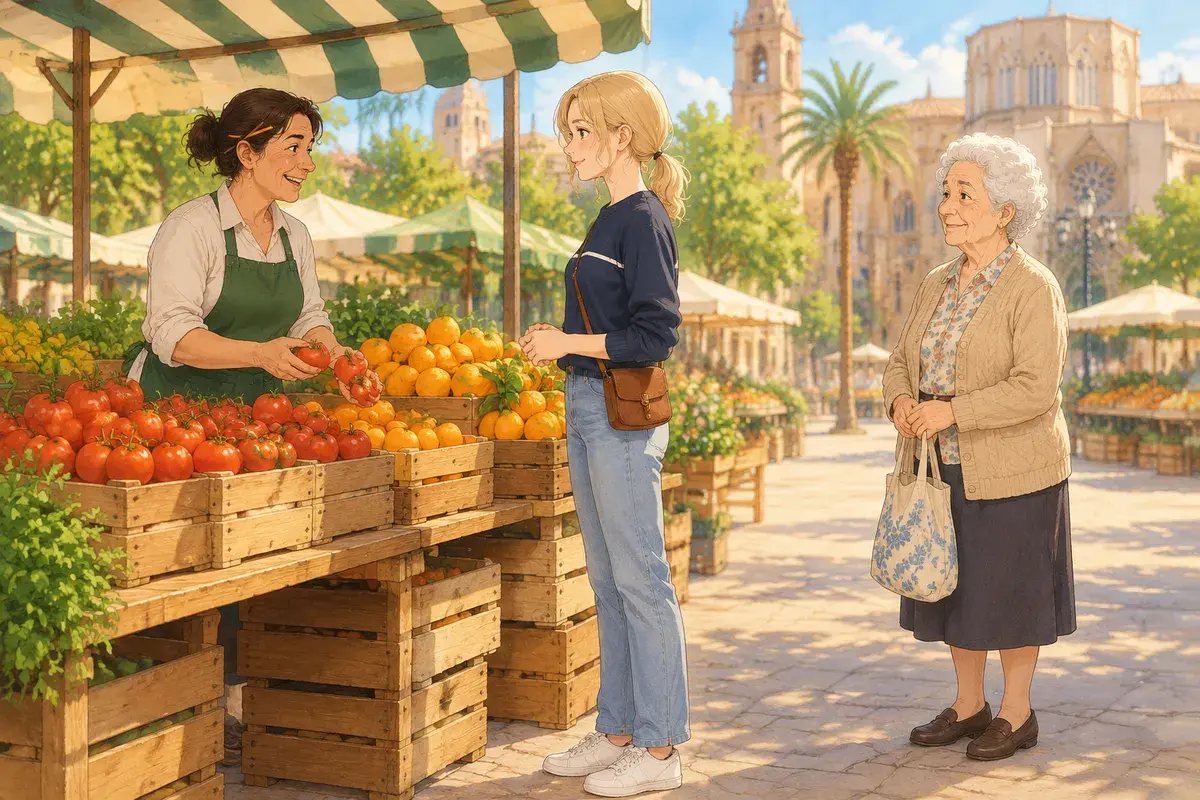
Spanish dialogue with translation · A2 · 12 lines
¿Quién es la última? Who's last in line?
Comic · 8 panels
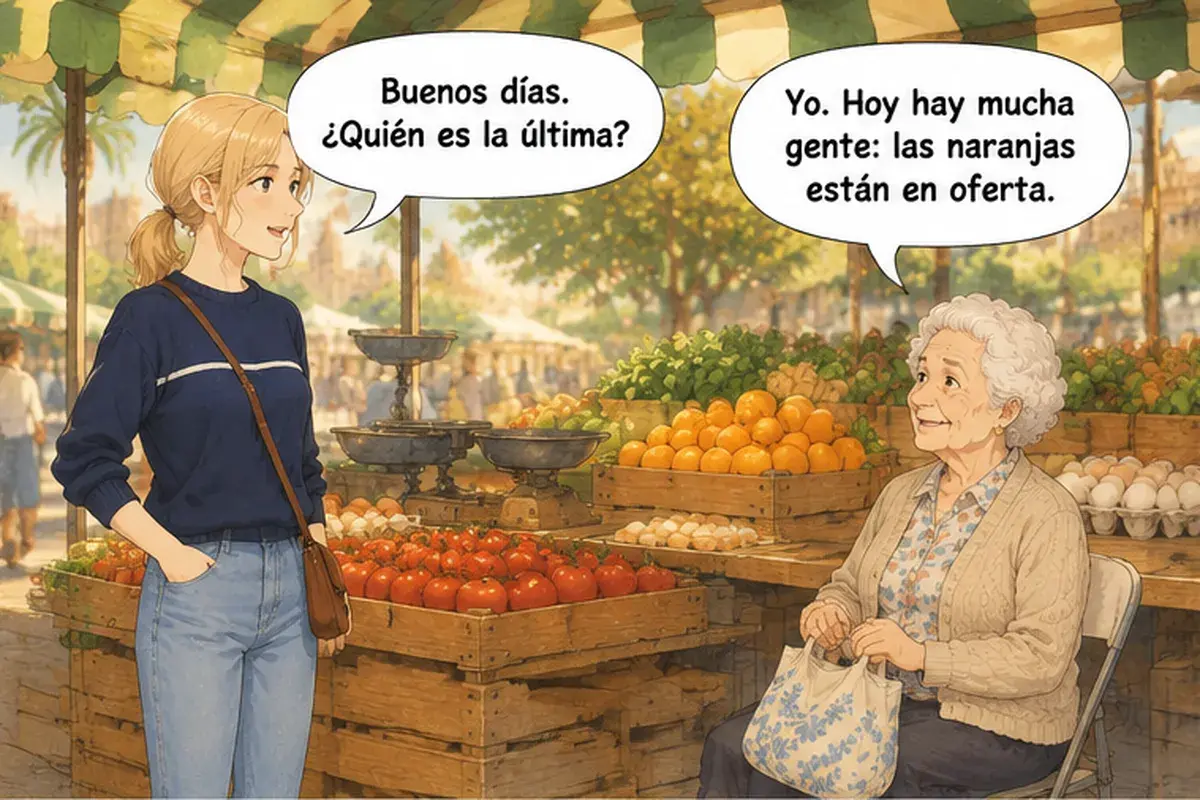
- Ana
Buenos días. ¿Quién es la última?
Good morning. Who's last in line? (about women)
- Señora
Yo. Hoy hay mucha gente: las naranjas están en oferta.
Me. There are a lot of people today: the oranges are on sale.
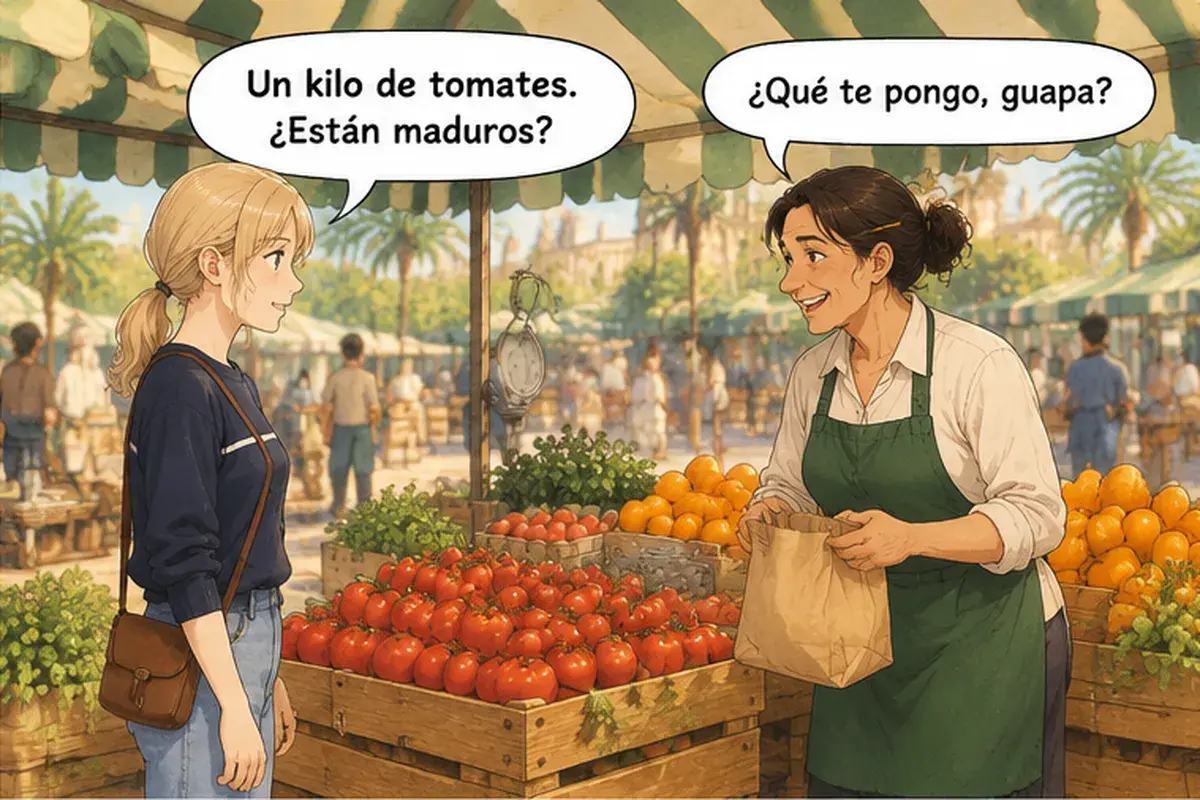
- Vendedora
¿Qué te pongo, guapa?
What can I get you, dear? (to a woman)
- Ana
Un kilo de tomates. ¿Están maduros?
A kilo of tomatoes. Are they ripe?
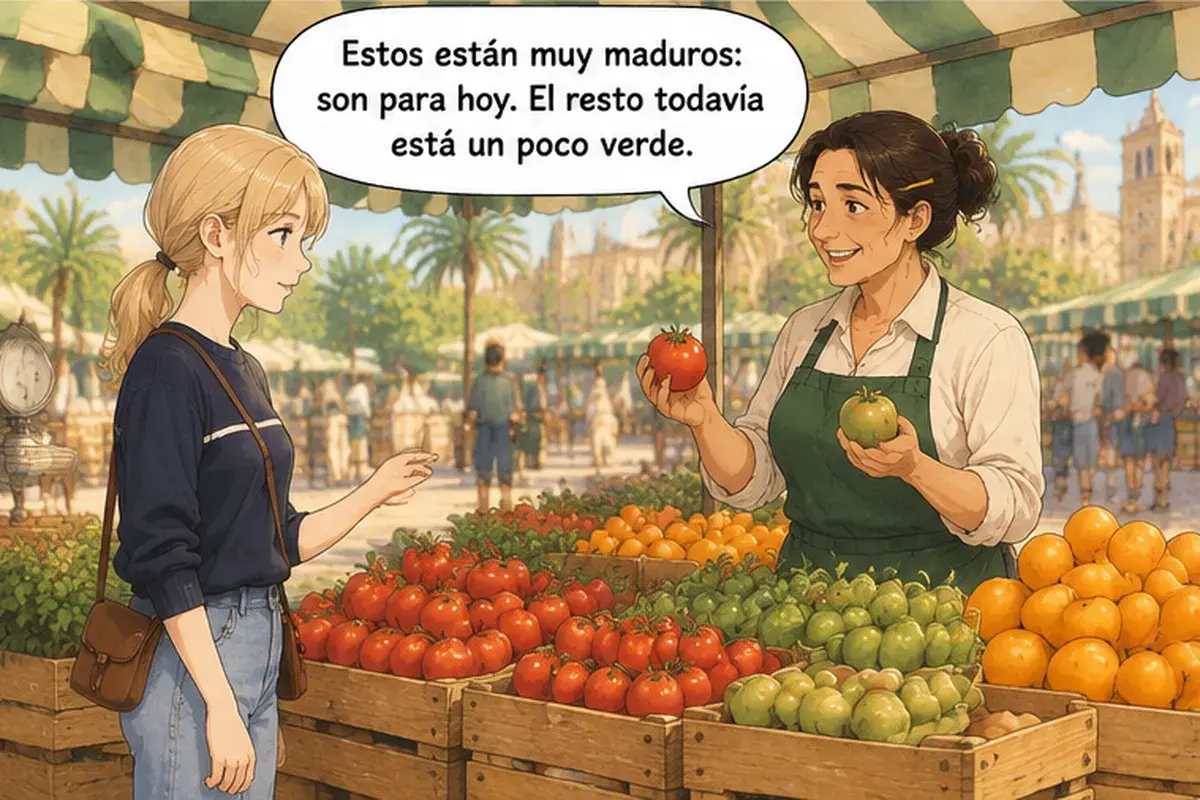
- Vendedora
Estos están muy maduros: son para hoy. El resto todavía está un poco verde.
These are very ripe: they're for today. The rest are still a little green.
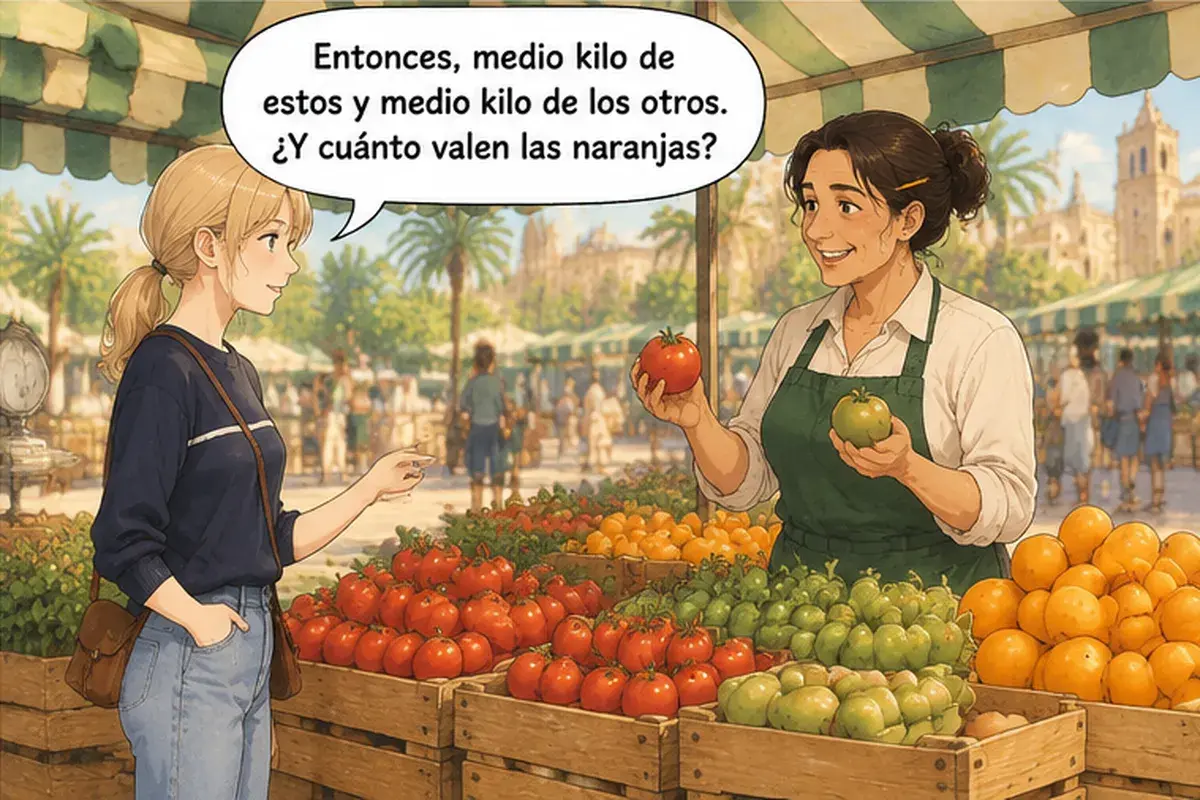
- Ana
Entonces, medio kilo de estos y medio kilo de los otros. ¿Y cuánto valen las naranjas?
Then half a kilo of these and half a kilo of the others. And how much are the oranges?
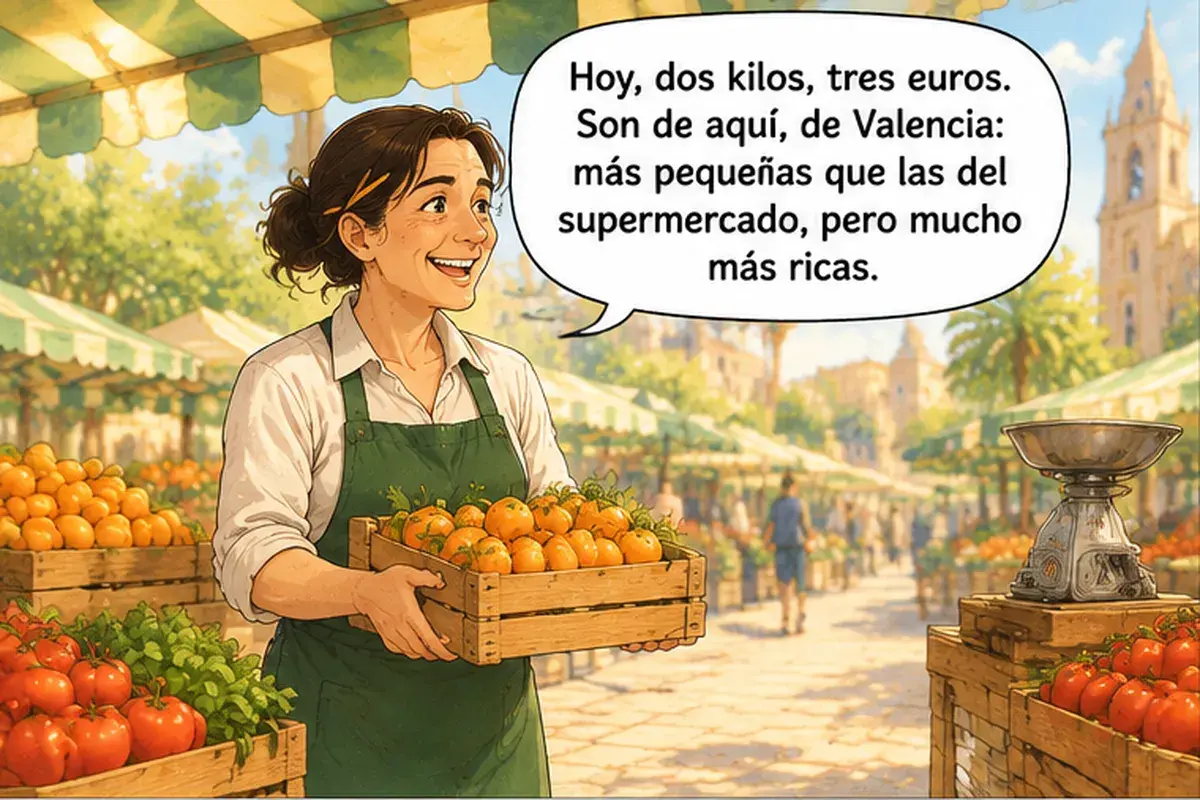
- Vendedora
Hoy, dos kilos, tres euros. Son de aquí, de Valencia: más pequeñas que las del supermercado, pero mucho más ricas.
Today, two kilos for three euros. They're from here, from Valencia: smaller than the ones at the supermarket, but much tastier.
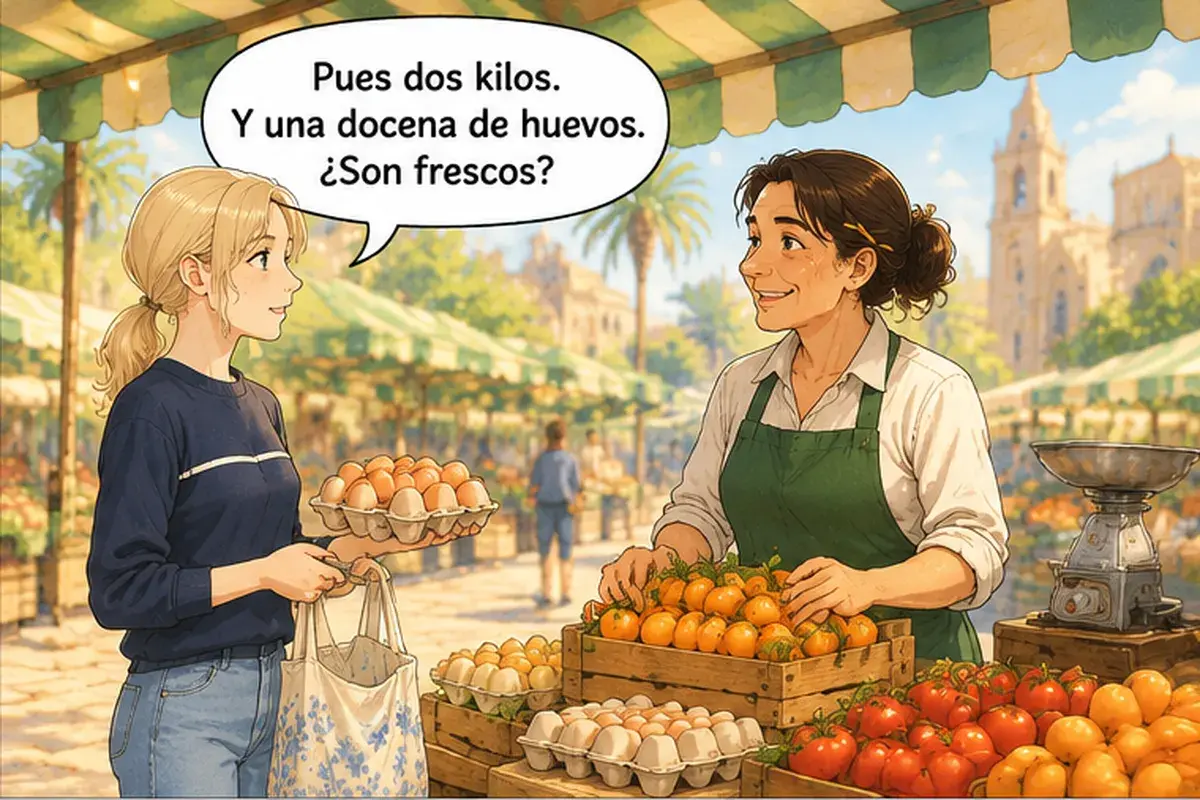
- Ana
Pues dos kilos. Y una docena de huevos. ¿Son frescos?
Two kilos, then. And a dozen eggs. Are they fresh?
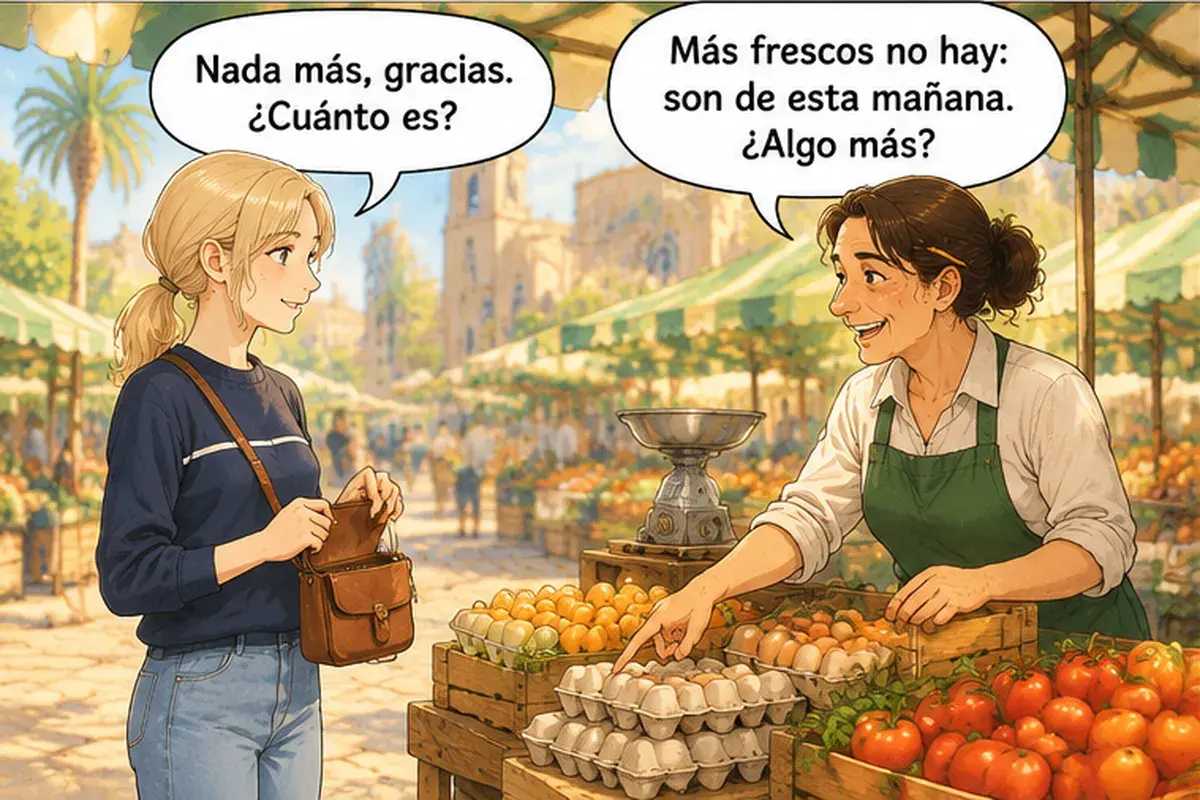
- Vendedora
Más frescos no hay: son de esta mañana. ¿Algo más?
They don't come any fresher: they're from this morning. Anything else?
- Ana
Nada más, gracias. ¿Cuánto es?
Nothing else, thanks. How much is it?
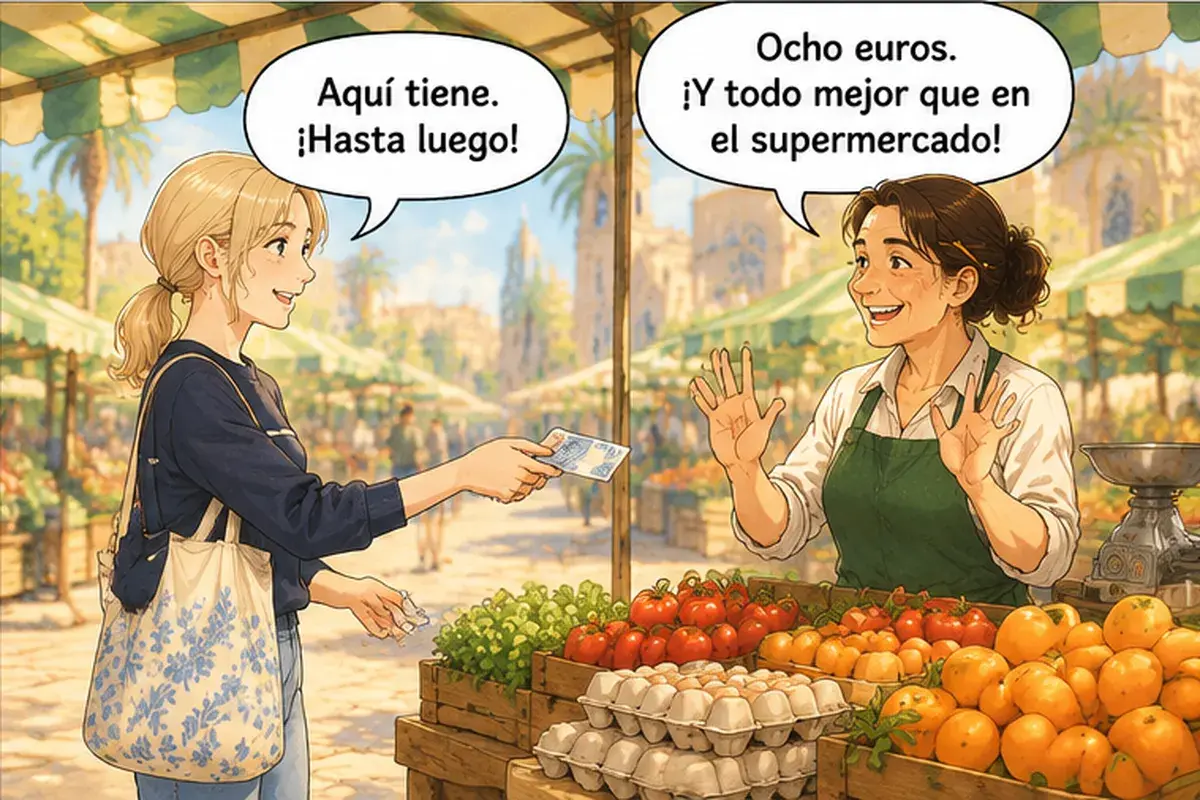
- Vendedora
Ocho euros. ¡Y todo mejor que en el supermercado!
Eight euros. And everything's better than at the supermarket!
- Ana
Aquí tiene. ¡Hasta luego!
Here you go. See you later!
Grammar for this text
¿Quién es la última? At a counter in a Spanish market, people often don't stand in a line. When you arrive, ask who's last: ¿Quién es el último? (or la última if there are women ahead of you), and remember that person: you go after them.
¿Qué te pongo? — literally "What shall I put for you?": this is how a seller asks what you'd like. Guapa ("pretty"; to a man, guapo) is just a friendly way to address customers at the market, not a compliment.
Comparing. Más pequeñas que las del supermercado — "smaller than the ones at the supermarket". Mucho más ricas — "much tastier". Más frescos no hay — "they don't come any fresher". Mejor que en el supermercado — "better than at the supermarket".
Ripe and green. Están maduros — "they're ripe" (right now, so estar). Todavía está un poco verde — "it's still a little green", meaning not ripe yet: here verde isn't about the color. The verb is singular because el resto ("the rest") is a singular word, even though English says "the rest are".
Prices. Dos kilos, tres euros — at the market people often leave out the verb. En oferta — "on sale". ¿Cuánto es? — "How much is it?"
Words and grammar of the unit: Compare prices and haggle.
Learn the words from the texts with flashcards
In the app, you can tap any word in a text to see its translation, forms and examples, and new words stick with flashcards. 15 minutes a day.
Start for freeEverything is open for free. No card needed to sign up.