
Spanish dialogue with translation · A2 · 16 lines
Toso desde hace cuatro días I've been coughing for four days
Comic · 14 panels
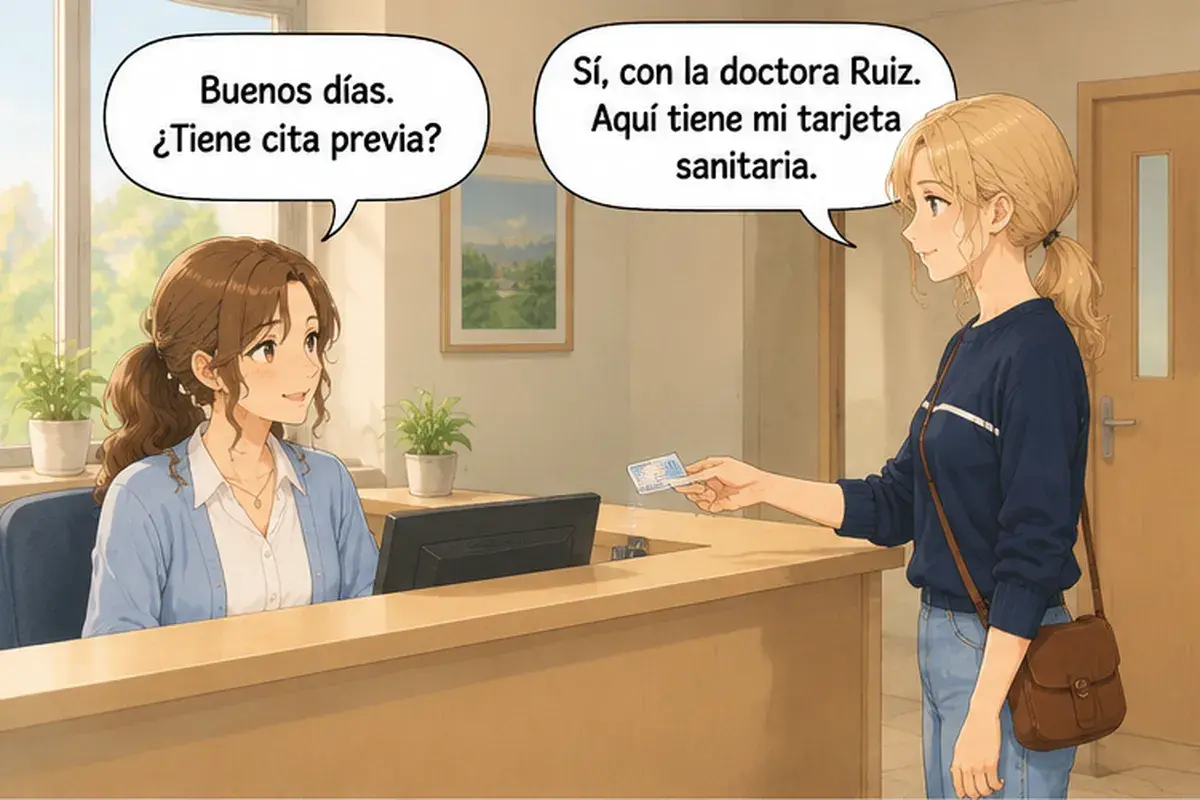
- Recepcionista
Buenos días. ¿Tiene cita previa?
Good morning. Do you have an appointment? (formal)
- Ana
Sí, con la doctora Ruiz. Aquí tiene mi tarjeta sanitaria.
Yes, with Dr. Ruiz. Here's my health card. (formal)
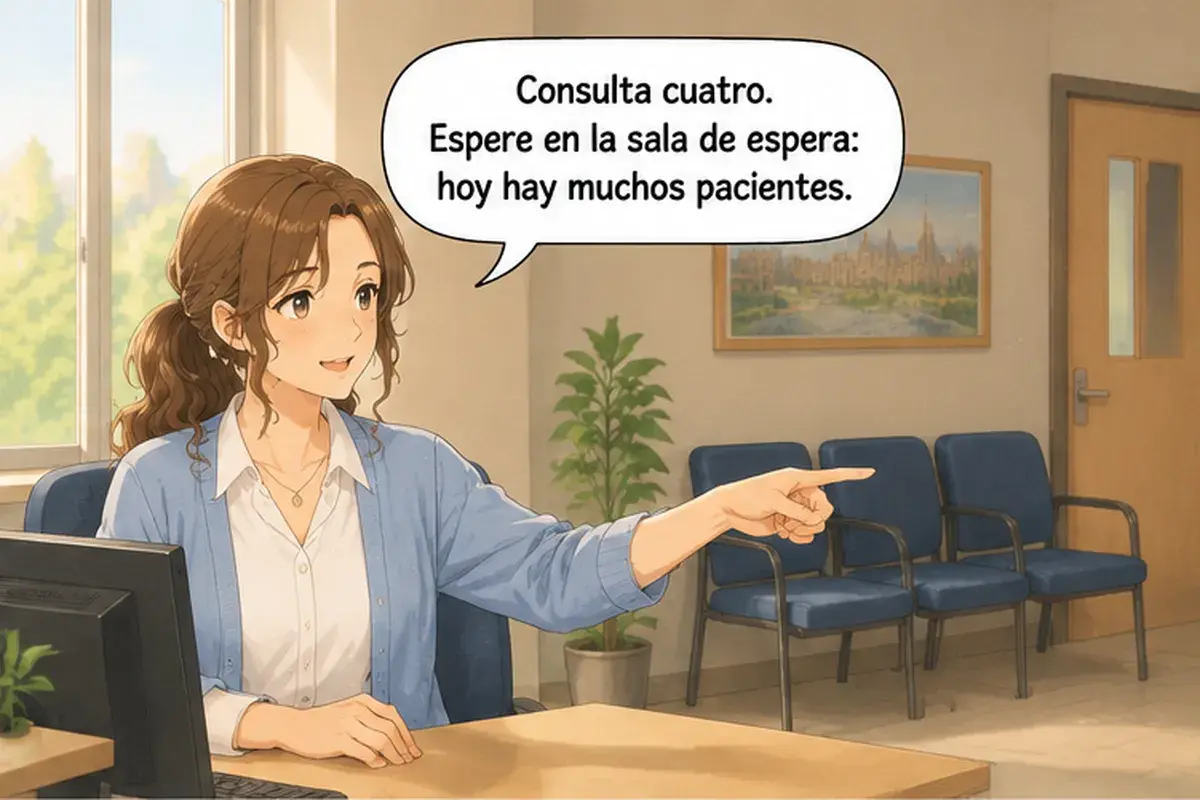
- Recepcionista
Consulta cuatro. Espere en la sala de espera: hoy hay muchos pacientes.
Room four. Wait in the waiting room: there are a lot of patients today. (formal)
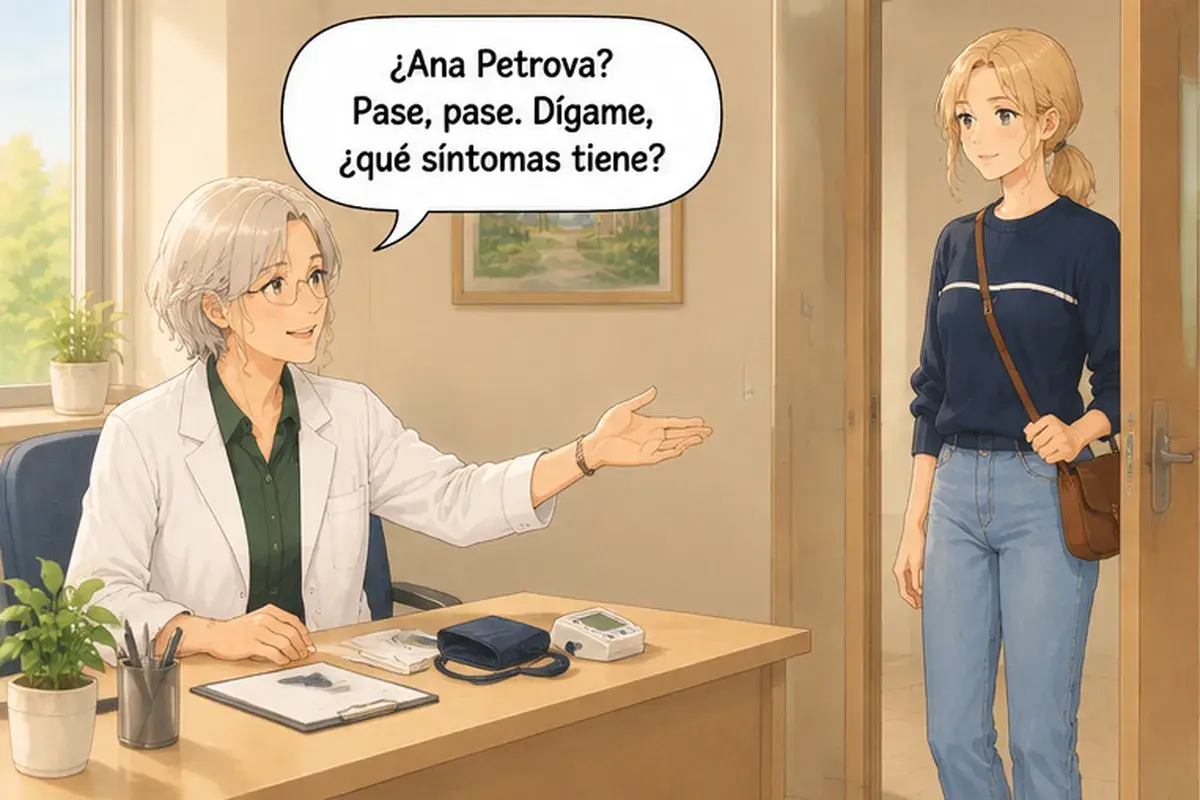
- Doctora
¿Ana Lind? Pase, pase. Dígame, ¿qué síntomas tiene?
Ana Lind? Come in, come in. Tell me, what symptoms do you have? (formal)
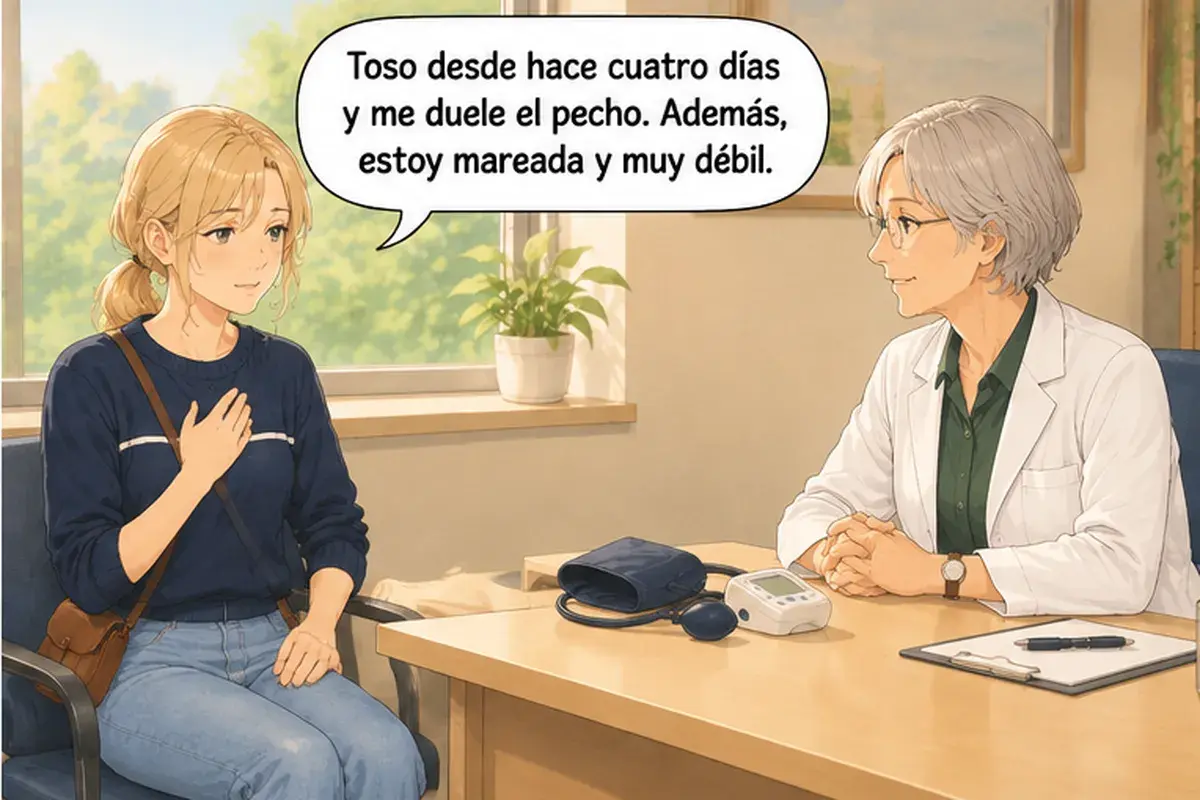
- Ana
Toso desde hace cuatro días y me duele el pecho. Además, estoy mareada y muy débil.
I've been coughing for four days and my chest hurts. Also, I'm dizzy and very weak (woman speaking).
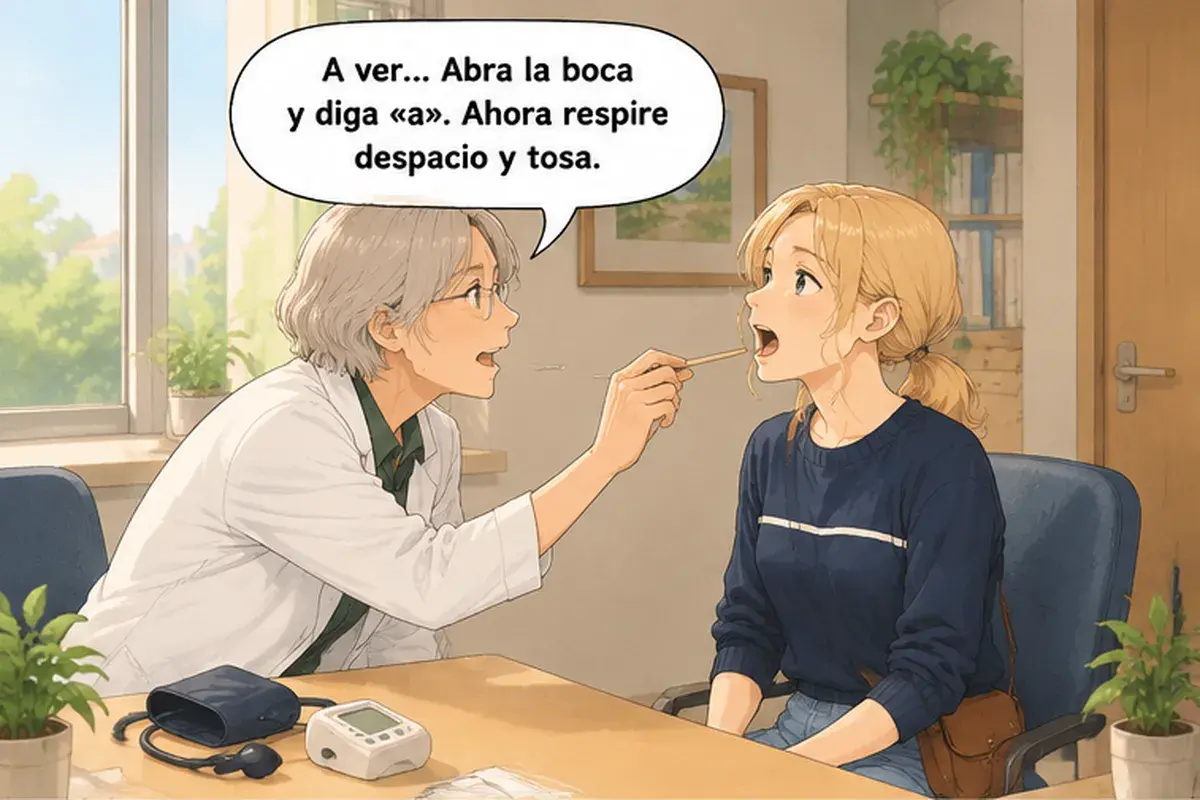
- Doctora
A ver… Abra la boca y diga «a». Ahora respire despacio y tosa.
Let's see… Open your mouth and say "ah." Now breathe slowly and cough. (formal)
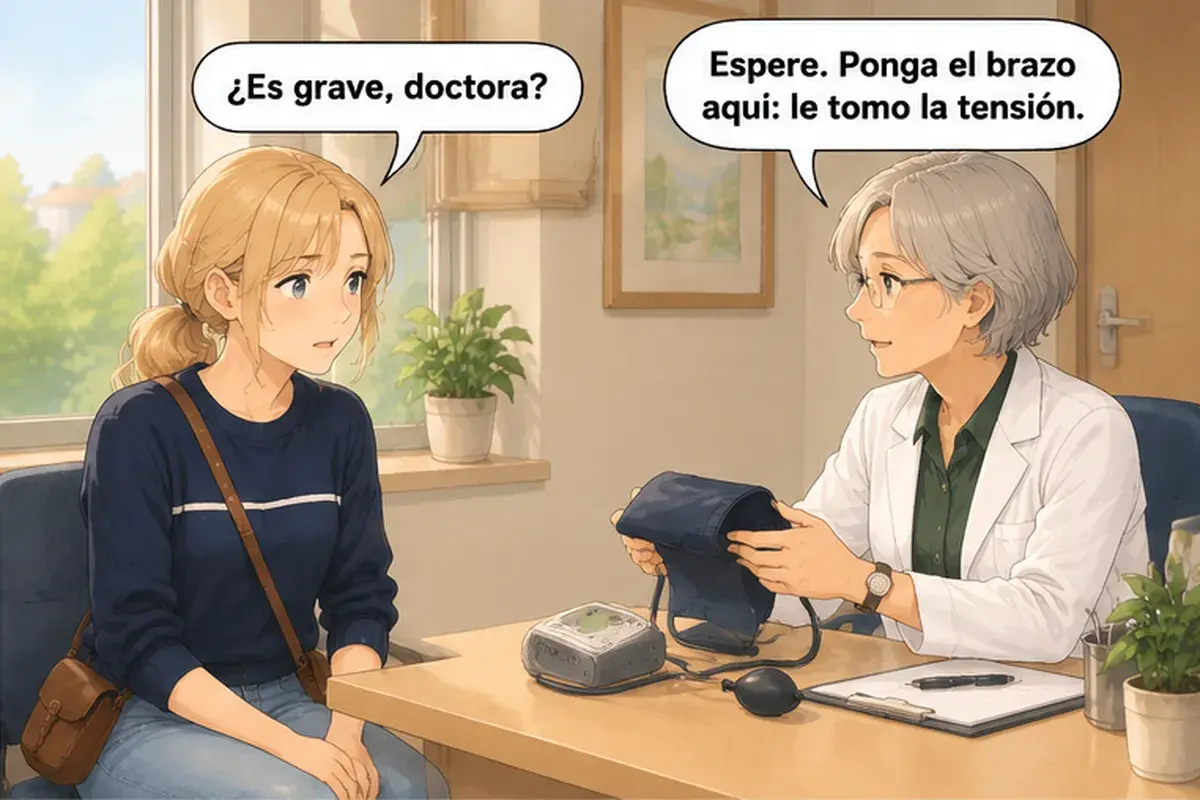
- Ana
¿Es grave, doctora?
Is it serious, doctor? (to a woman)
- Doctora
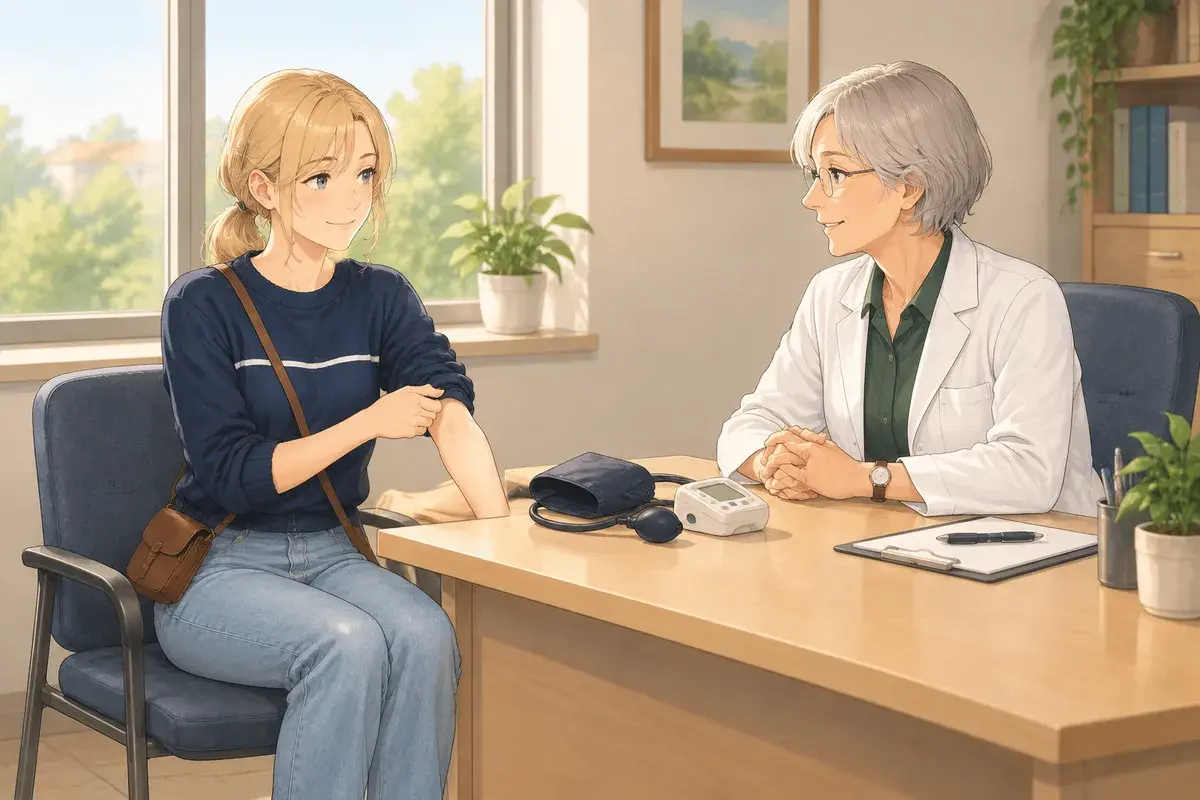
Espere. Ponga el brazo aquí: le tomo la tensión.
Wait. Put your arm here: I'll take your blood pressure. (formal)
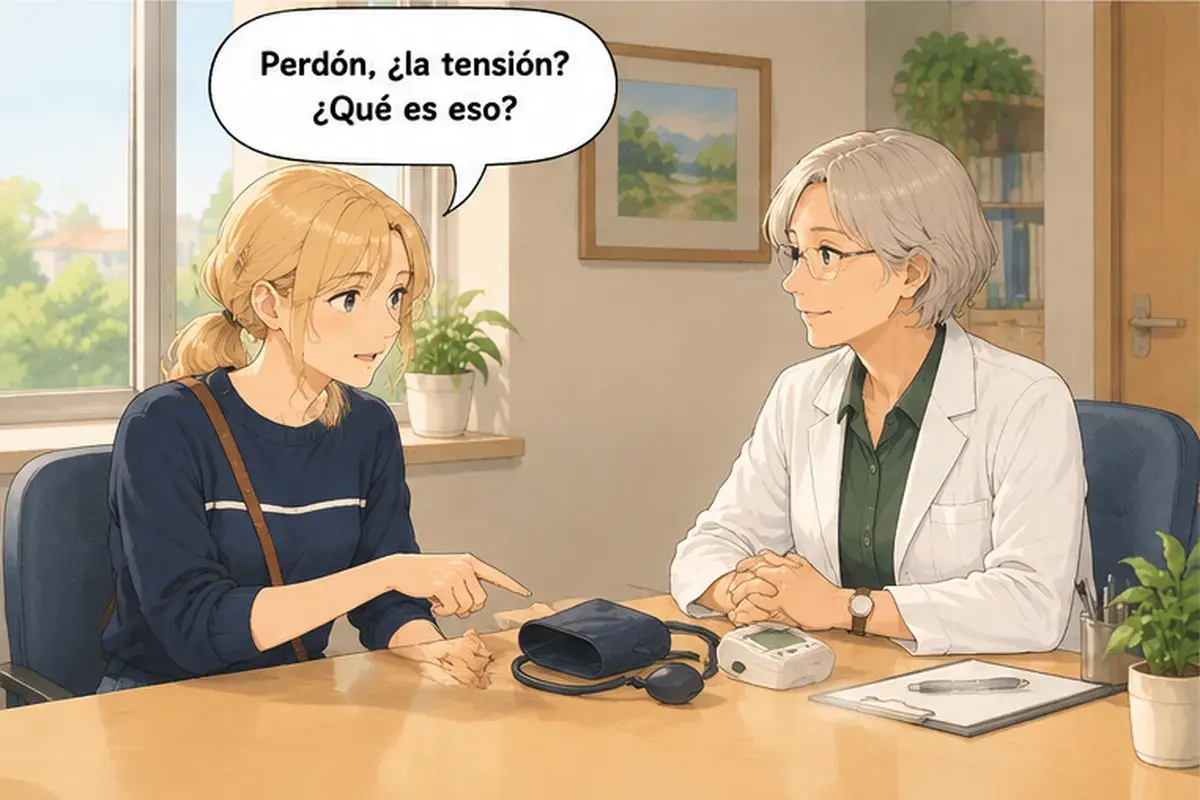
- Ana
Perdón, ¿la tensión? ¿Qué es eso?
Sorry, "la tensión"? What's that?
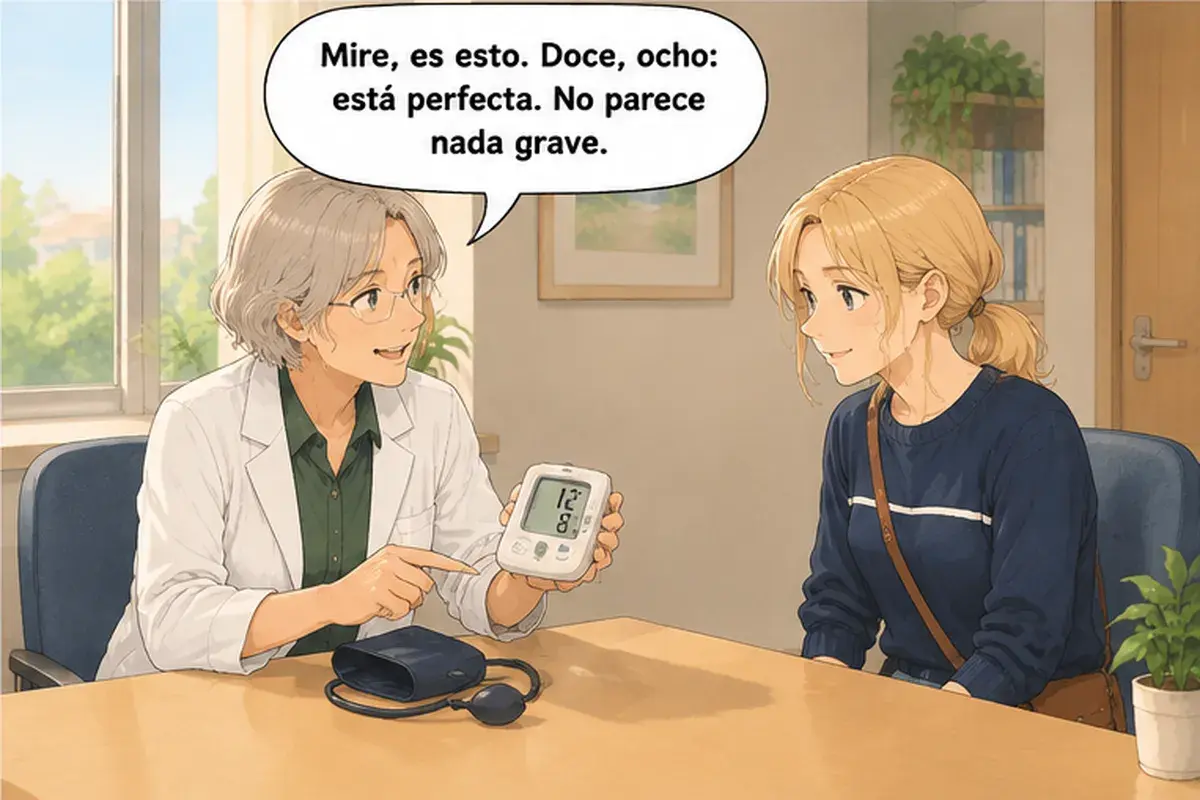
- Doctora
Mire, es esto. Doce, ocho: está perfecta. No parece nada grave.
Look, it's this. Twelve over eight: it's perfect. It doesn't look like anything serious. (formal)
- Ana
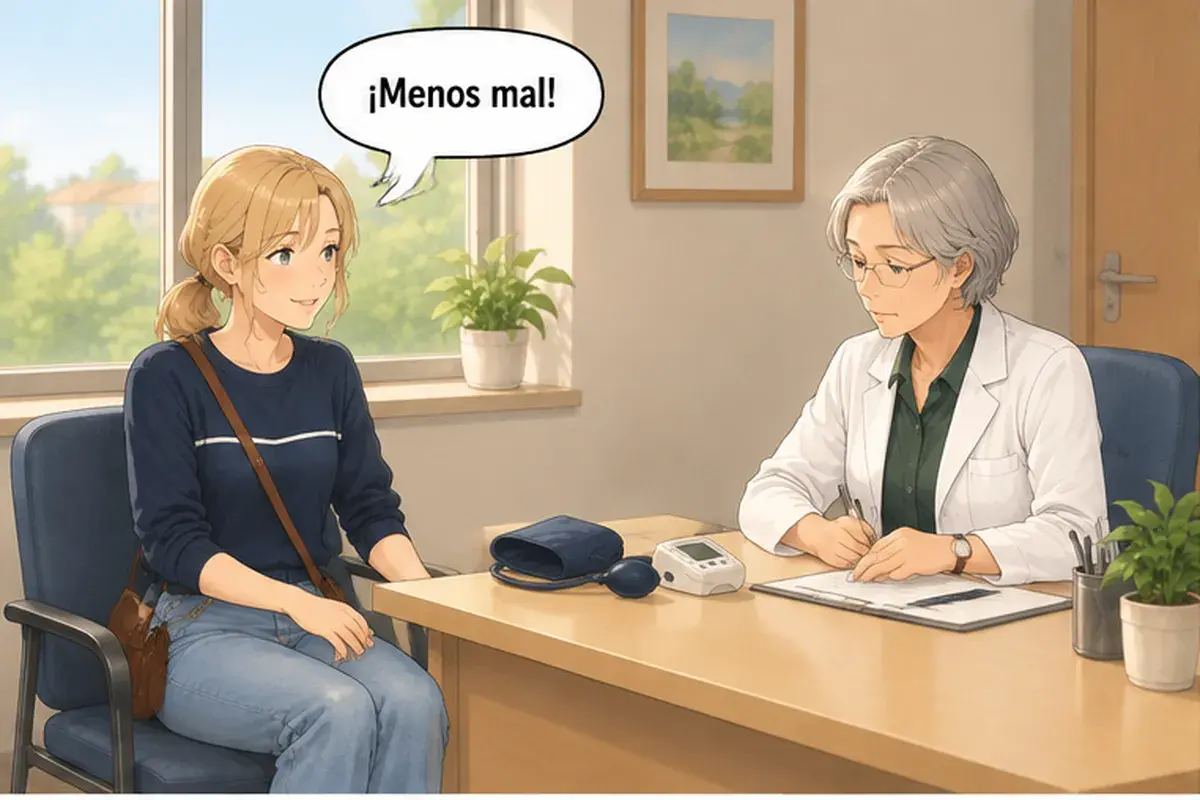
¡Menos mal!
Thank goodness!
- Doctora
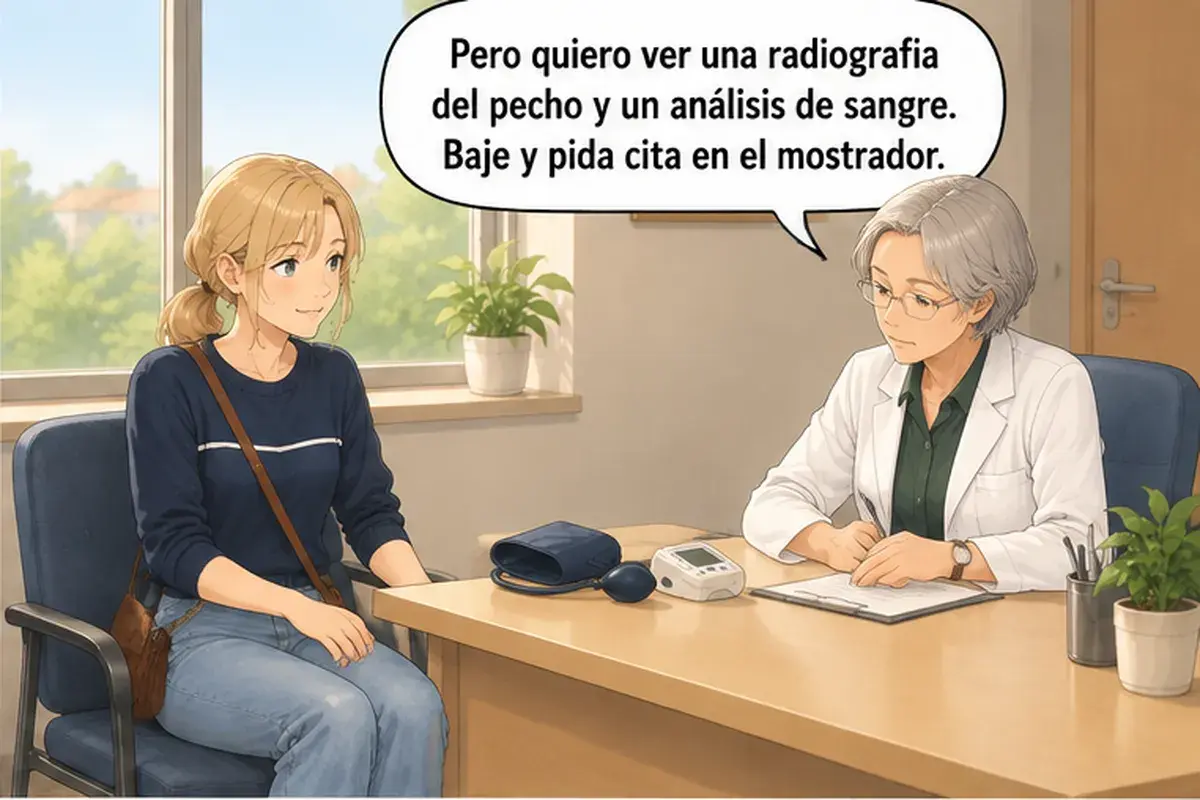
Pero quiero ver una radiografía del pecho y un análisis de sangre. Baje y pida cita en el mostrador.
But I want to see a chest X-ray and a blood test. Go downstairs and make an appointment at the front desk. (formal)
- Ana
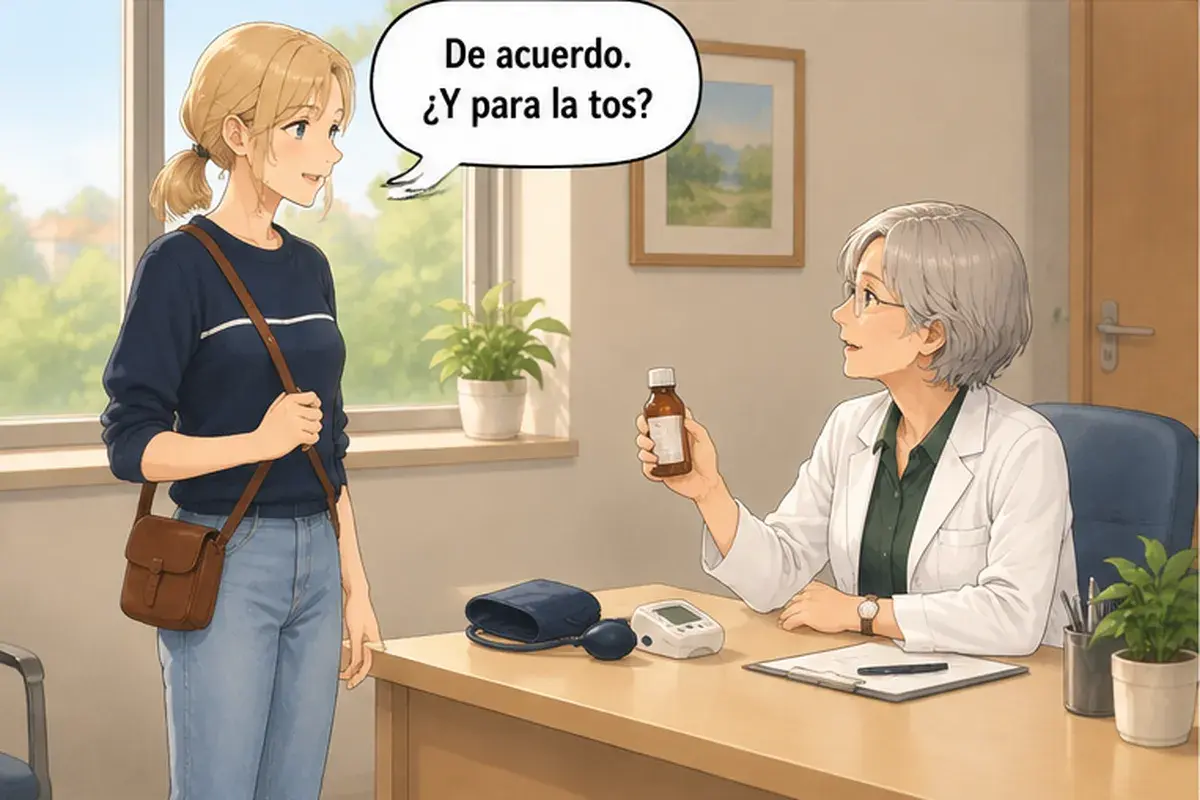
De acuerdo. ¿Y para la tos?
All right. And for the cough?
- Doctora
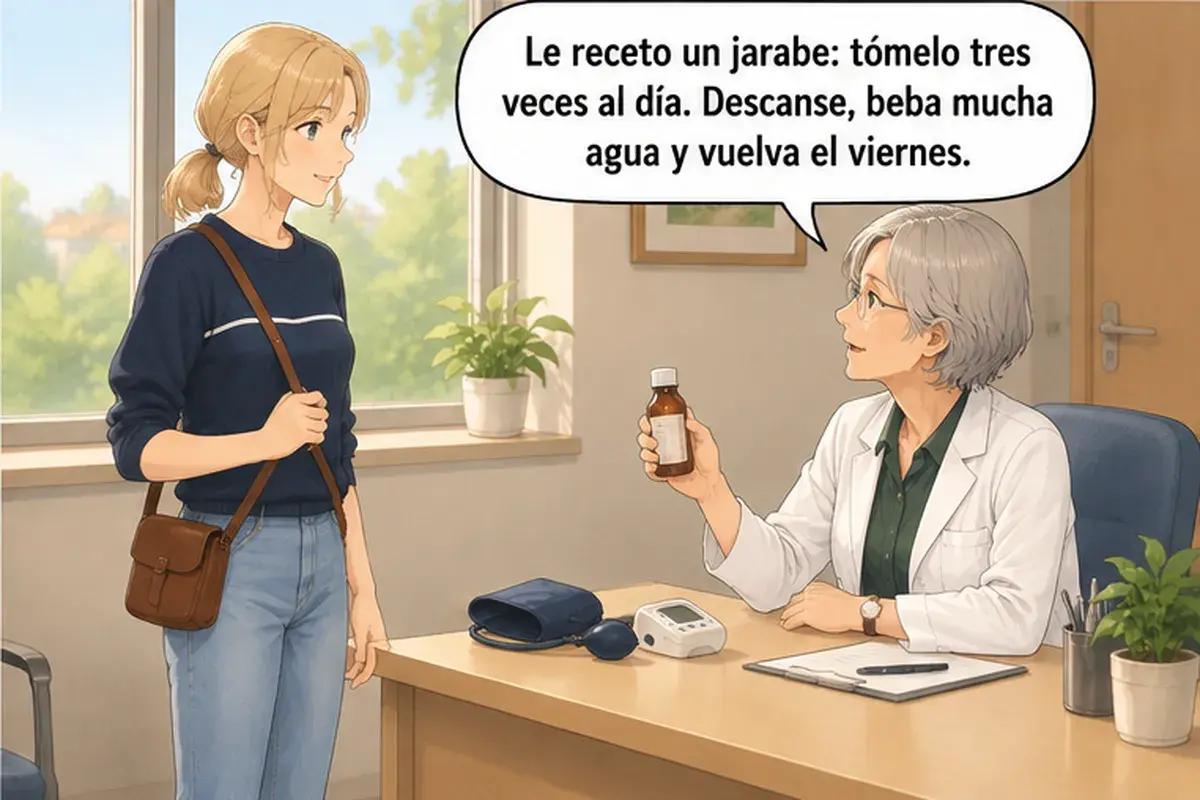
Le receto un jarabe: tómelo tres veces al día. Descanse, beba mucha agua y vuelva el viernes.
I'll prescribe you a syrup: take it three times a day. Rest, drink lots of water and come back on Friday. (formal)
- Ana
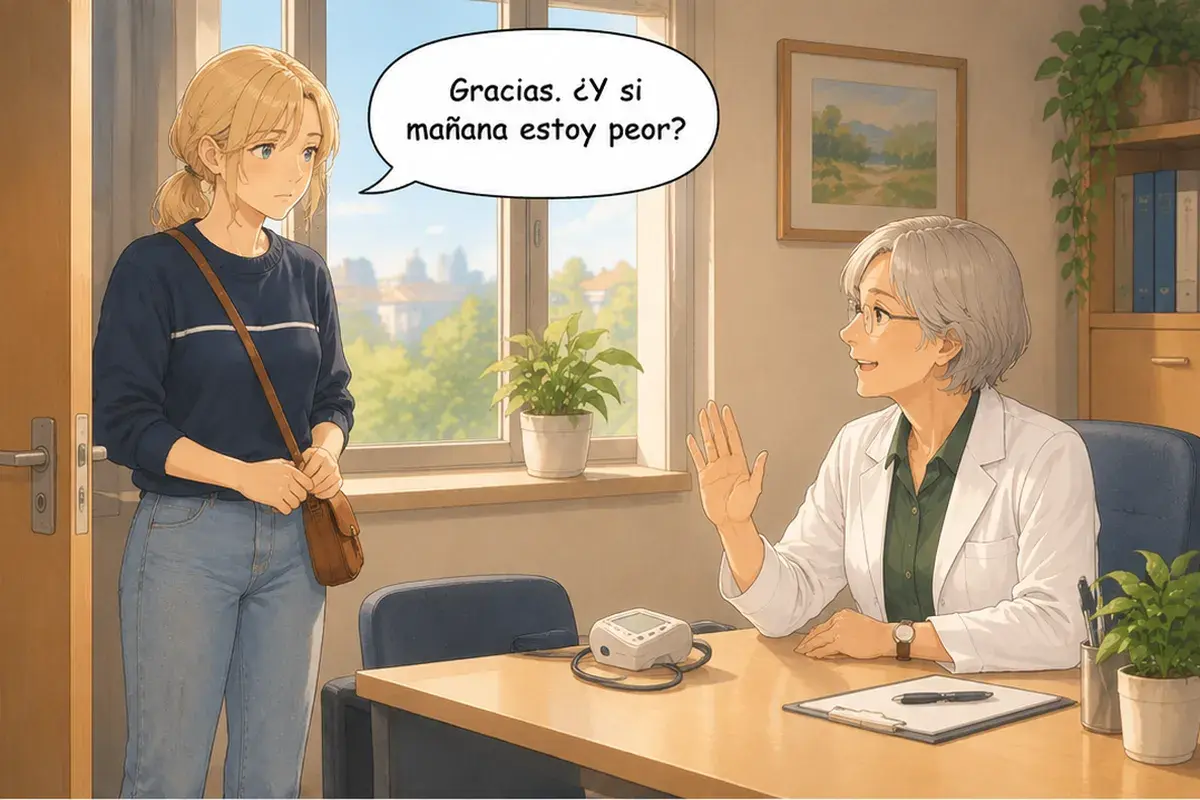
Gracias. ¿Y si mañana estoy peor?
Thanks. And what if I'm worse tomorrow?
- Doctora
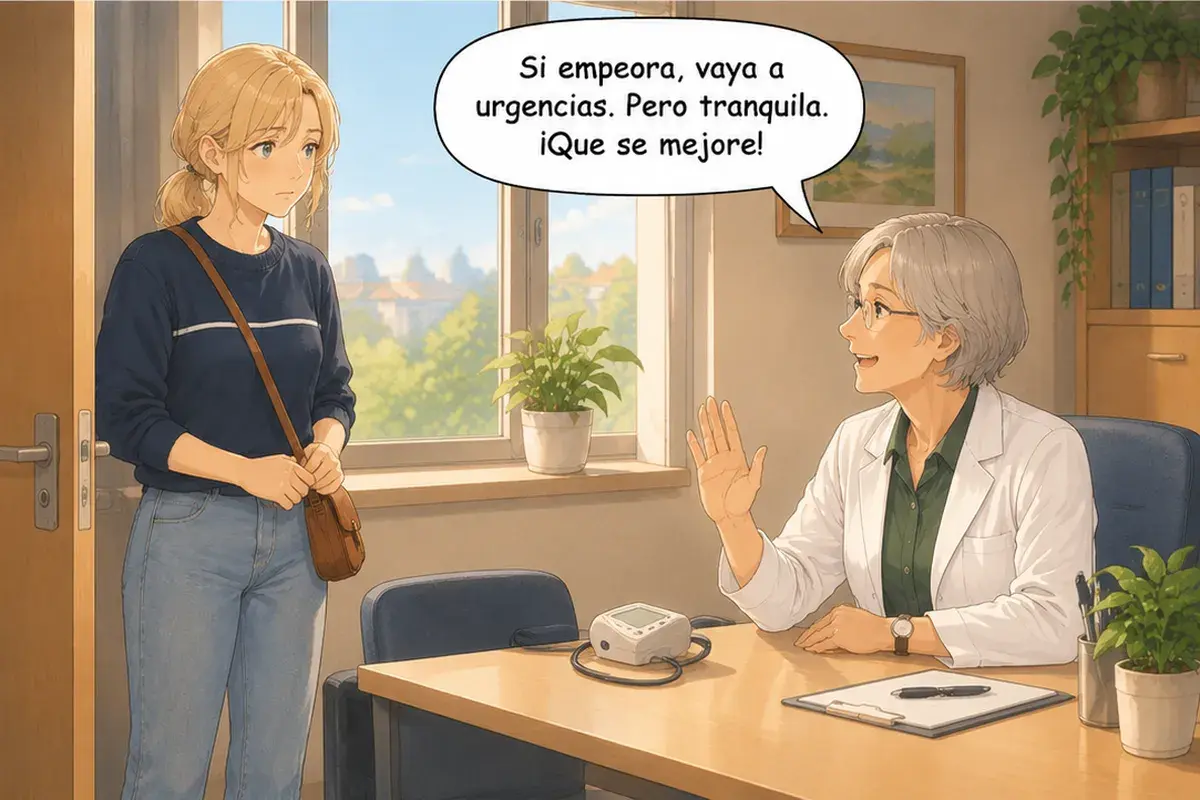
Si empeora, vaya a urgencias. Pero tranquila. ¡Que se mejore!
If you get worse, go to the ER. But don't worry. Get well soon! (to a woman, formal)
Grammar for this text
The doctor uses usted. All her instructions are usted commands: pase, espere, abra, respire, tosa, mire, baje, descanse, beba. -ar verbs end in -e; -er / -ir verbs end in -a. Irregular ones come from the yo form: digo → diga, pongo → ponga, pido → pida, vuelvo → vuelva. On its own: ir → vaya.
The pronoun is attached to the end. Dígame — tell me; tómelo — take it (lo is the syrup).
Le — (to) you, formal: le tomo la tensión — I'll take your blood pressure; le receto un jarabe — I'll prescribe you a syrup.
Doce, ocho. In Spain, blood pressure is said like this: 12 and 8. It's the same as 120 over 80.
Desde hace cuatro días — for four days (unit 14). English uses the present perfect here: I've been coughing for four days.
¡Que se mejore! — Get well soon! The doctor uses usted; se mejore is a special form of mejorarse (to get better). You'll learn these forms after que at level B1. For now, learn it as a set phrase. To a friend, you say ¡Que te mejores!
Words and grammar of the unit: Understand what the doctor tells you.
Learn the words from the texts with flashcards
In the app, you can tap any word in a text to see its translation, forms and examples, and new words stick with flashcards. 15 minutes a day.
Start for freeEverything is open for free. No card needed to sign up.