

Spanish dialogue with translation · A2 · 11 lines
Me pica mucho la piel de los brazos The skin on my arms really itches
Comic · 11 panels
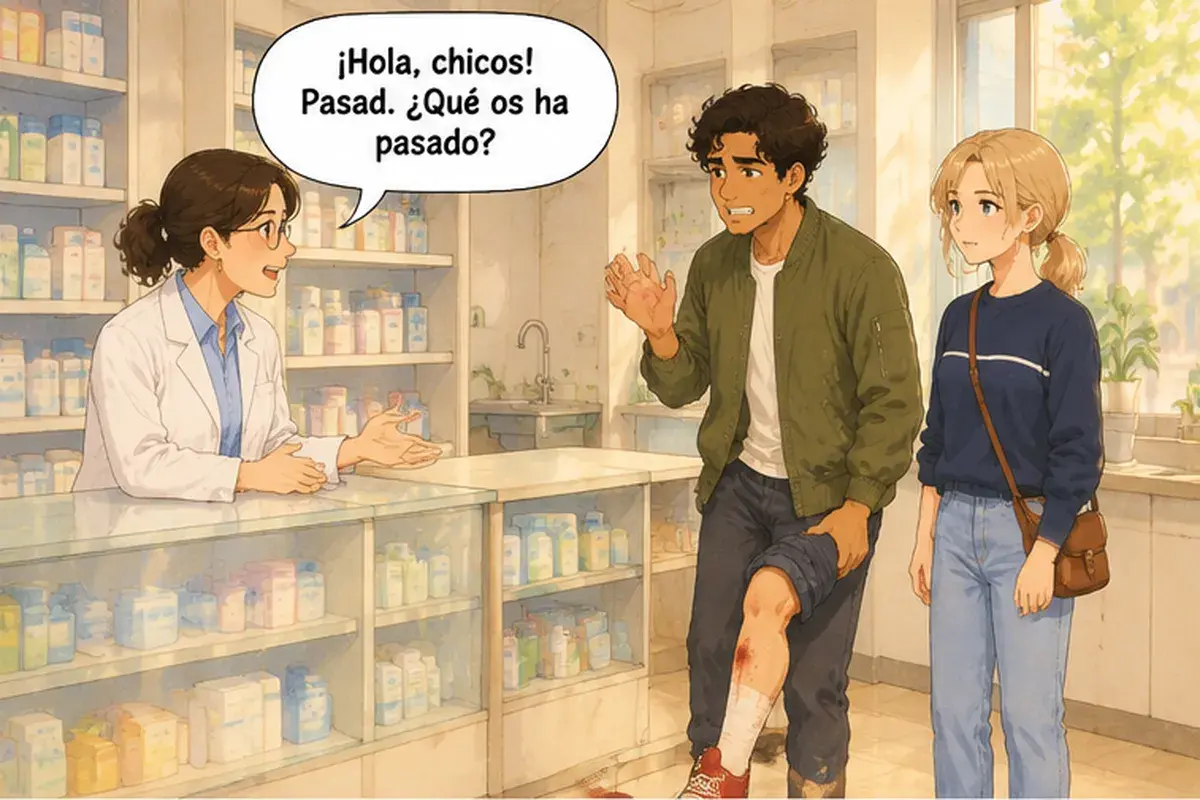
- Farmacéutica
¡Hola, chicos! Pasad. ¿Qué os ha pasado?
Hi, guys! Come in. What happened to you? (to several people)
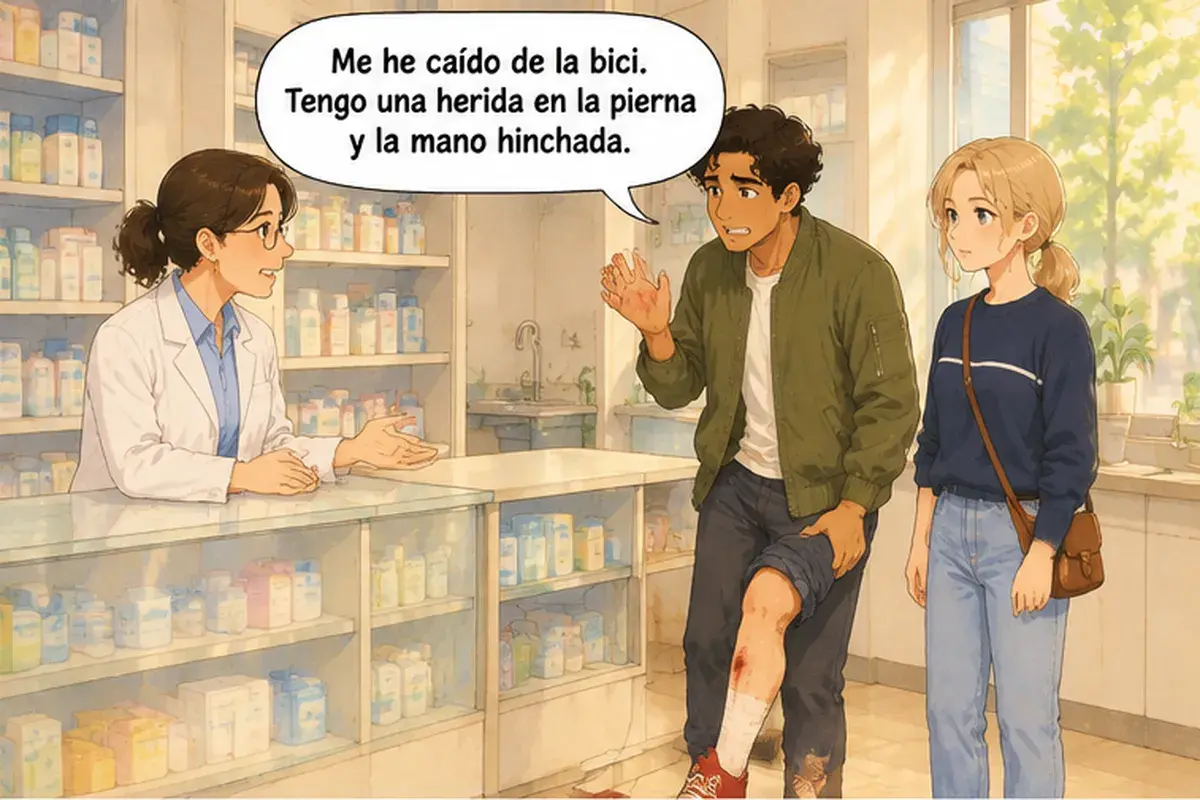
- Pablo
Me he caído de la bici. Tengo una herida en la pierna y la mano hinchada.
I fell off my bike. I have a cut on my leg and my hand is swollen.
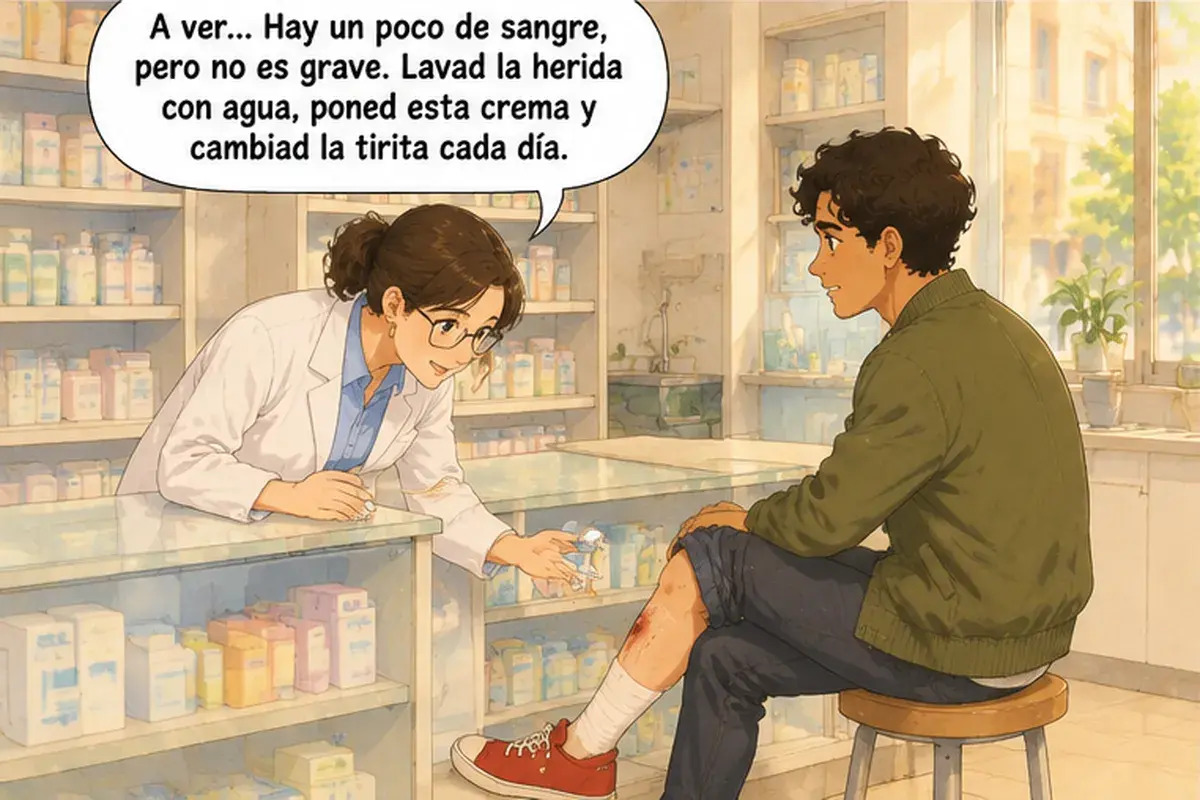
- Farmacéutica
A ver… Hay un poco de sangre, pero no es grave. Lavad la herida con agua, poned esta crema y cambiad la tirita cada día.
Let's see… There's a little blood, but it's not serious. Wash the cut with water, put on this cream and change the Band-Aid every day. (to several people)
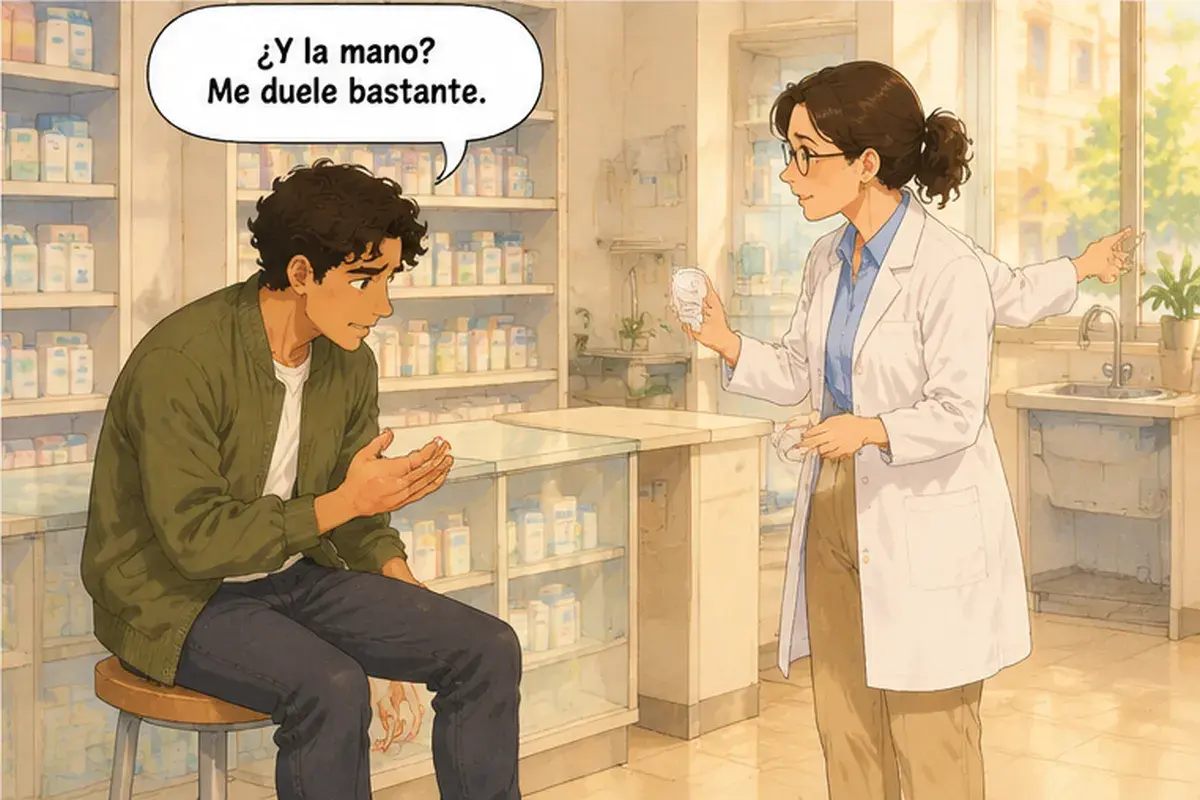
- Pablo
¿Y la mano? Me duele bastante.
And my hand? It hurts quite a bit.
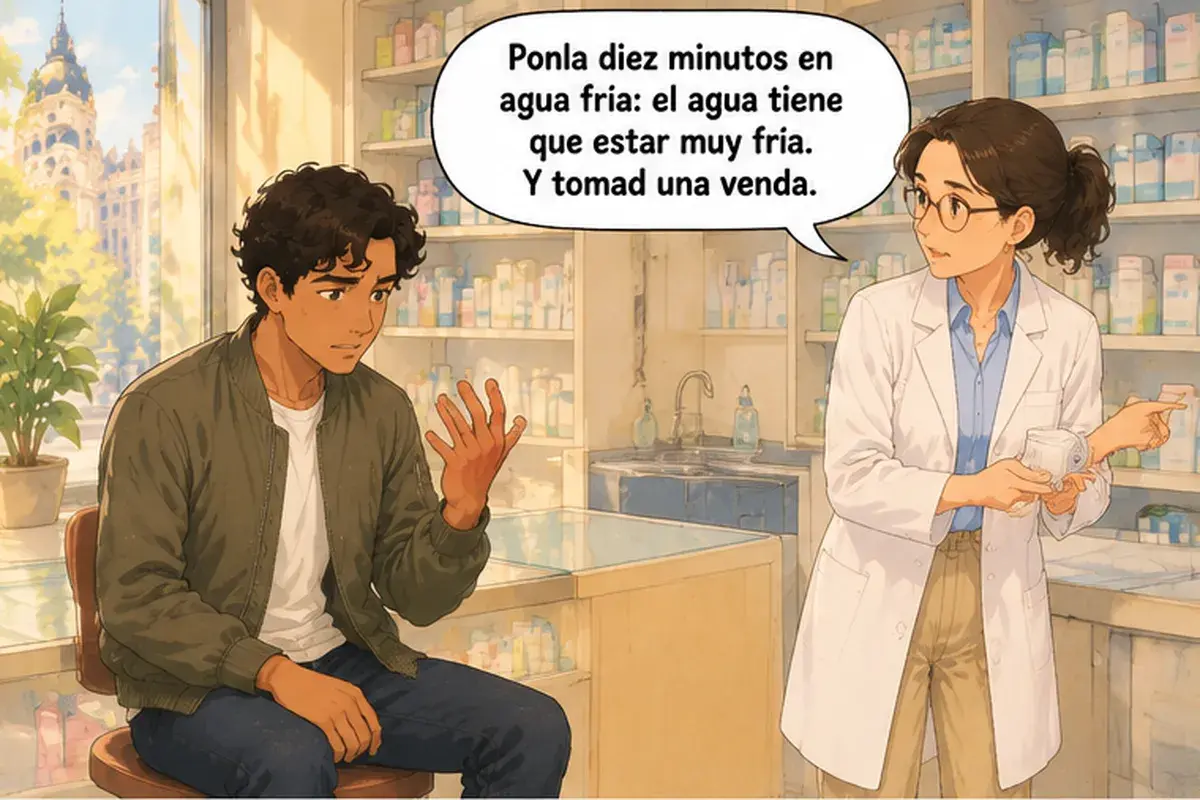
- Farmacéutica
Ponla diez minutos en agua fría: el agua tiene que estar muy fría. Y tomad una venda.
Put it in cold water for ten minutes: the water has to be very cold. And take a bandage (to several people).
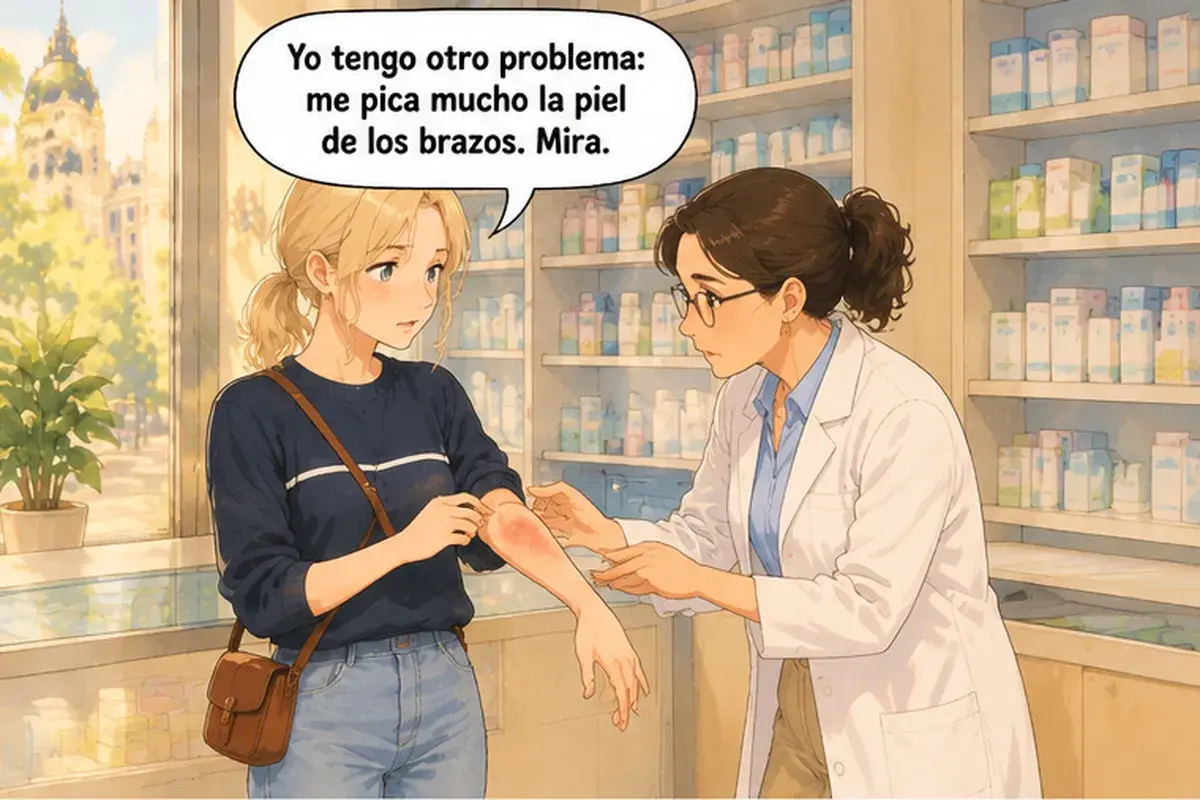
- Ana
Yo tengo otro problema: me pica mucho la piel de los brazos. Mira.
I have another problem: the skin on my arms really itches. Look.
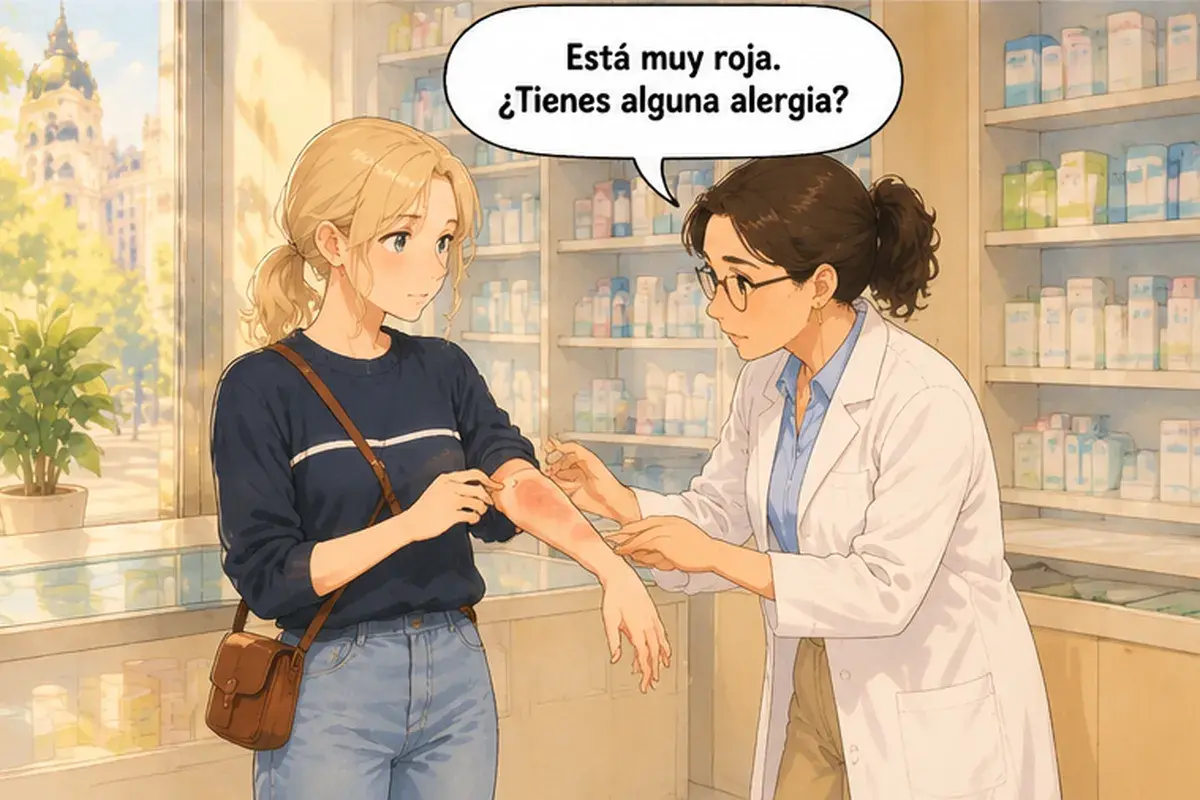
- Farmacéutica
Está muy roja. ¿Tienes alguna alergia?
It's very red. Do you have any allergies?
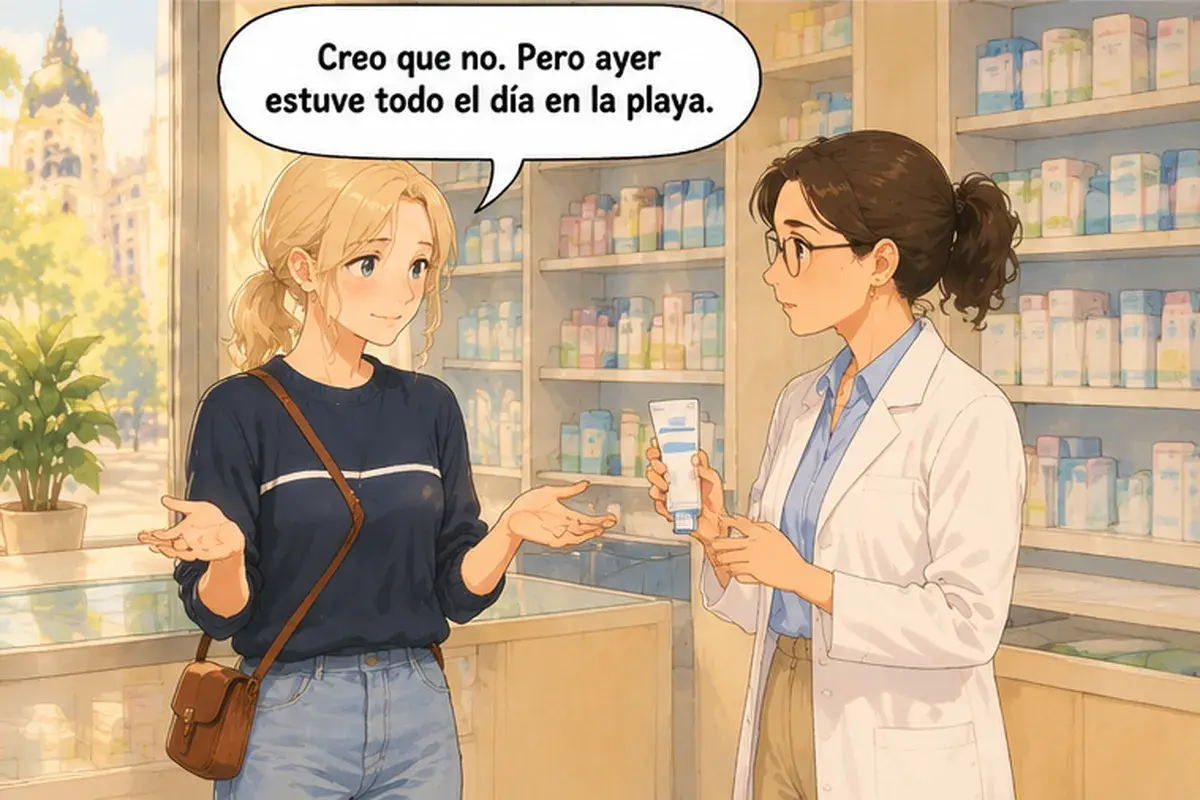
- Ana
Creo que no. Pero ayer estuve todo el día en la playa.
I don't think so. But yesterday I spent all day at the beach.
- Farmacéutica
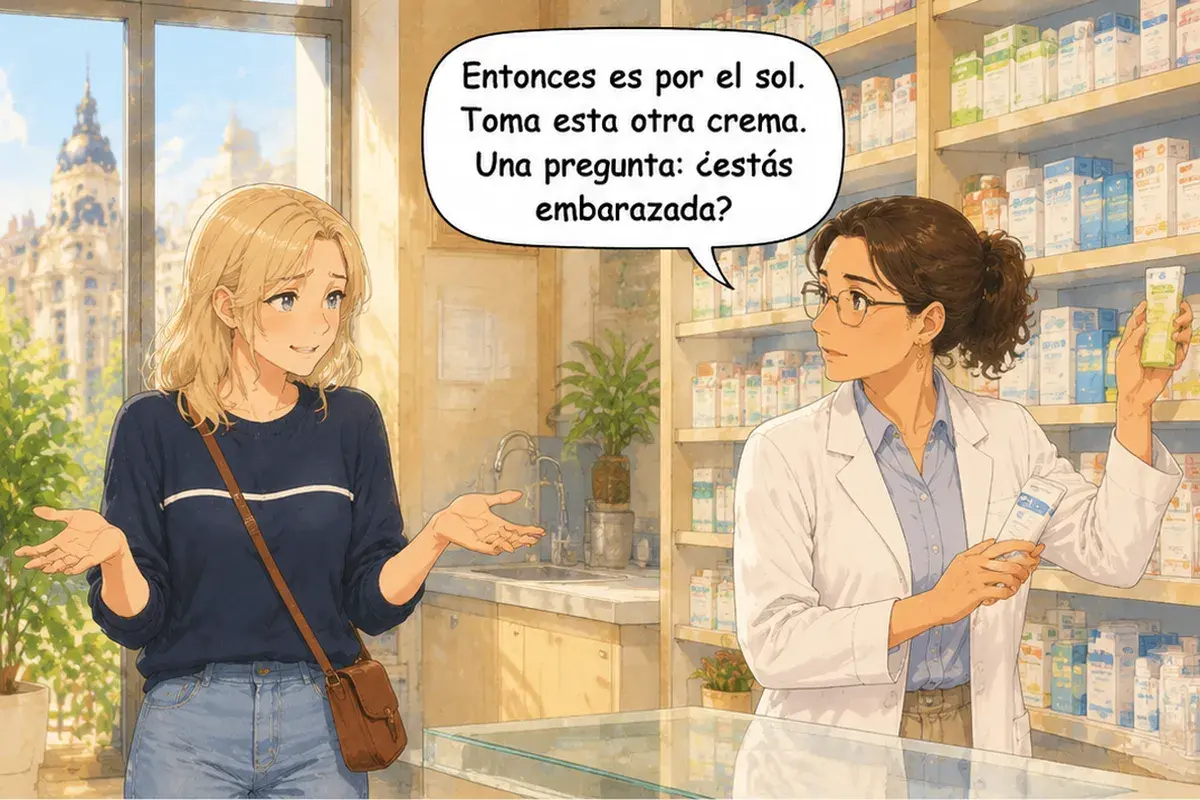
Entonces es por el sol. Toma esta otra crema. Una pregunta: ¿estás embarazada?
Then it's because of the sun. Take this other cream. One question: are you pregnant?
- Ana
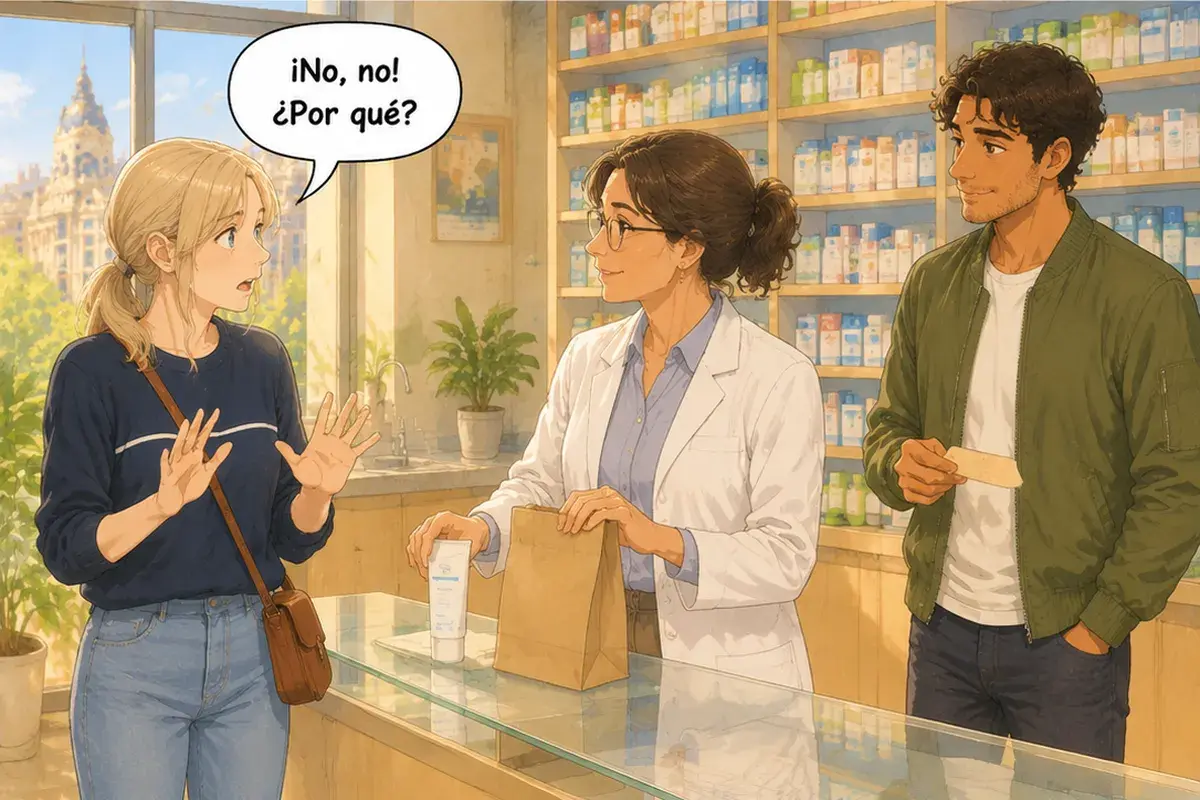
¡No, no! ¿Por qué?
No, no! Why?
- Farmacéutica
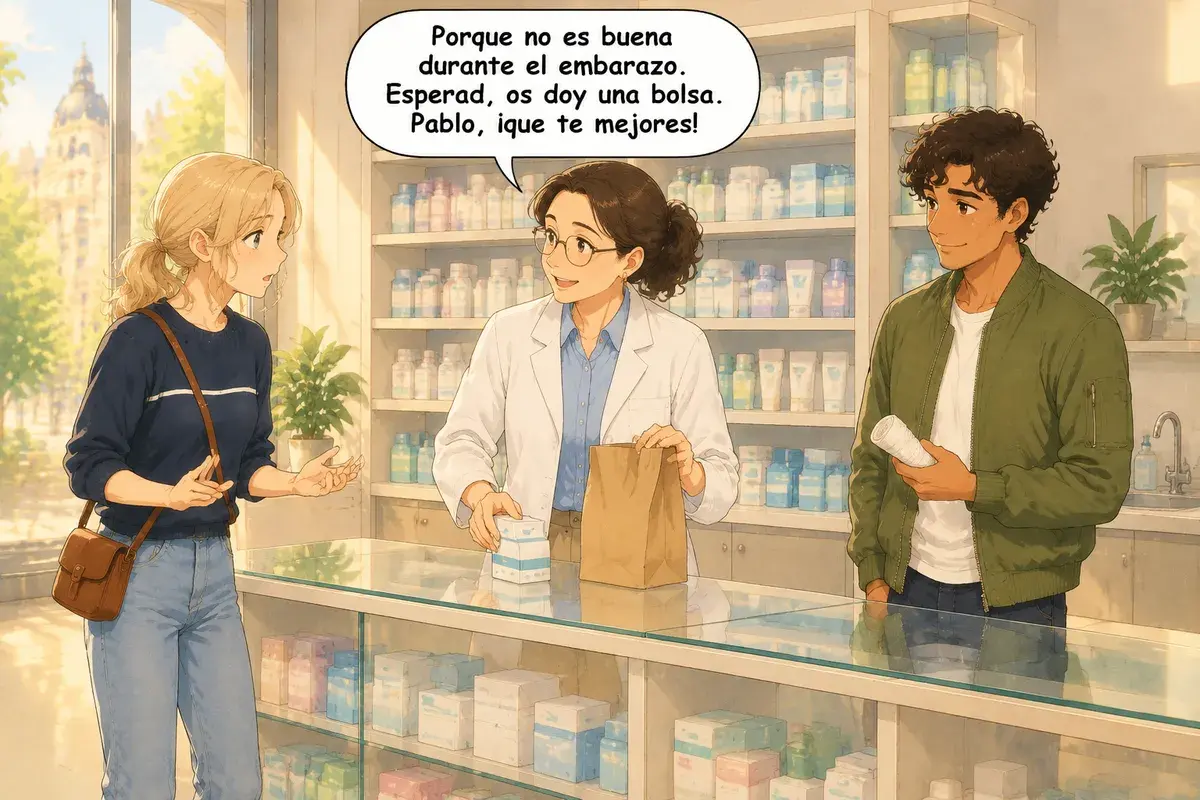
Porque no es buena durante el embarazo. Esperad, os doy una bolsa. Pablo, ¡que te mejores!
Because it's not good during pregnancy. Wait, I'll give you a bag (to several people). Pablo, get well soon!
Grammar for this text
To one person and to two. In Spain, pharmacists easily switch to tú with young customers. To both friends at once, she uses vosotros: pasad, lavad, poned, cambiad, tomad, esperad. To one of them, tú: toma and ponla = pon + la (put it, meaning the hand). Ana also answers her with tú: mira.
Tricky gender. La mano hinchada: the word ends in -o, but it's feminine. Otro problema: ends in -a, but it's masculine. El agua… muy fría: feminine, but it takes el because it starts with a stressed a.
Me pica la piel works like me duele: literally, "the skin itches to me." In English: my skin itches.
Es por el sol — por gives the reason: it's from the sun (unit 14).
Embarazada, embarazo — pregnant, pregnancy. They look like English "embarrassed," but the meaning is completely different. "Embarrassed" is avergonzado.
¡Que te mejores! — Get well soon! mejores is a form of mejorarse (to get better) for tú; you'll learn these forms after que at level B1. For now, learn it as a set phrase.
Words and grammar of the unit: Understand what the doctor tells you.
Learn the words from the texts with flashcards
In the app, you can tap any word in a text to see its translation, forms and examples, and new words stick with flashcards. 15 minutes a day.
Start for freeEverything is open for free. No card needed to sign up.