

Spanish dialogue with translation · A2 · 16 lines
¡Cuánto tiempo! Long time no see!
Comic · 15 panels

- Ana
¡Diego! ¡Cuánto tiempo! ¿Qué haces en Valencia?
Diego! Long time no see! What are you doing in Valencia?
- Diego
¡Hola, Ana! Ya no vivo en Madrid. Me fui en marzo.
Hi, Ana! I don't live in Madrid anymore. I left in March.

- Ana
¿En serio? ¡Qué cambio! ¿Y tu trabajo en el banco?
Really? What a change! And your job at the bank?
- Diego
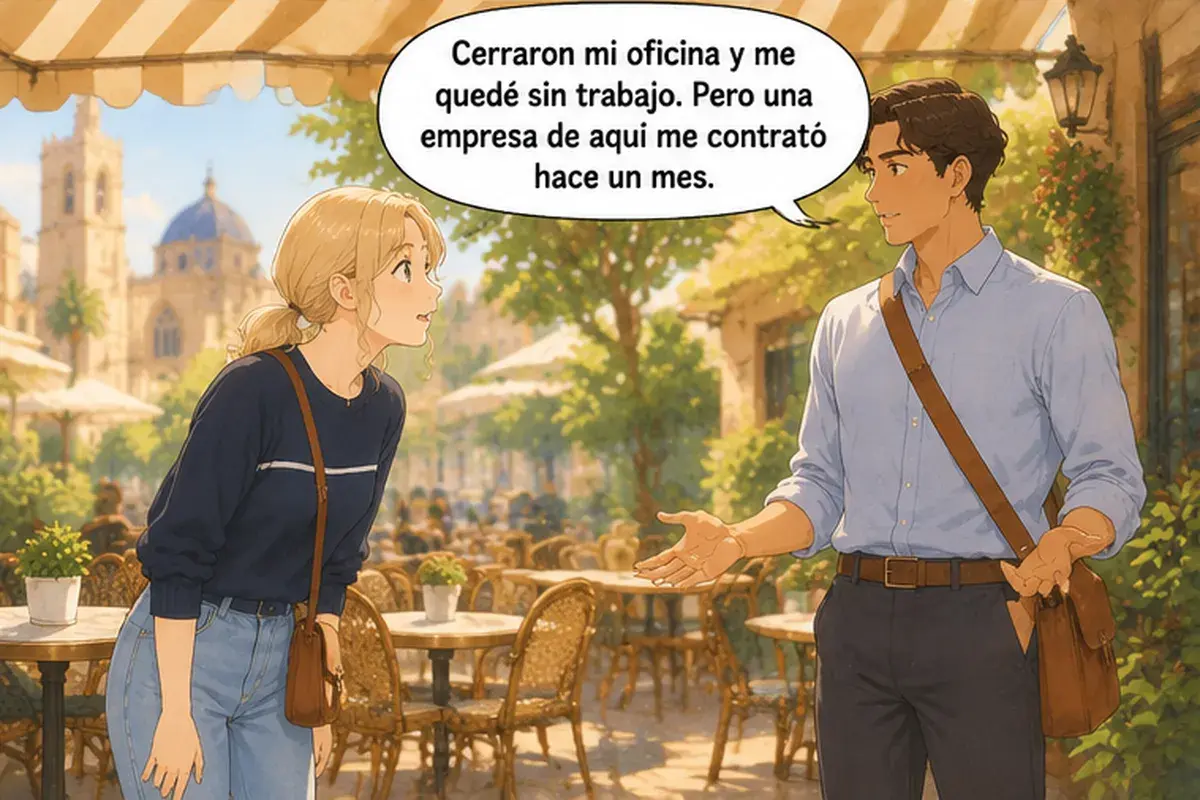
Cerraron mi oficina y me quedé sin trabajo. Pero una empresa de aquí me contrató hace un mes.
They closed my office, and I was left without a job. But a local company hired me a month ago.
- Ana
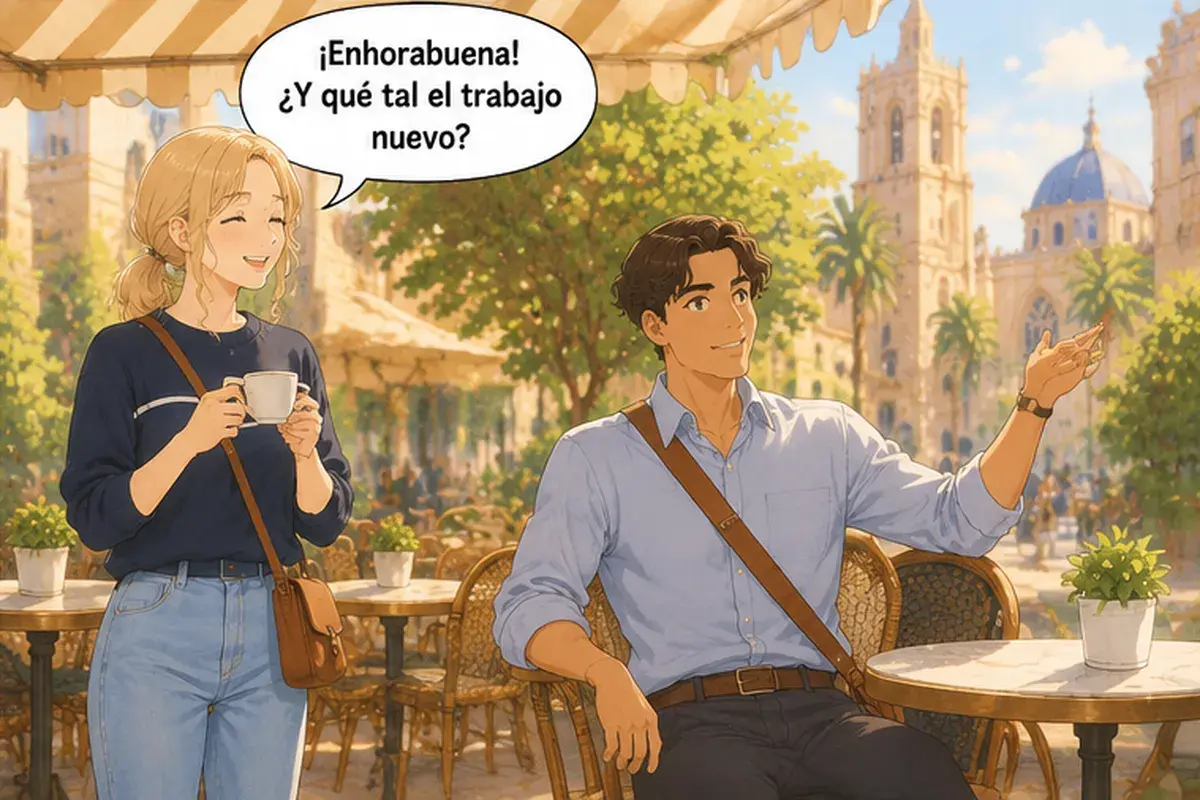
¡Enhorabuena! ¿Y qué tal el trabajo nuevo?
Congratulations! And how's the new job?
- Diego
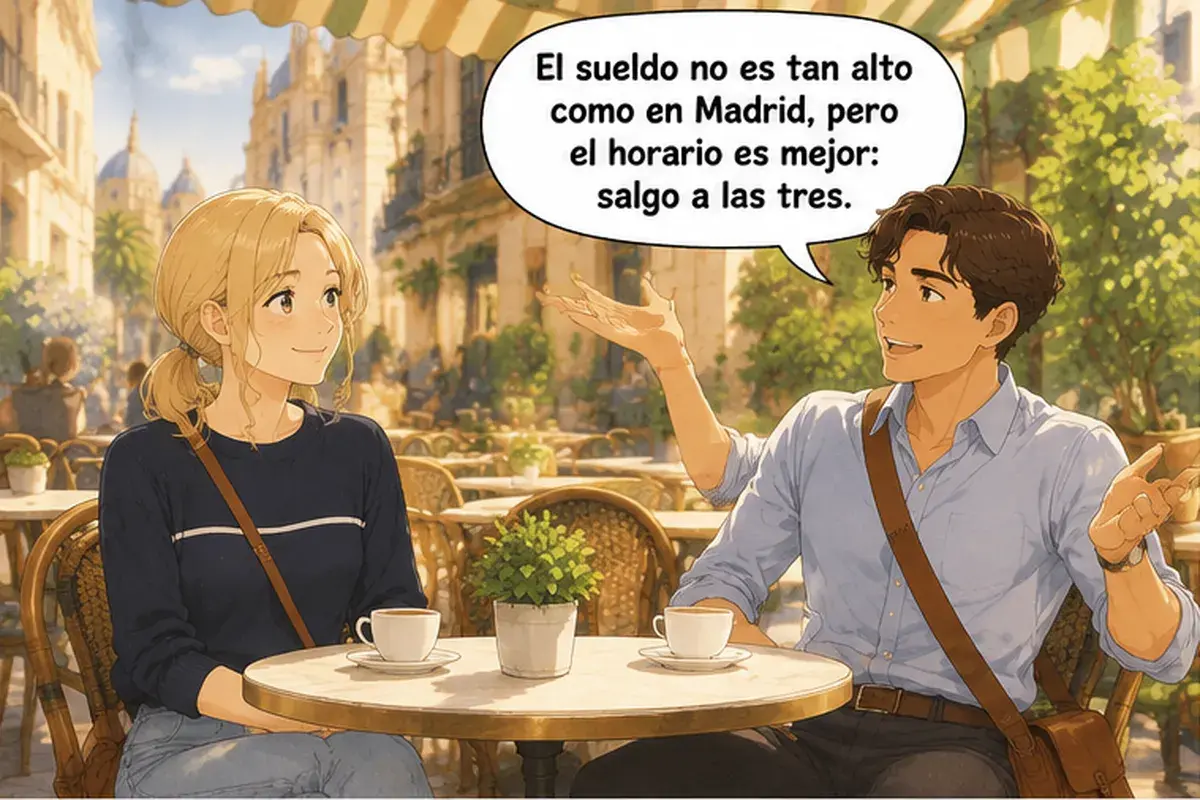
El sueldo no es tan alto como en Madrid, pero el horario es mejor: salgo a las tres.
The salary isn't as high as in Madrid, but the hours are better: I leave at three.

- Ana
¡Qué suerte! ¿Y la mudanza?
Lucky you! And the move?

- Diego
Un desastre. Lo hice todo yo solo, en tren, con cuatro maletas.
A disaster. I did it all by myself, by train, with four suitcases (man speaking).
- Ana
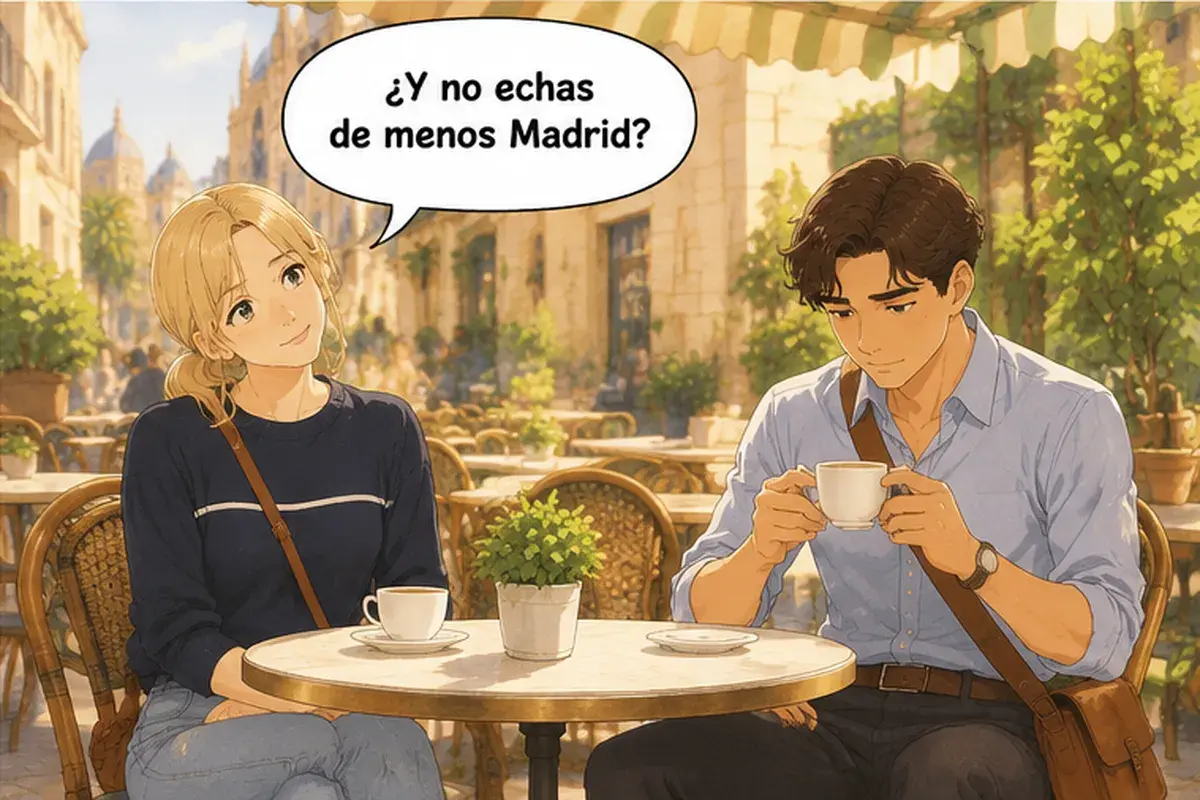
¿Y no echas de menos Madrid?
And don't you miss Madrid?

- Diego
Los domingos me pongo un poco triste. Pero fue una buena decisión.
On Sundays I get a little sad. But it was a good decision.
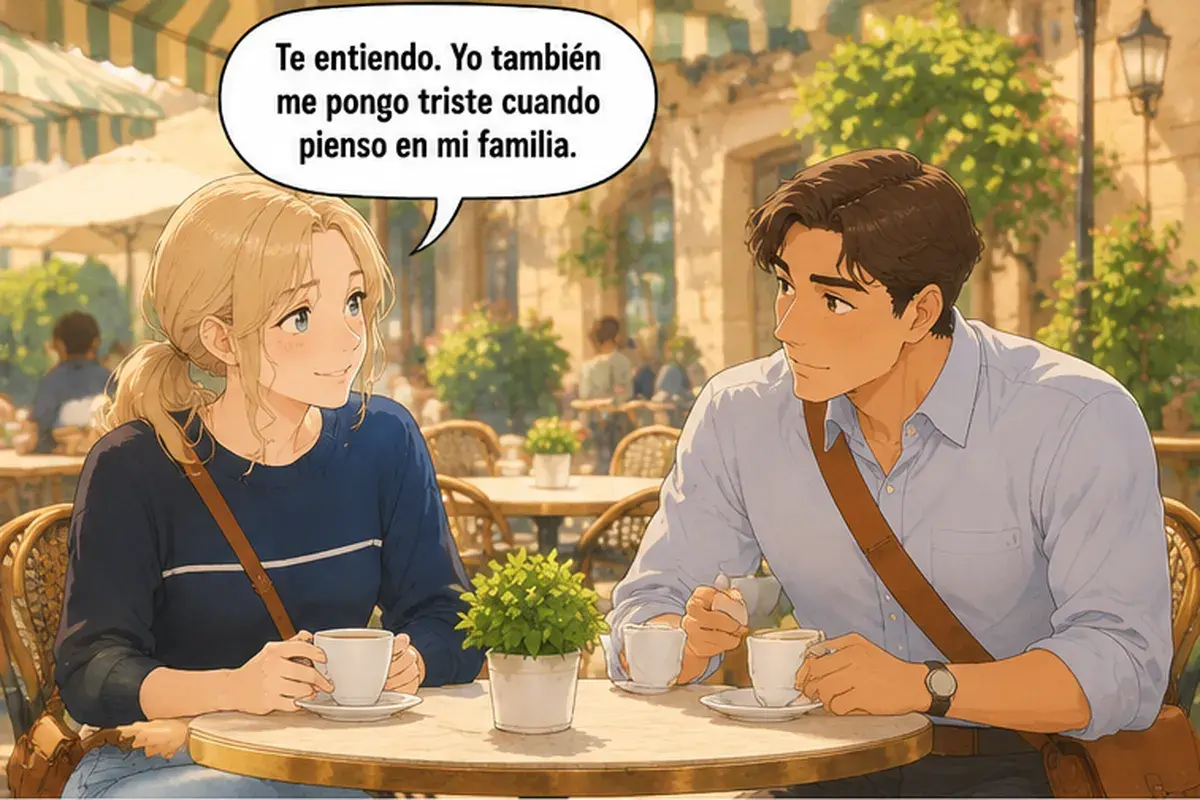
- Ana
Te entiendo. Yo también me pongo triste cuando pienso en mi familia.
I understand you. I get sad too when I think about my family.

- Diego
¿Y tú? ¿Te quedas en Valencia o vuelves a tu país?
What about you? Are you staying in Valencia or going back to your country?
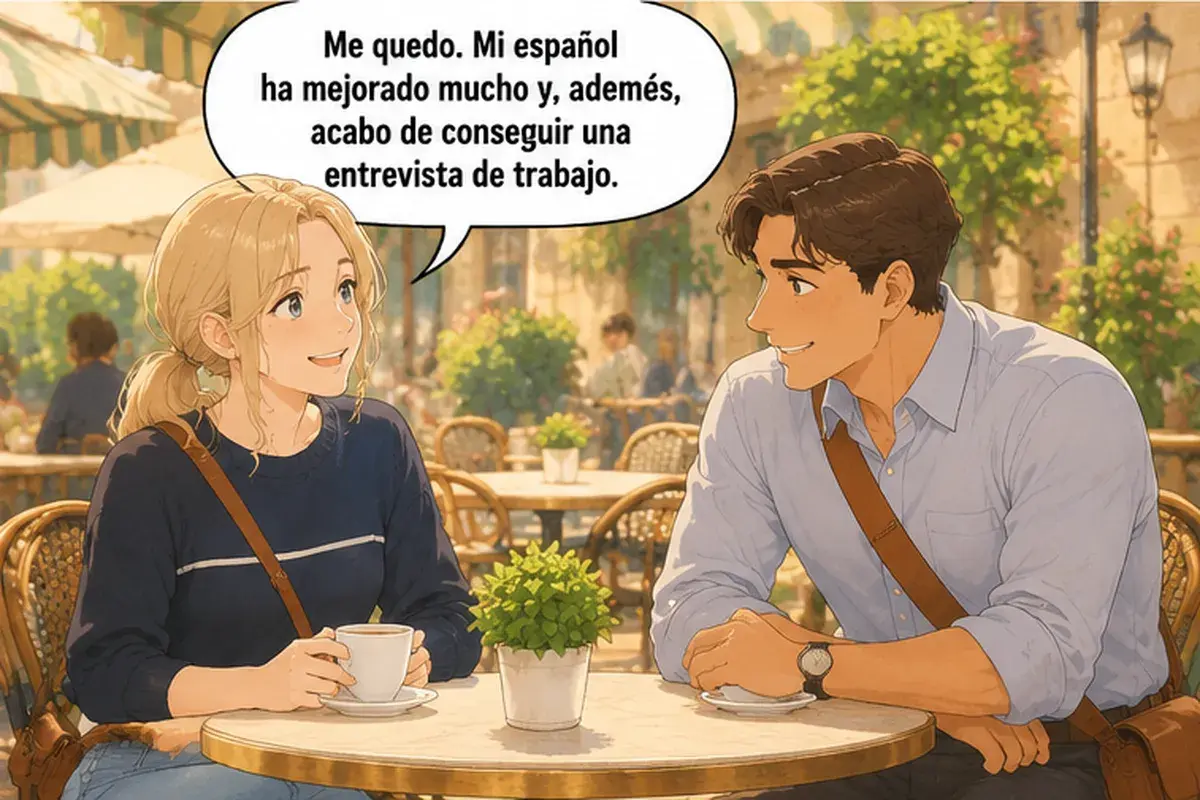
- Ana
Me quedo. Mi español ha mejorado mucho y, además, acabo de conseguir una entrevista de trabajo.
I'm staying. My Spanish has improved a lot, and besides, I've just gotten a job interview.

- Diego
¡Qué bien! Es una gran oportunidad. ¿Cuándo es?
How nice! It's a great opportunity. When is it?

- Ana
El jueves. Bueno, me voy: llego tarde a clase. ¿Quedamos otro día?
On Thursday. Well, I'm heading out: I'm late for class. Should we meet up another day?

- Diego
¡Claro! Te llamo y tomamos algo.
Sure! I'll call you and we'll grab a drink.
Grammar for this text
Verbs of change. Me fui — "I left": this is irse, to leave a place. Me quedé sin trabajo — "I was left without a job". ¿Te quedas en Valencia? — Me quedo — "Are you staying in Valencia? — I'm staying." Me pongo triste — "I get sad": ponerse + adjective is a change of mood, like English "get".
Me voy at the end of a conversation is the usual way to say goodbye: "well, I'm off".
Quedarse and quedar are different verbs. Me quedo — "I'm staying". ¿Quedamos otro día? — "Should we meet up another day?" (quedar — to arrange to meet, A1).
Acabar de + infinitive — "have just": acabo de conseguir una entrevista — "I've just gotten a job interview".
Ya no — "not anymore": Ya no vivo en Madrid. In vuelves a tu país, volver a comes before a place: "you're going back to your country".
Cerraron mi oficina — "they closed my office": the ellos form with no subject, when it doesn't matter who did it, just like English "they". Lo hice todo yo solo — "I did it all by myself": with todo (everything), Spanish also adds lo before the verb.
Salgo a las tres — "I leave at three": some Spanish offices work without a lunch break, from eight to three (jornada intensiva).
Words and grammar of the unit: Talk about a new job and a move.
Learn the words from the texts with flashcards
In the app, you can tap any word in a text to see its translation, forms and examples, and new words stick with flashcards. 15 minutes a day.
Start for freeEverything is open for free. No card needed to sign up.