

Spanish dialogue with translation · A2 · 16 lines
¿Qué estás haciendo? What are you doing?
Comic · 16 panels
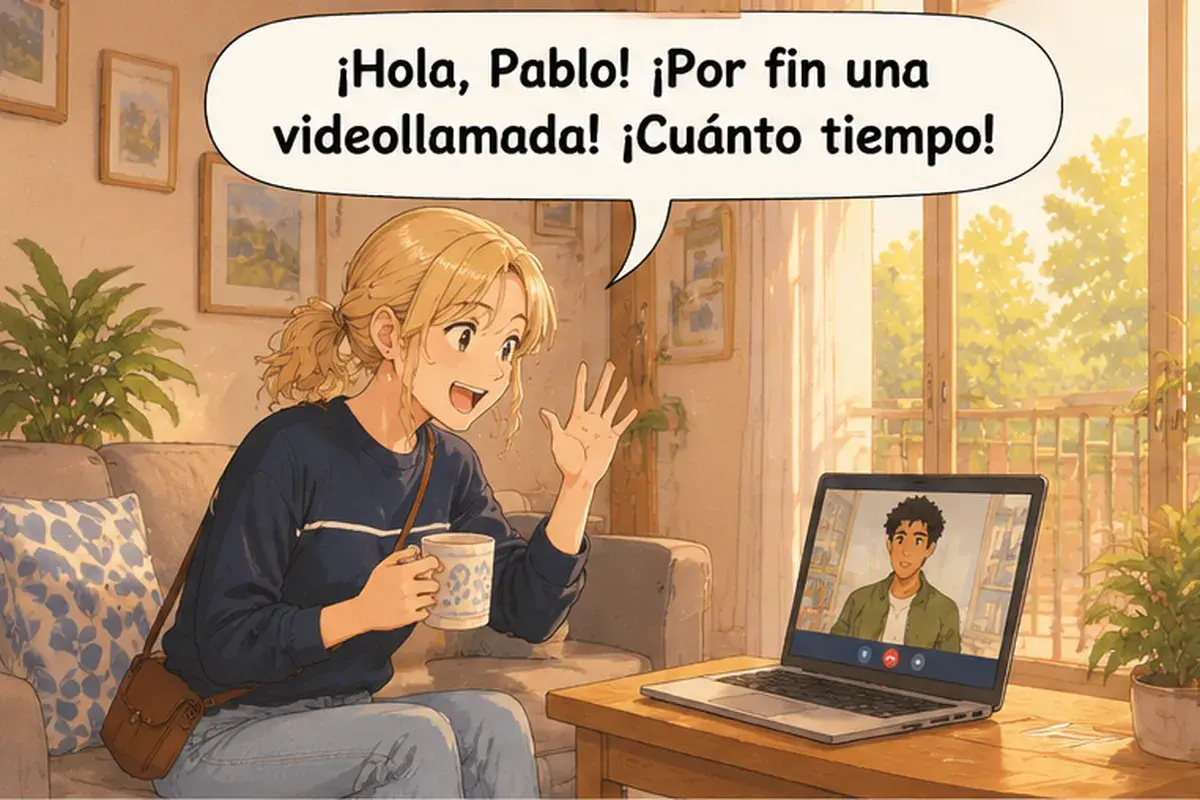
- Ana
¡Hola, Pablo! ¡Por fin una videollamada! ¡Cuánto tiempo!
Hi, Pablo! A video call at last! Long time no see!
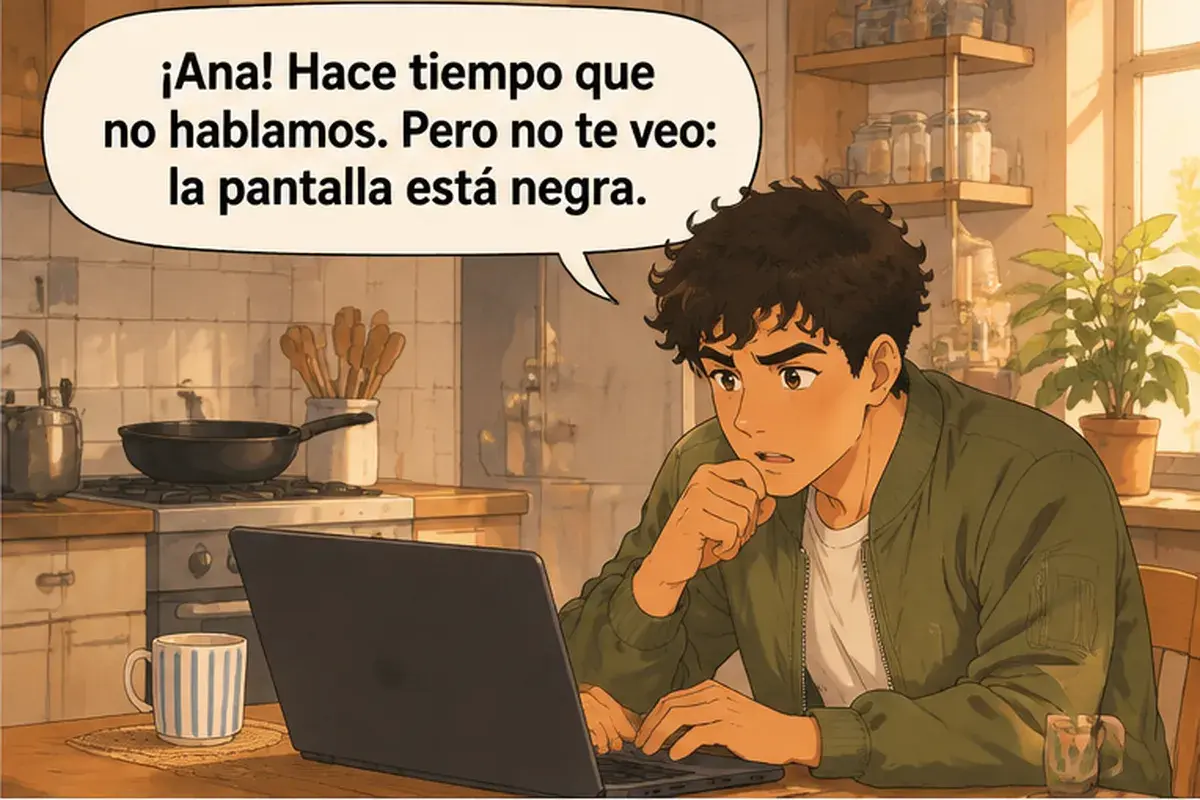
- Pablo
¡Ana! Hace tiempo que no hablamos. Pero no te veo: la pantalla está negra.
Ana! We haven't talked in a long time. But I can't see you: the screen is black.
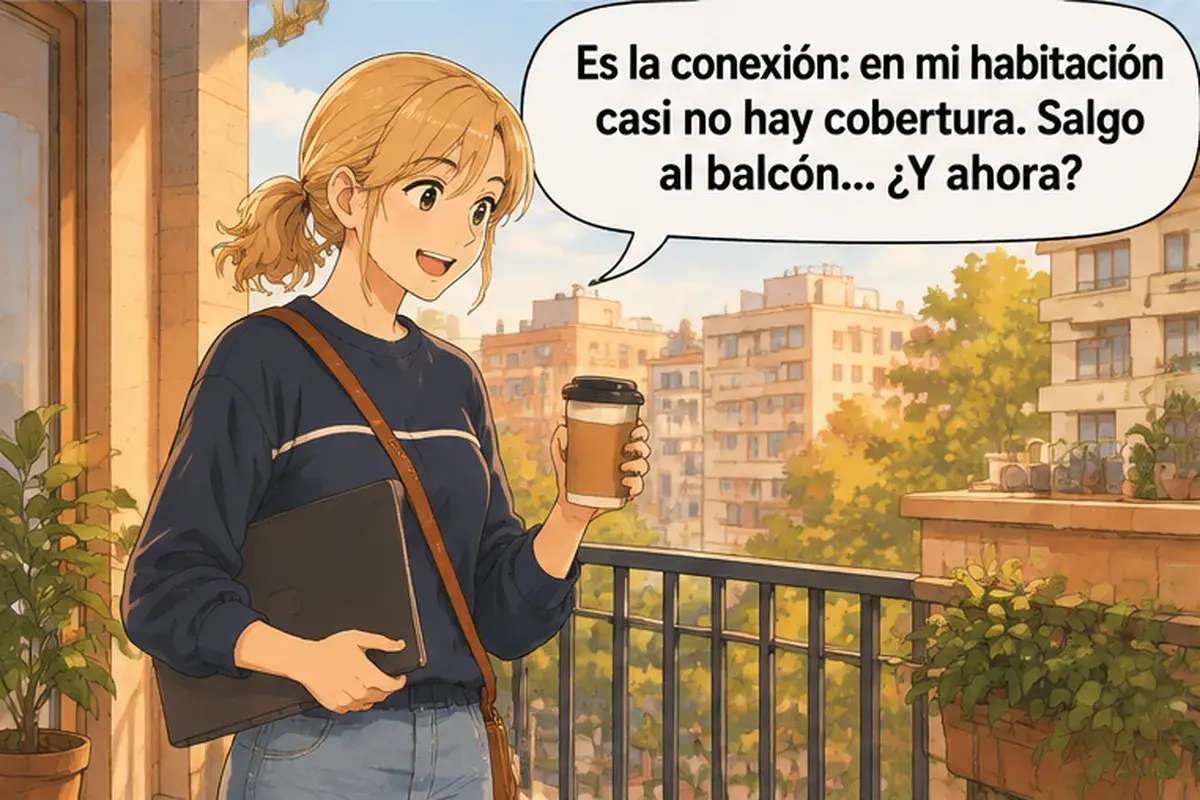
- Ana
Es la conexión: en mi habitación casi no hay cobertura. Salgo al balcón... ¿Y ahora?
It's the connection: there's almost no signal in my room. I'm going out onto the balcony... And now?
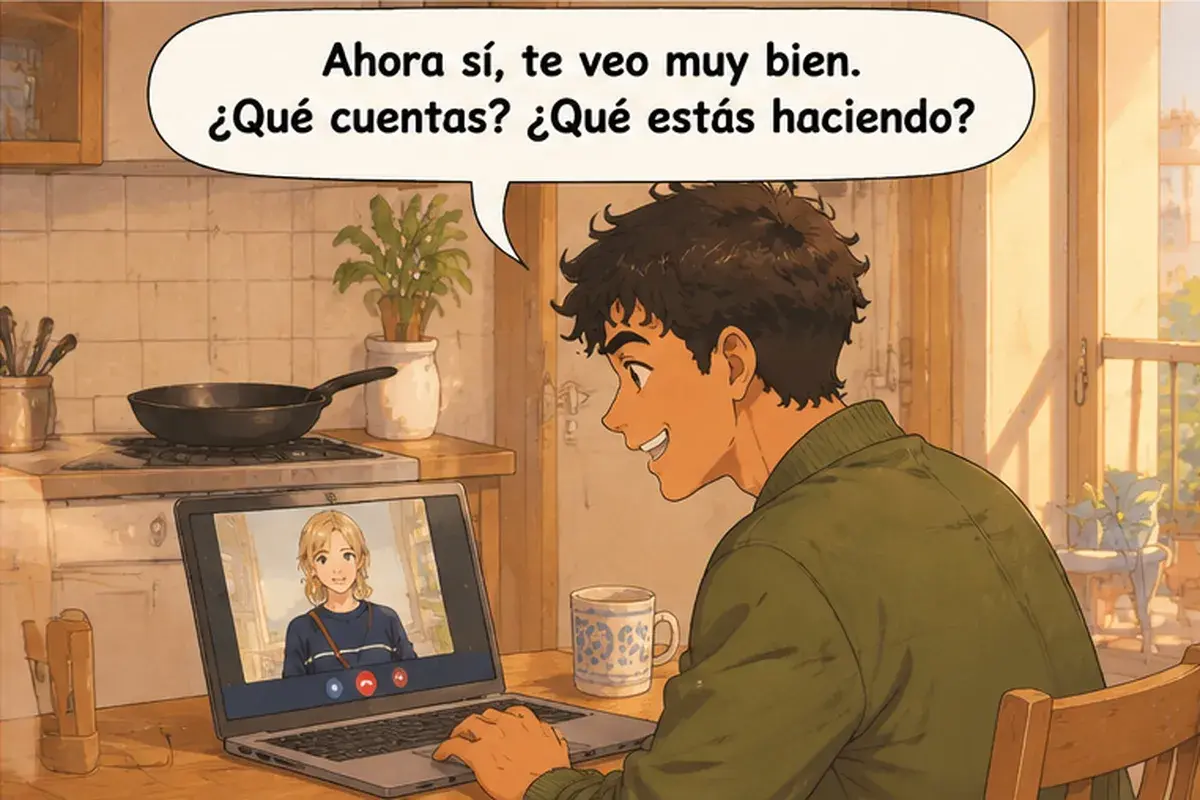
- Pablo
Ahora sí, te veo muy bien. ¿Qué cuentas? ¿Qué estás haciendo?
Yes, now I can see you really well. What's new? What are you doing?
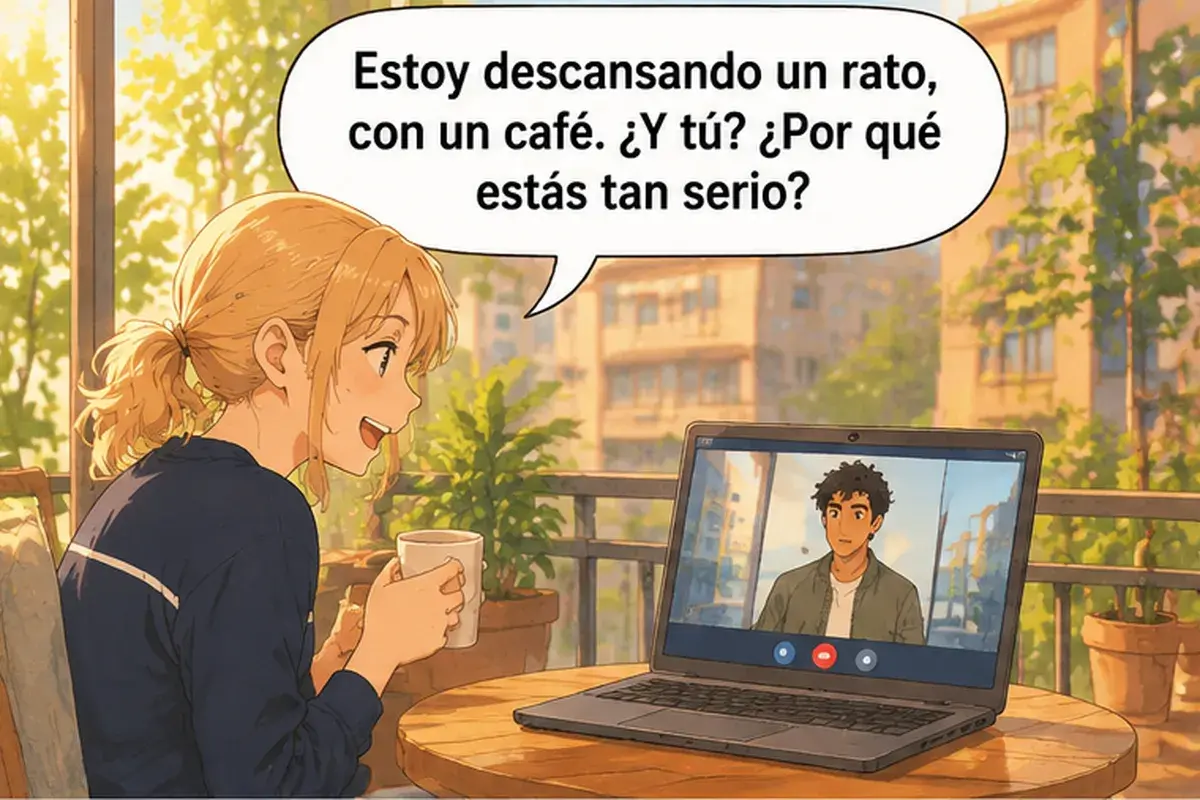
- Ana
Estoy descansando un rato, con un café. ¿Y tú? ¿Por qué estás tan serio?
I'm resting for a while, with a coffee. And you? Why are you so serious? (to a man)
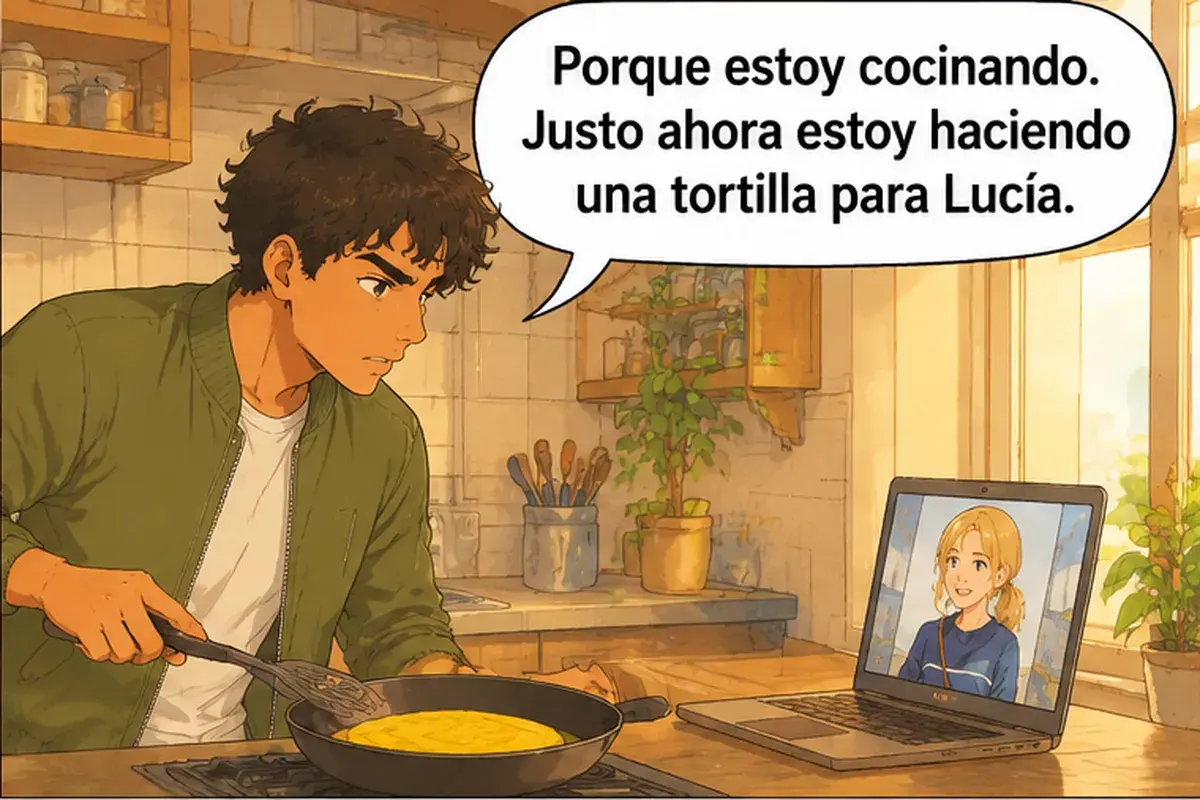
- Pablo
Porque estoy cocinando. Justo ahora estoy haciendo una tortilla para Lucía.
Because I'm cooking. Right now I'm making a Spanish omelet (tortilla) for Lucía.
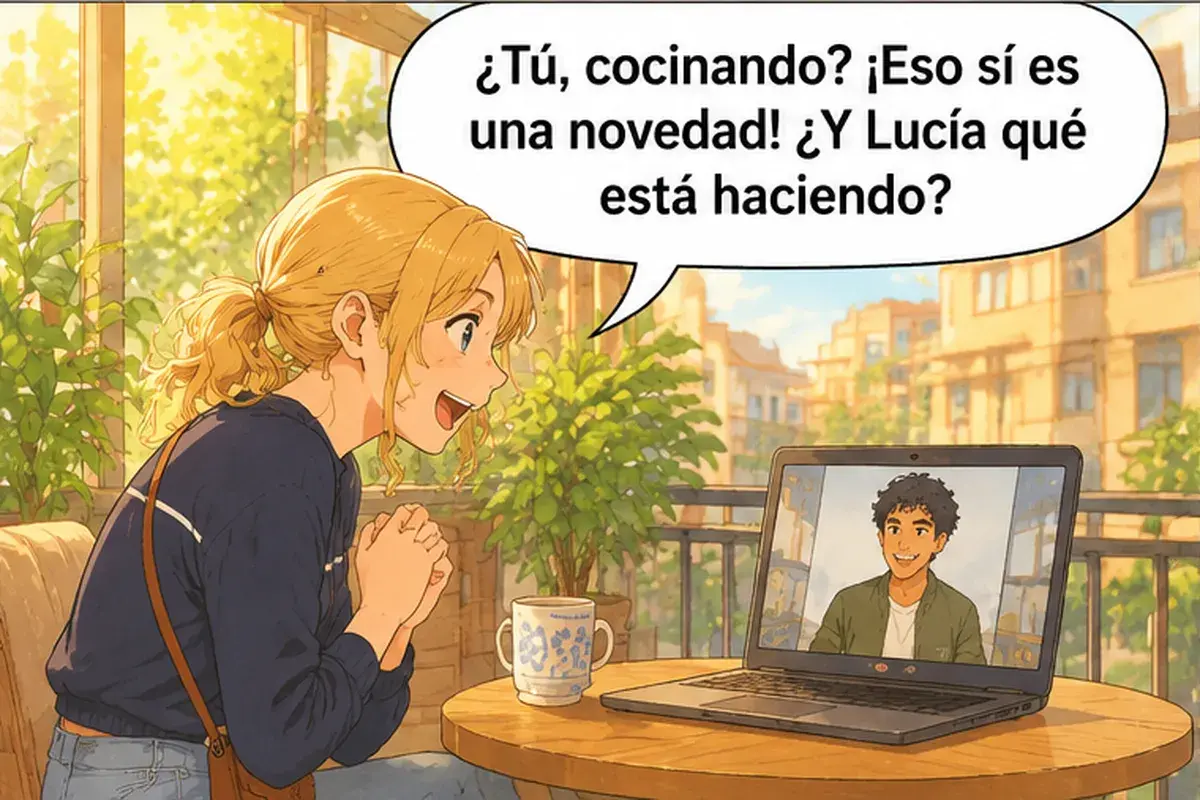
- Ana
¿Tú, cocinando? ¡Eso sí es una novedad! ¿Y Lucía qué está haciendo?
You, cooking? Now that's real news! And what's Lucía doing?
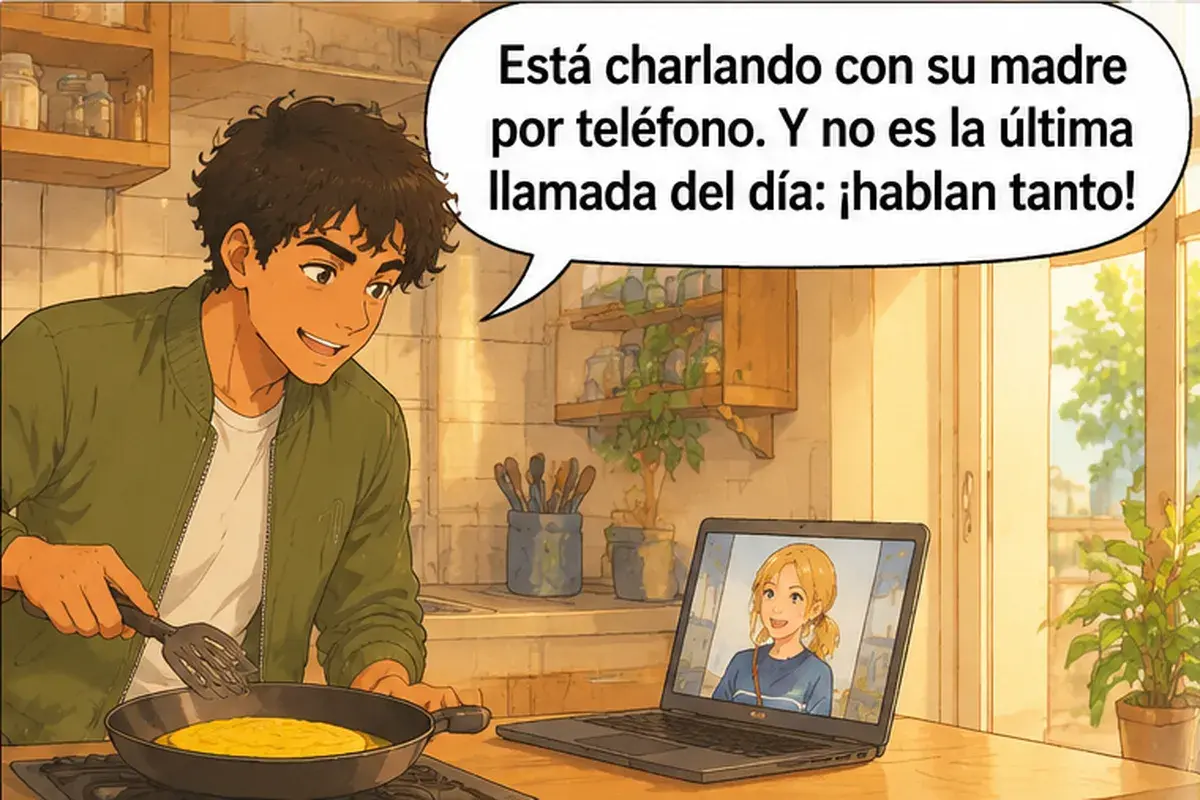
- Pablo
Está charlando con su madre por teléfono. Y no es la última llamada del día: ¡hablan tanto!
She's chatting with her mom on the phone. And it's not the last call of the day: they talk so much!
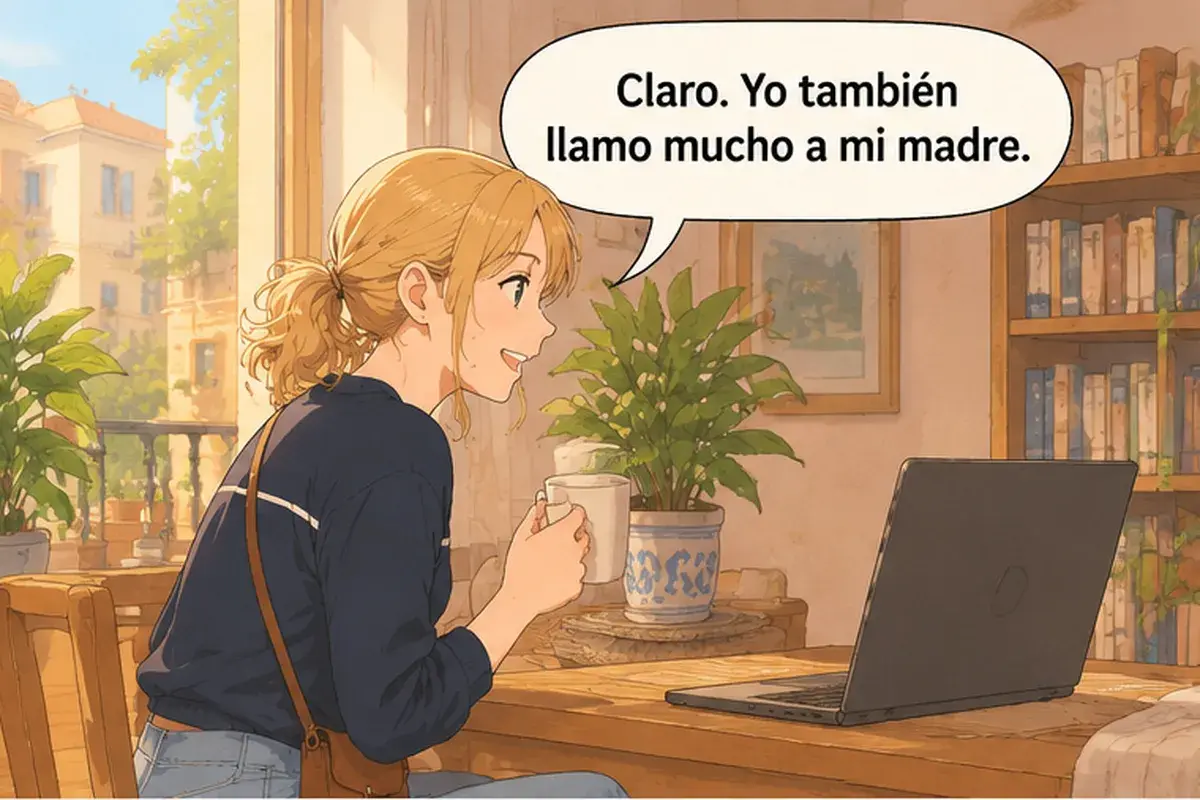
- Ana
Claro. Yo también llamo mucho a mi madre.
Of course. I call my mom a lot too.
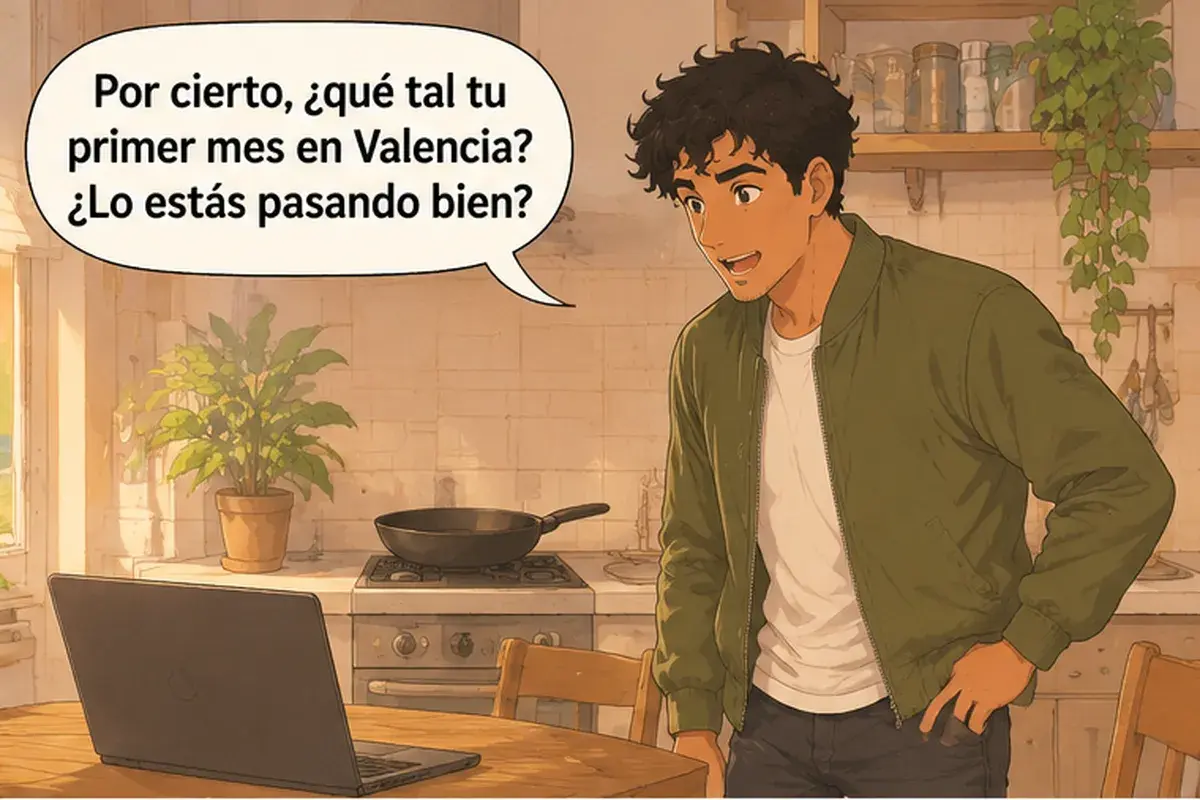
- Pablo
Por cierto, ¿qué tal tu primer mes en Valencia? ¿Lo estás pasando bien?
By the way, how's your first month in Valencia going? Are you having a good time?
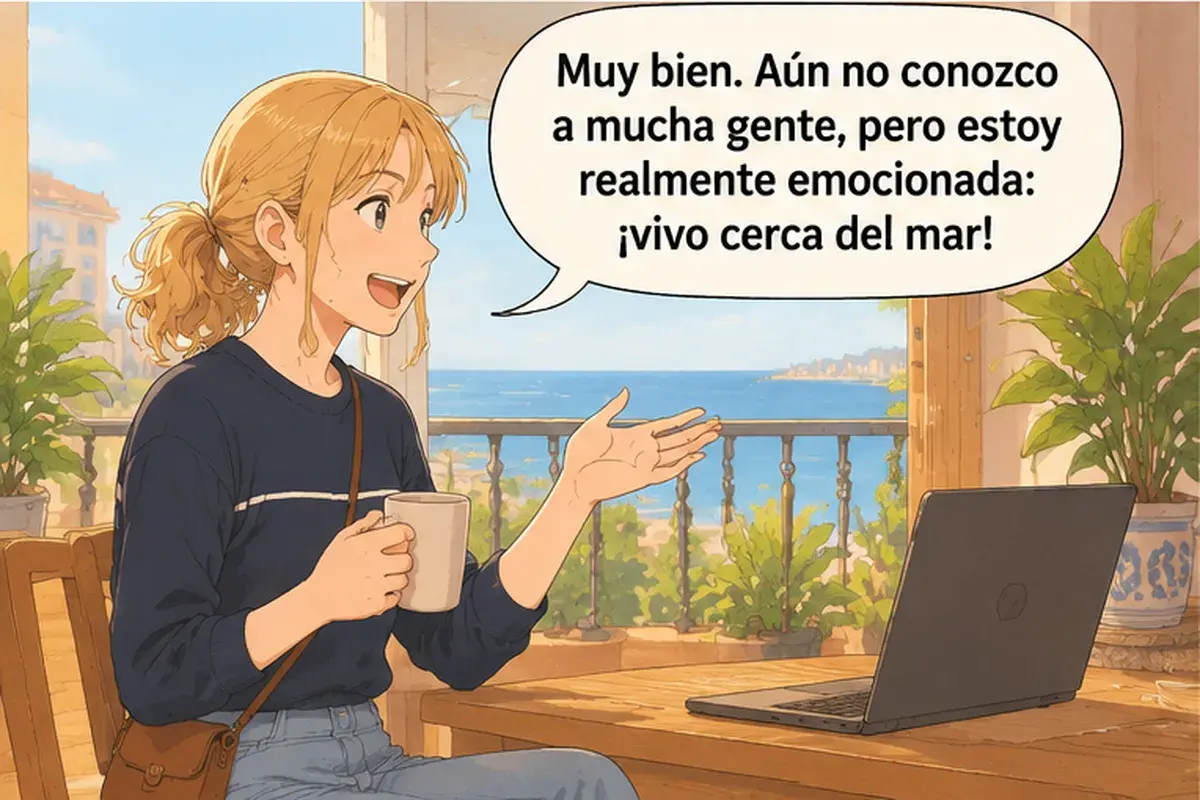
- Ana
Muy bien. Aún no conozco a mucha gente, pero estoy realmente emocionada: ¡vivo cerca del mar!
Really good. I don't know many people yet, but I'm really excited: I live near the sea! (woman speaking)
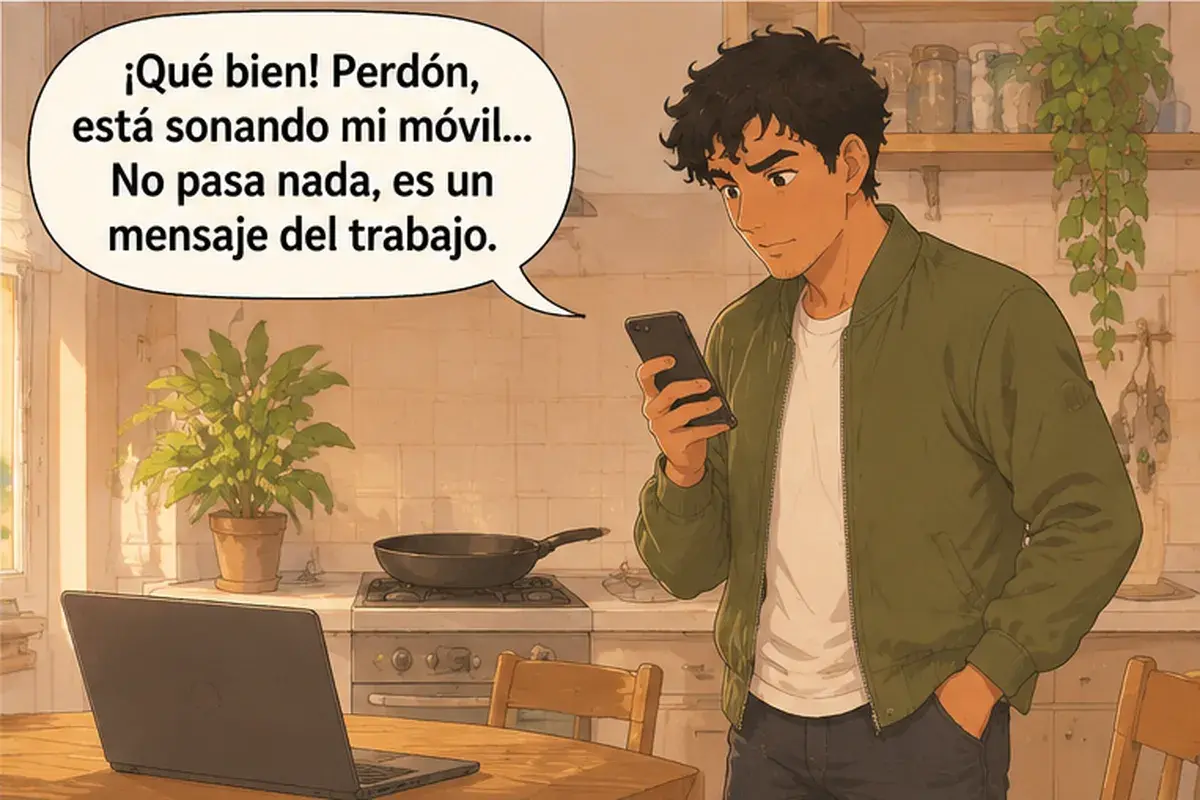
- Pablo
¡Qué bien! Perdón, está sonando mi móvil... No pasa nada, es un mensaje del trabajo.
How nice! Sorry, my phone's ringing... It's OK, it's a message from work.
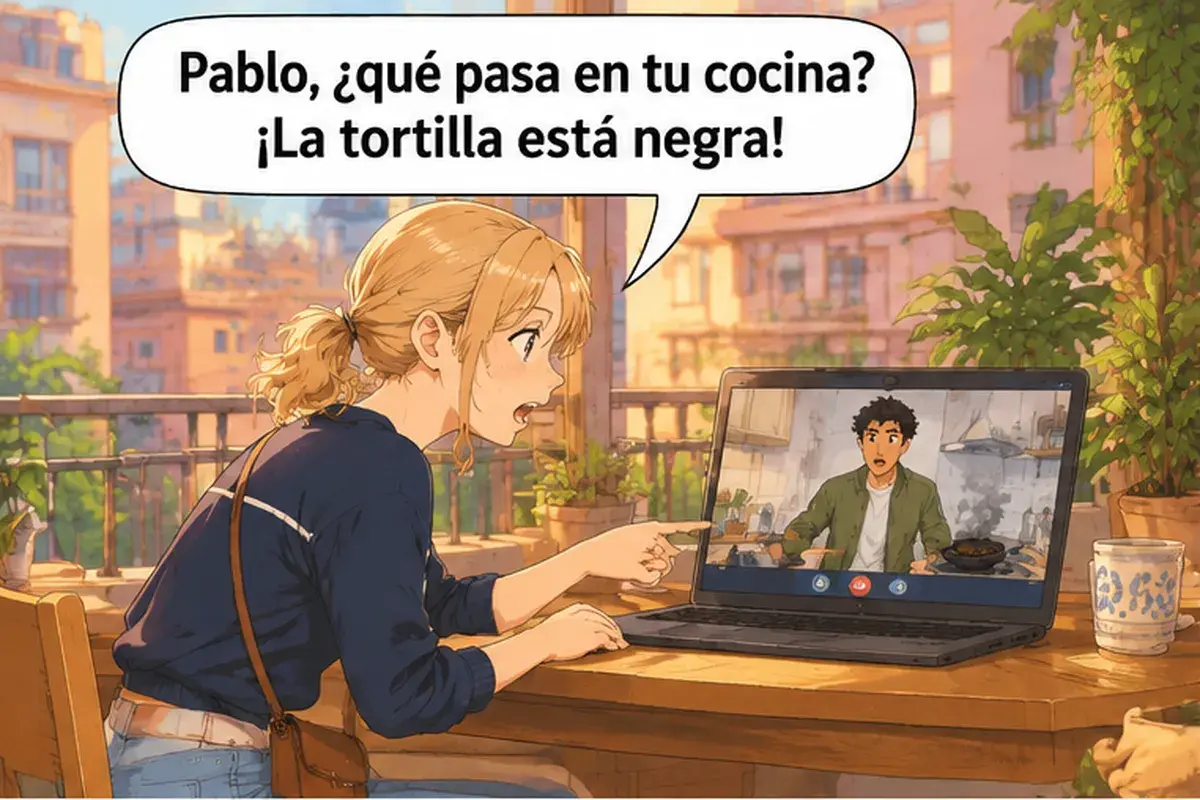
- Ana
Pablo, ¿qué pasa en tu cocina? ¡La tortilla está negra!
Pablo, what's going on in your kitchen? The tortilla is black!
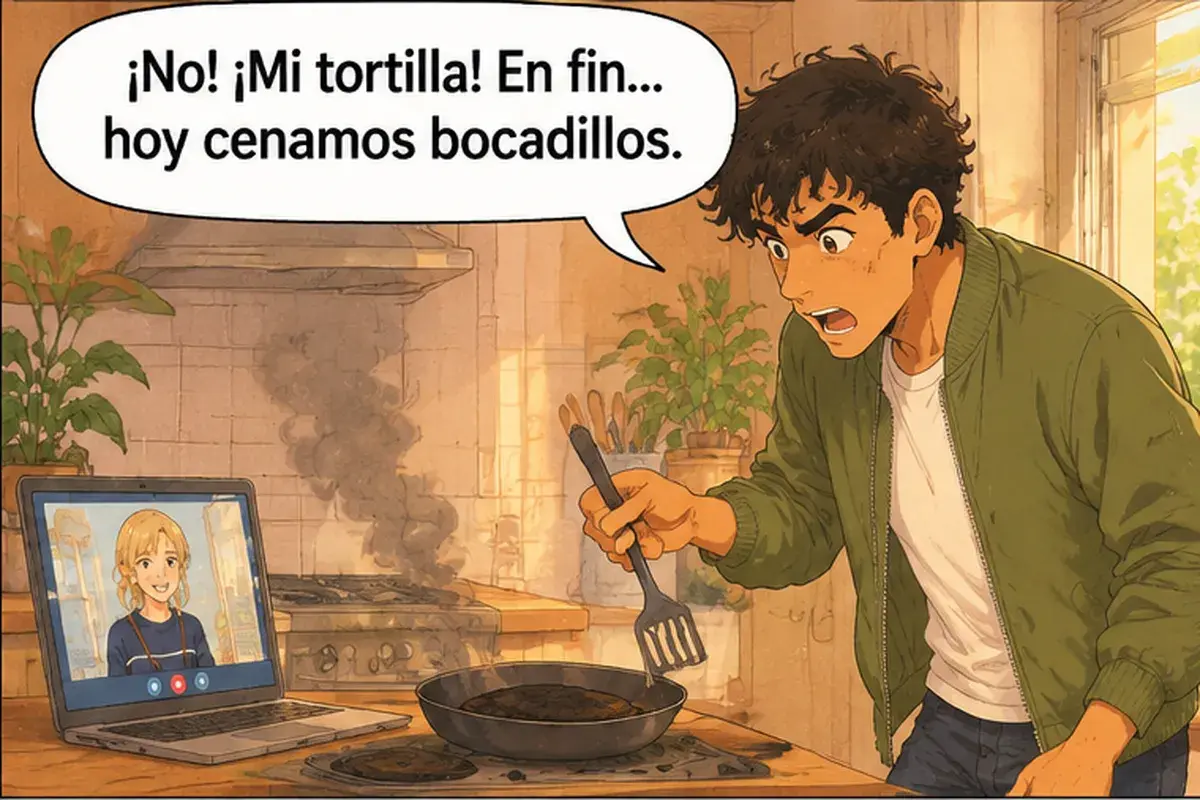
- Pablo
¡No! ¡Mi tortilla! En fin... hoy cenamos bocadillos.
No! My tortilla! Oh well... today we're having sandwiches for dinner.
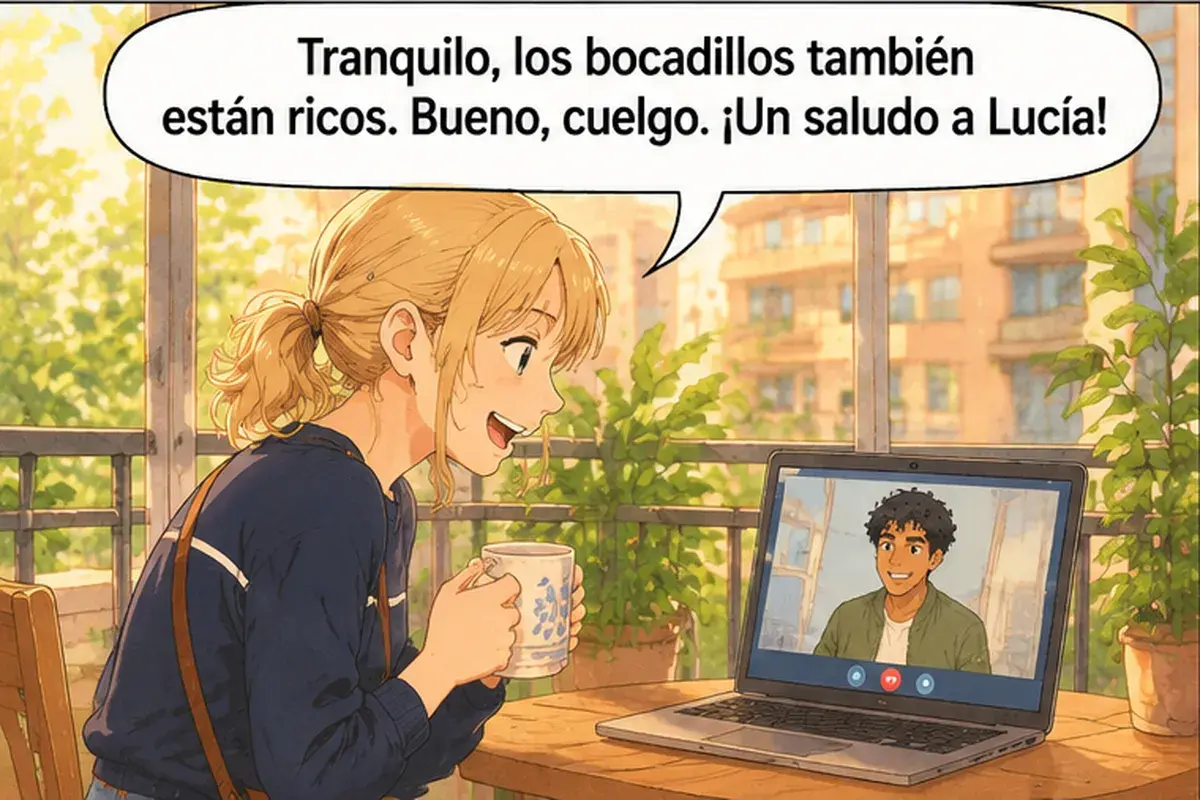
- Ana
Tranquilo, los bocadillos también están ricos. Bueno, cuelgo. ¡Un saludo a Lucía!
Relax, sandwiches are tasty too. OK, I'm hanging up. Say hi to Lucía! (to a man)
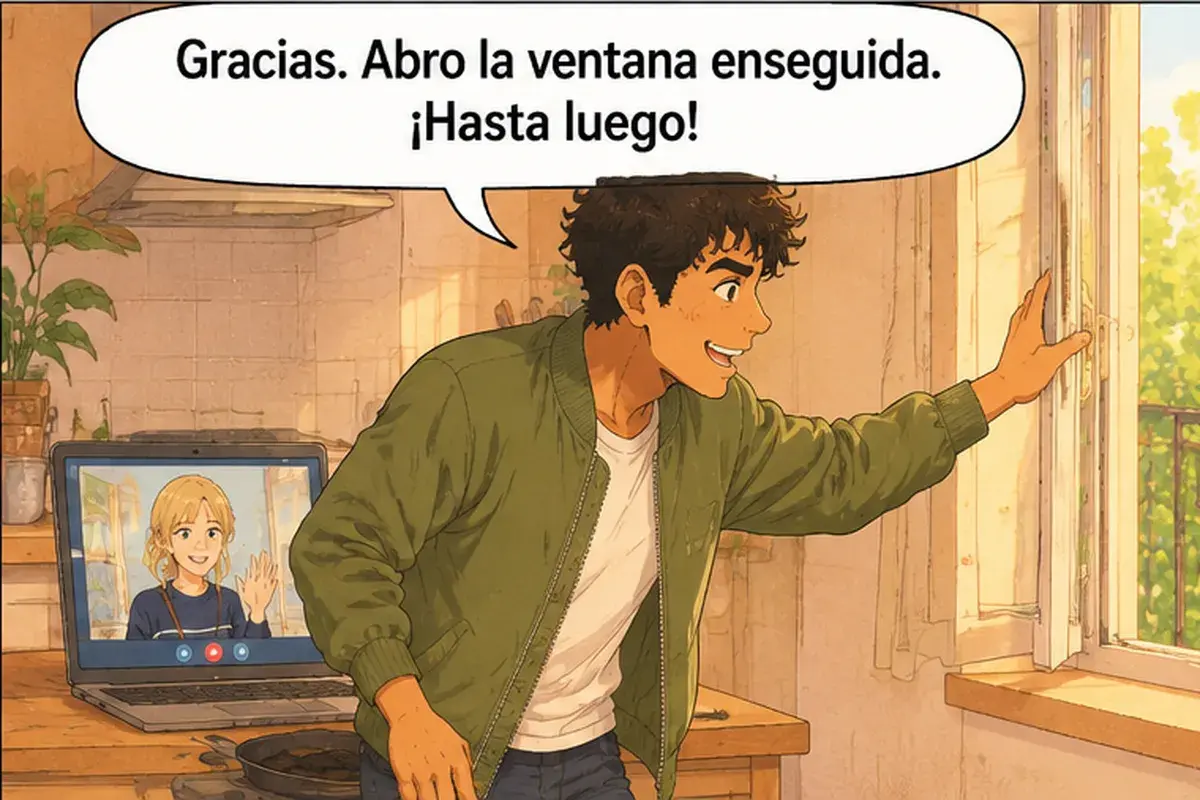
- Pablo
Gracias. Abro la ventana enseguida. ¡Hasta luego!
Thanks. I'll open the window right away. See you later!
Grammar for this text
Estar + gerund: "right now"
- ¿Qué estás haciendo? — "What are you doing (right now)?"; estoy cocinando — "I'm cooking", está charlando — "she's chatting", está sonando mi móvil — "my phone is ringing".
- In ¿Tú, cocinando? the gerund comes without estar: it's a short way to sound surprised — "You, cooking?"
And this is the simple present
- hablan tanto — "they talk so much" (in general); vivo cerca del mar — "I live near the sea". Not "right now" but "always" — just like in English.
Yo-go verbs
- salgo al balcón — "I'm going out onto the balcony" (salir → salgo).
- Cuelgo ("I'm hanging up") only looks like it belongs to this group: colgar has the g in its stem, and what changes is o → ue, like poder → puedo.
The written accent changes the word
- tú in ¿Y tú? is "you", but tu in en tu cocina is "your"; sí in Ahora sí is "yes".
- In ¡Eso sí es una novedad! the same sí adds emphasis: "now that's real news".
Set phrases
- ¿Qué cuentas? — "What's new?" (word for word, "what do you tell?").
- ¡Cuánto tiempo! — "Long time no see!"
- Hace tiempo que no hablamos — "We haven't talked in a long time": Spanish uses the present tense here, English the present perfect.
- ¿Lo estás pasando bien? — "Are you having a good time?" (lo is part of the expression pasarlo bien).
- tortilla is a Spanish omelet — a thick potato omelet, not a Mexican tortilla.
Words and grammar of the unit: Catch up with friends and family.
Learn the words from the texts with flashcards
In the app, you can tap any word in a text to see its translation, forms and examples, and new words stick with flashcards. 15 minutes a day.
Start for freeEverything is open for free. No card needed to sign up.