

Spanish dialogue with translation · A2 · 16 lines
Antes todo era distinto Everything used to be different
Comic · 16 panels
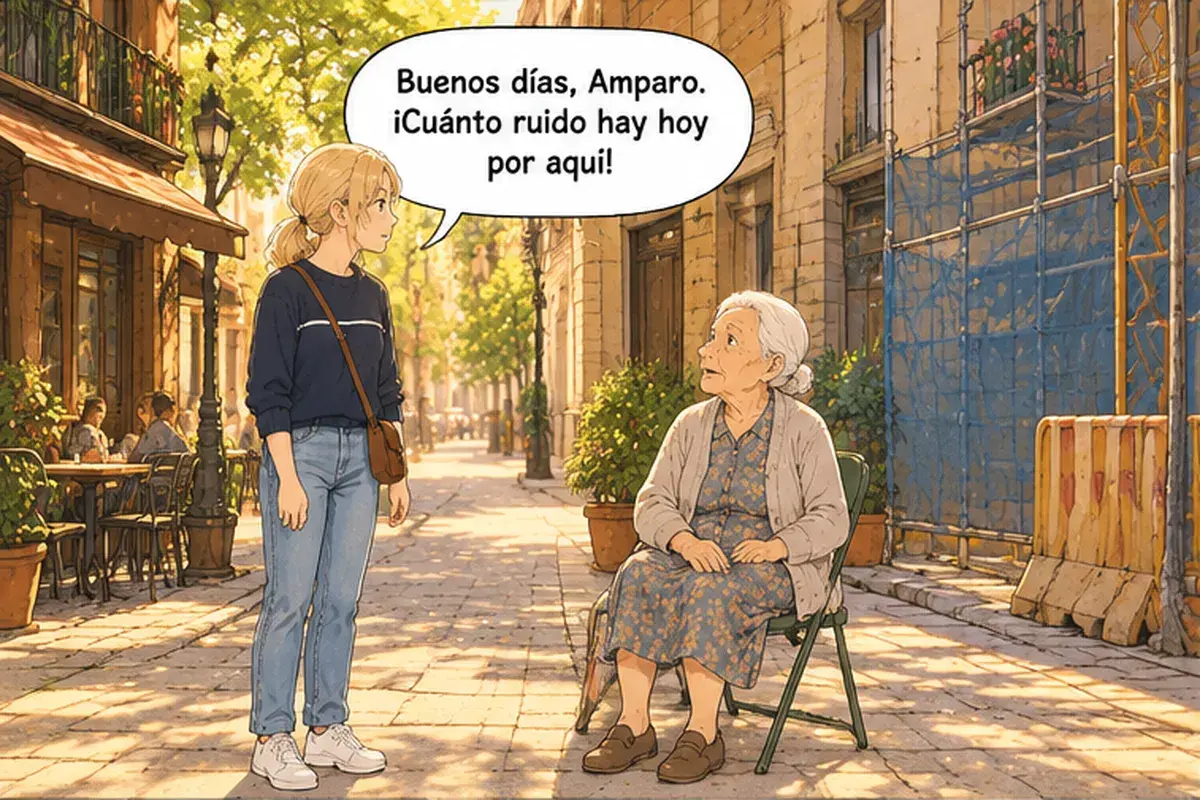
- Ana
Buenos días, Amparo. ¡Cuánto ruido hay hoy por aquí!
Good morning, Amparo. There's so much noise around here today!
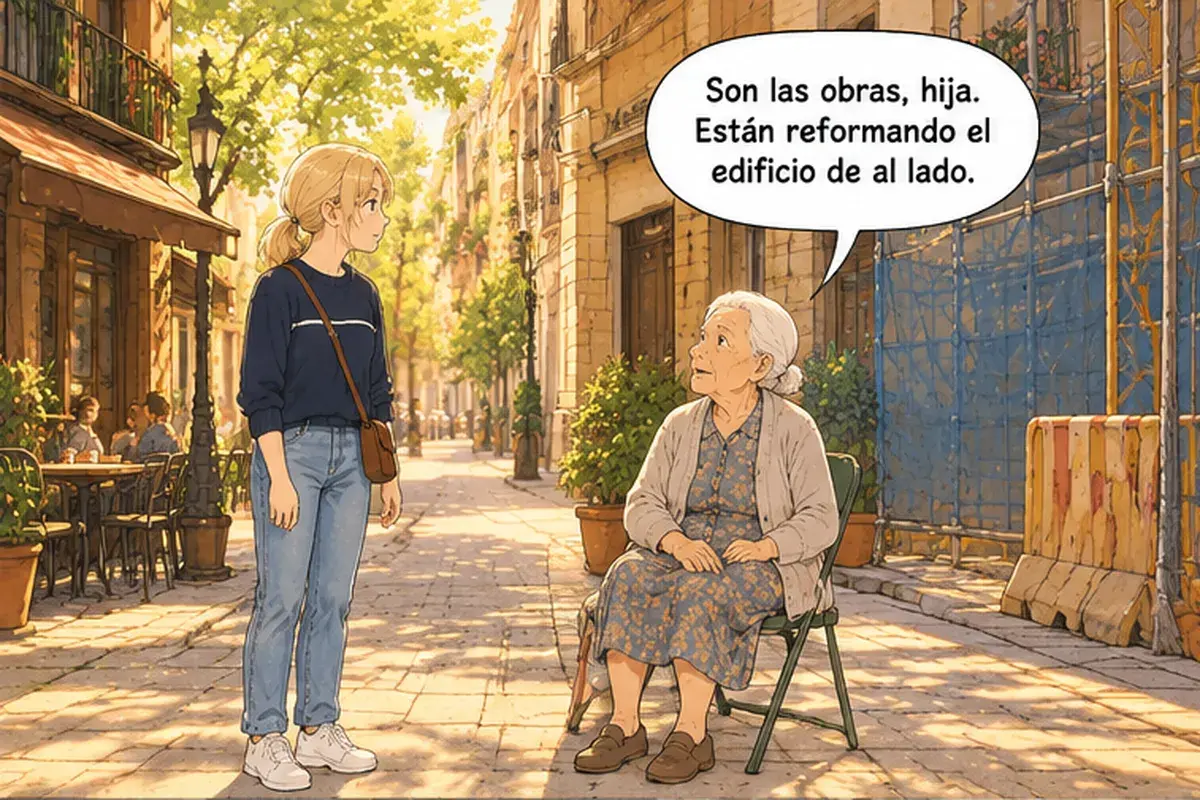
- Amparo
Son las obras, hija. Están reformando el edificio de al lado.
It's the construction work, dear. They're renovating the building next door.
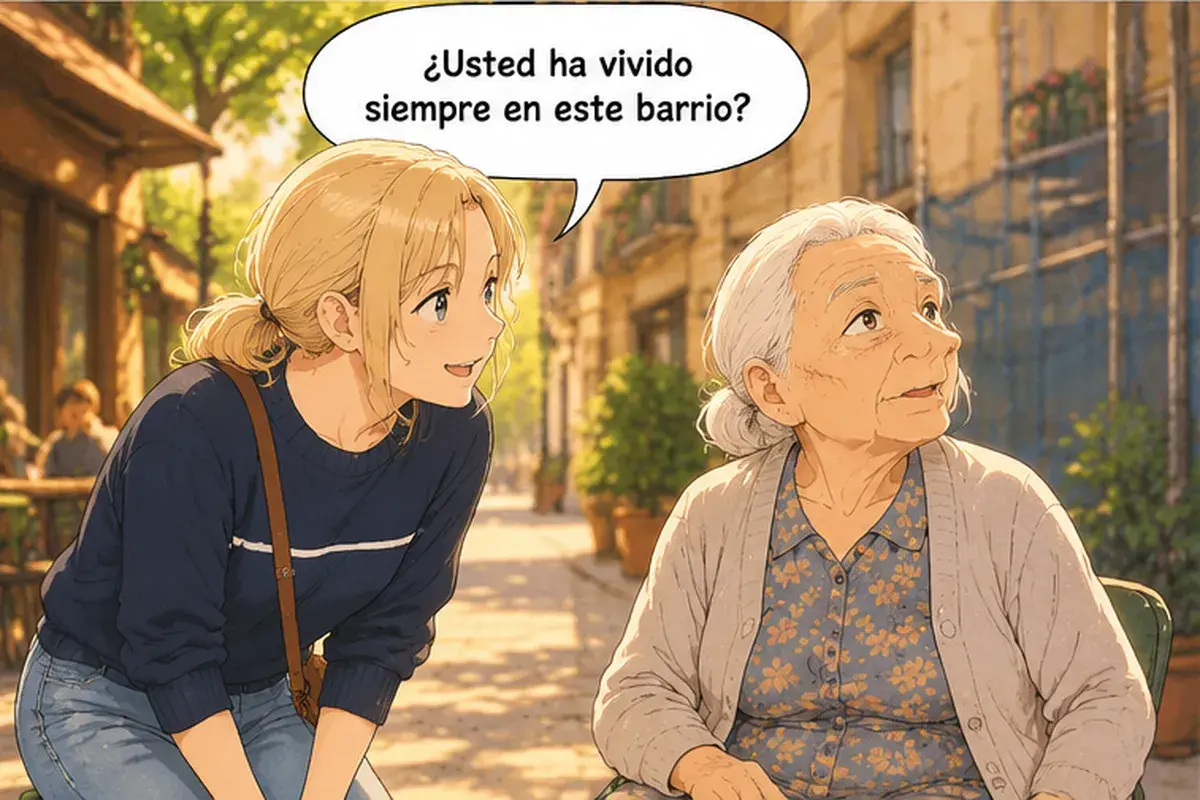
- Ana
¿Usted ha vivido siempre en este barrio?
Have you always lived in this neighborhood? (formal)
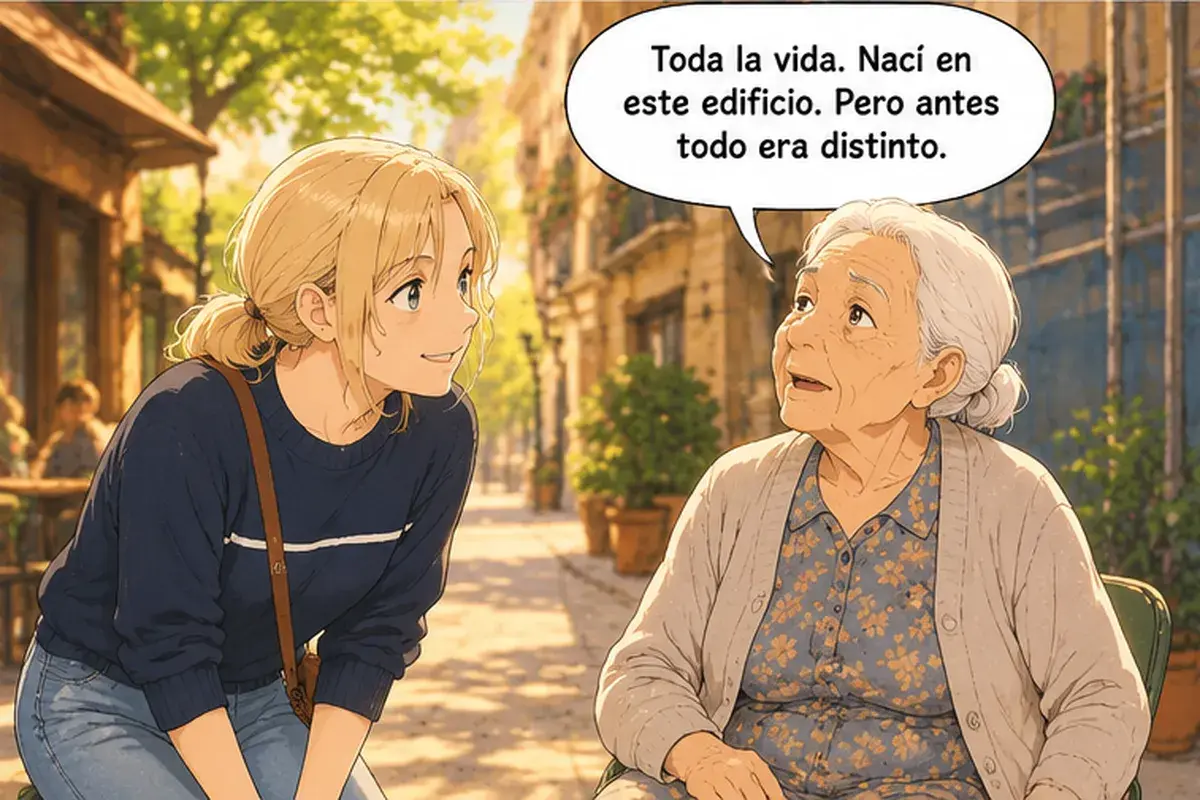
- Amparo
Toda la vida. Nací en este edificio. Pero antes todo era distinto.
My whole life. I was born in this building. But everything used to be different.
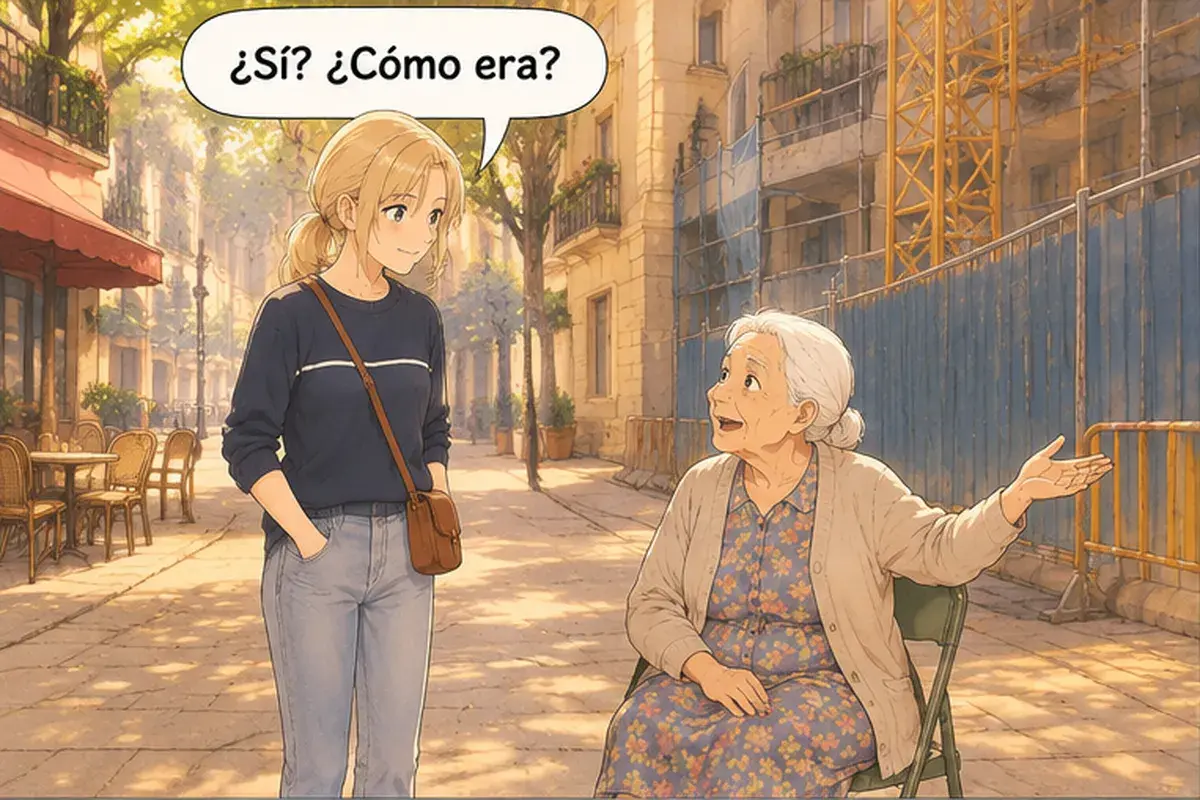
- Ana
¿Sí? ¿Cómo era?
Really? What was it like?
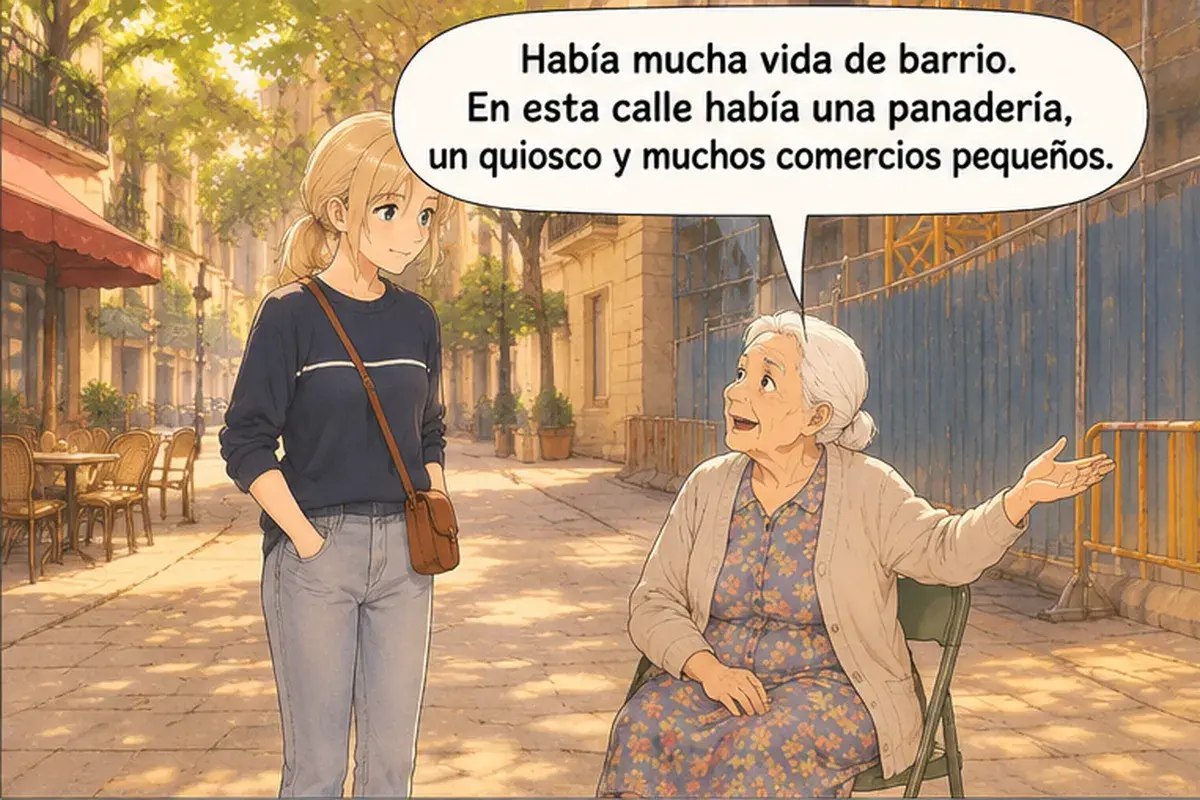
- Amparo
Había mucha vida de barrio. En esta calle había una panadería, un quiosco y muchos comercios pequeños.
There was a lot of neighborhood life. On this street there was a bakery, a newsstand and lots of small shops.
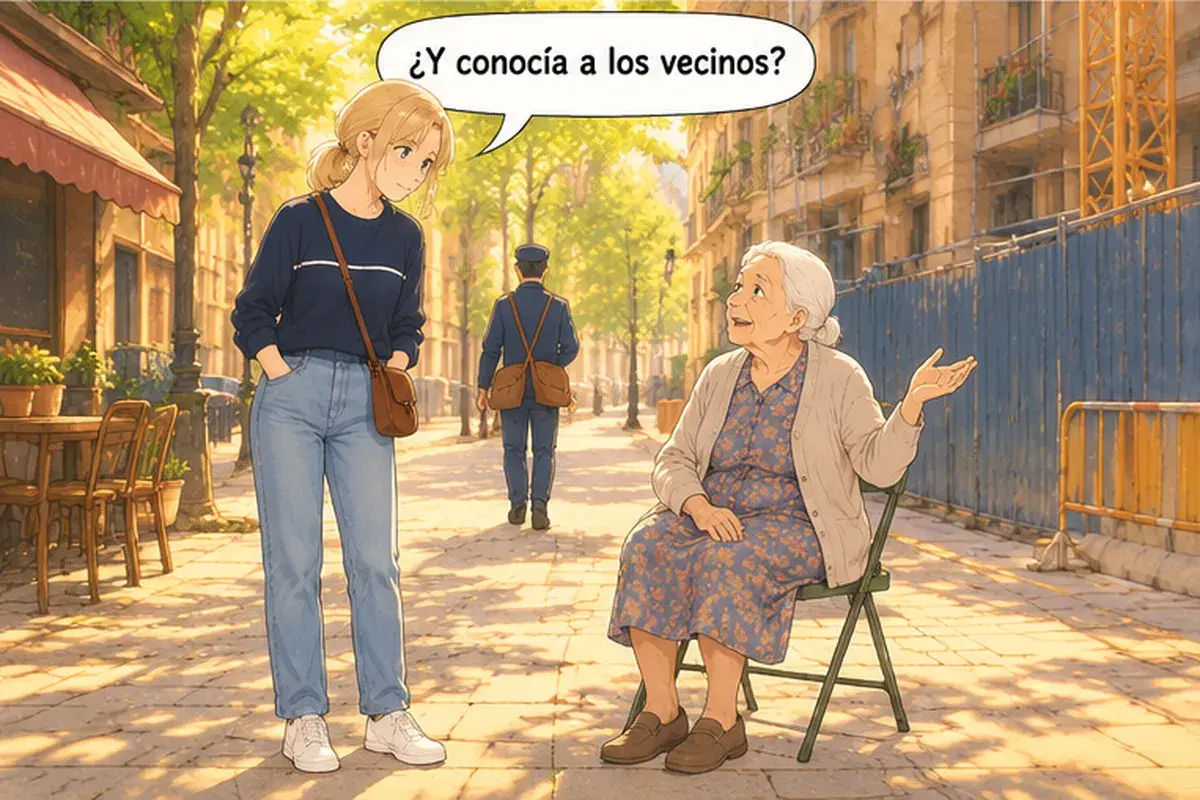
- Ana
¿Y conocía a los vecinos?
And did you know the neighbors? (formal)
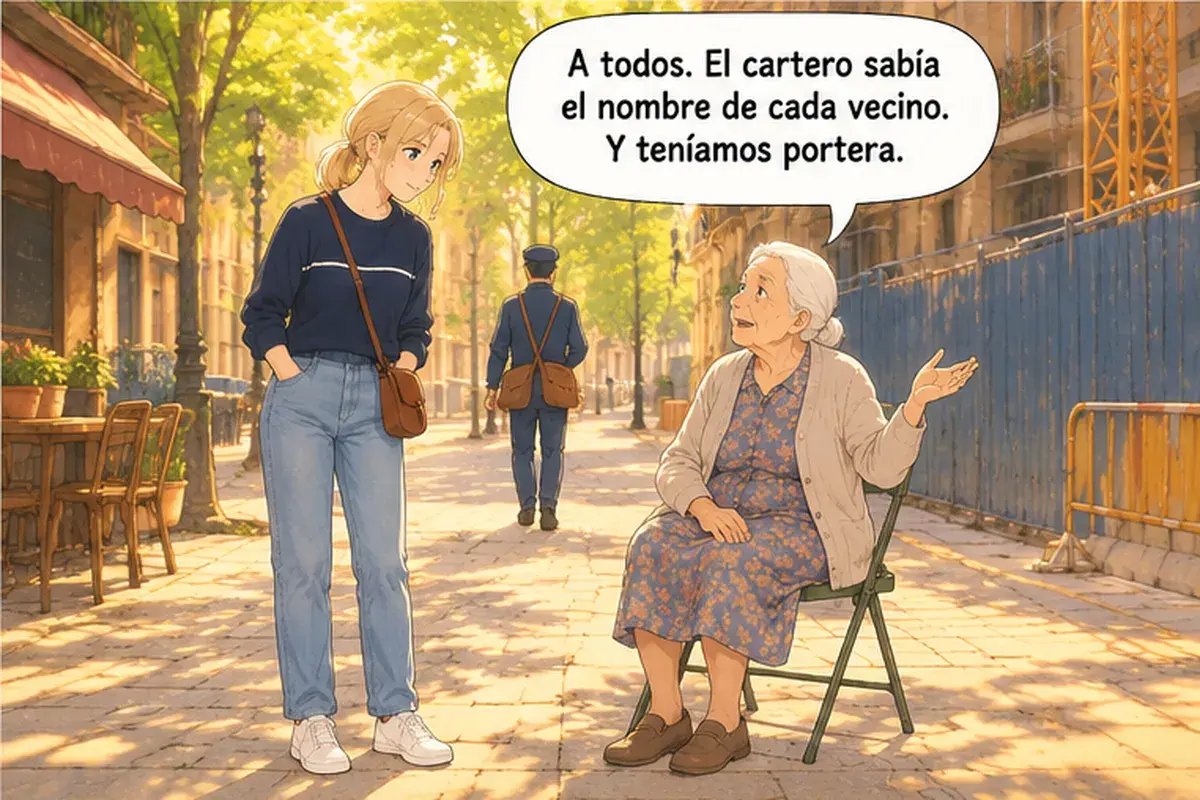
- Amparo
A todos. El cartero sabía el nombre de cada vecino. Y teníamos portera.
All of them. The mailman knew every neighbor's name. And we had a concierge.
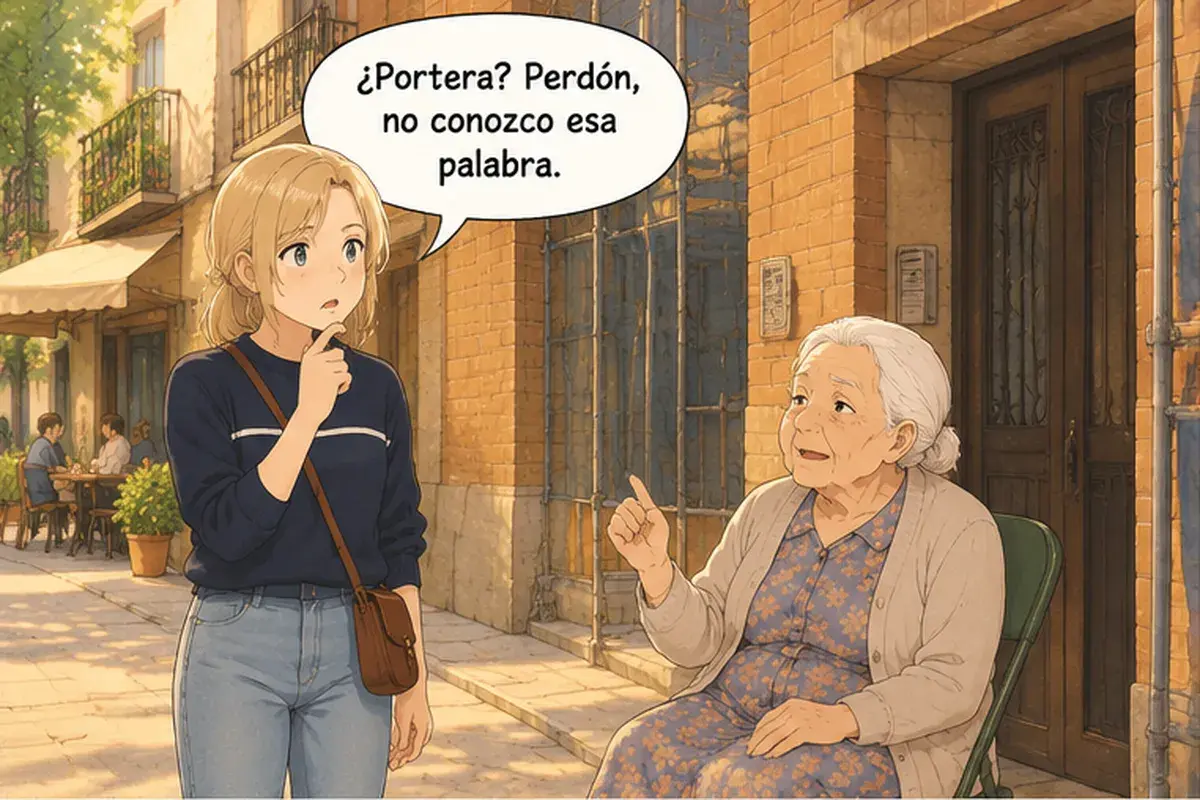
- Ana
¿Portera? Perdón, no conozco esa palabra.
Portera? Sorry, I don't know that word.
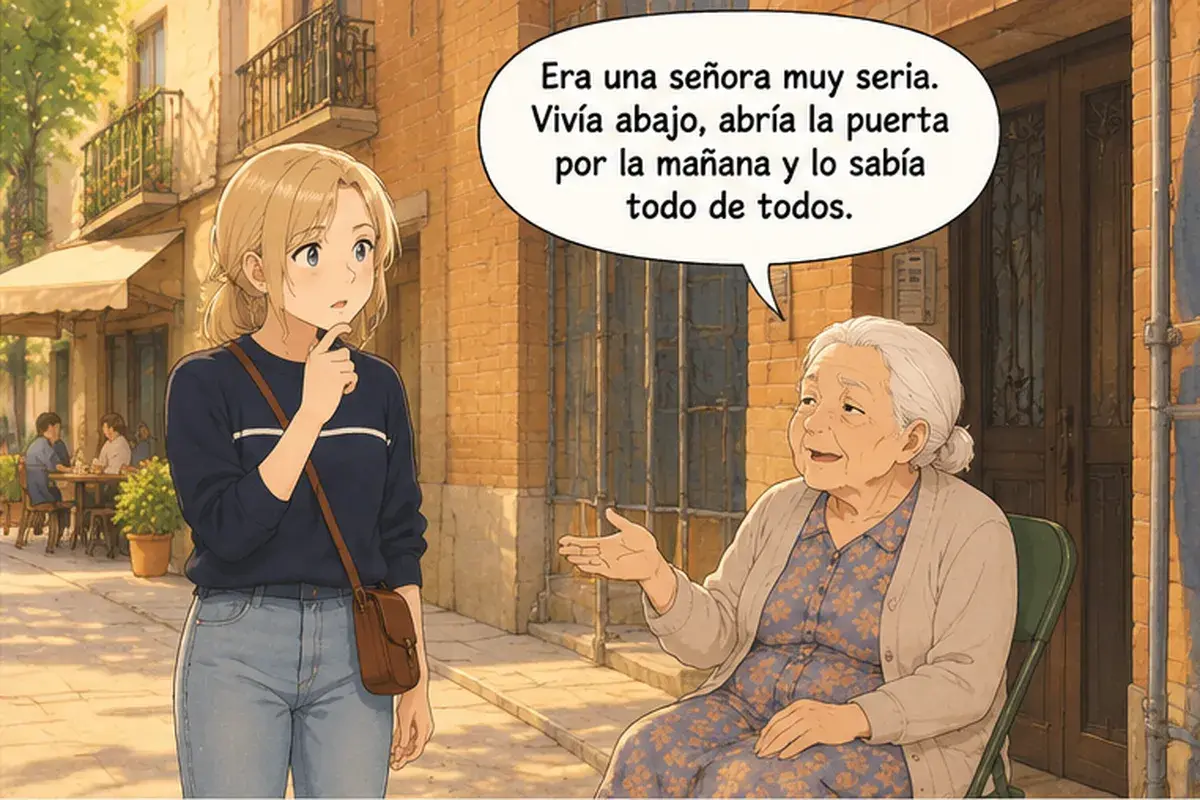
- Amparo
Era una señora muy seria. Vivía abajo, abría la puerta por la mañana y lo sabía todo de todos.
She was a very serious lady. She lived downstairs, opened the door in the morning and knew everything about everyone.
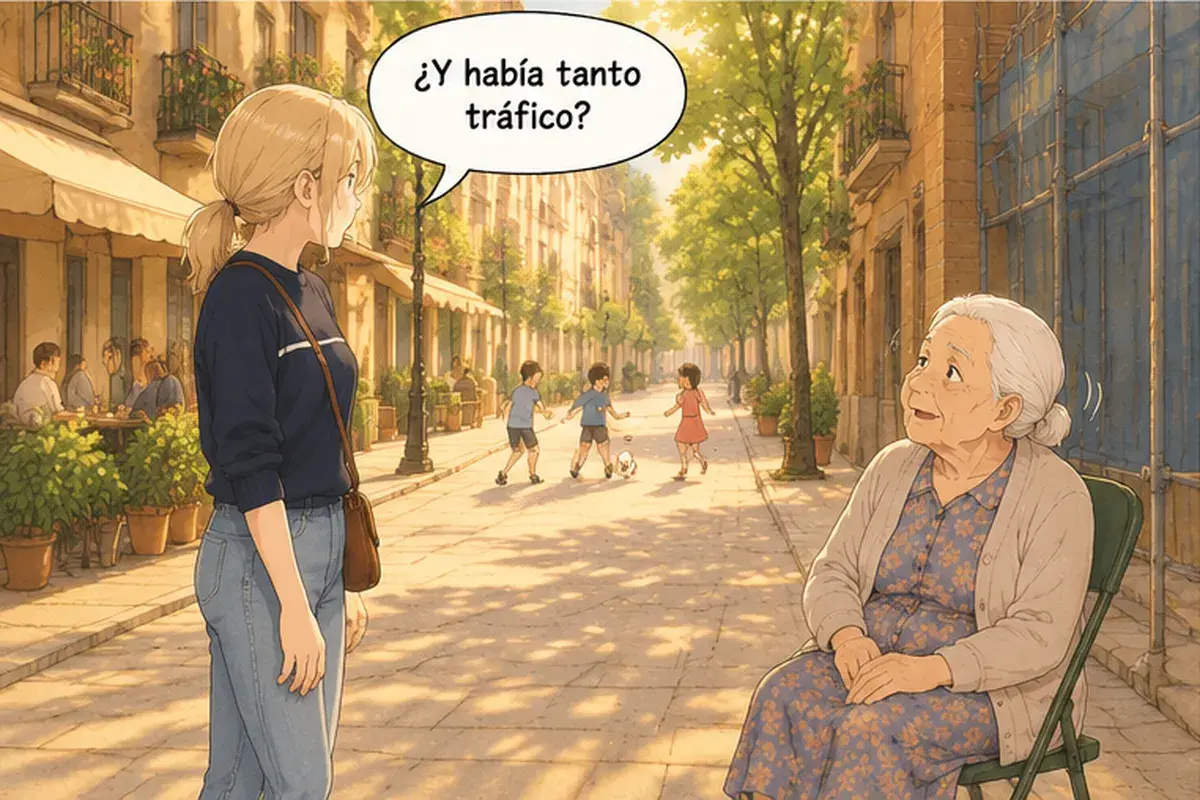
- Ana
¿Y había tanto tráfico?
And was there this much traffic?
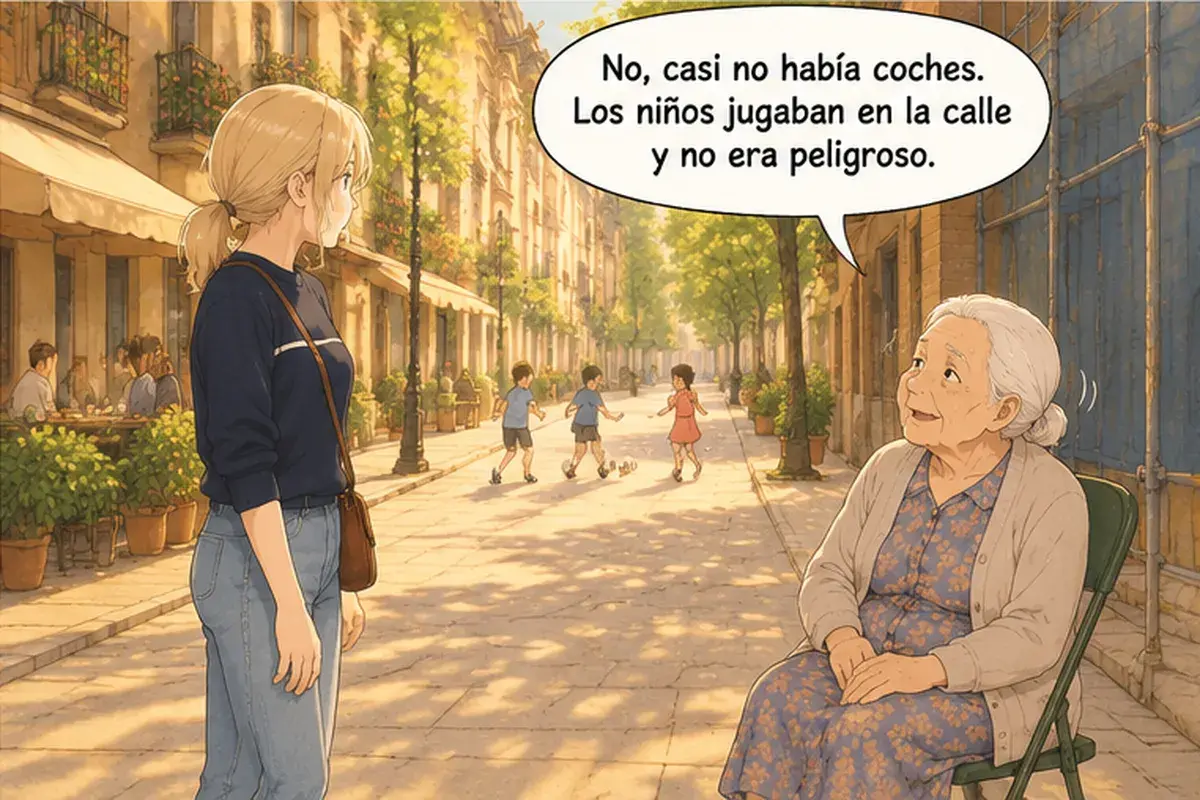
- Amparo
No, casi no había coches. Los niños jugaban en la calle y no era peligroso.
No, there were almost no cars. The kids played in the street and it wasn't dangerous.
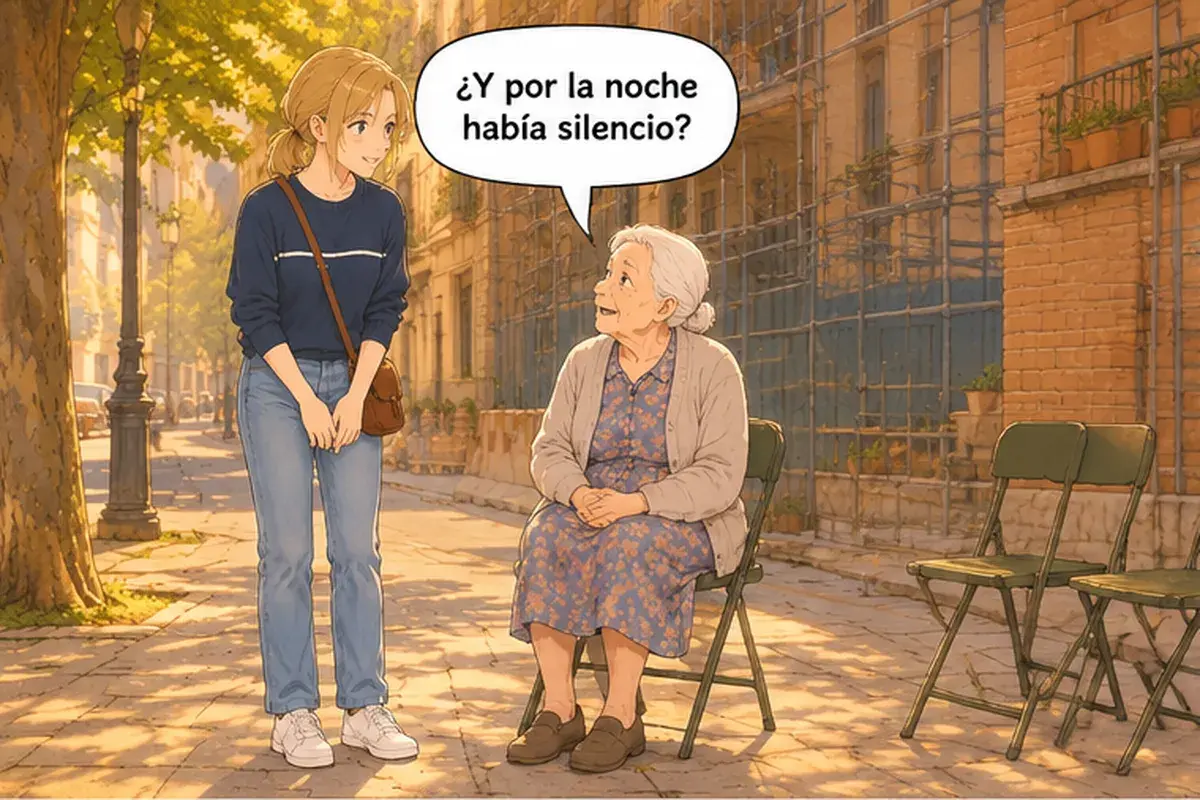
- Ana
¿Y por la noche había silencio?
And was it quiet at night?
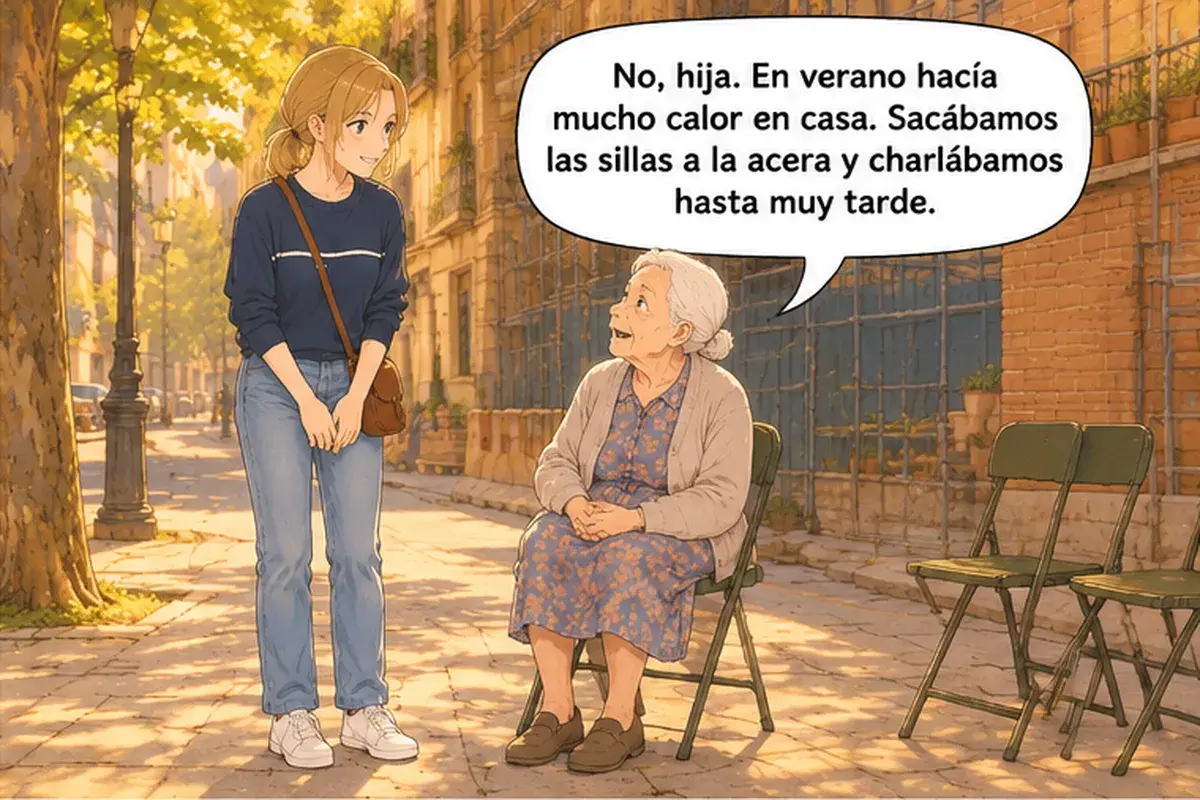
- Amparo
No, hija. En verano hacía mucho calor en casa. Sacábamos las sillas a la acera y charlábamos hasta muy tarde.
No, dear. In summer it was very hot at home. We used to take our chairs out onto the sidewalk and chat until very late.
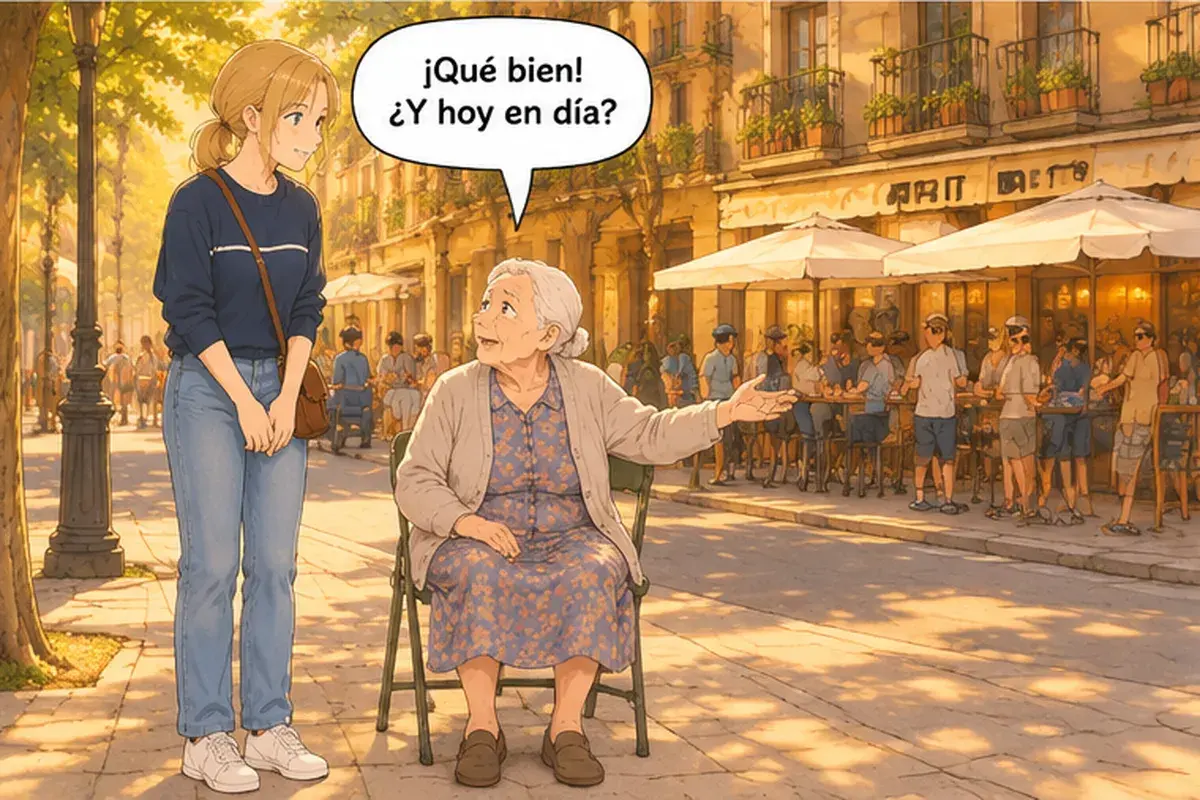
- Ana
¡Qué bien! ¿Y hoy en día?
How nice! And nowadays?
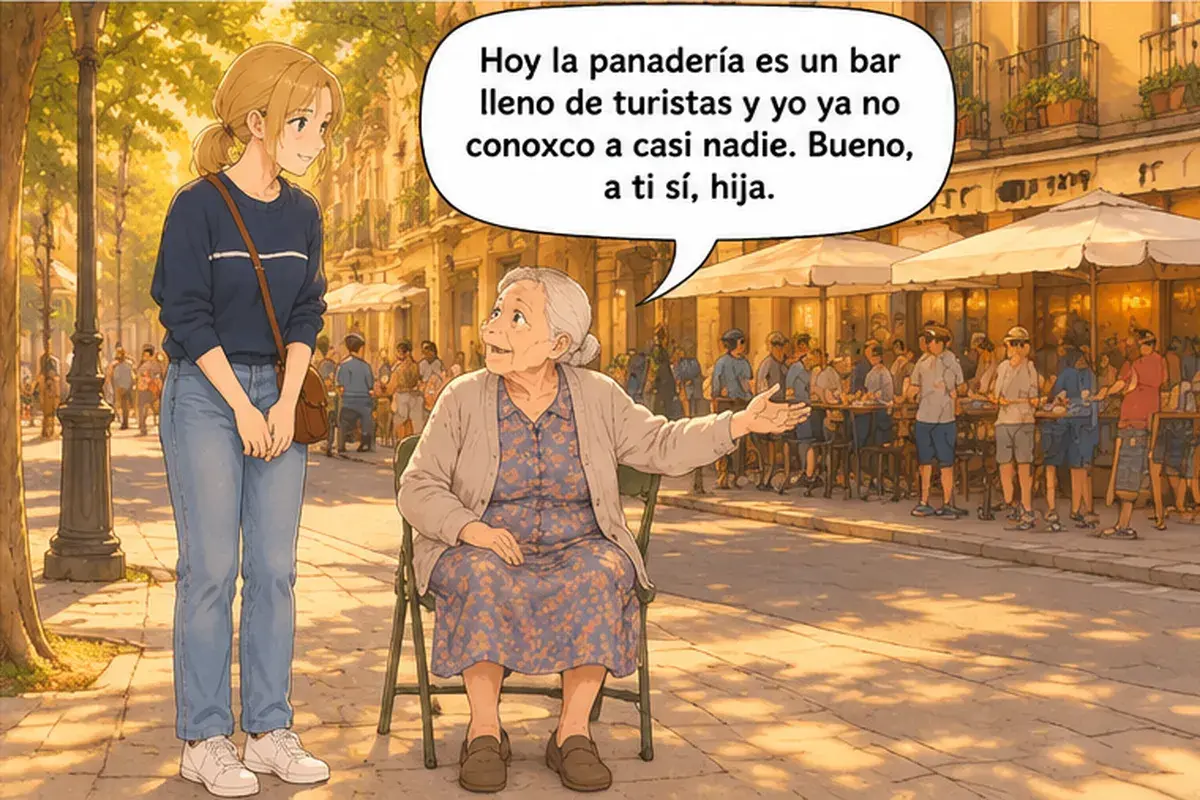
- Amparo
Hoy la panadería es un bar lleno de turistas y yo ya no conozco a casi nadie. Bueno, a ti sí, hija.
Today the bakery is a bar full of tourists, and I hardly know anyone anymore. Well, I do know you, dear.
Grammar for this text
Describing the past. Amparo paints a picture of the old neighborhood, so almost all the verbs are in the imperfect: todo era distinto — "everything was different", vivía abajo — "she (the concierge) lived downstairs", no era peligroso — "it wasn't dangerous", hacía mucho calor — "it was very hot".
Había — "there was / there were", the past of hay. It's one form for any number: había una panadería, un quiosco y muchos comercios pequeños, casi no había coches.
Lo sabía todo — "she knew everything". When todo means "everything" and is the object of the verb, Spanish adds lo before the verb: learn the pair lo … todo.
Usted and tú. Ana speaks to her elderly neighbor with usted: ¿Usted ha vivido…?, ¿conocía a los vecinos? The form conocía means both "I knew" and "you (formal) knew": the context tells you which. Amparo answers with tú (a ti sí) and calls Ana hija (literally "daughter"). Older Spaniards say it warmly to young people, like "dear".
Words and grammar of the unit: Describe how your neighborhood used to be.
Learn the words from the texts with flashcards
In the app, you can tap any word in a text to see its translation, forms and examples, and new words stick with flashcards. 15 minutes a day.
Start for freeEverything is open for free. No card needed to sign up.