

Spanish dialogue with translation · A1 · 12 lines
Dos billetes para Valencia, por favor Two tickets to Valencia, please
Comic · 11 panels
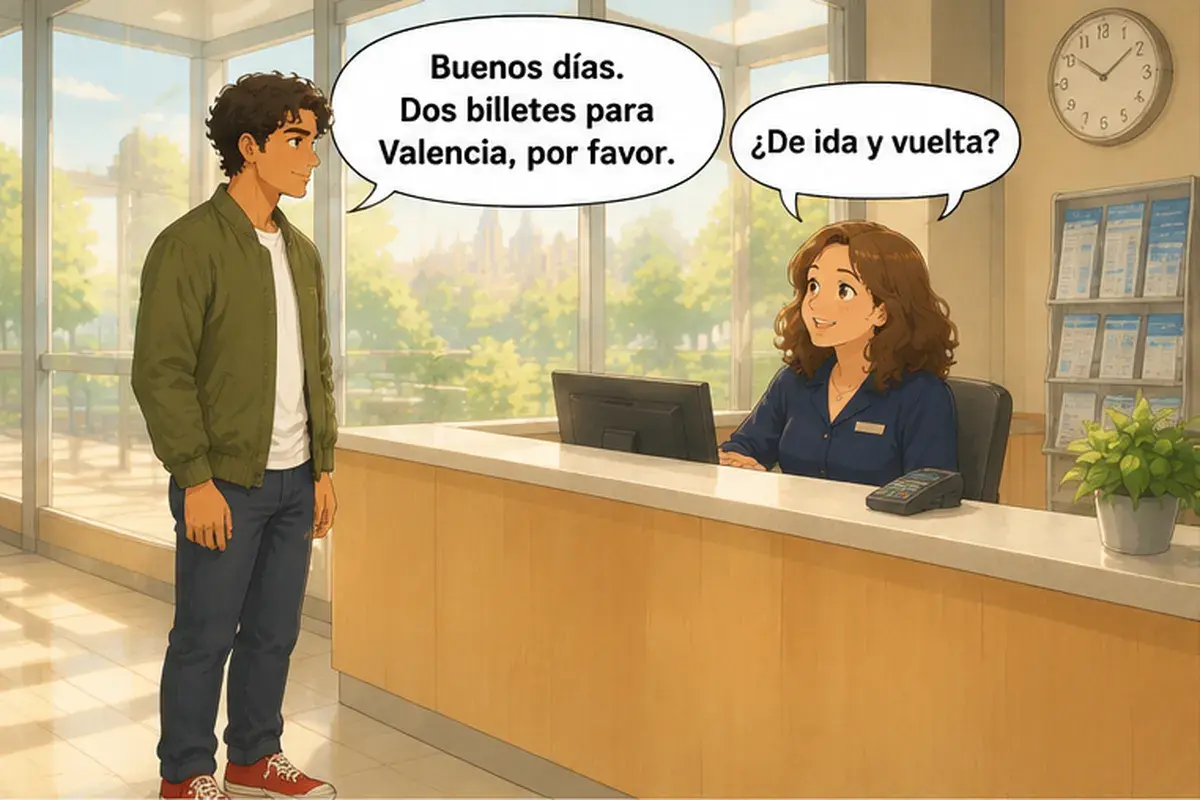
- Pablo
Buenos días. Dos billetes para Valencia, por favor.
Good morning. Two tickets to Valencia, please.
- Empleada
¿De ida y vuelta?
Round-trip?
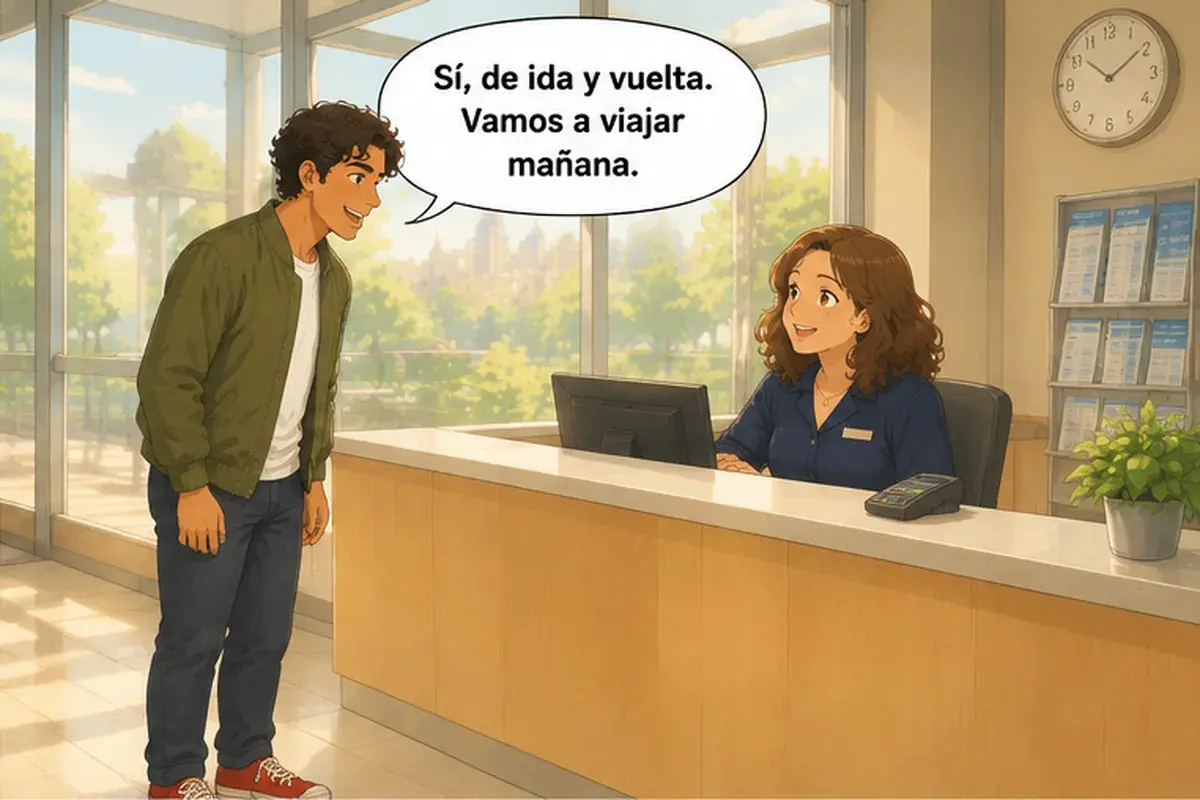
- Pablo
Sí, de ida y vuelta. Vamos a viajar mañana.
Yes, round-trip. We're going to travel tomorrow.
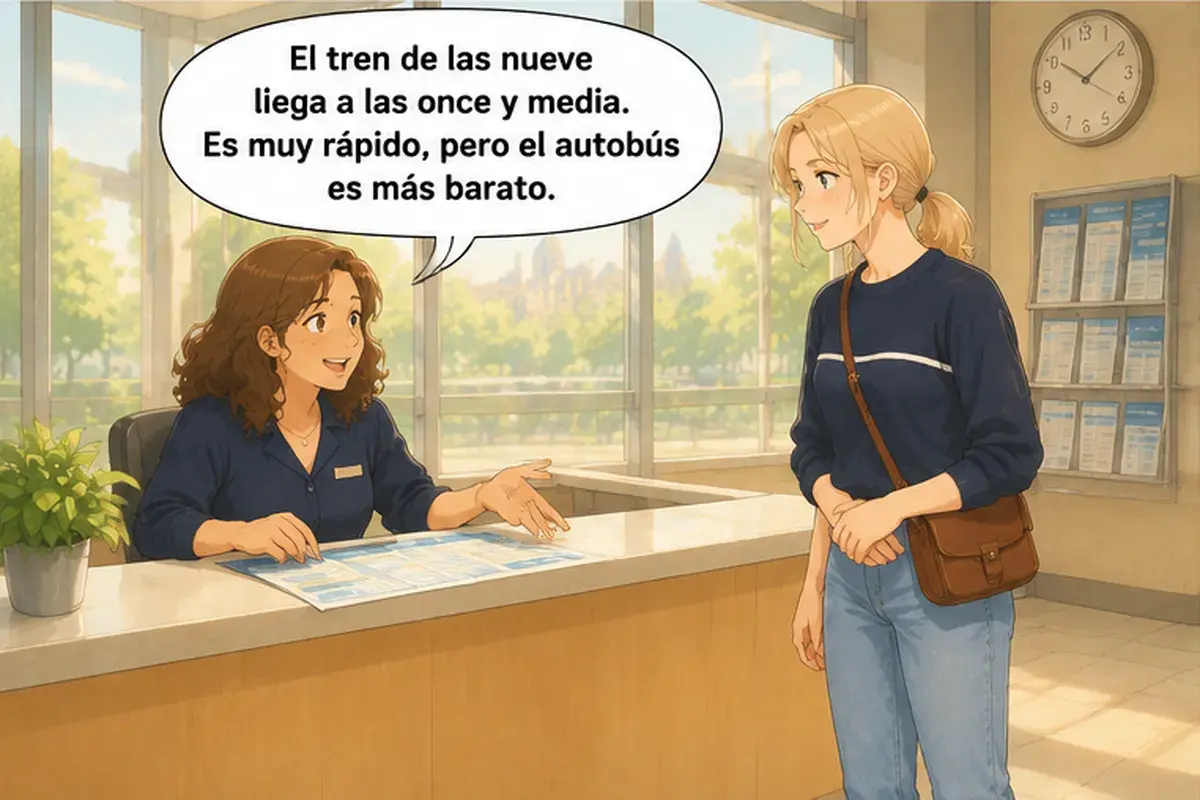
- Empleada
El tren de las nueve llega a las once y media. Es muy rápido, pero el autobús es más barato.
The nine o'clock train arrives at eleven thirty. It's very fast, but the bus is cheaper.
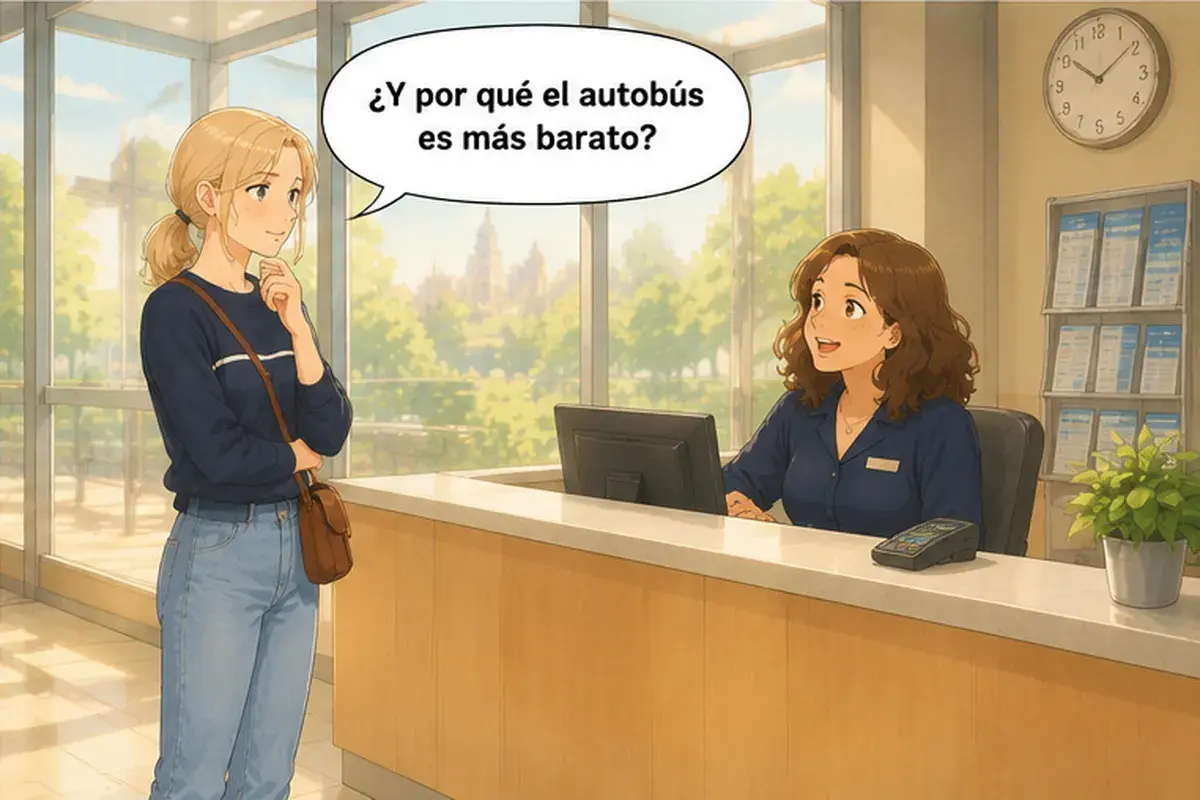
- Ana
¿Y por qué el autobús es más barato?
And why is the bus cheaper?
- Empleada
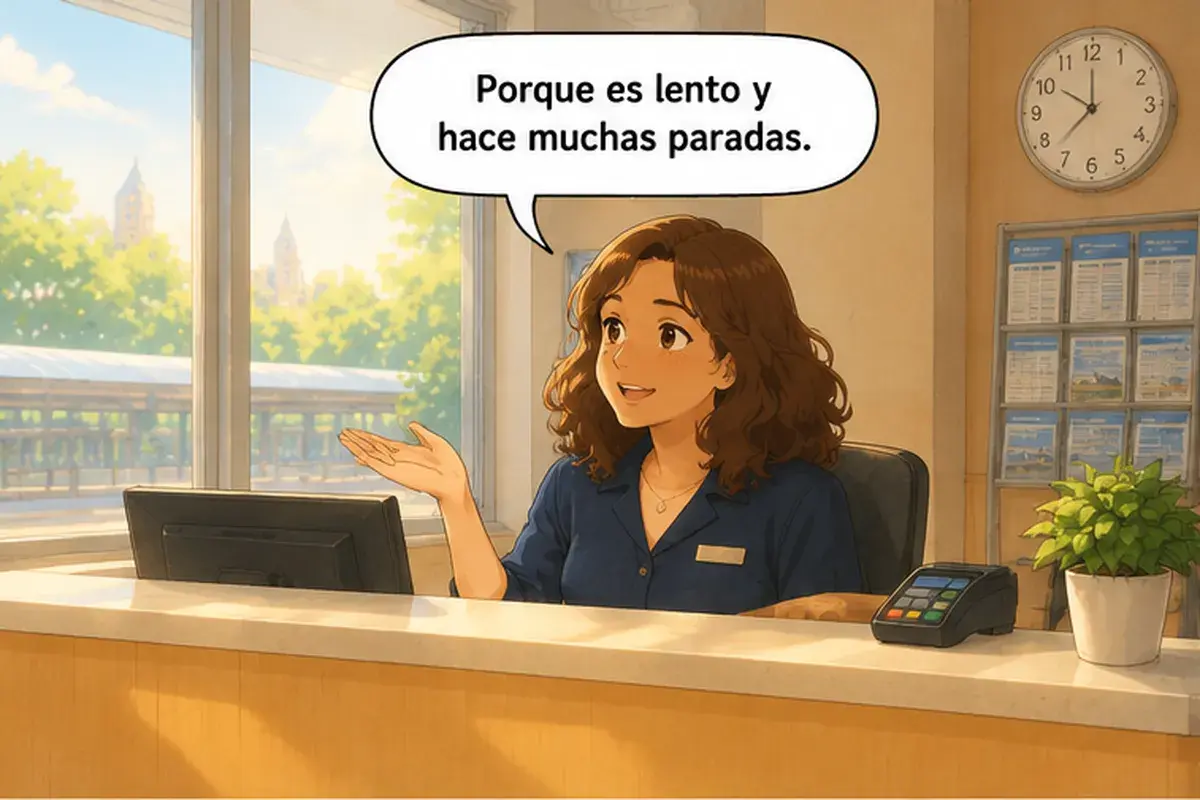
Porque es lento y hace muchas paradas.
Because it's slow and makes a lot of stops.
- Pablo
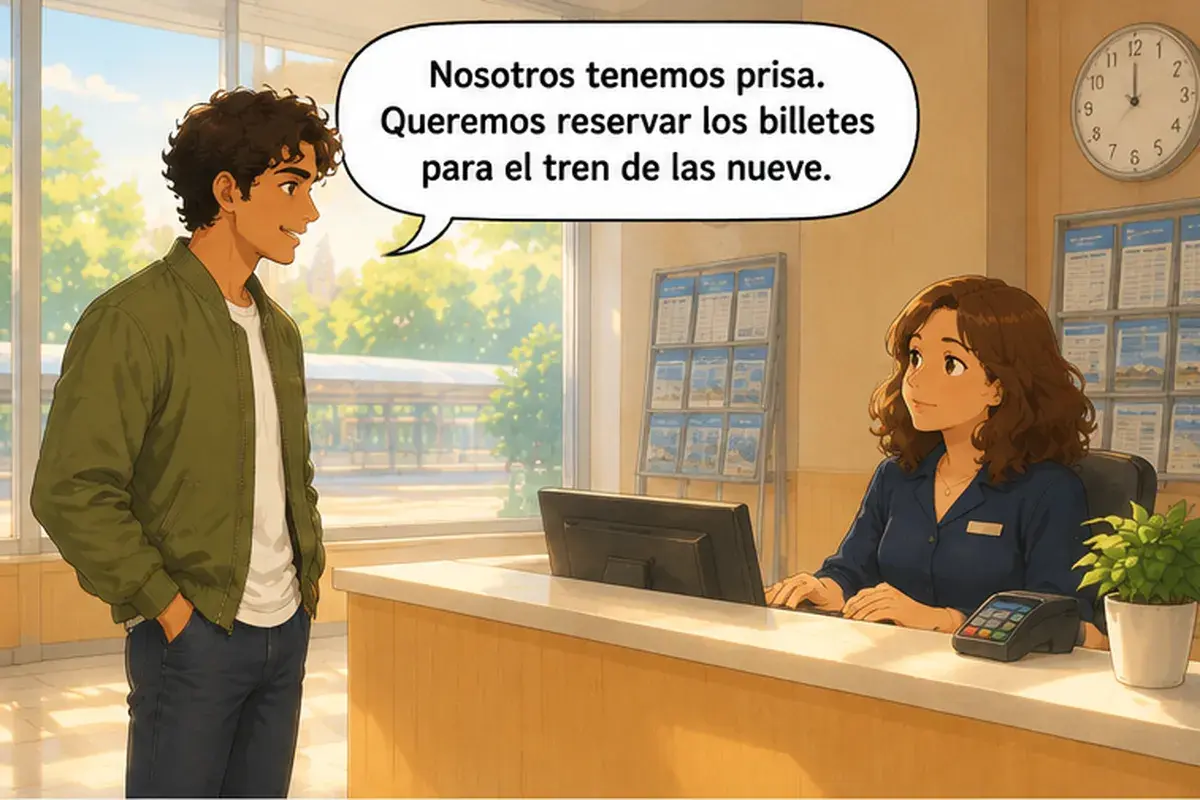
Nosotros tenemos prisa. Queremos reservar los billetes para el tren de las nueve.
We're in a hurry. We want to book the tickets for the nine o'clock train.

- Empleada
Muy bien. Son cuarenta euros. ¿Con tarjeta o en efectivo?
Very good. That's forty euros. By card or in cash?
- Ana
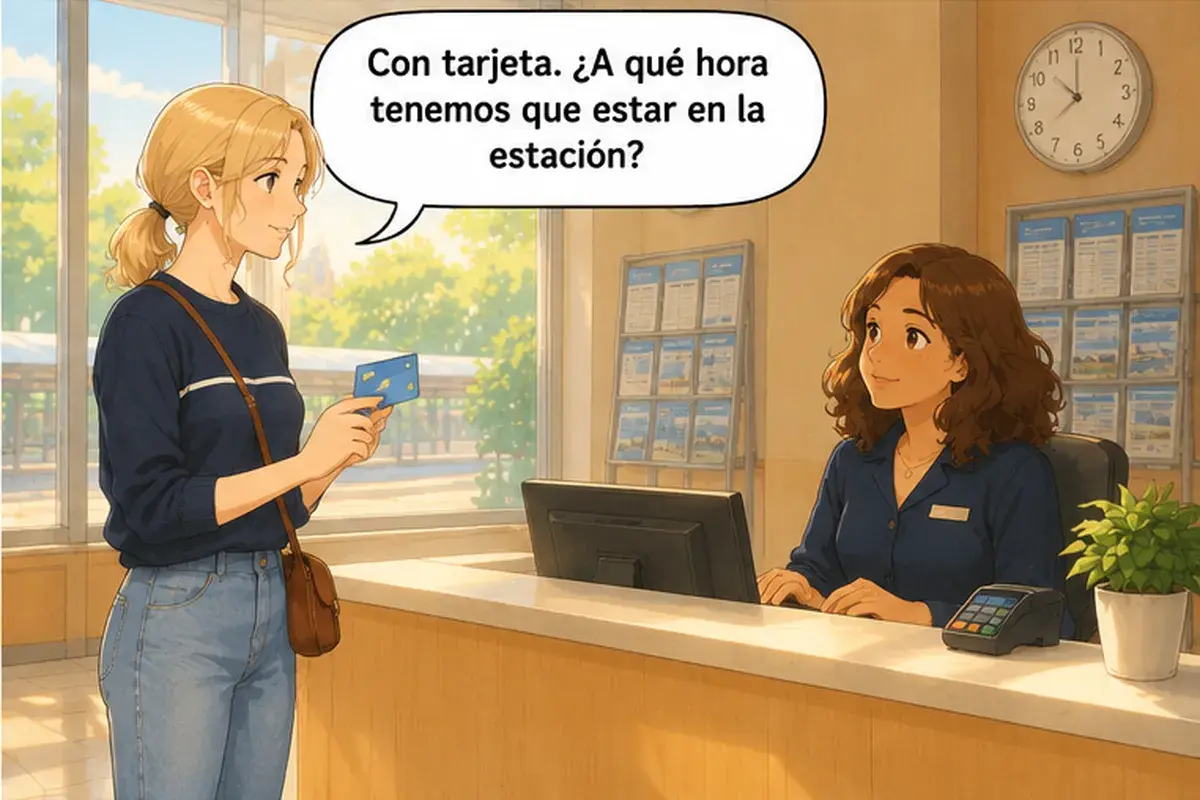
Con tarjeta. ¿A qué hora tenemos que estar en la estación?
By card. What time do we have to be at the station?
- Empleada
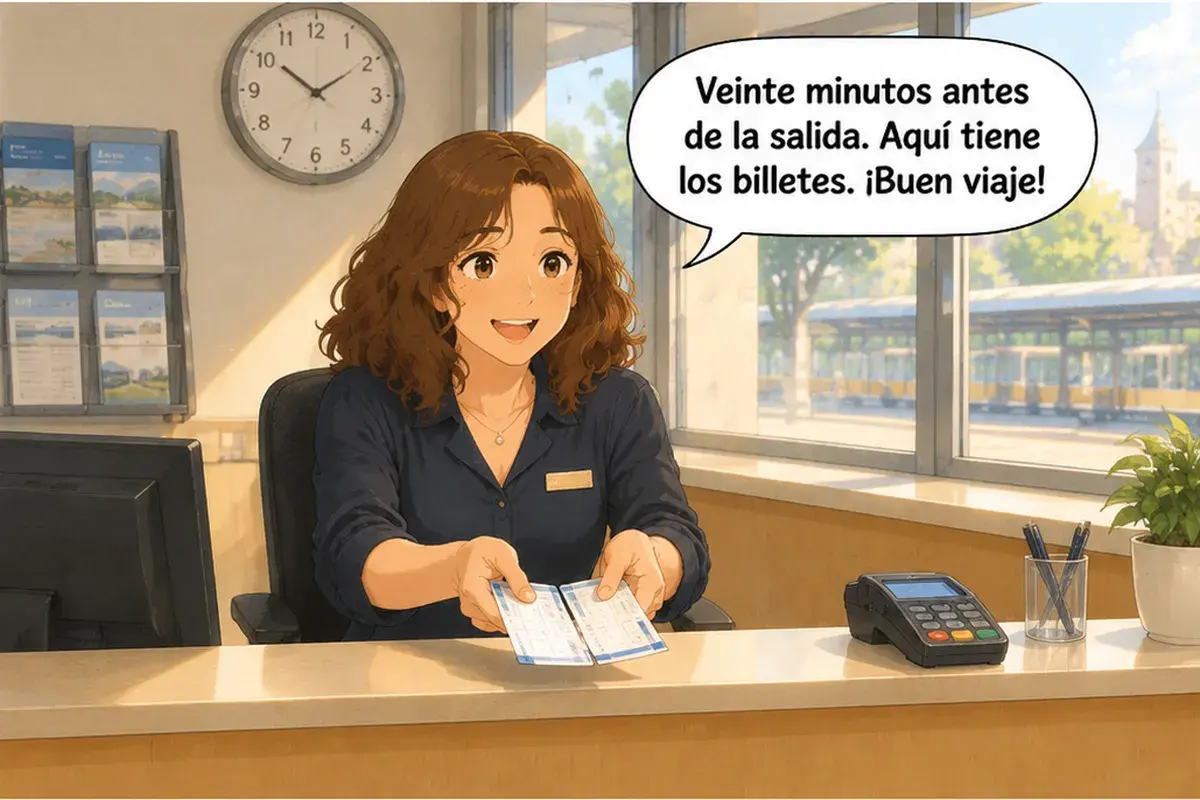
Veinte minutos antes de la salida. Aquí tiene los billetes. ¡Buen viaje!
Twenty minutes before departure. Here are your tickets. Have a good trip! (formal)

- Pablo
Gracias. A Ana no le gusta esperar.
Thanks. Ana doesn't like waiting.

- Ana
¡Y a ti tampoco, Pablo!
And neither do you, Pablo!
Grammar for this text
Near future: ir a + infinitive. Vamos a viajar mañana means "we're going to travel tomorrow": vamos (the nosotros form of ir) + a + the infinitive. Use it for what you're going to do, just like English "be going to".
Tickets: para, de ida y vuelta. Dos billetes para Valencia means "two tickets to Valencia": para shows where the ticket takes you. De ida y vuelta means "round-trip", literally "of going and coming back".
El tren de las nueve. "The nine o'clock train": the departure time is joined to the train with de. When it arrives, use a: llega a las once y media (it arrives at eleven thirty).
Why? Because. The question is two words with an accent: ¿Por qué…? The answer is one word with no accent: porque. ¿Y por qué el autobús es más barato? (And why is the bus cheaper?) Porque es lento y hace muchas paradas. (Because it's slow and makes a lot of stops.) Más barato means "cheaper".
Tener prisa, tener que. Tener can describe a state: nosotros tenemos prisa is literally "we have hurry", that is, "we're in a hurry". Tener que + infinitive means "to have to": ¿A qué hora tenemos que estar en la estación? (What time do we have to be at the station?)
Antes de la salida. Veinte minutos antes de la salida means "twenty minutes before departure": antes de is "before", and the word order is the same as in English.
Gustar with a. In A Ana no le gusta esperar (Ana doesn't like waiting), the thing liked is an action (esperar), and the person comes with a and the pronoun le. ¡Y a ti tampoco, Pablo! means "and neither do you, Pablo!", literally "and to you not either".
Words and grammar of the unit: Buy a train ticket.
Learn the words from the texts with flashcards
In the app, you can tap any word in a text to see its translation, forms and examples, and new words stick with flashcards. 15 minutes a day.
Start for freeEverything is open for free. No card needed to sign up.