

Spanish story with translation · A1 · 12 lines
Vivimos en la misma calle We live on the same street
Comic · 8 panels

Vivimos en un edificio antiguo en el centro de un pueblo pequeño.
We live in an old building in the center of a small town.
El pueblo es famoso por su plaza típica y su iglesia.
The town is famous for its traditional square and its church.

La plaza es bonita y limpia, pero por la noche es muy ruidosa.
The square is pretty and clean, but at night it's very noisy.
Es muy diferente de la ciudad. Aquí la gente es abierta.
It's very different from the city. Here people are outgoing.

Nuestra vecina Carmen es mayor, baja y delgada, con el pelo largo y gris.
Our neighbor Carmen is elderly, short and thin, with long gray hair.
Es muy simpática y siempre habla con todos.
She's very nice and always talks to everyone.

El vecino del segundo piso es un hombre serio y un poco antipático.
The neighbor on the second floor is a serious and slightly unfriendly man.
Es alto y fuerte, un poco gordo y muy trabajador.
He's tall and strong, a little fat and very hardworking.

Pablo dice que no es antipático, solo tímido.
Pablo says he isn't unfriendly, just shy.
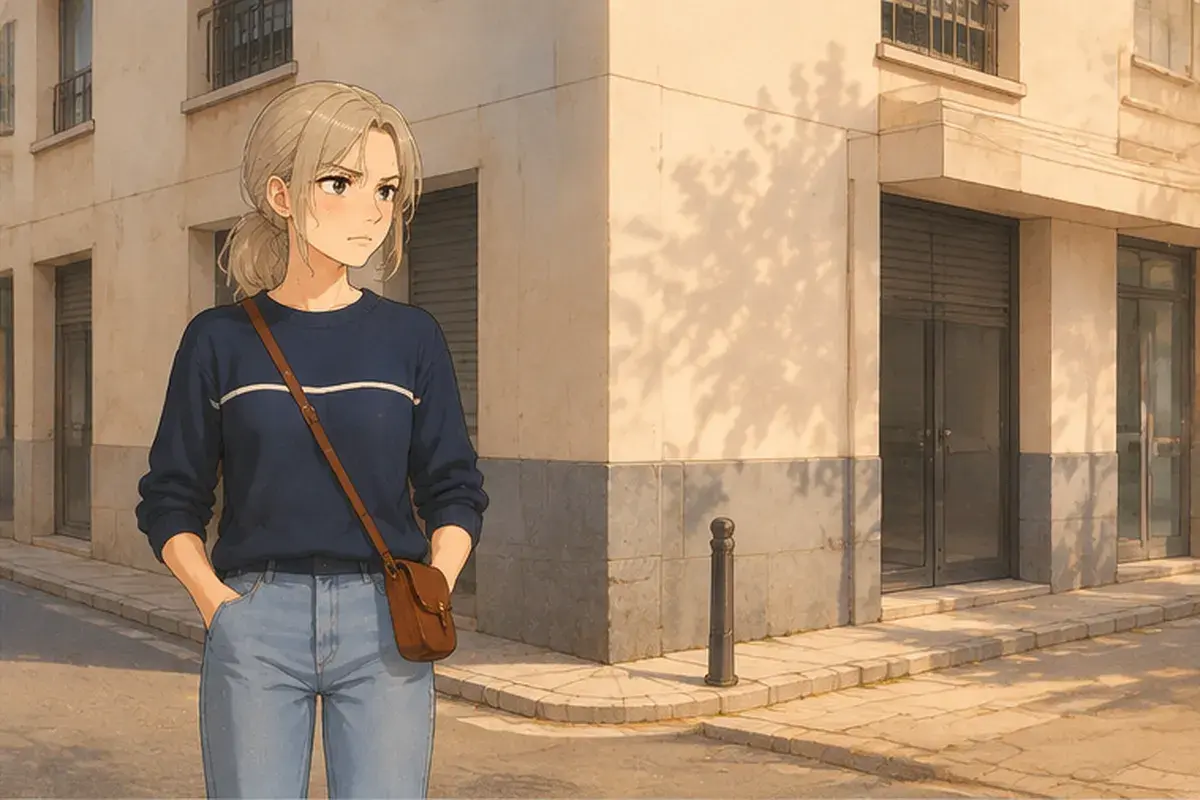
El edificio moderno de la esquina es feo y sucio.
The modern building on the corner is ugly and dirty.

Los chicos y las chicas del barrio son inteligentes y divertidos.
The boys and girls in the neighborhood are smart and fun.
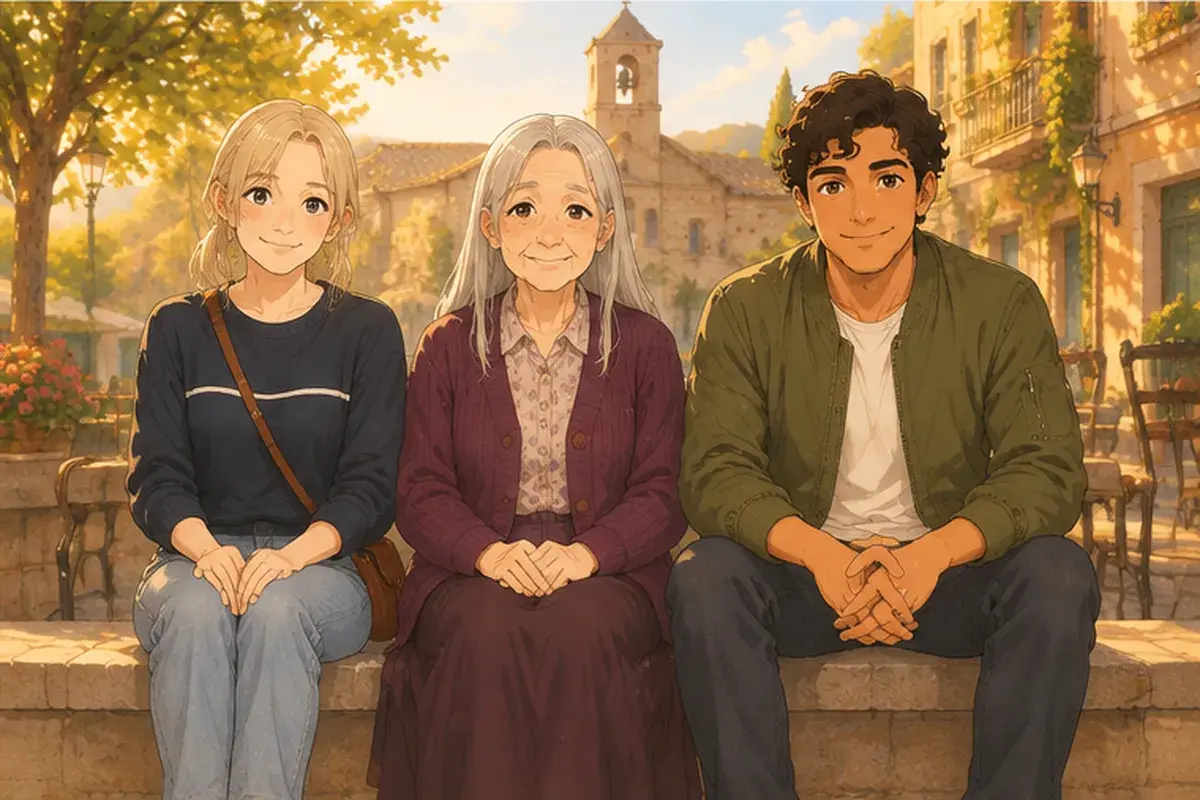
Somos gente de carácter diferente, pero vivimos en la misma calle.
We're people with different personalities, but we live on the same street.
Grammar for this text
What it's like: ser + adjective
- La plaza es bonita y limpia, Es alto y fuerte, El edificio moderno de la esquina es feo y sucio — everyday traits of people and places go with ser.
- Even por la noche es muy ruidosa: the square is noisy every night, so that's what it's like.
- The adjective comes after the noun and agrees with it: un edificio antiguo, su plaza típica.
La gente es abierta
- gente means "people", but it's a feminine singular word: so es, not son, and abierta with -a.
Boys and girls together
- Los chicos y las chicas del barrio son inteligentes y divertidos — for a mixed group, Spanish uses the masculine plural: divertidos. Inteligentes ends in -e, so it's the same for both genders.
Carmen's portrait
- es mayor, baja y delgada, con el pelo largo y gris — the words end in -a because Carmen is a woman; mayor ("elderly") doesn't change. Pelo is singular, and gris about hair means "gray".
Prepositions
- famoso por su plaza típica — "famous for its square": por.
- diferente de la ciudad — "different from the city": de.
- El vecino del segundo piso — "the neighbor on the second floor": del = de + el.
Dice que no es antipático, solo tímido
- "He says he isn't unfriendly, just shy": solo means "only, just". As in English, there's no word for "but" here.
Words and grammar of the unit: Describe people and places.
Learn the words from the texts with flashcards
In the app, you can tap any word in a text to see its translation, forms and examples, and new words stick with flashcards. 15 minutes a day.
Start for freeEverything is open for free. No card needed to sign up.