
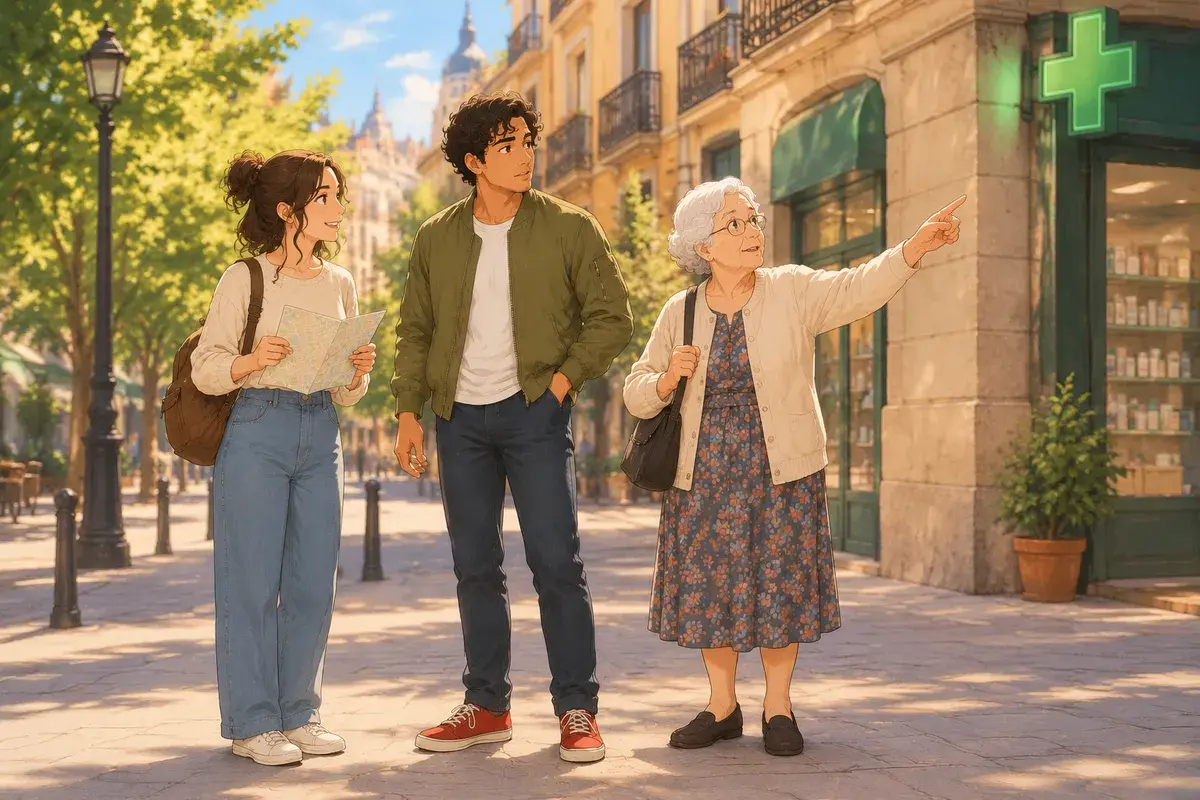
Spanish dialogue with translation · A1 · 14 lines
Disculpe, busco la farmacia Excuse me, I'm looking for the pharmacy
Comic · 10 panels
- Pablo
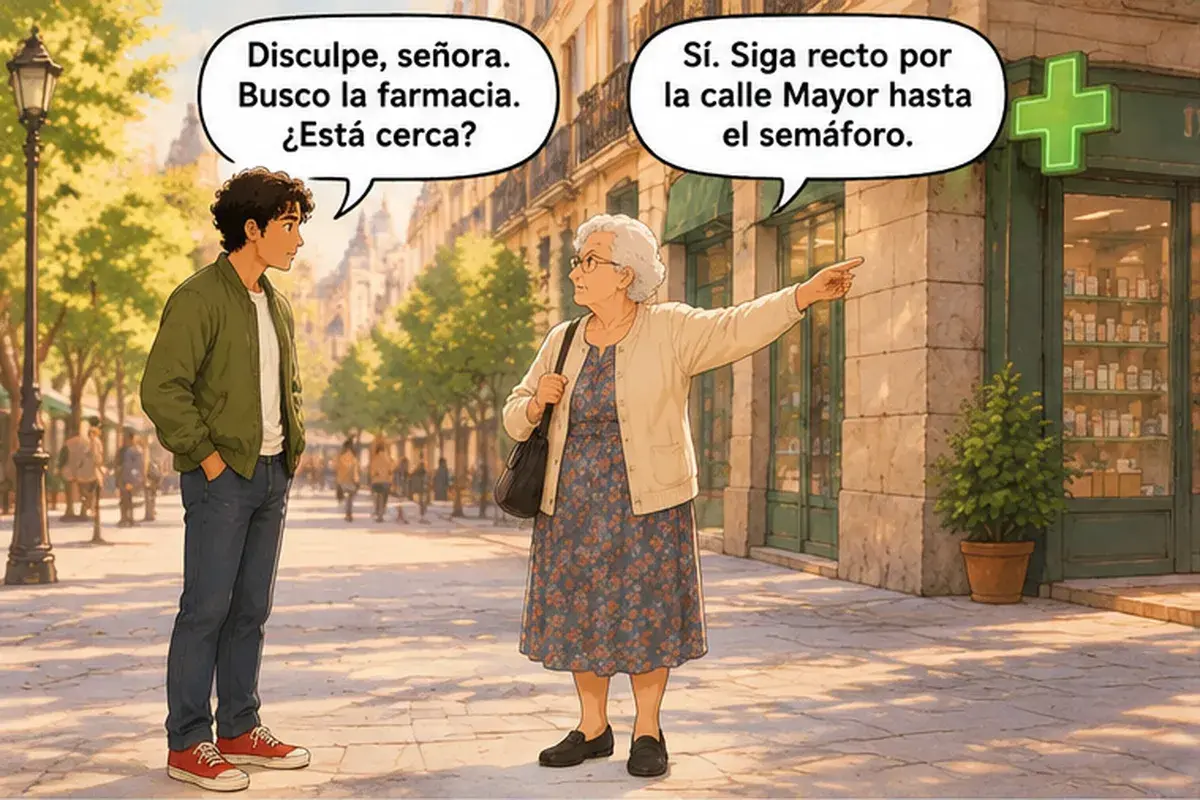
Disculpe, señora. Busco la farmacia. ¿Está cerca?
Excuse me, ma'am. I'm looking for the pharmacy. Is it close? (formal)
- Señora
Sí. Siga recto por la calle Mayor hasta el semáforo.
Yes. Go straight along Calle Mayor to the traffic light (formal).
- Pablo
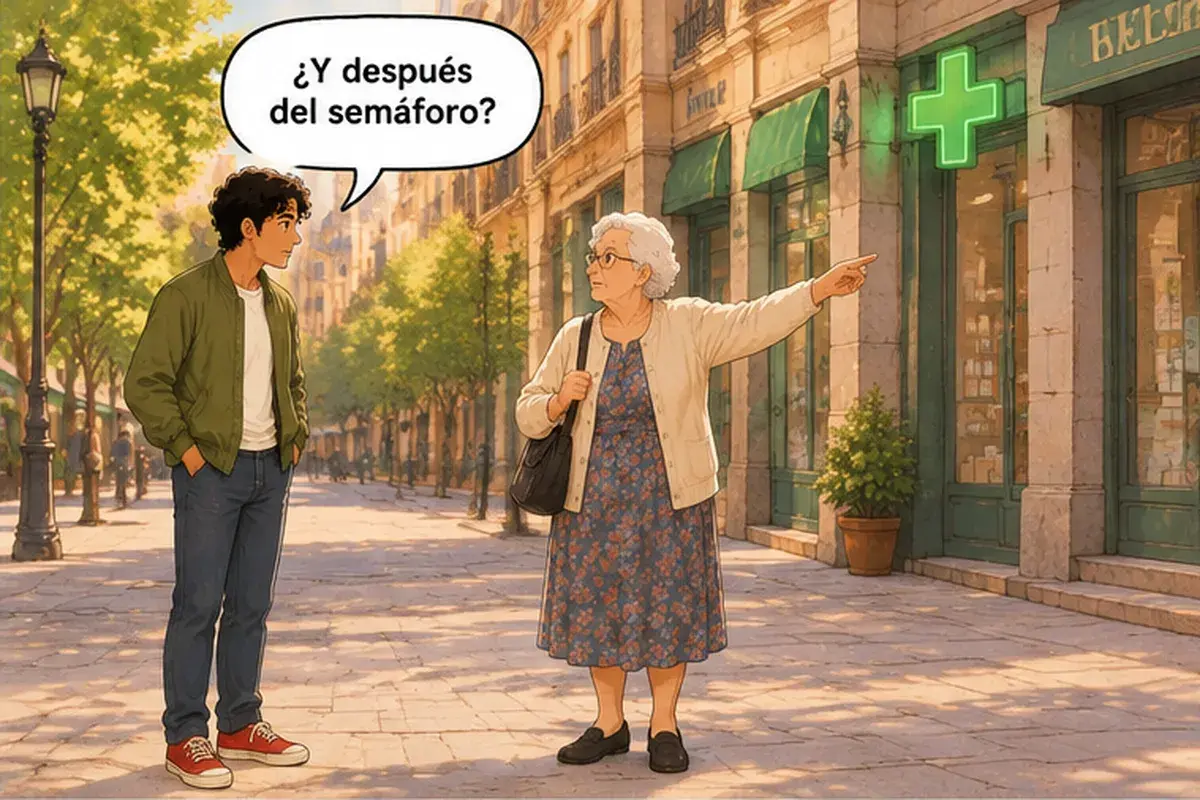
¿Y después del semáforo?
And after the traffic light?
- Señora
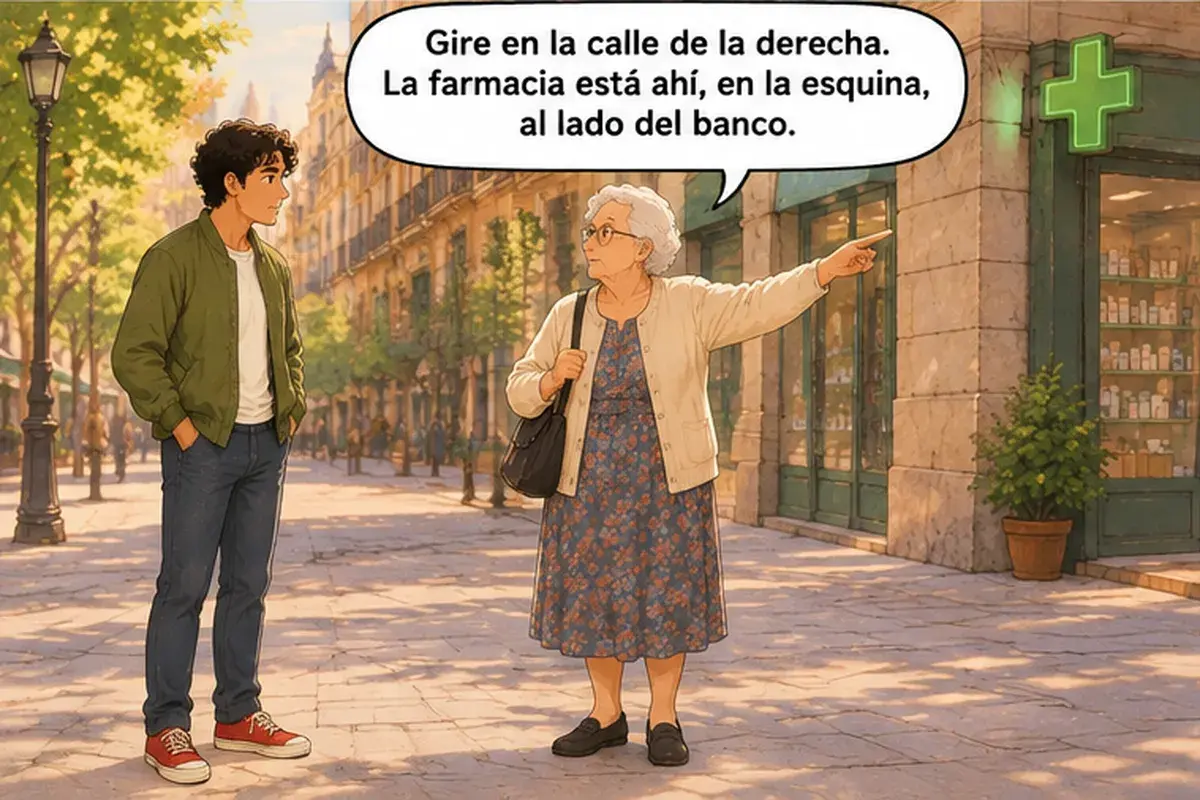
Gire en la calle de la derecha. La farmacia está ahí, en la esquina, al lado del banco.
Turn at the street on the right. The pharmacy is there, on the corner, next to the bank (formal).
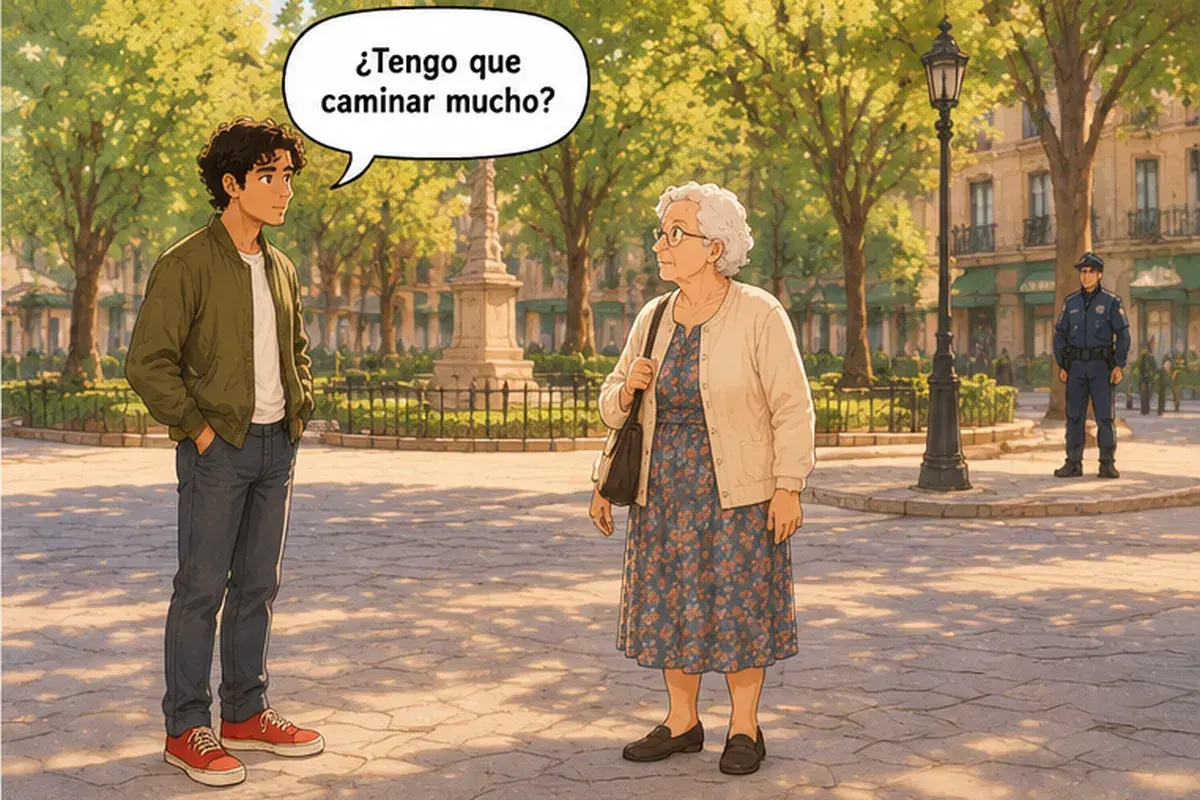
- Pablo
¿Tengo que caminar mucho?
Do I have to walk a lot?
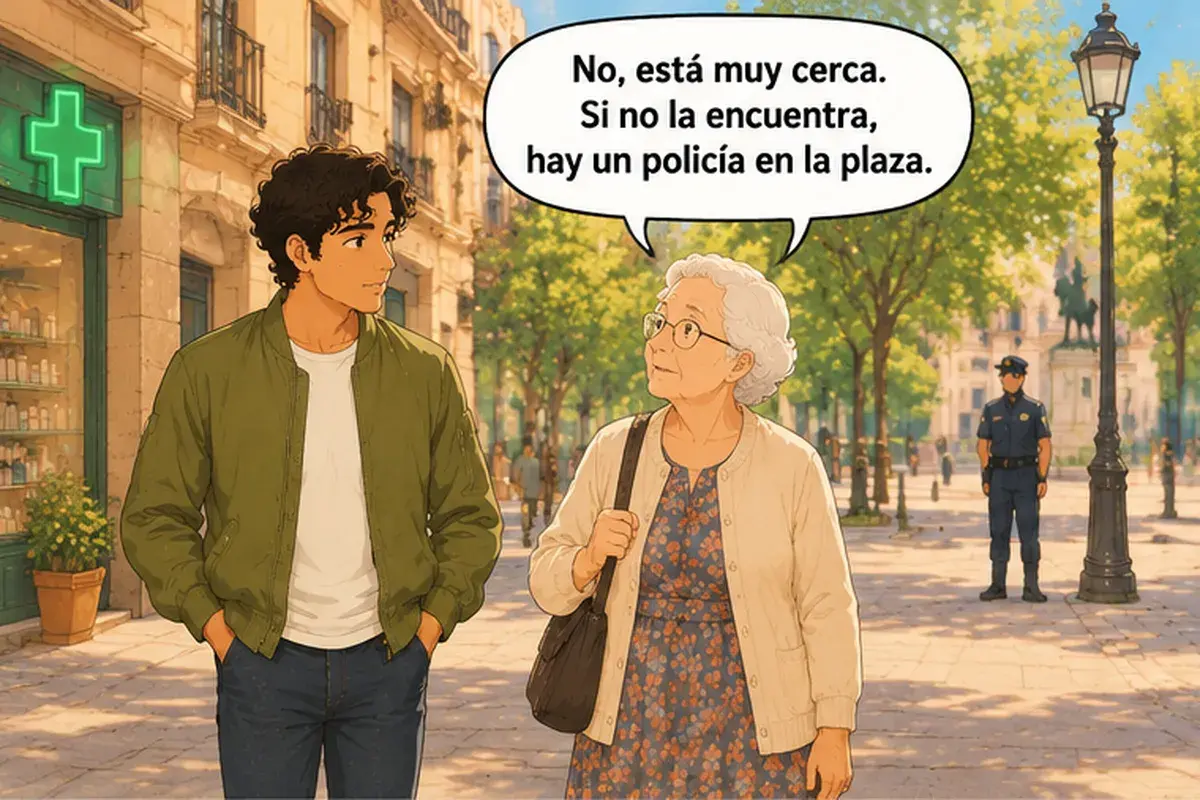
- Señora
No, está muy cerca. Si no la encuentra, hay un policía en la plaza.
No, it's very close. If you don't find it, there's a police officer in the square (formal).
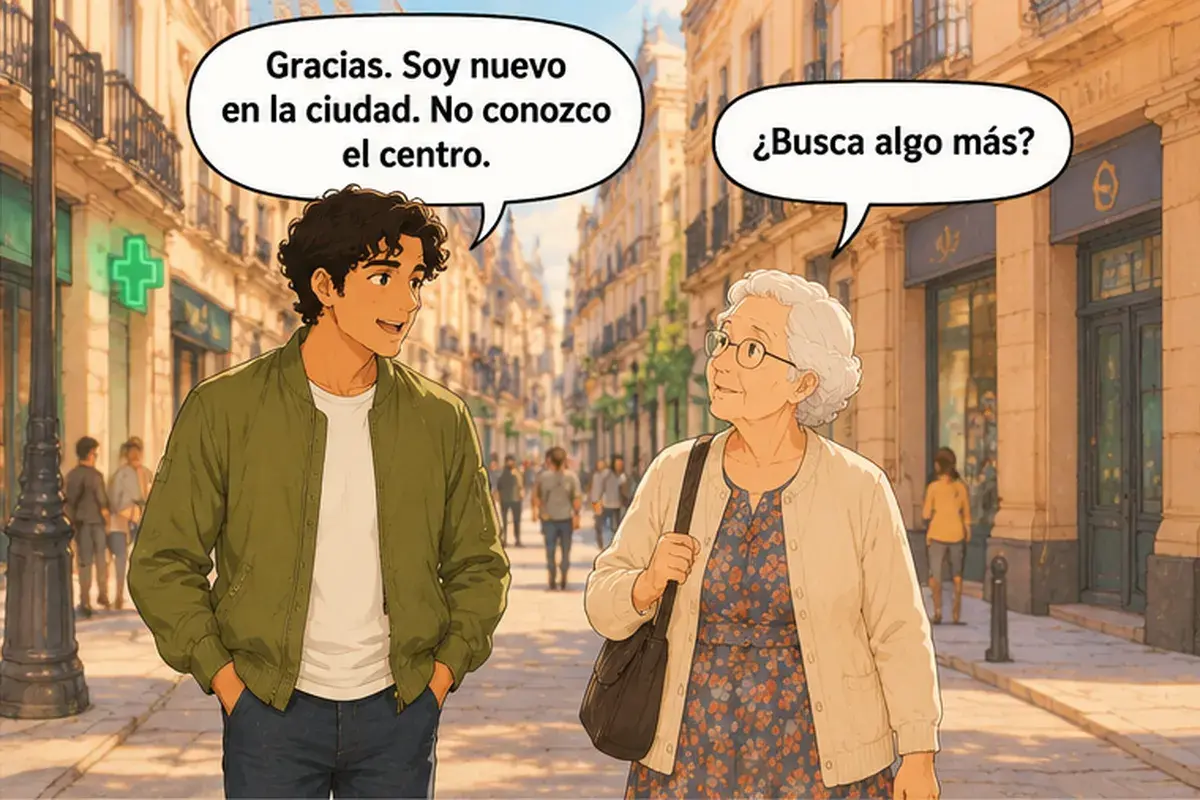
- Pablo
Gracias. Soy nuevo en la ciudad. No conozco el centro.
Thank you. I'm new in the city. I don't know the downtown area (man speaking).
- Señora
¿Busca algo más?
Are you looking for anything else? (formal)
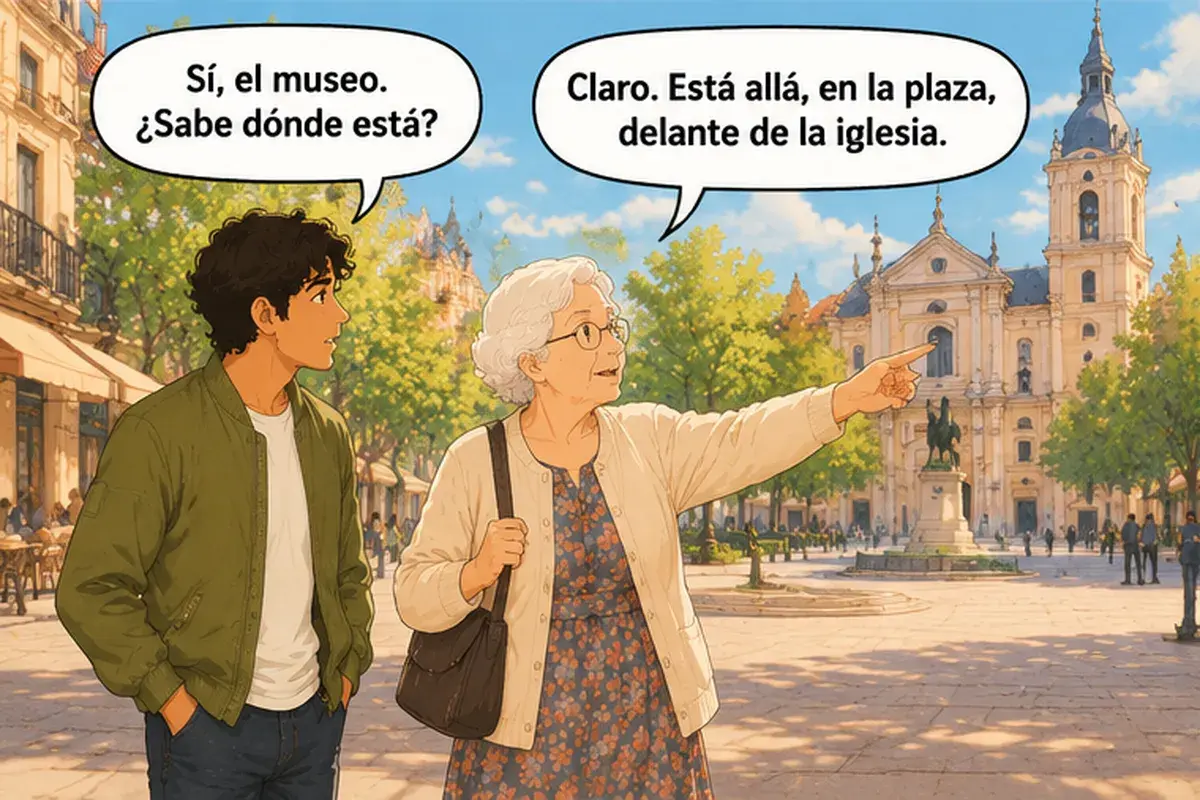
- Pablo
Sí, el museo. ¿Sabe dónde está?
Yes, the museum. Do you know where it is? (formal)
- Señora
Claro. Está allá, en la plaza, delante de la iglesia.
Of course. It's over there, in the square, in front of the church.
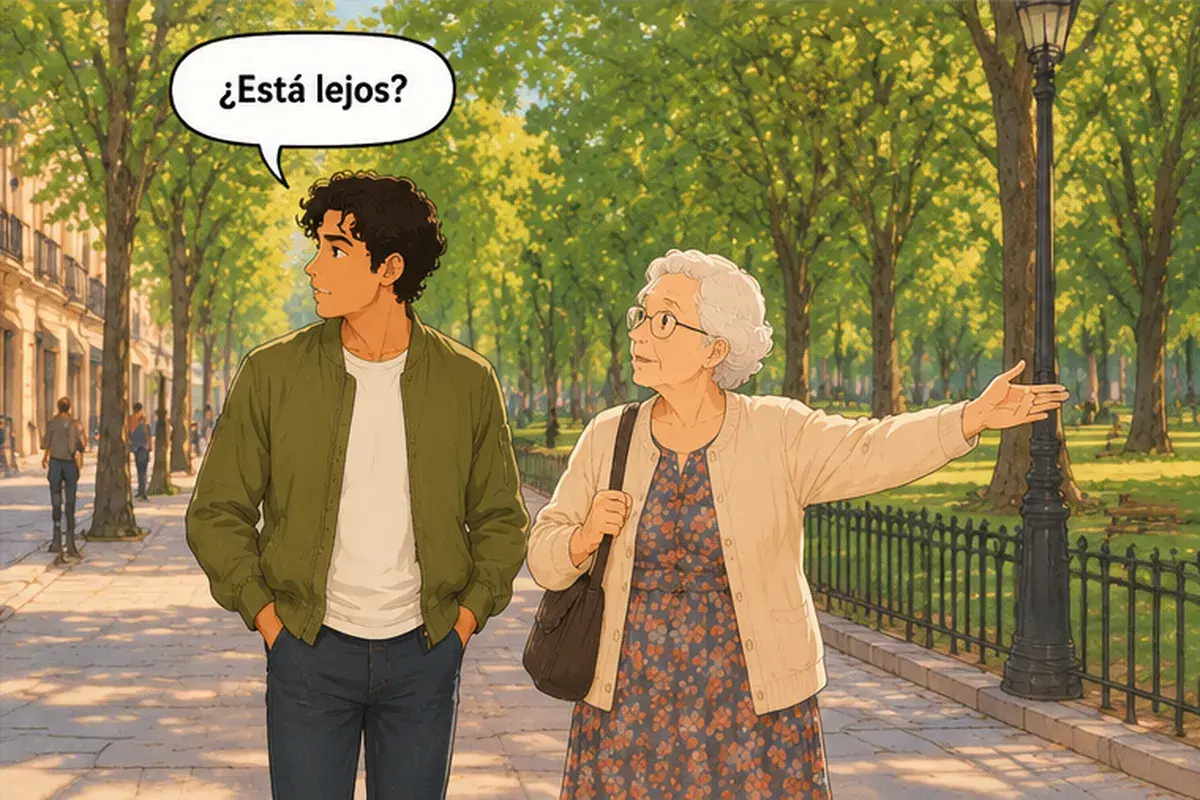
- Pablo
¿Está lejos?
Is it far?
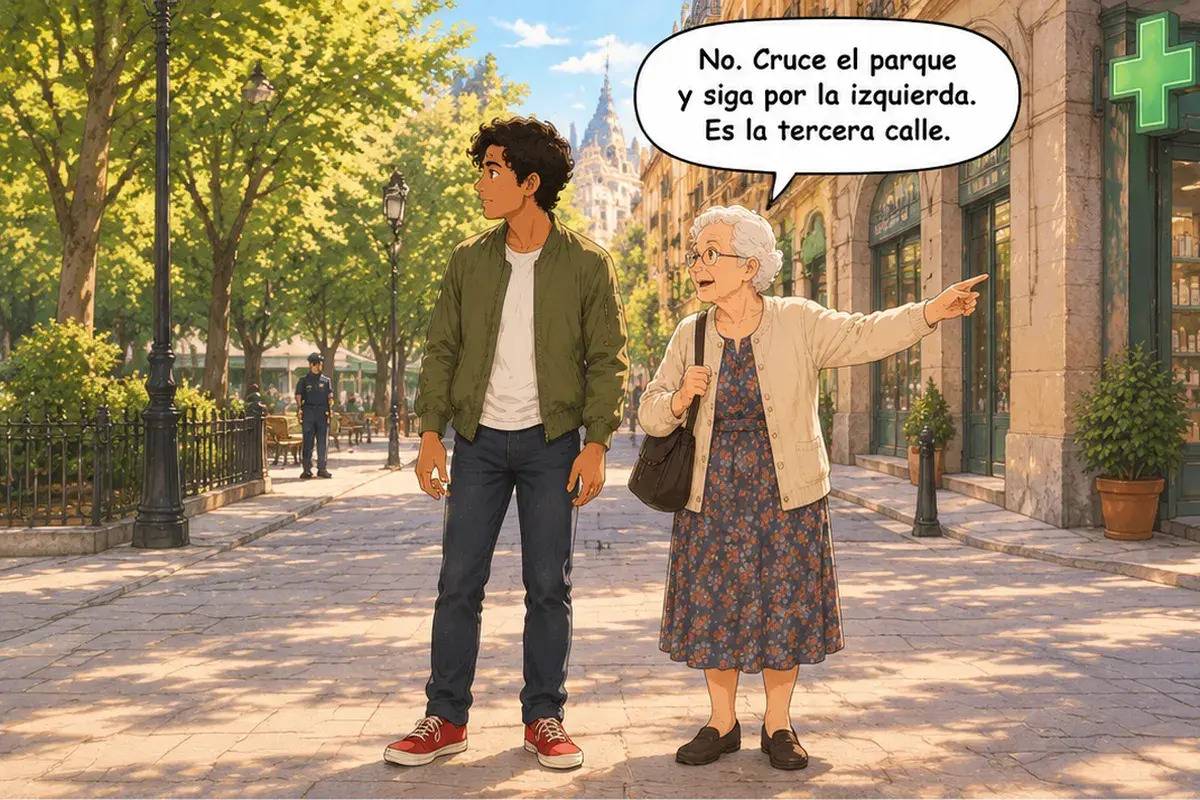
- Señora
No. Cruce el parque y siga por la izquierda. Es la tercera calle.
No. Cross the park and keep to the left. It's the third street (formal).
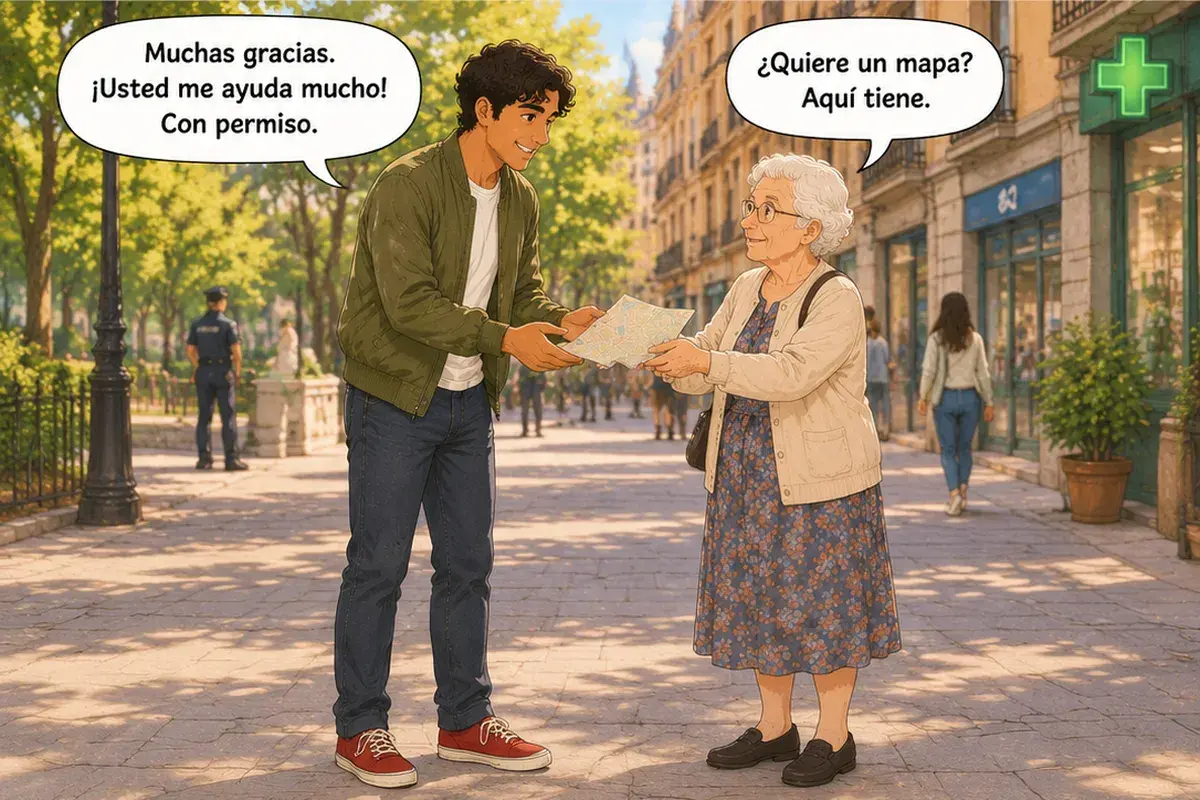
- Señora
¿Quiere un mapa? Aquí tiene.
Do you want a map? Here you go (formal).
- Pablo
Muchas gracias. ¡Usted me ayuda mucho! Con permiso.
Thank you very much. You're helping me a lot! Excuse me (formal).
Grammar for this text
Directions: commands in the usted form. Siga recto, Gire en la calle de la derecha, Cruce el parque: "go straight", "turn at the street on the right", "cross the park". The woman speaks to Pablo formally (usted). These commands are built from the yo form: drop the -o and add the "opposite" vowel. For -ar verbs it's -e: girar → gire, cruzar → cruce (before e, z is written as c). For -er and -ir verbs it's -a: seguir (yo sigo) → siga. Disculpe comes from disculpar the same way. You'll study these forms in detail at A2 (unit 15).
Si no la encuentra. "If you don't find it": here la isn't an article. It means "it" (the pharmacy, la farmacia), and it goes before the verb. Just like in English, after si (if) you use the present tense.
Formal you without usted. ¿Busca algo más?, ¿Sabe dónde está?, ¿Quiere un mapa?: the verb has the same form as for "he" or "she", but it's addressed to the listener. It's the polite "are you looking for", "do you know", "do you want". Spanish often leaves out the word usted.
Al lado del banco, delante de la iglesia. A place word + de, and de + el = del: al lado del banco (next to the bank), después del semáforo (after the traffic light). La farmacia está ahí — "the pharmacy is right there" (not far); Está allá — "it's over there" (farther away). To answer "where?", use estar.
Tengo que, sabe, conozco. ¿Tengo que caminar mucho? — "Do I have to walk a lot?": tener que + infinitive means "to have to". ¿Sabe dónde está? — "Do you know where it is?": to know a fact is saber. To know a place or a person, to be familiar with it, is conocer: No conozco el centro. English uses "know" for both.
Words and grammar of the unit: Ask for directions in the city.
Learn the words from the texts with flashcards
In the app, you can tap any word in a text to see its translation, forms and examples, and new words stick with flashcards. 15 minutes a day.
Start for freeEverything is open for free. No card needed to sign up.