

German dialogue with translation · B2 · 16 lines
Wir haben fünfzehn Minuten We have fifteen minutes
Comic · 16 panels
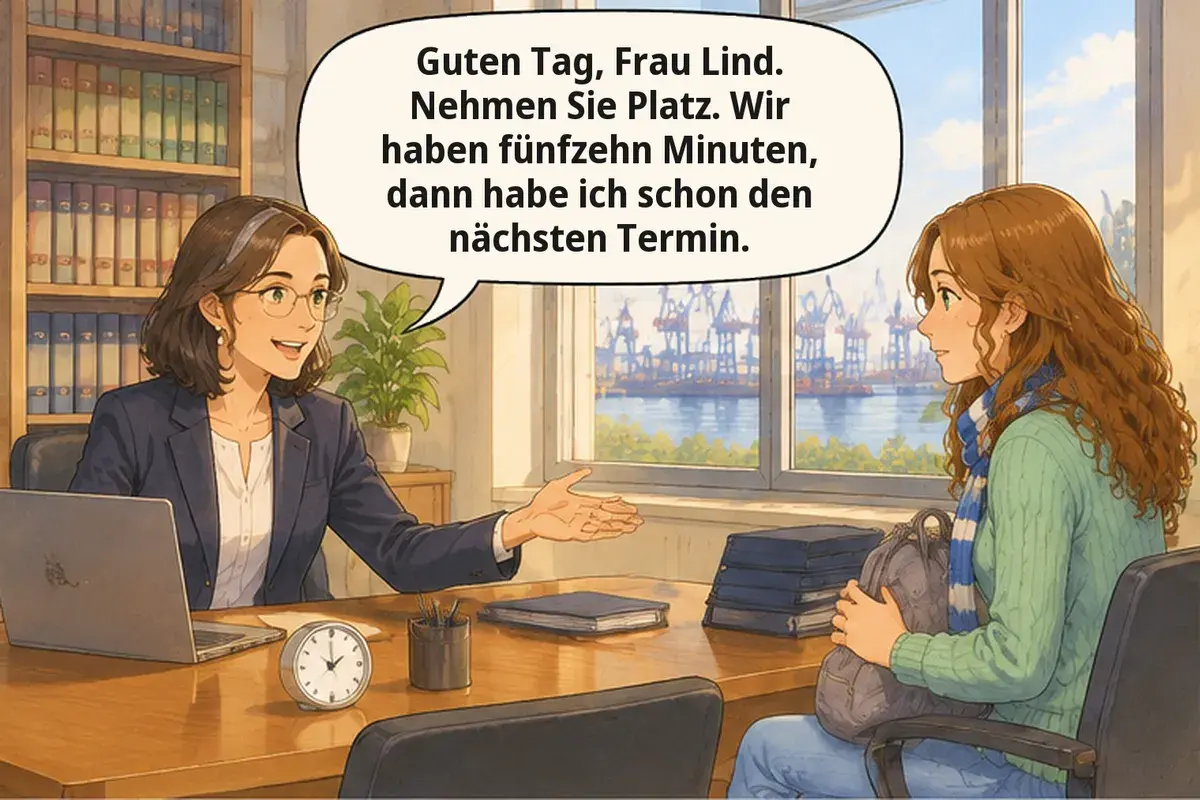
- Anwältin
Guten Tag, Frau Lind. Nehmen Sie Platz. Wir haben fünfzehn Minuten, dann habe ich schon den nächsten Termin.
Good afternoon, Frau Lind. Have a seat. We have fifteen minutes, then I have my next appointment already. (formal)
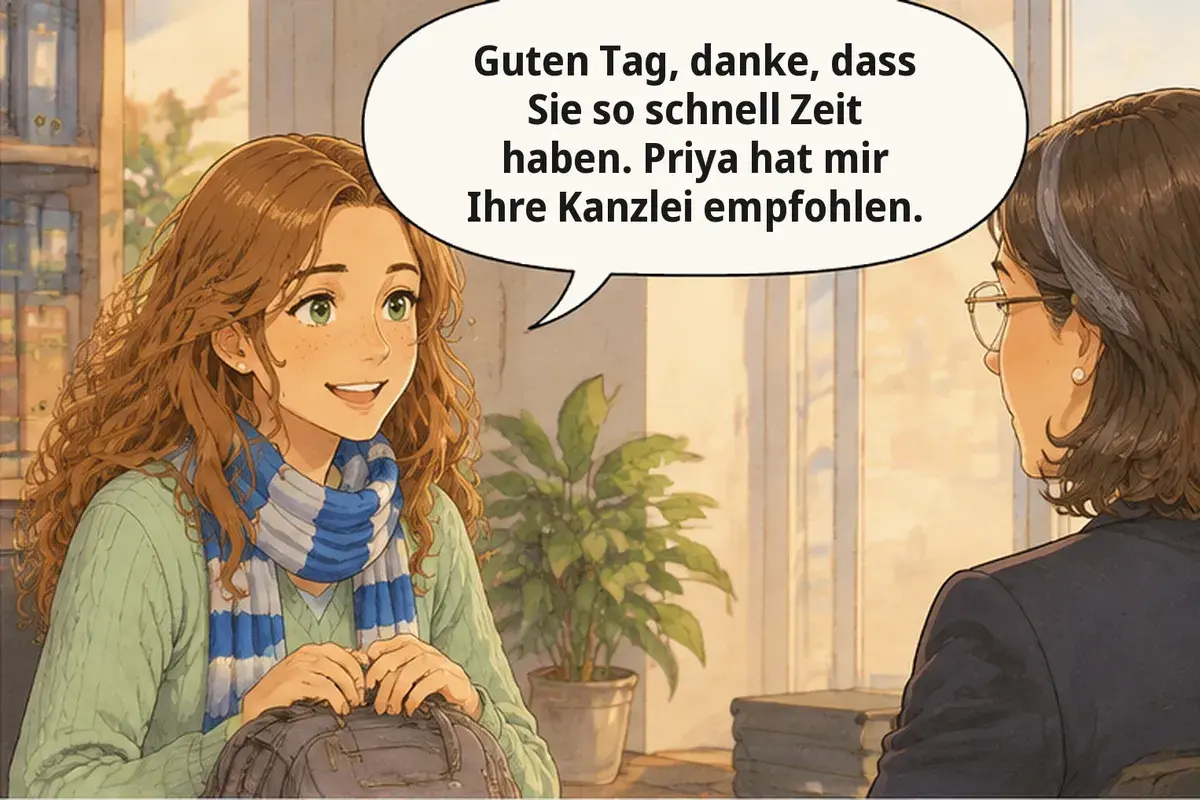
- Katja
Guten Tag, danke, dass Sie so schnell Zeit haben. Priya hat mir Ihre Kanzlei empfohlen.
Hello, thank you for making time so quickly. Priya recommended your firm to me. (formal)
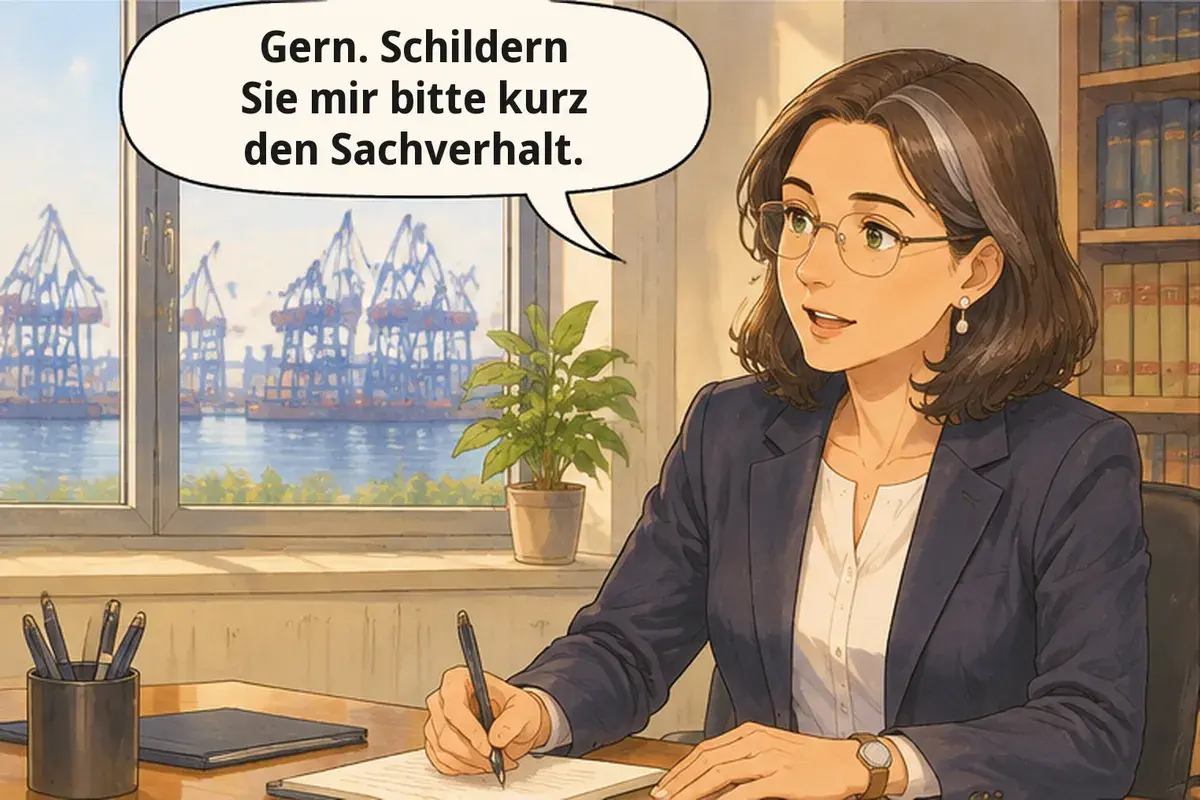
- Anwältin
Gern. Schildern Sie mir bitte kurz den Sachverhalt.
You're welcome. Please briefly describe the facts of the case to me. (formal)
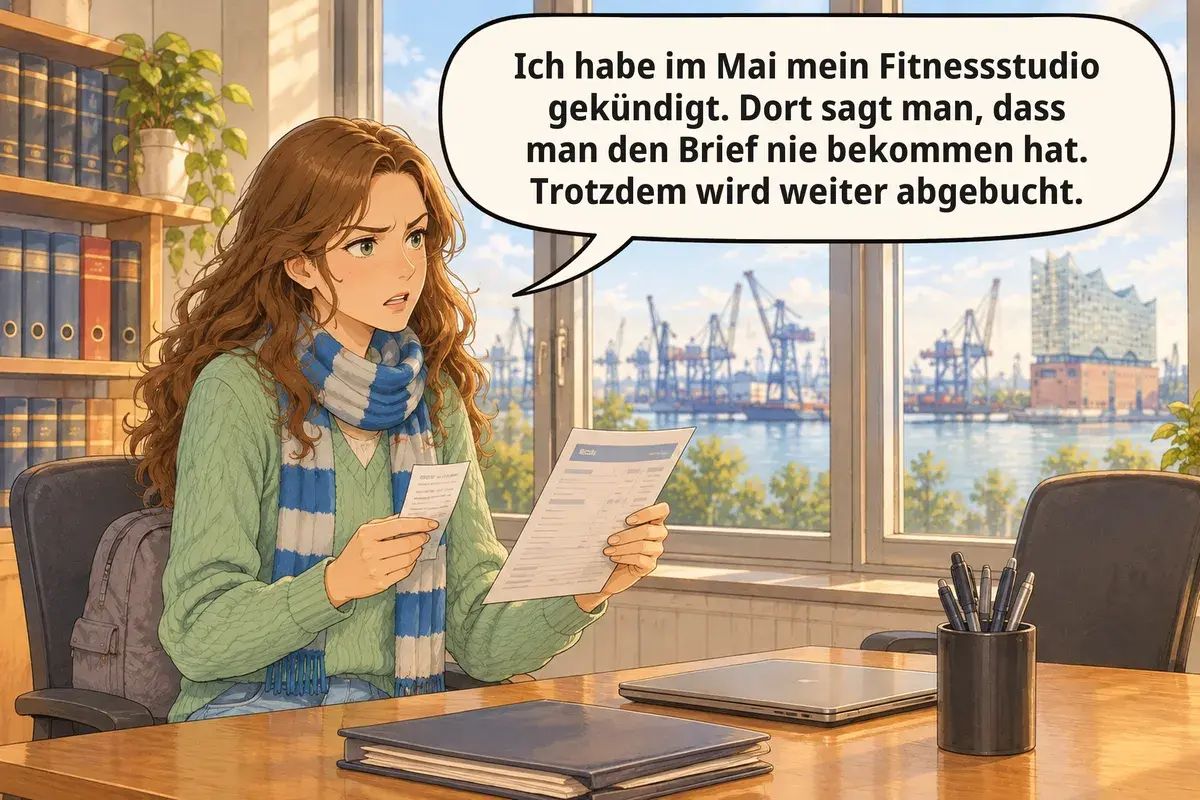
- Katja
Ich habe im Mai mein Fitnessstudio gekündigt. Dort sagt man, dass man den Brief nie bekommen hat. Trotzdem wird weiter abgebucht.
I canceled my gym membership in May. They say there that they never got the letter. Even so, they keep debiting my account.
- Anwältin
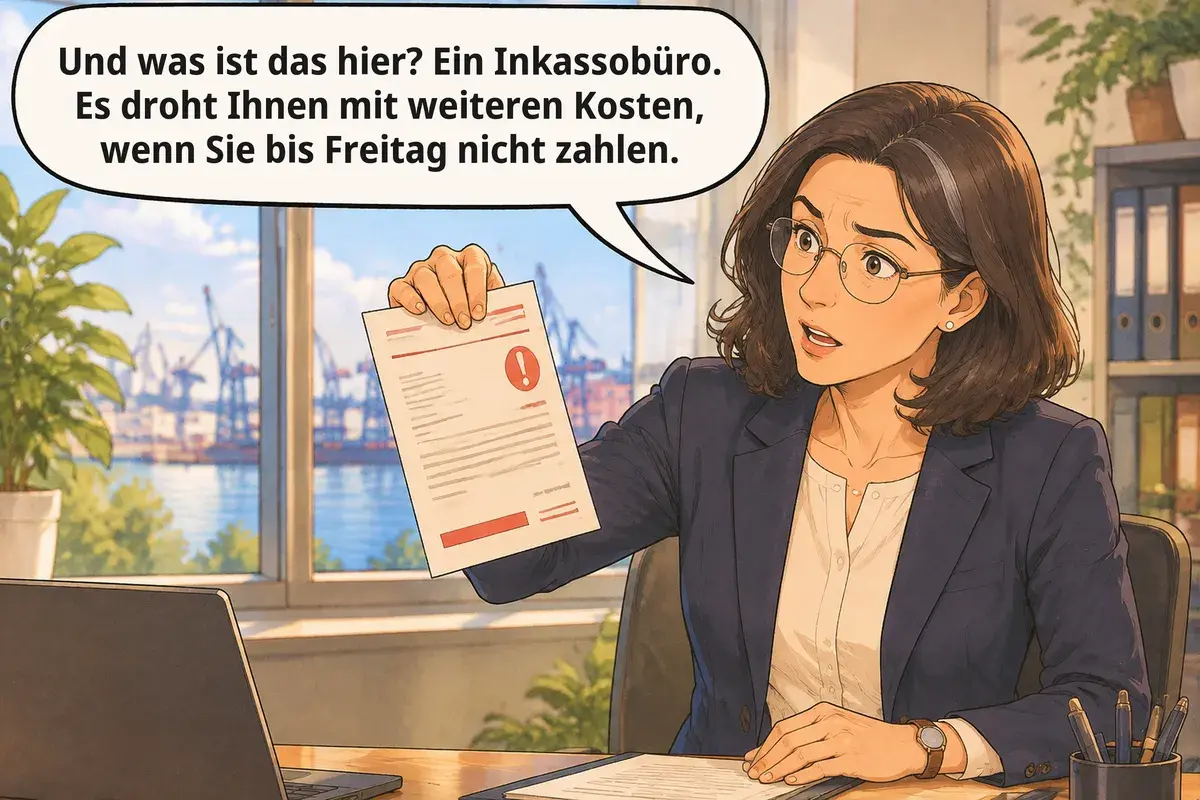
Und was ist das hier? Ein Inkassobüro. Es droht Ihnen mit weiteren Kosten, wenn Sie bis Freitag nicht zahlen.
And what is this here? A debt collection agency. It's threatening you with further costs if you don't pay by Friday. (formal)

- Katja
Ich habe Angst, dass ich Ärger bekomme. Ich dachte, die Firma sitzt am längeren Hebel.
I'm afraid I'll get into trouble. I thought the company had the upper hand.
- Anwältin
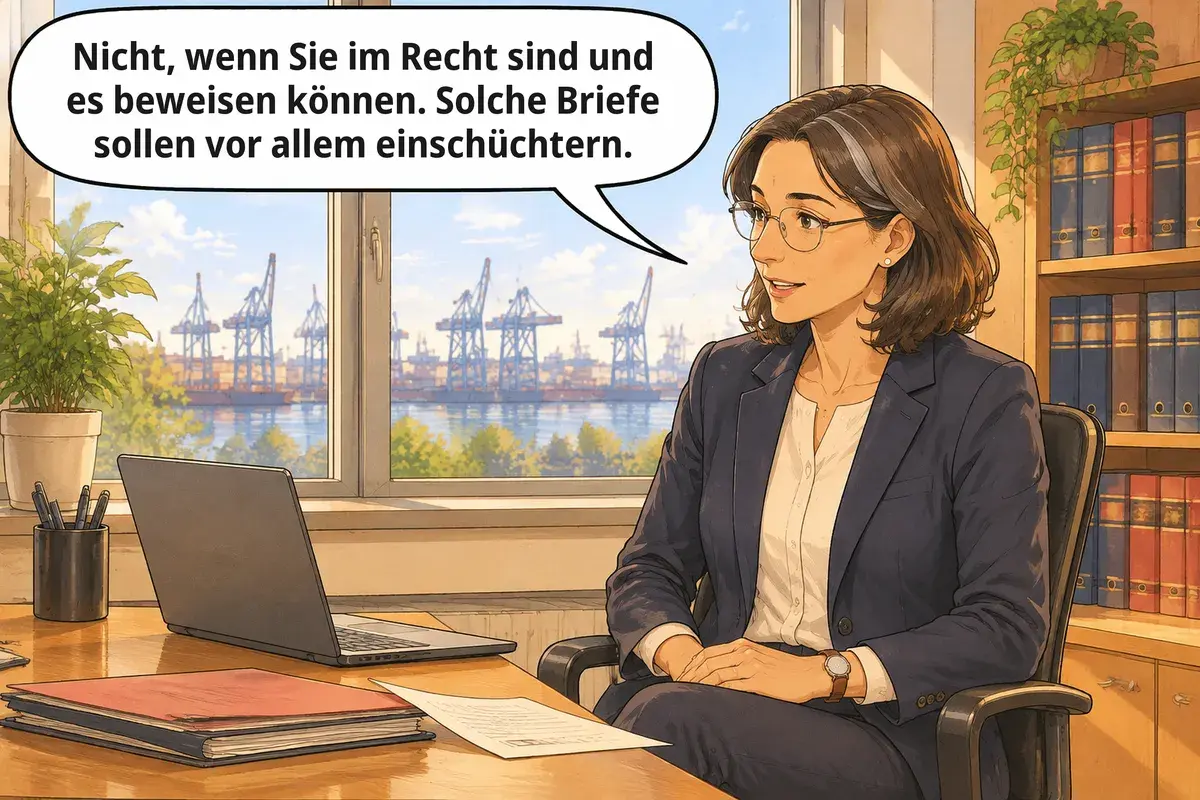
Nicht, wenn Sie im Recht sind und es beweisen können. Solche Briefe sollen vor allem einschüchtern.
Not if you're in the right and can prove it. Letters like this are mainly meant to intimidate. (formal)
- Katja
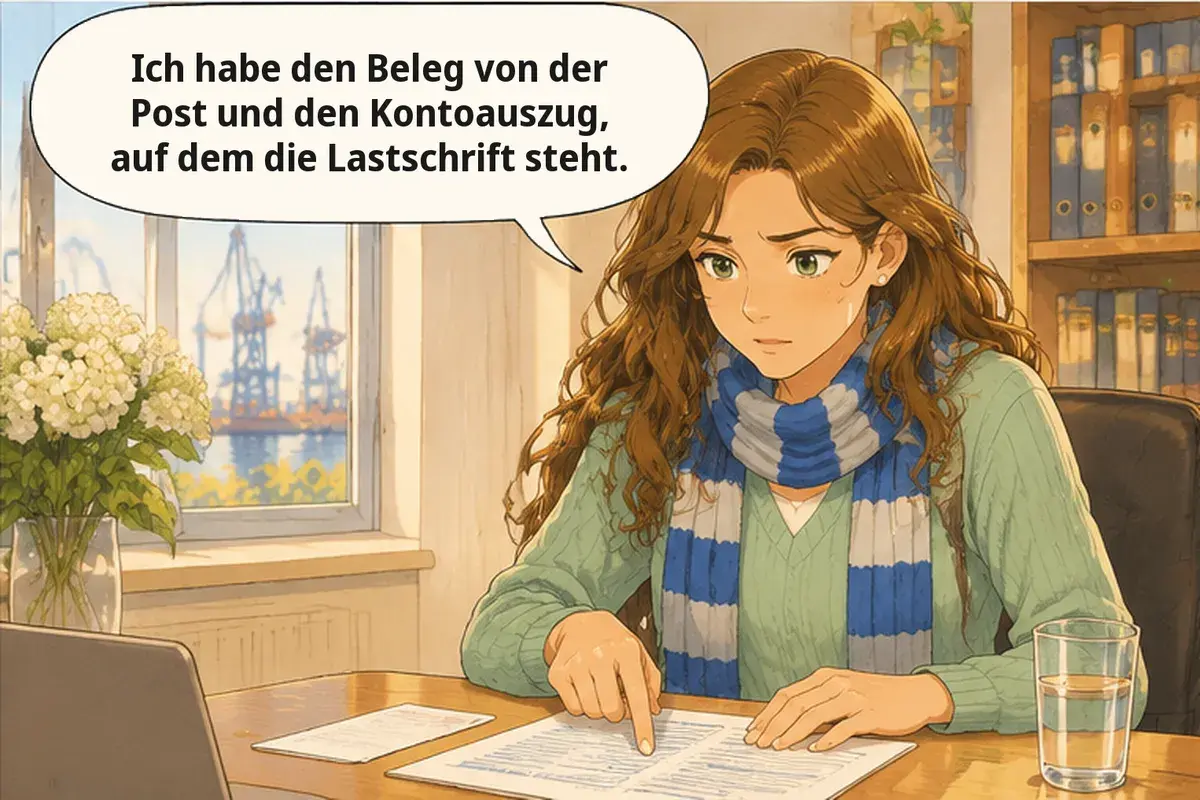
Ich habe den Beleg von der Post und den Kontoauszug, auf dem die Lastschrift steht.
I have the receipt from the post office and the bank statement showing the direct debit.
- Anwältin
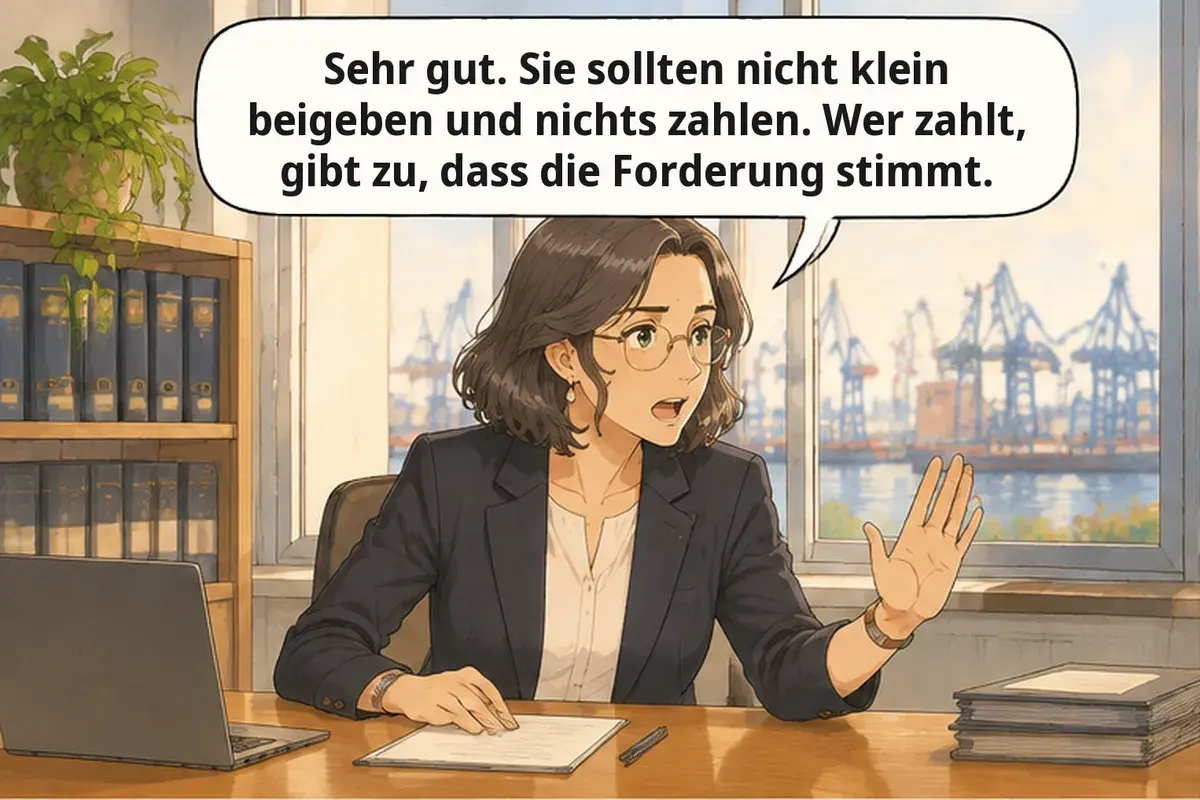
Sehr gut. Sie sollten nicht klein beigeben und nichts zahlen. Wer zahlt, gibt zu, dass die Forderung stimmt.
Very good. You shouldn't give in, and you shouldn't pay anything. Whoever pays admits that the claim is valid. (formal)
- Katja
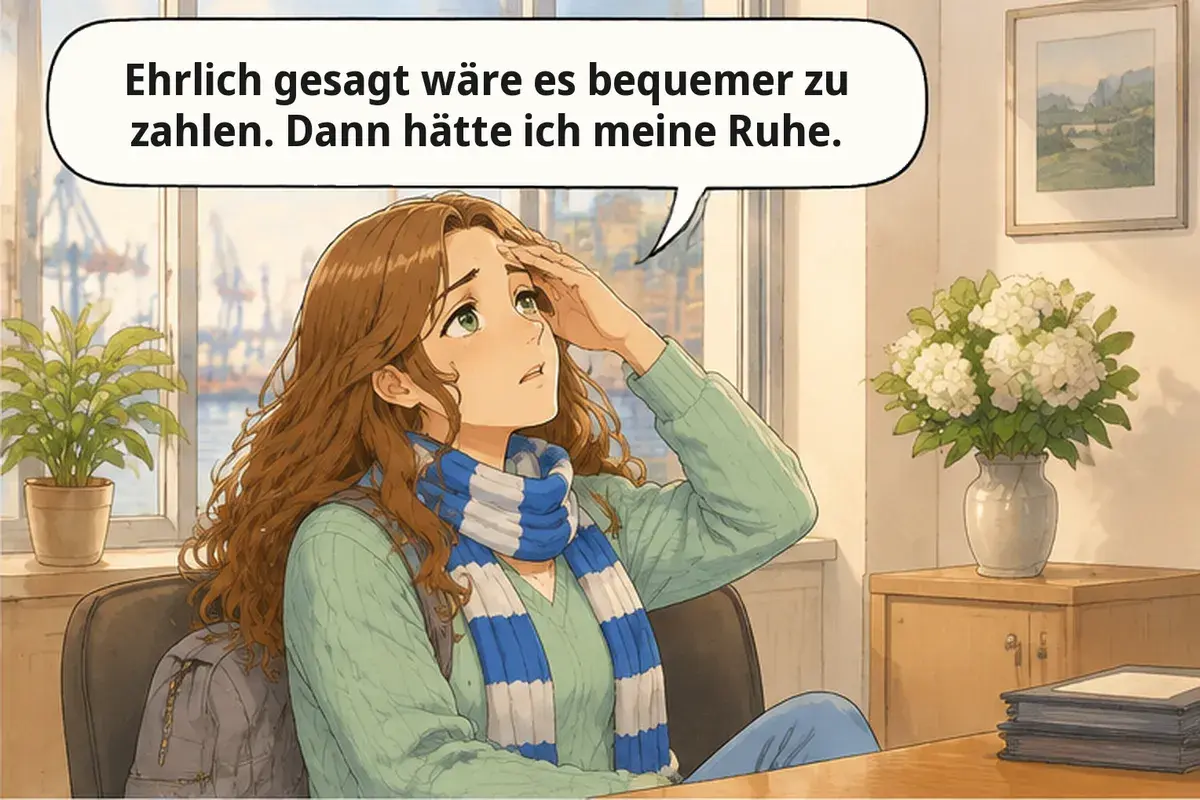
Ehrlich gesagt wäre es bequemer zu zahlen. Dann hätte ich meine Ruhe.
To be honest, it would be more convenient to pay. Then I'd have peace and quiet.
- Anwältin
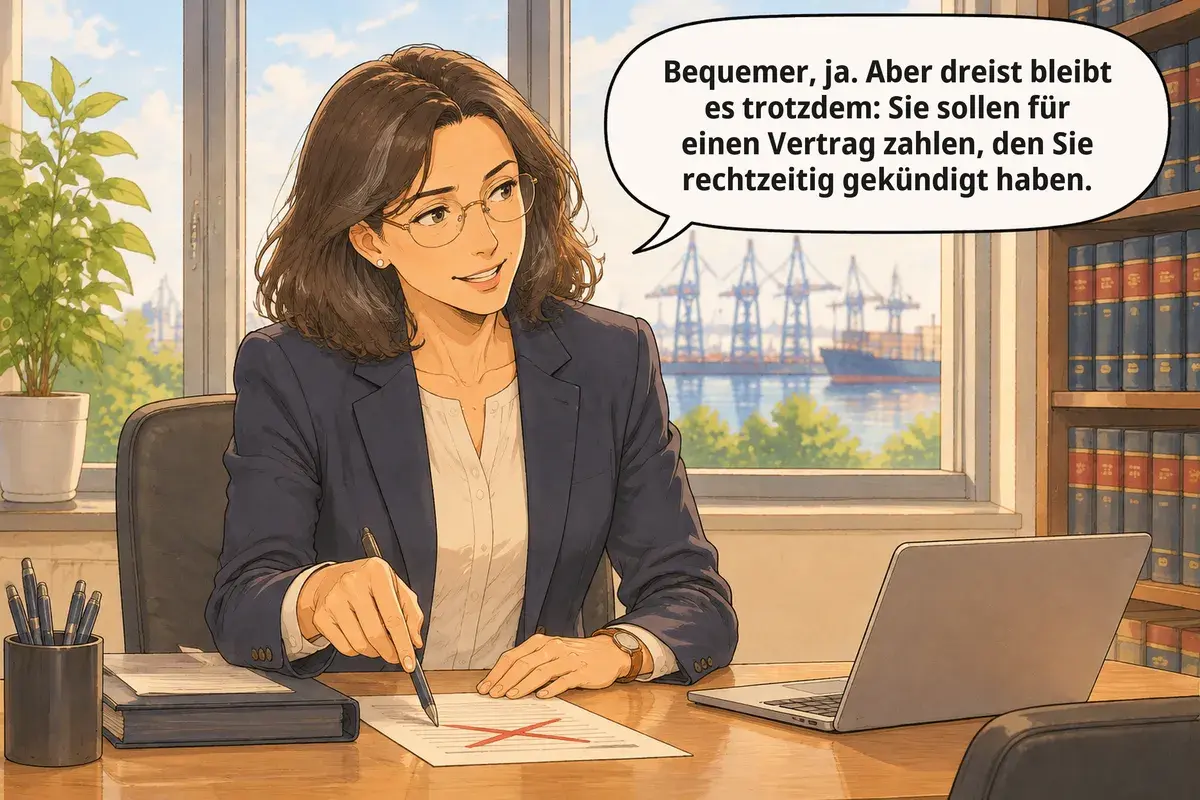
Bequemer, ja. Aber dreist bleibt es trotzdem: Sie sollen für einen Vertrag zahlen, den Sie rechtzeitig gekündigt haben.
More convenient, yes. But it's still brazen: you're supposed to pay for a contract that you canceled on time. (formal)
- Katja
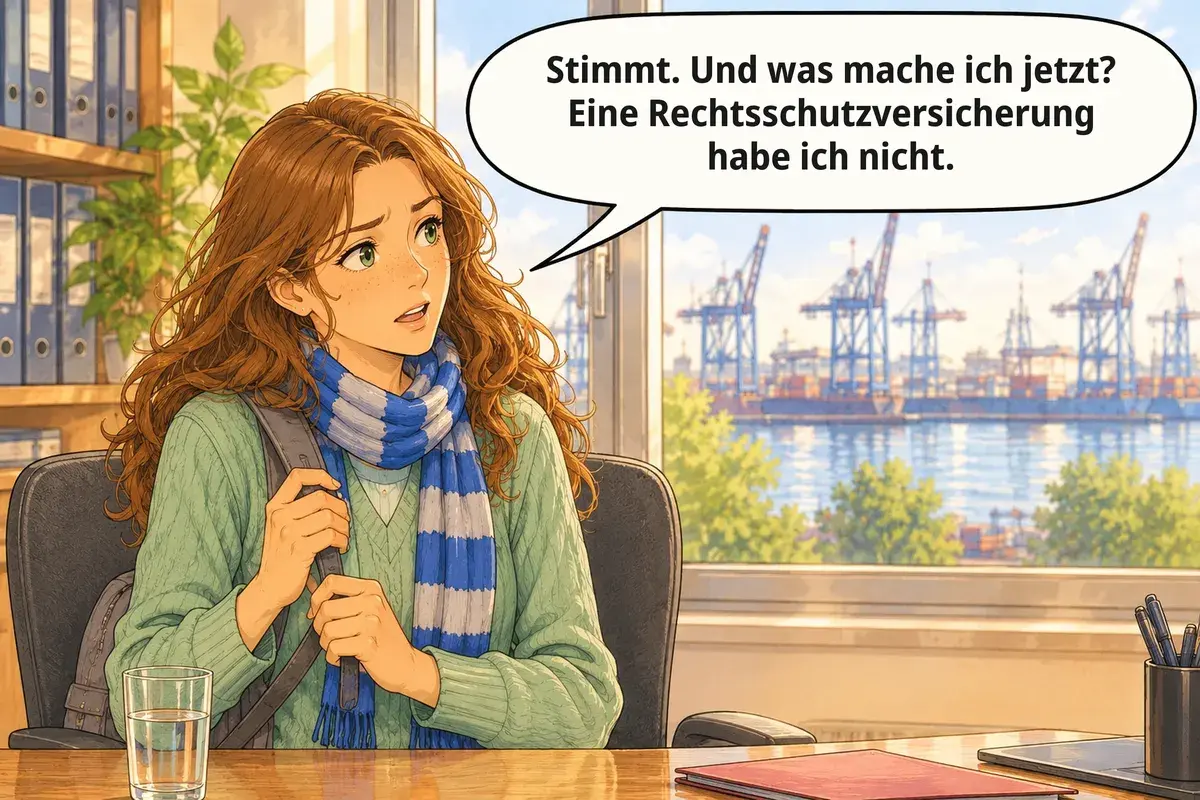
Stimmt. Und was mache ich jetzt? Eine Rechtsschutzversicherung habe ich nicht.
Right. So what do I do now? I don't have legal expenses insurance.
- Anwältin
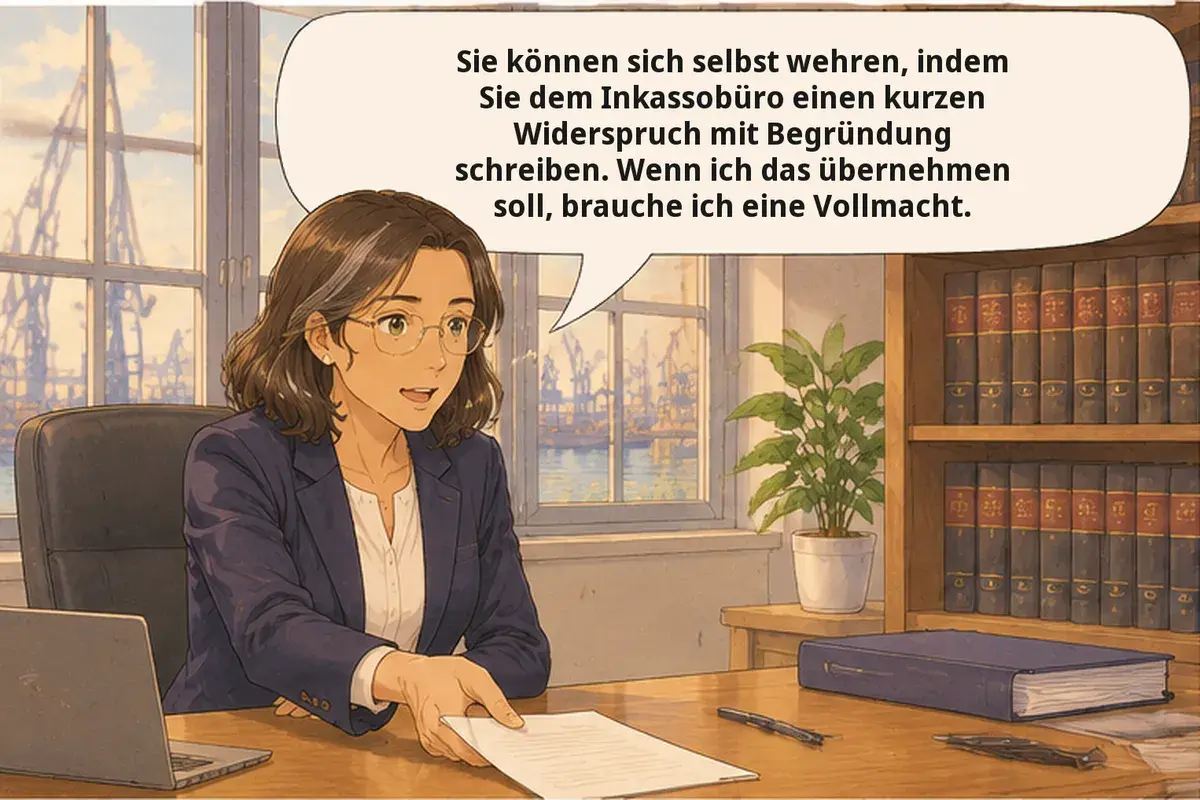
Sie können sich selbst wehren, indem Sie dem Inkassobüro einen kurzen Widerspruch mit Begründung schreiben. Wenn ich das übernehmen soll, brauche ich eine Vollmacht.
You can defend yourself by writing the debt collection agency a short objection with reasons. If you want me to take that on, I'll need a power of attorney. (formal)
- Katja
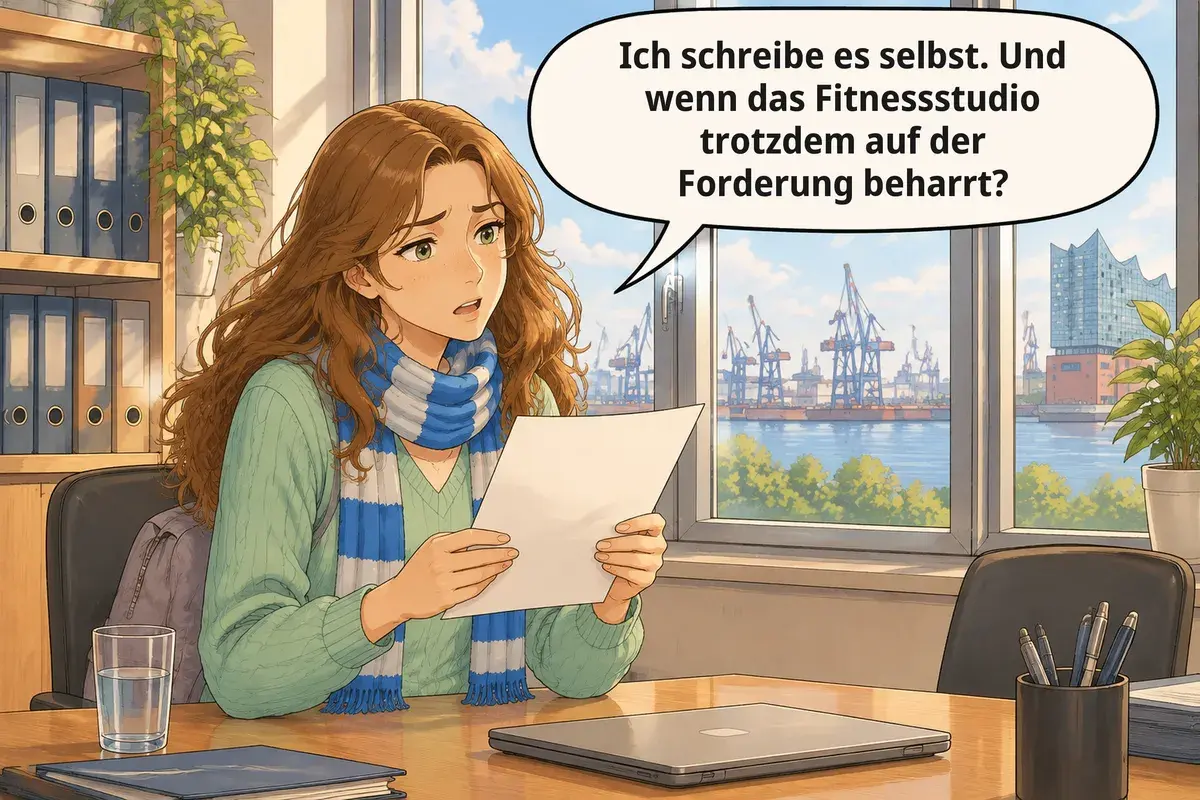
Ich schreibe es selbst. Und wenn das Fitnessstudio trotzdem auf der Forderung beharrt?
I'll write it myself. And what if the gym still insists on its claim?
- Anwältin
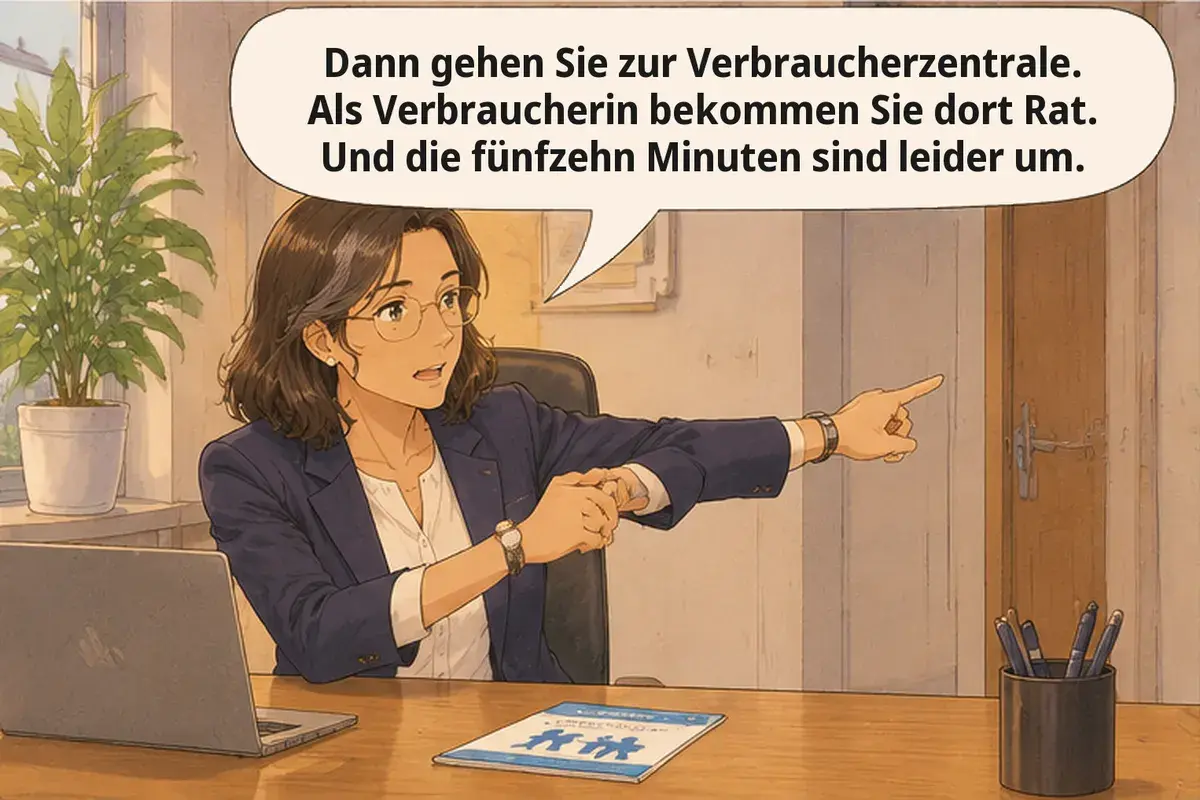
Dann gehen Sie zur Verbraucherzentrale. Als Verbraucherin bekommen Sie dort Rat. Und die fünfzehn Minuten sind leider um.
Then go to the consumer advice center. As a consumer, you'll get advice there. And the fifteen minutes are unfortunately up. (formal)
- Katja
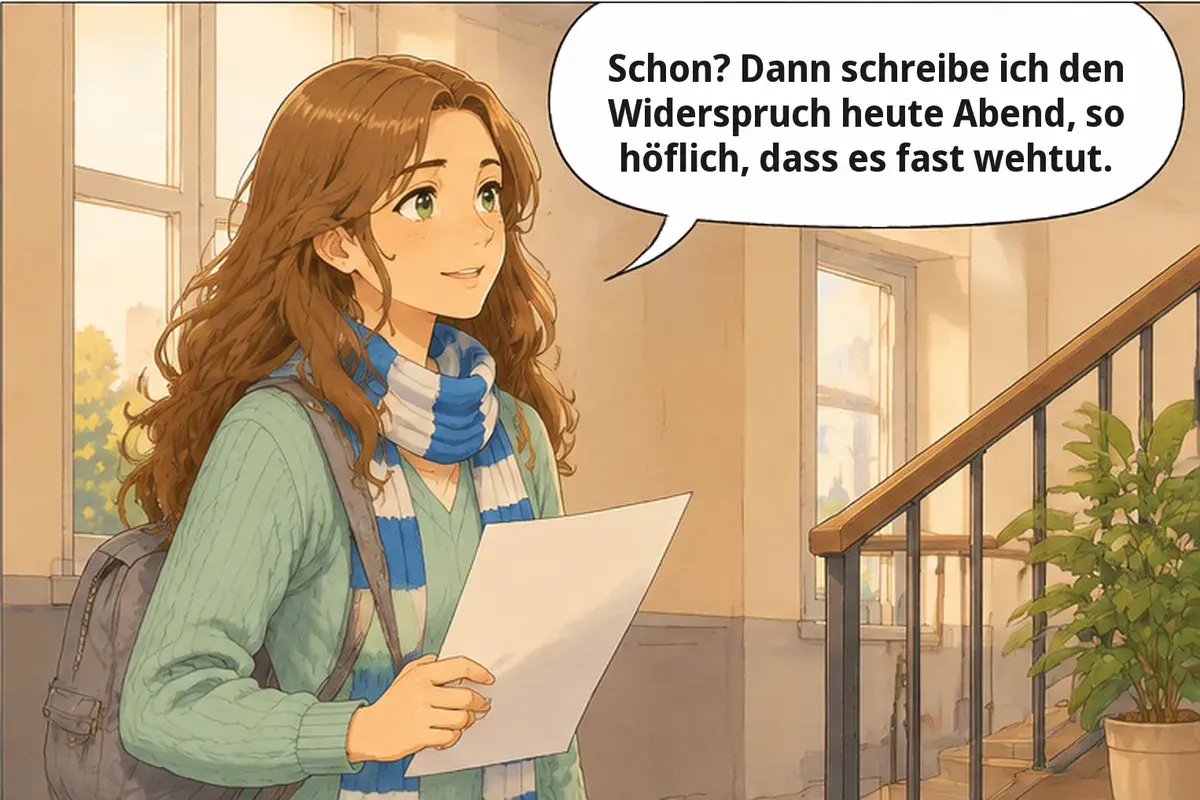
Schon? Dann schreibe ich den Widerspruch heute Abend, so höflich, dass es fast wehtut.
Already? Then I'll write the objection tonight, so politely that it almost hurts.
Grammar for this text
- Wir haben fünfzehn Minuten, dann habe ich schon den nächsten Termin. — after
dannthe verb comes right away (habe), thenich.der Terminis an appointment, with a lawyer too. - Schildern Sie mir bitte kurz den Sachverhalt. — a request with
Sie: the verb comes first.miris dative ("to me"),den Sachverhaltis accusative. - Dort sagt man, dass man den Brief nie bekommen hat. Trotzdem wird weiter abgebucht. —
wird abgebuchtis a passive without a doer: it doesn't matter who exactly is debiting. Afterdassthe verb goes to the end. - Es droht Ihnen mit weiteren Kosten —
drohen: the person is in the dative (Ihnen), the threat comes with the prepositionmit. - Ich dachte, die Firma sitzt am längeren Hebel. —
am längeren Hebel sitzenmeans "to have the upper hand". The answer: Nicht, wenn Sie im Recht sind und es beweisen können. —im Recht seinmeans "to be in the right"; in the subordinate clause both verbs stand at the end. - Sie können sich selbst wehren, indem Sie dem Inkassobüro einen kurzen Widerspruch mit Begründung schreiben. —
indemmeans "by -ing": it explains how exactly to defend yourself. The verbschreibenis at the end. - Ehrlich gesagt wäre es bequemer zu zahlen. Dann hätte ich meine Ruhe. — the Konjunktiv II:
wäre,hättemean "would be", "I would have".
Words and grammar of the unit: Stand up for your rights with a company.
Learn the words from the texts with flashcards
In the app, you can tap any word in a text to see its translation, forms and examples, and new words stick with flashcards. 15 minutes a day.
Start for freeEverything is open for free. No card needed to sign up.