

German dialogue with translation · B2 · 15 lines
Das ist aber teuer hier It's really expensive here
Comic · 15 panels
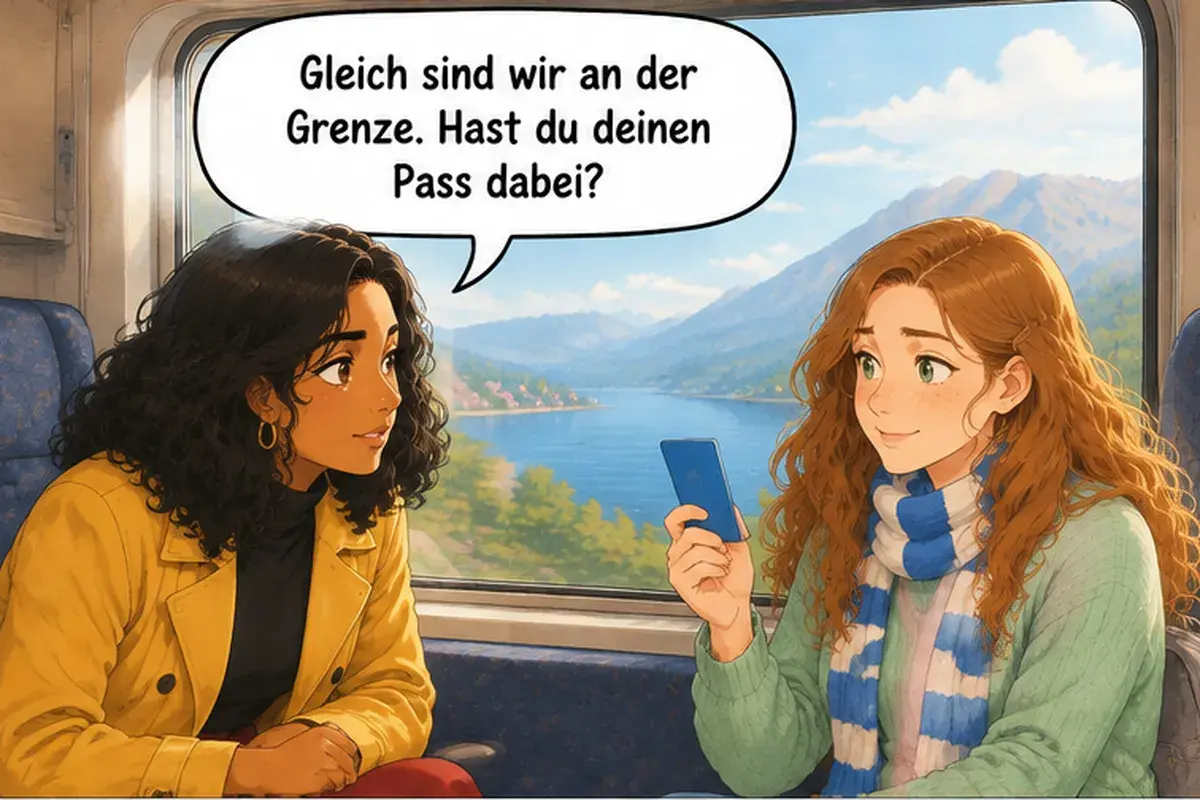
- Priya
Gleich sind wir an der Grenze. Hast du deinen Pass dabei?
We'll be at the border soon. Do you have your passport with you?
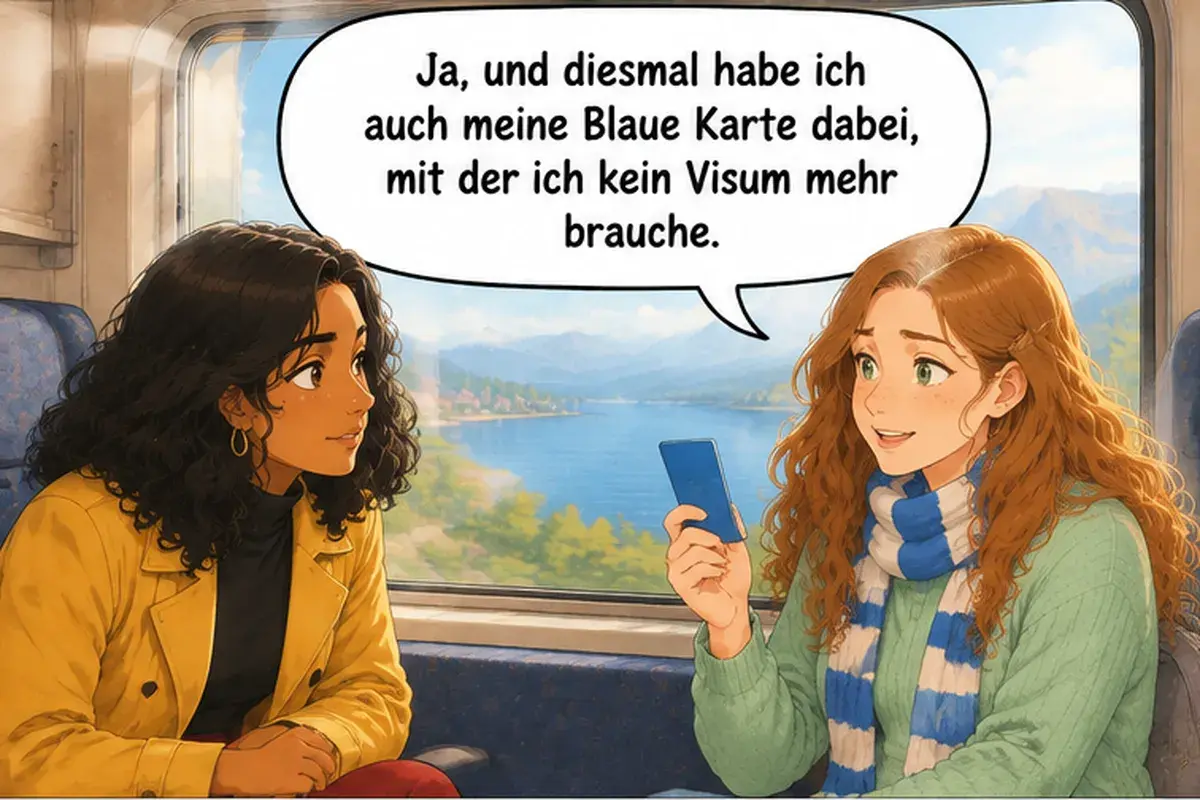
- Katja
Ja, und diesmal habe ich auch meine Blaue Karte dabei, mit der ich kein Visum mehr brauche.
Yes, and this time I also have my Blue Card with me, so I don't need a visa anymore.
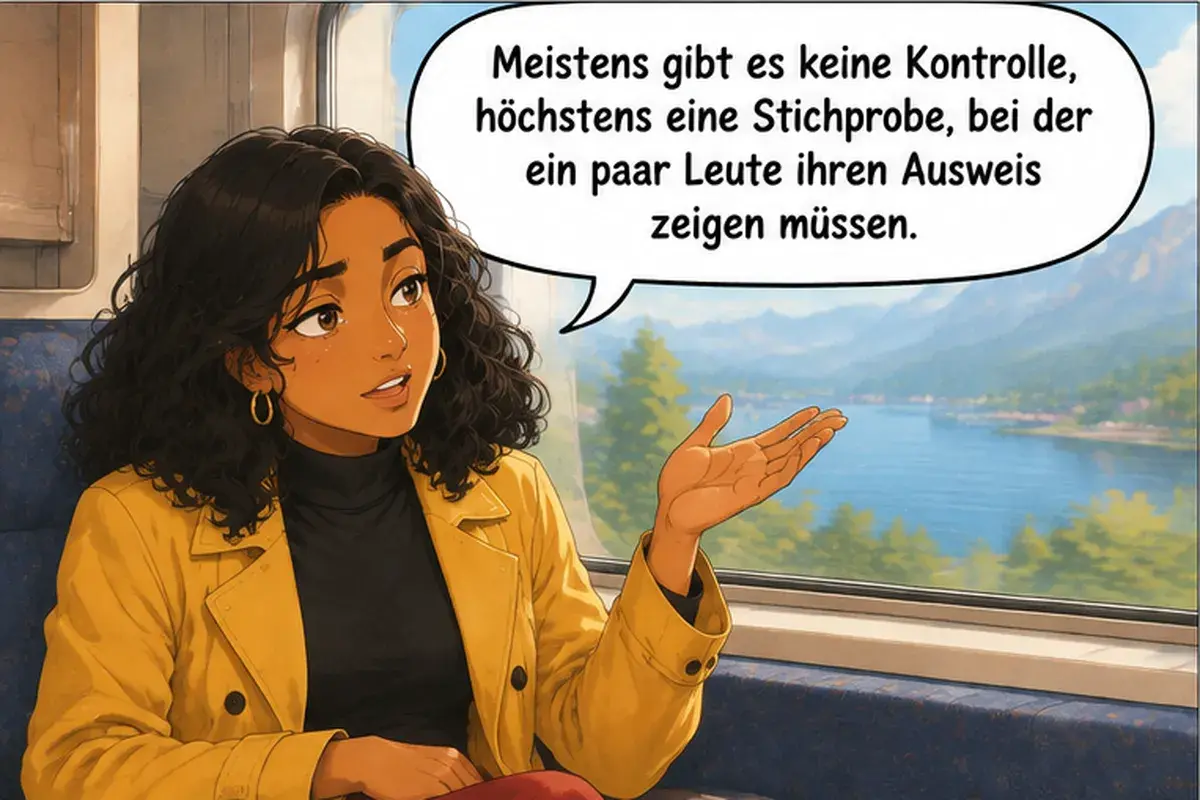
- Priya
Meistens gibt es keine Kontrolle, höchstens eine Stichprobe, bei der ein paar Leute ihren Ausweis zeigen müssen.
Usually there's no check, at most a spot check where a few people have to show their ID.
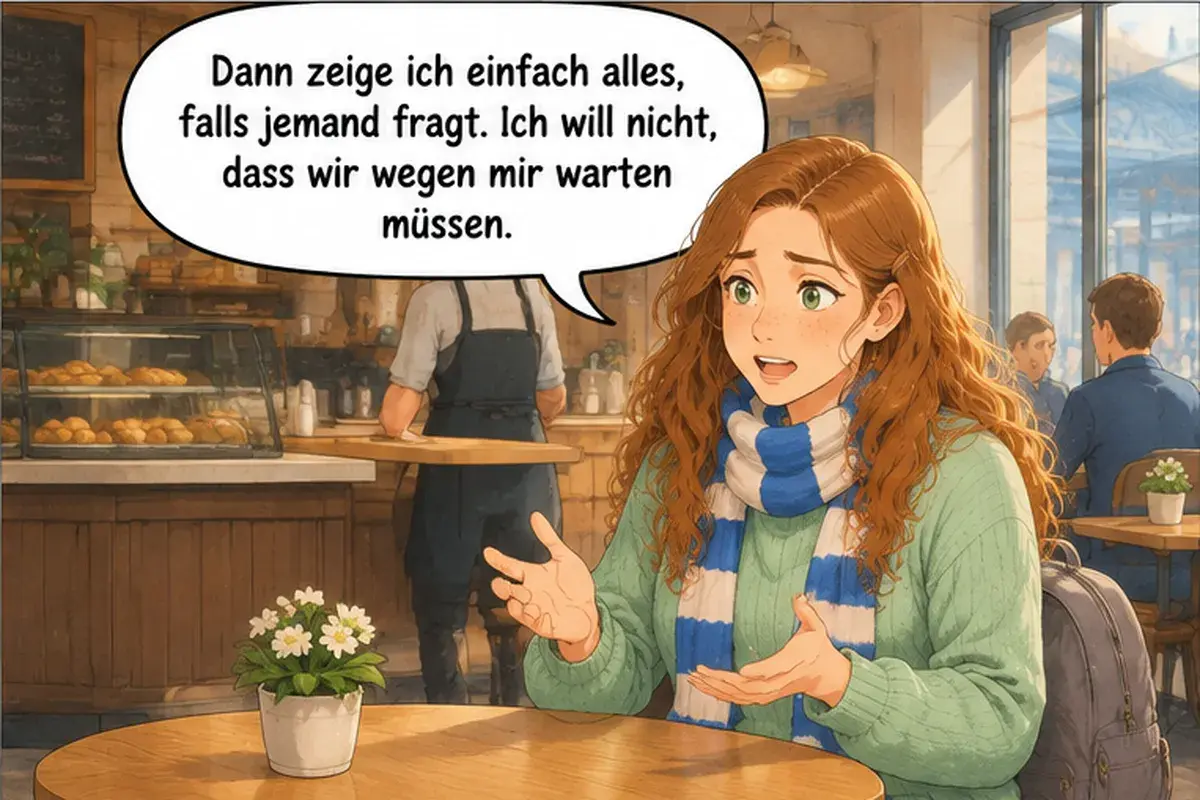
- Katja
Dann zeige ich einfach alles, falls jemand fragt. Ich will nicht, dass wir wegen mir warten müssen.
Then I'll just show everything, in case anyone asks. I don't want us to have to wait because of me.
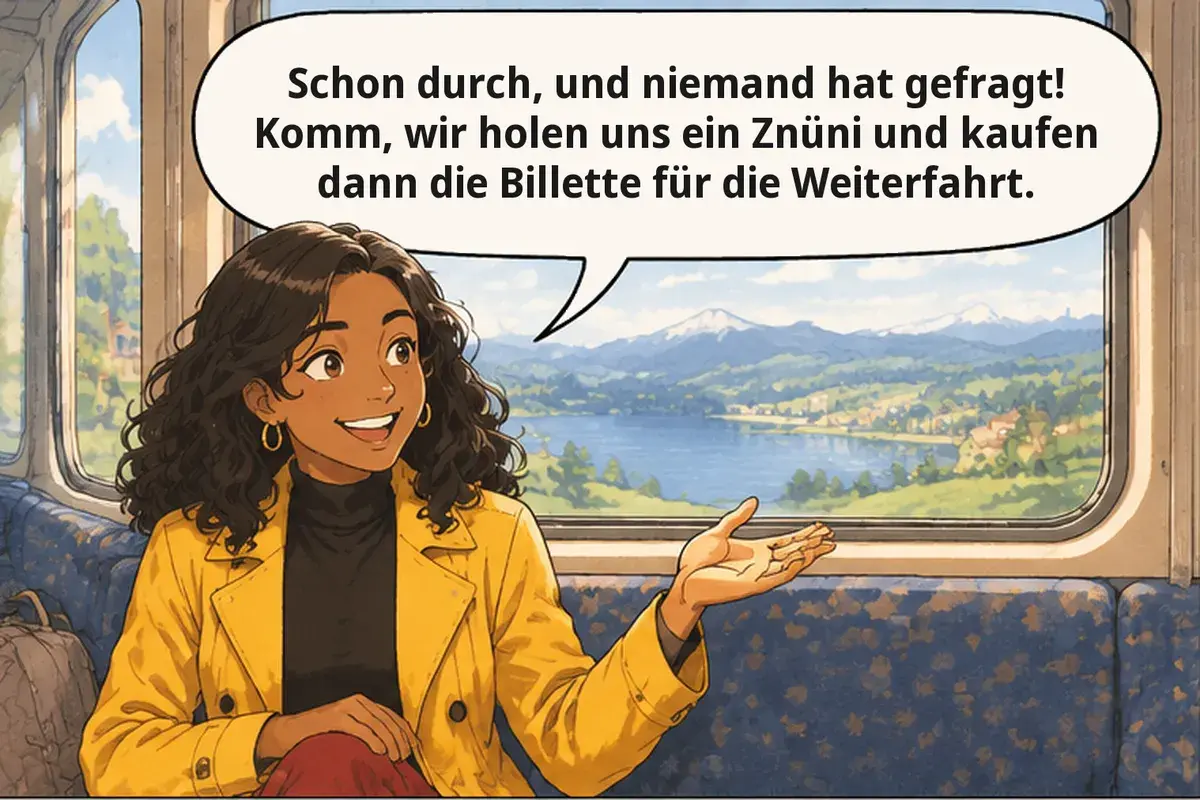
- Priya
Schon durch, und niemand hat gefragt! Komm, wir holen uns ein Znüni und kaufen dann die Billette für die Weiterfahrt.
We're through already, and nobody asked! Come on, let's grab a Znüni and then buy the tickets for the rest of the trip.
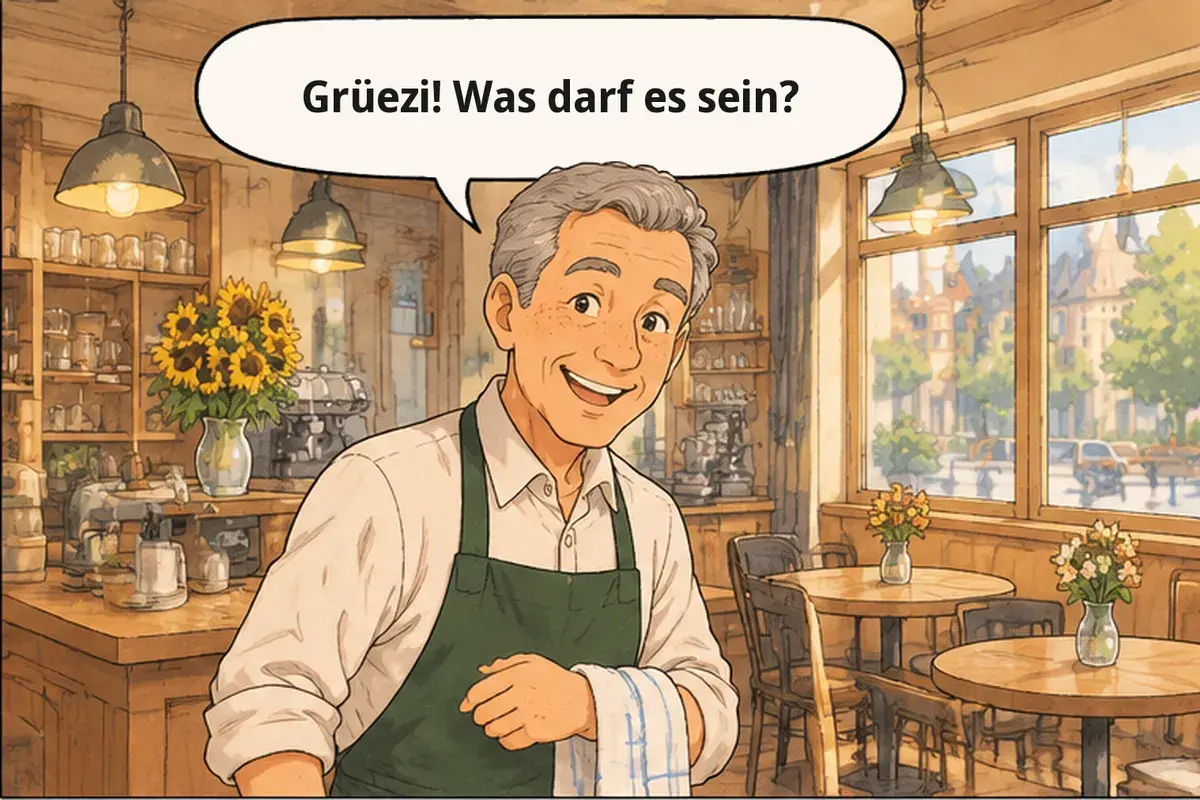
- Schweizer
Grüezi! Was darf es sein?
Hello! What can I get you?
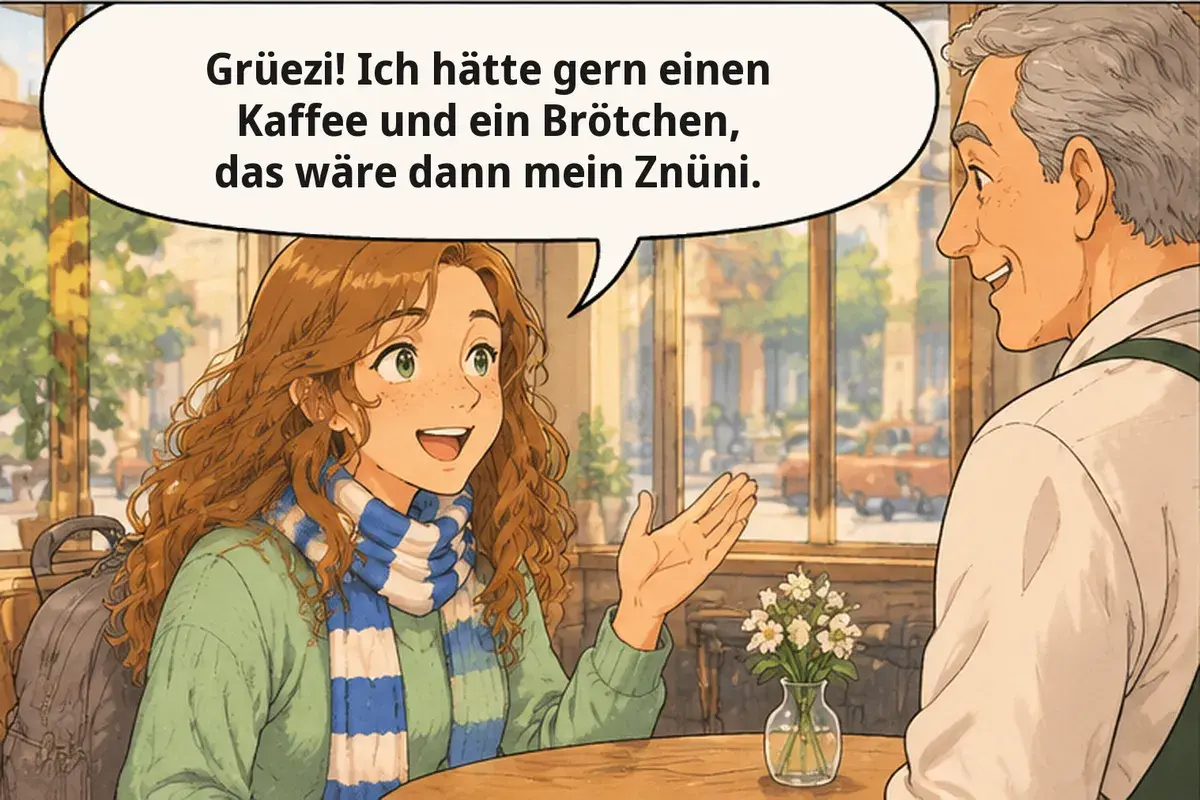
- Katja
Grüezi! Ich hätte gern einen Kaffee und ein Brötchen, das wäre dann mein Znüni.
Hello! I'd like a coffee and a roll, that'll be my Znüni.
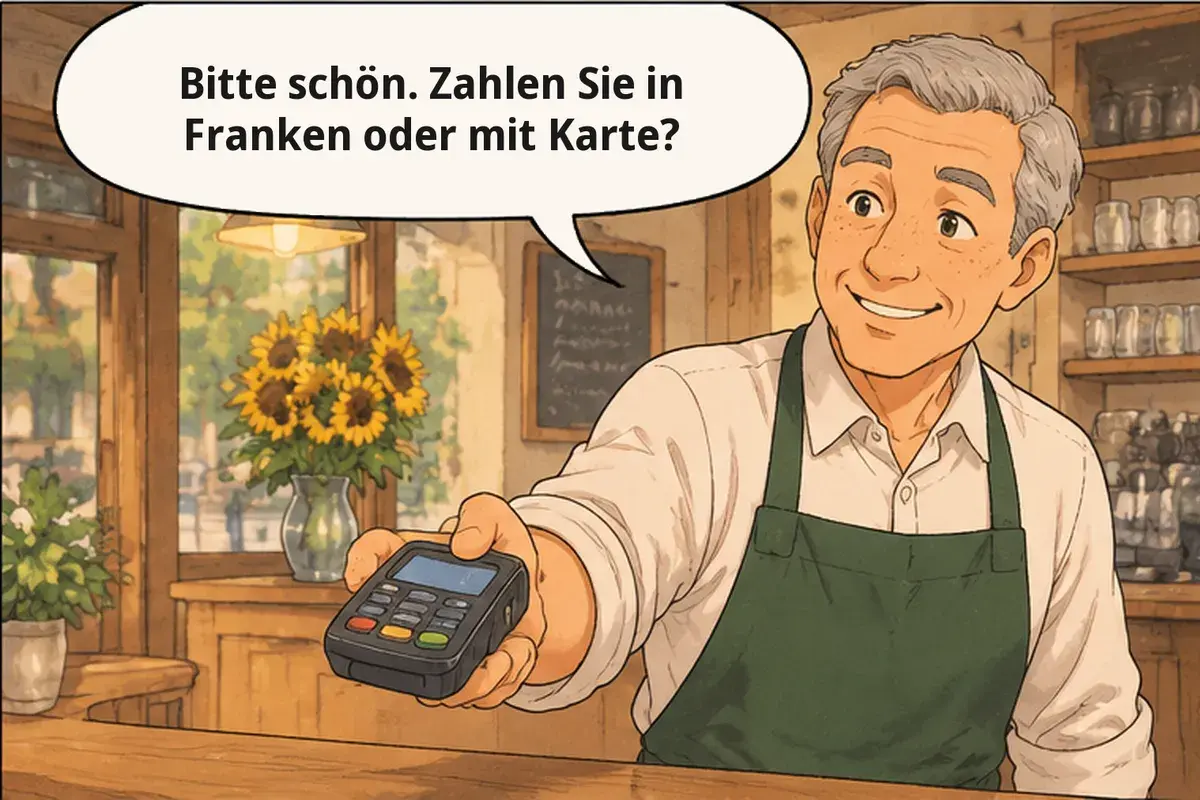
- Schweizer
Bitte schön. Zahlen Sie in Franken oder mit Karte?
Here you go. Are you paying in francs or by card? (formal)

- Katja
Mit Karte, bitte. Merci vielmal!
By card, please. Thank you very much!
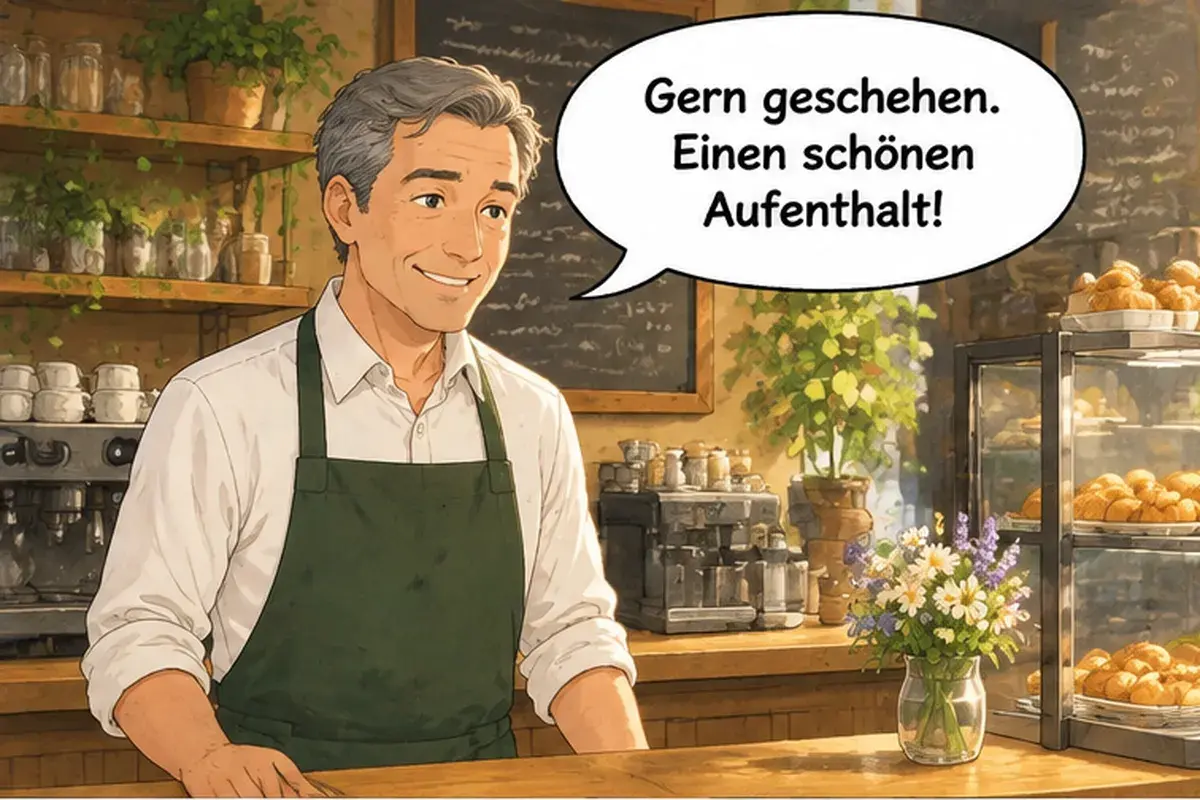
- Schweizer
Gern geschehen. Einen schönen Aufenthalt!
You're welcome. Enjoy your stay!
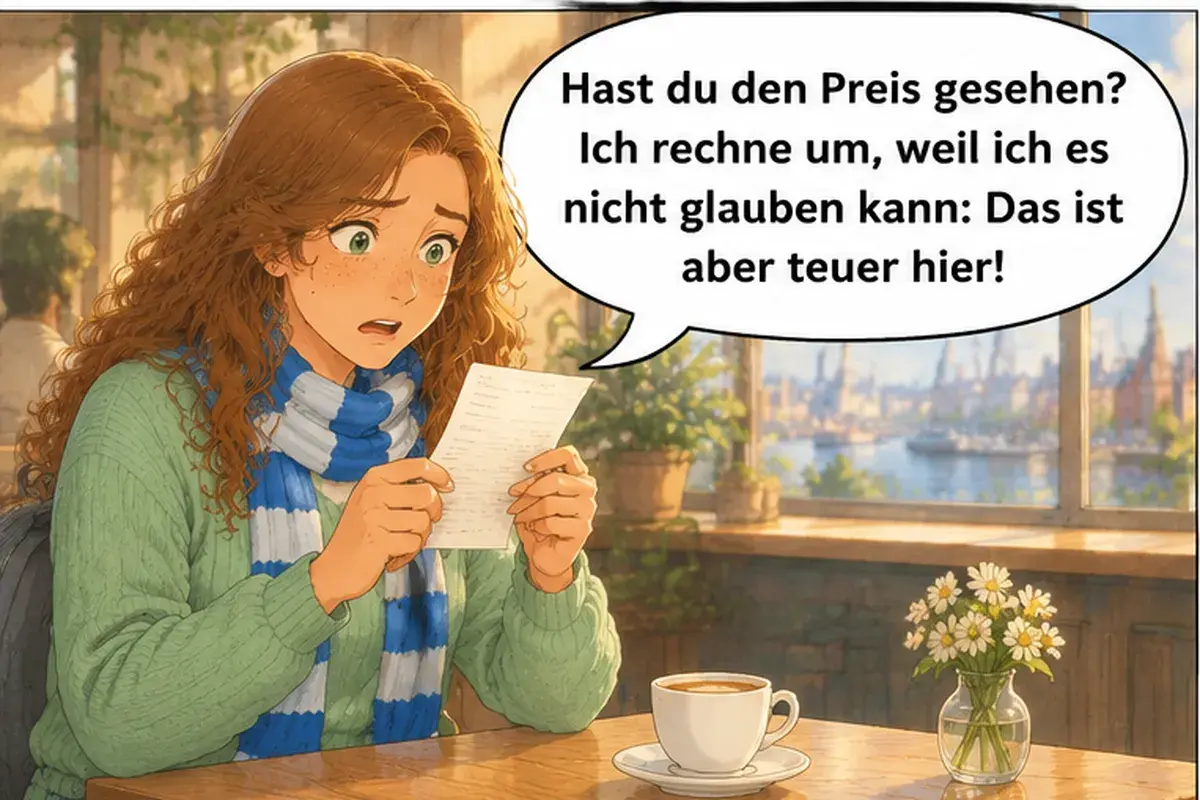
- Katja
Hast du den Preis gesehen? Ich rechne um, weil ich es nicht glauben kann: Das ist aber teuer hier!
Did you see the price? I'm converting it because I can't believe it: It's really expensive here!
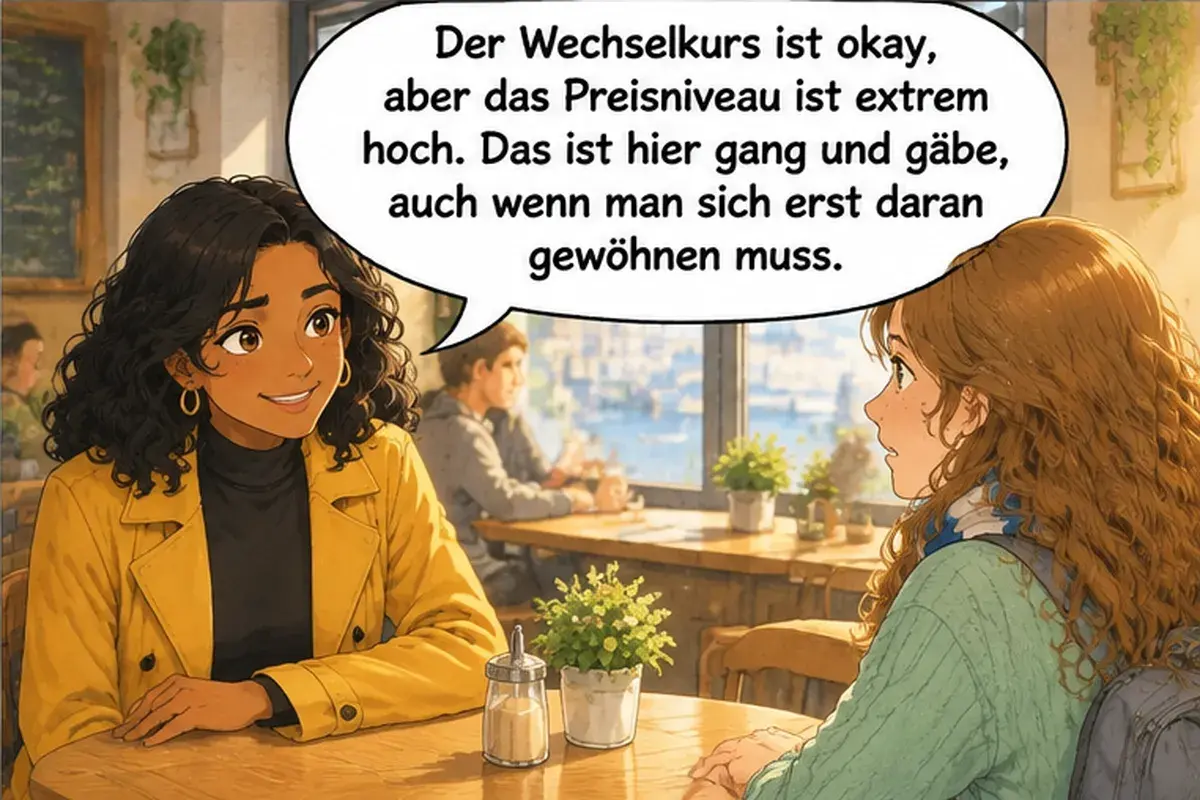
- Priya
Der Wechselkurs ist okay, aber das Preisniveau ist extrem hoch. Das ist hier gang und gäbe, auch wenn man sich erst daran gewöhnen muss.
The exchange rate is okay, but the price level is extremely high. That's normal here, even if you have to get used to it first.
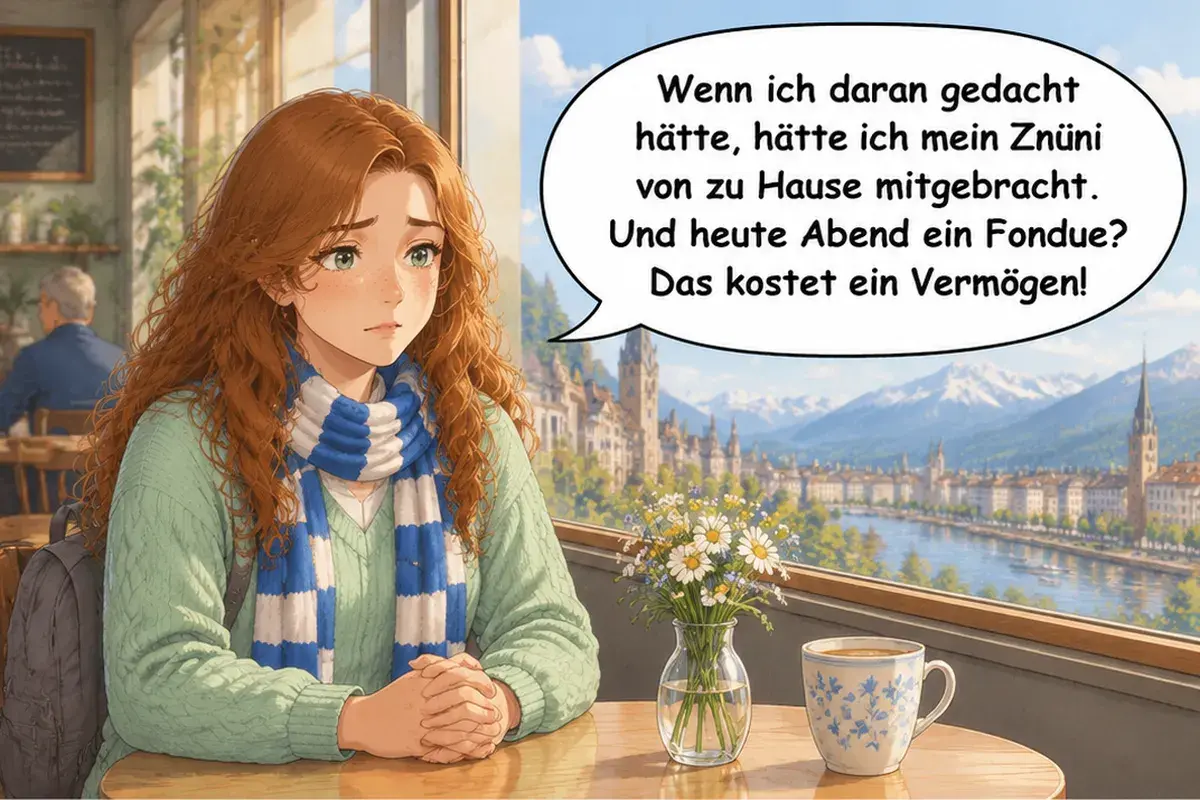
- Katja
Wenn ich daran gedacht hätte, hätte ich mein Znüni von zu Hause mitgebracht. Und heute Abend ein Fondue? Das kostet ein Vermögen!
If I had thought of it, I would have brought my Znüni from home. And a fondue tonight? That costs a fortune!
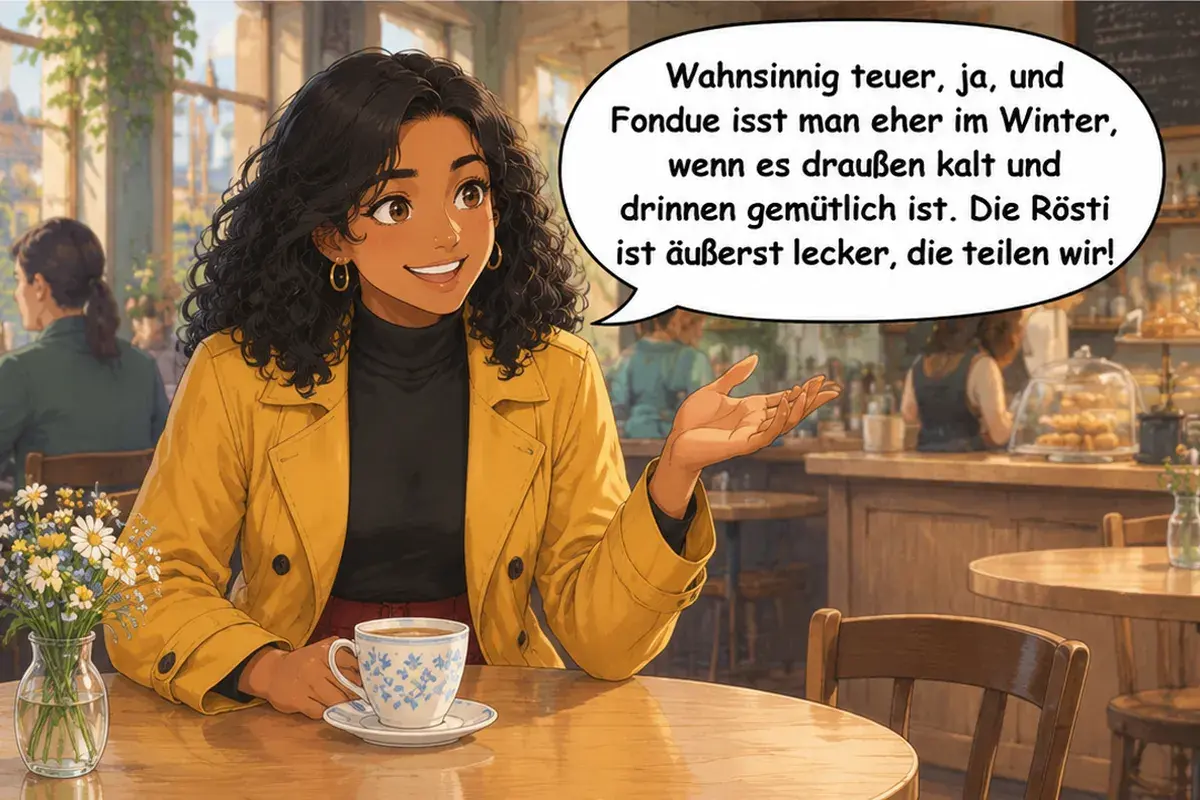
- Priya
Wahnsinnig teuer, ja, und Fondue isst man eher im Winter, wenn es draußen kalt und drinnen gemütlich ist. Die Rösti ist äußerst lecker, die teilen wir!
Crazy expensive, yes, and people eat fondue more in winter, when it's cold outside and cozy inside. The rösti is extremely tasty, we'll share it!
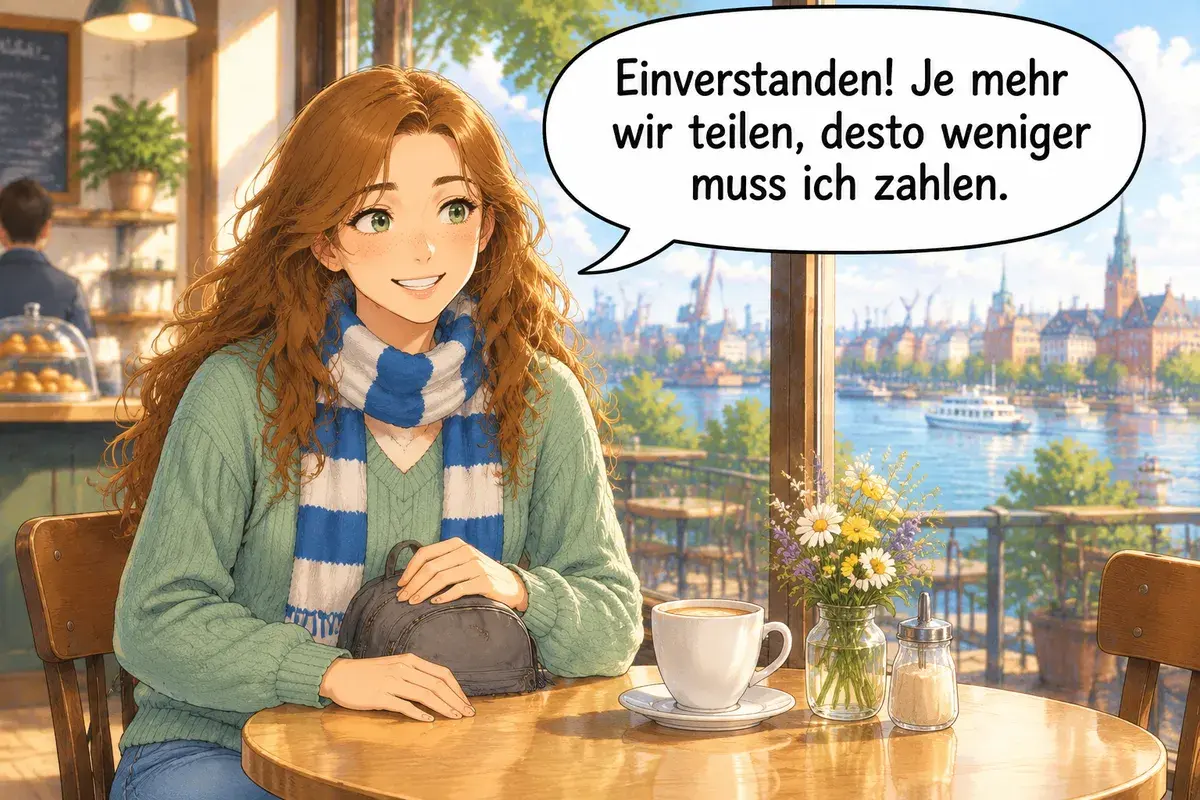
- Katja
Einverstanden! Je mehr wir teilen, desto weniger muss ich zahlen.
Agreed! The more we share, the less I have to pay.
Grammar for this text
- meine Blaue Karte, mit der ich kein Visum mehr brauche —
mit dermeans "with which":deris dative feminine (die Karte), and the verbbrauchegoes to the end. The same pattern: eine Stichprobe, bei der ein paar Leute ihren Ausweis zeigen müssen. - wir holen uns ein Znüni und kaufen dann die Billette —
Billettis a Swiss word; in Germany people sayFahrkarte.Znüniis Swiss too: a snack around nine in the morning.wir holen unsmeans "we'll get ourselves", andunsis dative here. - Ich hätte gern einen Kaffee und ein Brötchen, das wäre dann mein Znüni —
ich hätte gernis the polite "I'd like", the Konjunktiv II (would-form) ofhaben;das wäreis the Konjunktiv II ofsein: "that would be". - Wenn ich daran gedacht hätte, hätte ich mein Znüni von zu Hause mitgebracht — something unreal in the past: "if I had thought of it, I would have brought". Both parts use
hätte+ past participle:gedacht(fromdenken) andmitgebracht(frommitbringen, withgebetween the prefix and the stem). The subordinate clause comes first, so the main clause starts with the verbhätte. - wenn es draußen kalt und drinnen gemütlich ist —
gemütlichmeans "cozy", an adjective ending in-lich(the topic of this unit).wennhere means "when" (every time), and the verbistgoes to the end. - Fondue isst man eher im Winter —
isstis themanform ofessen(ebecomesi, likegibt). - Je mehr wir teilen, desto weniger muss ich zahlen —
je … destomeans "the more…, the less…". Afterjethe verb goes to the end; afterdestothe order is normal:muss ich.
Words and grammar of the unit: Take a trip to Switzerland.
Learn the words from the texts with flashcards
In the app, you can tap any word in a text to see its translation, forms and examples, and new words stick with flashcards. 15 minutes a day.
Start for freeEverything is open for free. No card needed to sign up.