

German dialogue with translation · B2 · 14 lines
Wie gehen wir vor? How do we go about it?
Comic · 14 panels
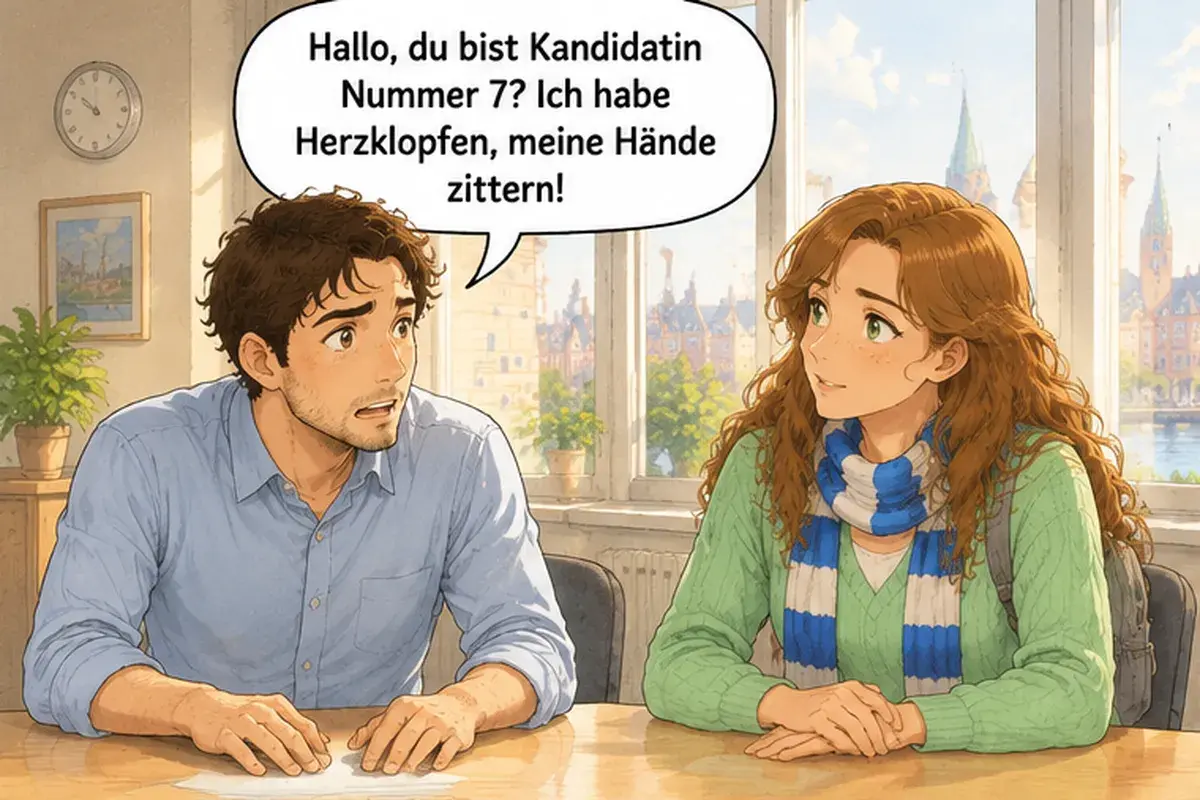
- Partner
Hallo, du bist Kandidatin Nummer 7? Ich habe Herzklopfen, meine Hände zittern!
Hi, are you candidate number 7 (to a woman)? My heart is pounding, my hands are shaking!
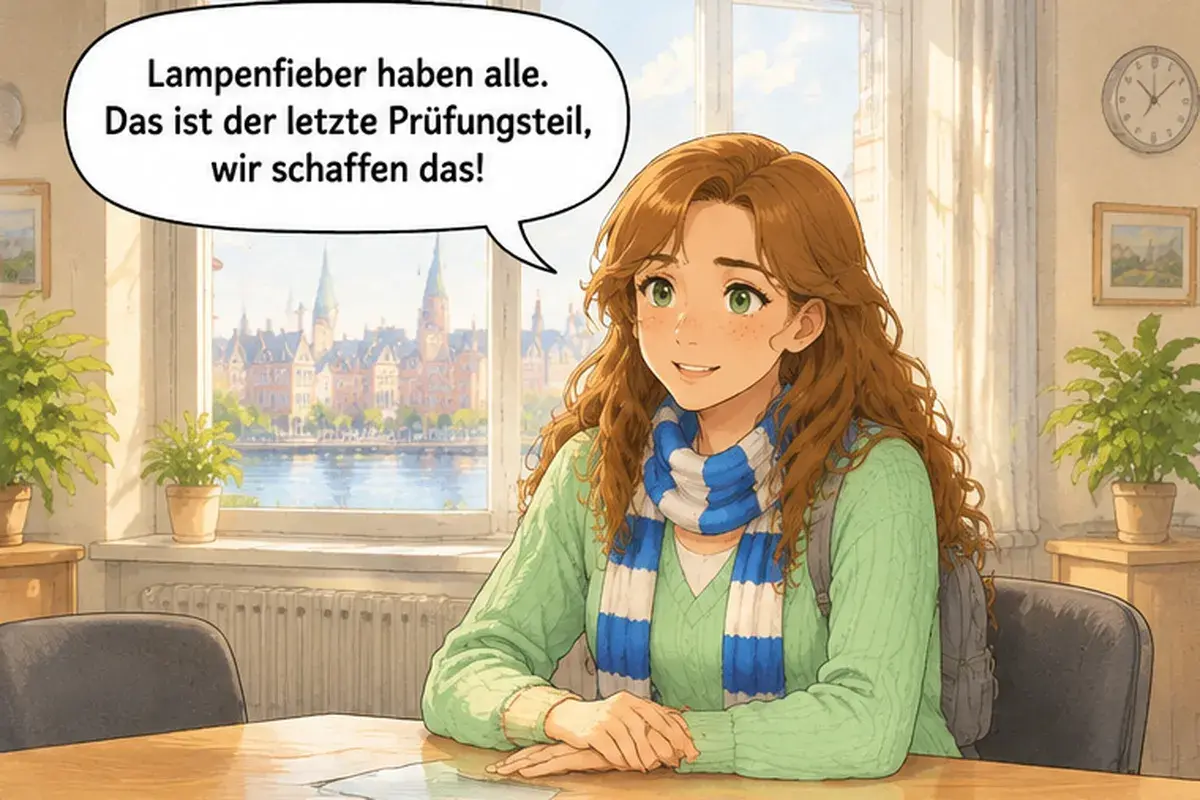
- Katja
Lampenfieber haben alle. Das ist der letzte Prüfungsteil, wir schaffen das!
Everyone gets stage fright. This is the last part of the exam, we can do this!
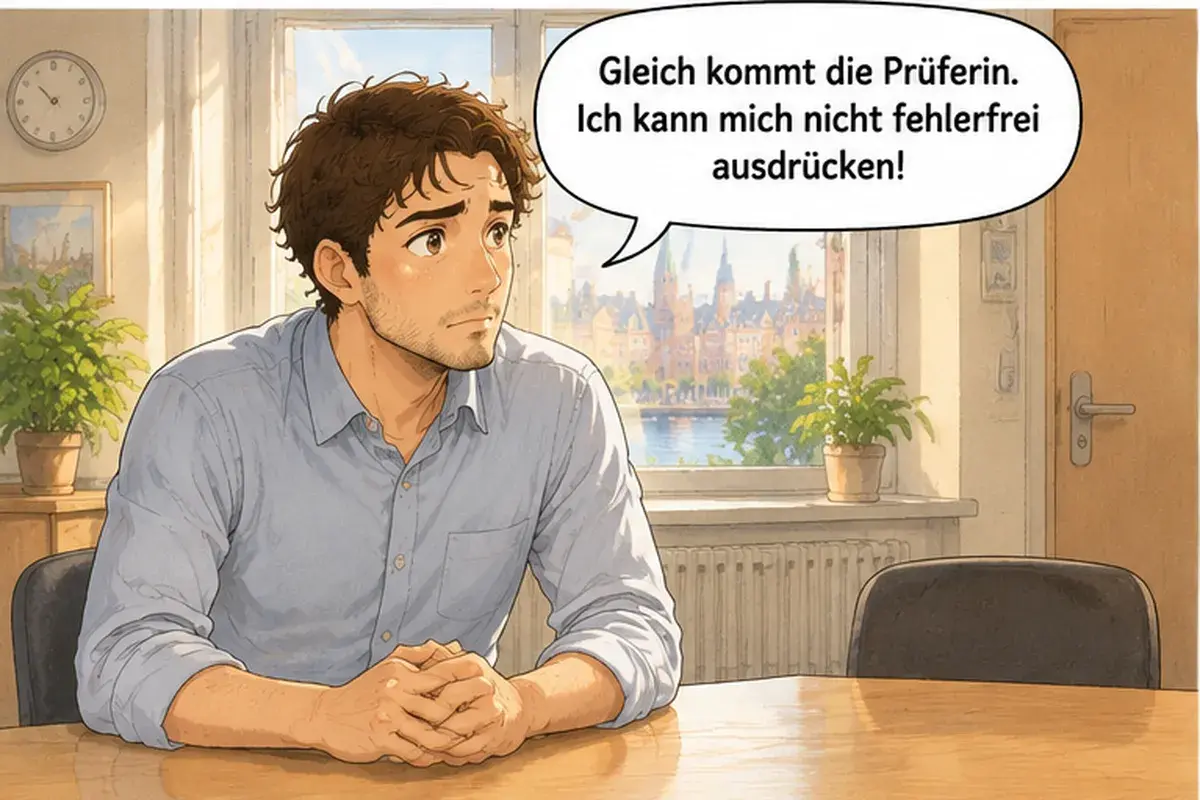
- Partner
Gleich kommt die Prüferin. Ich kann mich nicht fehlerfrei ausdrücken!
The examiner is coming any minute now. I can't express myself without mistakes!
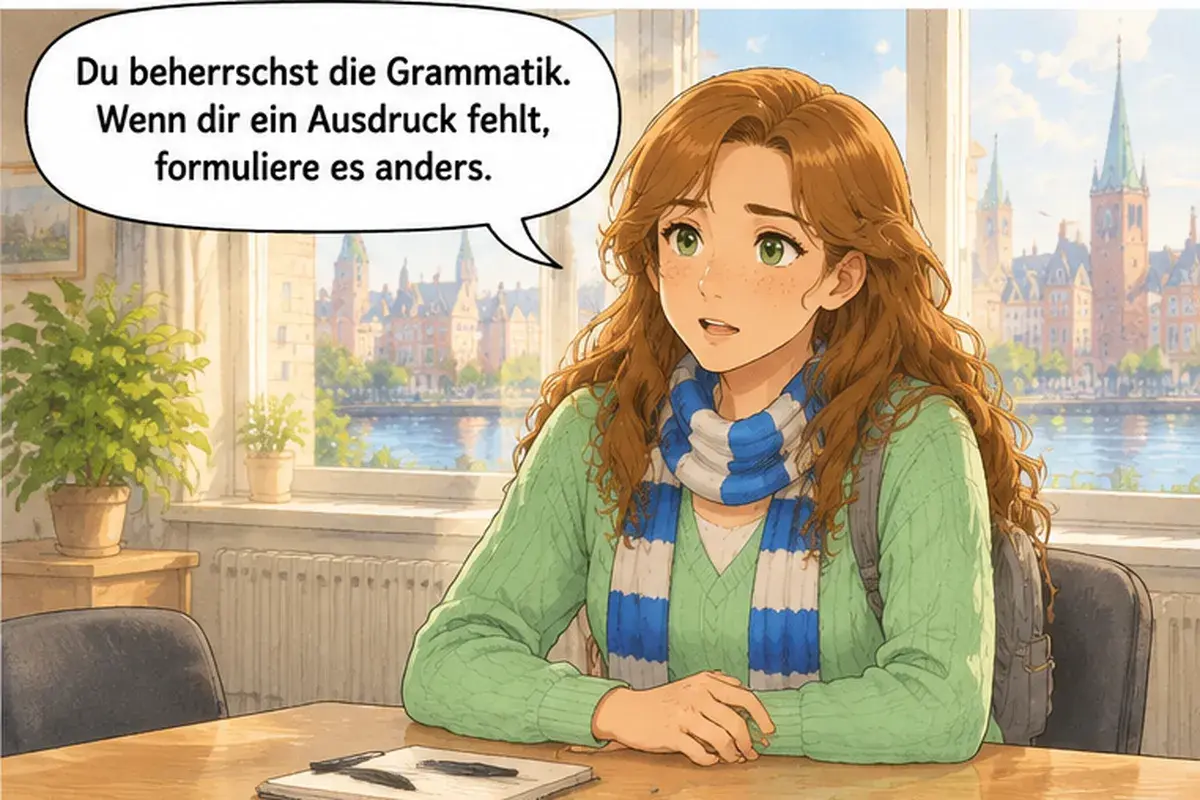
- Katja
Du beherrschst die Grammatik. Wenn dir ein Ausdruck fehlt, formuliere es anders.
You have a good command of the grammar. If you're missing an expression, phrase it differently.
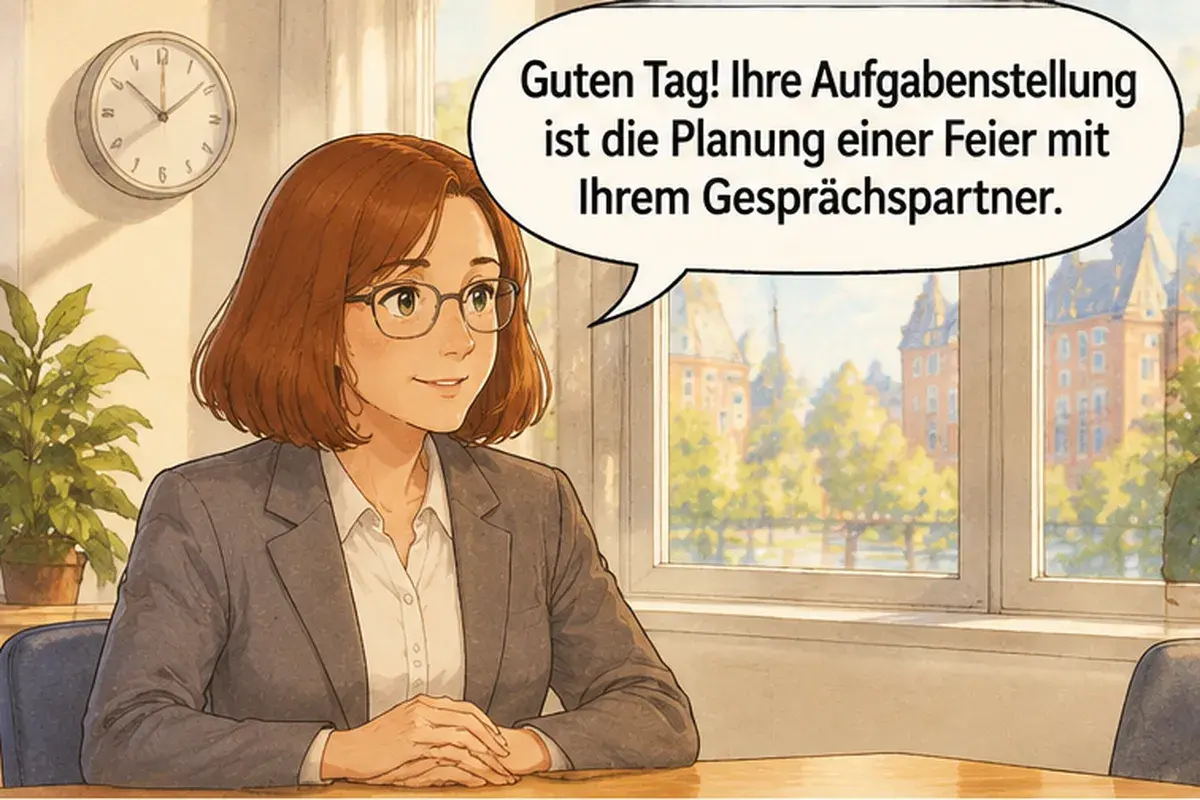
- Prüferin
Guten Tag! Ihre Aufgabenstellung ist die Planung einer Feier mit Ihrem Gesprächspartner.
Hello! Your assigned task is planning a celebration with your conversation partner. (formal)
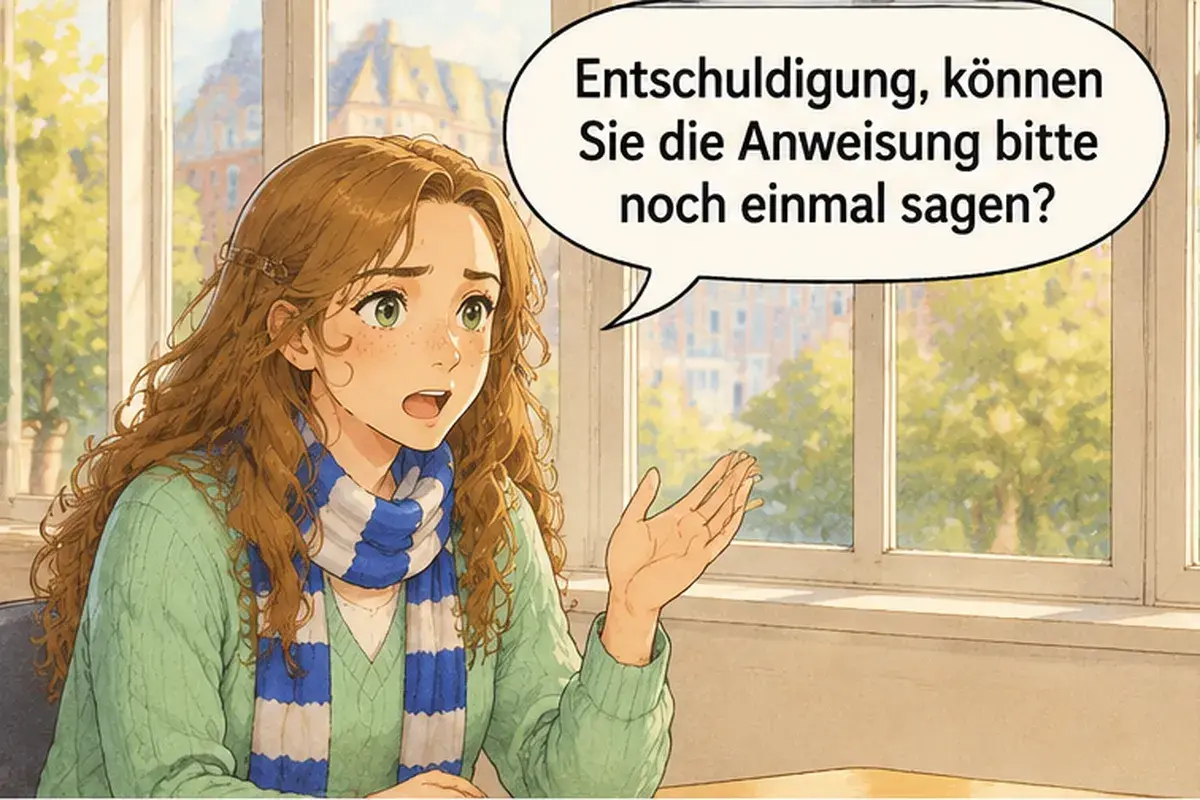
- Katja
Entschuldigung, können Sie die Anweisung bitte noch einmal sagen?
Excuse me, could you please say the instructions again? (formal)
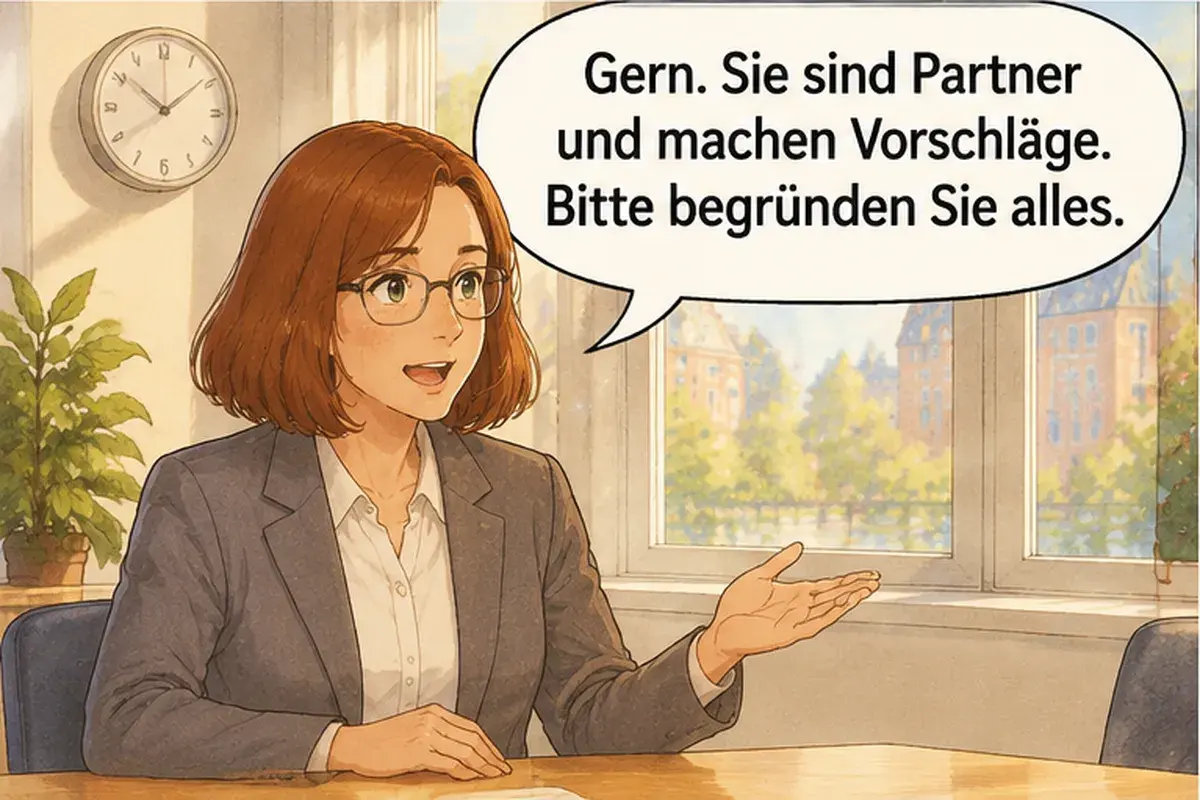
- Prüferin
Gern. Sie sind Partner und machen Vorschläge. Bitte begründen Sie alles.
Sure. You're partners and you make suggestions. Please give reasons for everything. (formal)
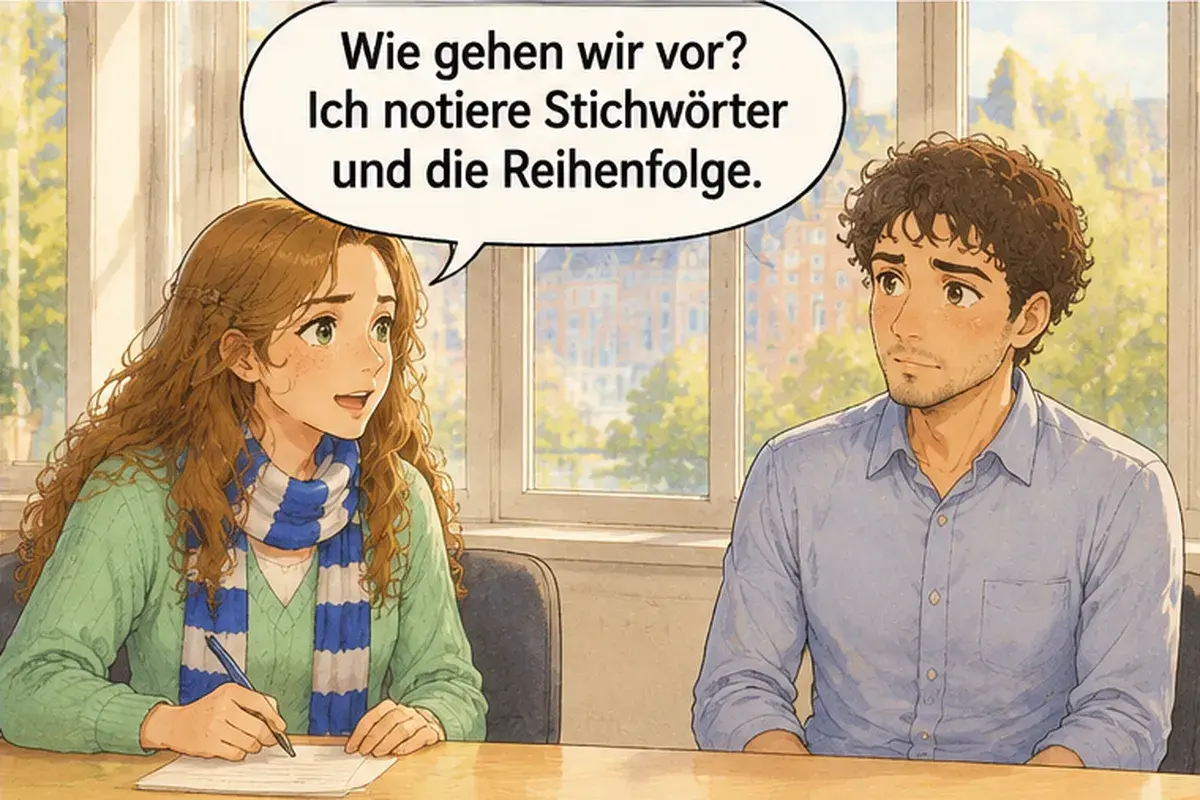
- Katja
Wie gehen wir vor? Ich notiere Stichwörter und die Reihenfolge.
How do we go about it? I'll write down keywords and the order.
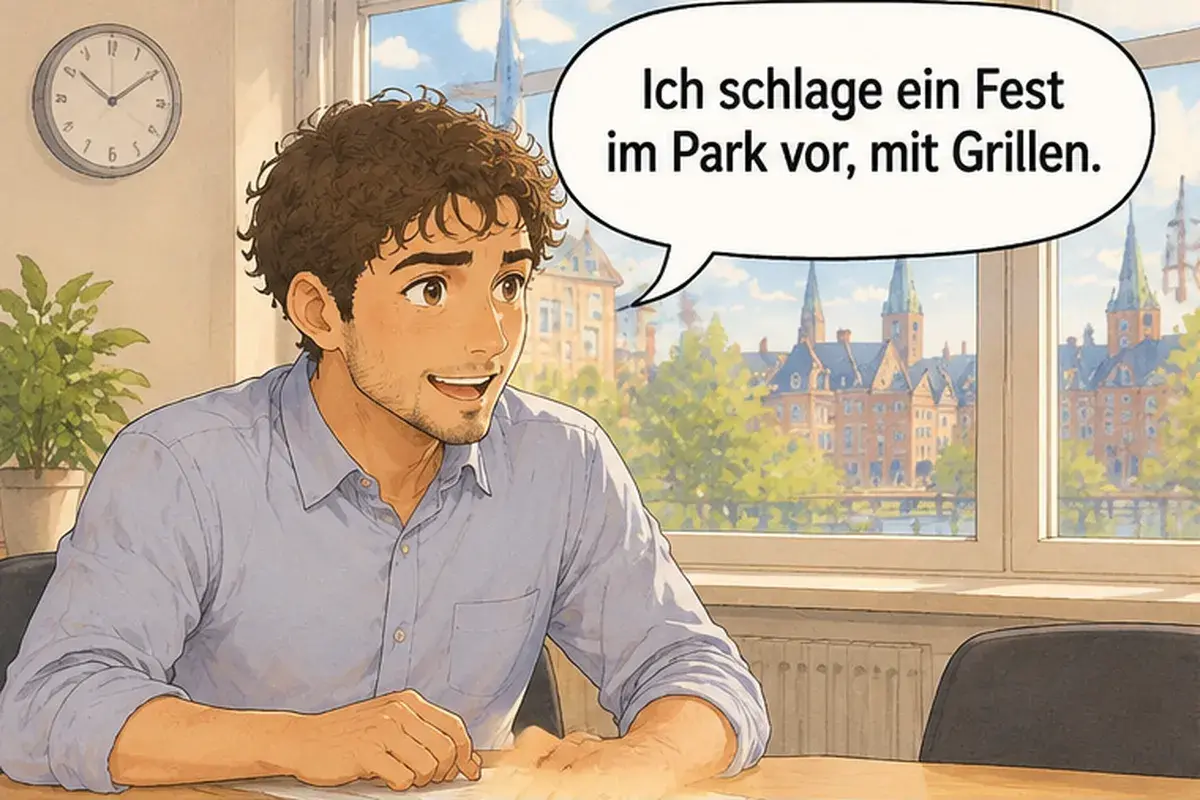
- Partner
Ich schlage ein Fest im Park vor, mit Grillen.
I suggest a party in the park, with a barbecue.
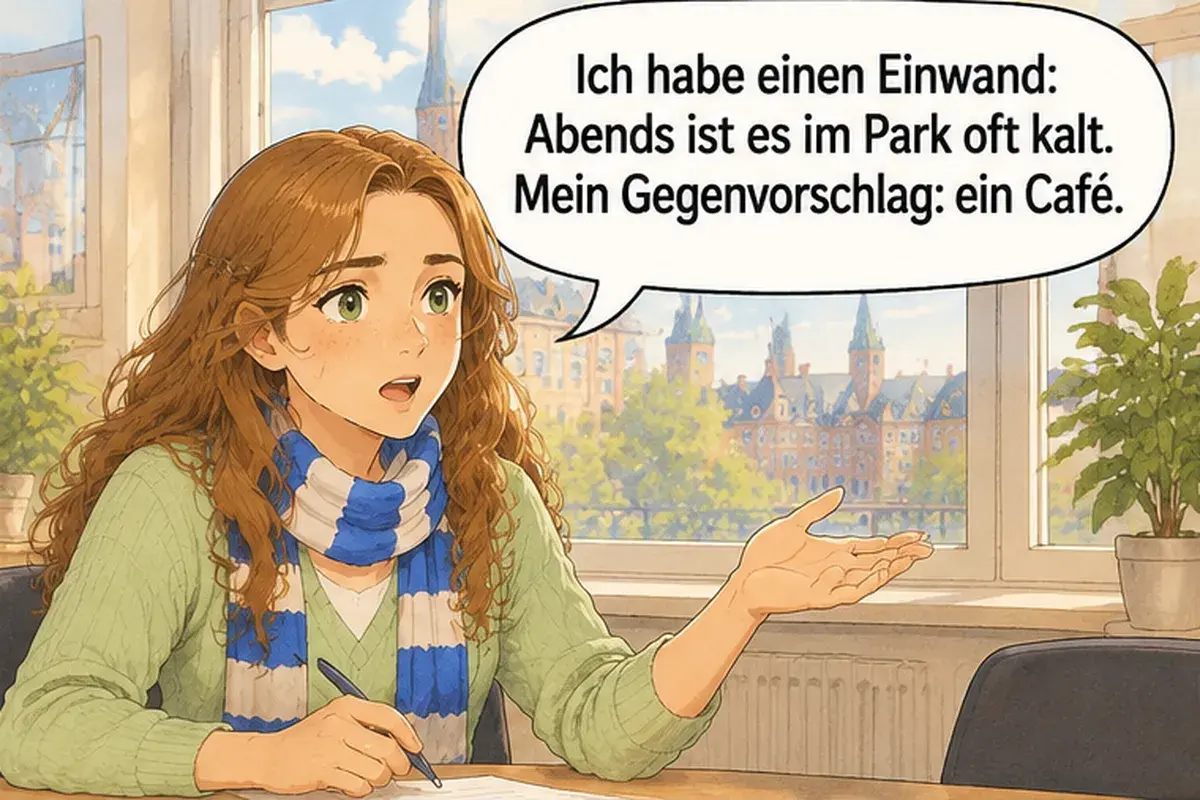
- Katja
Ich habe einen Einwand: Abends ist es im Park oft kalt. Mein Gegenvorschlag: ein Café.
I have an objection: it's often cold in the park in the evening. My counterproposal: a café.
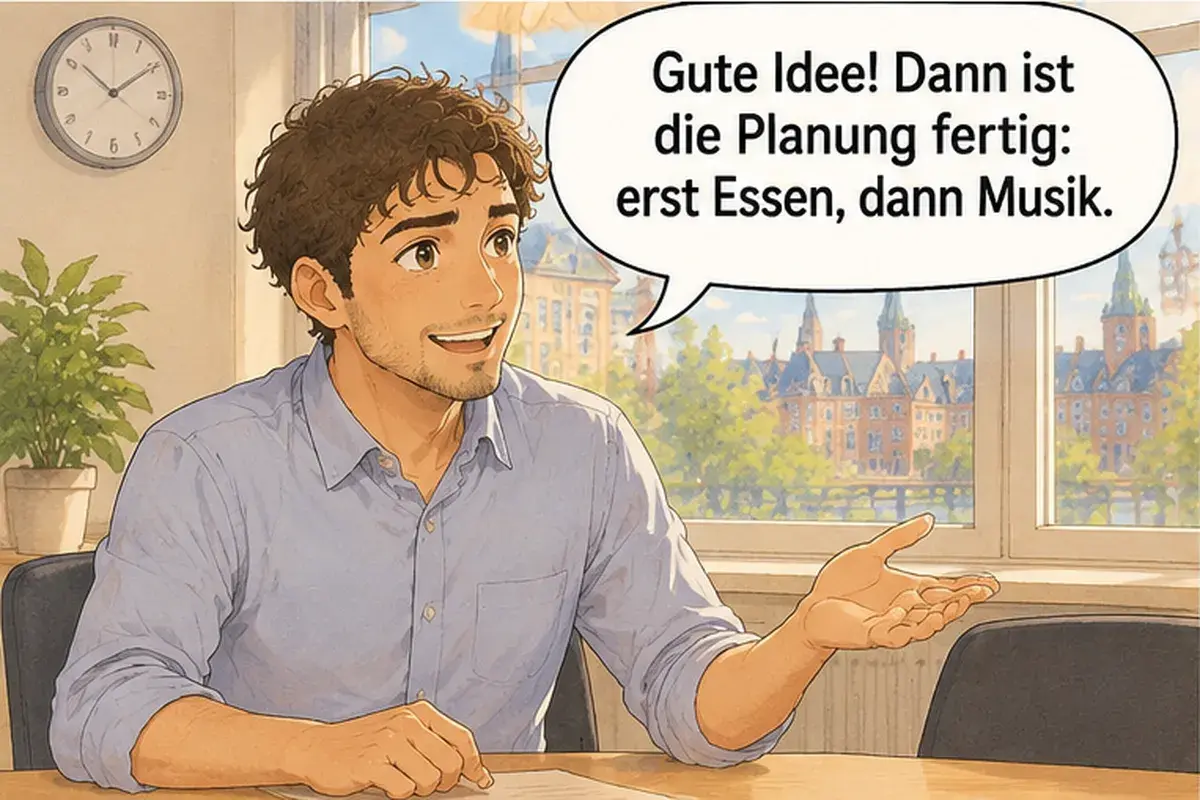
- Partner
Gute Idee! Dann ist die Planung fertig: erst Essen, dann Musik.
Good idea! Then the planning is done: food first, then music.
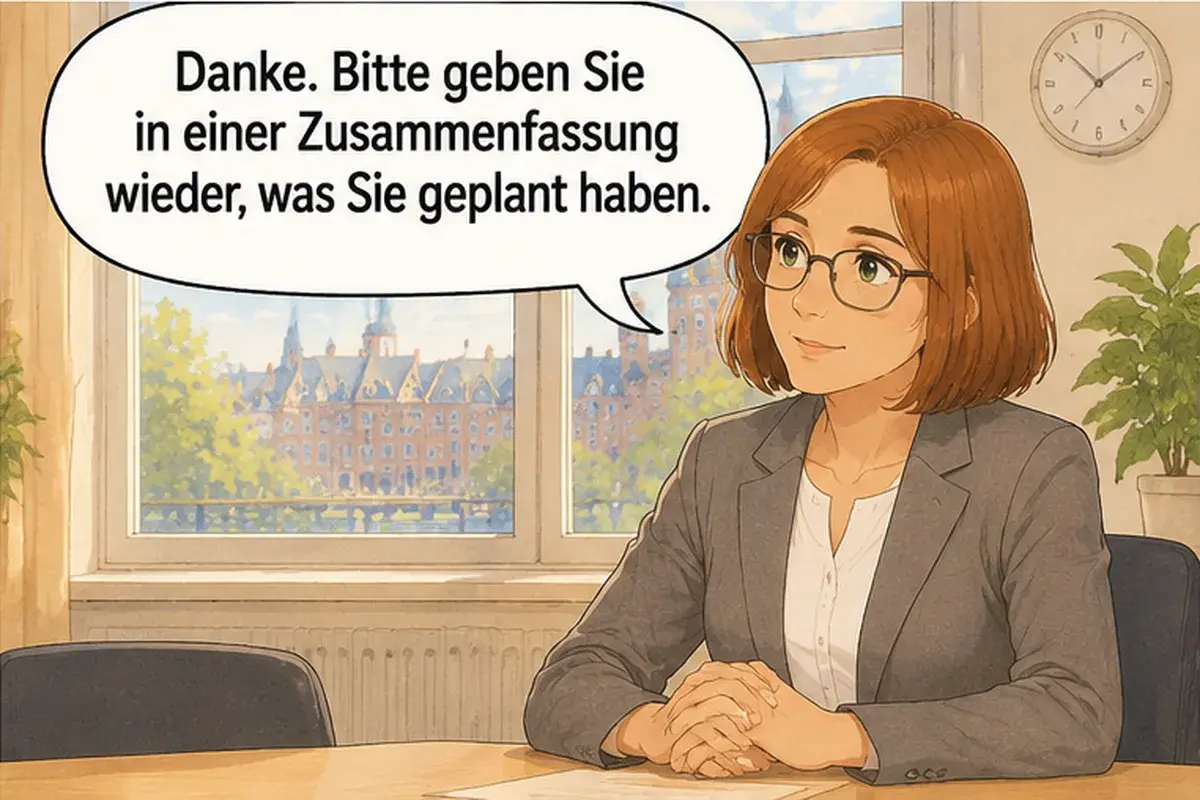
- Prüferin
Danke. Bitte geben Sie in einer Zusammenfassung wieder, was Sie geplant haben.
Thank you. Please retell what you planned in a summary. (formal)
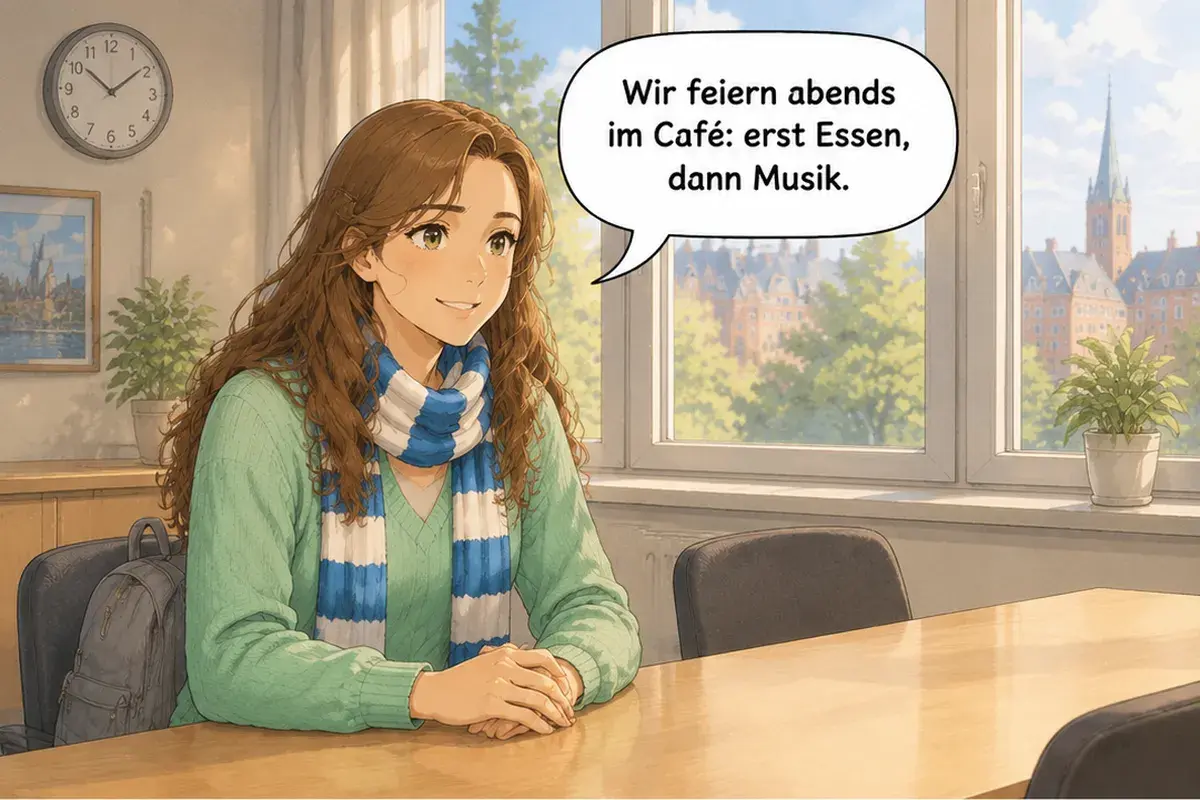
- Katja
Wir feiern abends im Café: erst Essen, dann Musik.
We're celebrating in the café in the evening: food first, then music.
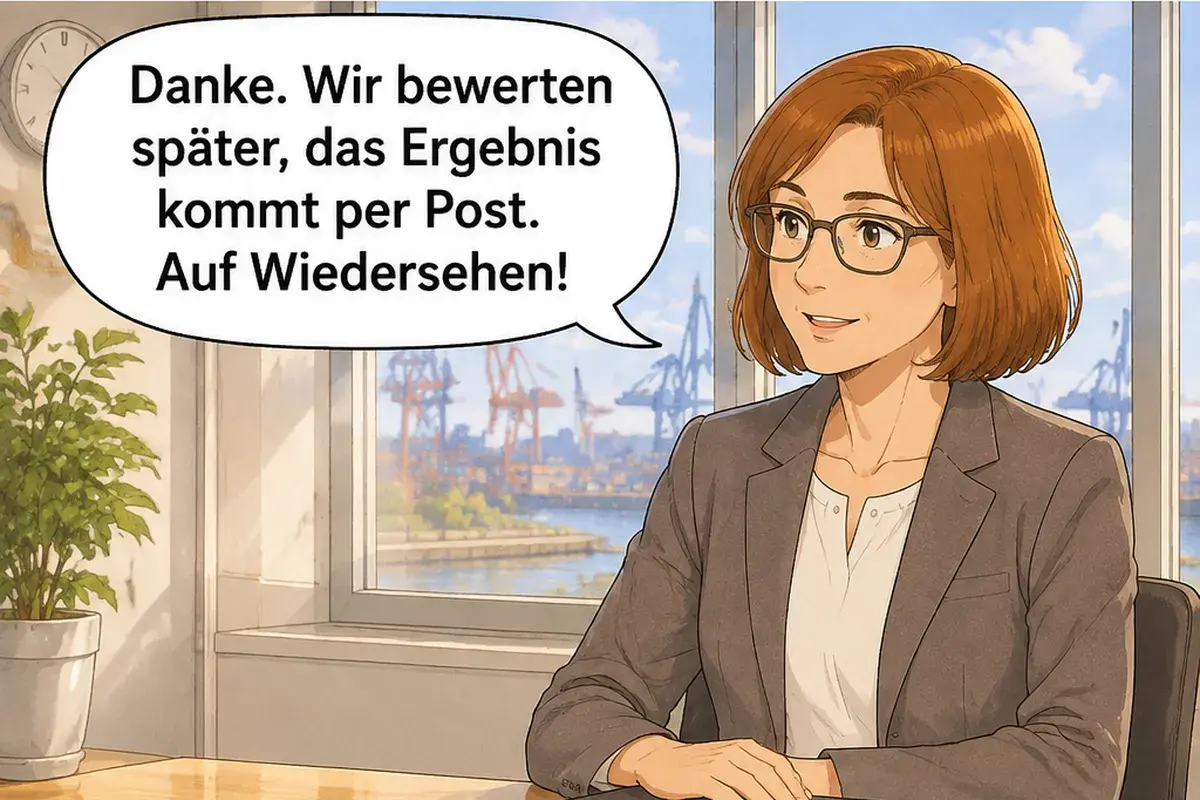
- Prüferin
Danke. Wir bewerten später, das Ergebnis kommt per Post. Auf Wiedersehen!
Thank you. We'll grade it later, the result will come by mail. Goodbye!
Grammar for this text
- Ich habe Herzklopfen, meine Hände zittern! —
Herzklopfenis a pounding heart, what people say when they're nervous:Ich habe Herzklopfen— "My heart is pounding."zitternmeans "to shake";Hände zittern— "hands are shaking." - Wenn dir ein Ausdruck fehlt, formuliere es anders. — after
wennthe verbfehltgoes to the end, and the main clause starts with its verb:formuliereis a command to one friend (du) fromformulieren("to put into words"), with nodu: the stem +-e. - Wie gehen wir vor? —
vorgehen("to proceed, to go about something") is a separable verb:gehenis in second place,vorgoes to the end. A ready-made question for any plan. - Ich schlage ein Fest im Park vor, mit Grillen. —
vorschlagen("to suggest") is separable too:schlage ... vor.schlageis the ich form ofschlagen. - Ich habe einen Einwand: Abends ist es im Park oft kalt. —
der Einwandis an objection; afterhabeit is accusative:einen Einwand.der Gegenvorschlagis a counterproposal: this is how partners share the talking when they plan together. - Bitte geben Sie in einer Zusammenfassung wieder, was Sie geplant haben. —
wiedergeben("to pass on, to sum up") is separable:geben ... wieder.Sieafter the verb is formal "you."in einer Zusammenfassungmeans "in a summary":inwith the dative answers "where?" or "in what?". - Das Ergebnis kommt per Post. — a ready-made phrase:
per Postmeans "by mail." The examiner doesn't say the result: it comes in a letter later.
Words and grammar of the unit: Pass the exam.
Learn the words from the texts with flashcards
In the app, you can tap any word in a text to see its translation, forms and examples, and new words stick with flashcards. 15 minutes a day.
Start for freeEverything is open for free. No card needed to sign up.