

German dialogue with translation · B2 · 14 lines
Was wollen Sie dafür haben? What do you want for it? (formal)
Comic · 14 panels
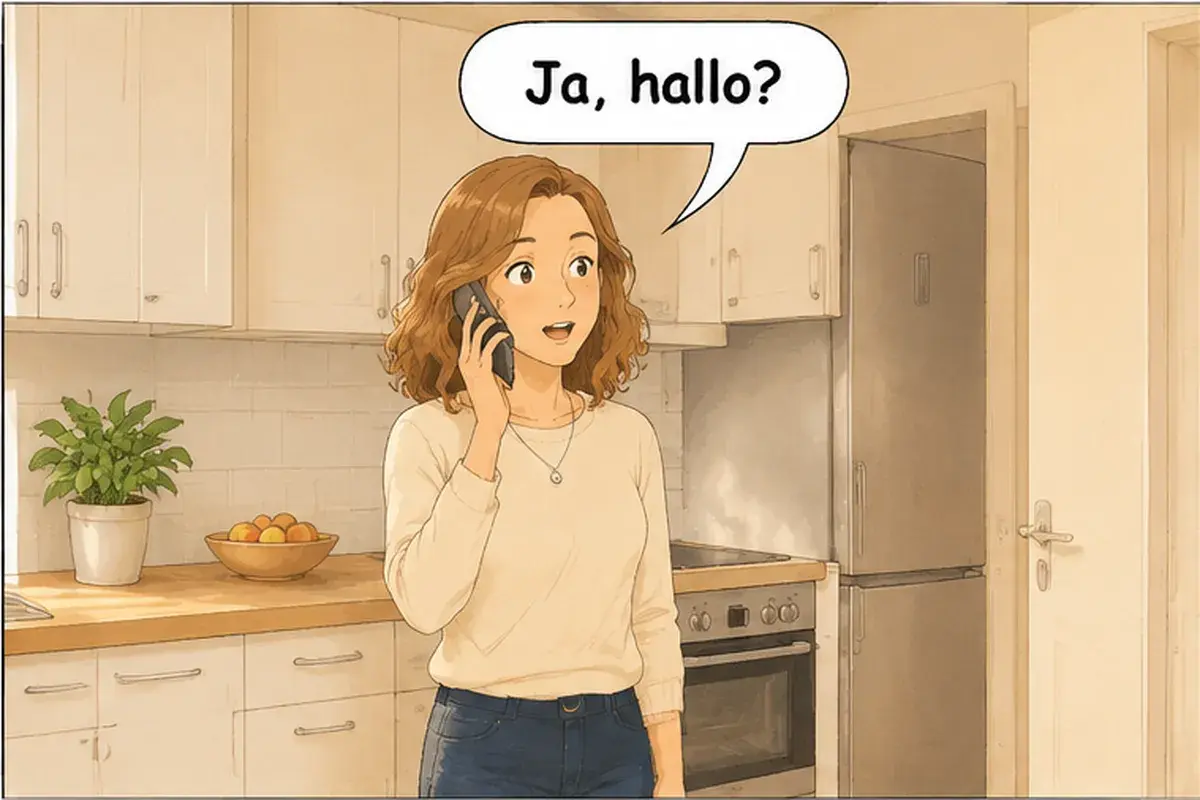
- Vormieterin
Ja, hallo?
Yes, hello?
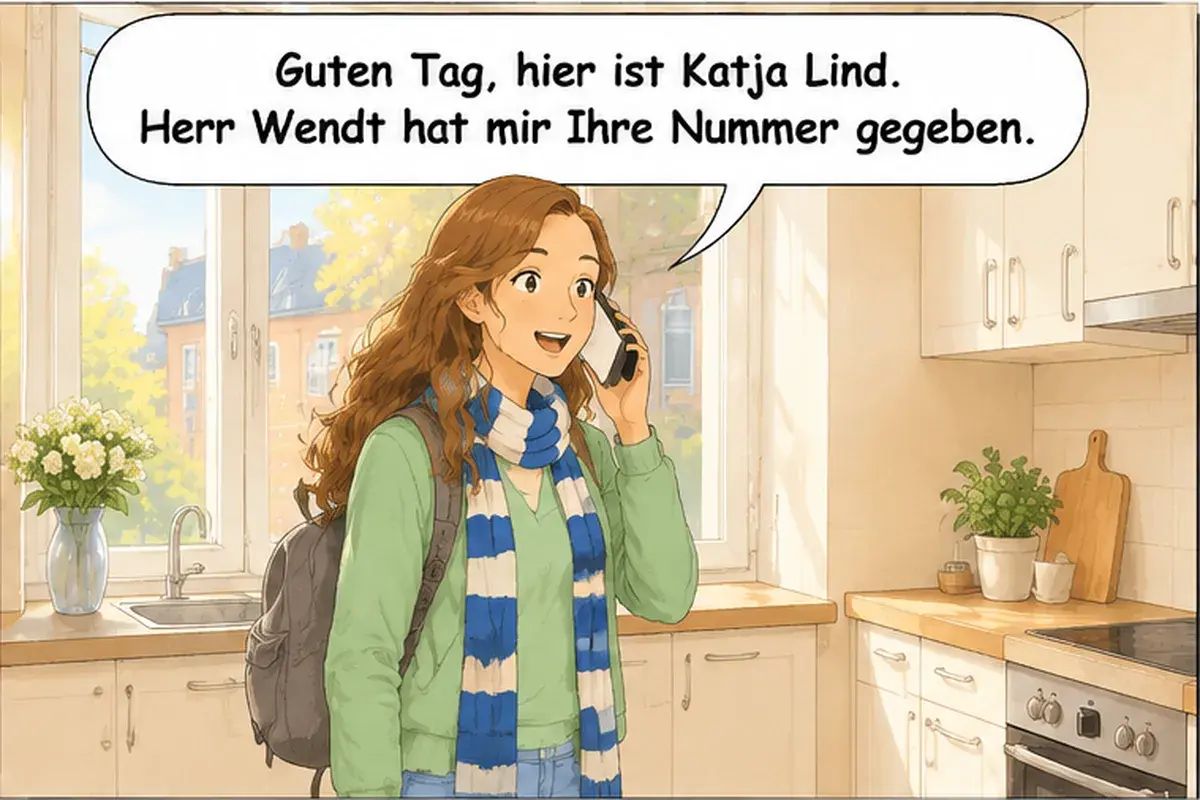
- Katja
Guten Tag, hier ist Katja Lind. Herr Wendt hat mir Ihre Nummer gegeben.
Hello, this is Katja Lind. Herr Wendt gave me your number (formal).
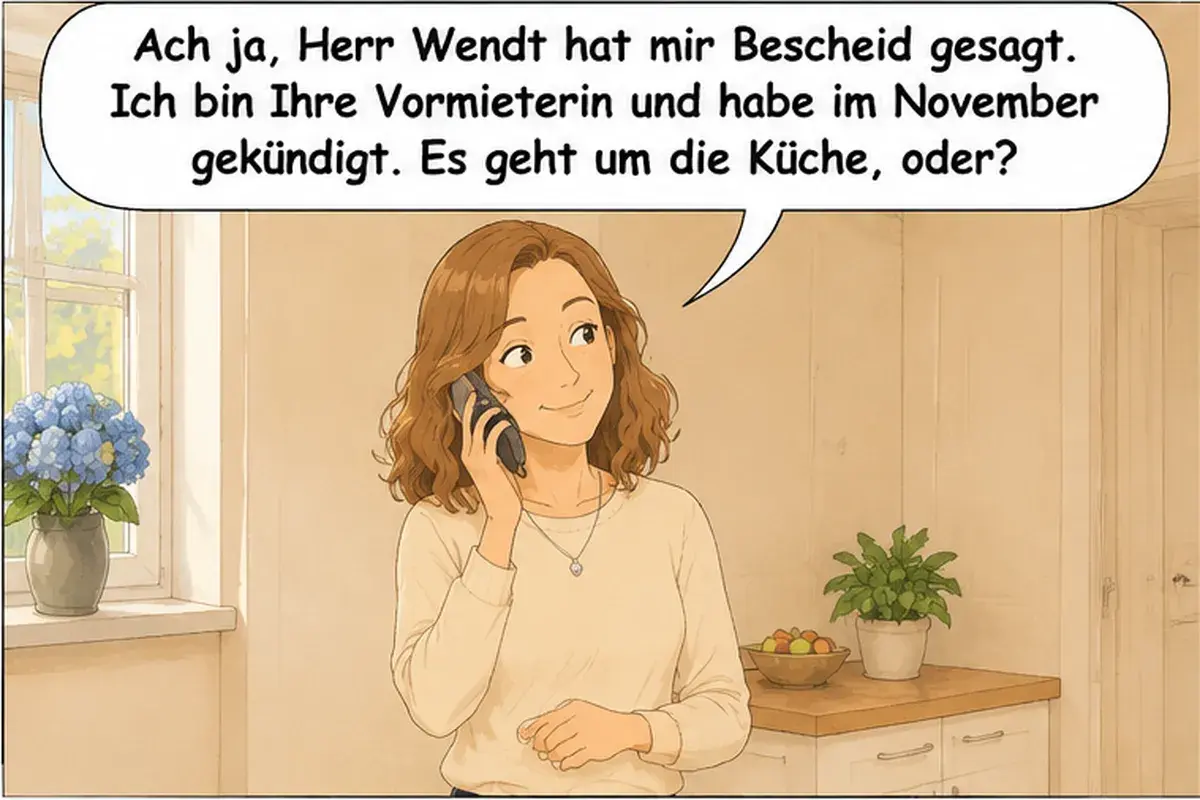
- Vormieterin
Ach ja, Herr Wendt hat mir Bescheid gesagt. Ich bin Ihre Vormieterin und habe im November gekündigt. Es geht um die Küche, oder?
Oh yes, Herr Wendt let me know. I'm your previous tenant and I gave notice in November (woman speaking, formal). This is about the kitchen, right?
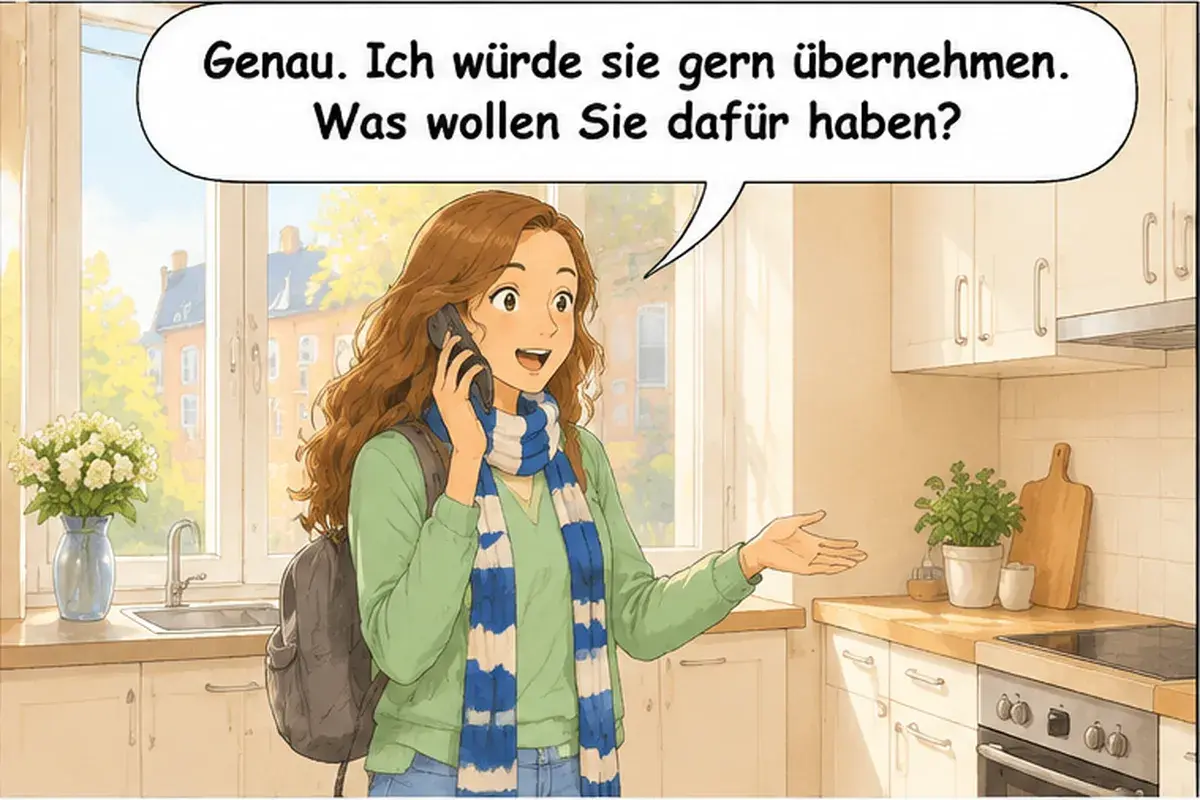
- Katja
Genau. Ich würde sie gern übernehmen. Was wollen Sie dafür haben?
Exactly. I'd like to take it over. What do you want for it? (formal)
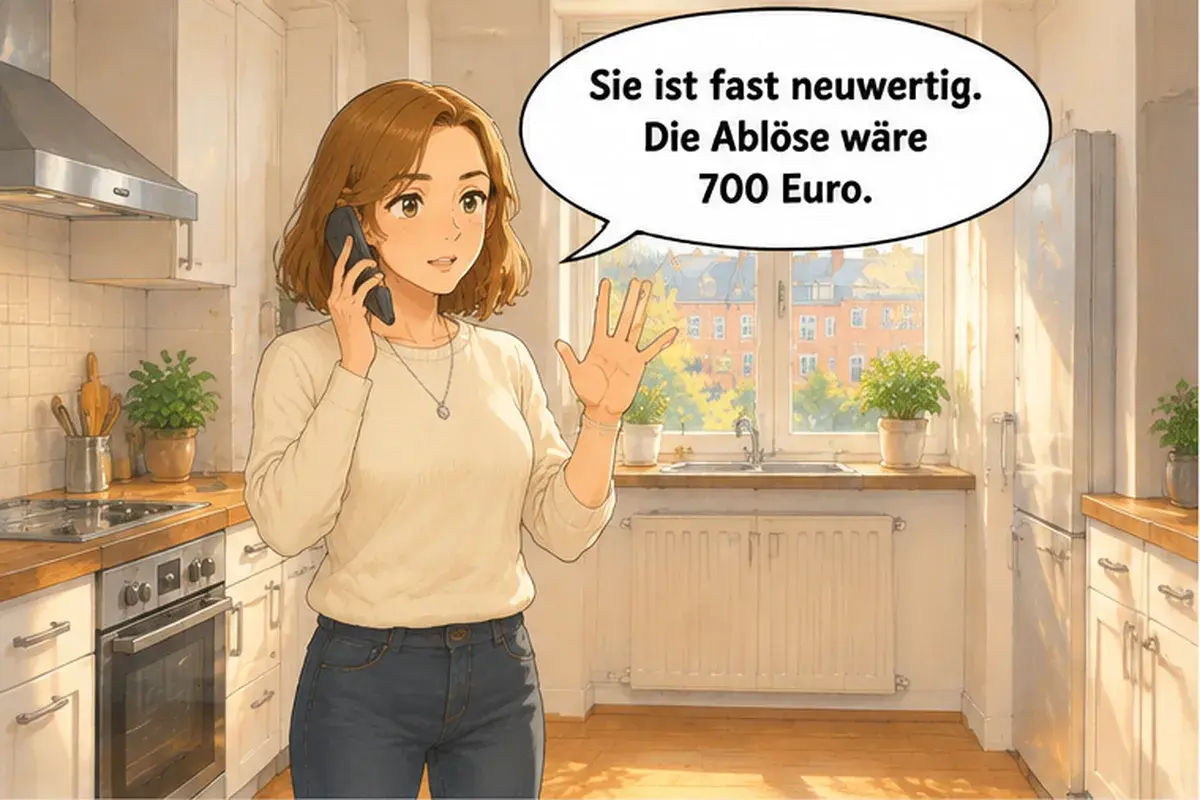
- Vormieterin
Sie ist fast neuwertig. Die Ablöse wäre 700 Euro.
It's almost like new. The payment would be 700 euros.
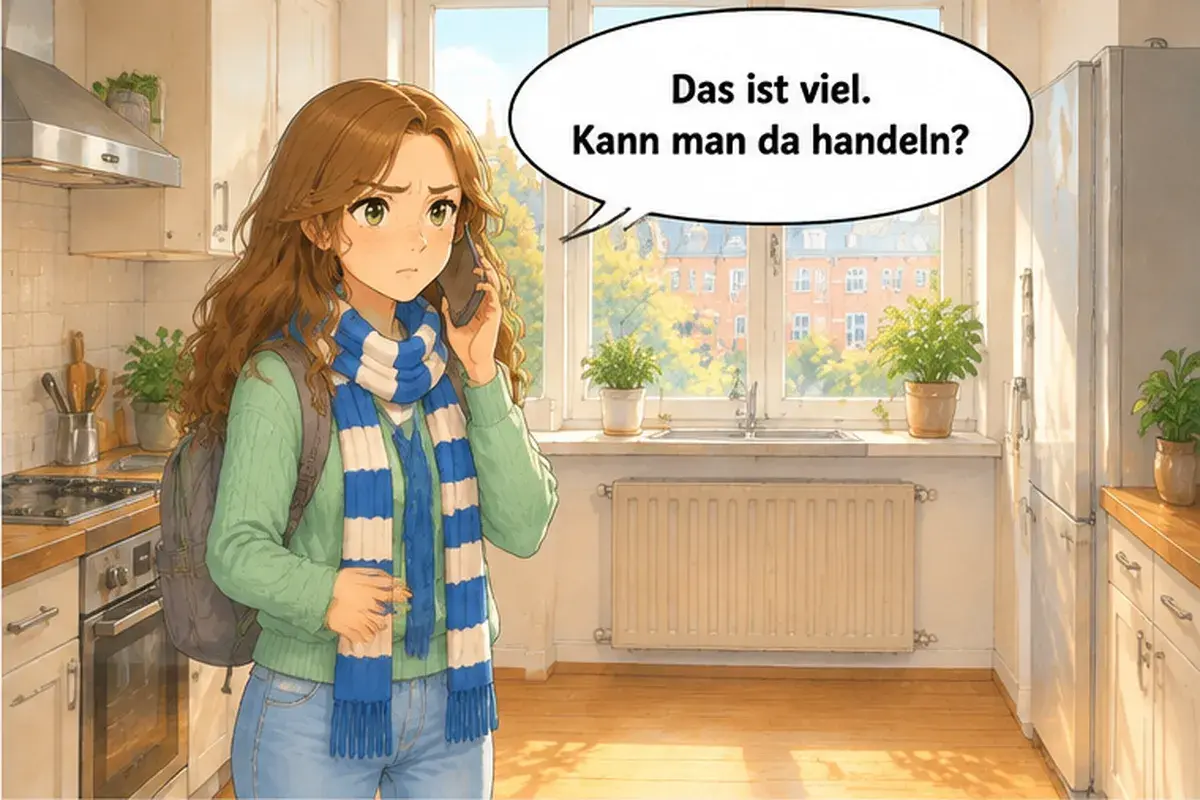
- Katja
Das ist viel. Kann man da handeln?
That's a lot. Is there any room to haggle?
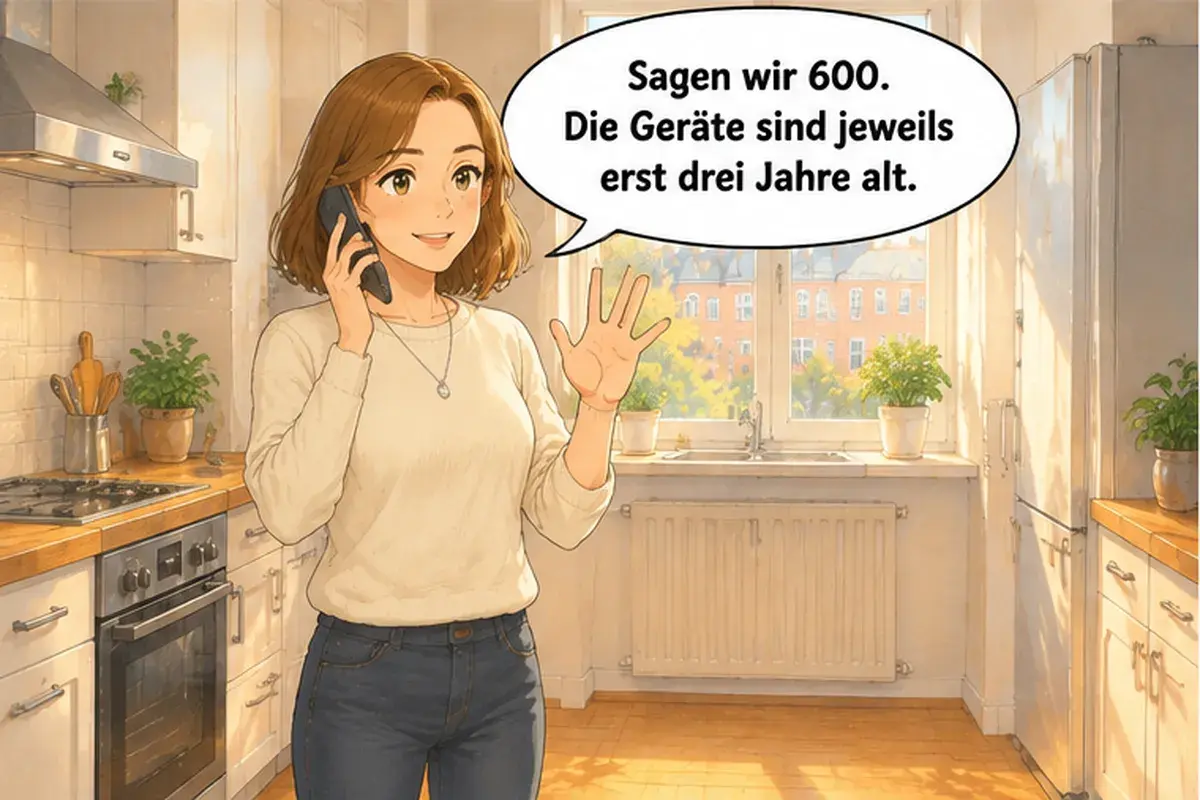
- Vormieterin
Sagen wir 600. Die Geräte sind jeweils erst drei Jahre alt.
Let's say 600. Each of the appliances is only three years old.

- Katja
Aber nicht neu. Der Preis sollte entsprechend niedriger sein: 500?
But not new. The price should be lower accordingly: 500?
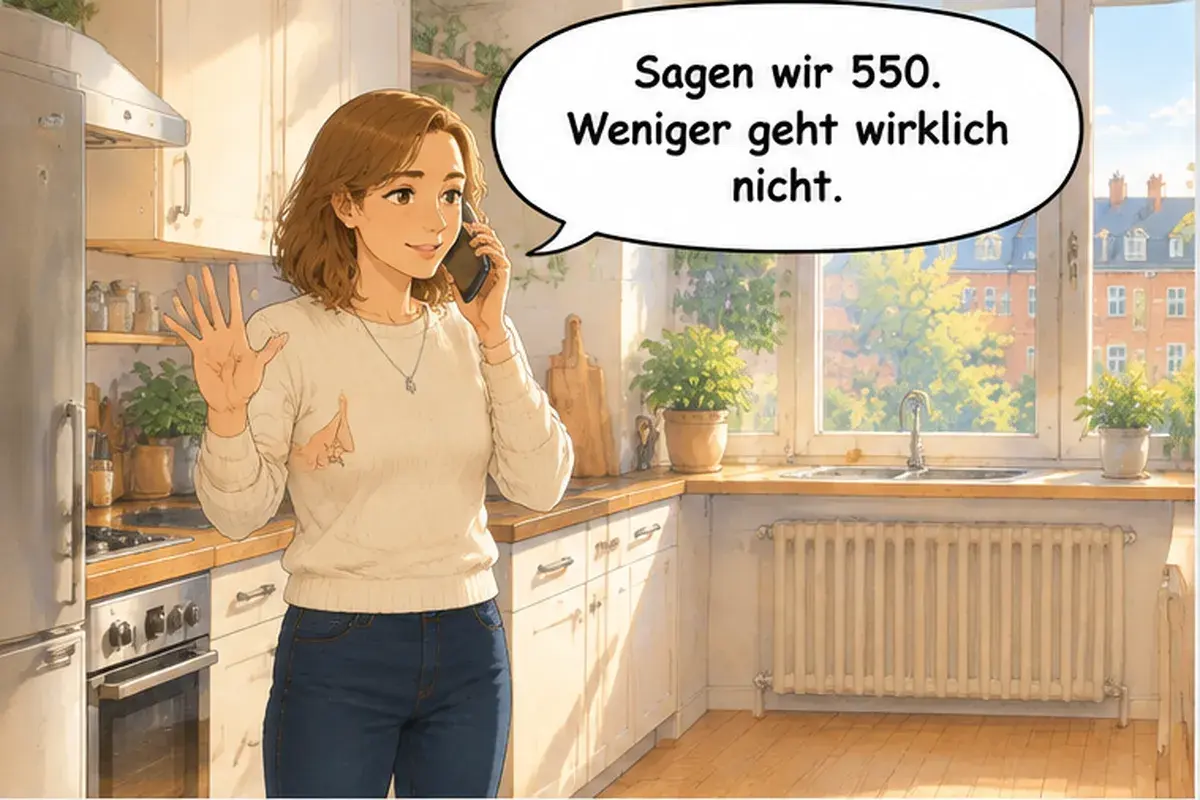
- Vormieterin
Sagen wir 550. Weniger geht wirklich nicht.
Let's say 550. I really can't go any lower.
- Katja
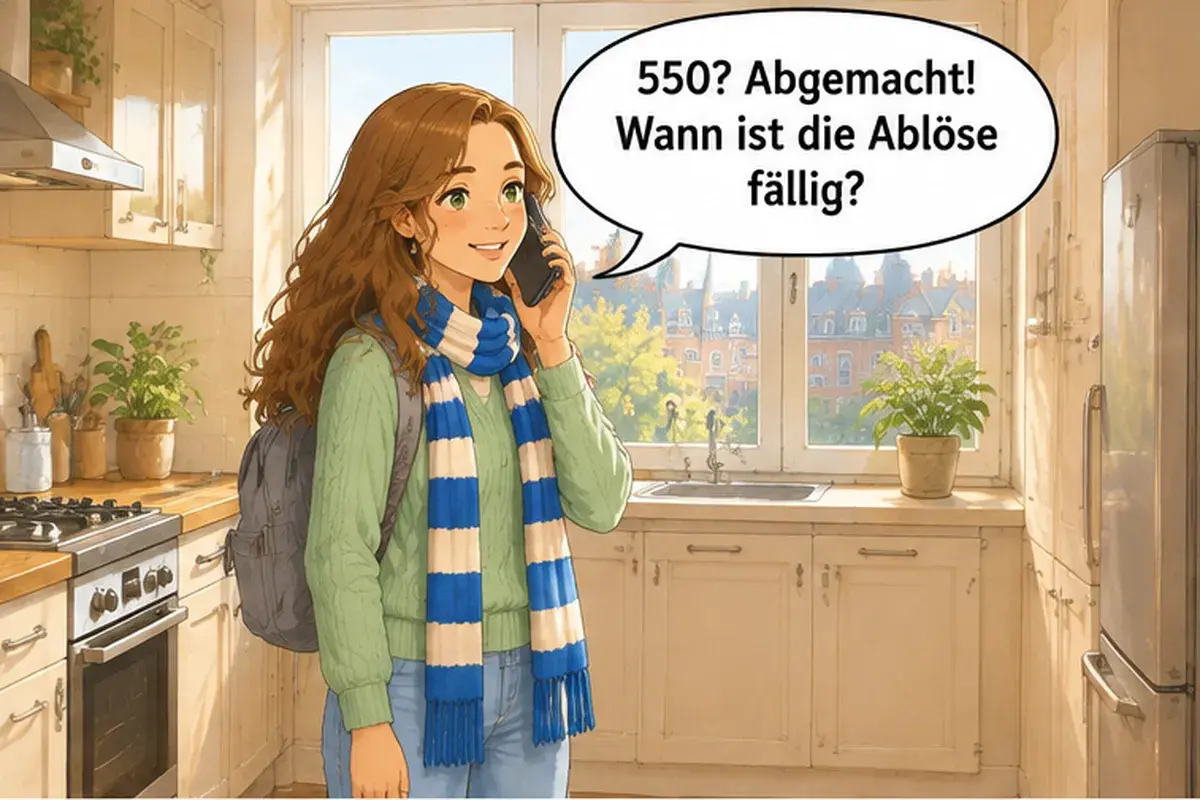
550? Abgemacht! Wann ist die Ablöse fällig?
550? Deal! When is the payment due?
- Vormieterin
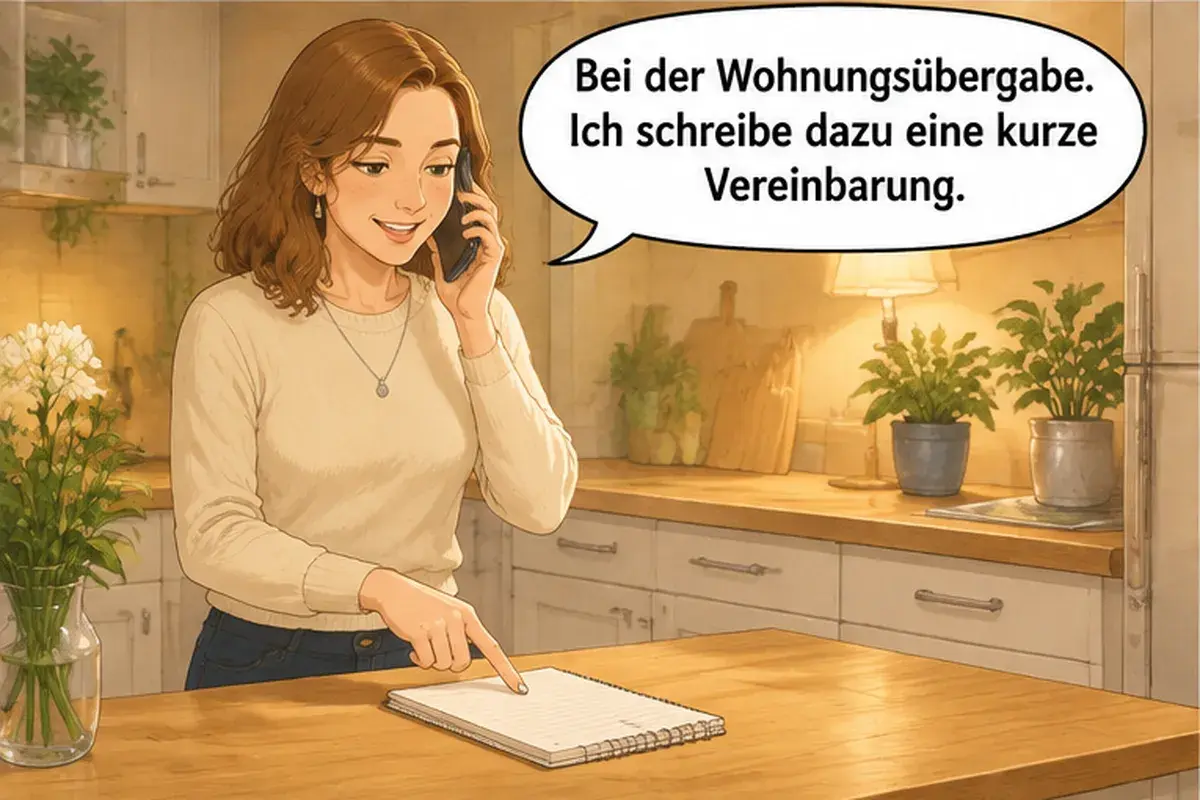
Bei der Wohnungsübergabe. Ich schreibe dazu eine kurze Vereinbarung.
At the apartment handover. I'll write up a short agreement for that.
- Katja
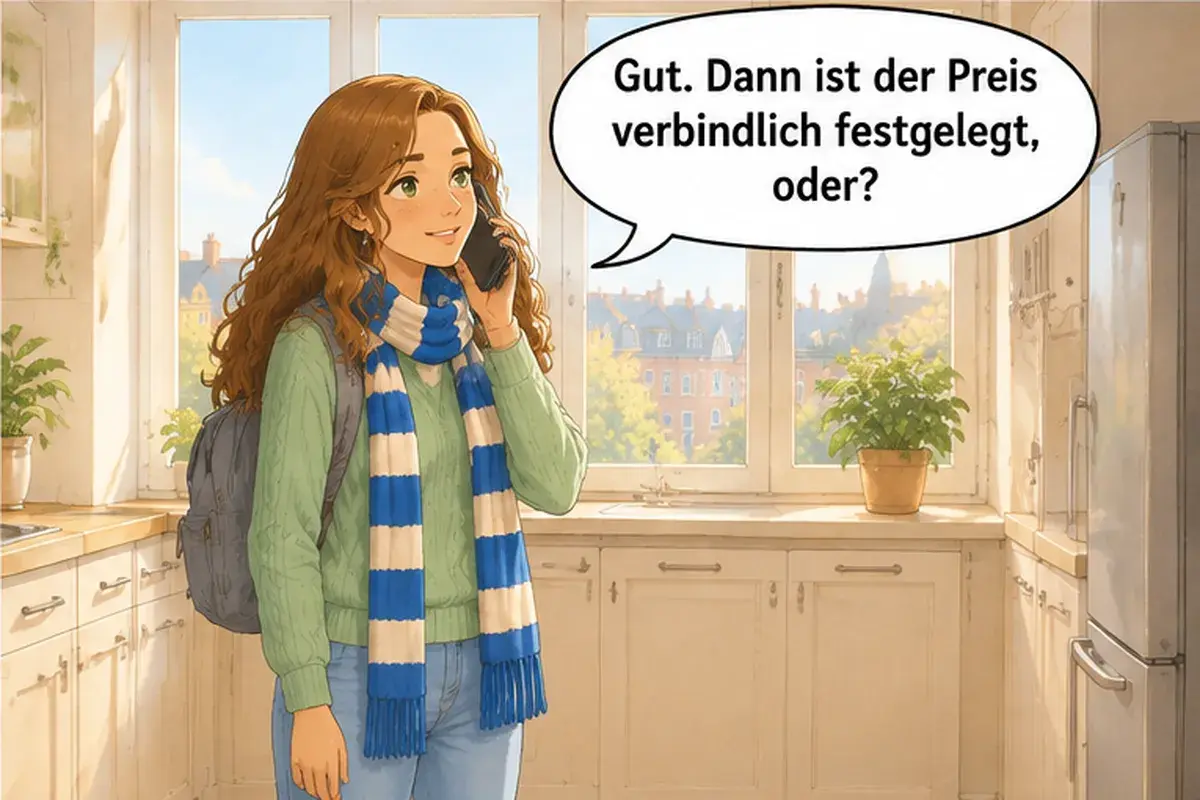
Gut. Dann ist der Preis verbindlich festgelegt, oder?
Good. Then the price is set and binding, right?
- Vormieterin
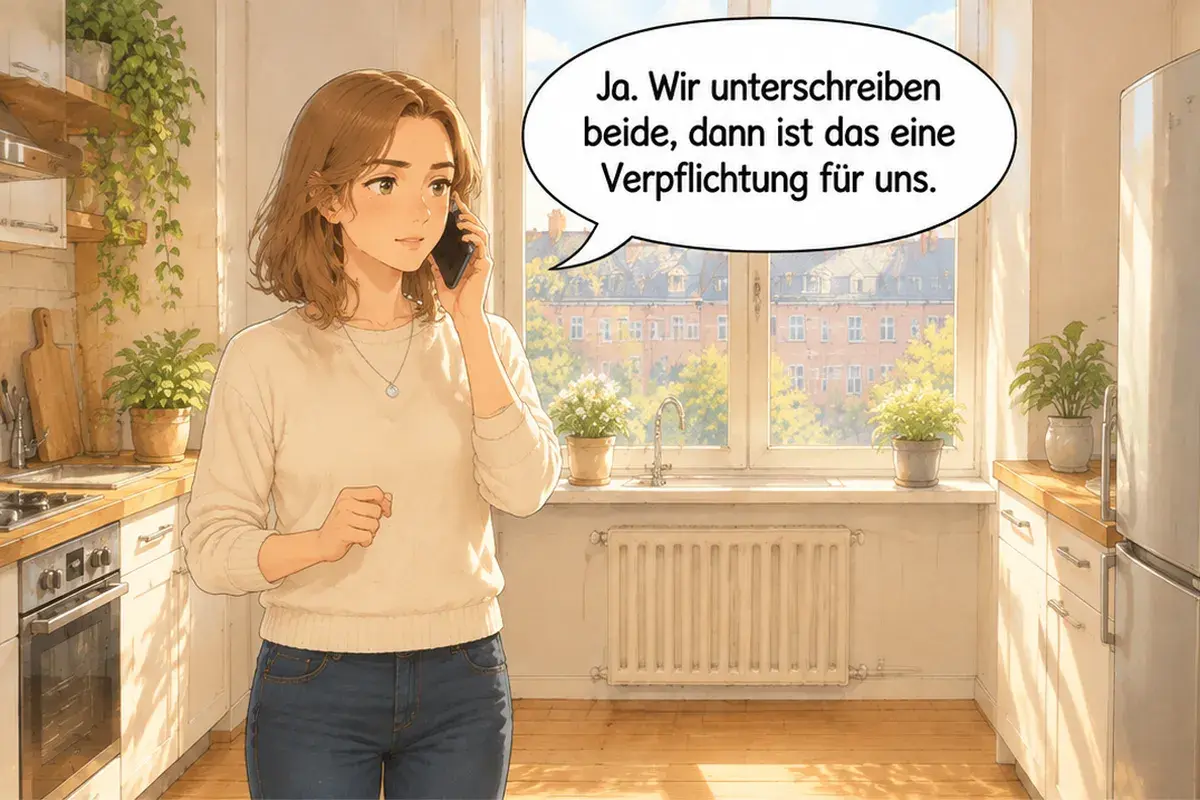
Ja. Wir unterschreiben beide, dann ist das eine Verpflichtung für uns.
Yes. We'll both sign, and then it's a commitment for both of us.

- Katja
Dann ist alles unter Dach und Fach. Danke, bis bald!
Then everything is wrapped up. Thanks, see you soon!
Grammar for this text
- Herr Wendt hat mir Ihre Nummer gegeben — Herr Wendt gave me your number (formal). This is how you explain where you got someone's number:
hat … gegebenis the Perfekt ofgeben(to give), with an irregular participle.Ihrewith a capital I means your for someone you don't know well. - Herr Wendt hat mir Bescheid gesagt — Herr Wendt let me know.
Bescheid sagenmeans to let someone know;gesagtis the participle ofsagen. - Ich bin Ihre Vormieterin und habe im November gekündigt — I'm your previous tenant and I gave notice in November (woman speaking, formal).
die Vormieterinis the feminine form ofder Vormieter: the person who rented the apartment before you.gekündigtis the participle ofkündigen(to terminate a contract). - Was wollen Sie dafür haben? — What do you want for it? (formal) This is how you ask the price when someone is selling their own things.
wollenis in second place,habengoes at the end;dafürmeans for it. - Die Ablöse wäre 700 Euro — The payment would be 700 euros.
wäreis the Konjunktiv II (would-form) ofsein: would be, a suggestion without pressure.die Ablöseis the money paid to the previous tenant for a kitchen or furniture. In haggling the amounts are round, as at a market. - Kann man da handeln? — Is there any room to haggle?
handelnhere means to haggle;manis the general you,dameans on that. - Sagen wir 600 — Let's say 600.
sagen wiris the standard haggling phrase. Weniger geht wirklich nicht — I really can't go any lower. - Der Preis sollte entsprechend niedriger sein — The price should be lower accordingly.
sollteis the Konjunktiv II ofsollen, a softer should.entsprechendmeans accordingly. - Abgemacht! — It's a deal! Dann ist alles unter Dach und Fach — Then everything is wrapped up. Word for word it is under roof and beams, like a house that is finished.
Words and grammar of the unit: Sign a lease and make a deal on the kitchen.
Learn the words from the texts with flashcards
In the app, you can tap any word in a text to see its translation, forms and examples, and new words stick with flashcards. 15 minutes a day.
Start for freeEverything is open for free. No card needed to sign up.