

German dialogue with translation · B2 · 14 lines
Mein Namensschild fehlt noch My name plate is still missing
Comic · 14 panels
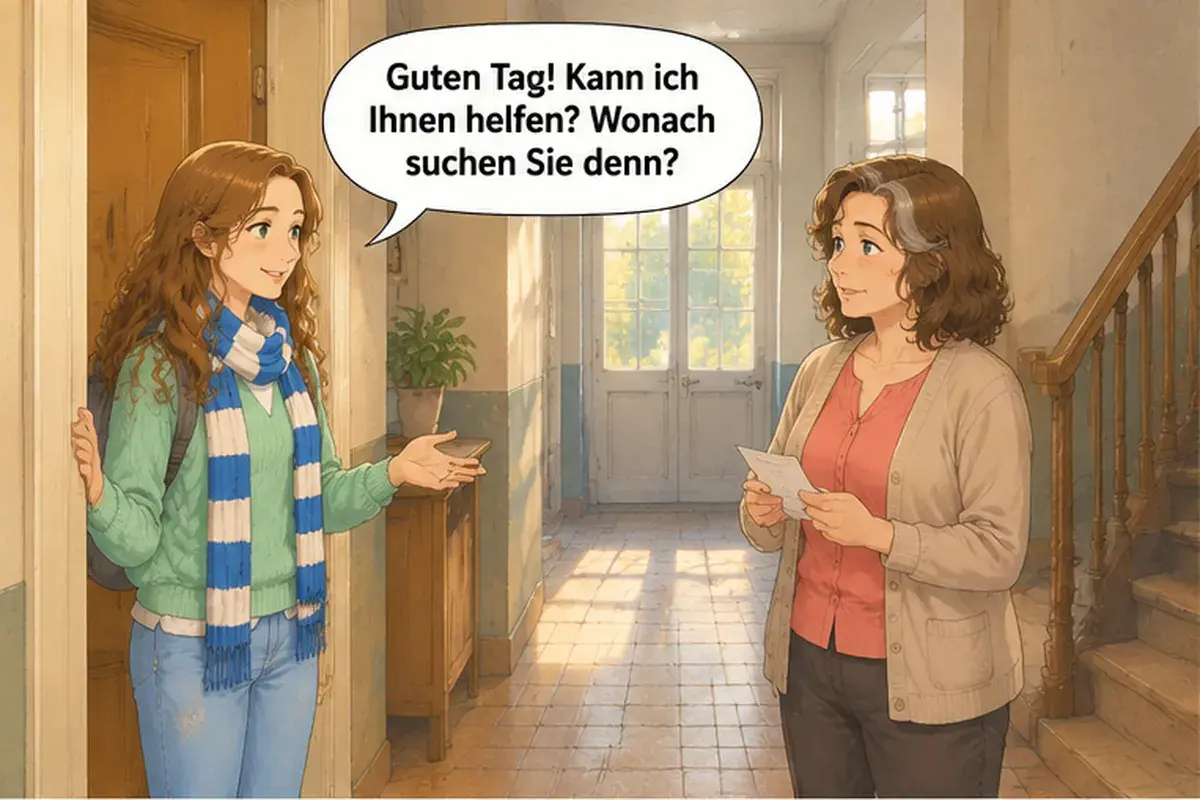
- Katja
Guten Tag! Kann ich Ihnen helfen? Wonach suchen Sie denn?
Hello! Can I help you? (formal) So what are you looking for? (formal)
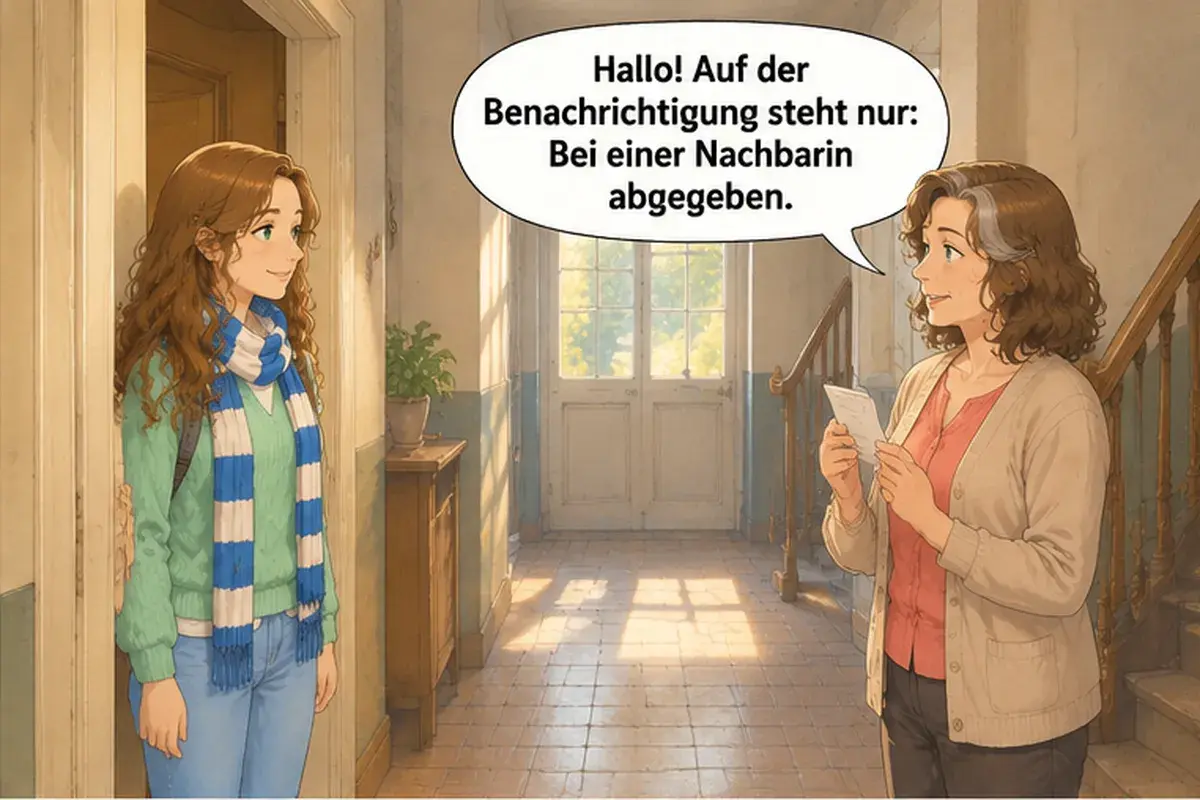
- Nachbarin
Hallo! Auf der Benachrichtigung steht nur: Bei einer Nachbarin abgegeben.
Hi! The notification only says: Left with a neighbor.
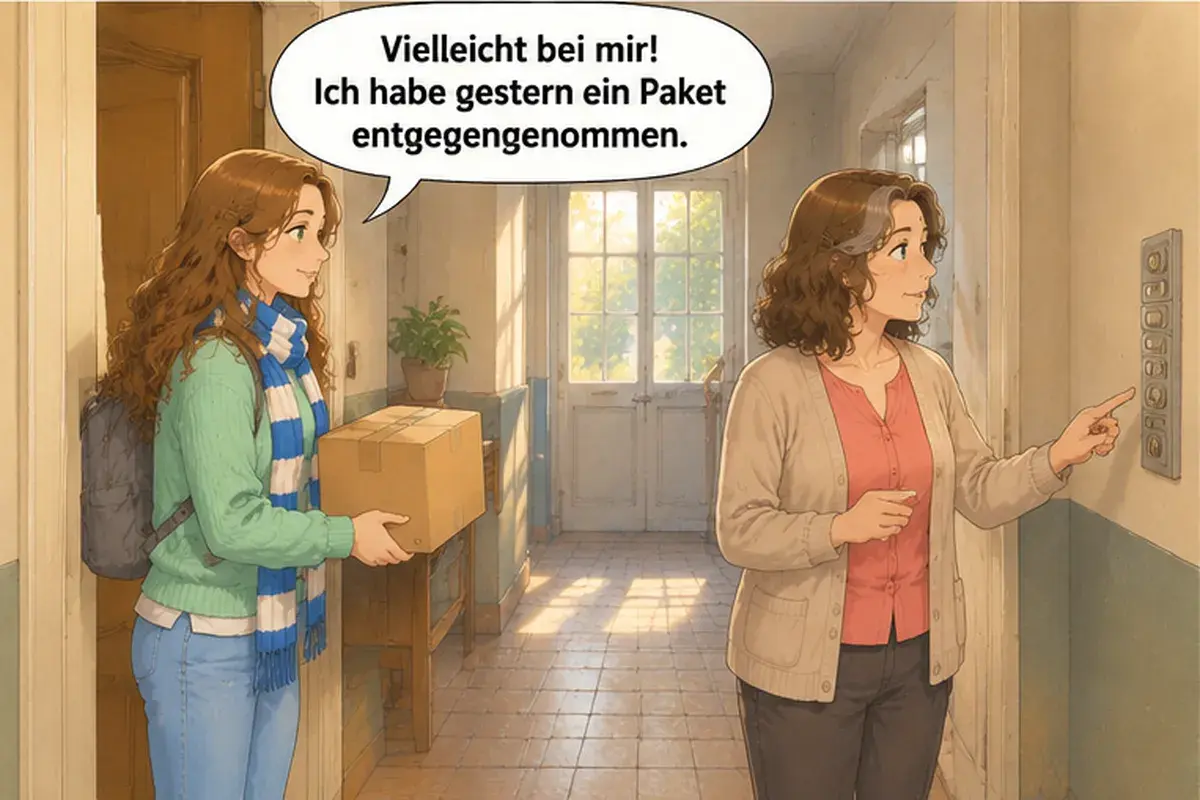
- Katja
Vielleicht bei mir! Ich habe gestern ein Paket entgegengenommen.
Maybe with me! I took in a package yesterday.
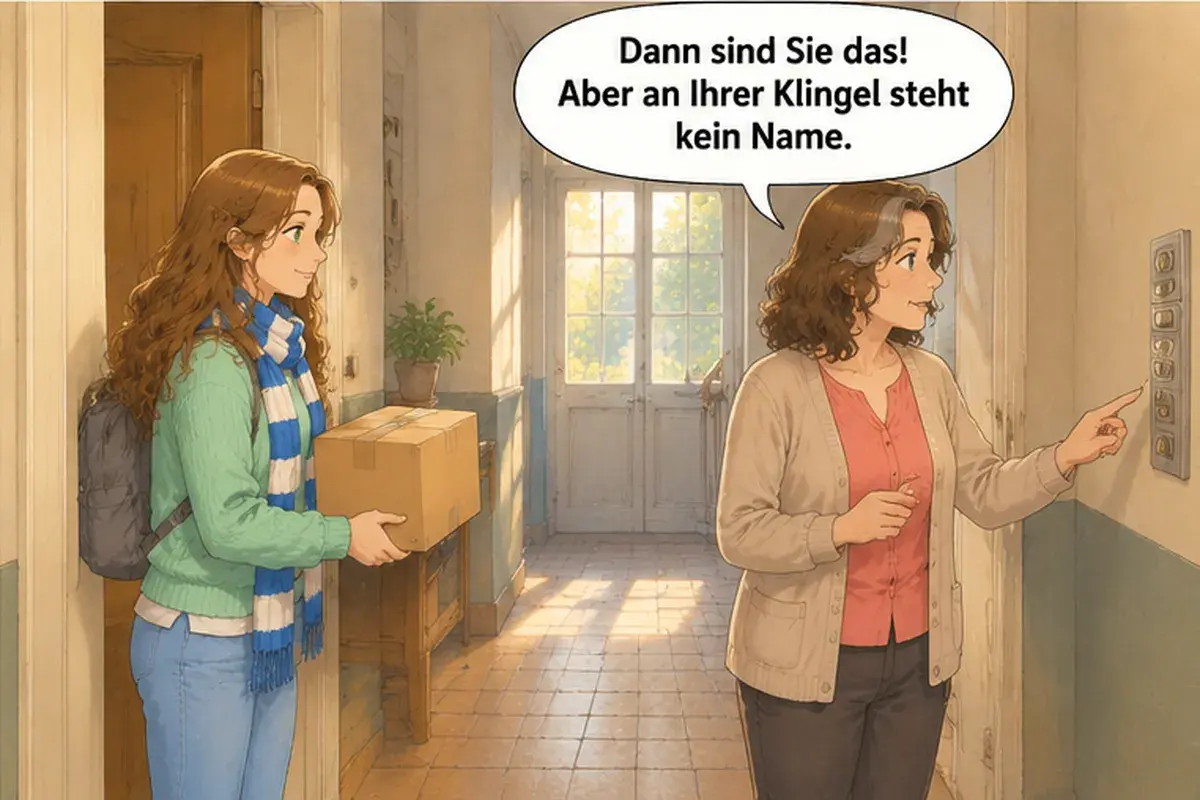
- Nachbarin
Dann sind Sie das! Aber an Ihrer Klingel steht kein Name.
Then that's you! (formal) But there's no name on your doorbell. (formal)
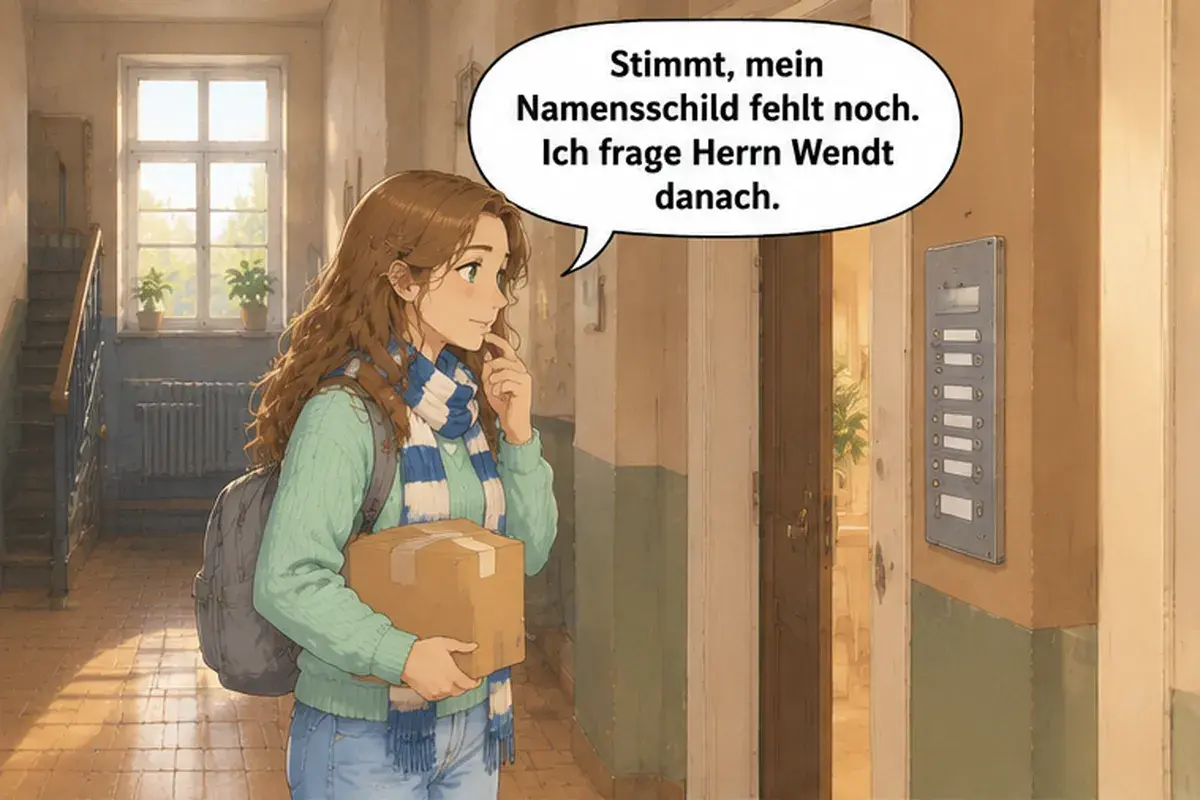
- Katja
Stimmt, mein Namensschild fehlt noch. Ich frage Herrn Wendt danach.
Right, my name plate is still missing. I'll ask Herr Wendt about it.
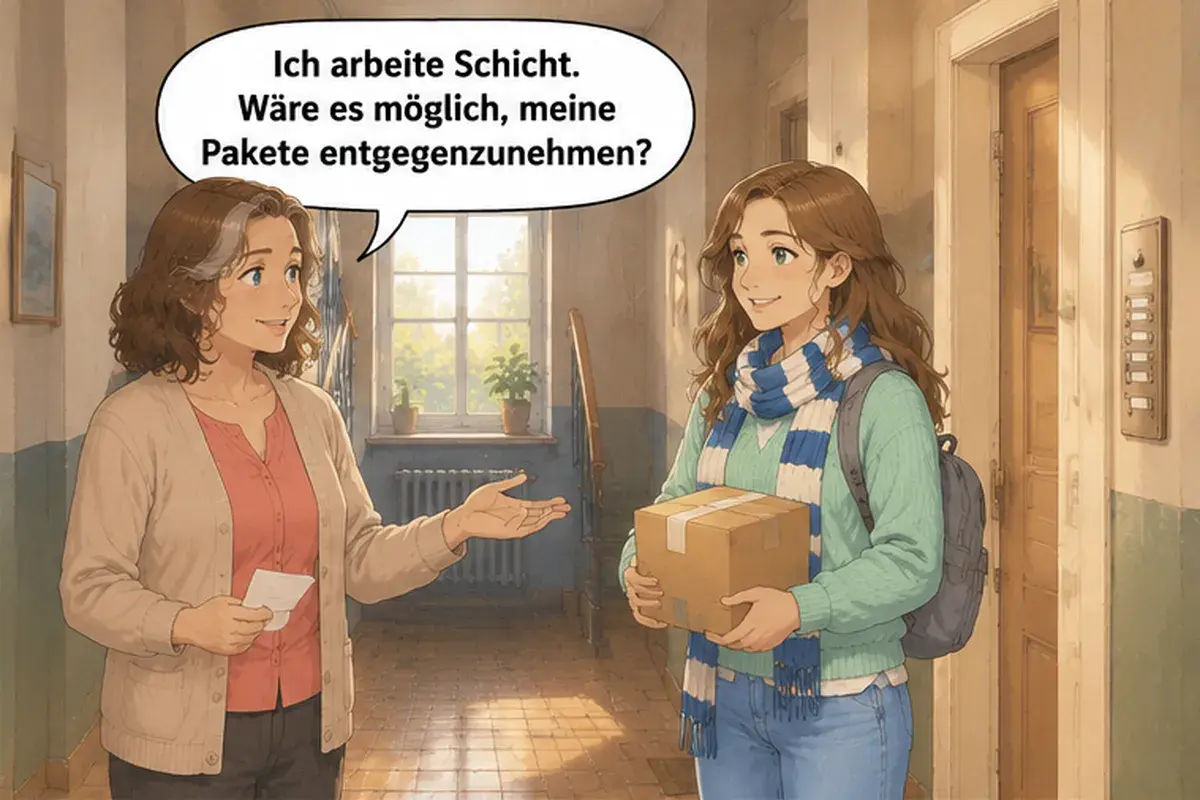
- Nachbarin
Ich arbeite Schicht. Wäre es möglich, meine Pakete entgegenzunehmen?
I work shifts. Would it be possible to take in my packages?
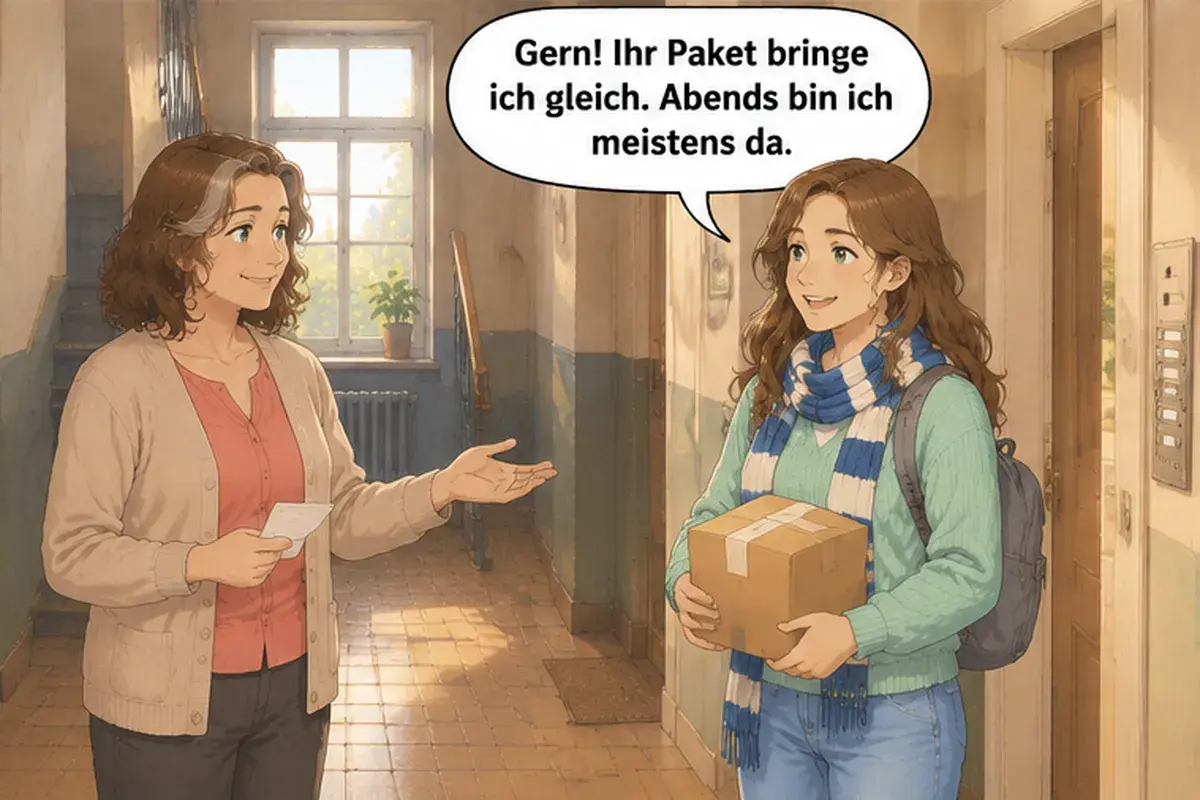
- Katja
Gern! Ihr Paket bringe ich gleich. Abends bin ich meistens da.
Sure! I'll bring your package right away (formal). In the evenings I'm usually home.
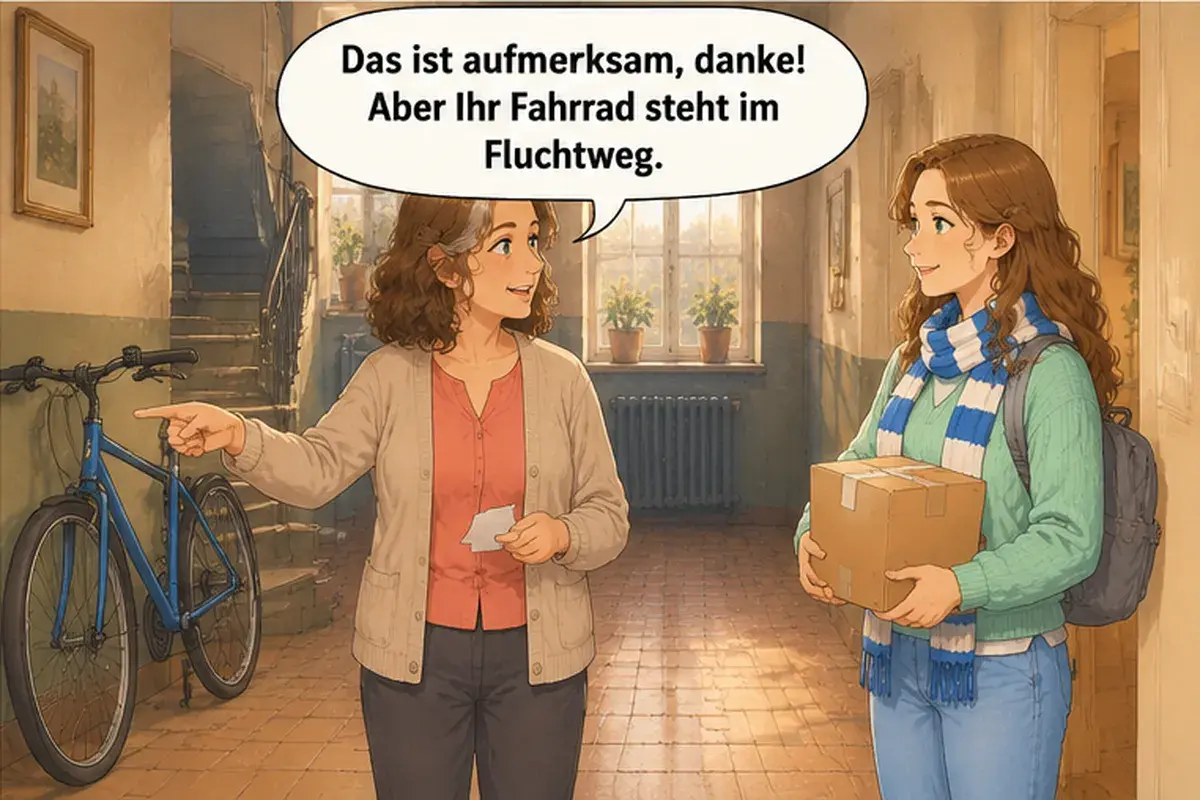
- Nachbarin
Das ist aufmerksam, danke! Aber Ihr Fahrrad steht im Fluchtweg.
That's thoughtful, thanks! But your bike is in the escape route. (formal)
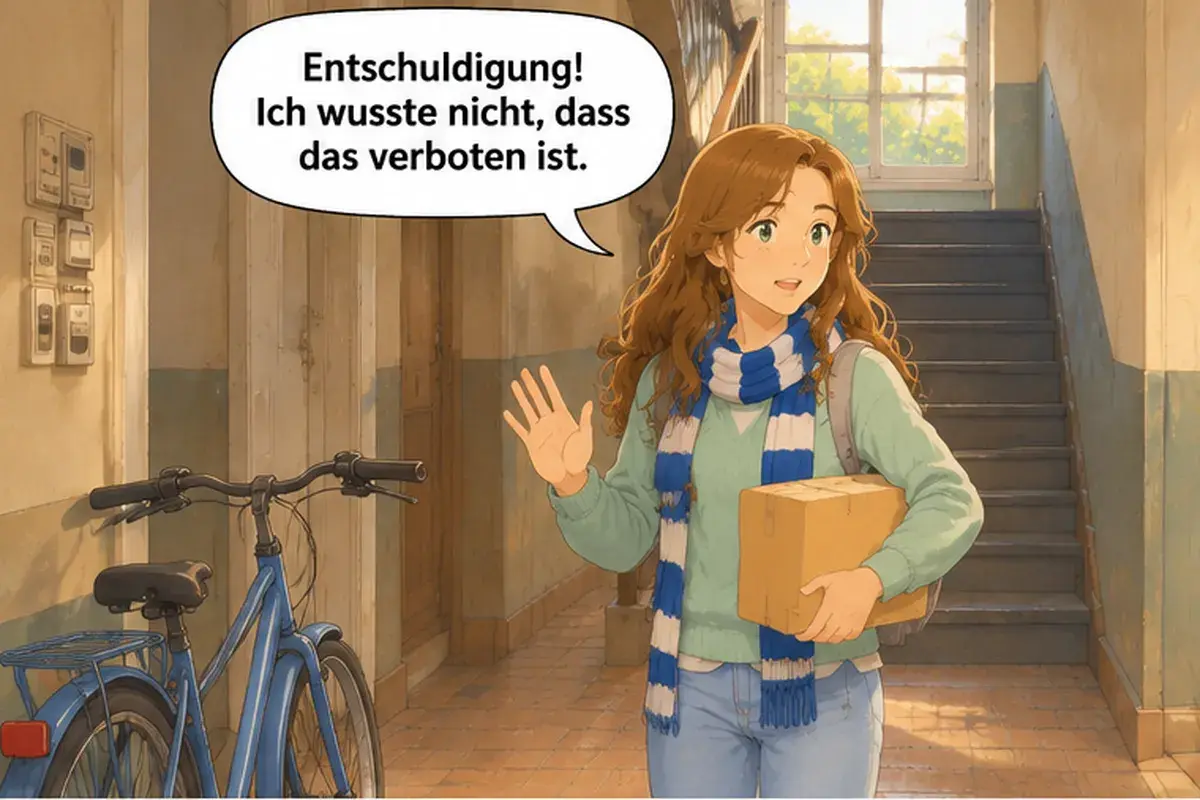
- Katja
Entschuldigung! Ich wusste nicht, dass das verboten ist.
Sorry! I didn't know that's not allowed.
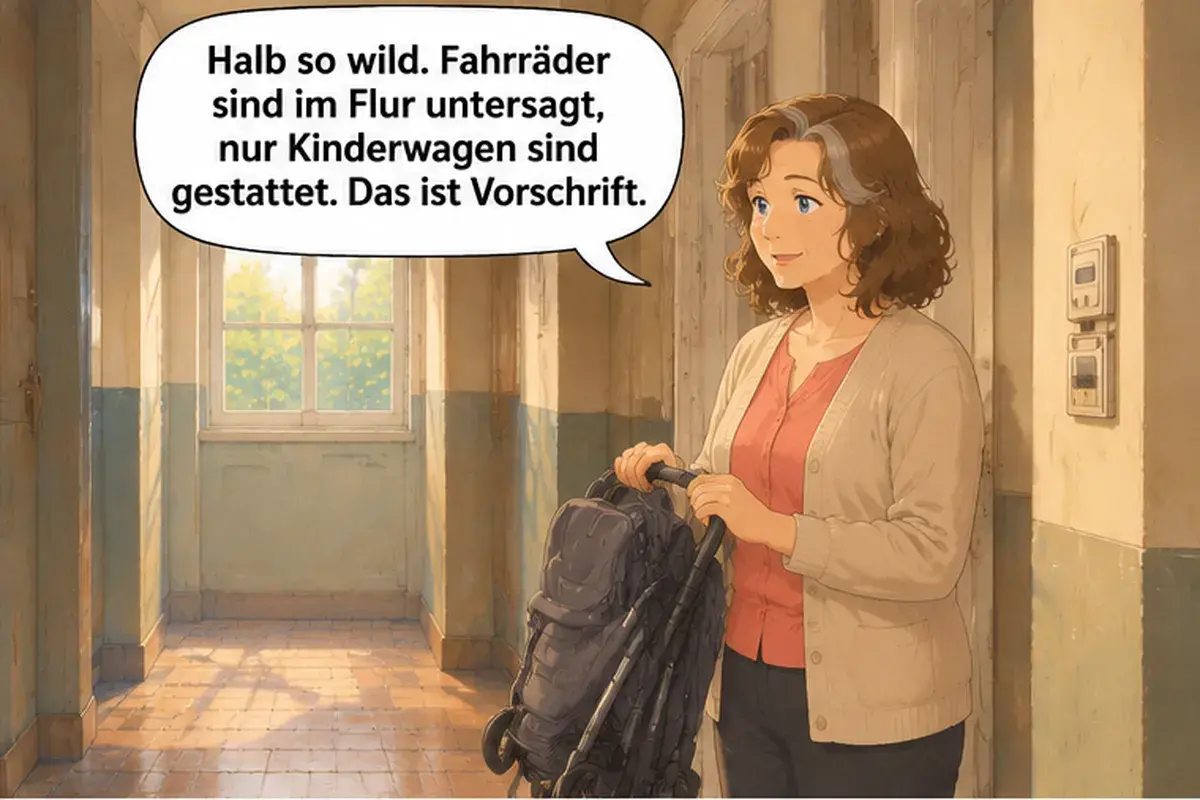
- Nachbarin
Halb so wild. Fahrräder sind im Flur untersagt, nur Kinderwagen sind gestattet. Das ist Vorschrift.
It's not that bad. Bikes are prohibited in the hallway, only strollers are permitted. That's the regulation.
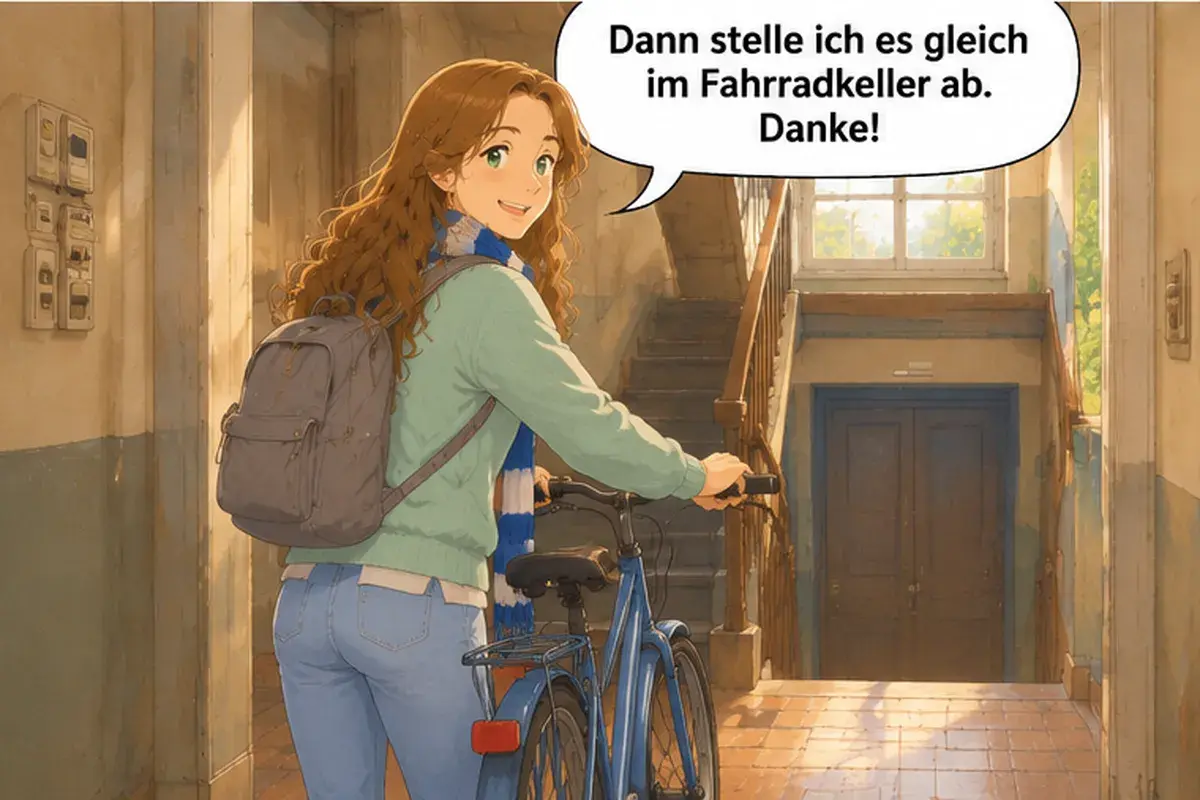
- Katja
Dann stelle ich es gleich im Fahrradkeller ab. Danke!
Then I'll put it in the bike room right away. Thanks!
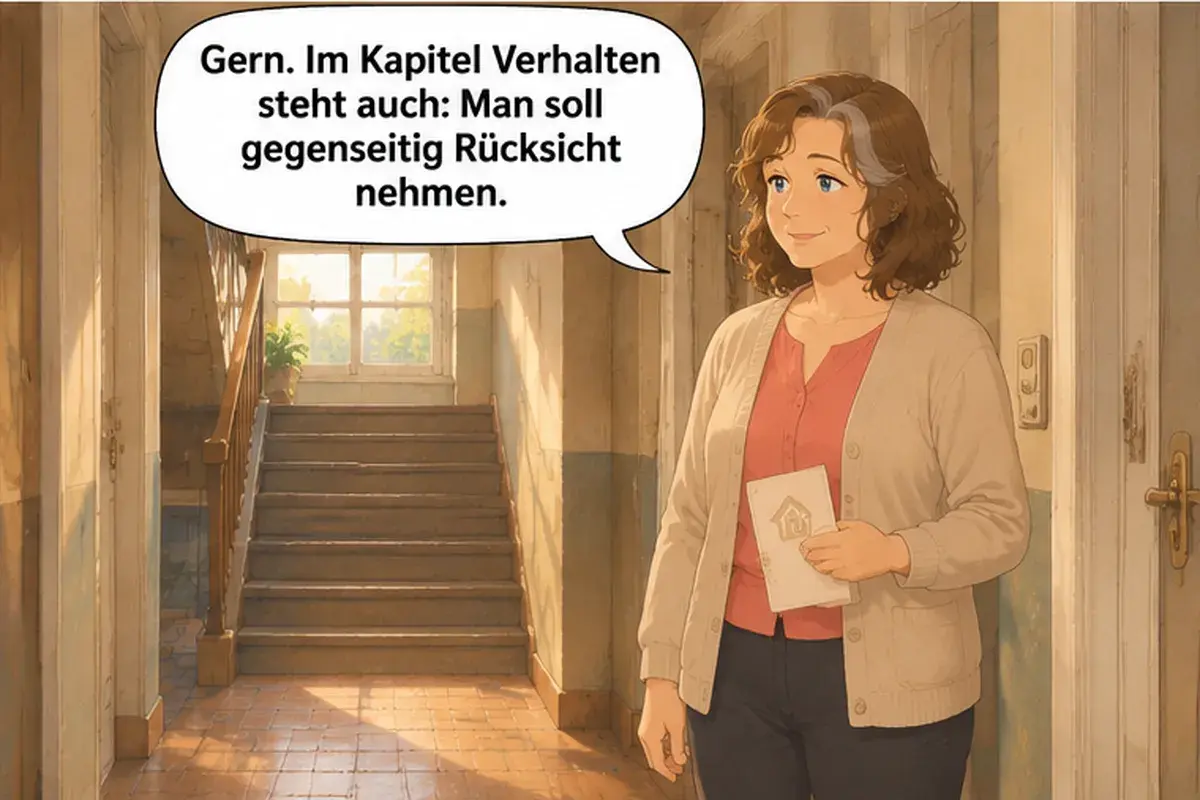
- Nachbarin
Gern. Im Kapitel Verhalten steht auch: Man soll gegenseitig Rücksicht nehmen.
You're welcome. The chapter on behavior also says: You should show consideration for each other.
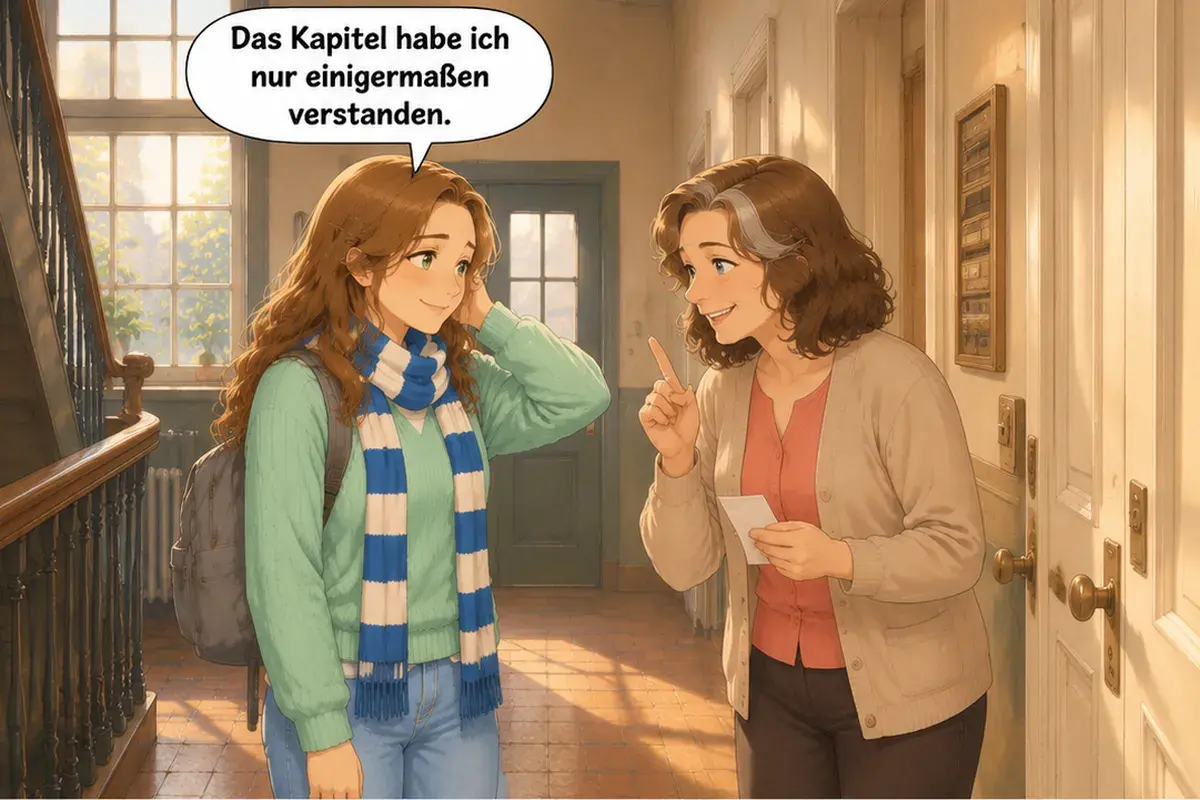
- Katja
Das Kapitel habe ich nur einigermaßen verstanden.
I only sort of understood that chapter.
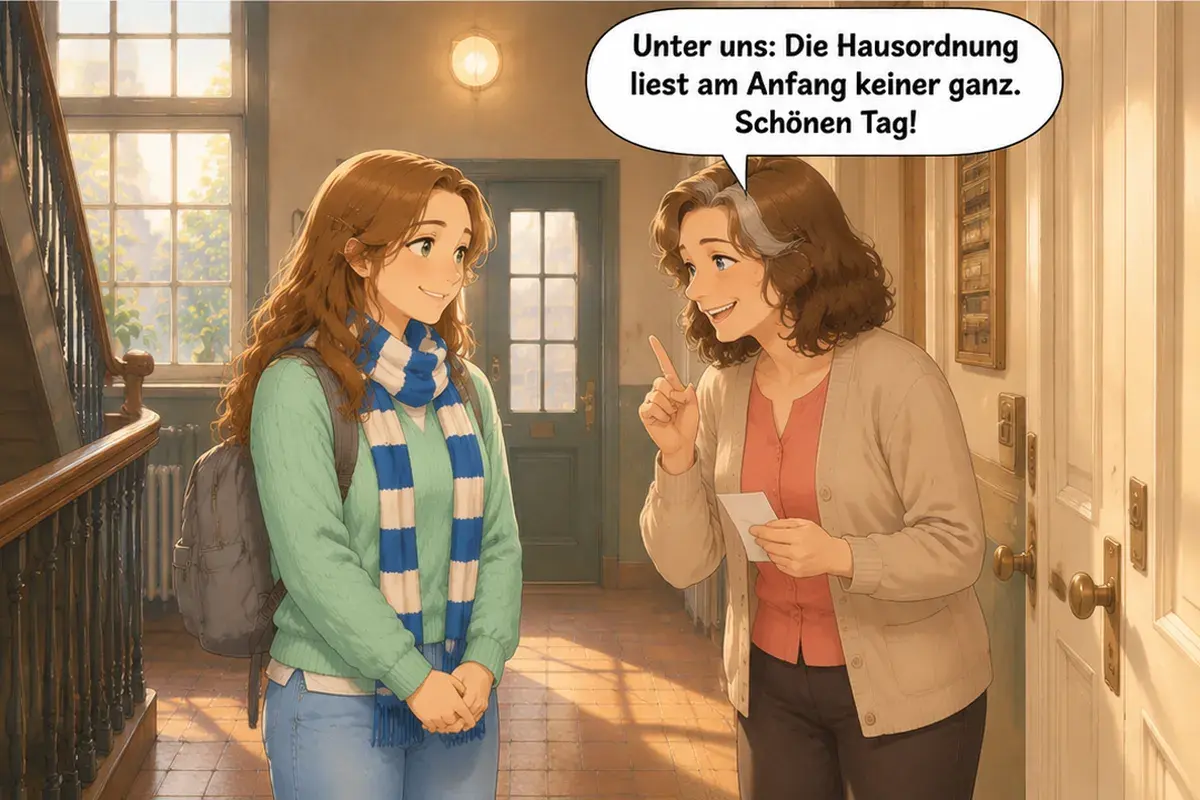
- Nachbarin
Unter uns: Die Hausordnung liest am Anfang keiner ganz. Schönen Tag!
Just between us: nobody reads the house rules all the way through at first. Have a nice day!
Grammar for this text
- Wonach suchen Sie denn? — So what are you looking for?
wonachisnach+was: for what; the verb issuchen nach, to look for.dennmakes the question friendly. - Auf der Benachrichtigung steht nur: Bei einer Nachbarin abgegeben — The notification only says: Left with a neighbor.
Benachrichtigungis the card a courier leaves in your mailbox.abgegebenis the past participle ofabgeben(to hand in, to leave with someone). On these cards the helper verb is left out, just like in English "Left with a neighbor". - Ich habe gestern ein Paket entgegengenommen — I took in a package yesterday.
entgegennehmenis to take in, to accept:nehmenwith the prefixentgegen-, past participleentgegengenommen. - Wäre es möglich, meine Pakete entgegenzunehmen? — Would it be possible to take in my packages?
zugoes between the prefix and the stem;wäreis the Konjunktiv II (would-form) ofsein. - Ich arbeite Schicht — I work shifts. There is no article, like shift work in general.
- Mein Namensschild fehlt noch — My name plate is still missing.
fehlenmeans to be missing;Namensschildis the name plate by your doorbell. - Ich wusste nicht, dass das verboten ist — I didn't know that's not allowed.
wussteis the Präteritum (narrative past) ofwissen. - Fahrräder sind im Flur untersagt, nur Kinderwagen sind gestattet — Bikes are prohibited in the hallway, only strollers are permitted.
untersagtis prohibited andgestattetis permitted: that's how house rules are written; in conversation people usually sayverbotenanderlaubt.Fluchtwegis the escape route, which must stay clear. - Halb so wild — It's not that bad. A fixed phrase for calming someone down.
- Dann stelle ich es gleich im Fahrradkeller ab — Then I'll put it in the bike room right away.
abstellenis to put somewhere:stelle … ab. - Unter uns: Die Hausordnung liest am Anfang keiner ganz — Just between us: nobody reads the house rules all the way through at first.
unter unsis between us;liestis theer / sie / esform oflesen(e→ie).Verhaltenwith a capital letter is behavior, the name of a chapter.
Words and grammar of the unit: Get along with your neighbors.
Learn the words from the texts with flashcards
In the app, you can tap any word in a text to see its translation, forms and examples, and new words stick with flashcards. 15 minutes a day.
Start for freeEverything is open for free. No card needed to sign up.