
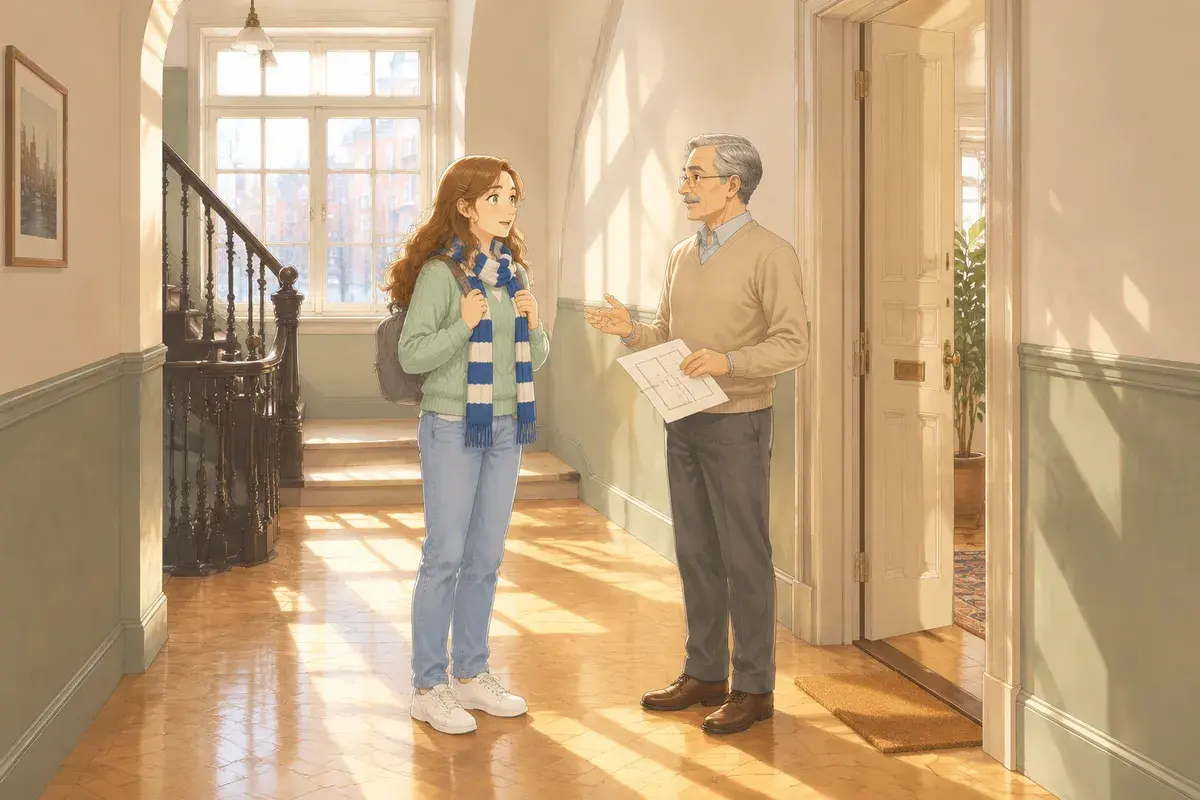
German dialogue with translation · B2 · 14 lines
Wann ist der Einzugstermin? When is the move-in date?
Comic · 14 panels
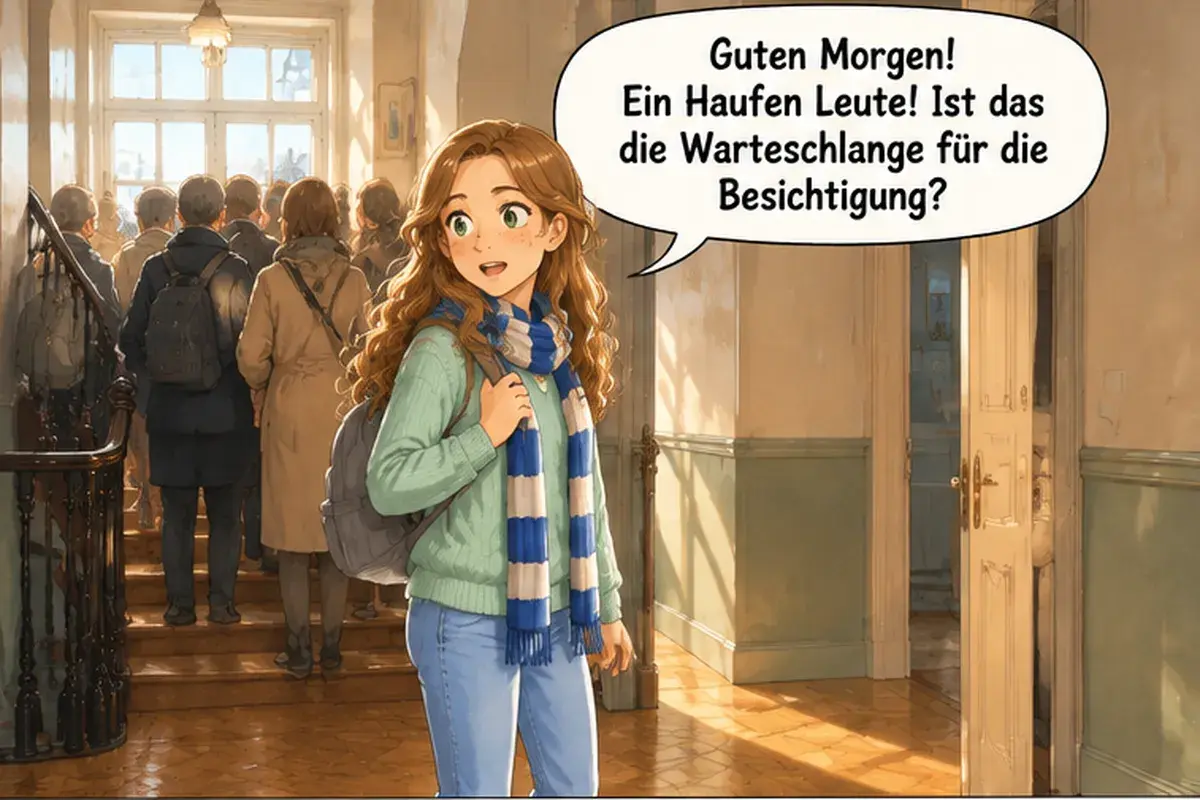
- Katja
Guten Morgen! Ein Haufen Leute! Ist das die Warteschlange für die Besichtigung?
Good morning! A ton of people! Is this the line for the viewing?
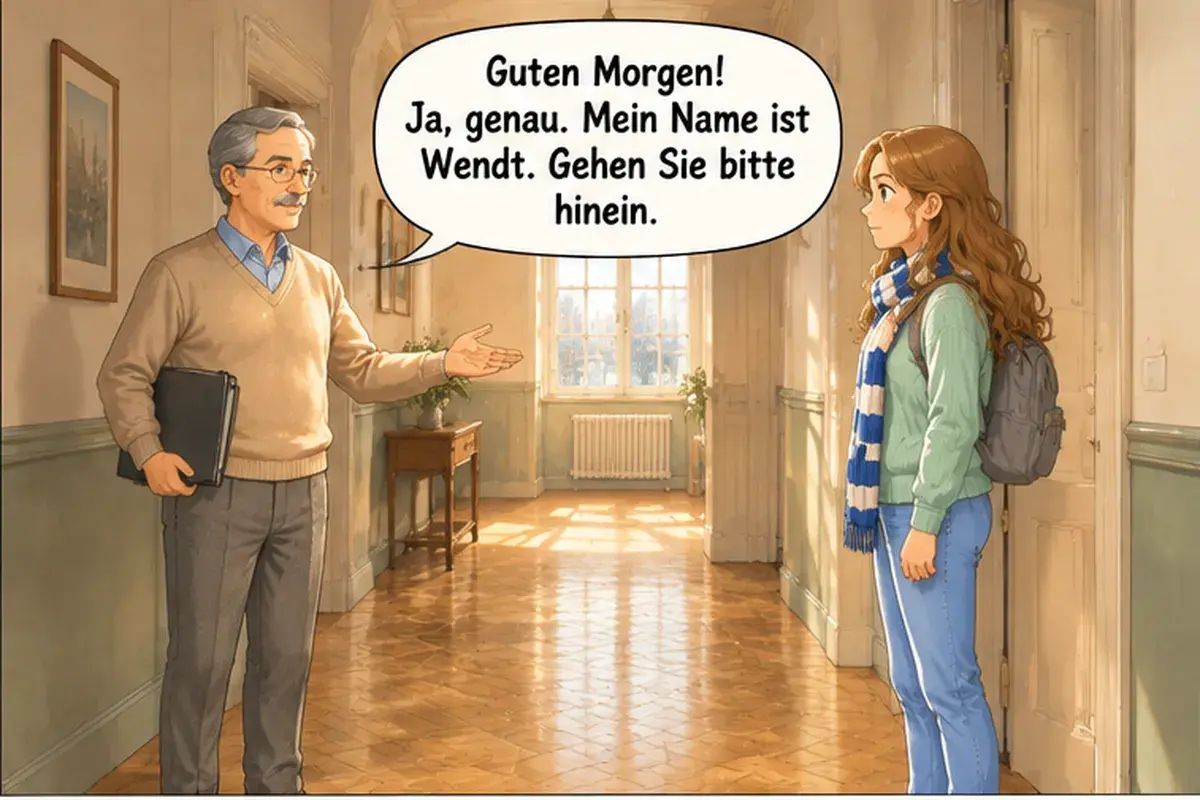
- Herr Wendt
Guten Morgen! Ja, genau. Mein Name ist Wendt. Gehen Sie bitte hinein.
Good morning! Yes, that's right. My name is Wendt. Please go inside (formal).
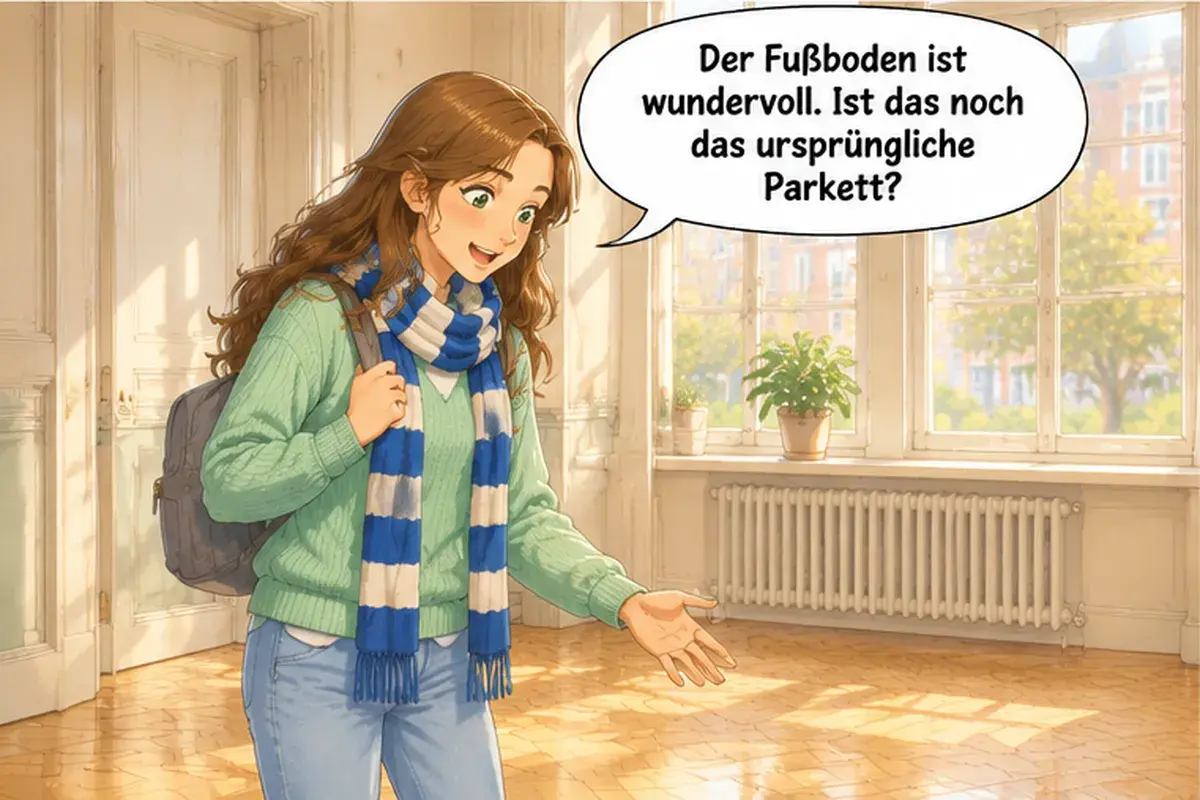
- Katja
Der Fußboden ist wundervoll. Ist das noch das ursprüngliche Parkett?
The floor is wonderful. Is this still the original parquet?
- Herr Wendt
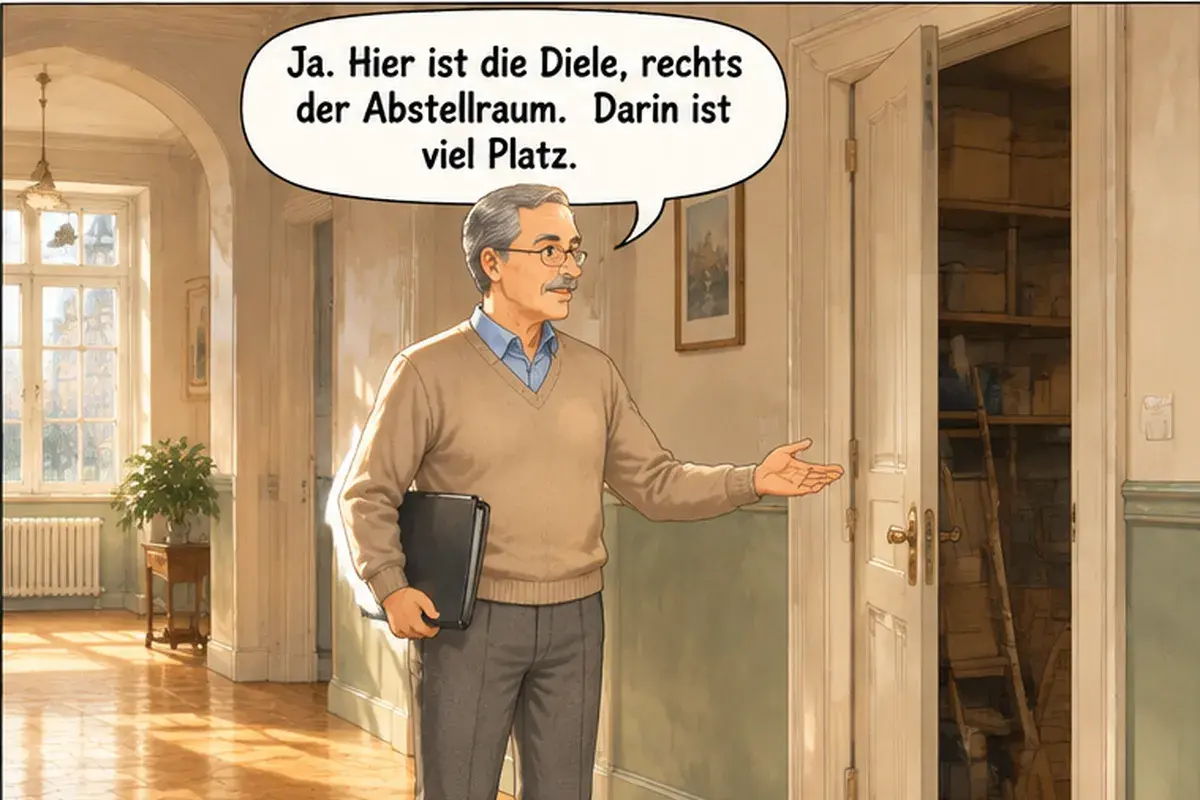
Ja. Hier ist die Diele, rechts der Abstellraum. Darin ist viel Platz.
Yes. This is the hallway, and on the right is the storage room. There's a lot of space in it.
- Katja
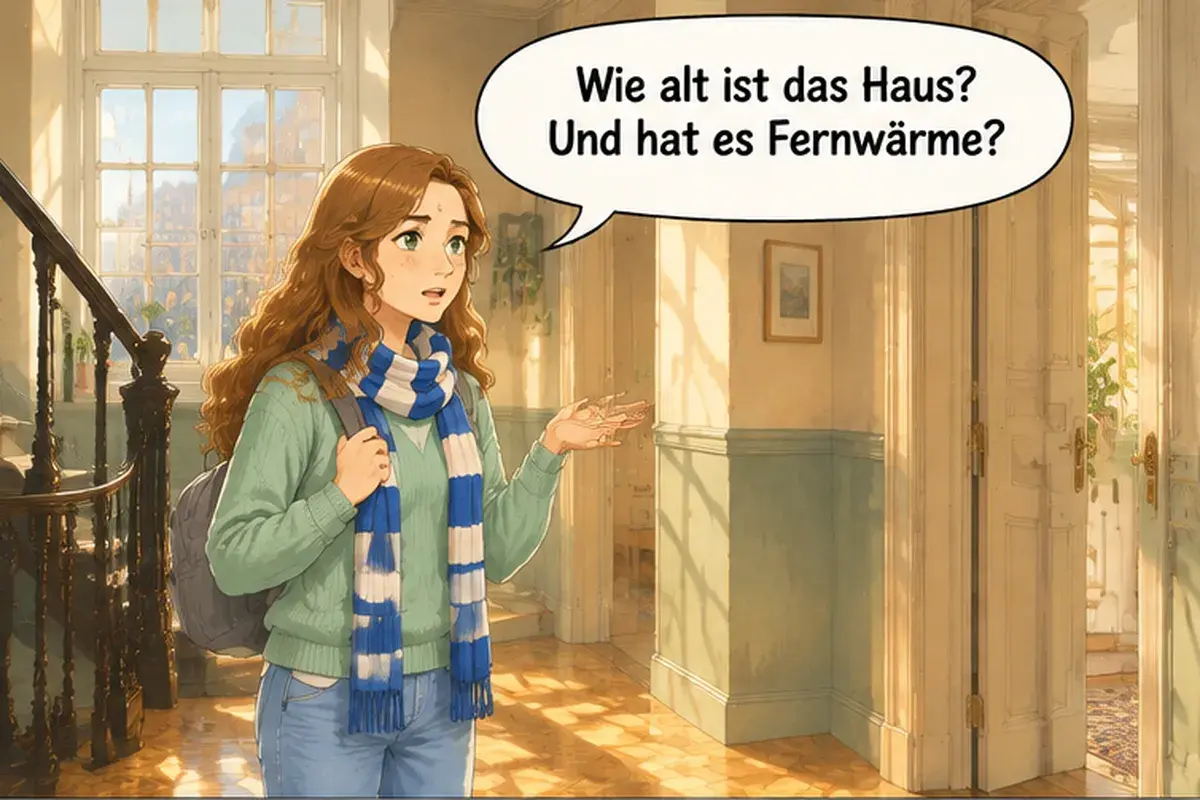
Wie alt ist das Haus? Und hat es Fernwärme?
How old is the house? And does it have district heating?
- Herr Wendt
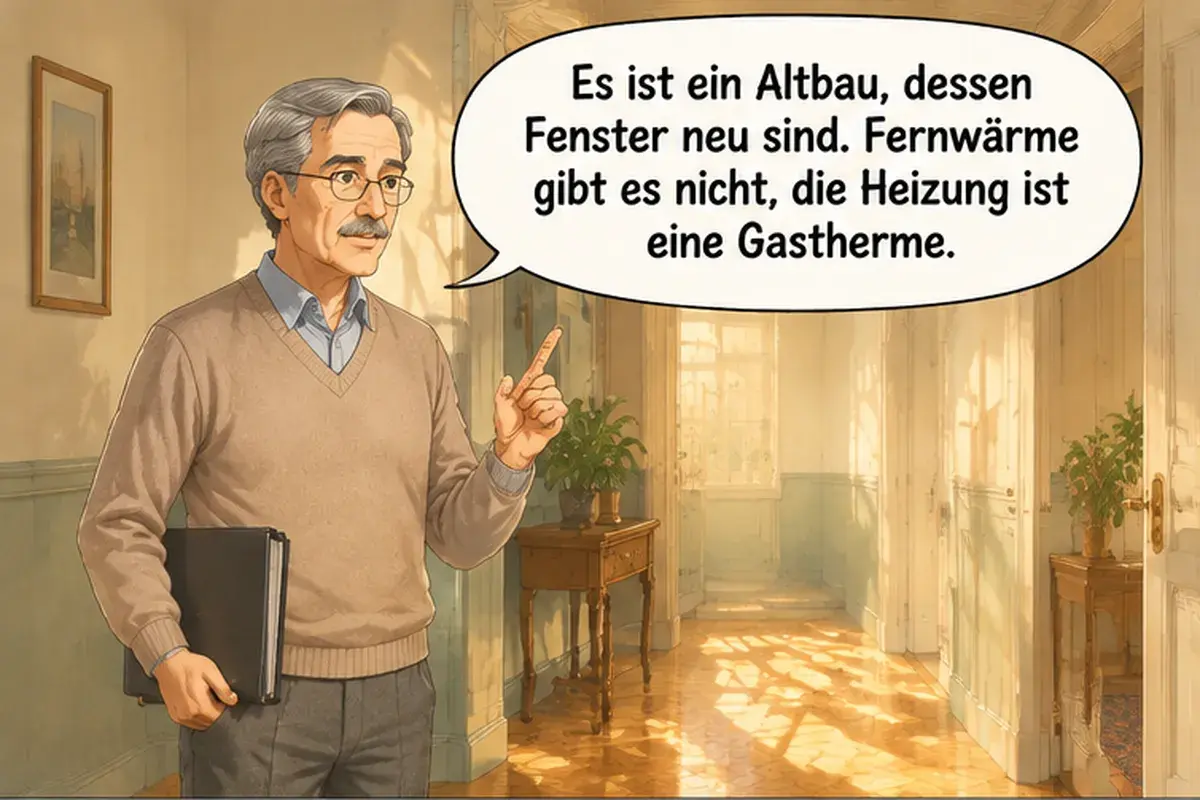
Es ist ein Altbau, dessen Fenster neu sind. Fernwärme gibt es nicht, die Heizung ist eine Gastherme.
It's an old building whose windows are new. There's no district heating; the heating is a gas boiler.
- Katja
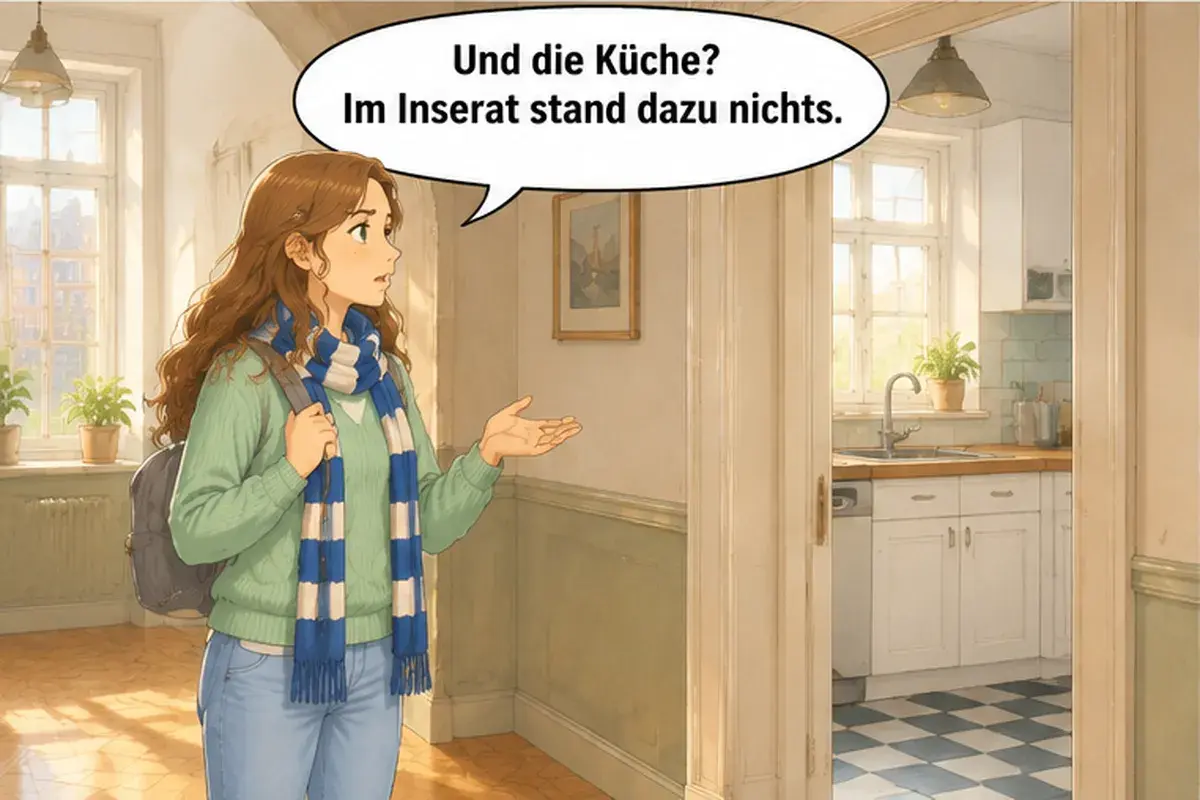
Und die Küche? Im Inserat stand dazu nichts.
And the kitchen? The listing didn't say anything about it.
- Herr Wendt
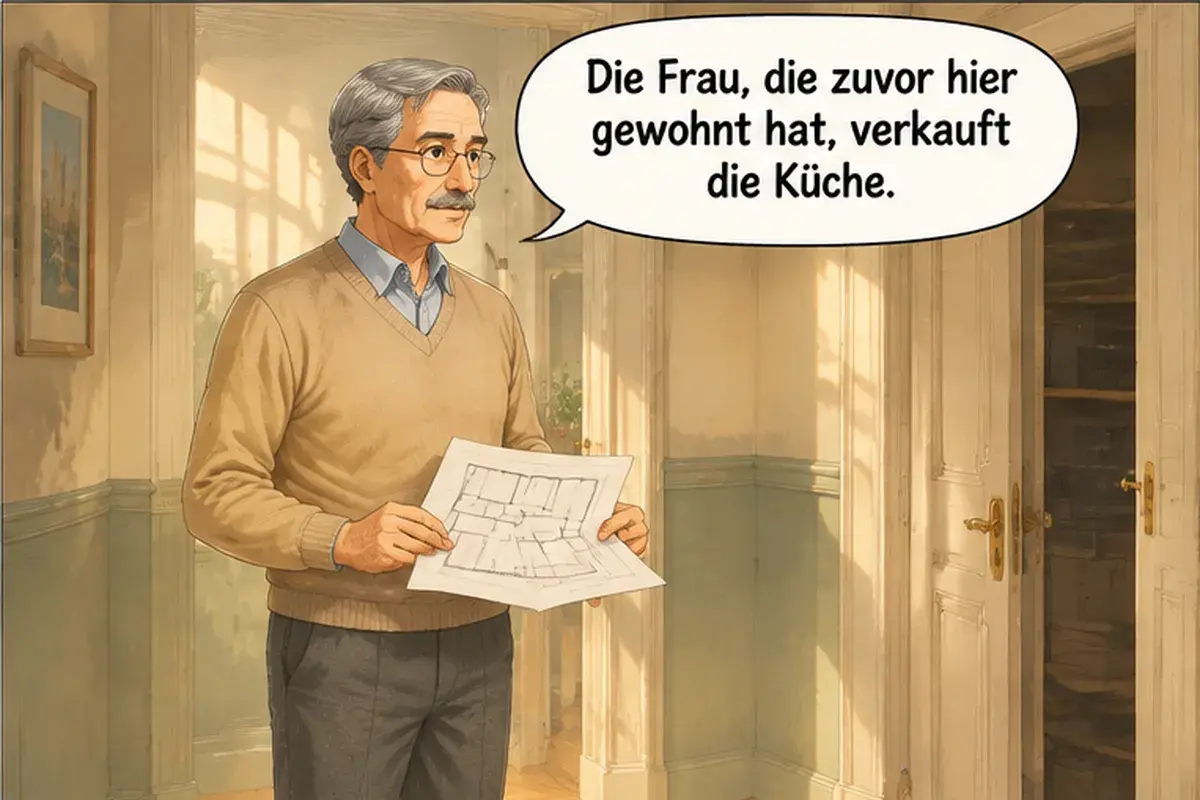
Die Frau, die zuvor hier gewohnt hat, verkauft die Küche.
The woman who lived here before is selling the kitchen.
- Katja
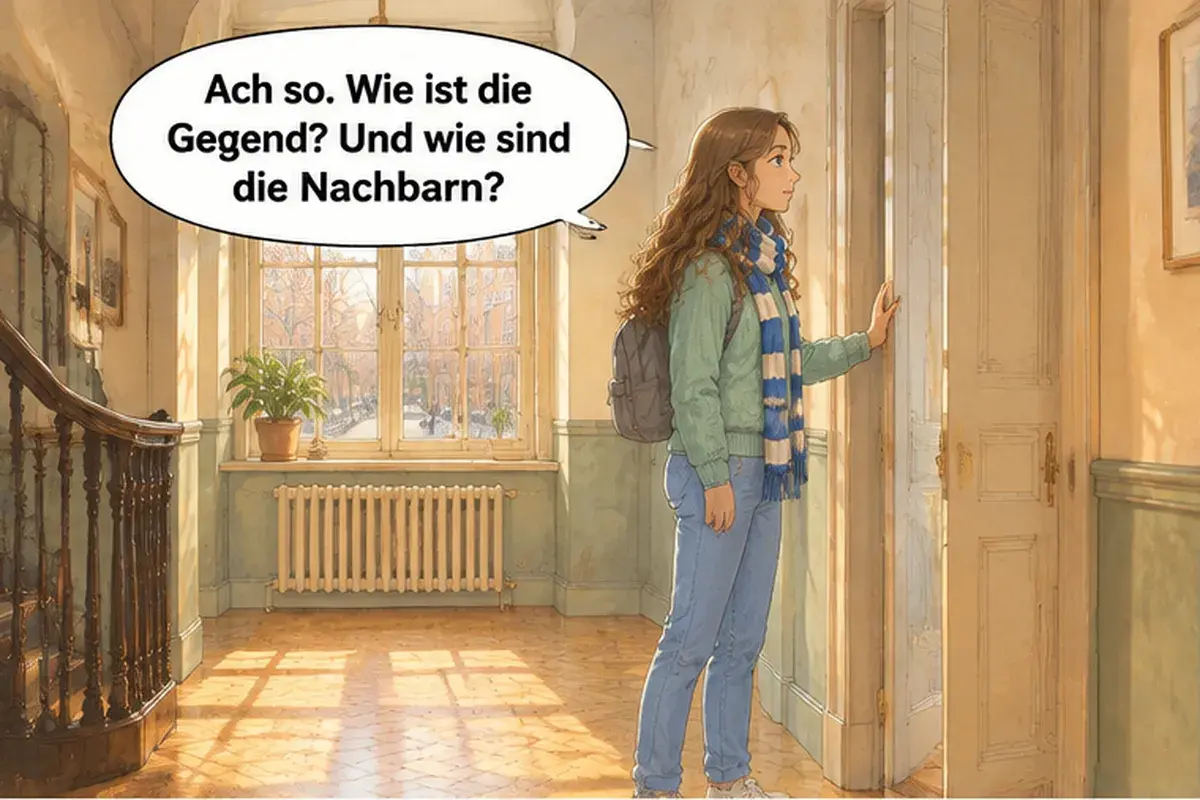
Ach so. Wie ist die Gegend? Und wie sind die Nachbarn?
Oh, I see. What's the area like? And what are the neighbors like?
- Herr Wendt
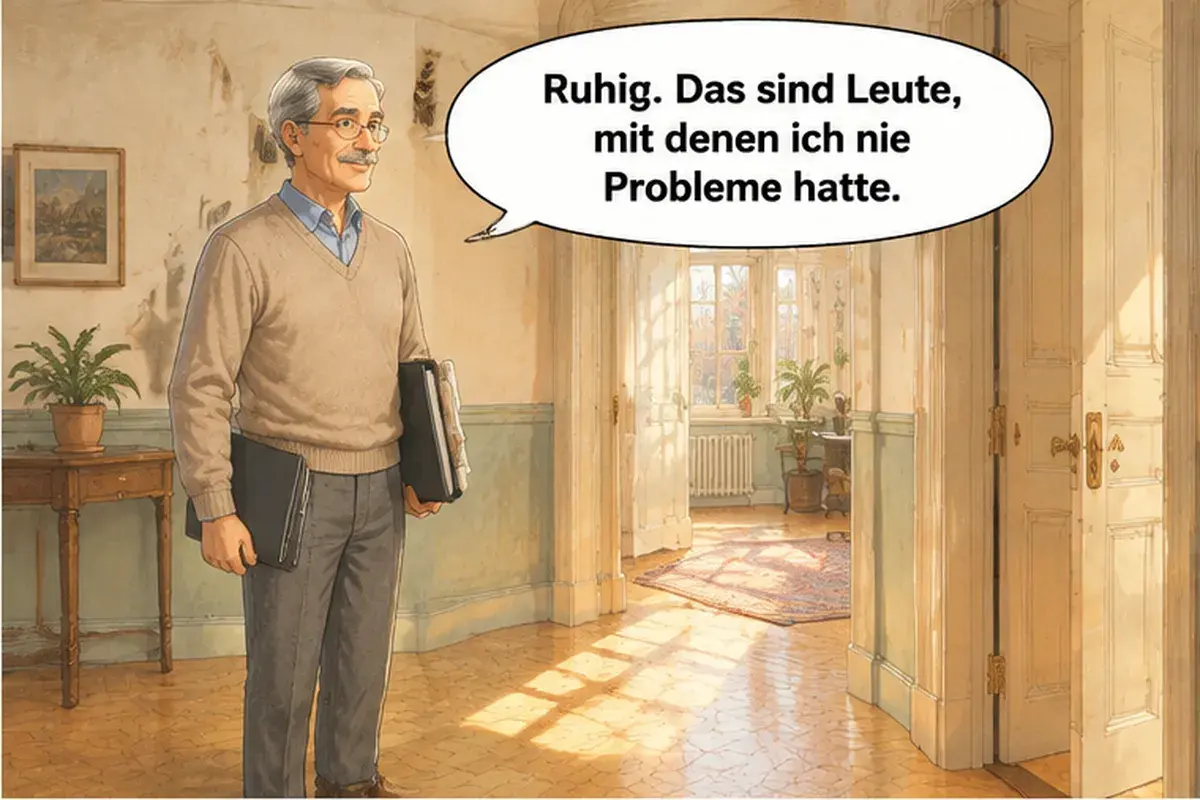
Ruhig. Das sind Leute, mit denen ich nie Probleme hatte.
Quiet. These are people I've never had problems with.
- Katja
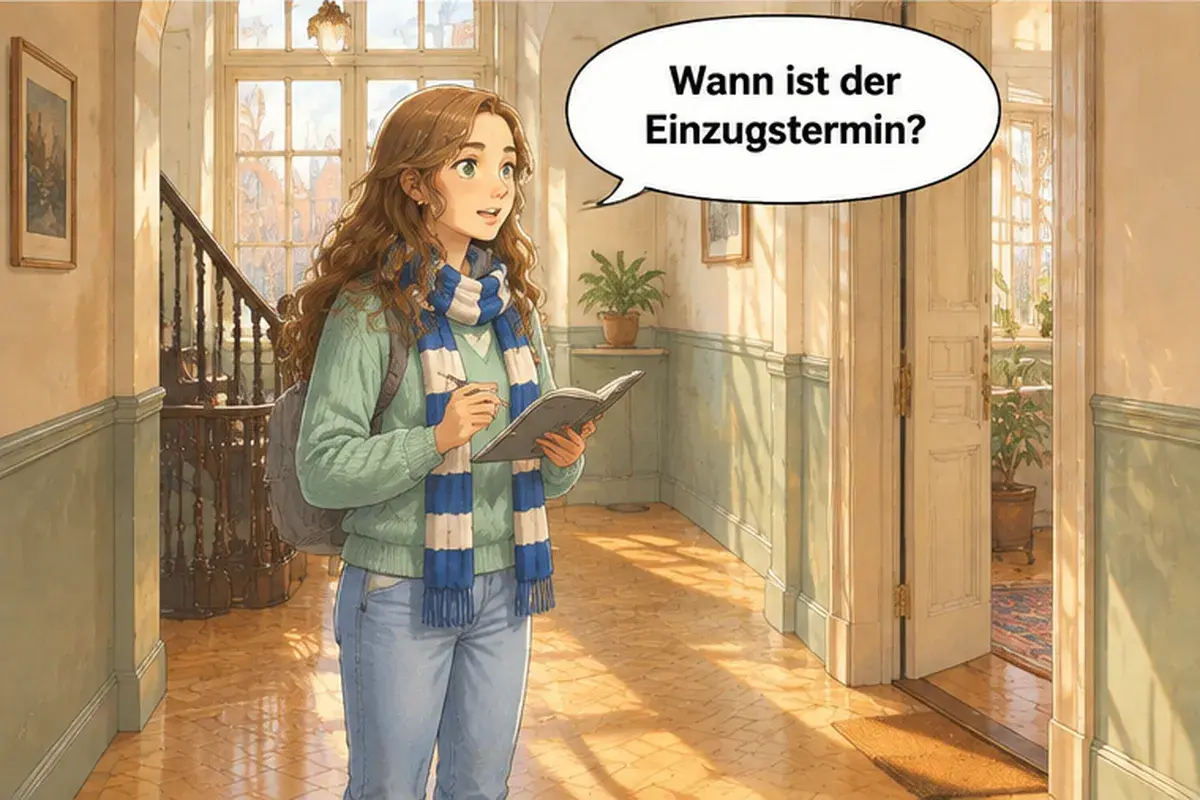
Wann ist der Einzugstermin?
When is the move-in date?
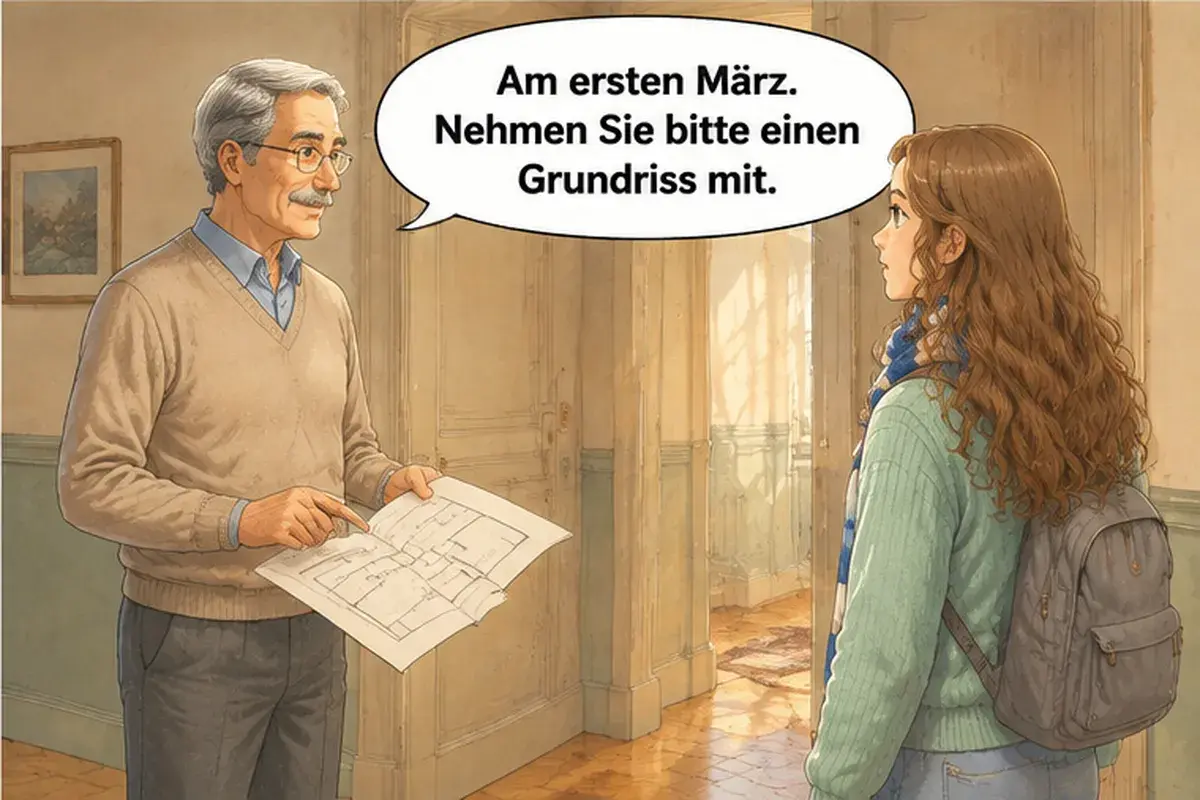
- Herr Wendt
Am ersten März. Nehmen Sie bitte einen Grundriss mit.
On March 1. Please take a floor plan with you (formal).
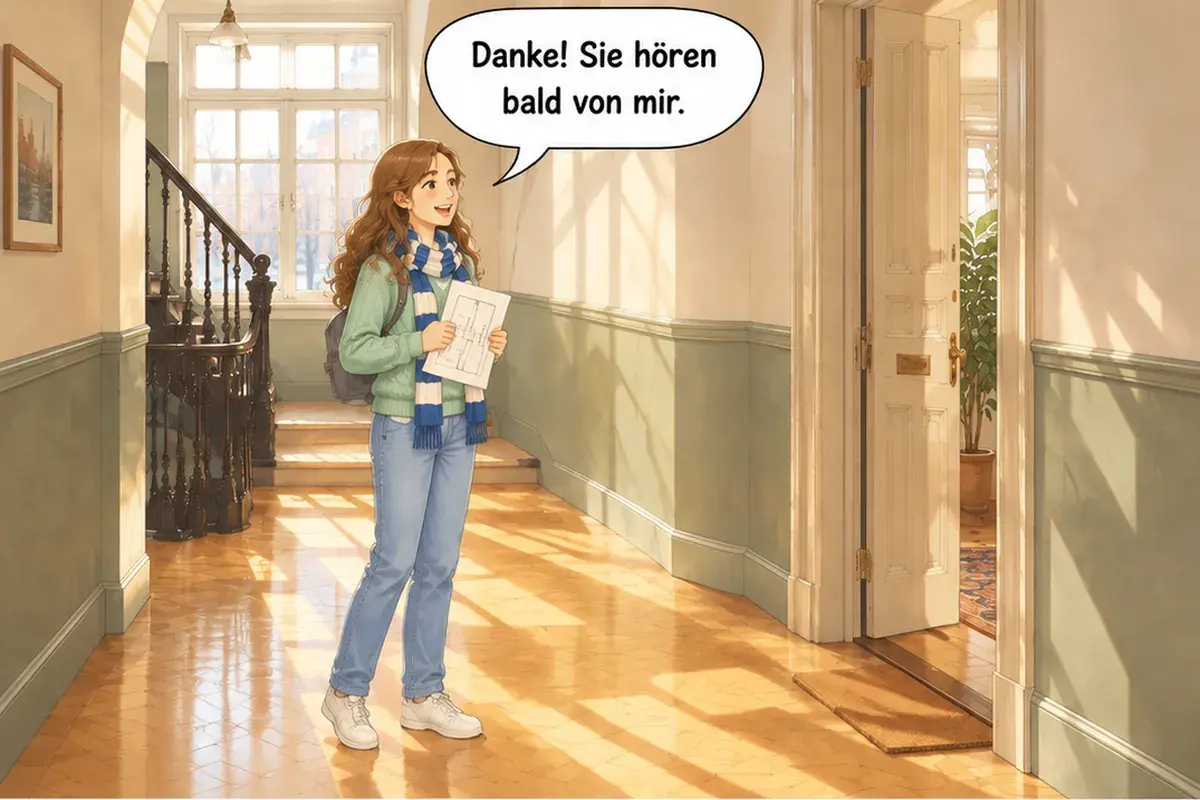
- Katja
Danke! Sie hören bald von mir.
Thank you! You'll hear from me soon (formal).
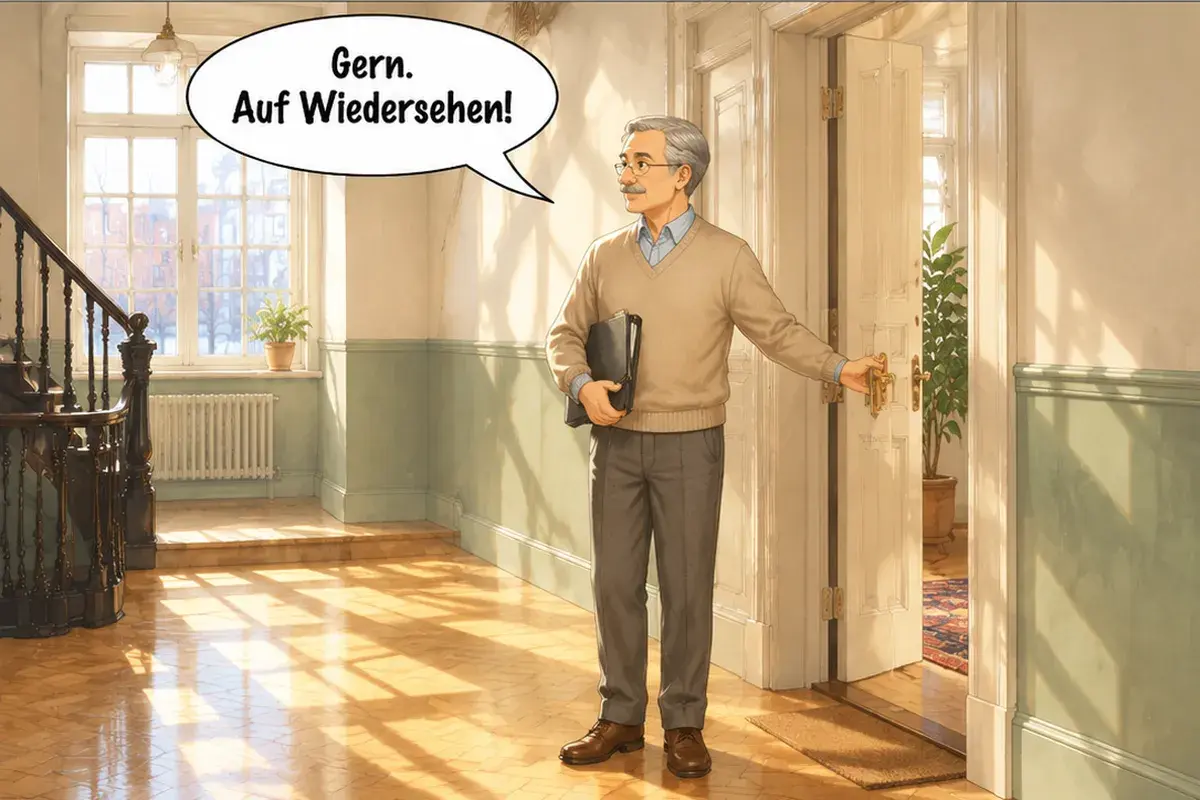
- Herr Wendt
Gern. Auf Wiedersehen!
My pleasure. Goodbye!
Grammar for this text
- Die Frau, die zuvor hier gewohnt hat, verkauft die Küche — The woman who lived here before is selling the kitchen. This is a relative clause without a preposition (B1, unit 7):
die Frau, die …means "the woman who …". Commas set the clause off, and its verbhatcomes at the end.zuvormeans "before, earlier". - Das sind Leute, mit denen ich nie Probleme hatte — These are people I've never had problems with. This is the key point of the text: the preposition comes before
denen.denenmeans "with whom": plural and dative, becausemittakes the dative.hatteis the Präteritum (narrative past) ofhabenforich("I had"). - Es ist ein Altbau, dessen Fenster neu sind — It's an old building whose windows are new.
dessenmeans "whose" (genitive). It refers toein Altbau, and there is no article afterdessen:dessen Fenstermeans "its windows". The verbsindcomes at the end. - Im Inserat stand dazu nichts — The listing didn't say anything about it.
standis the Präteritum ofstehenforer / sie / es; the vowel changes (steht→stand). Here it means "said, was written";dazumeans "about it". - Fernwärme gibt es nicht, die Heizung ist eine Gastherme — There's no district heating; the heating is a gas boiler.
Fernwärmeis heat piped in from the city network;die Gasthermeis a gas boiler mounted on the wall inside the apartment.es gibt+ accusative means "there is"; withnichtit means "there isn't". - Nehmen Sie bitte einen Grundriss mit — Please take a floor plan with you (formal). This is a polite request with
Sie: the verb comes first. The separable prefixmitgoes to the end:mitnehmenmeans "to take along". - Sie hören bald von mir — You'll hear from me soon (formal). This is a polite way to say "I'll be in touch soon".
hörenis theSieform;von miris the dative aftervon("from me").
Words and grammar of the unit: Go to an apartment viewing.
Learn the words from the texts with flashcards
In the app, you can tap any word in a text to see its translation, forms and examples, and new words stick with flashcards. 15 minutes a day.
Start for freeEverything is open for free. No card needed to sign up.