

German dialogue with translation · B2 · 15 lines
Bedienen Sie sich! Help yourself! (formal)
Comic · 15 panels
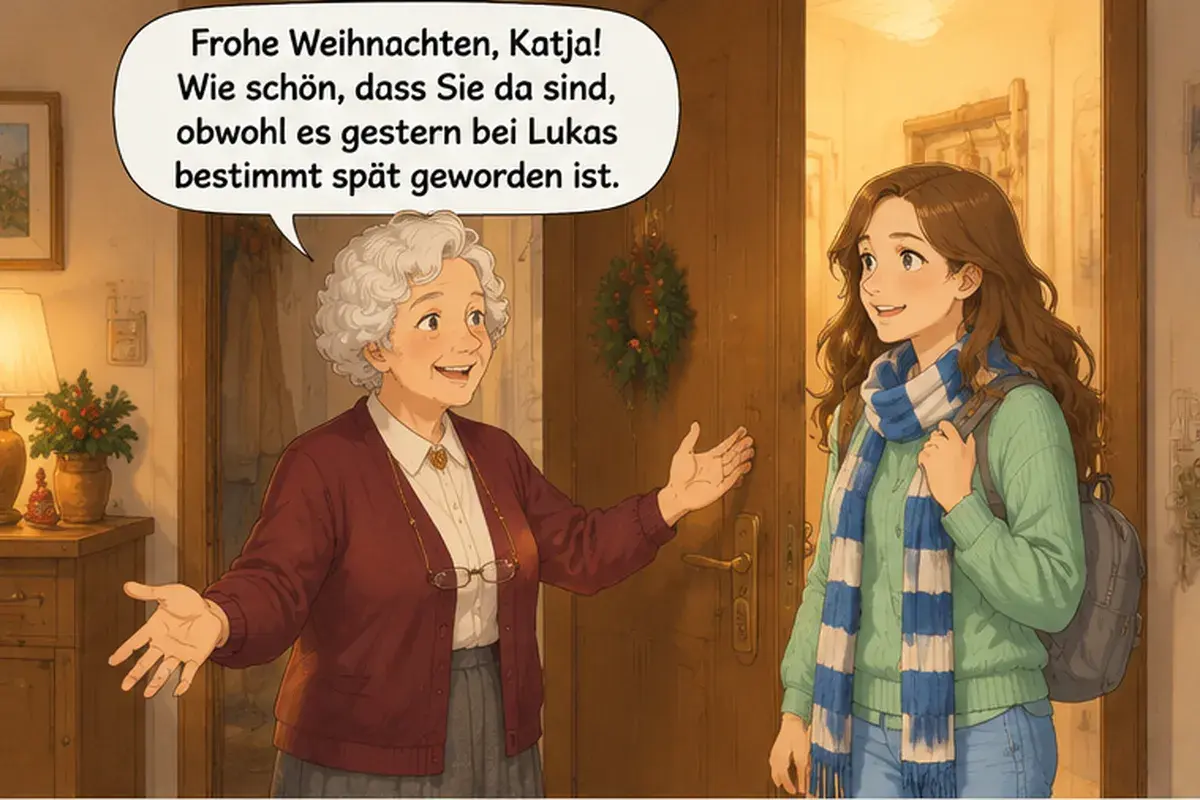
- Frau Brandt
Frohe Weihnachten, Katja! Wie schön, dass Sie da sind, obwohl es gestern bei Lukas bestimmt spät geworden ist.
Merry Christmas, Katja! How nice that you're here, even though it surely got late at Lukas's yesterday. (formal)

- Katja
Frohe Weihnachten, Frau Brandt! Ja, es wurde spät, aber ich freue mich schon seit gestern auf Ihren Kuchen. Hier duftet es wunderbar!
Merry Christmas, Frau Brandt! Yes, it got late, but I've been looking forward to your cake since yesterday. It smells wonderful in here! (formal)

- Frau Brandt
Es gibt Streuselkuchen und Bratäpfel mit Schlagsahne. Als Lukas und Hanna kamen, hatte ich den Tisch schon gedeckt.
There's streusel cake and baked apples with whipped cream. When Lukas and Hanna came, I had already set the table.
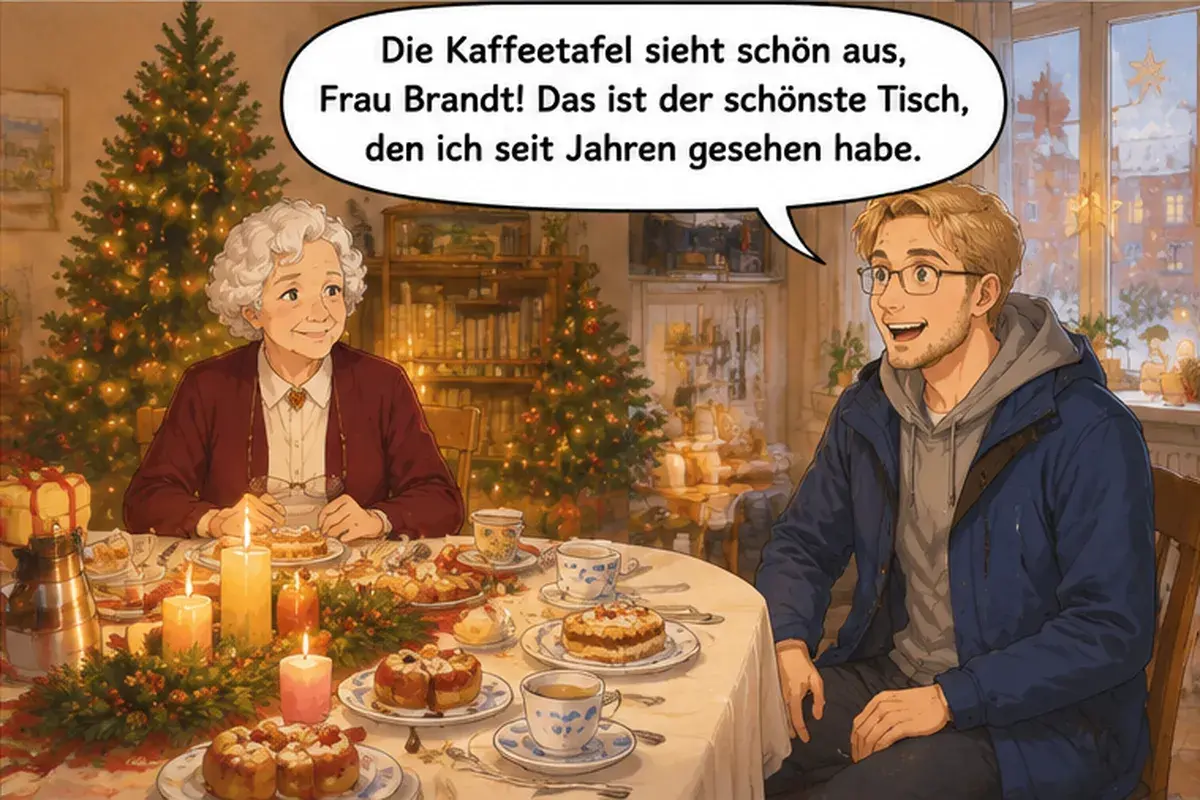
- Lukas
Die Kaffeetafel sieht schön aus, Frau Brandt! Das ist der schönste Tisch, den ich seit Jahren gesehen habe.
The coffee-and-cake table looks lovely, Frau Brandt! It's the most beautiful table I've seen in years.
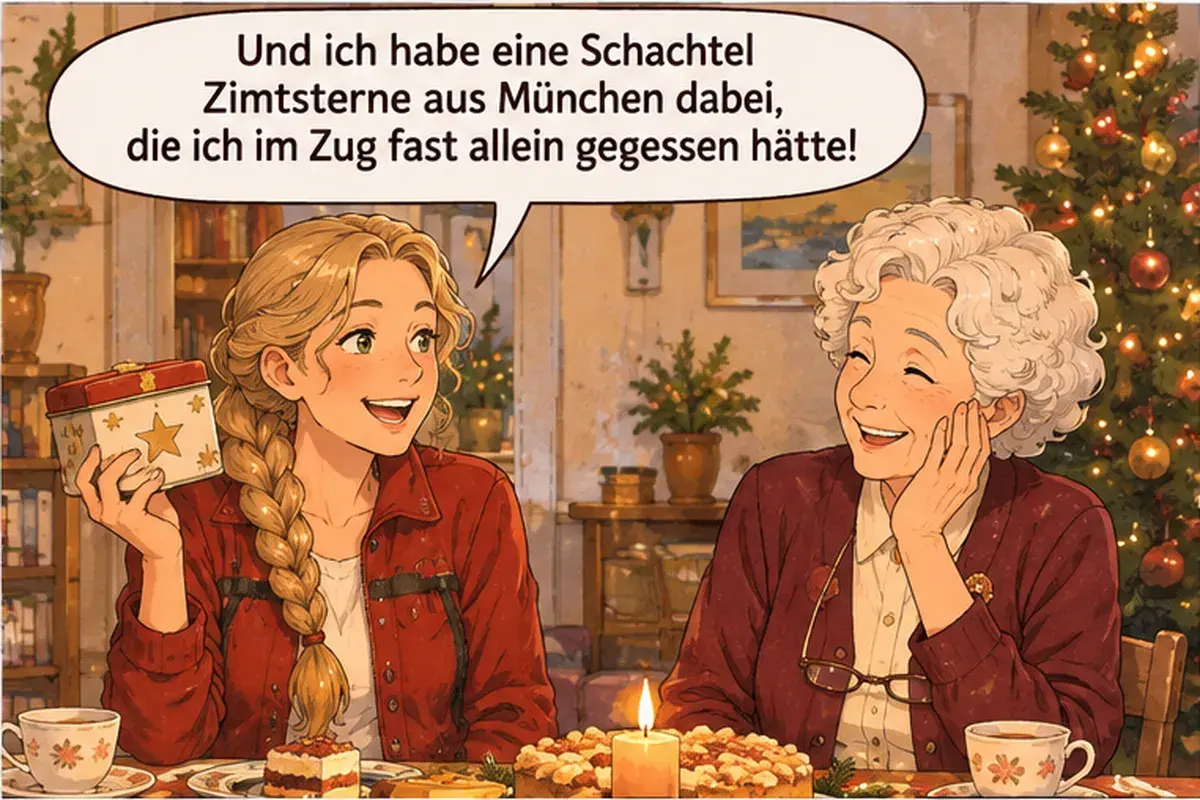
- Hanna
Und ich habe eine Schachtel Zimtsterne aus München dabei, die ich im Zug fast allein gegessen hätte!
And I brought a box of cinnamon stars from Munich, which I almost ate all by myself on the train!
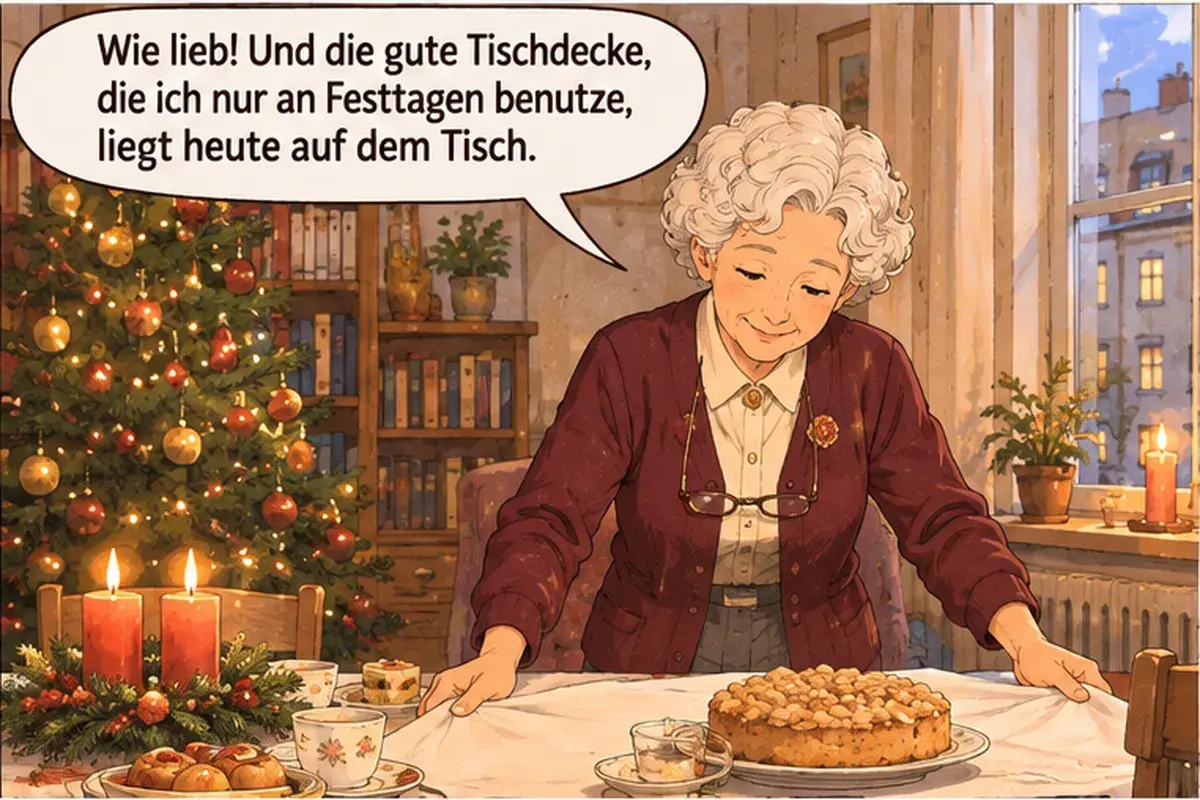
- Frau Brandt
Wie lieb! Und die gute Tischdecke, die ich nur an Festtagen benutze, liegt heute auf dem Tisch.
How sweet! And the good tablecloth, which I only use on holidays, is on the table today.
- Katja
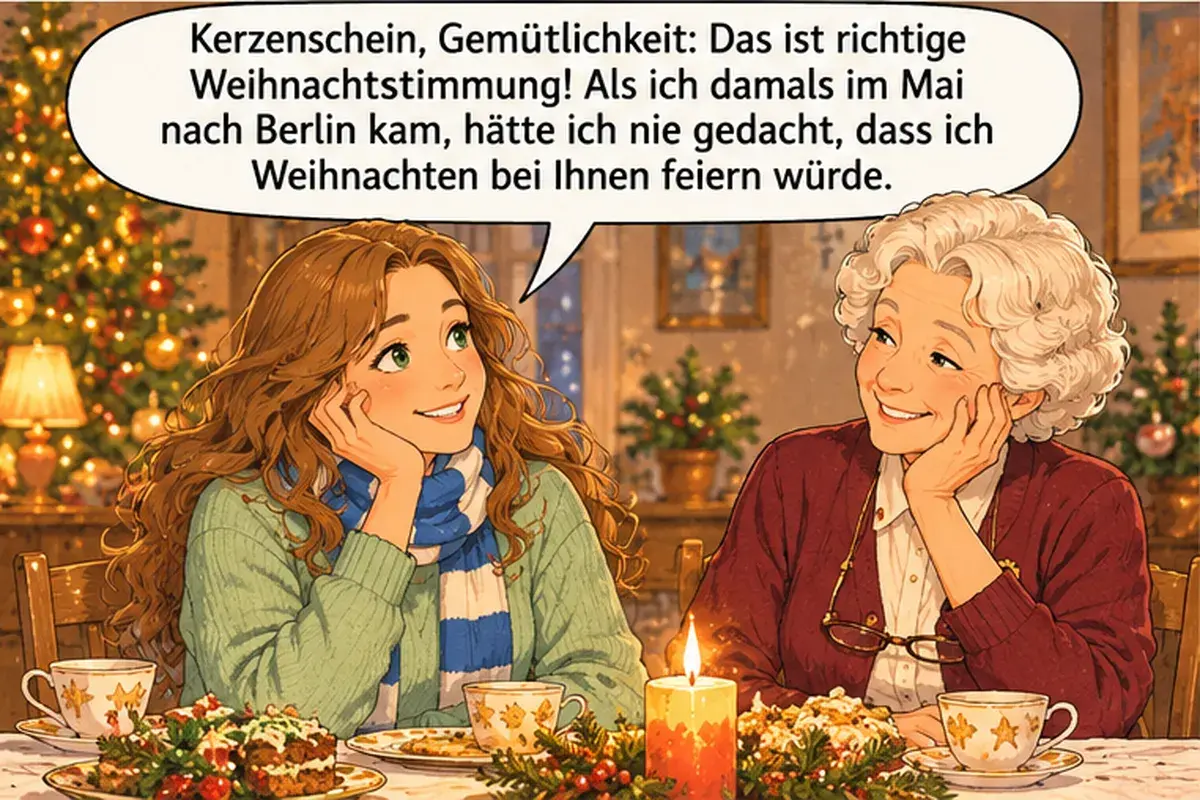
Kerzenschein, Gemütlichkeit: Das ist richtige Weihnachtsstimmung! Als ich damals im Mai nach Berlin kam, hätte ich nie gedacht, dass ich Weihnachten bei Ihnen feiern würde.
Candlelight, coziness: that's real Christmas spirit! When I came to Berlin back then in May, I would never have thought I'd be celebrating Christmas at your place. (formal)

- Frau Brandt
Weihnachten soll besinnlich sein, und das geht am besten mit Menschen, die man mag. Bedienen Sie sich!
Christmas should be calm and reflective, and that works best with people you like. Help yourself! (formal)
- Katja
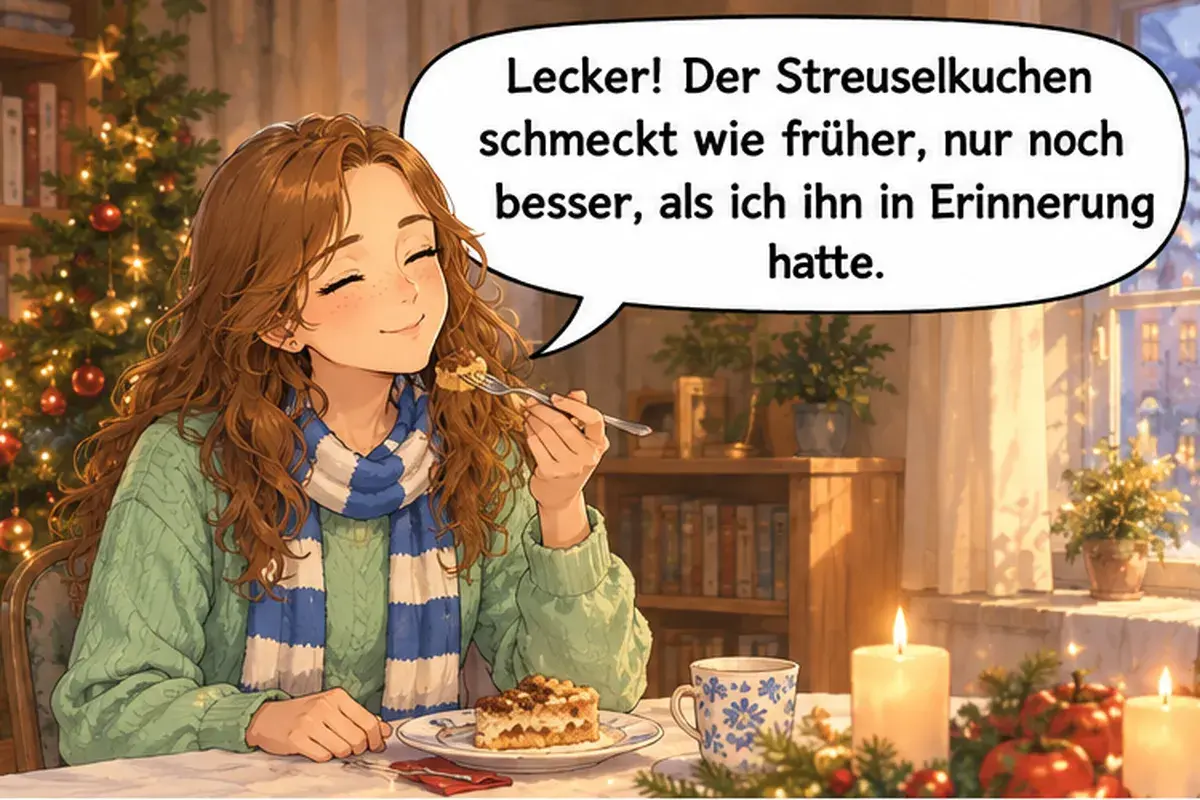
Lecker! Der Streuselkuchen schmeckt wie früher, nur noch besser, als ich ihn in Erinnerung hatte.
Delicious! The streusel cake tastes like it used to, only even better than I remembered it.
- Frau Brandt
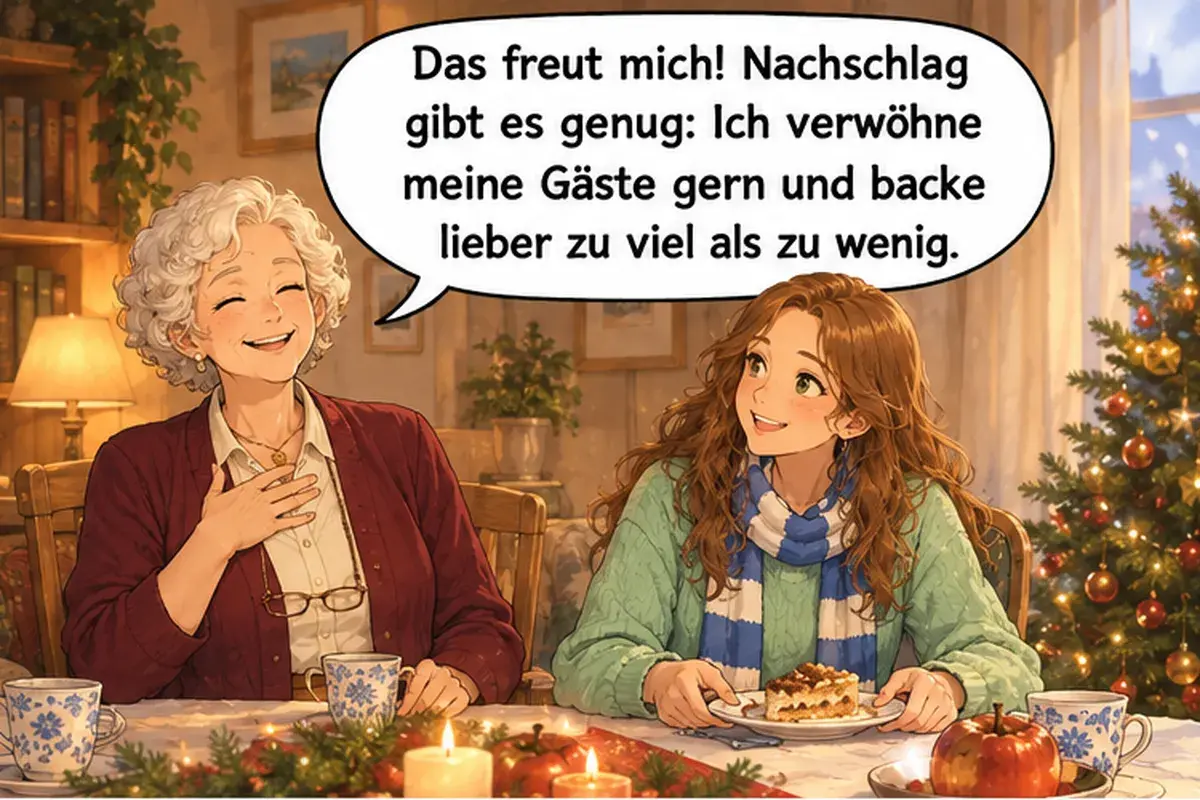
Das freut mich! Nachschlag gibt es genug: Ich verwöhne meine Gäste gern und backe lieber zu viel als zu wenig.
I'm glad! There are plenty of seconds: I like to spoil my guests and would rather bake too much than too little.
- Mehmet
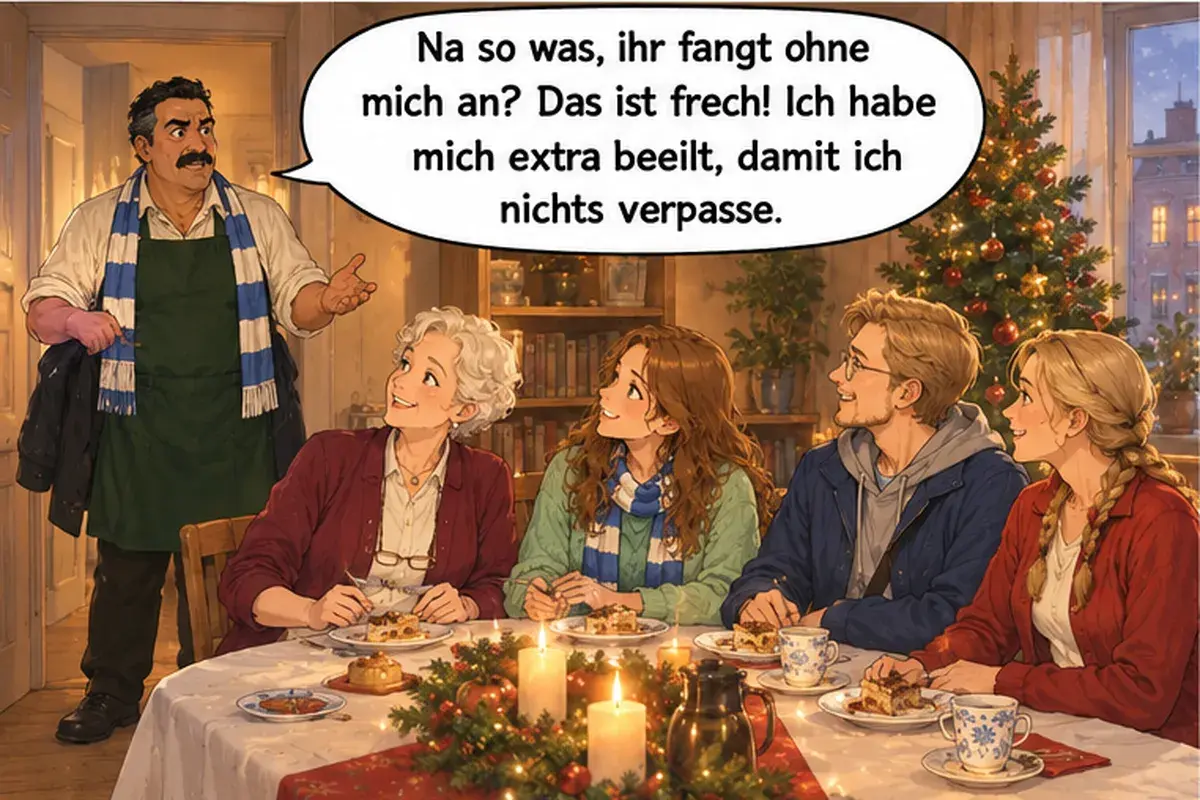
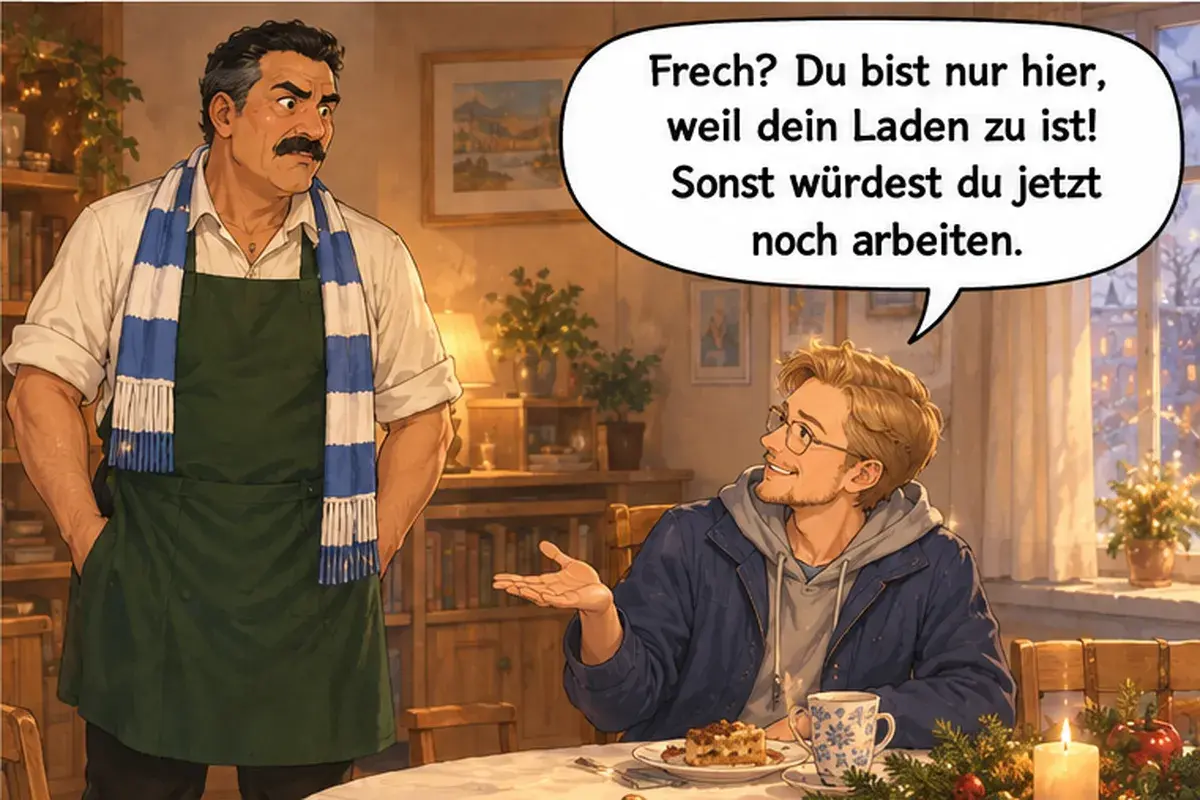
Na so was, ihr fangt ohne mich an? Das ist frech! Ich habe mich extra beeilt, damit ich nichts verpasse.
Well, look at that, you're starting without me? That's cheeky! I hurried on purpose so I wouldn't miss anything. (to several people)
- Lukas
Frech? Du bist nur hier, weil dein Laden zu ist! Sonst würdest du jetzt noch arbeiten.
Cheeky? You're only here because your store is closed! Otherwise you'd still be working right now.
- Frau Brandt
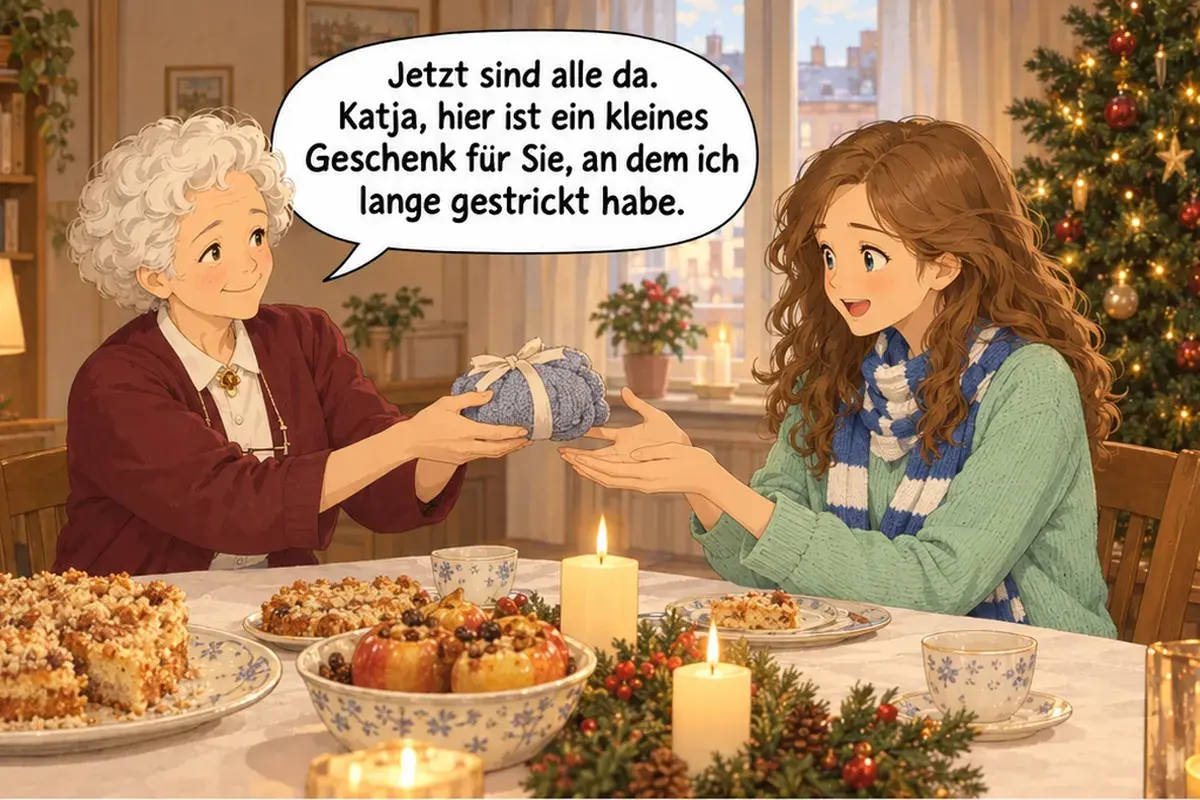
Jetzt sind alle da. Katja, hier ist ein kleines Geschenk für Sie, an dem ich lange gestrickt habe.
Now everyone's here. Katja, here's a little gift for you that I spent a long time knitting. (formal)

- Katja
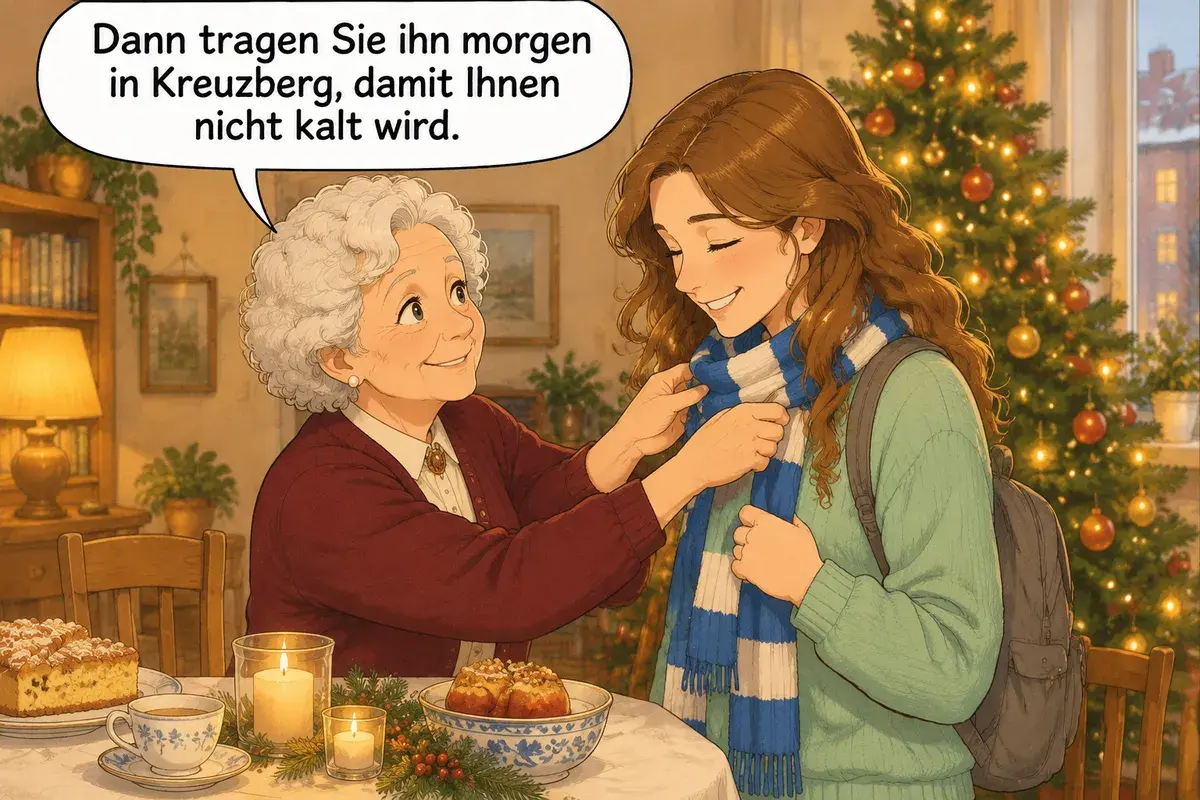
Ein selbstgestrickter Schal! Ich bin so gerührt, dass ich kaum sprechen kann. Dafür gibt es eine Umarmung.
A hand-knitted scarf! I'm so touched that I can hardly speak. That deserves a hug.
- Frau Brandt
Dann tragen Sie ihn morgen in Kreuzberg, damit Ihnen nicht kalt wird.
Then wear it tomorrow in Kreuzberg so you won't be cold. (formal)
Grammar for this text
- Als Lukas und Hanna kamen, hatte ich den Tisch schon gedeckt — the Plusquamperfekt (past perfect):
hatte+gedecktis "had already set", the thing that happened before "came".kamenis the Präteritum ofkommen, the sie form. Afteralsthe verb goes to the end. - obwohl es gestern bei Lukas bestimmt spät geworden ist —
obwohlmeans "although" and sends the verbs to the end.Es ist spät gewordenis a set phrase: "it got late". It is the Perfekt ofwerdenwithsein. - die ich im Zug fast allein gegessen hätte —
diepoints back toZimtsterne(plural), and the verb is at the end.hätte … gegessenis the past Konjunktiv II: "almost ate", which means I did not eat them. Same in hätte ich nie gedacht — I would never have thought. - dass ich Weihnachten bei Ihnen feiern würde —
würde+ infinitive is "would", seen from the past: "that I would be celebrating". - Und die gute Tischdecke, die ich nur an Festtagen benutze, liegt heute … — a relative clause sits in the middle of the sentence between commas.
dieis the tablecloth (feminine). - Ich habe mich extra beeilt, damit ich nichts verpasse —
beeiltis the past participle ofsich beeilen(to hurry), andmichstays with the verb.damitmeans "so that" and sendsverpasseto the end.extrameans "on purpose". - an dem ich lange gestrickt habe — preposition +
dem: the gift isdas Geschenk, dative afteran.an etwas strickenmeans "to knit something". The verbhabeis at the end.
Words and grammar of the unit: Going back to where it all started.
Learn the words from the texts with flashcards
In the app, you can tap any word in a text to see its translation, forms and examples, and new words stick with flashcards. 15 minutes a day.
Start for freeEverything is open for free. No card needed to sign up.