

German dialogue with translation · B2 · 14 lines
Ich traue dir das zu I think you can do it
Comic · 14 panels
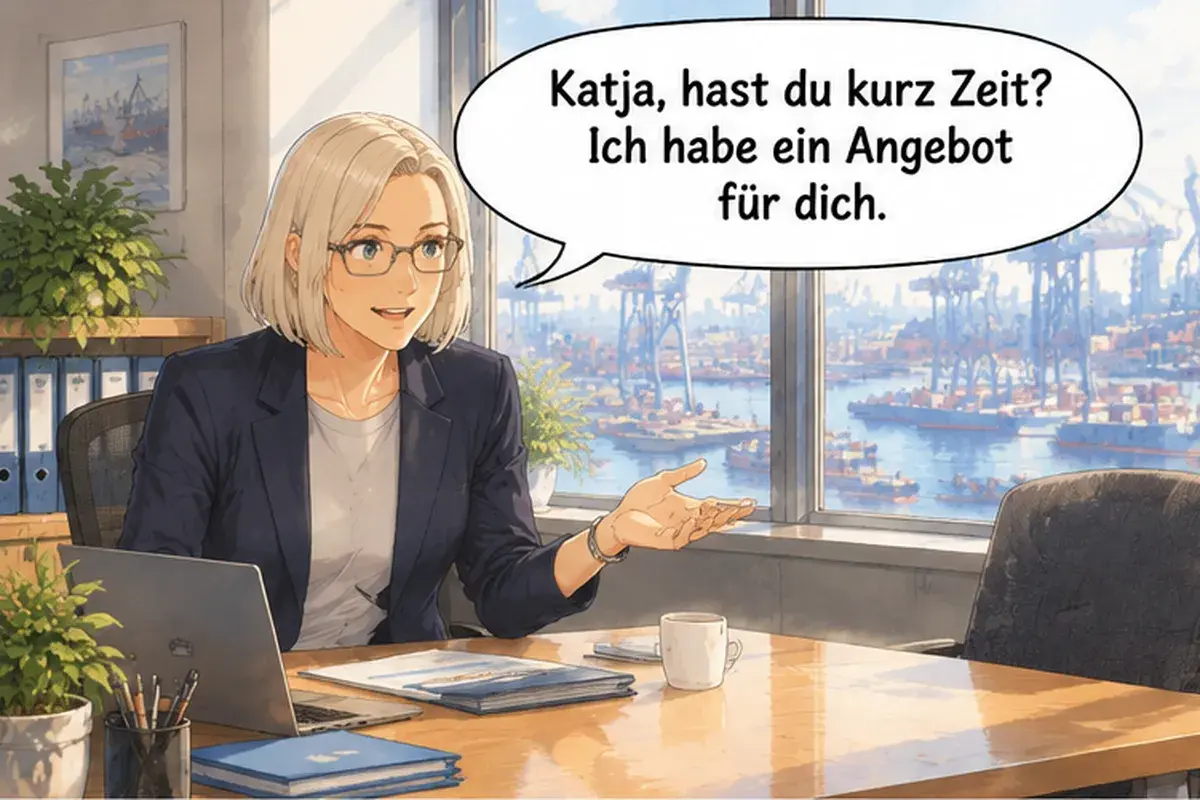
- Sabine
Katja, hast du kurz Zeit? Ich habe ein Angebot für dich.
Katja, do you have a minute? I have an offer for you.
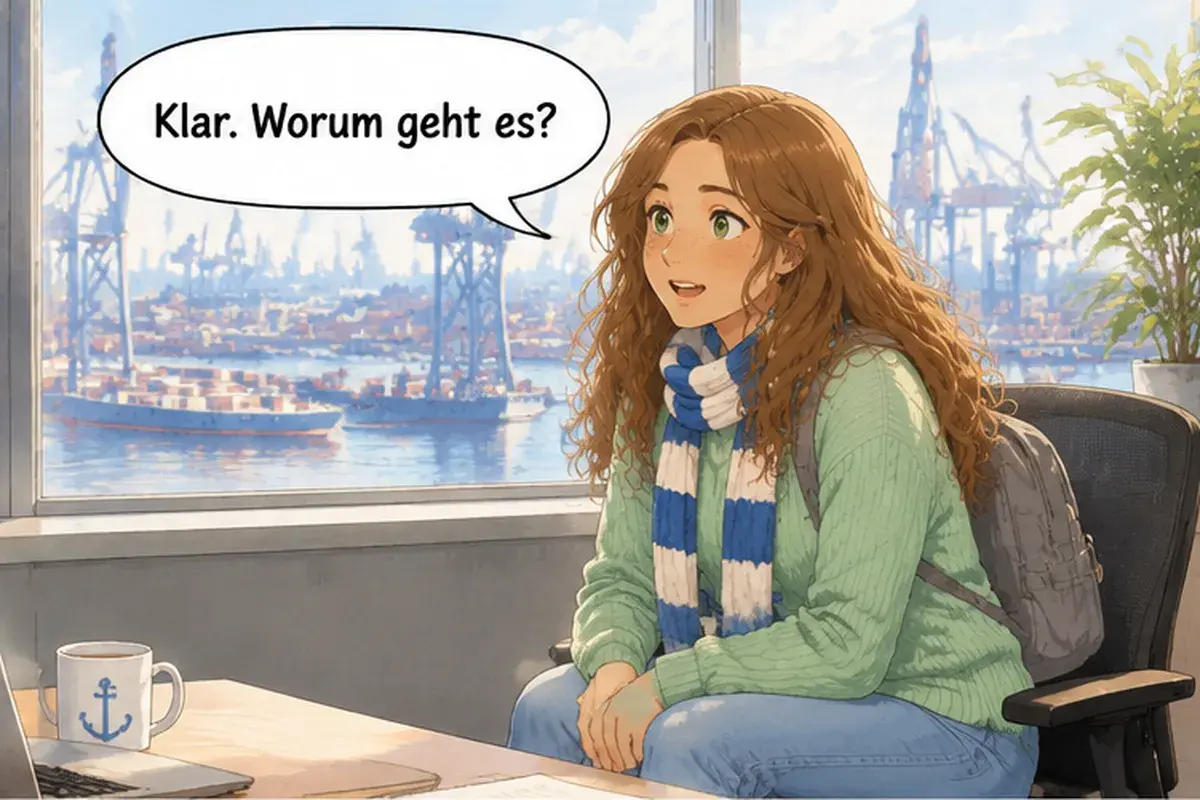
- Katja
Klar. Worum geht es?
Sure. What's it about?
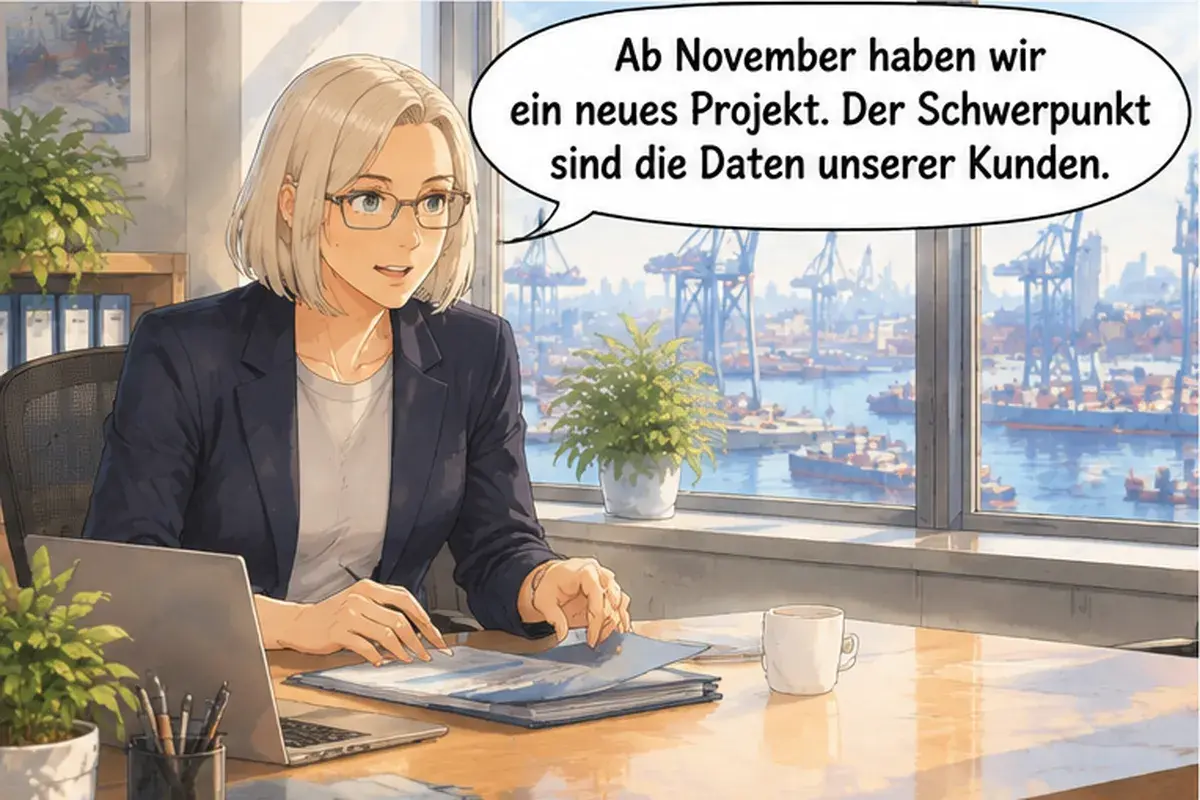
- Sabine
Ab November haben wir ein neues Projekt. Der Schwerpunkt sind die Daten unserer Kunden.
We have a new project starting in November. The focus is our customers' data.
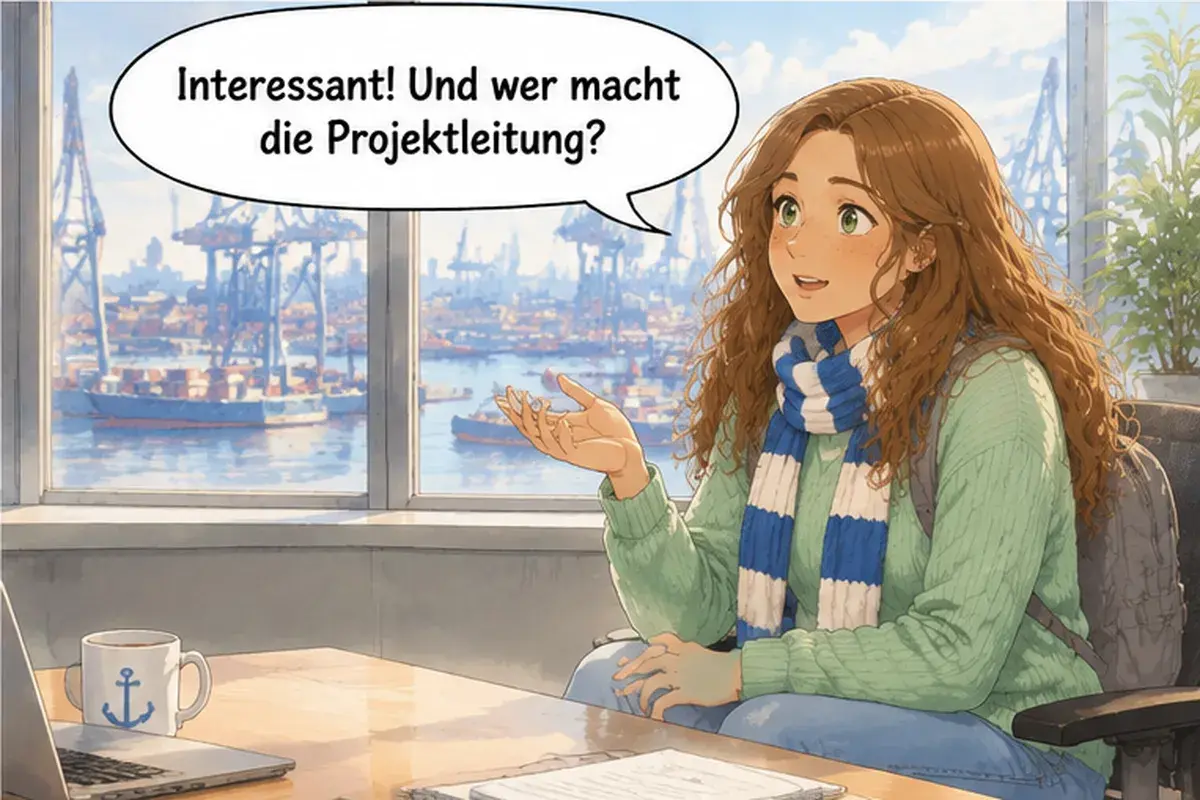
- Katja
Interessant! Und wer macht die Projektleitung?
Interesting! And who's going to lead the project?
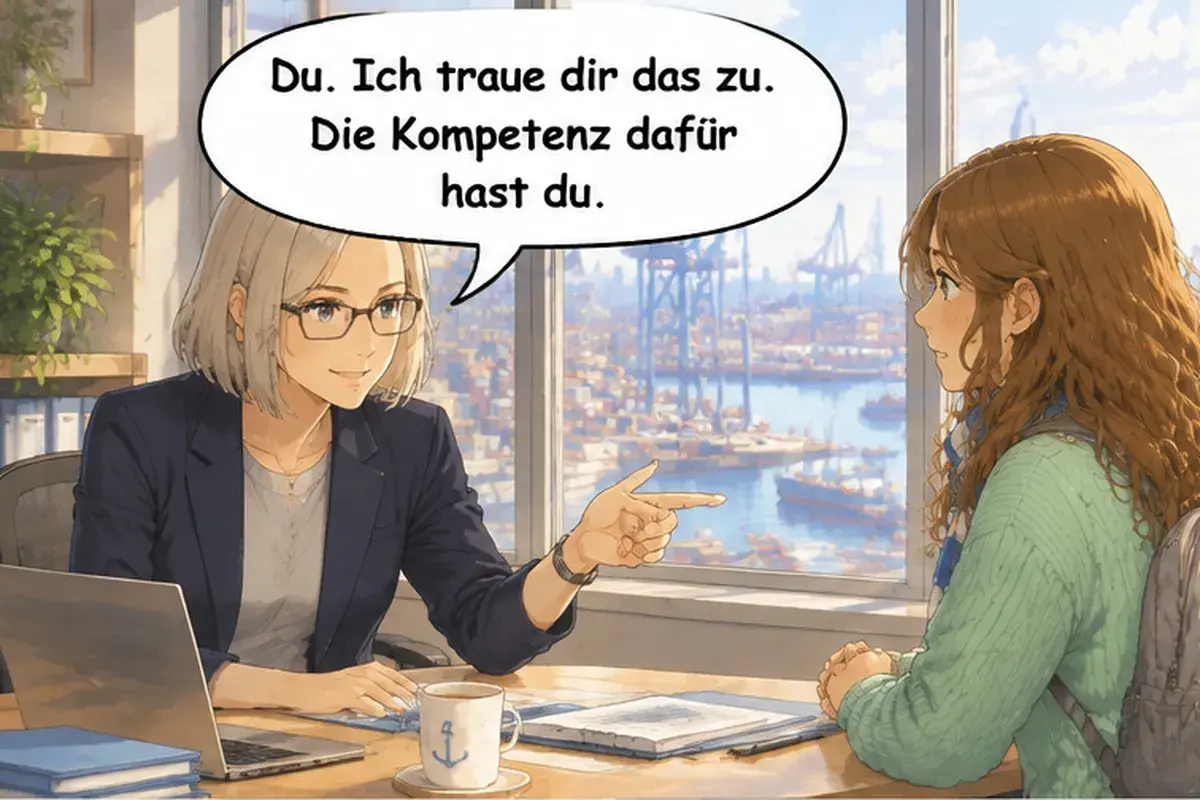
- Sabine
Du. Ich traue dir das zu. Die Kompetenz dafür hast du.
You. I think you can do it. You have the competence for it.
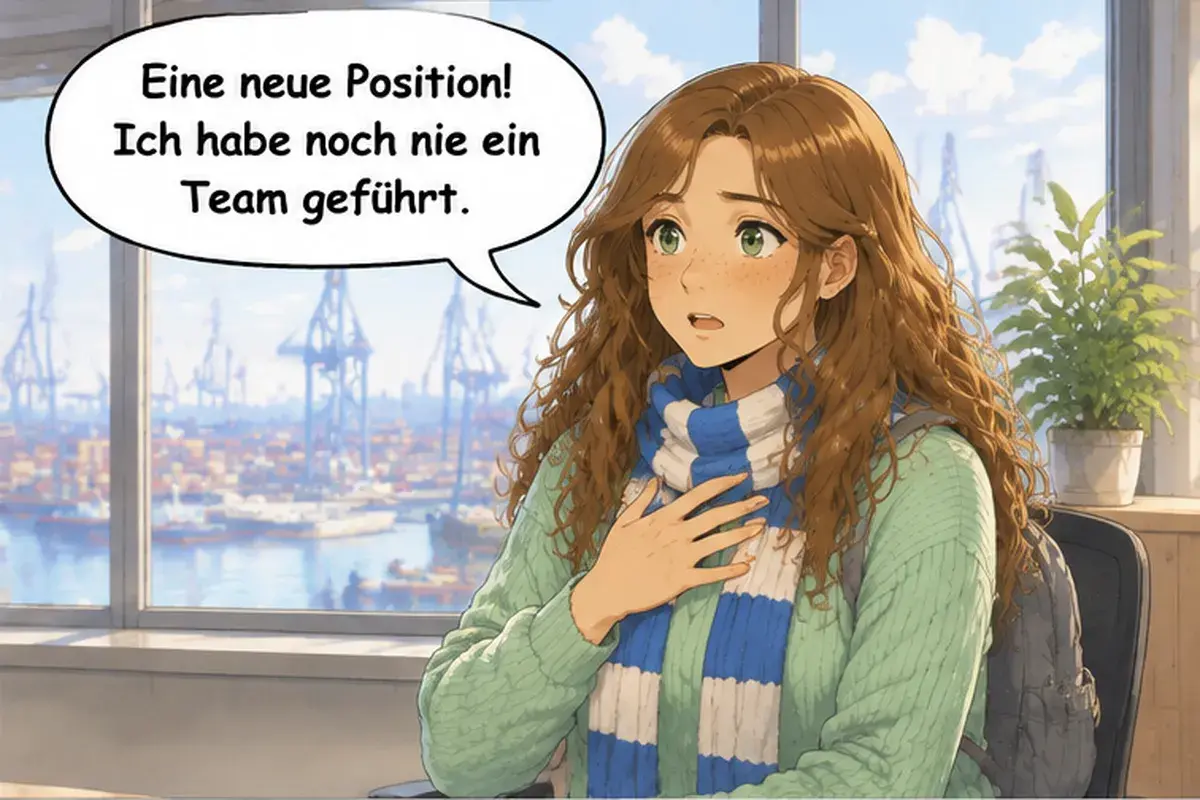
- Katja
Eine neue Position! Ich habe noch nie ein Team geführt.
A new position! I've never led a team before.
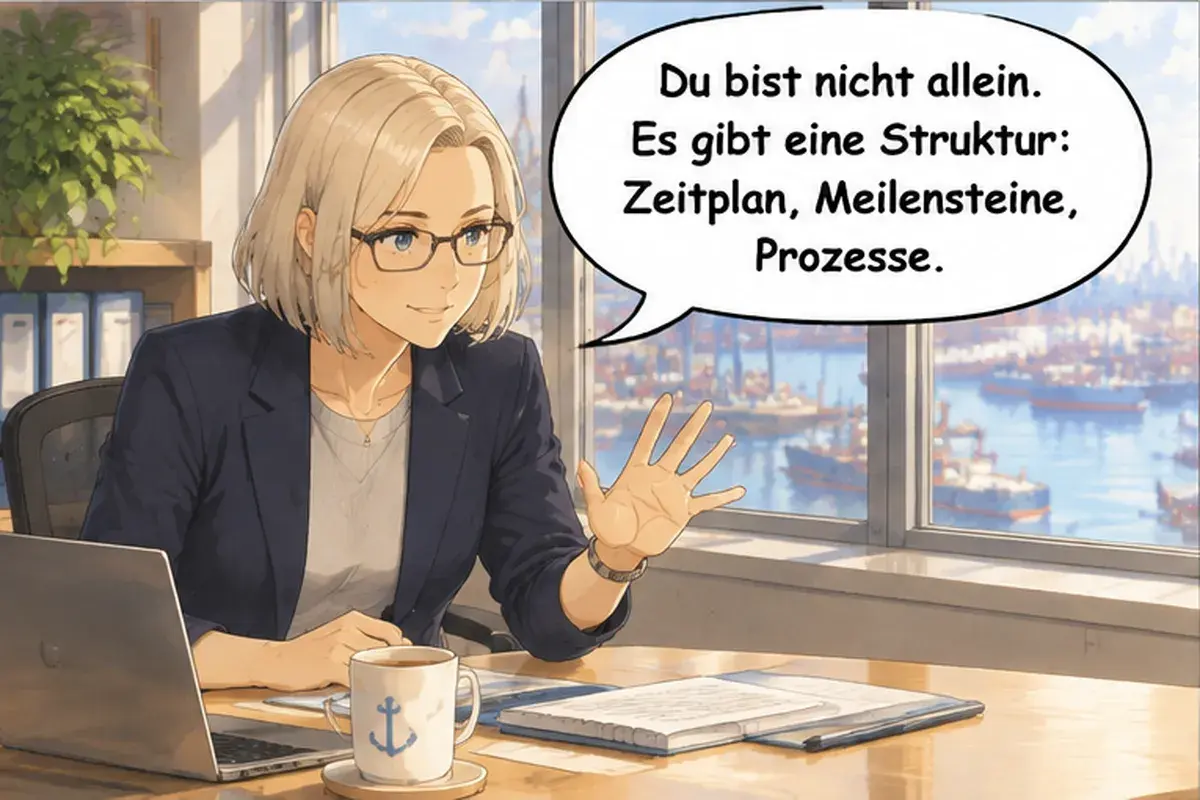
- Sabine
Du bist nicht allein. Es gibt eine Struktur: Zeitplan, Meilensteine, Prozesse.
You're not alone. There's a structure: schedule, milestones, processes.

- Katja
Also ab ins kalte Wasser. Wann ist der Auftakt?
So, straight into the deep end. When's the kickoff?
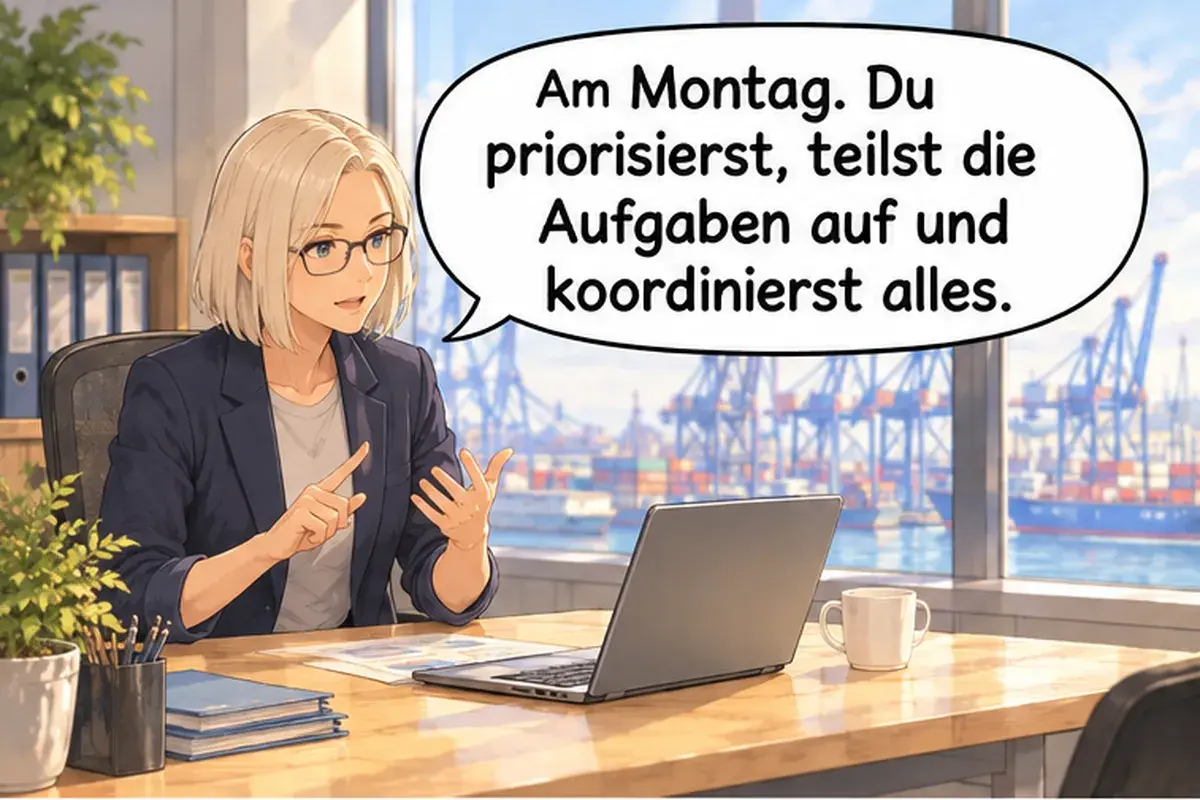
- Sabine
Am Montag. Du priorisierst, teilst die Aufgaben auf und koordinierst alles.
On Monday. You'll prioritize, split up the tasks, and coordinate everything.

- Katja
Und wenn ich überfordert bin? Wenn ich es nicht bewältige?
And if I'm overloaded? If I can't handle it?
- Sabine
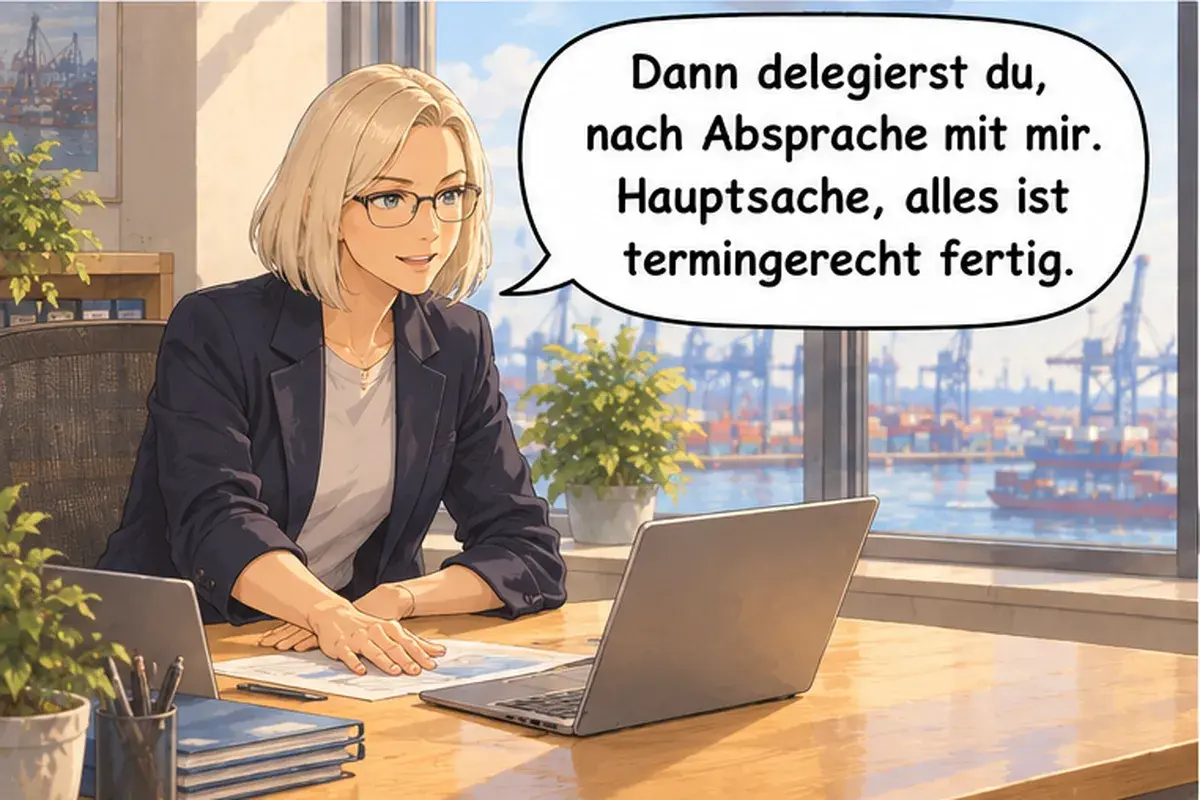
Dann delegierst du, nach Absprache mit mir. Hauptsache, alles ist termingerecht fertig.
Then you delegate, after agreeing with me. The main thing is that everything's finished on time.
- Katja
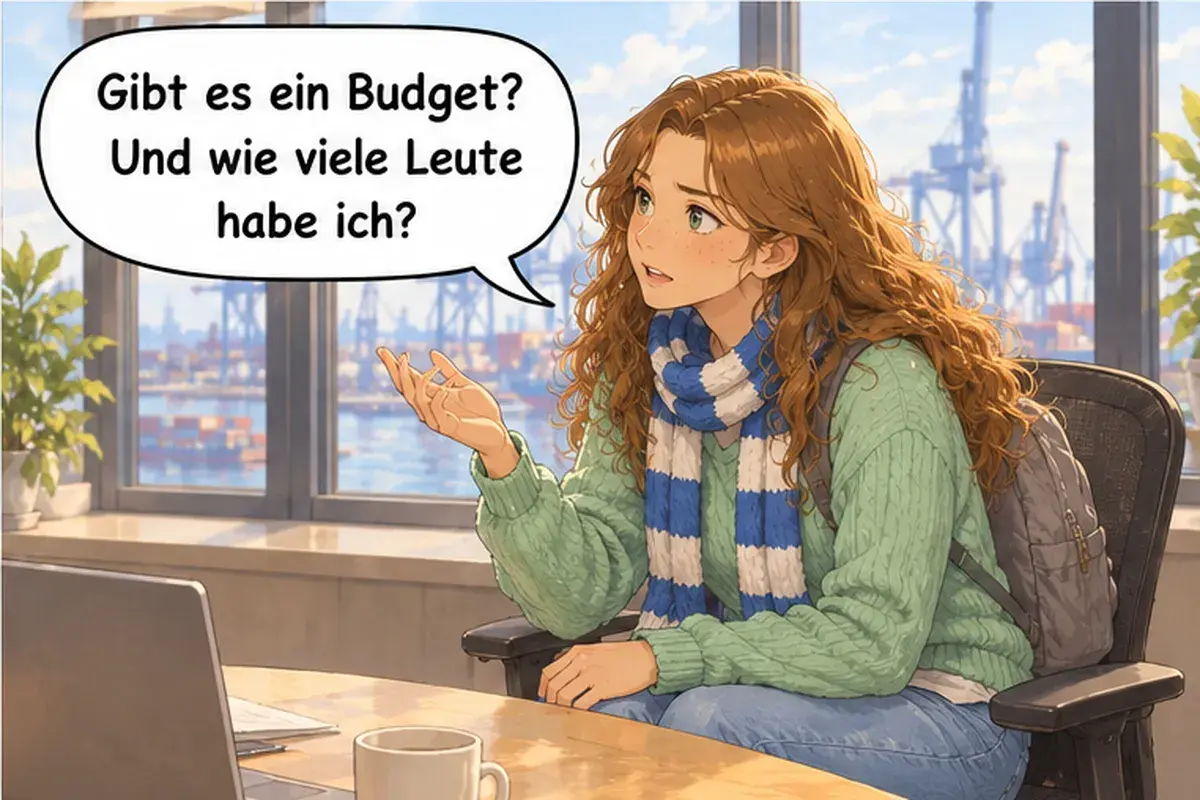
Gibt es ein Budget? Und wie viele Leute habe ich?
Is there a budget? And how many people do I have?
- Sabine
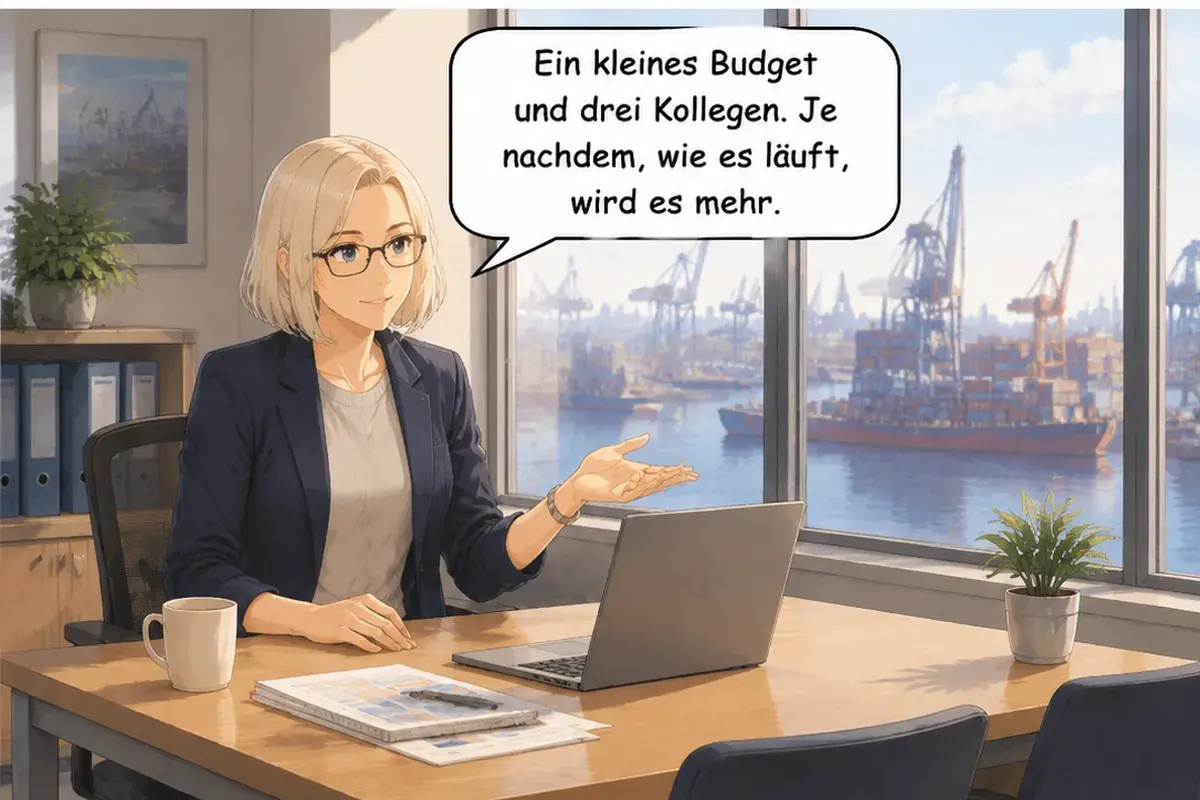
Ein kleines Budget und drei Kollegen. Je nachdem, wie es läuft, wird es mehr.
A small budget and three coworkers. Depending on how it goes, there'll be more.
- Katja
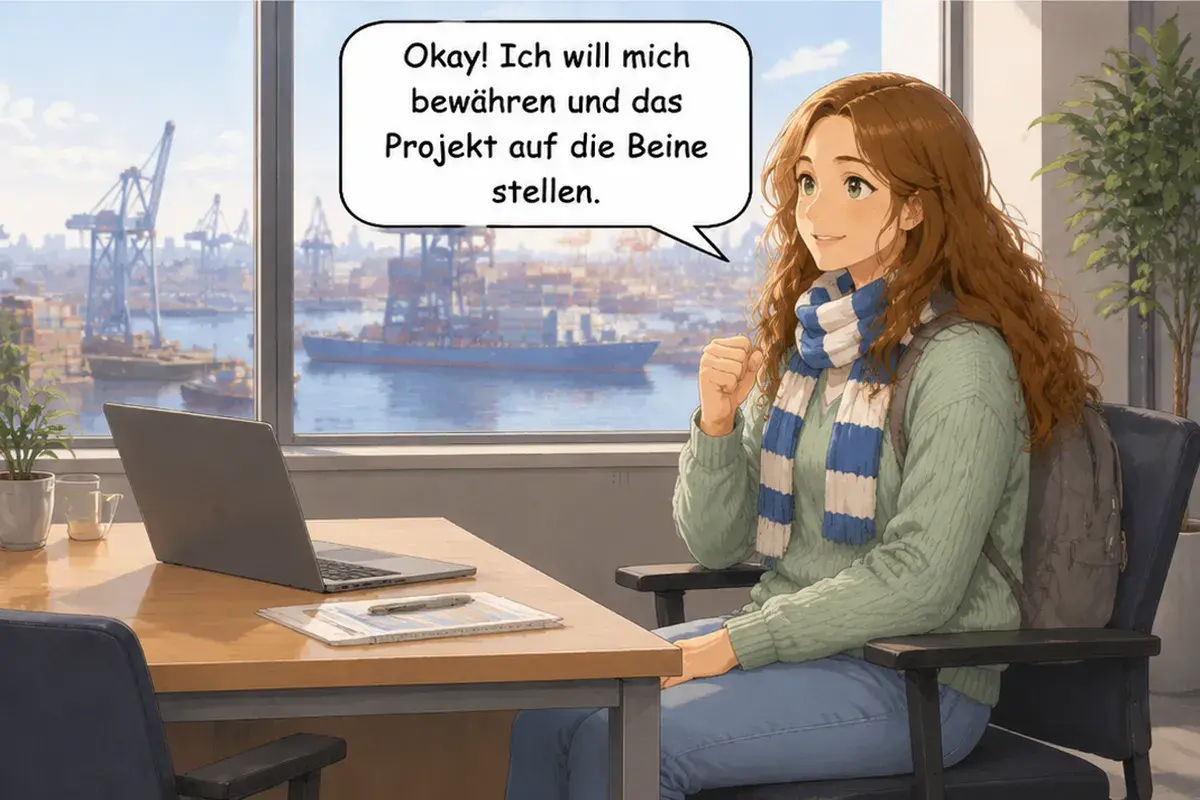
Okay! Ich will mich bewähren und das Projekt auf die Beine stellen.
Okay! I want to prove myself and get the project off the ground.
Grammar for this text
- Ich traue dir das zu —
zutrauenis a separable verb:zugoes to the end of the sentence. Who:dir(dative), what:das(accusative). It means "I believe you can do it." - Eine neue Position! Ich habe noch nie ein Team geführt —
geführtis the past participle offühren("to lead"), used in the Perfekt (spoken past).noch niemeans "never before." - Also ab ins kalte Wasser — literally "so, off into the cold water": starting something new without preparation, like "straight into the deep end."
abis a call to action, like "let's go." - Du priorisierst, teilst die Aufgaben auf und koordinierst alles — three verbs in a row, all with
du: the ending is-st.teilst … aufcomes fromaufteilen("to split up"):aufgoes to the end. - Und wenn ich überfordert bin? Wenn ich es nicht bewältige? —
überfordertmeans "overloaded." In the second question the verbbewältige(the ich form ofbewältigen, "to handle") is at the end, as in any subordinate clause withwenn. - Dann delegierst du, nach Absprache mit mir —
nach Absprachemeans "after agreeing."Hauptsachemeans "the main thing": a short way to sayDie Hauptsache ist, dass …. - Je nachdem, wie es läuft, wird es mehr —
je nachdem, wiemeans "depending on how."läuftis the es form oflaufen(aubecomesäu). After the subordinate clause, the main clause starts with its verb:wird es mehr. The rule is in the grammar of this unit.
Words and grammar of the unit: Take on a new role.
Learn the words from the texts with flashcards
In the app, you can tap any word in a text to see its translation, forms and examples, and new words stick with flashcards. 15 minutes a day.
Start for freeEverything is open for free. No card needed to sign up.