

German dialogue with translation · B2 · 20 lines
Ich möchte noch etwas klären I'd like to clear up something else
Comic · 19 panels
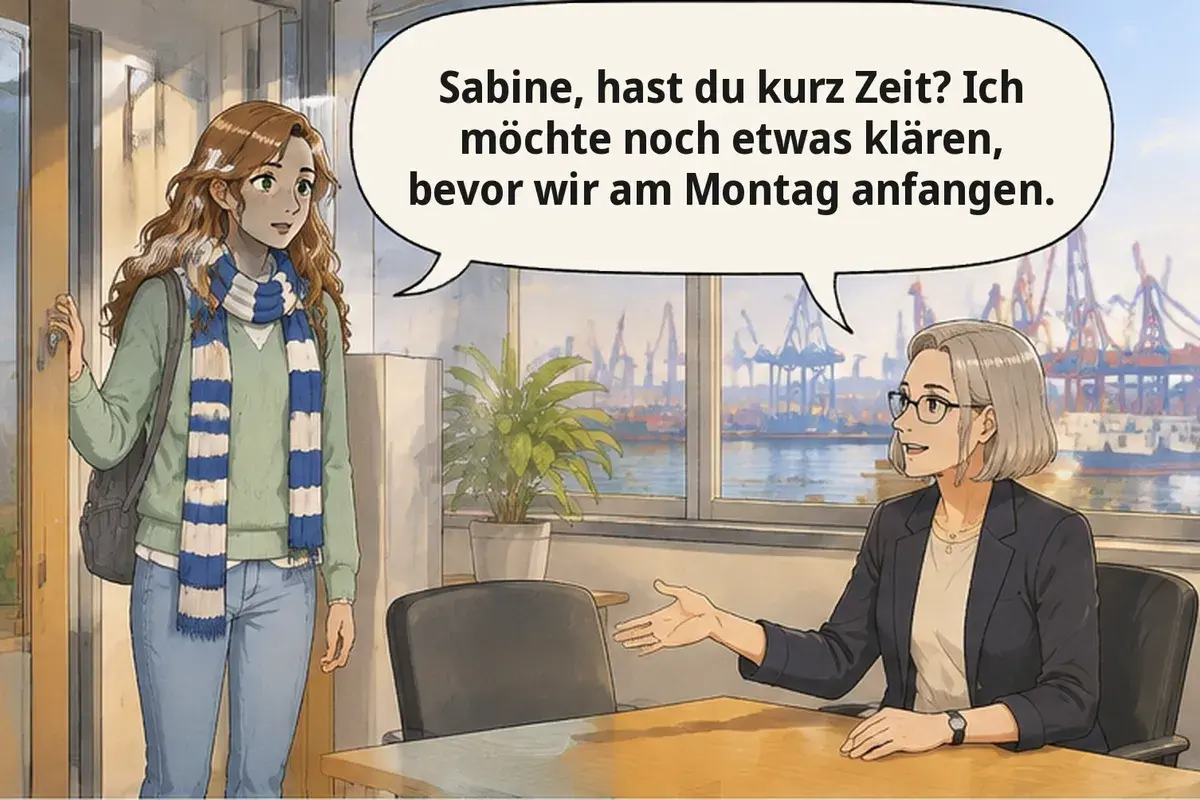
- Katja
Sabine, hast du kurz Zeit? Ich möchte noch etwas klären, bevor wir am Montag anfangen.
Sabine, do you have a minute? I'd like to clear up something else before we start on Monday.
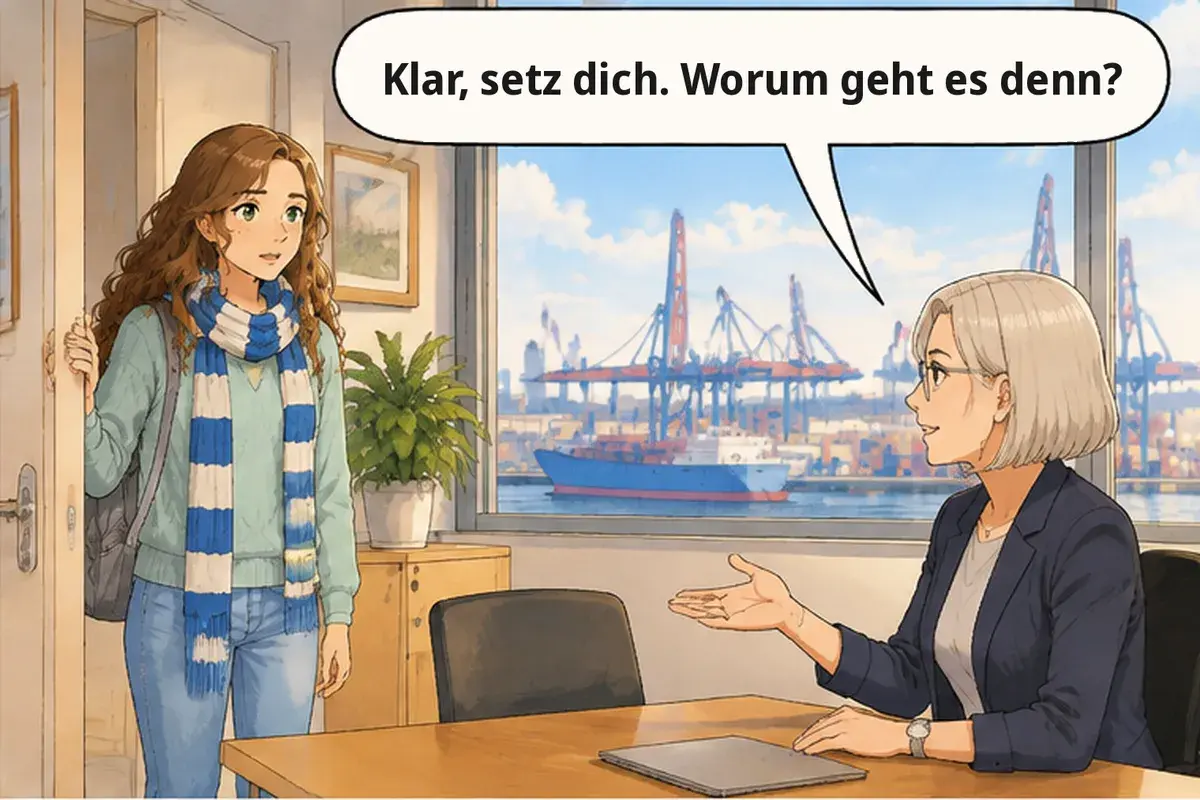
- Sabine
Klar, setz dich. Worum geht es denn?
Sure, sit down. What's it about?
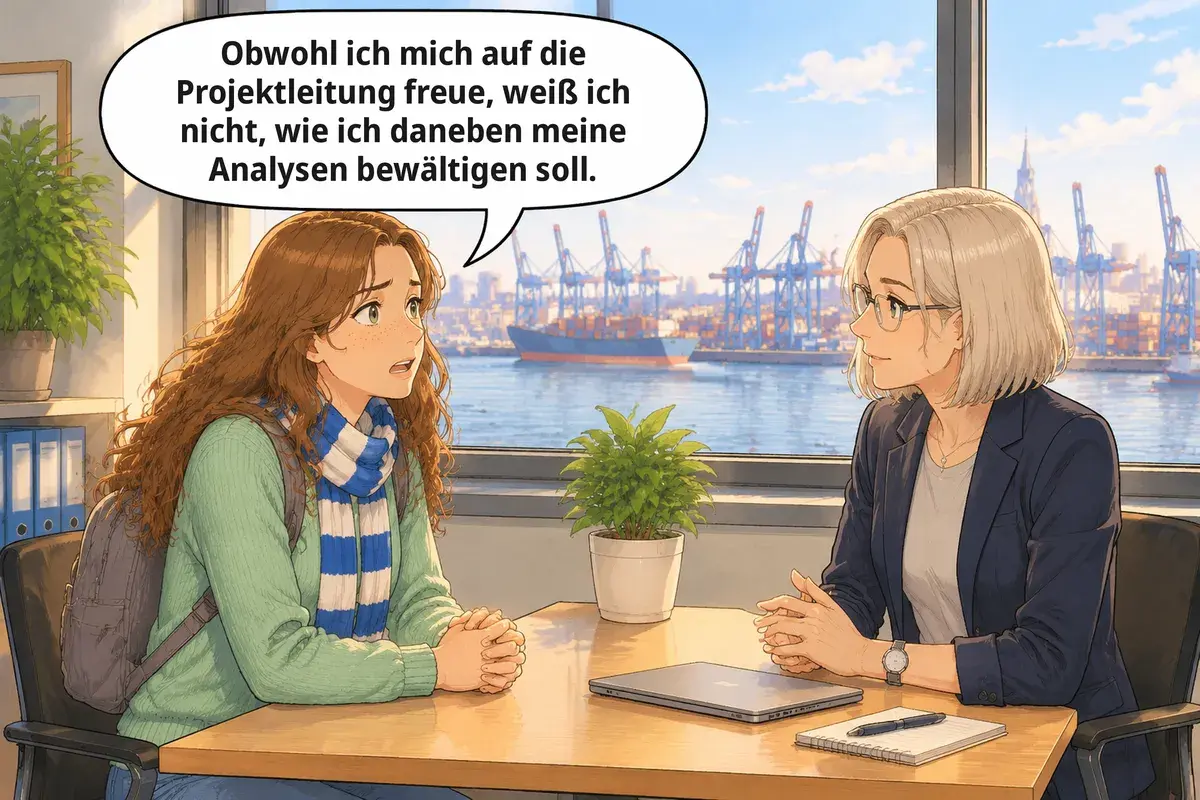
- Katja
Obwohl ich mich auf die Projektleitung freue, weiß ich nicht, wie ich daneben meine Analysen bewältigen soll.
Although I'm looking forward to leading the project, I don't know how I'm supposed to handle my analyses on top of it.
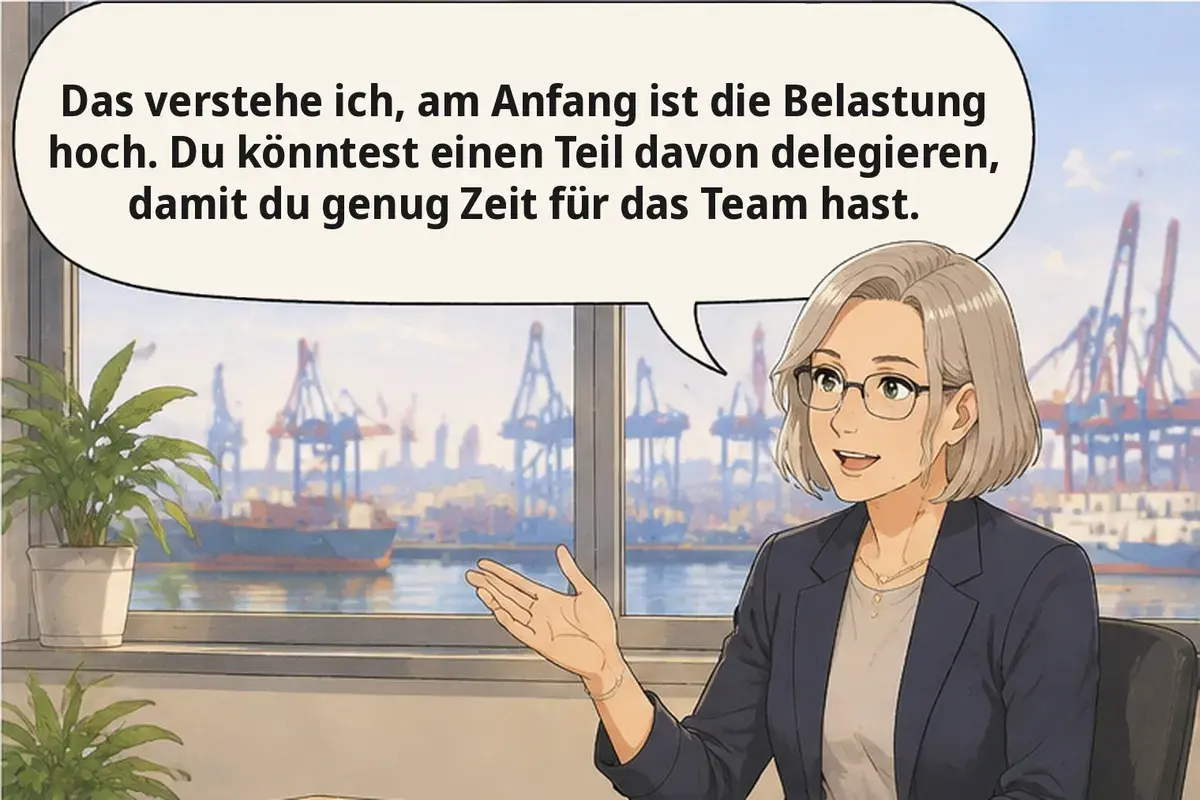
- Sabine
Das verstehe ich, am Anfang ist die Belastung hoch. Du könntest einen Teil davon delegieren, damit du genug Zeit für das Team hast.
I understand that; the workload is heavy at the start. You could delegate part of it so you have enough time for the team.
- Katja
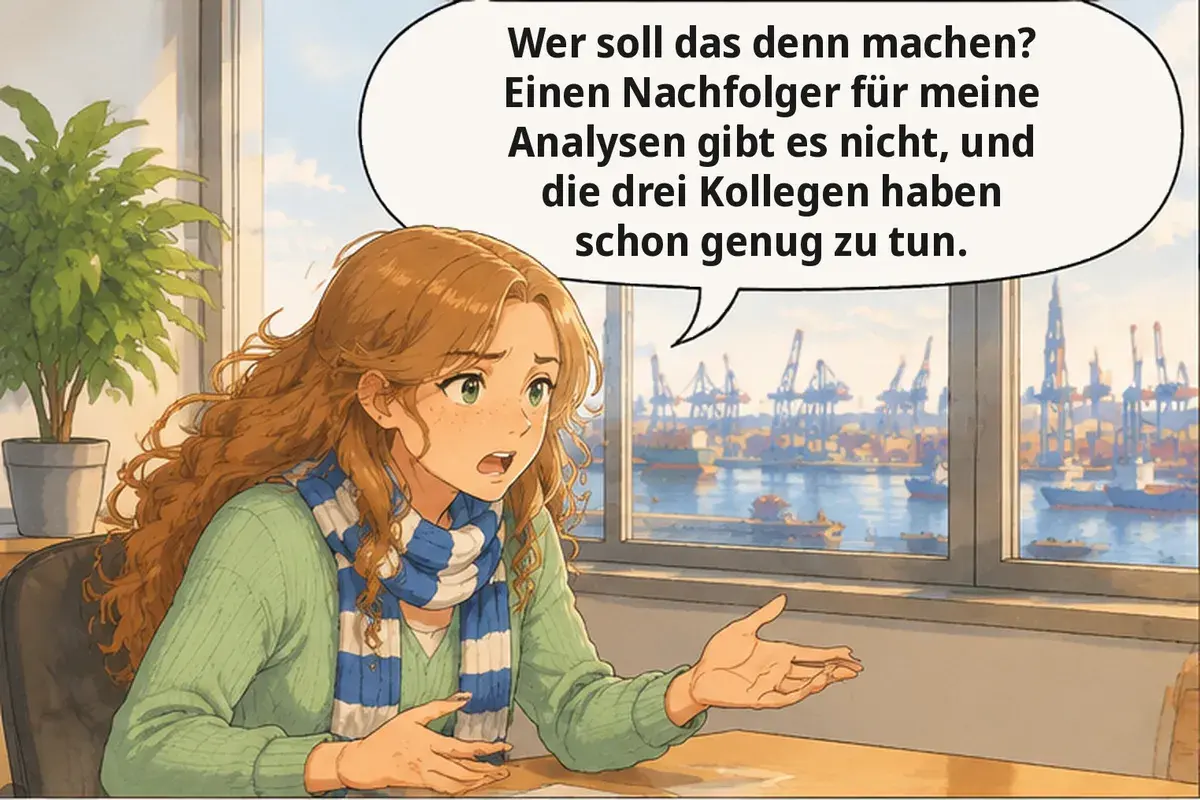
Wer soll das denn machen? Einen Nachfolger für meine Analysen gibt es nicht, und die drei Kollegen haben schon genug zu tun.
Who's supposed to do that? There's no successor for my analyses, and the three coworkers already have enough to do.
- Sabine
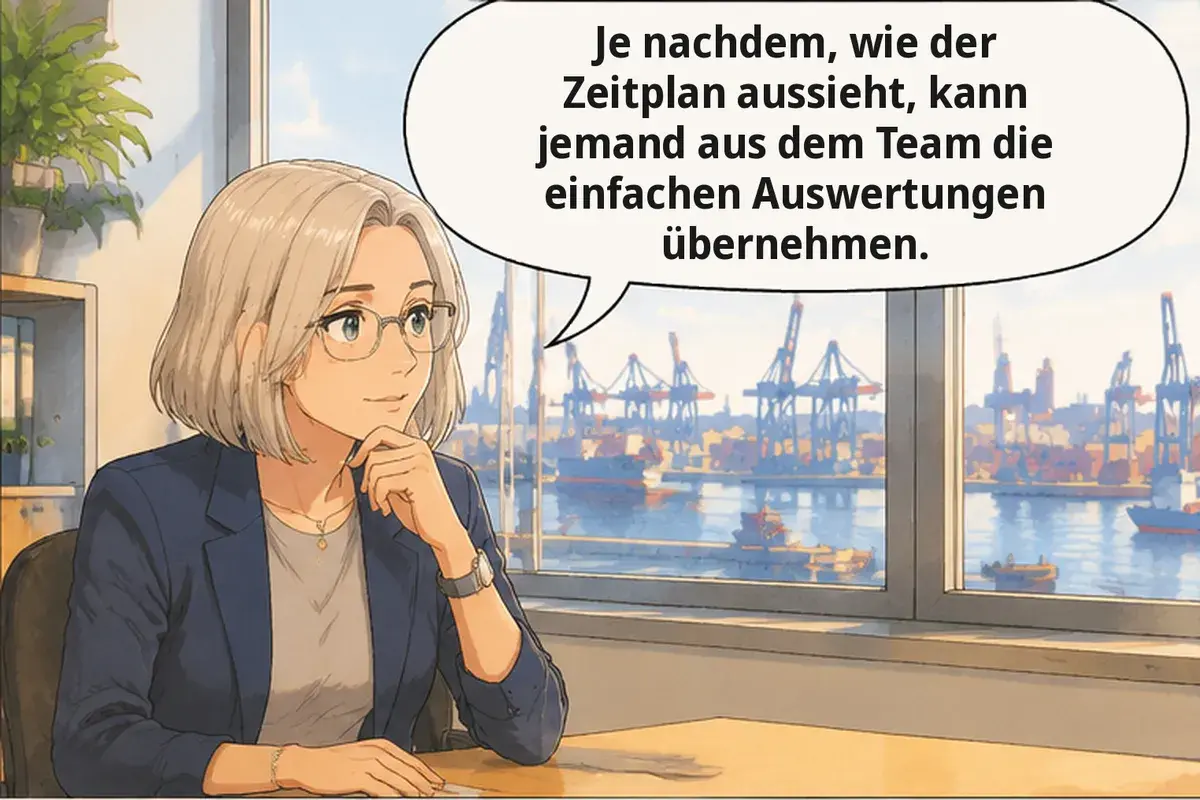
Je nachdem, wie der Zeitplan aussieht, kann jemand aus dem Team die einfachen Auswertungen übernehmen.
Depending on how the schedule looks, someone on the team can take over the simple evaluations.
- Katja
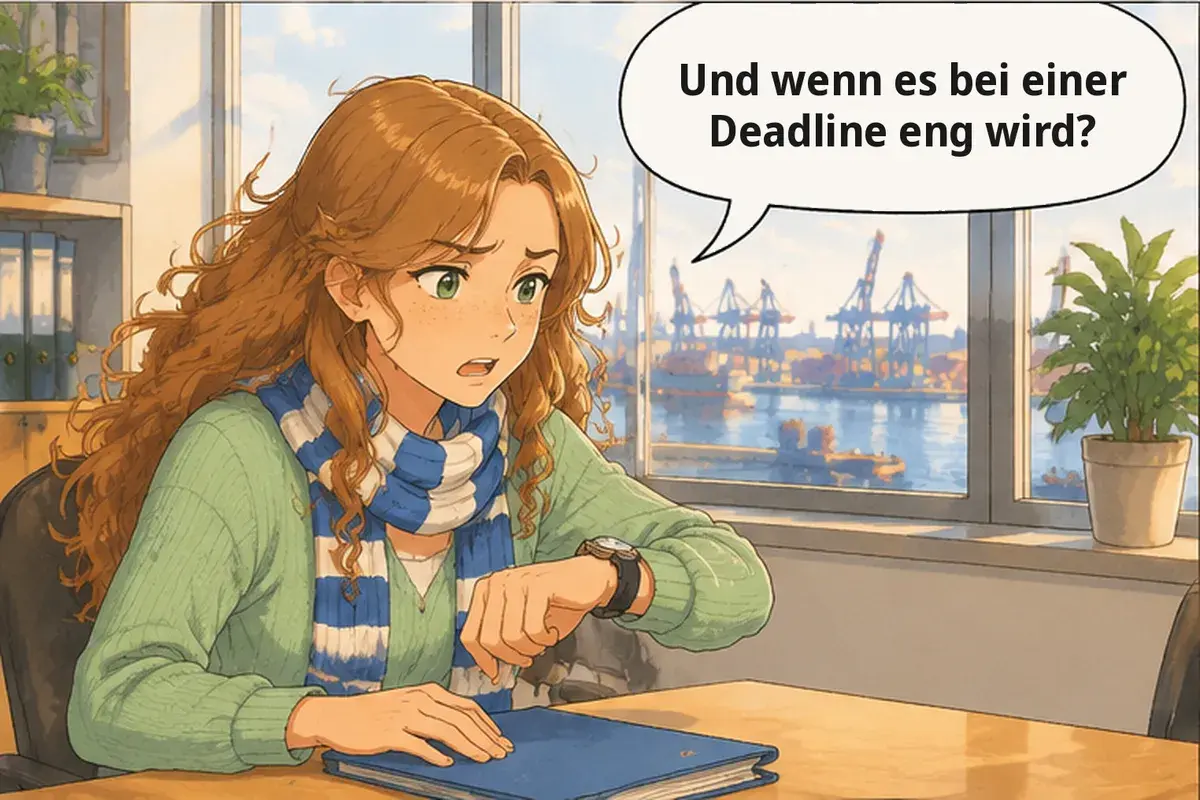
Und wenn es bei einer Deadline eng wird?
And if it gets tight with a deadline?
- Sabine
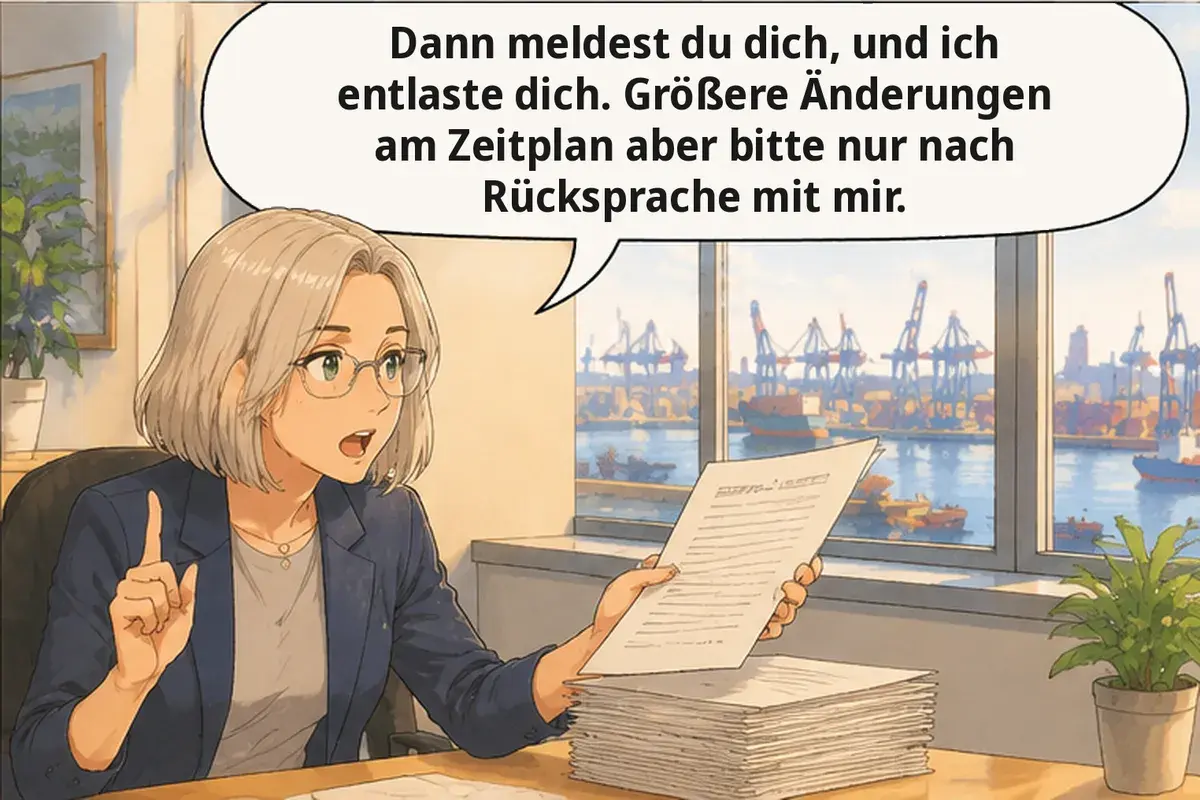
Dann meldest du dich, und ich entlaste dich. Größere Änderungen am Zeitplan aber bitte nur nach Rücksprache mit mir.
Then you let me know, and I'll take some of the load off you. But please make bigger changes to the schedule only after consulting with me.
- Katja
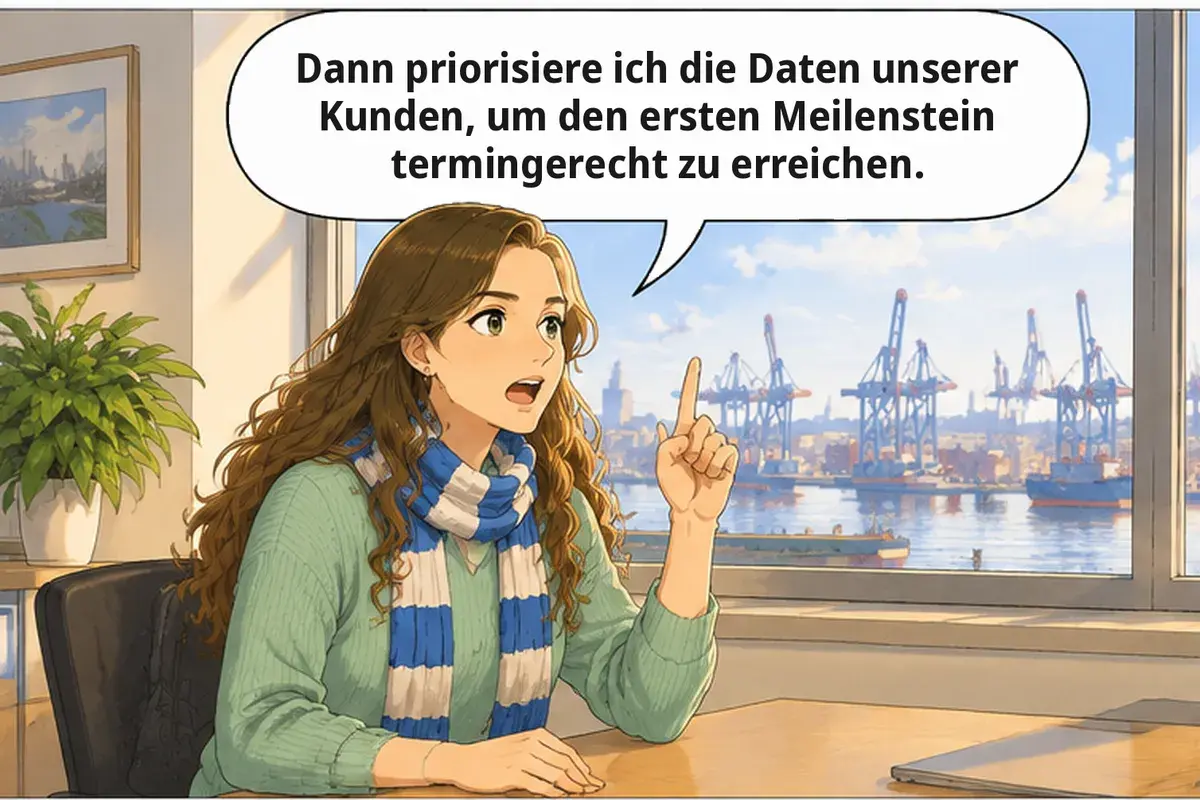
Dann priorisiere ich die Daten unserer Kunden, um den ersten Meilenstein termingerecht zu erreichen.
Then I'll prioritize our customers' data to reach the first milestone on time.
- Sabine
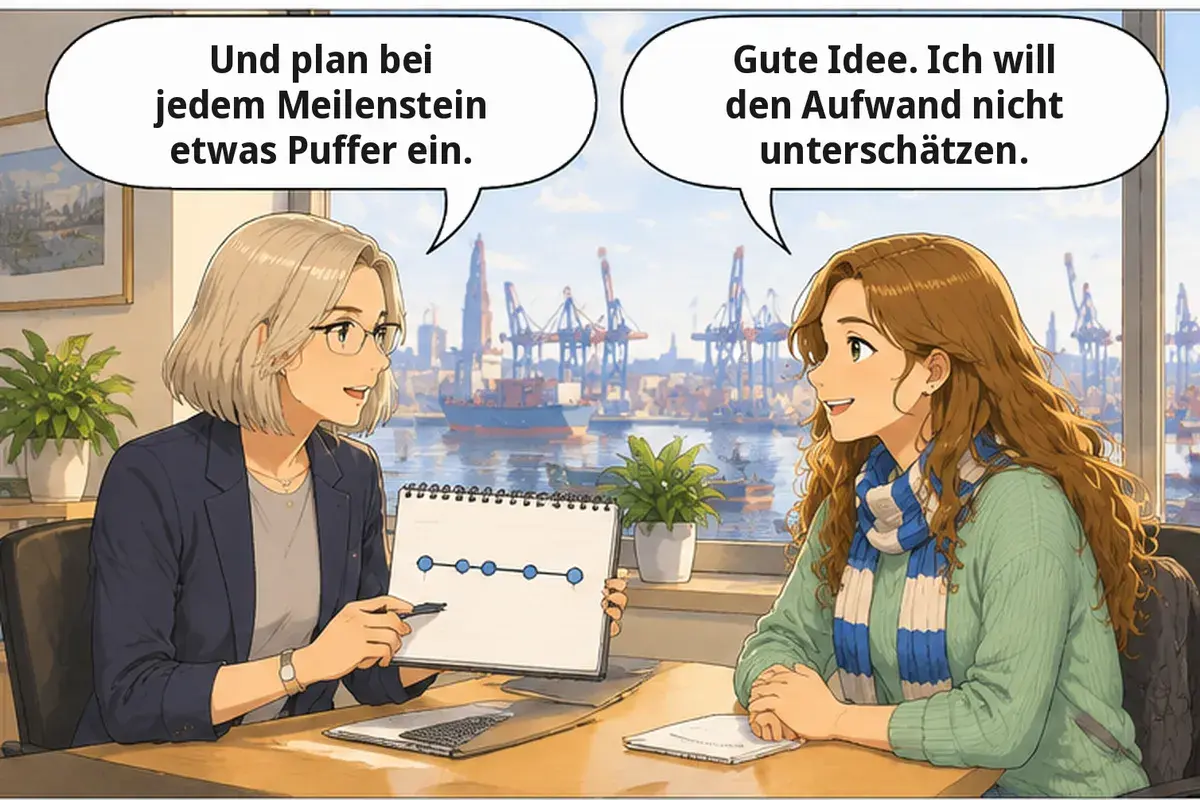
Und plan bei jedem Meilenstein etwas Puffer ein.
And build in some buffer for each milestone.
- Katja
Gute Idee. Ich will den Aufwand nicht unterschätzen.
Good idea. I don't want to underestimate the effort.
- Sabine
Gut. Während das Projekt läuft, haben wir jeden Freitag eine kurze Absprache.
Good. While the project is running, we'll have a short meeting every Friday to coordinate.

- Katja
Das beruhigt mich. Ehrlich gesagt hätte ich nie gedacht, dass du mir so eine Position zutraust.
That reassures me. To be honest, I never would have thought you'd trust me with a position like this.
- Sabine
Hätte ich dir das nicht zugetraut, hätte ich dich nicht gefragt. Du hast dich schon oft bewährt.
If I hadn't trusted you with it, I wouldn't have asked you. You've proven yourself many times.

- Katja
Aber als Teamleiterin habe ich noch keine Erfahrung.
But I don't have any experience as a team lead yet (woman speaking).
- Sabine
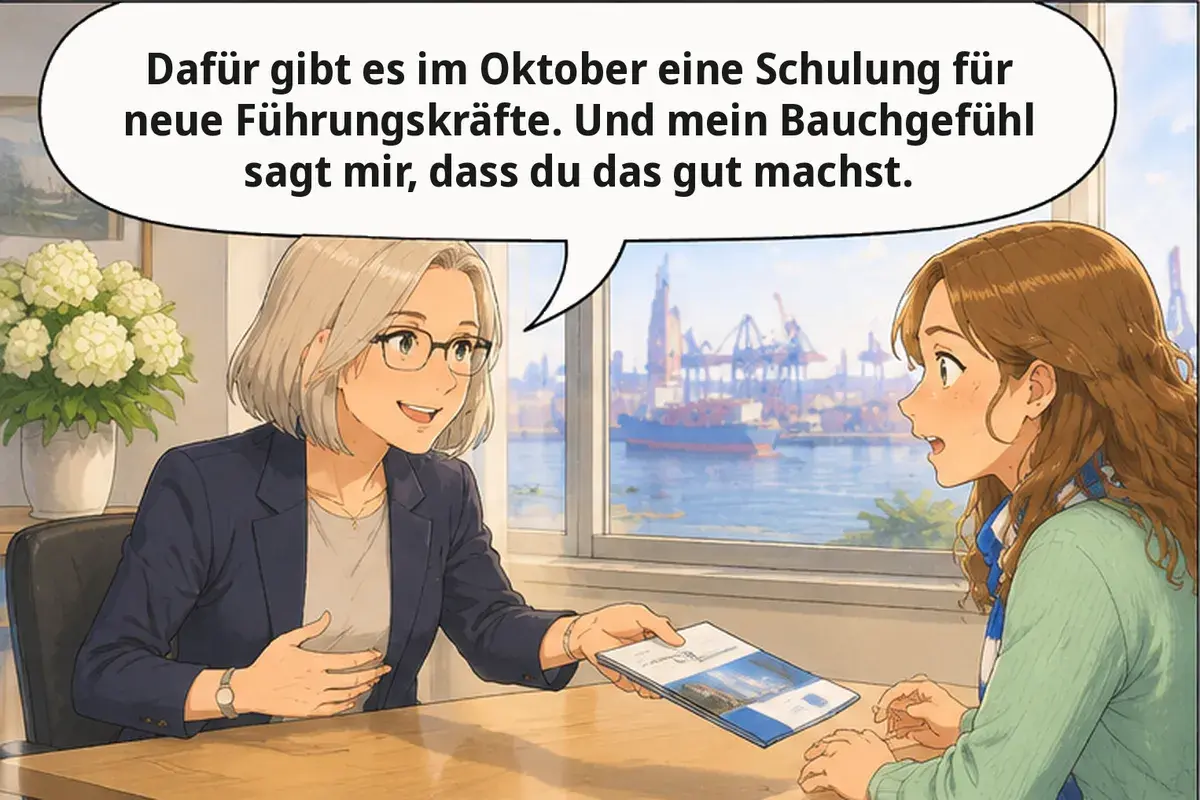
Dafür gibt es im Oktober eine Schulung für neue Führungskräfte. Und mein Bauchgefühl sagt mir, dass du das gut machst.
There's a training for new managers in October. And my gut feeling tells me you'll do well.

- Katja
Und wenn ich trotzdem überfordert bin? Wäre es dann schlimm, wenn ich dich um Hilfe bitte?
And if I'm overloaded anyway? Would it be bad if I ask you for help?

- Sabine
Im Gegenteil. Sag es lieber früh, damit wir noch etwas ändern können.
On the contrary. Better to say so early, so we can still change something.

- Katja
Abgemacht. Kommst du am Montag zum Auftakt?
Deal. Are you coming to the kickoff on Monday?

- Sabine
Je nachdem, ob meine Besprechung früher endet. Fang ruhig ohne mich an, du schaffst das.
Depending on whether my meeting ends earlier. Go ahead and start without me, you can do it.
Grammar for this text
- Obwohl ich mich auf die Projektleitung freue, weiß ich nicht, wie ich daneben meine Analysen bewältigen soll —
obwohl("although") starts the subordinate clause, with the verbfreueat the end; the main clause after the comma starts with its verb (weiß ich).weißis a special ich form ofwissen. - Du könntest einen Teil davon delegieren, damit du genug Zeit für das Team hast —
könntestis the Konjunktiv II (would-form) ofkönnen: soft advice, "you could."damit("so that") gives a purpose, with the verbhastat the end. - Je nachdem, wie der Zeitplan aussieht, kann jemand aus dem Team die einfachen Auswertungen übernehmen — "depending on how":
aussiehtis at the end of the subordinate clause, then the main clause starts with its verb (kann jemand). - Dann priorisiere ich die Daten unserer Kunden, um den ersten Meilenstein termingerecht zu erreichen —
um … zu+ infinitive gives a purpose when the subject is the same (ich). In Während das Projekt läuft,währendis a conjunction meaning "while";läuftis the es form oflaufen. - Ehrlich gesagt hätte ich nie gedacht, dass du mir so eine Position zutraust —
hätte … gedachtis the past Konjunktiv II: "I never would have thought." In the subordinate clause,zutraustis written as one word. Hätte ich dir das nicht zugetraut, hätte ich dich nicht gefragt — a condition withoutwenn: the verbhättecomes first. - Wäre es dann schlimm, wenn ich dich um Hilfe bitte? —
wäreis the Konjunktiv II ofsein: "would be." In Fang ruhig ohne mich an, the command form ofanfangenhasanat the end;ruhigmeans "go ahead."
Words and grammar of the unit: Take on a new role.
Learn the words from the texts with flashcards
In the app, you can tap any word in a text to see its translation, forms and examples, and new words stick with flashcards. 15 minutes a day.
Start for freeEverything is open for free. No card needed to sign up.