

German dialogue with translation · B2 · 16 lines
Der Bericht ist leer The report is empty
Comic · 16 panels

- Katja
Moin, Tobias! Der Bericht für den Kunden ist leer, und da ist eine Fehlermeldung.
Hi, Tobias! The client's report is empty, and there's an error message.

- Tobias
Leer? Um neun soll er doch geschickt werden! Was steht in der Fehlermeldung?
Empty? It's supposed to be sent at nine! What does the error message say?
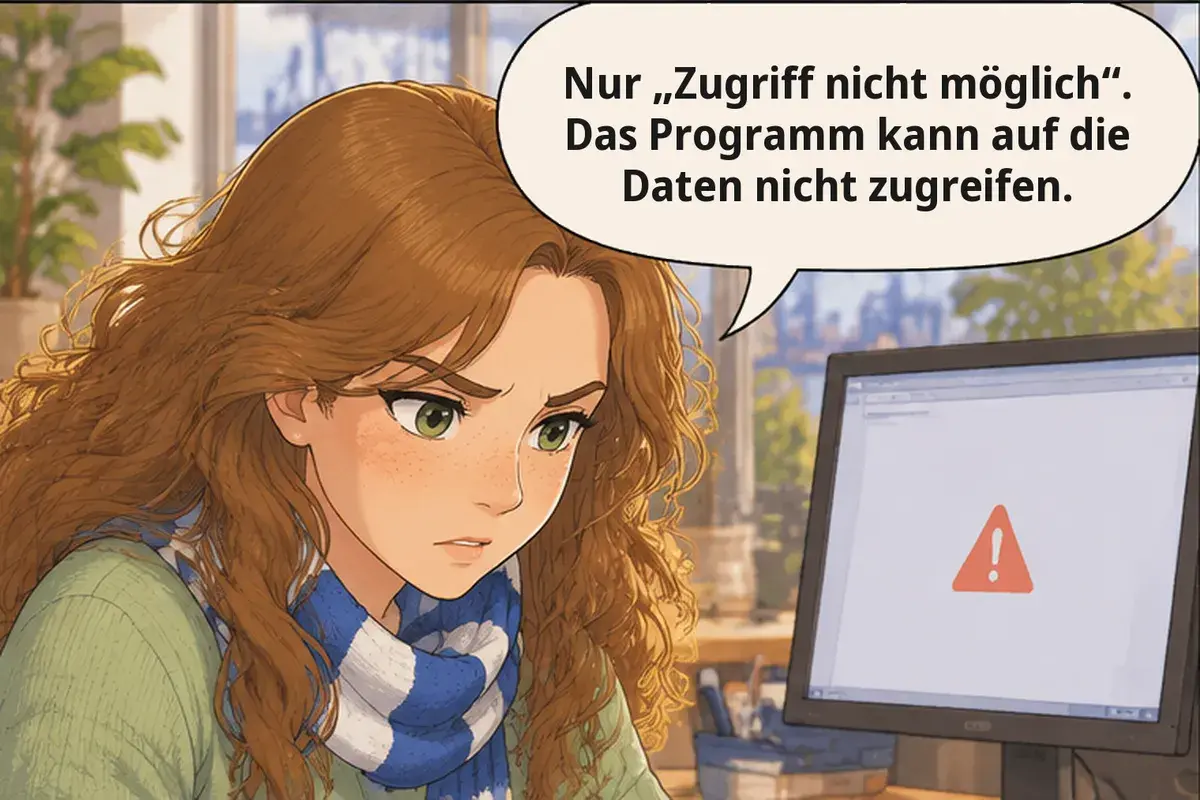
- Katja
Nur „Zugriff nicht möglich“. Das Programm kann auf die Daten nicht zugreifen.
Just "Access not possible." The program can't access the data.
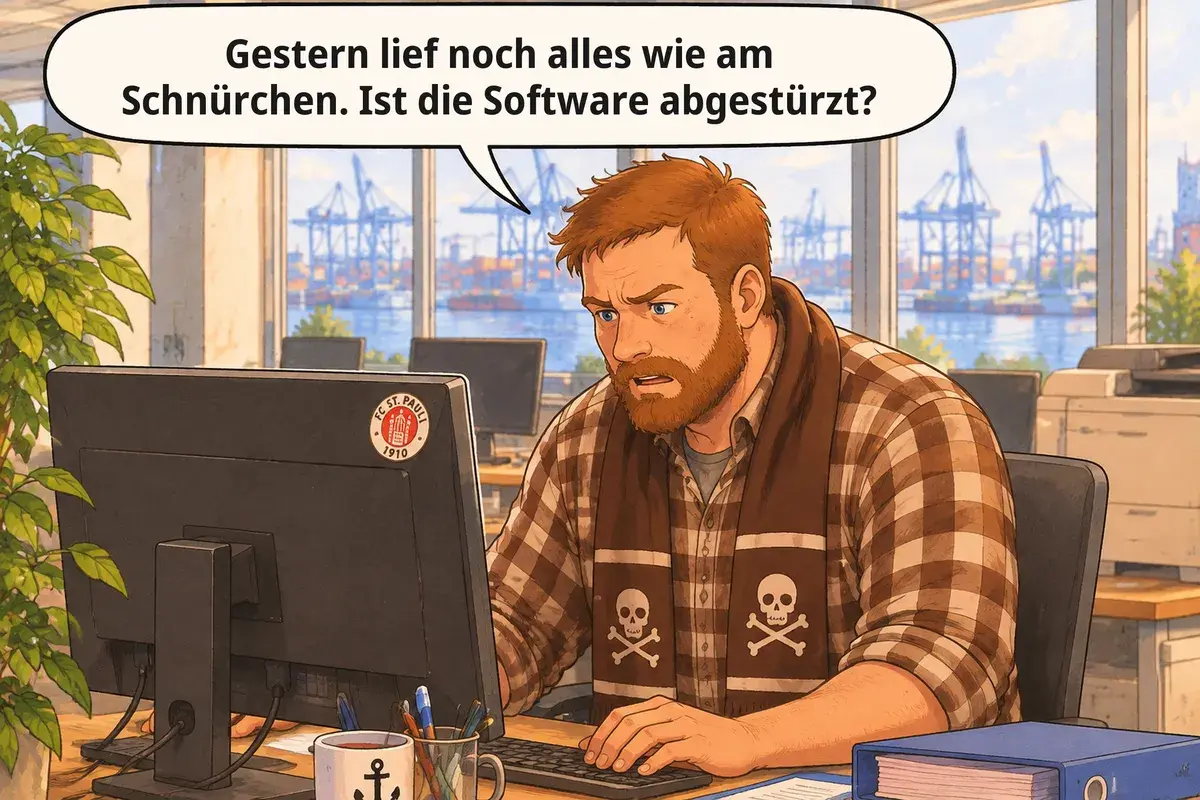
- Tobias
Gestern lief noch alles wie am Schnürchen. Ist die Software abgestürzt?
Yesterday everything was still running like clockwork. Did the software crash?
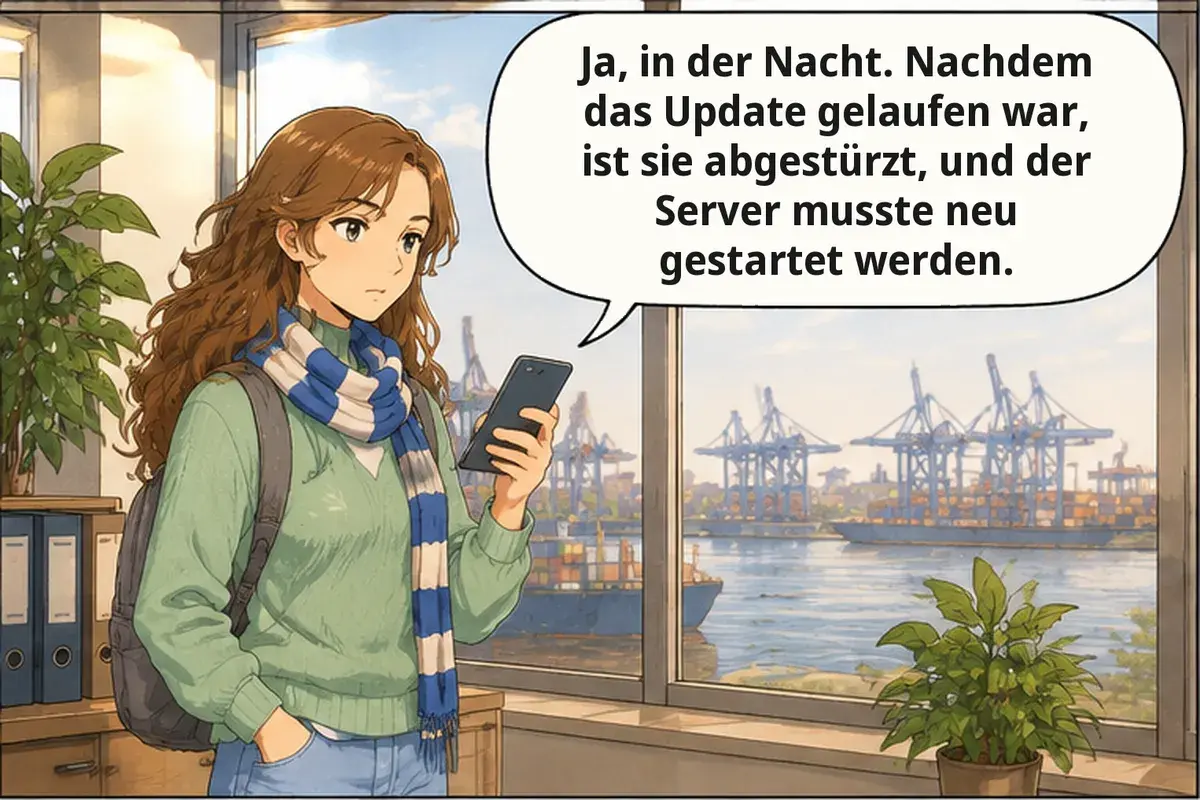
- Katja
Ja, in der Nacht. Nachdem das Update gelaufen war, ist sie abgestürzt, und der Server musste neu gestartet werden.
Yes, during the night. After the update had run, it crashed, and the server had to be restarted.

- Tobias
Und danach? Hat er die Daten wieder gespeichert?
And after that? Did it save the data again?
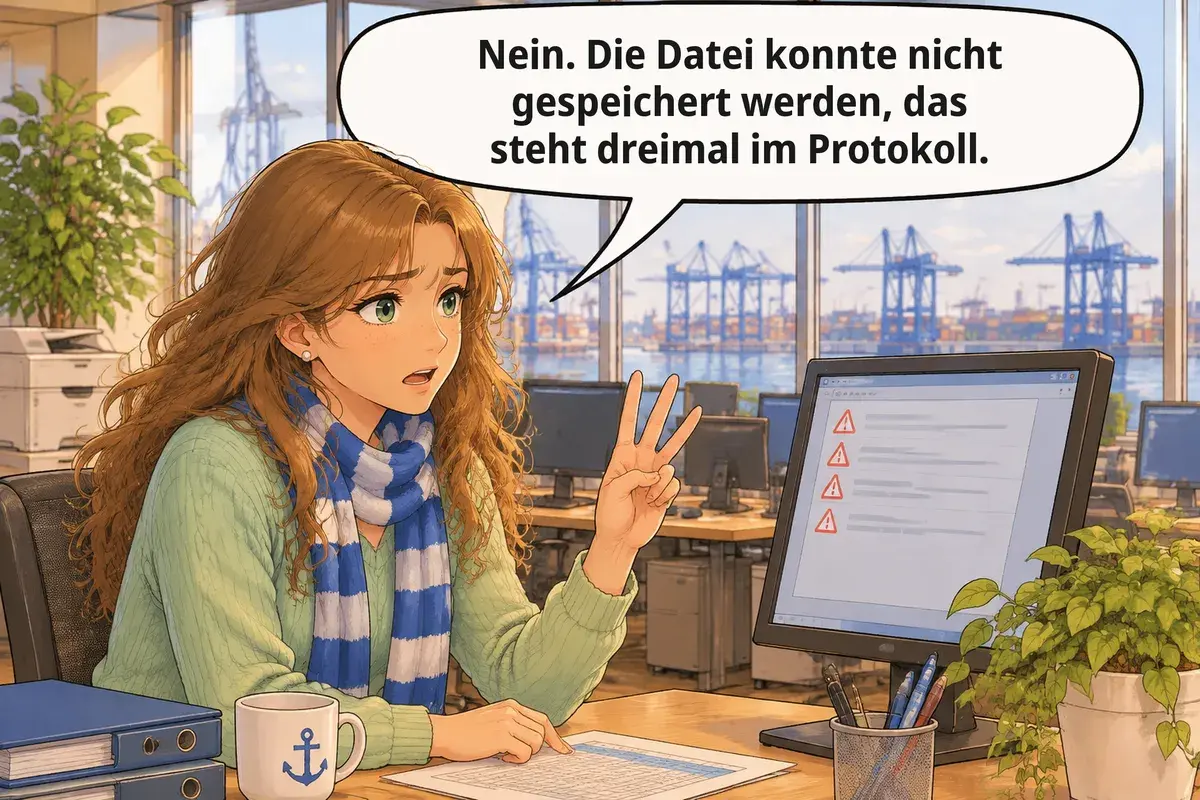
- Katja
Nein. Die Datei konnte nicht gespeichert werden, das steht dreimal im Protokoll.
No. The file couldn't be saved, it says so three times in the log.

- Tobias
Dann ist der Speicherplatz voll, oder der Server war überlastet.
Then the storage space is full, or the server was overloaded.

- Katja
Beides habe ich geprüft: Der Speicherplatz reicht, und überlastet war der Server auch nicht.
I checked both: there's enough storage space, and the server wasn't overloaded either.
- Tobias
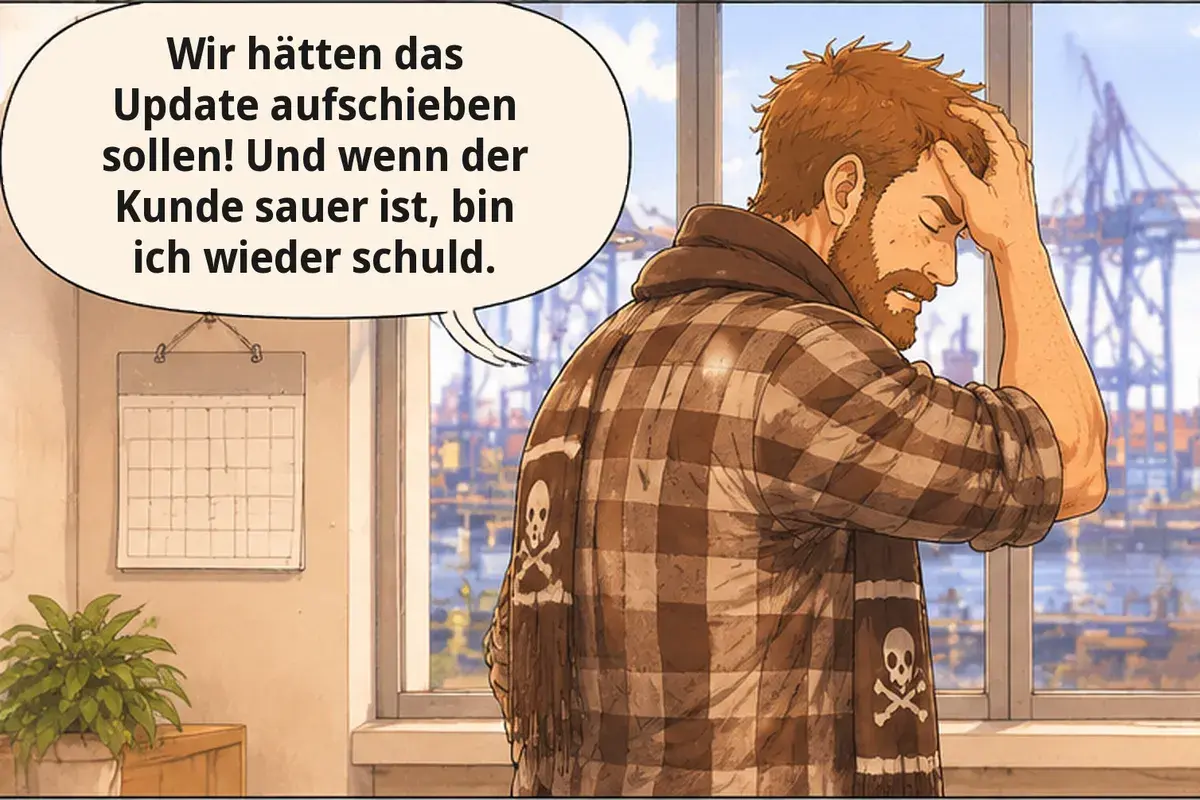
Wir hätten das Update aufschieben sollen! Und wenn der Kunde sauer ist, bin ich wieder schuld.
We should have postponed the update! And if the client is angry, I'll get the blame again.

- Katja
Niemand will dir etwas in die Schuhe schieben. Es ist eine Panne, mehr nicht. Sei nur nicht hektisch.
Nobody wants to pin the blame on you. It's a glitch, nothing more. Just don't be so hectic.

- Tobias
Ich bin nicht hektisch! Aber um ein Haar wäre der leere Bericht um neun geschickt worden.
I'm not hectic! But the empty report almost got sent at nine.
- Katja
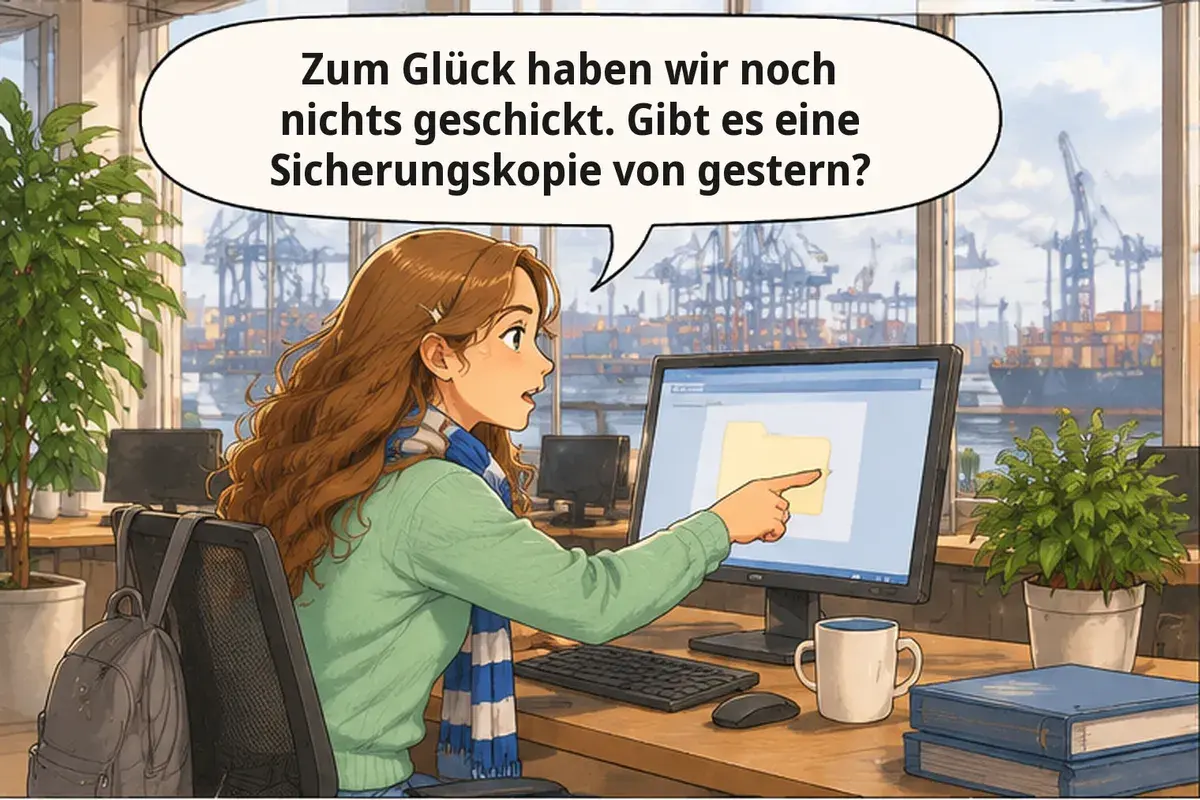
Zum Glück haben wir noch nichts geschickt. Gibt es eine Sicherungskopie von gestern?
Luckily we haven't sent anything yet. Is there a backup from yesterday?
- Tobias
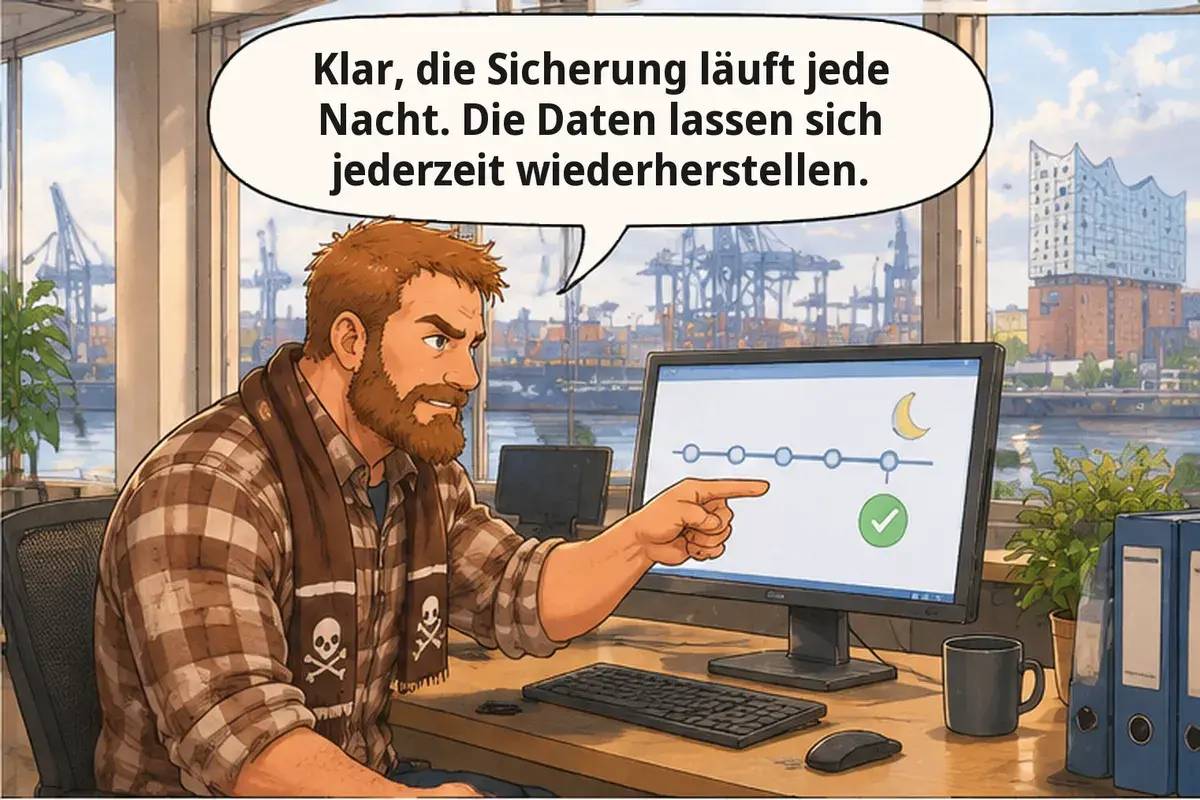
Klar, die Sicherung läuft jede Nacht. Die Daten lassen sich jederzeit wiederherstellen.
Sure, the backup runs every night. The data can be restored at any time.

- Katja
Erst brauche ich die Ursache, sonst ist morgen wieder alles im Eimer. Ich rufe Lukas an, er programmiert so etwas den ganzen Tag.
First I need the cause, otherwise everything will be ruined again tomorrow. I'll call Lukas, he programs things like this all day.

- Tobias
Mach das. Ich schreibe dem Kunden einen Zwischenstand. Und das nächste Update läuft am Tag, ich mache keine Nachtschicht!
Go ahead. I'll write the client an interim update. And the next update runs during the day, I'm not doing a night shift!
Grammar for this text
- Um neun soll er doch geschickt werden! — the modal passive (unit 2): "It's supposed to be sent at nine!"
dochreminds him of something he already knows, like "you know". - Gestern lief noch alles wie am Schnürchen. —
liefis the Präteritum (narrative past) oflaufen, here "was running".wie am Schnürchenmeans "like clockwork". - Nachdem das Update gelaufen war, ist sie abgestürzt, und der Server musste neu gestartet werden. —
war gelaufenis the Plusquamperfekt (past perfect): the update came first.ist abgestürztis the Perfekt (spoken past) withsein.musste neu gestartet werdenis the modal passive in the past.siestands fordie Software. - Wir hätten das Update aufschieben sollen! — "We should have postponed the update!"
hättenplus two infinitives in a row; there is nogesollthere. - Niemand will dir etwas in die Schuhe schieben. — an idiom:
jemandem etwas in die Schuhe schiebenmeans "to pin the blame on someone". - Aber um ein Haar wäre der leere Bericht um neun geschickt worden. —
um ein Haarmeans "almost".wäre … geschickt wordenmeans "would have been sent": the passive in the past Konjunktiv II. After the participle,werdenbecomesworden. - Erst brauche ich die Ursache, sonst ist morgen wieder alles im Eimer. —
im Eimer seinis an informal way to say "ruined".
Words and grammar of the unit: Deal with a technical breakdown.
Learn the words from the texts with flashcards
In the app, you can tap any word in a text to see its translation, forms and examples, and new words stick with flashcards. 15 minutes a day.
Start for freeEverything is open for free. No card needed to sign up.