

German dialogue with translation · B1 · 14 lines
Die Tassen haben Pfand The mugs have a deposit
Comic · 14 panels

- Priya
Da ist er: der Weihnachtsmarkt! Im Advent bin ich fast jeden Abend hier.
There it is: the Christmas market! During Advent I'm here almost every evening.
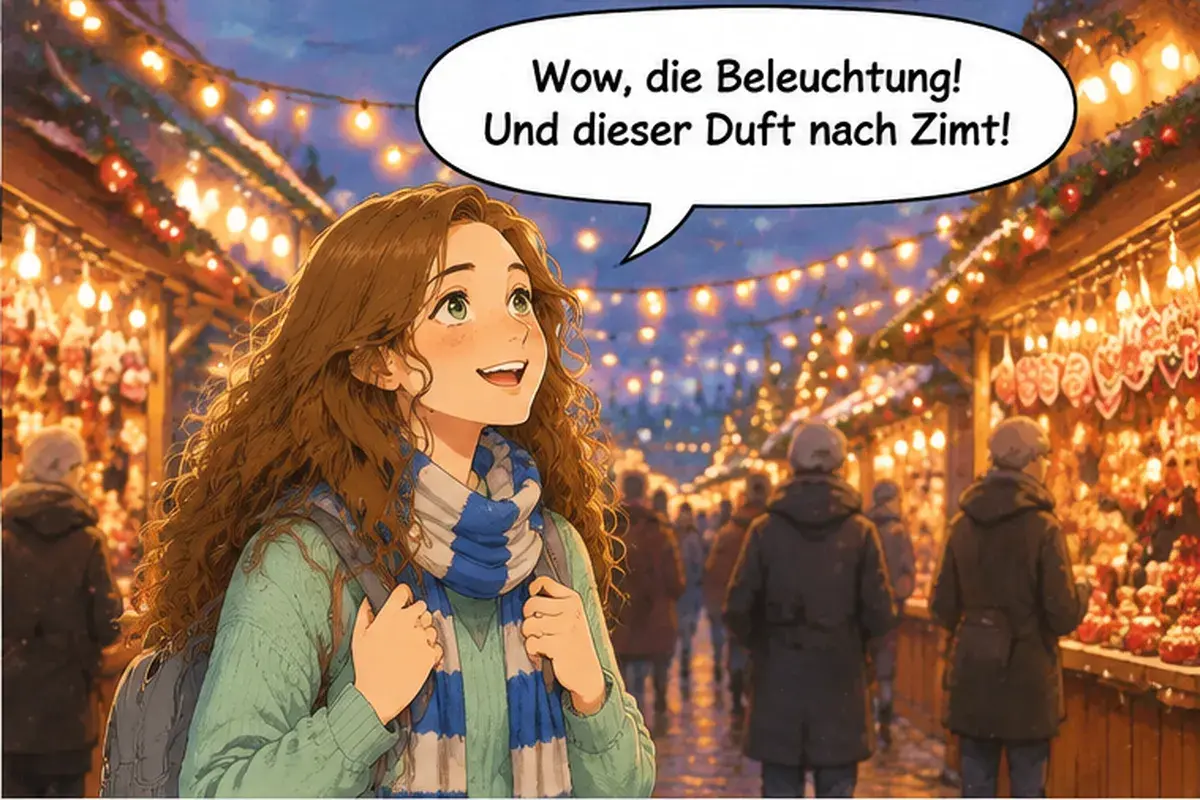
- Katja
Wow, die Beleuchtung! Und dieser Duft nach Zimt!
Wow, the lights! And that smell of cinnamon!

- Priya
Der ganze Schmuck ist ein bisschen kitschig, aber ich mag ihn.
All the decorations are a little kitschy, but I like them.

- Katja
Mir ist kalt. Gibt es hier Glühwein? Der wärmt doch.
I'm cold. Do they have mulled wine here? It warms you up, you know.

- Priya
Klar, dort drüben. Hallo, zwei Glühwein, bitte!
Sure, over there. Hi, two mulled wines, please!
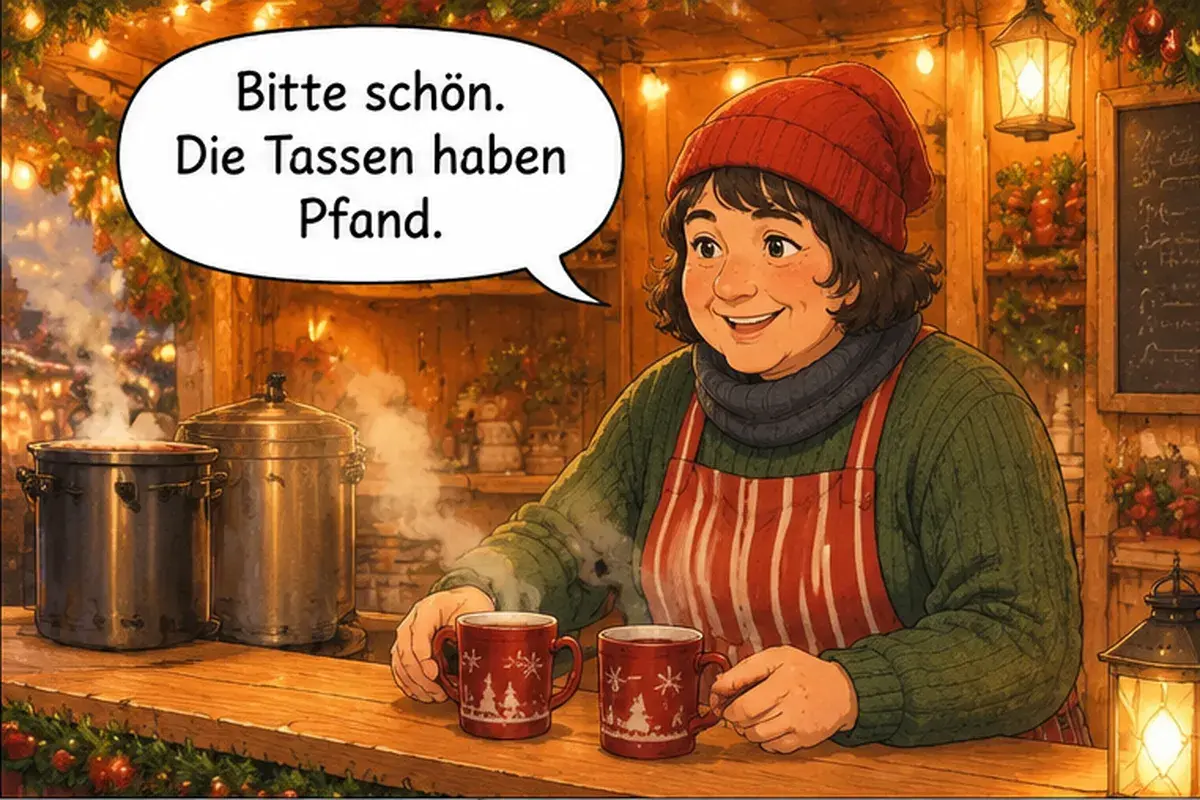
- Verkäuferin
Bitte schön. Die Tassen haben Pfand.
Here you go. The mugs have a deposit.
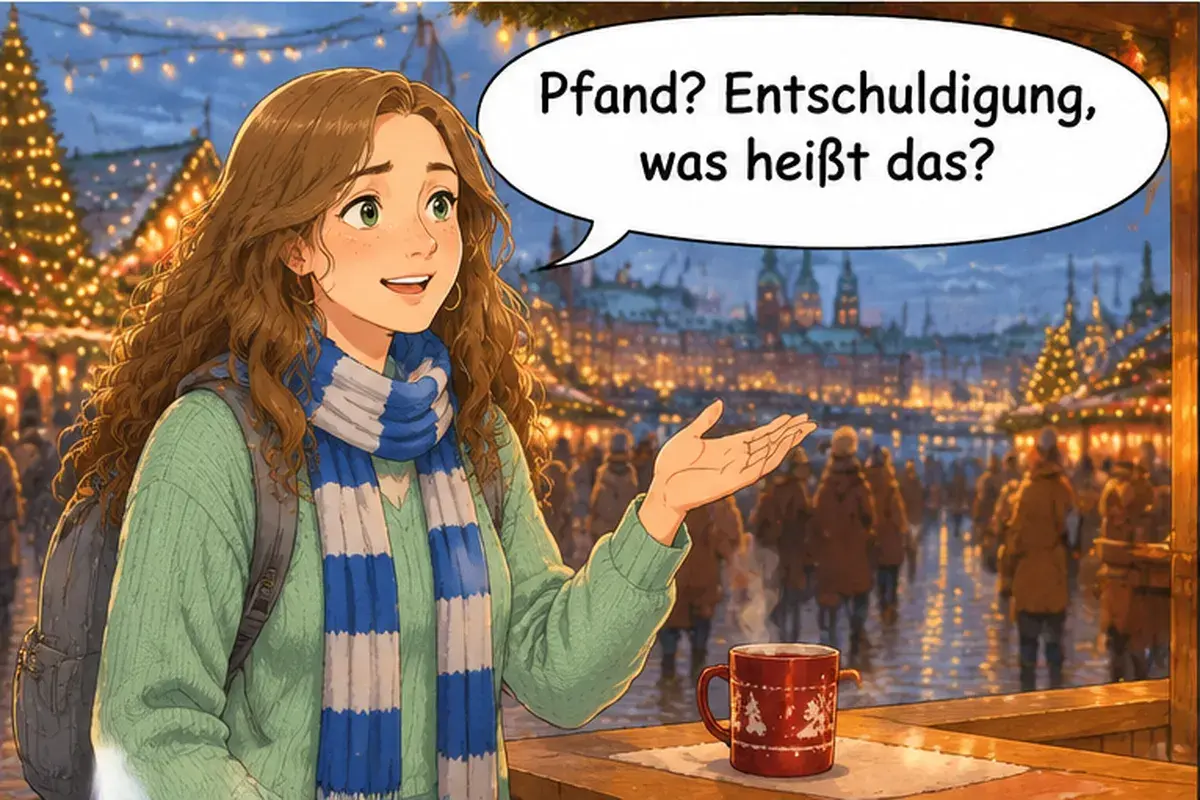
- Katja
Pfand? Entschuldigung, was heißt das?
A deposit? Excuse me, what does that mean?
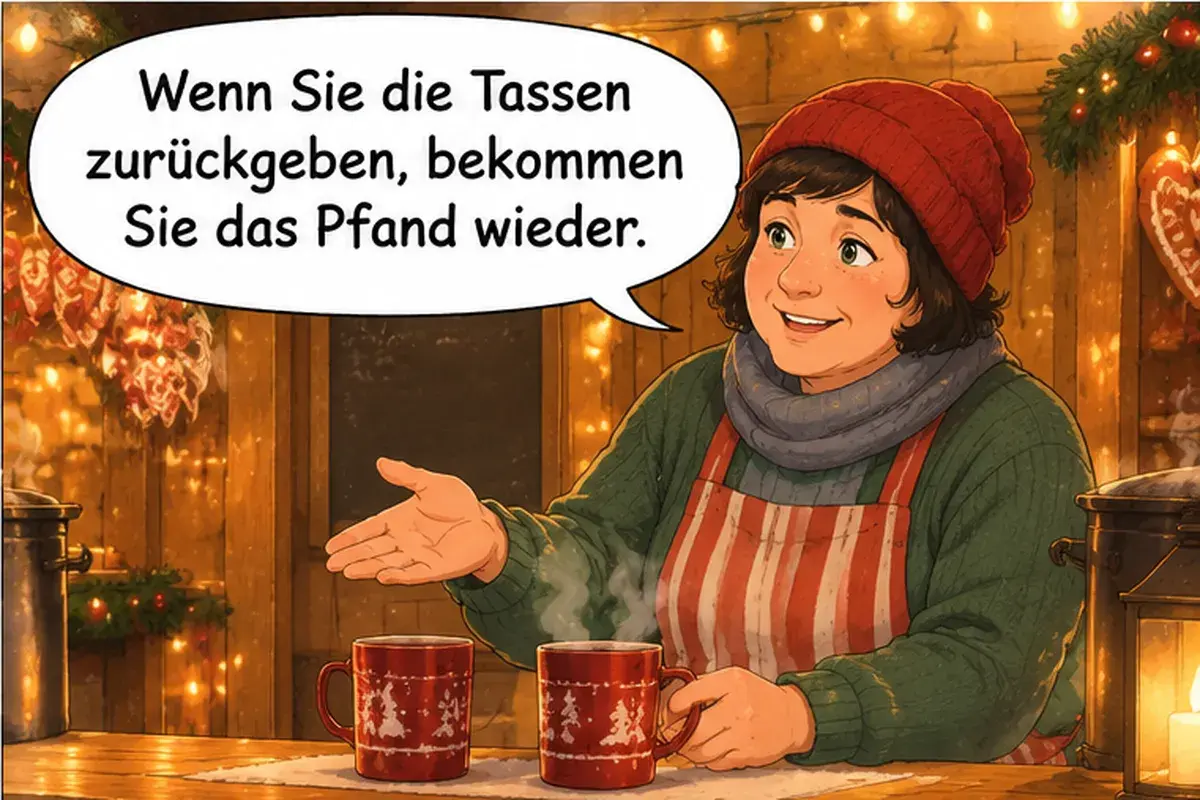
- Verkäuferin
Wenn Sie die Tassen zurückgeben, bekommen Sie das Pfand wieder.
If you return the mugs, you get the deposit back (formal).

- Katja
Ach so, danke! Dann bringen wir sie nachher zurück.
Oh, I see, thanks! Then we'll bring them back later.
- Priya
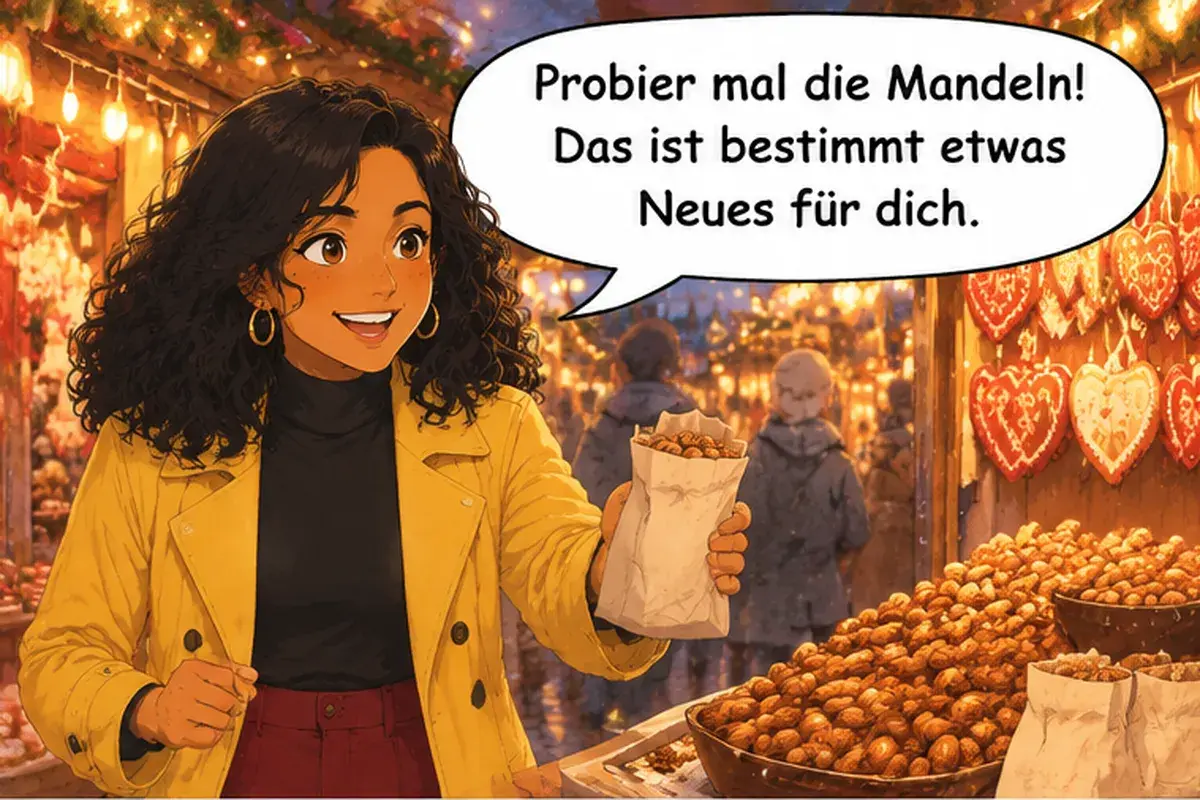
Probier mal die Mandeln! Das ist bestimmt etwas Neues für dich.
Try the almonds! That's probably something new for you.

- Katja
Lecker! Ich kaufe welche für das Team. Vor Tobias muss ich sie verstecken.
Delicious! I'm buying some for the team. I have to hide them from Tobias.

- Priya
Gute Idee! Hör mal, dort singen Jugendliche. Das ist wunderschön.
Good idea! Listen, some teenagers are singing over there. It's beautiful.
- Katja
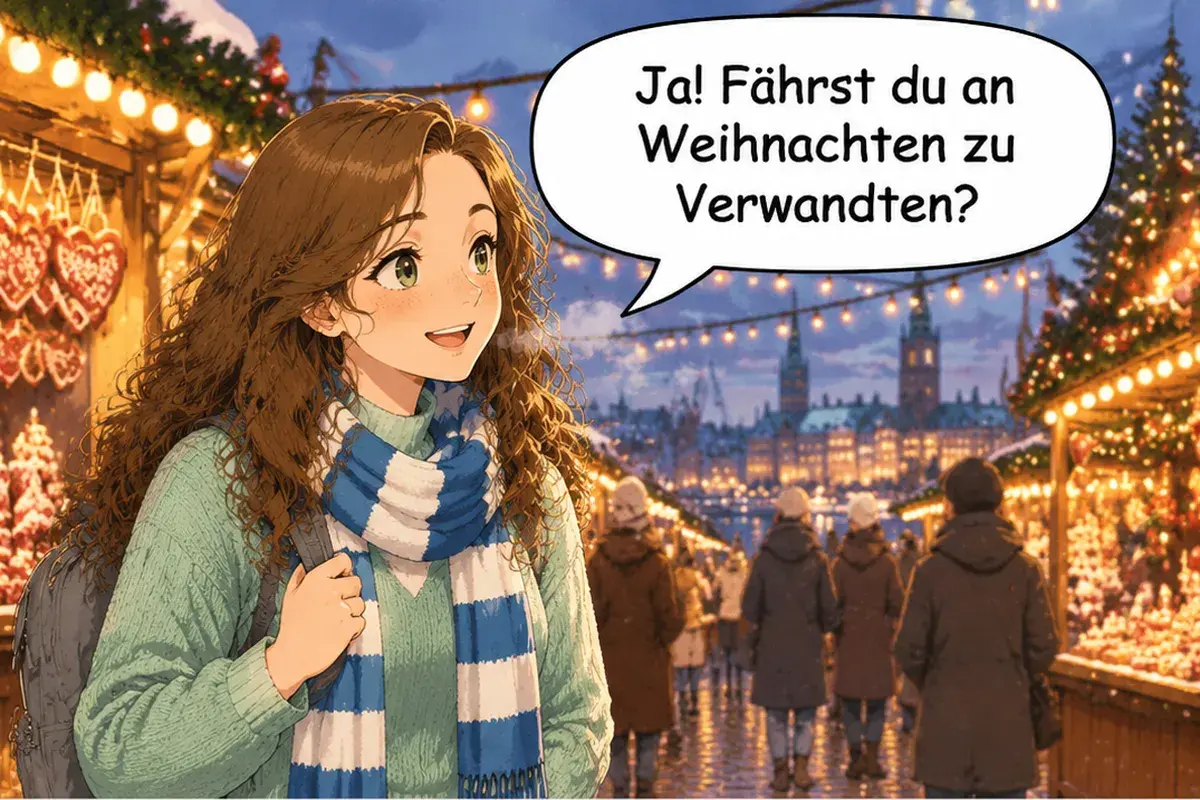
Ja! Fährst du an Weihnachten zu Verwandten?
Yes! Are you going to see relatives for Christmas?

- Priya
Nein, ich bleibe hier. An Heiligabend mache ich nichts Besonderes.
No, I'm staying here. On Christmas Eve I'm not doing anything special.
Grammar for this text
- Der wärmt doch — It warms you up, you know.
derstands forGlühwein(masculine): "it".wärmtis the er form ofwärmen("to warm").dochreminds the other person of something obvious, like "you know" or "after all". - Die Tassen haben Pfand — The mugs have a deposit.
Pfandis money you pay for the mug and get back when you return it. Bottles work the same way. - Wenn Sie die Tassen zurückgeben, bekommen Sie das Pfand wieder — If you return the mugs, you get the deposit back (formal). After
wennthe verb goes to the end and the separable prefix joins it:zurückgeben. In a main clause it splits:Sie geben die Tassen zurück. Thewennclause comes first, so the main clause starts with its verb:bekommen Sie. - Das ist bestimmt etwas Neues für dich — That's probably something new for you.
etwas Neuesmeans "something new":Neueshas a capital letter and the ending -es (see the grammar block of this unit). - Vor Tobias muss ich sie verstecken — I have to hide them from Tobias. The important part ("from Tobias") comes first, but
mussis still the second element, andversteckengoes to the end.siemeans "them" here: the almonds. - Fährst du an Weihnachten zu Verwandten? — Are you going to see relatives for Christmas?
fährstis the du form offahren(abecomesä).Verwandtenis the dative plural: "to relatives". - An Heiligabend mache ich nichts Besonderes — On Christmas Eve I'm not doing anything special.
nichts Besonderesmeans "nothing special". It is a ready-made answer to "What are you doing?"
Words and grammar of the unit: Celebrate Christmas at work and at the market.
Learn the words from the texts with flashcards
In the app, you can tap any word in a text to see its translation, forms and examples, and new words stick with flashcards. 15 minutes a day.
Start for freeEverything is open for free. No card needed to sign up.