

German dialogue with translation · B1 · 14 lines
Aller Anfang ist schwer Every beginning is hard
Comic · 14 panels
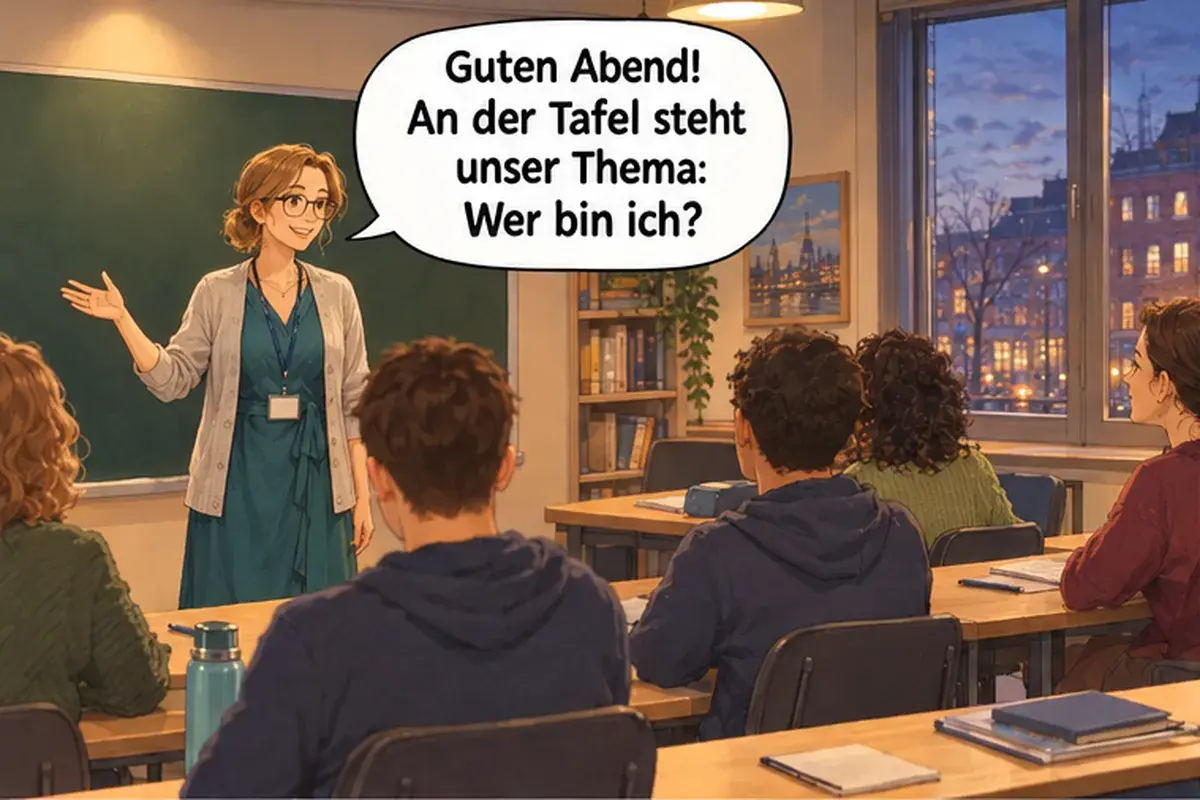
- Frau Albers
Guten Abend! An der Tafel steht unser Thema: Wer bin ich?
Good evening! Our topic is on the board: Who am I?
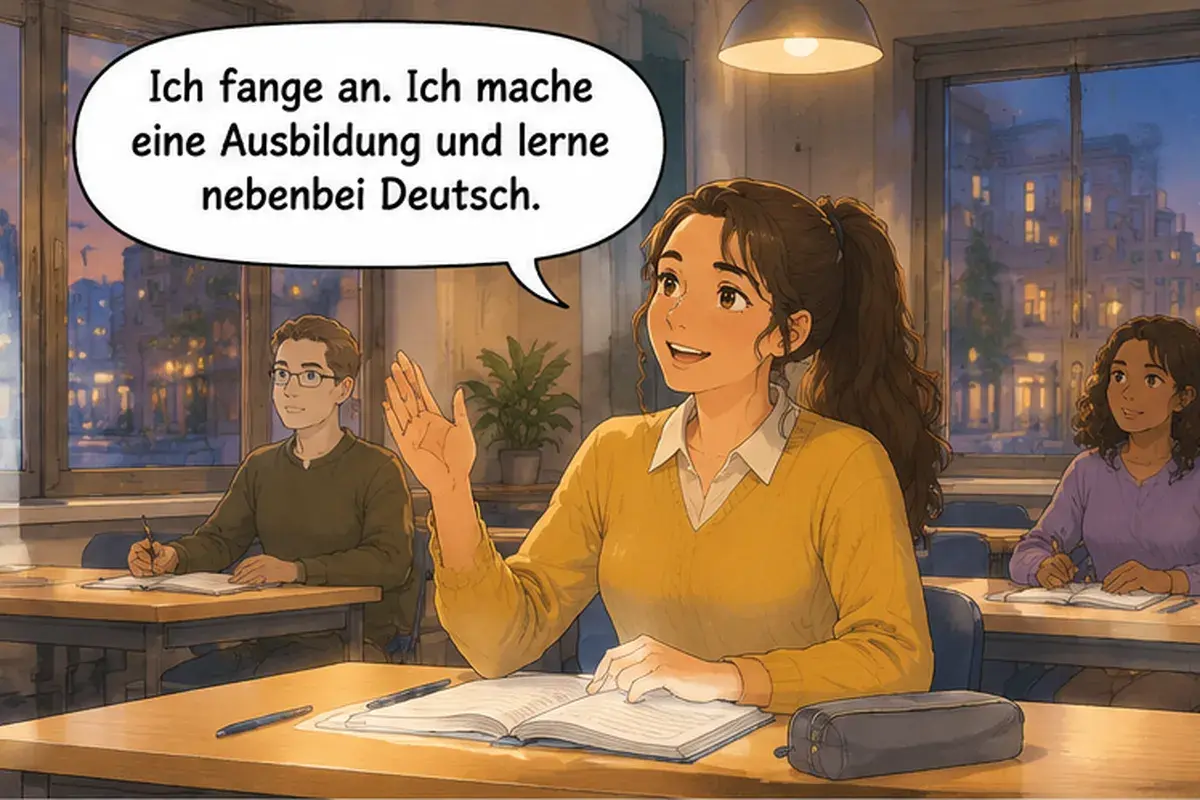
- Teilnehmerin
Ich fange an. Ich mache eine Ausbildung und lerne nebenbei Deutsch.
I'll start. I'm doing vocational training and learning German on the side.
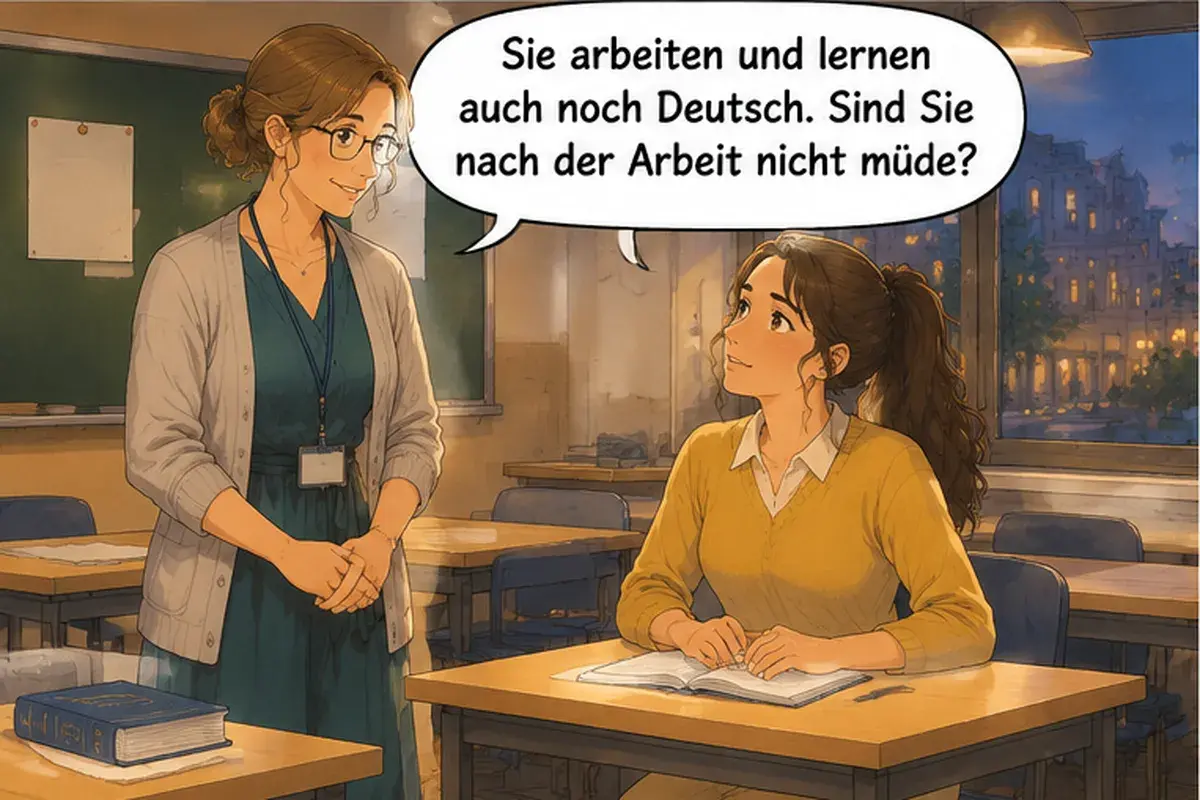
- Frau Albers
Sie arbeiten und lernen auch noch Deutsch. Sind Sie nach der Arbeit nicht müde?
You work and you're also learning German. Aren't you tired after work? (formal)
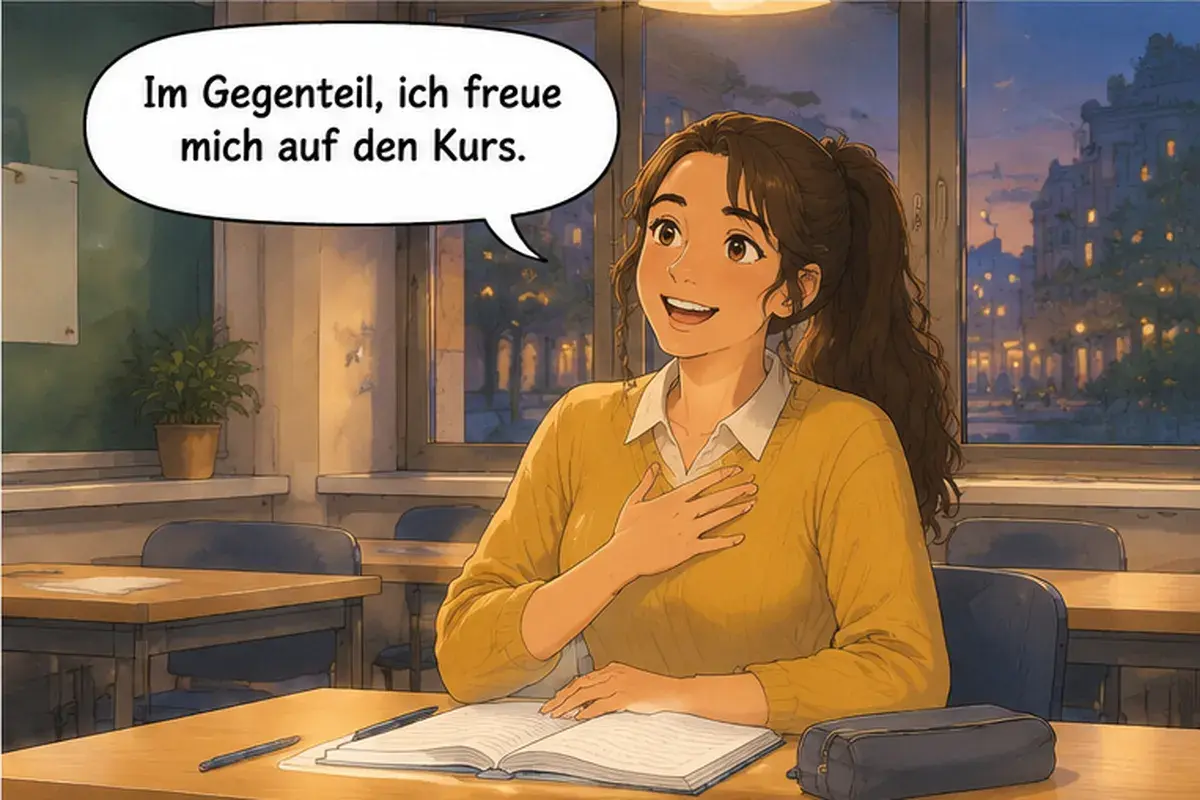
- Teilnehmerin
Im Gegenteil, ich freue mich auf den Kurs.
On the contrary, I'm looking forward to the class.
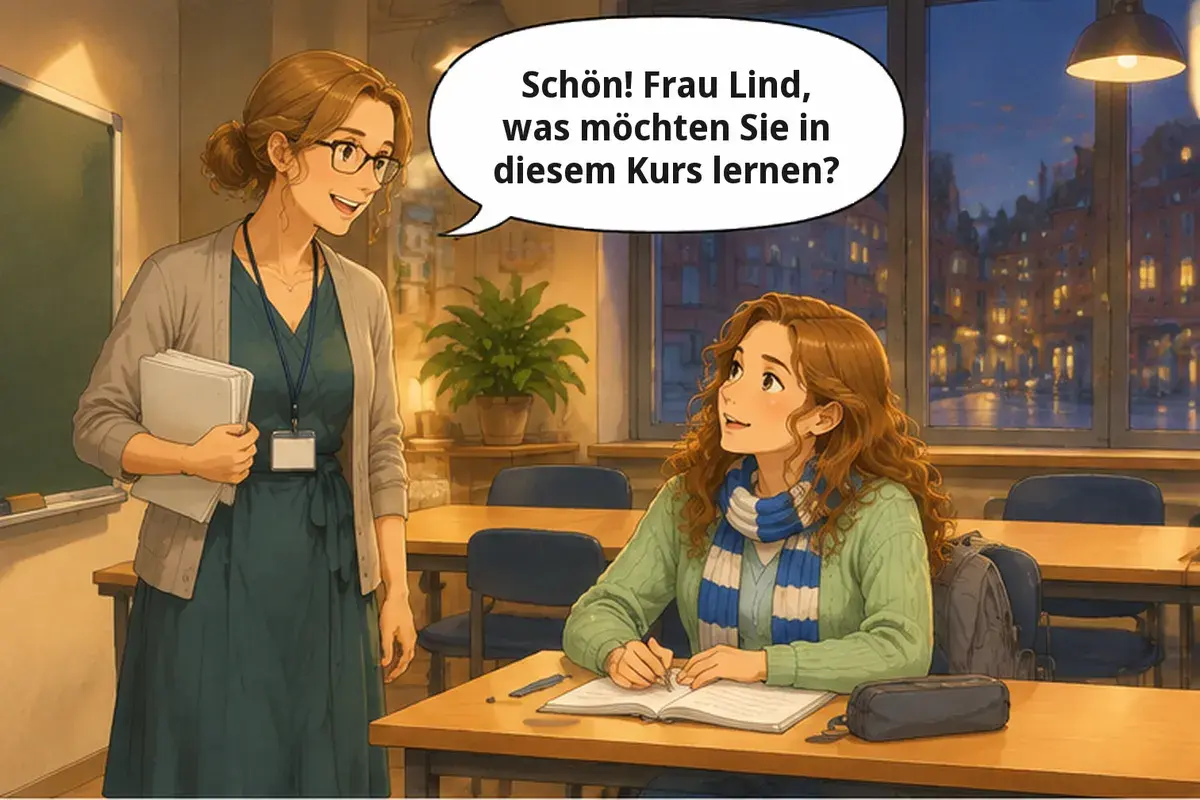
- Frau Albers
Schön! Frau Lind, was möchten Sie in diesem Kurs lernen?
Nice! Frau Lind, what would you like to learn in this course? (formal)
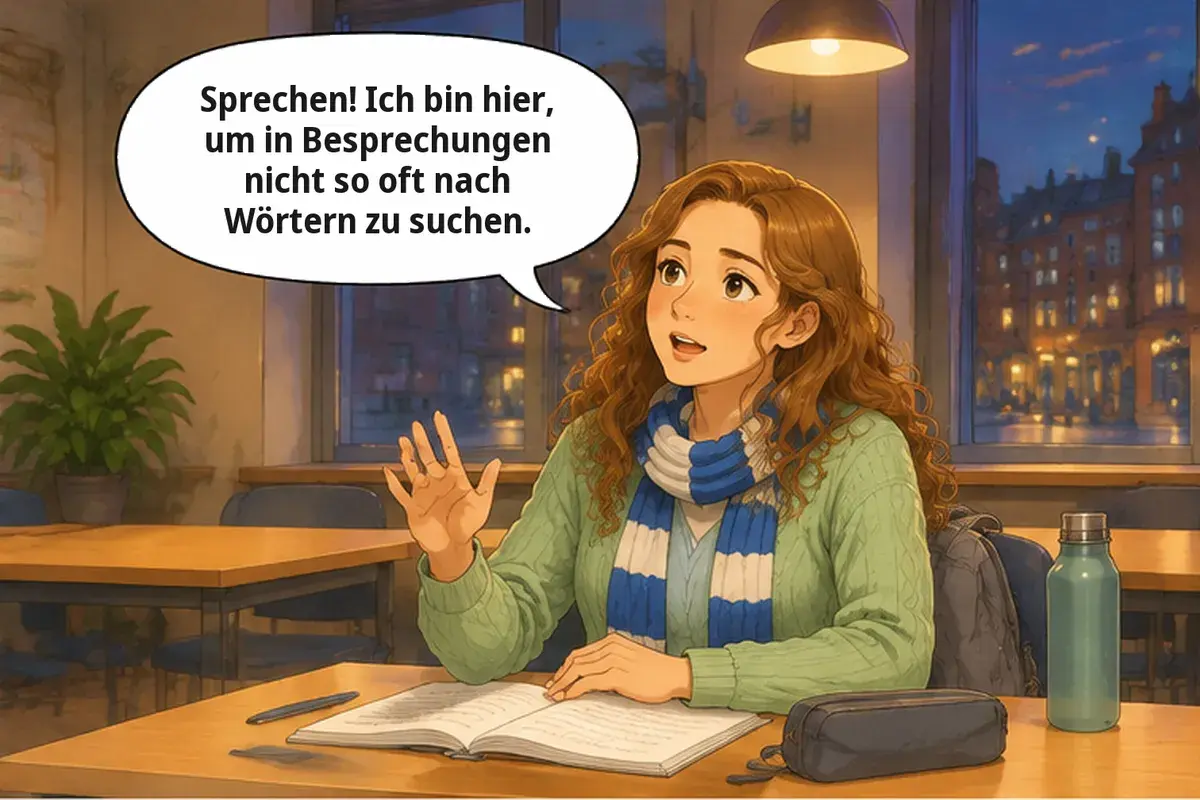
- Katja
Sprechen! Ich bin hier, um in Besprechungen nicht so oft nach Wörtern zu suchen.
Speaking! I'm here to look for words less often in meetings.
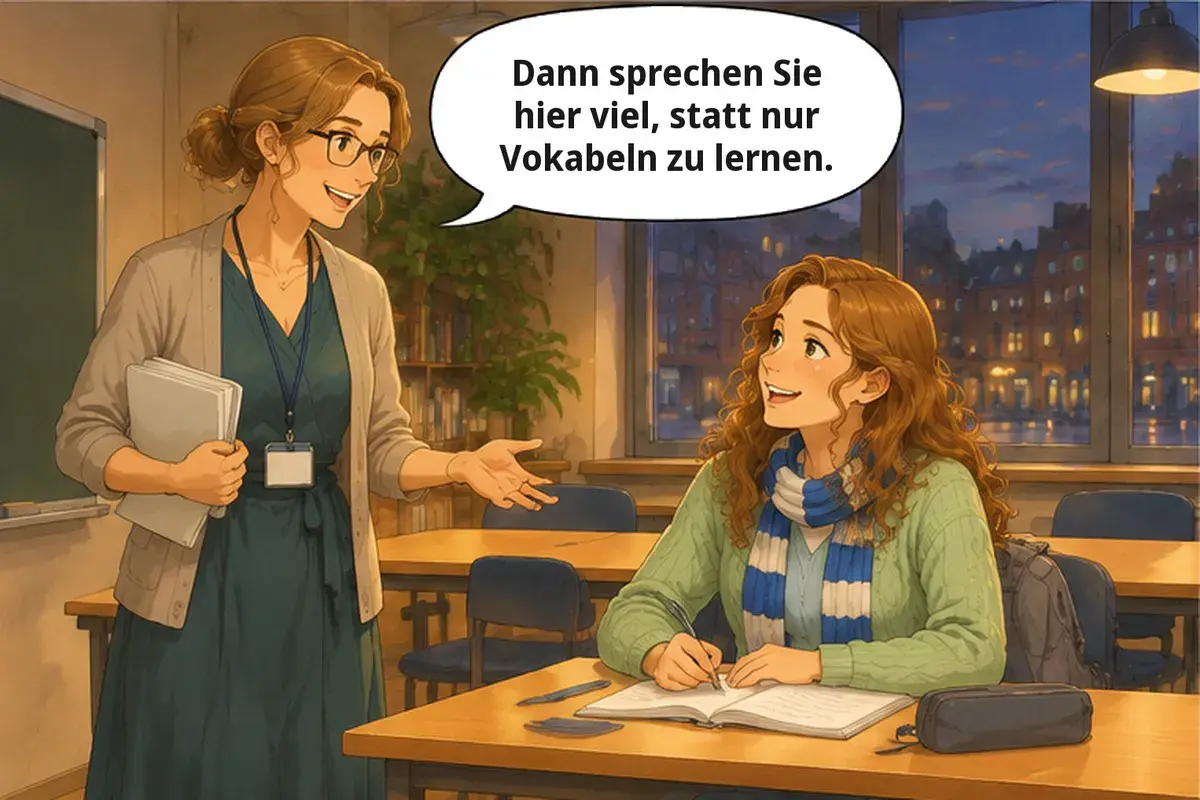
- Frau Albers
Dann sprechen Sie hier viel, statt nur Vokabeln zu lernen.
Then speak a lot here instead of just studying vocabulary. (formal)
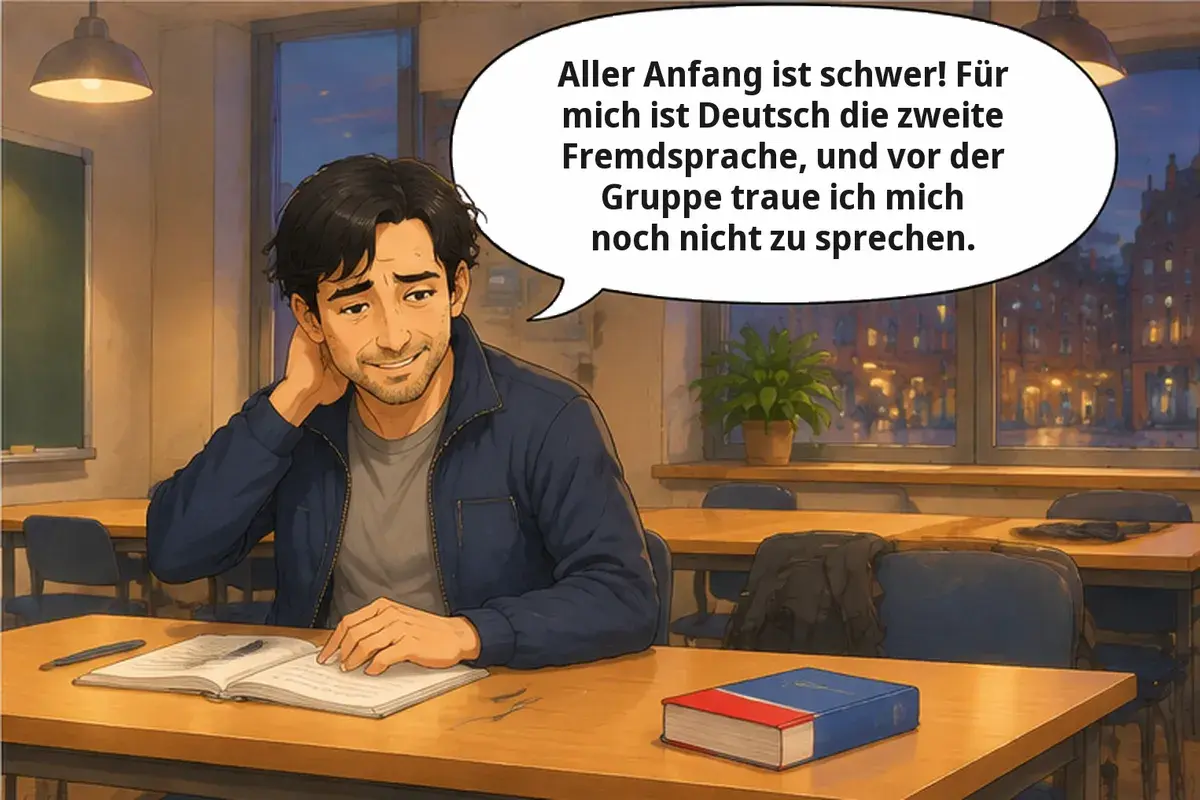
- Teilnehmer
Aller Anfang ist schwer! Für mich ist Deutsch die zweite Fremdsprache, und vor der Gruppe traue ich mich noch nicht zu sprechen.
Every beginning is hard! For me German is a second foreign language, and I don't dare to speak in front of the group yet.
- Frau Albers
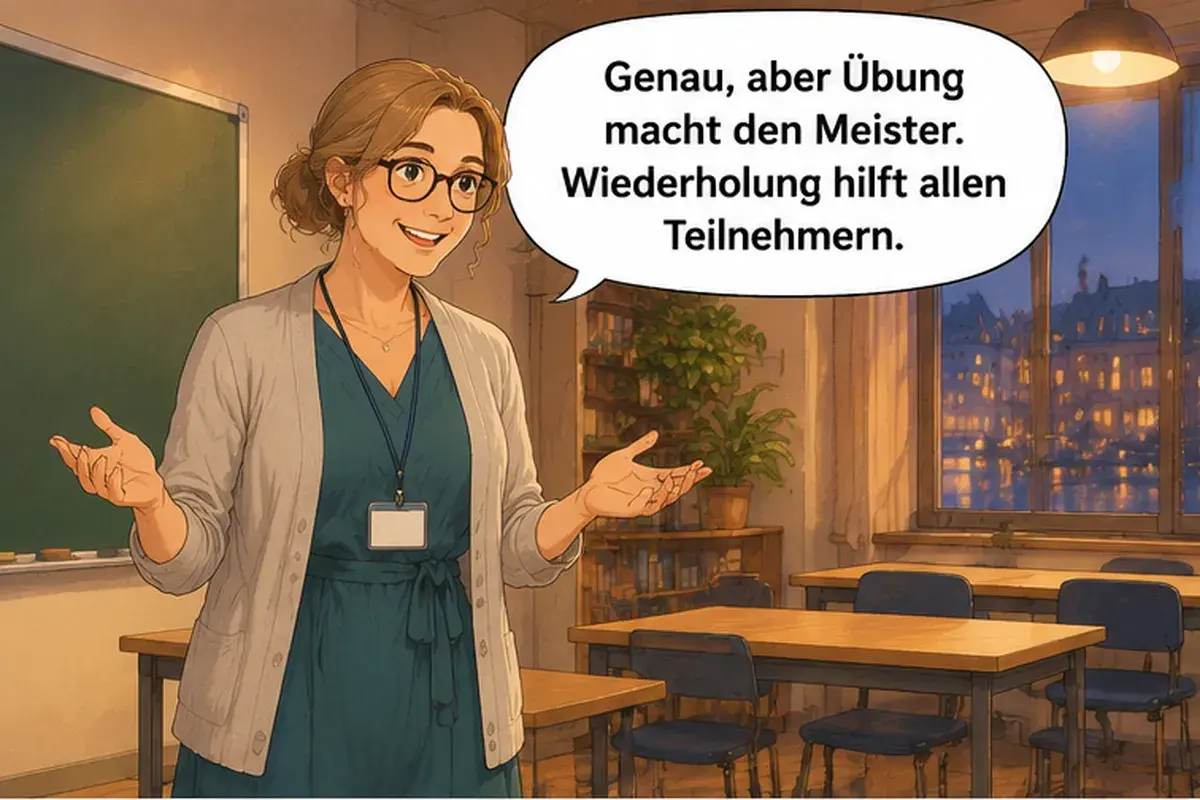
Genau, aber Übung macht den Meister. Wiederholung hilft allen Teilnehmern.
Exactly, but practice makes perfect. Repetition helps all the participants.
- Teilnehmerin
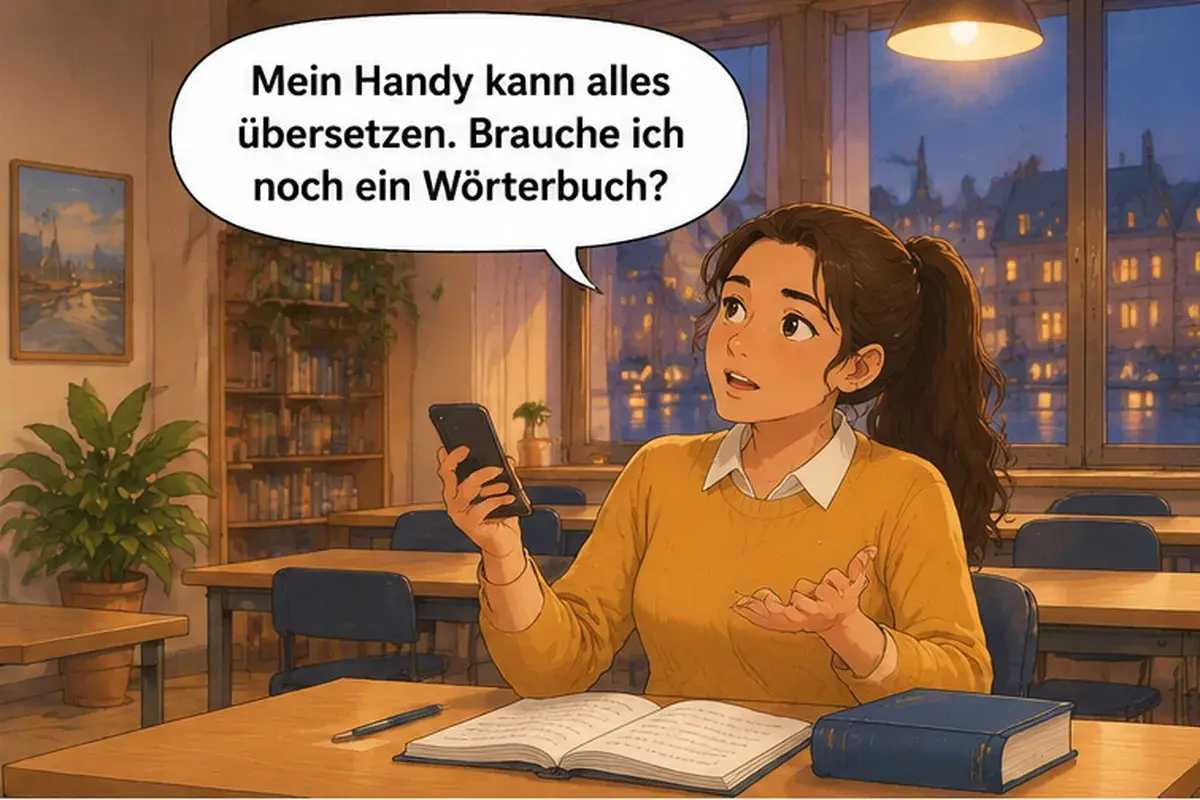
Mein Handy kann alles übersetzen. Brauche ich noch ein Wörterbuch?
My phone can translate everything. Do I still need a dictionary?
- Frau Albers
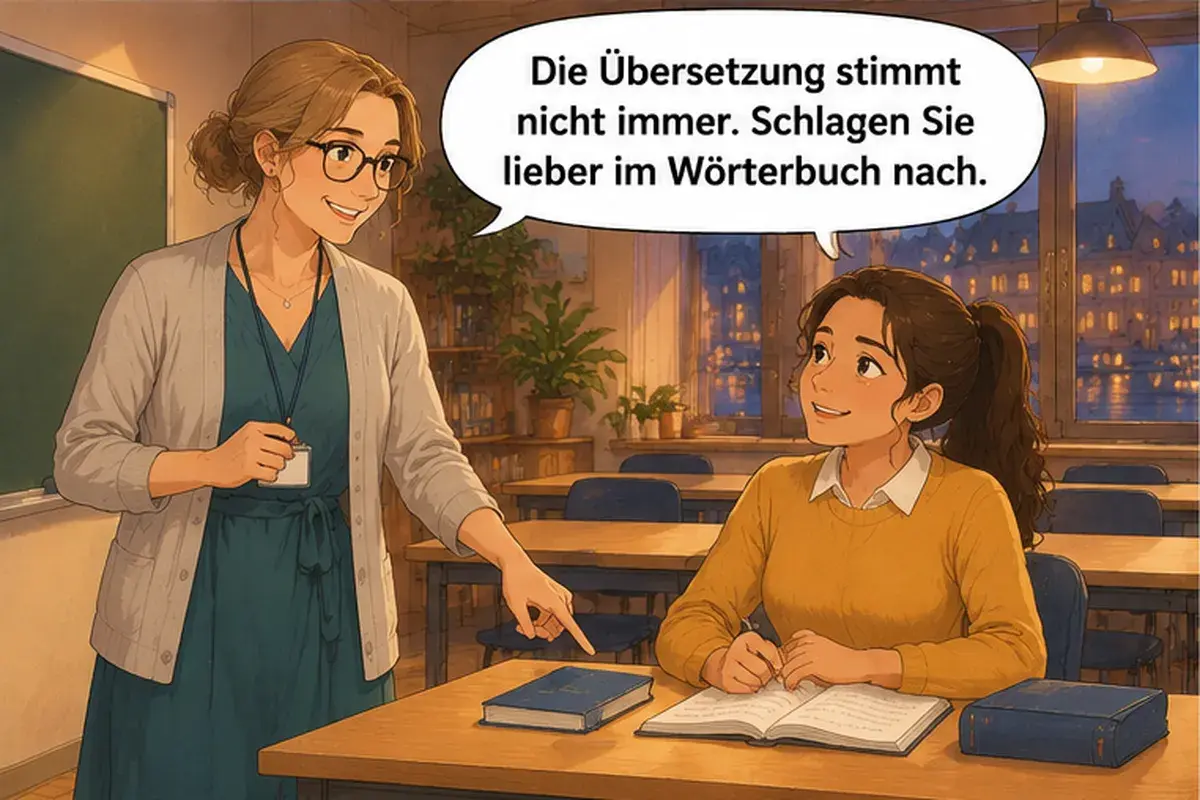
Die Übersetzung stimmt nicht immer. Schlagen Sie lieber im Wörterbuch nach.
The translation isn't always right. You'd better look it up in the dictionary. (formal)
- Katja
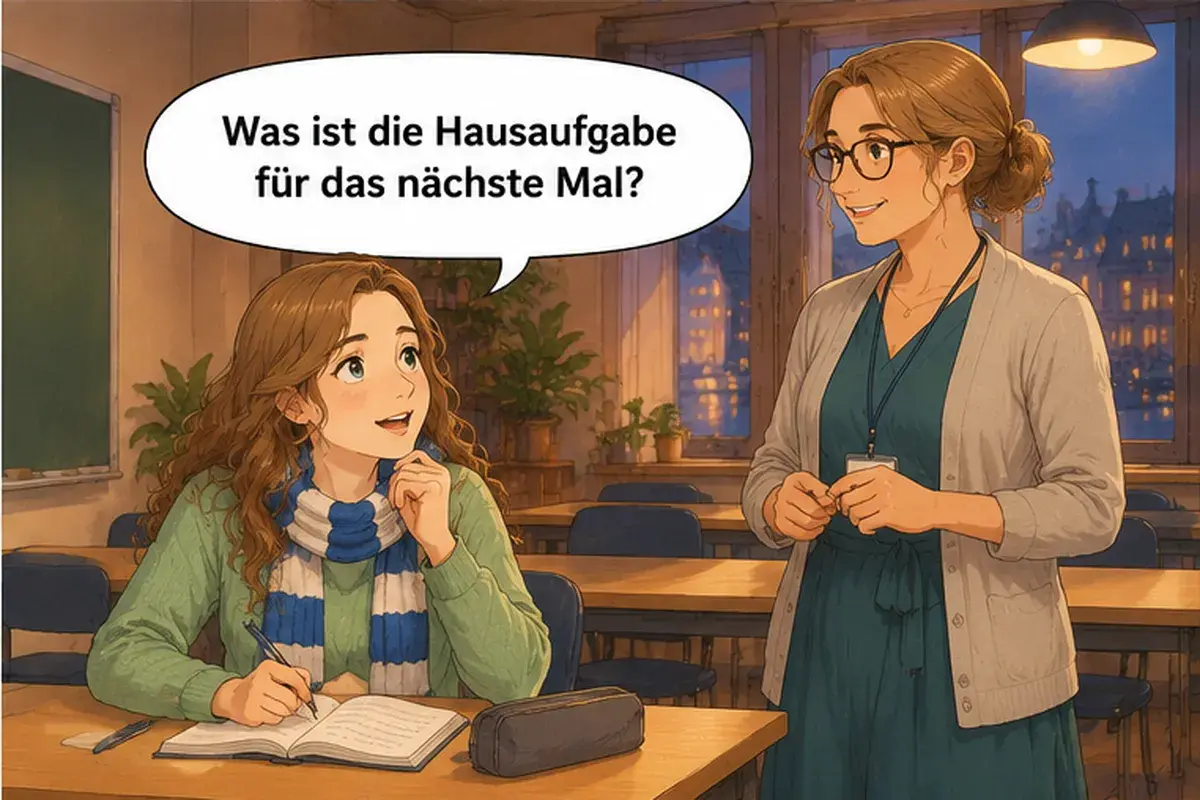
Was ist die Hausaufgabe für das nächste Mal?
What's the homework for next time?
- Frau Albers
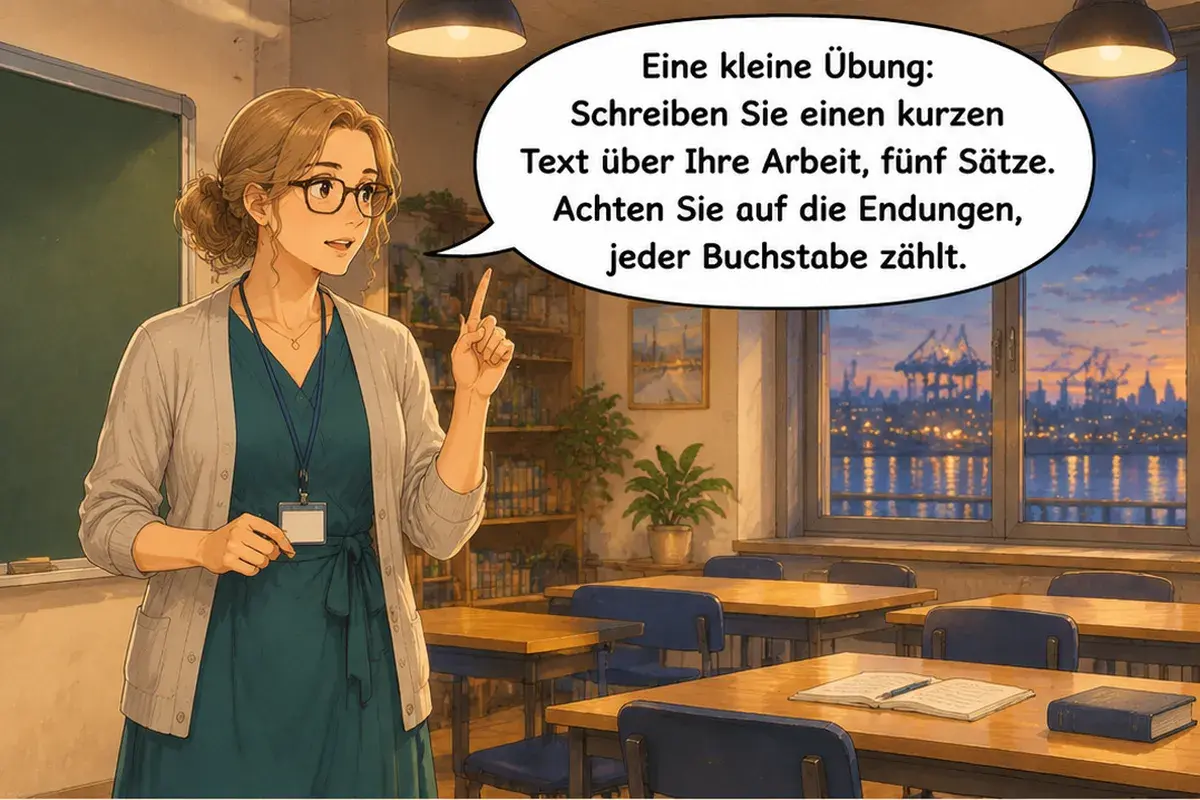
Eine kleine Übung: Schreiben Sie einen kurzen Text über Ihre Arbeit, fünf Sätze. Achten Sie auf die Endungen, jeder Buchstabe zählt.
A small exercise: Write a short text about your work, five sentences (formal). Pay attention to the endings, every letter counts (formal).
- Katja
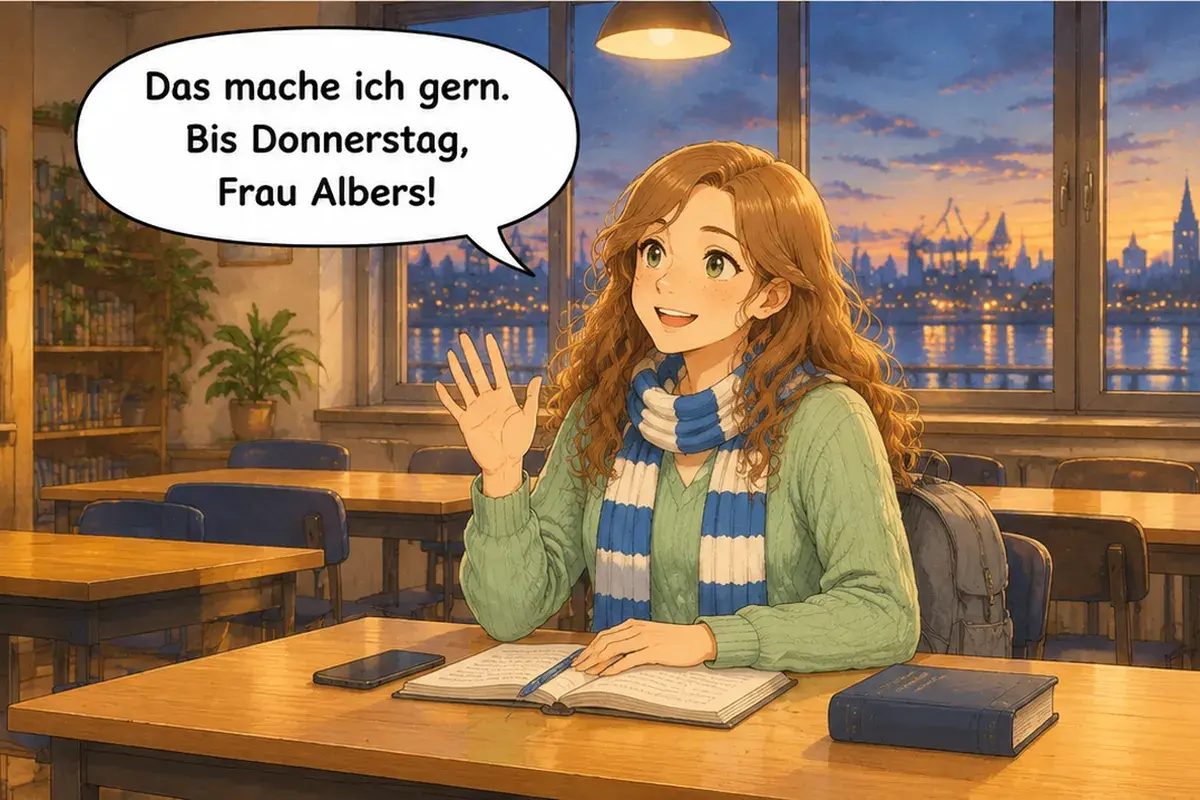
Das mache ich gern. Bis Donnerstag, Frau Albers!
I'm happy to do that. See you Thursday, Frau Albers!
Grammar for this text
- Ich fange an — I'll begin.
anfangen("to begin"):fangeis in second place andangoes to the end. - Im Gegenteil — On the contrary. A fixed phrase, literally "in the opposite".
imisin dem. You say it when you mean: "no, it's just the other way around". - Dann sprechen Sie hier viel, statt nur Vokabeln zu lernen — Then you'll speak a lot here instead of just learning vocabulary (formal).
statt … zumeans "instead of -ing": there is a comma beforestatt, andzu lernenstands at the end. More in the grammar of this unit. - Ich bin hier, um in Besprechungen nicht so oft nach Wörtern zu suchen — I'm here to look for words less often in meetings.
um … zumeans "in order to" and keeps the same person (more in the grammar of this unit). - vor der Gruppe traue ich mich noch nicht zu sprechen — I don't dare to speak in front of the group yet.
sich trauen("to dare"):traueis the ich form andmichmeans "myself". "In front of the group" comes first, sotraueis in second place andichfollows it.zu sprechenis at the end, andnoch nichtmeans "not yet". - Aller Anfang ist schwer — Every beginning is hard. A proverb; learn it as a whole.
alleris an old form of "every". - Übung macht den Meister — Practice makes perfect. Another proverb, literally "practice makes the master".
- Wiederholung hilft allen Teilnehmern — Review helps all the participants.
hilftis fromhelfen: theein the stem changes toi(er hilft).helfentakes the dative, soTeilnehmerin the plural gets the ending-n. - Schlagen Sie lieber im Wörterbuch nach — You'd better look it up in the dictionary (formal).
nachschlagen("to look up in a dictionary"): in a request to "you" (formal) the verb comes first,Siesecond, andnachgoes to the end.liebermeans "better, rather".
Words and grammar of the unit: Sign up for a class and say why.
Learn the words from the texts with flashcards
In the app, you can tap any word in a text to see its translation, forms and examples, and new words stick with flashcards. 15 minutes a day.
Start for freeEverything is open for free. No card needed to sign up.