

German story with translation · B1 · 12 lines
Warum steigt die Elbe? Why is the Elbe rising?
Comic · 12 panels

Warum steigt die Elbe? Das fragen sich nach dem Sturm viele Leute in Hamburg.
Why is the Elbe rising? Many people in Hamburg are asking that after the storm.

Von Hamburg bis zur Nordsee sind es etwa hundert Kilometer, trotzdem kommt das Meer bis hierher.
It's about a hundred kilometers from Hamburg to the North Sea, yet the sea reaches all the way here.

Der Mond und die Sonne bewegen das Wasser auf der Erde: So gibt es Ebbe und Flut.
The moon and the sun move the water on Earth: that's how we get low tide and high tide.

Zweimal am Tag kommt die Flut in die Elbe, und zweimal geht das Wasser wieder zurück.
Twice a day the high tide comes into the Elbe, and twice the water goes back out.

Bei einer Sturmflut kommt noch etwas dazu: der Wind.
In a storm flood, something else comes into play: the wind.

Ein starker Wind aus dem Westen drückt das Wasser aus der Nordsee in die Elbe.
A strong wind from the west pushes the water from the North Sea into the Elbe.

Wenn das während der Flut passiert, steigt das Wasser besonders hoch.
If that happens during high tide, the water rises especially high.

Die Wissenschaft hilft: Wissenschaftler wissen heute schon Stunden vorher, wann das Wasser kommt.
Science helps: Scientists today already know hours in advance when the water will come.

So wurden die Leute schon in der Nacht im Radio gewarnt.
That's how people were warned on the radio during the night.
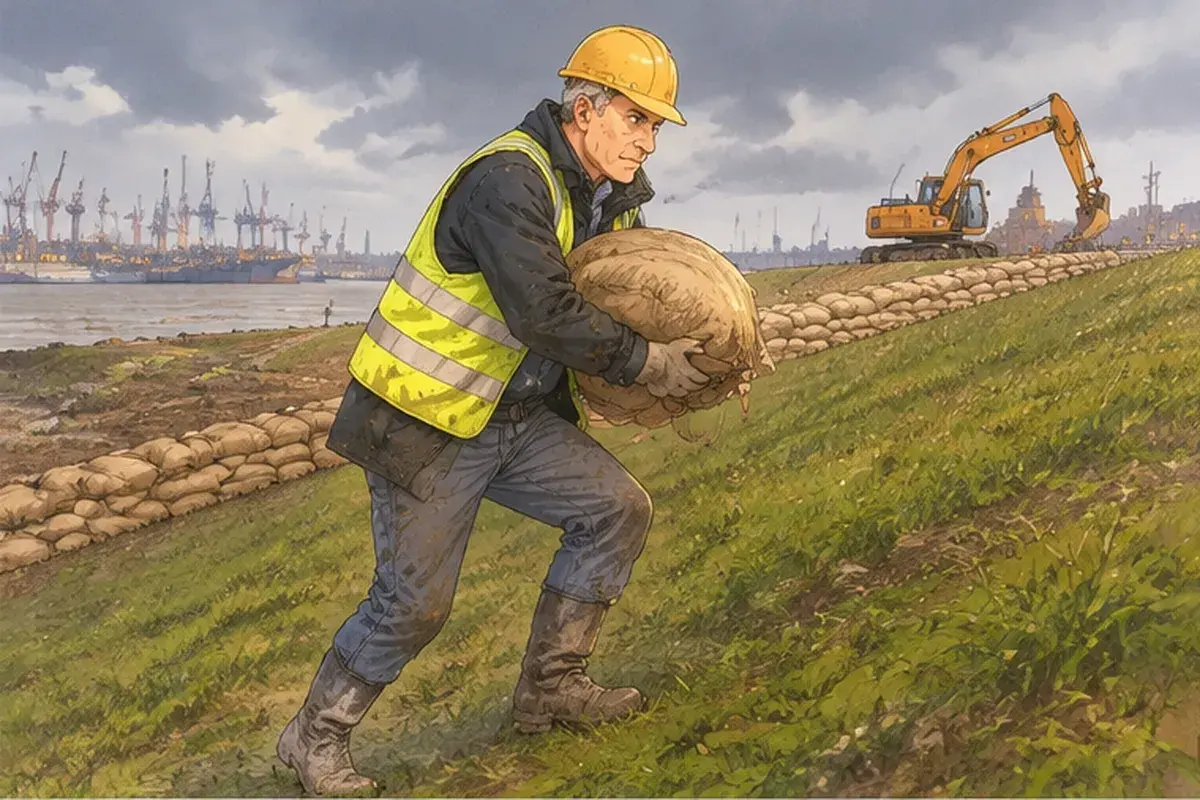
Nach früheren Sturmfluten wurden die Deiche höher gebaut.
After earlier storm floods, the dikes were built higher.

Deshalb schützt der Deich die Stadt, auch wenn der Fischmarkt manchmal unter Wasser steht.
That's why the dike protects the city, even if the fish market is sometimes under water.

Und nach ein paar Stunden geht das Wasser wieder zurück.
And after a few hours the water goes back out.
Grammar for this text
- Warum steigt die Elbe? —
steigenmeans "to rise". A newspaper article often starts like this: right away with the reader's question. This article teaches you to understand a simple science text. - Der Mond und die Sonne bewegen das Wasser auf der Erde — two subjects, so
bewegen, notbewegt.auf der Erdeis dative: where?Ebbe und Flut(low tide and high tide) are often said as a pair. - Wenn das während der Flut passiert —
währendis a preposition with the genitive here (unit 13):die Flut→der Flut. The verbpassiertis at the end because ofwenn. - So wurden die Leute schon in der Nacht im Radio gewarnt — the passive in the past:
wurden+ the past participlegewarnt. Who warned them doesn't matter, so there is novon. - Nach früheren Sturmfluten wurden die Deiche höher gebaut — again
wurden … gebaut.höheris the comparative ofhoch: "higher". - auch wenn der Fischmarkt manchmal unter Wasser steht —
auch wennmeans "even if"; the verb goes to the end.unter Wasser stehenmeans "to be flooded".
Words and grammar of the unit: Understand company and city news.
Learn the words from the texts with flashcards
In the app, you can tap any word in a text to see its translation, forms and examples, and new words stick with flashcards. 15 minutes a day.
Start for freeEverything is open for free. No card needed to sign up.