
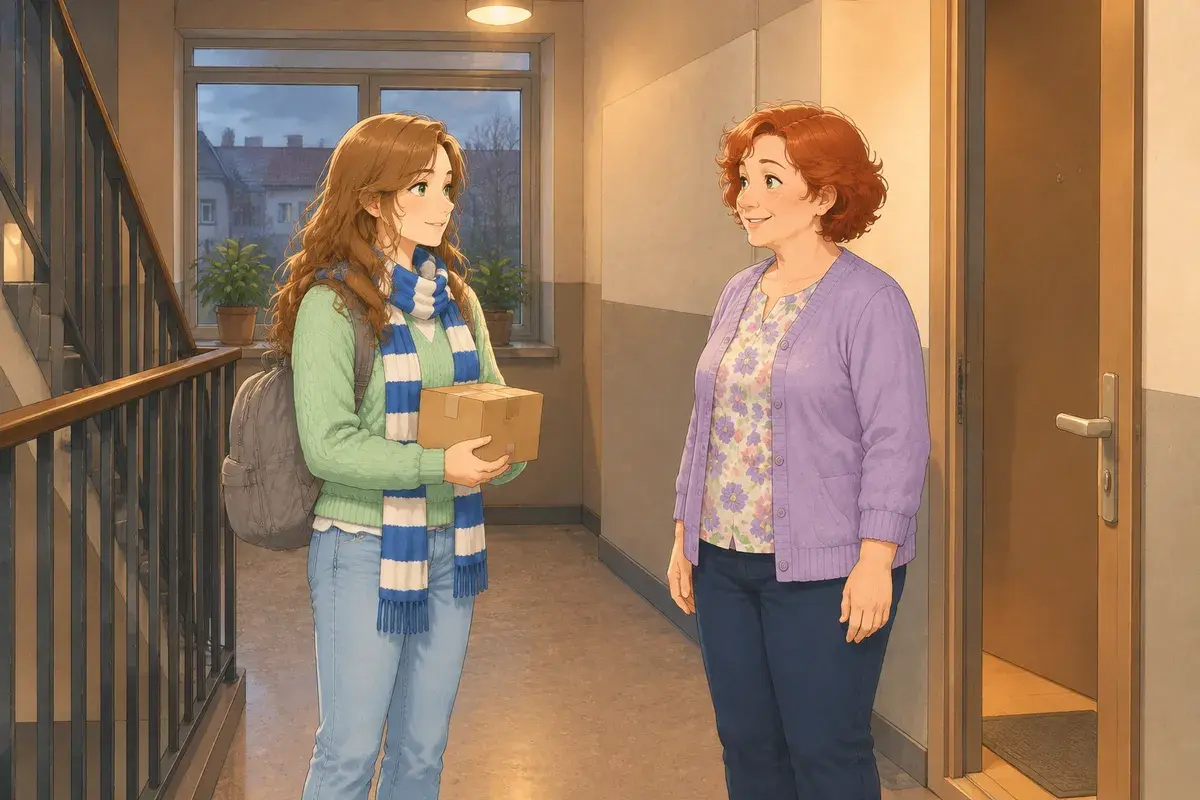
German dialogue with translation · B1 · 14 lines
Wir sind uns noch nie begegnet We've never met
Comic · 14 panels
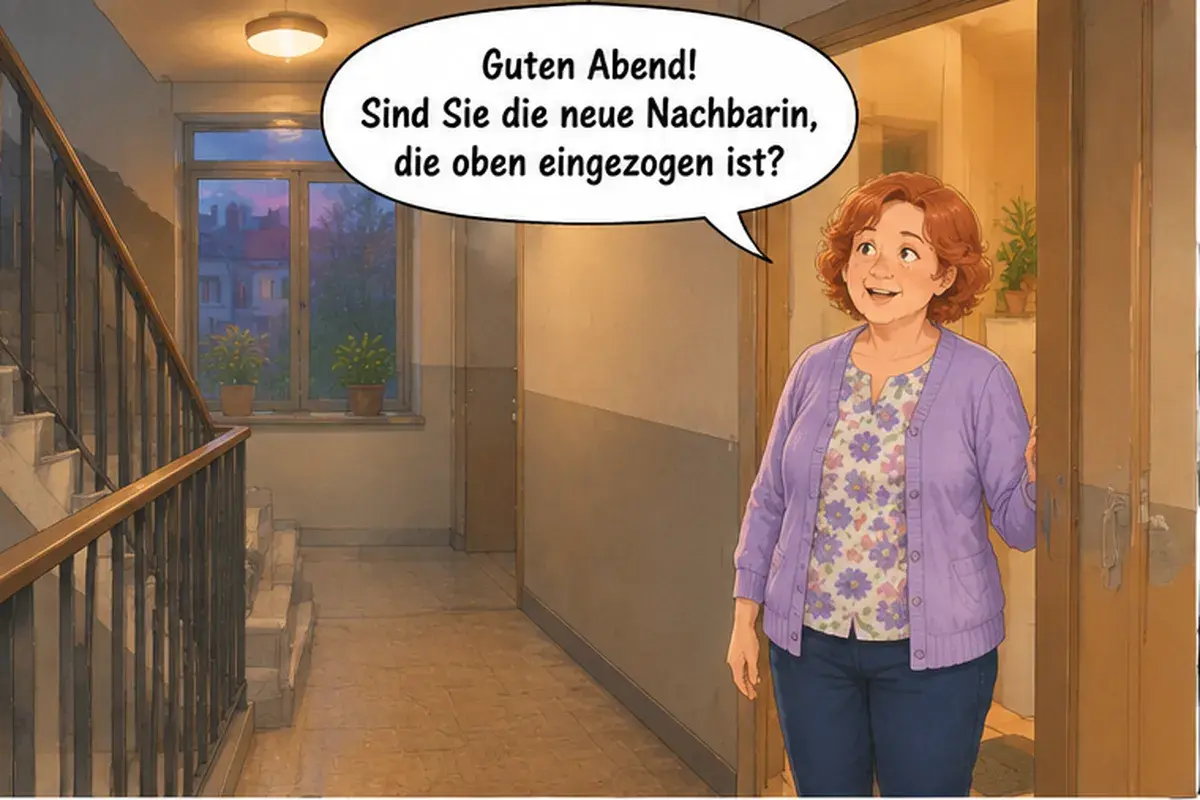
- Frau Petersen
Guten Abend! Sind Sie die neue Nachbarin, die oben eingezogen ist?
Good evening! Are you the new neighbor who moved in upstairs? (to a woman, formal)
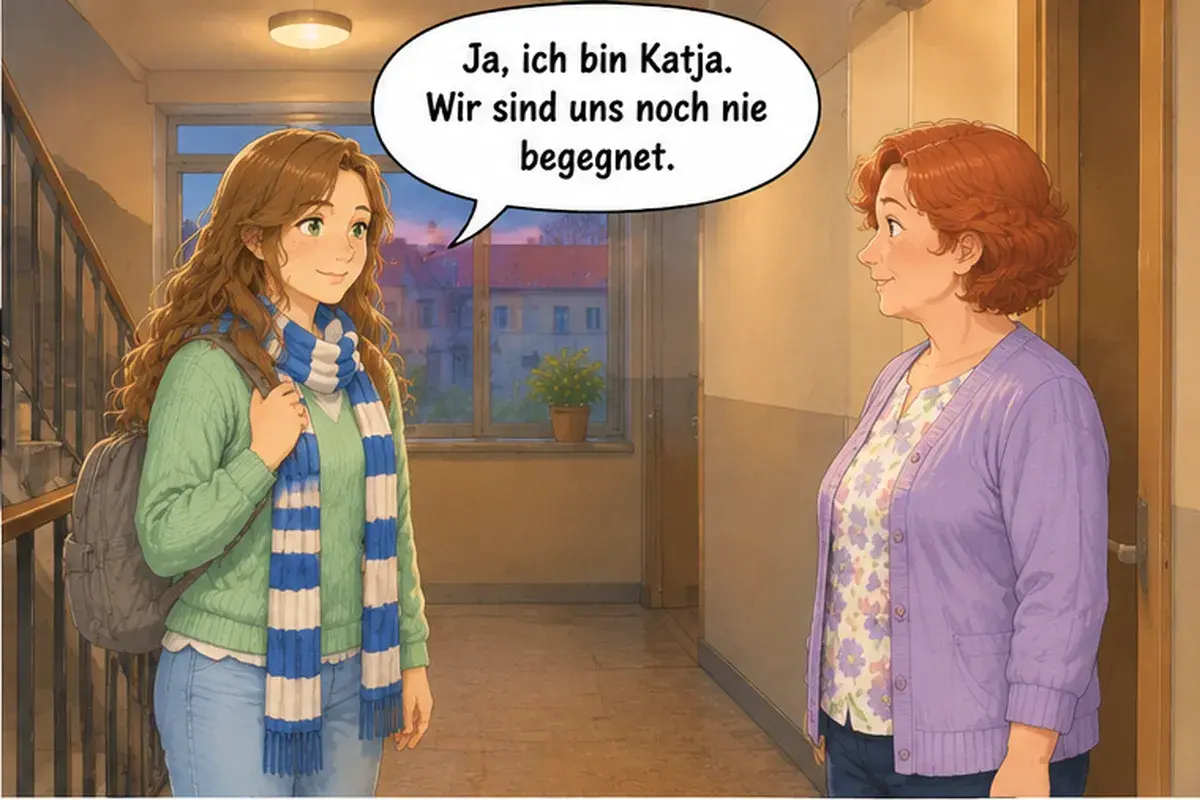
- Katja
Ja, ich bin Katja. Wir sind uns noch nie begegnet.
Yes, I'm Katja. We've never met.
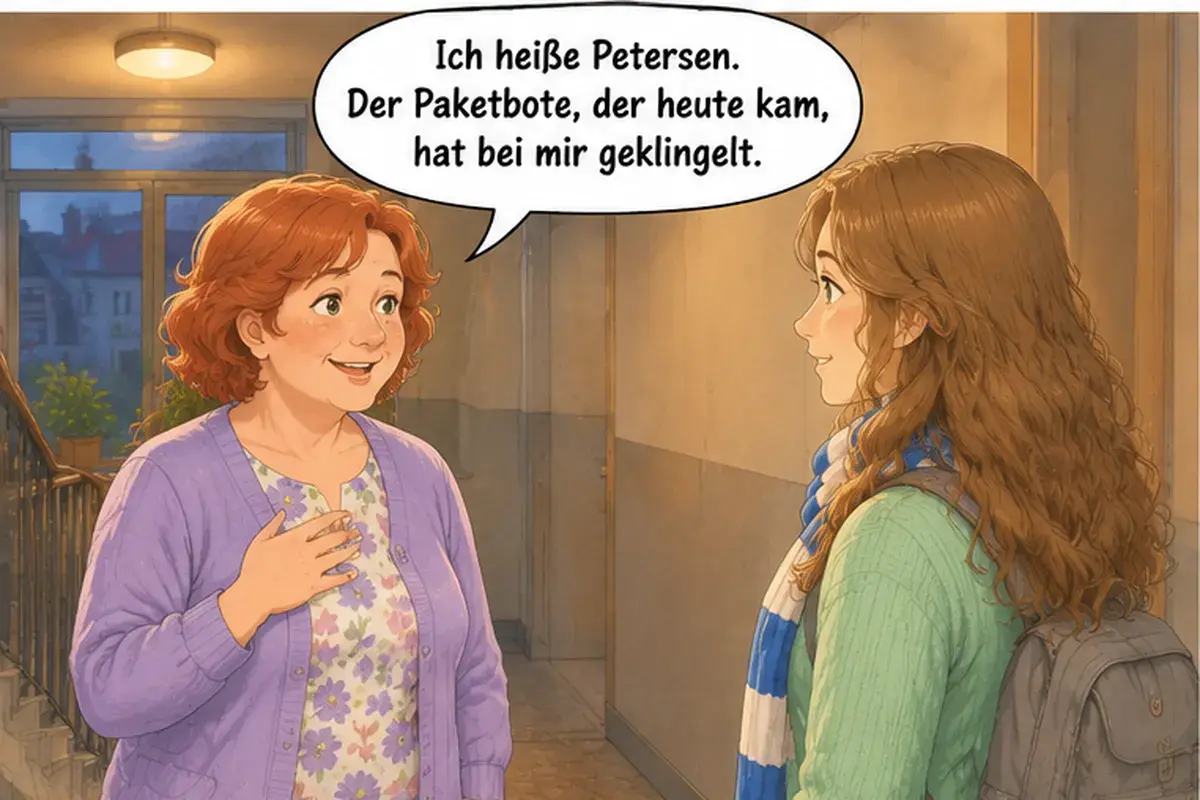
- Frau Petersen
Ich heiße Petersen. Der Paketbote, der heute kam, hat bei mir geklingelt.
My name is Petersen. The delivery man who came today rang my bell.
- Katja
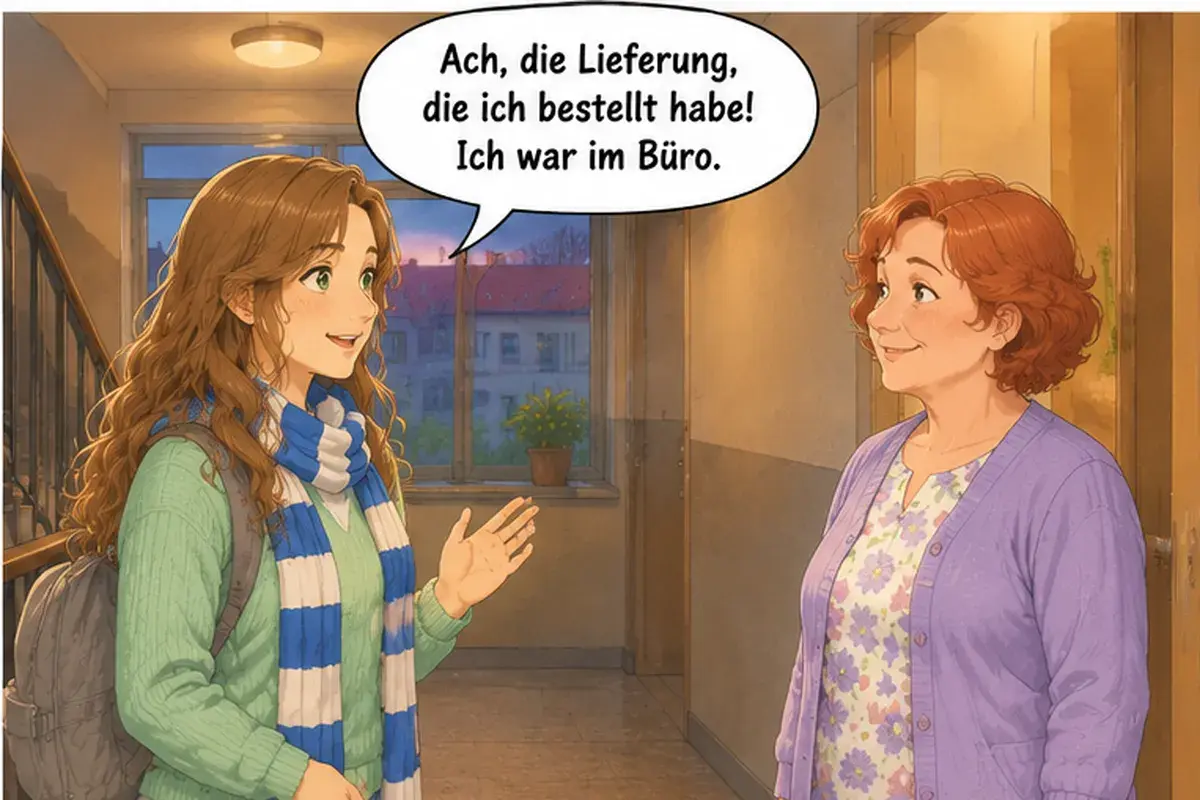
Ach, die Lieferung, die ich bestellt habe! Ich war im Büro.
Oh, the delivery I ordered! I was at the office.
- Frau Petersen
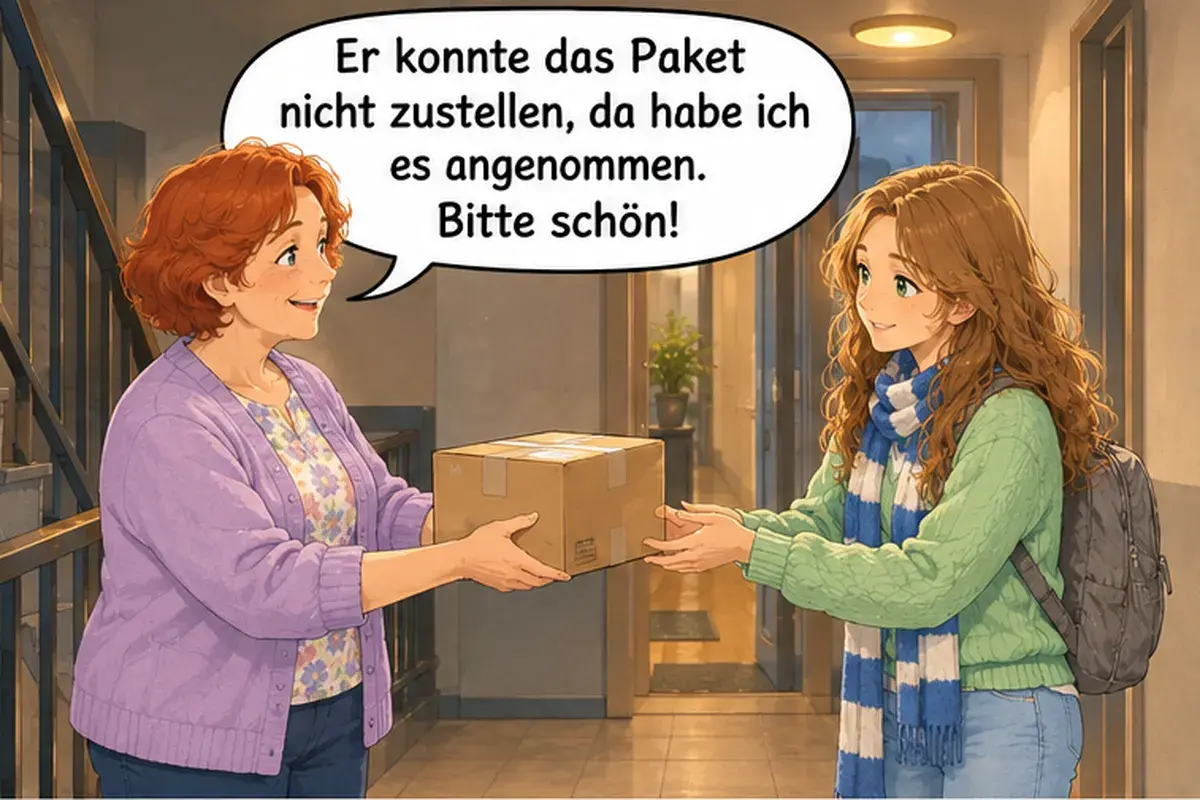
Er konnte das Paket nicht zustellen, da habe ich es angenommen. Bitte schön!
He couldn't deliver the package, so I took it in. Here you go!
- Katja
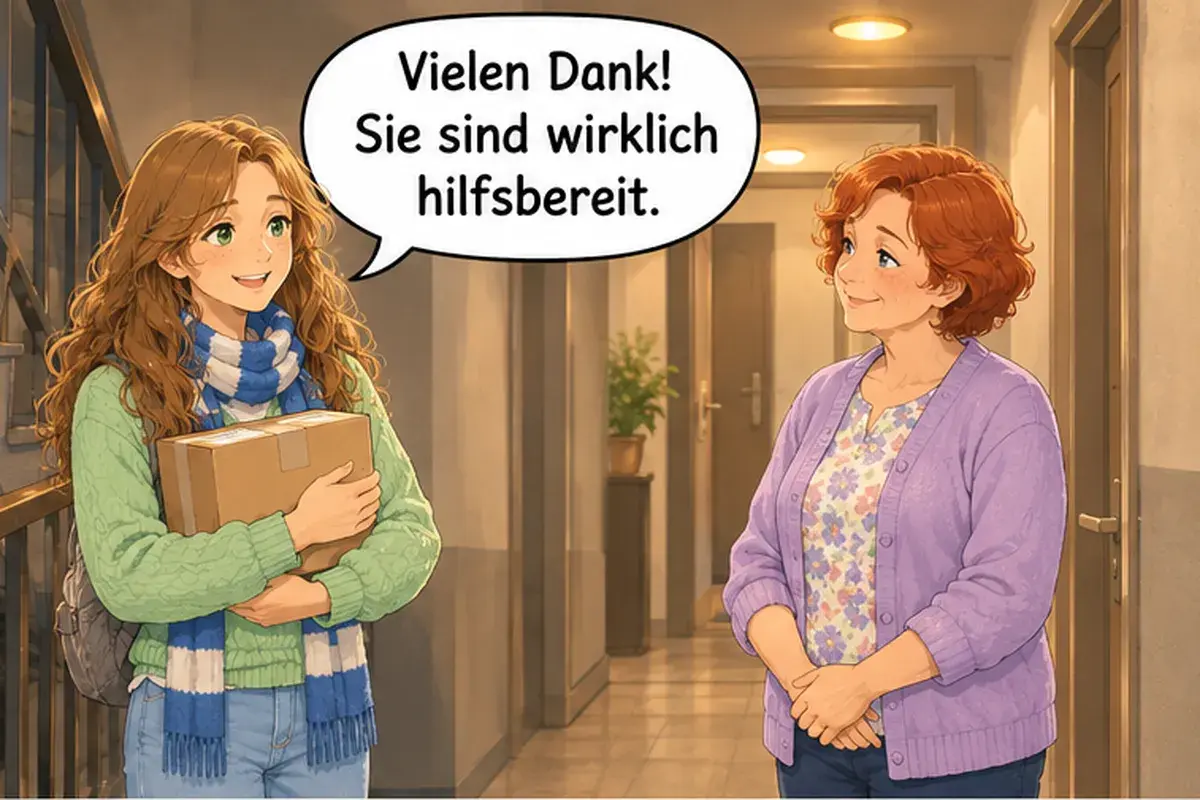
Vielen Dank! Sie sind wirklich hilfsbereit.
Thank you very much! You're really helpful (formal).
- Frau Petersen
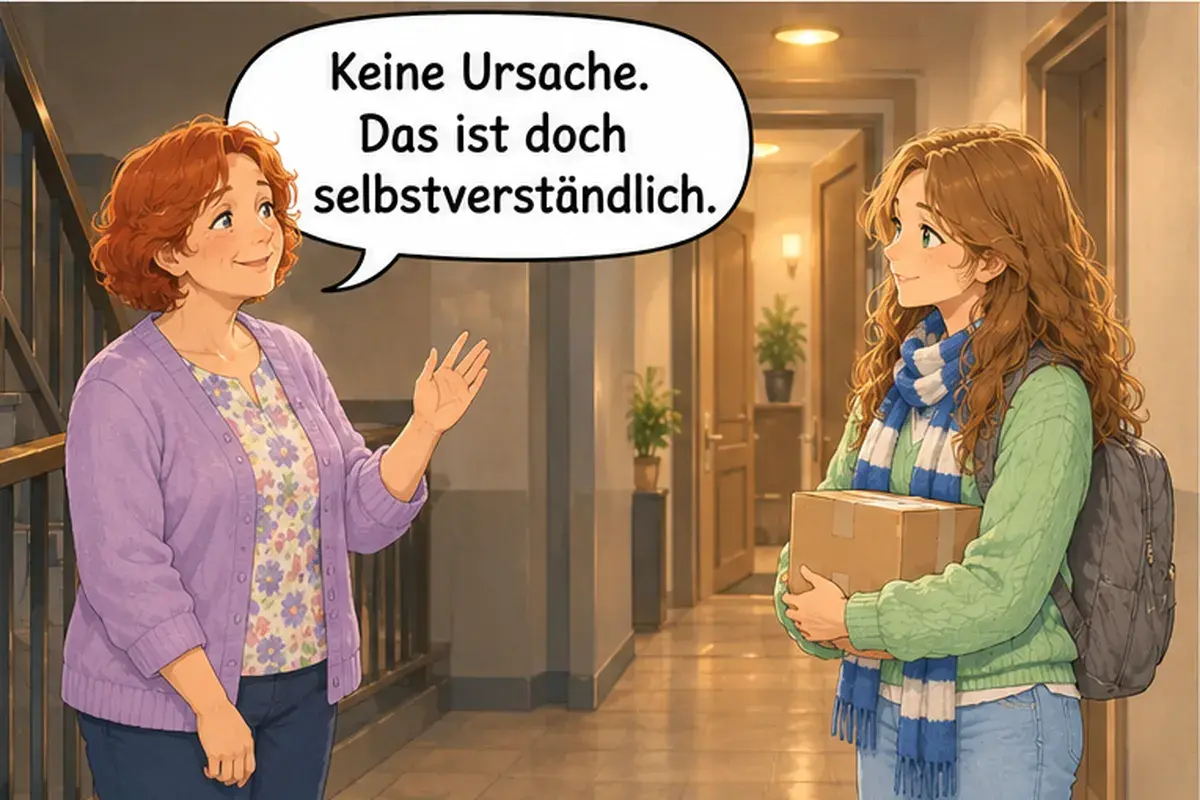
Keine Ursache. Das ist doch selbstverständlich.
Don't mention it. That goes without saying.
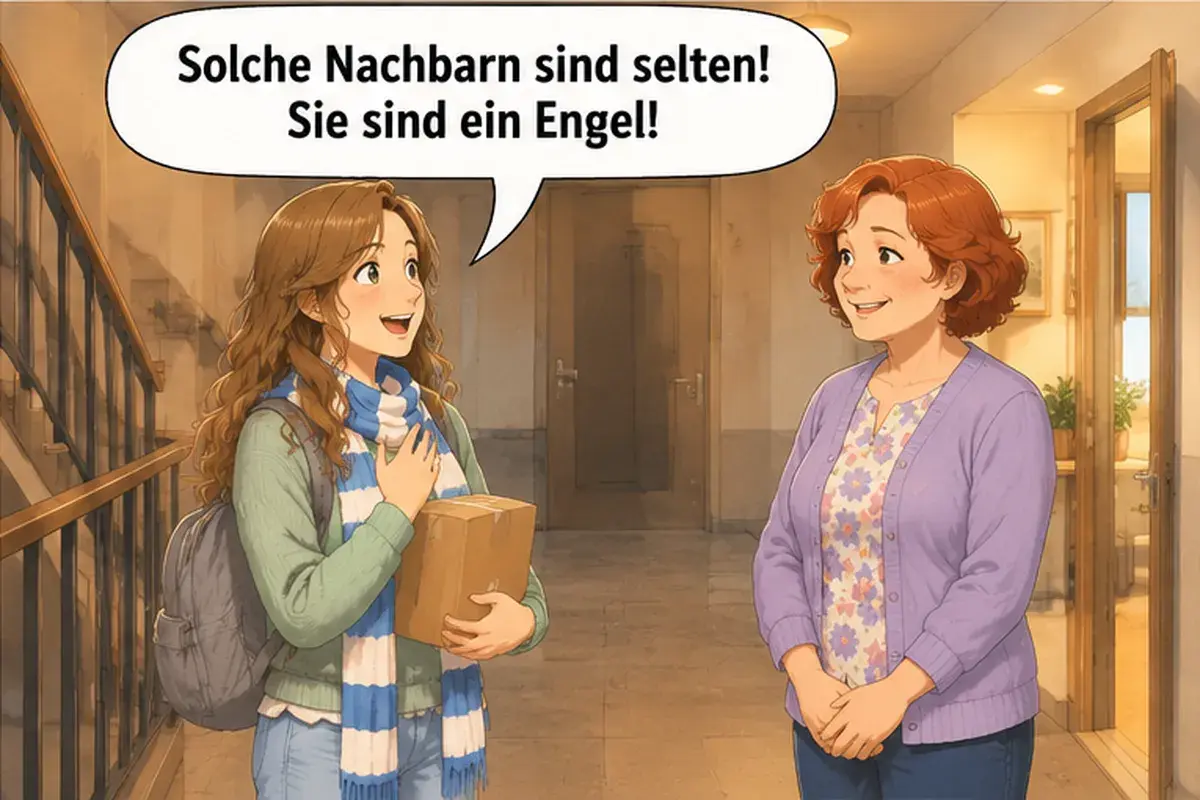
- Katja
Solche Nachbarn sind selten! Sie sind ein Engel!
Neighbors like that are rare! You're an angel! (formal)
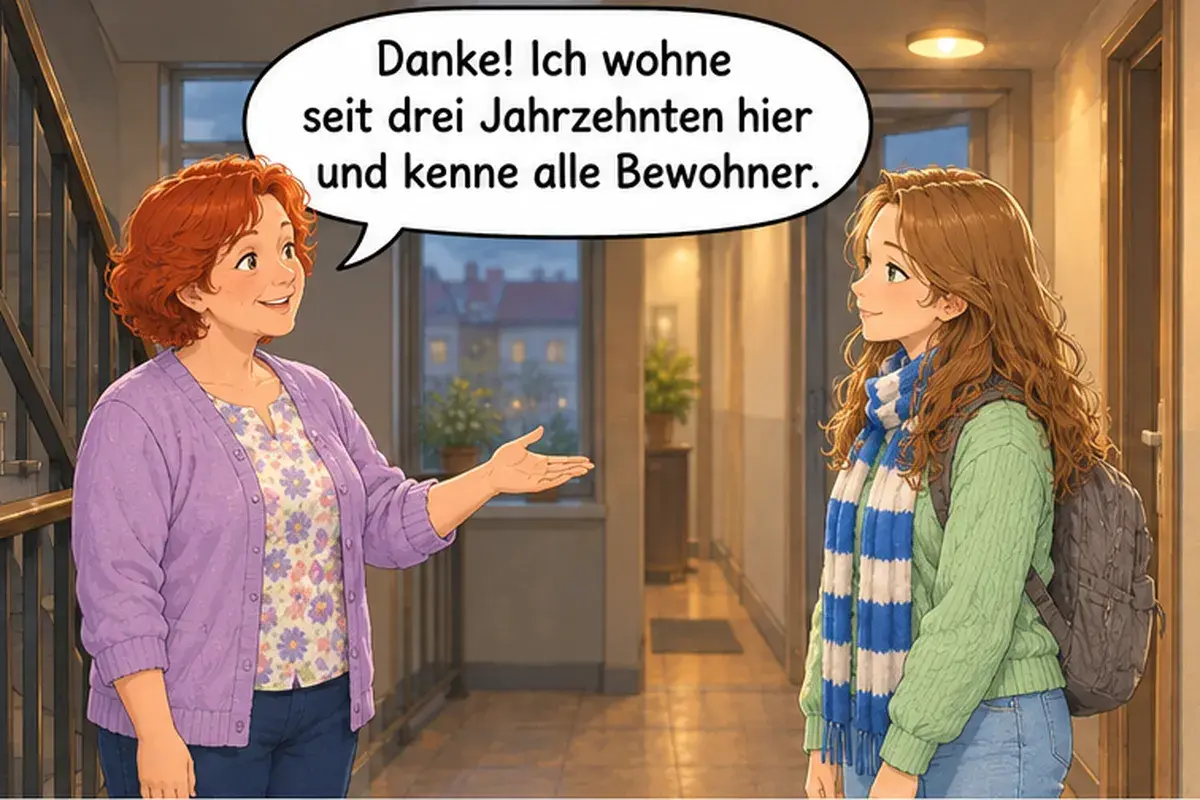
- Frau Petersen
Danke! Ich wohne seit drei Jahrzehnten hier und kenne alle Bewohner.
Thanks! I've lived here for three decades, and I know all the residents.
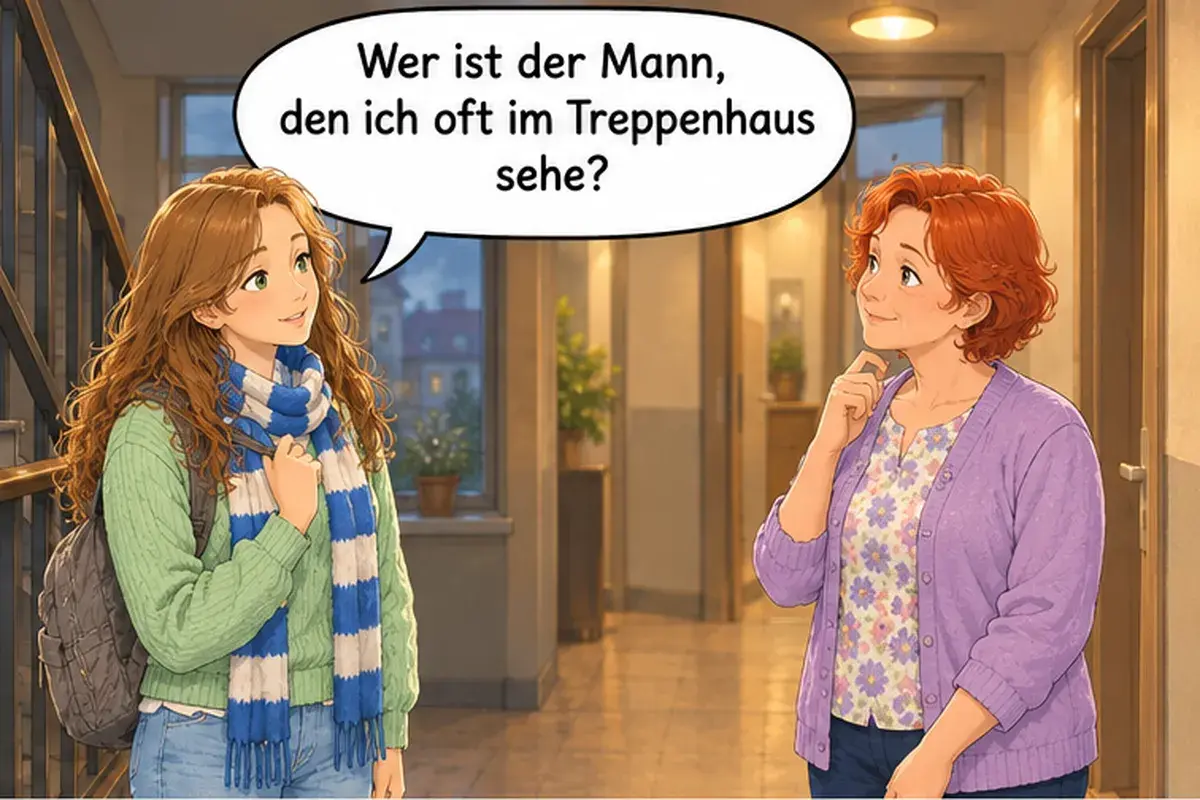
- Katja
Wer ist der Mann, den ich oft im Treppenhaus sehe?
Who's the man I often see in the stairwell?
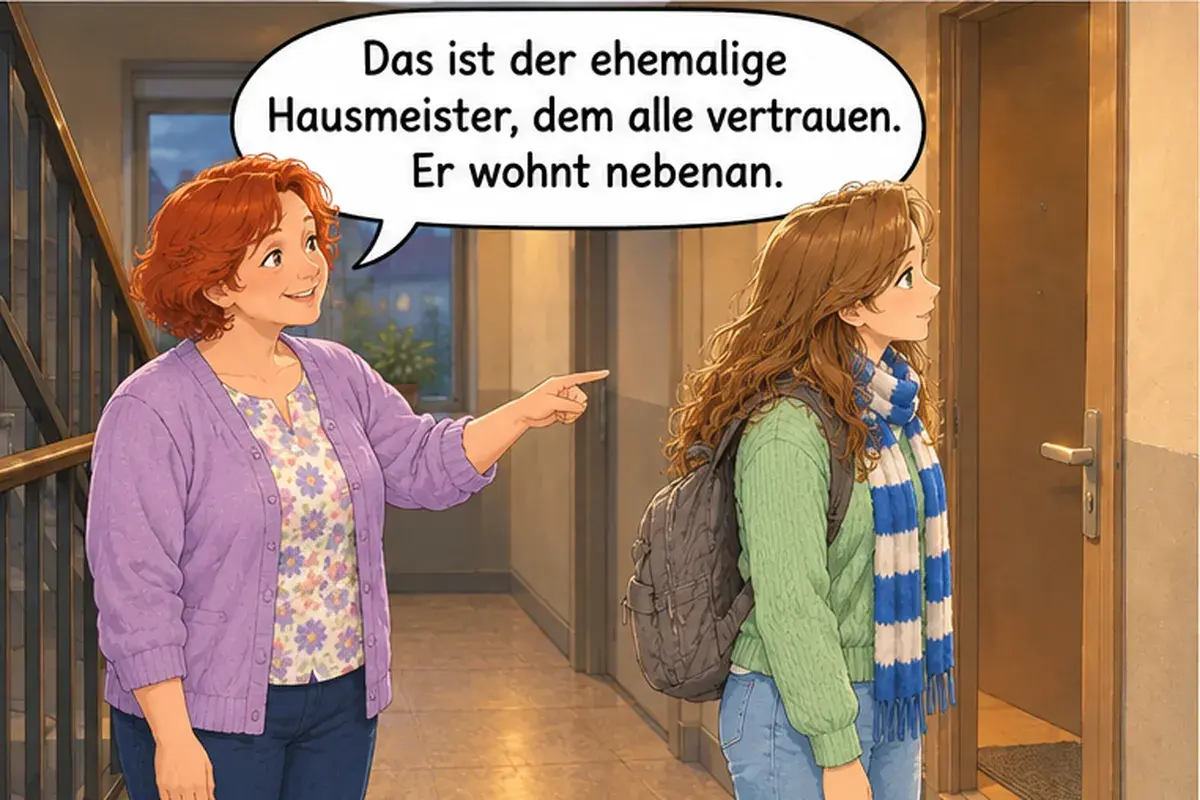
- Frau Petersen
Das ist der ehemalige Hausmeister, dem alle vertrauen. Er wohnt nebenan.
That's the former building manager, whom everyone trusts. He lives next door.
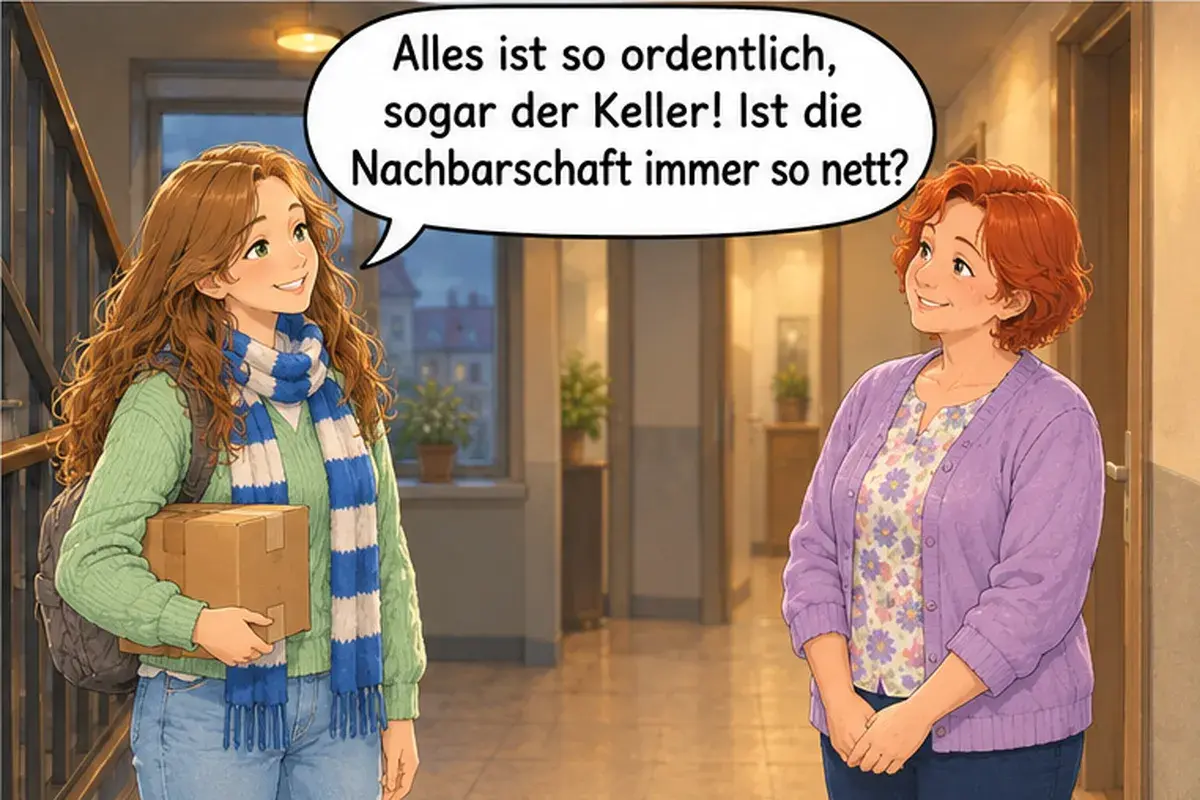
- Katja
Alles ist so ordentlich, sogar der Keller! Ist die Nachbarschaft immer so nett?
Everything is so neat, even the basement! Is the neighborhood always this nice?
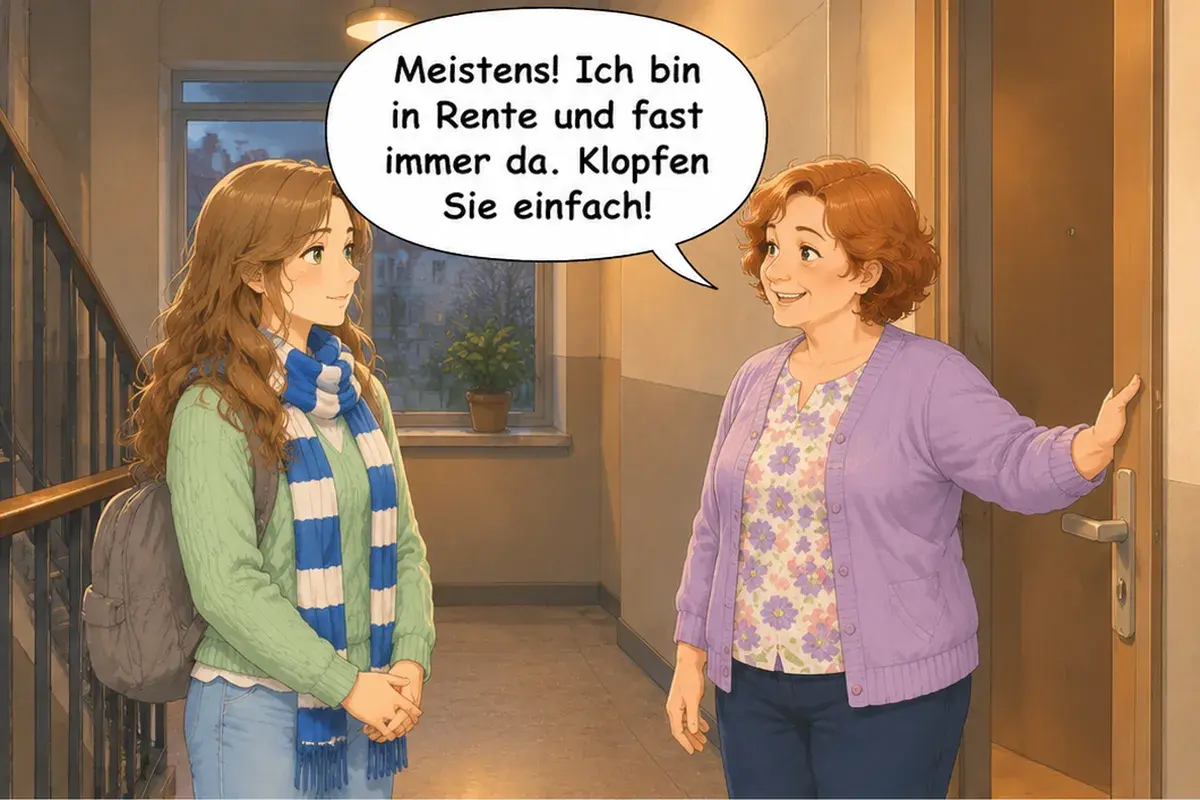
- Frau Petersen
Meistens! Ich bin in Rente und fast immer da. Klopfen Sie einfach!
Mostly! I'm retired and almost always home. Just knock! (formal)
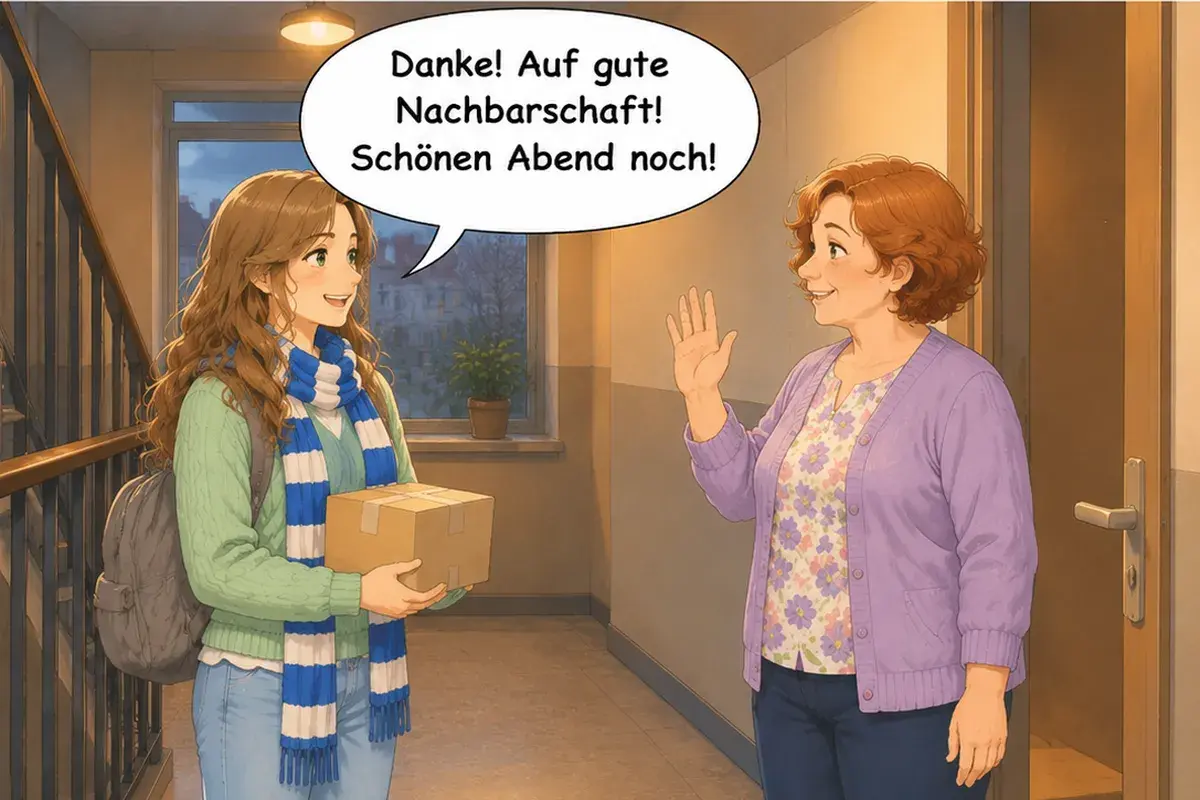
- Katja
Danke! Auf gute Nachbarschaft! Schönen Abend noch!
Thanks! Here's to good neighbors! Have a nice evening!
Grammar for this text
- Sind Sie die neue Nachbarin, die oben eingezogen ist? —
dieafter the comma means "who":Nachbarinis feminine, and she is the one doing the action (moving in). The conjugated verbistgoes to the end, after the past participleeingezogen(einziehen, to move in; the Perfekt (spoken past) usessein). - Der Paketbote, der heute kam, hat bei mir geklingelt. — the relative clause sits in the middle, with a comma on each side.
kamis the Präteritum (narrative past) ofkommen, the er form. After the relative clause the main verb comes back:hat … geklingelt. - Ach, die Lieferung, die ich bestellt habe! —
dieagain, but now it's the thing Katja ordered (the object), and the subject isich. The verbhabeis at the end. English can drop the pronoun ("the delivery I ordered"), German can't. - Er konnte das Paket nicht zustellen, da habe ich es angenommen. —
konnteis the Präteritum ofkönnen, the er form ("couldn't").dahere means "so, then" (an adverb), so the verbhabecomes right after it.angenommenis the past participle ofannehmen(to accept, to take in):an-is a separable prefix, soge-goes between the prefix and the stem; the stem is irregular, likenehmen. - Wir sind uns noch nie begegnet. —
begegnen(to run into, to meet by chance) takes the dative:unsmeans "each other" here. The Perfekt usessein, and the participlebegegnethas noge-. - den ich oft im Treppenhaus sehe — Katja sees the man (he's the object), so
den, like "whom". dem alle vertrauen —vertrauentakes the dative, sodem, like "to whom". - Keine Ursache — "don't mention it". Auf gute Nachbarschaft! — a wish when you meet new neighbors: "here's to good neighbors!"
Words and grammar of the unit: Get to know your neighbors.
Learn the words from the texts with flashcards
In the app, you can tap any word in a text to see its translation, forms and examples, and new words stick with flashcards. 15 minutes a day.
Start for freeEverything is open for free. No card needed to sign up.