

German dialogue with translation · B1 · 16 lines
Könntest du mir sagen, ob der Nudelsalat vegan ist? Could you tell me if the pasta salad is vegan?
Comic · 16 panels
- Katja
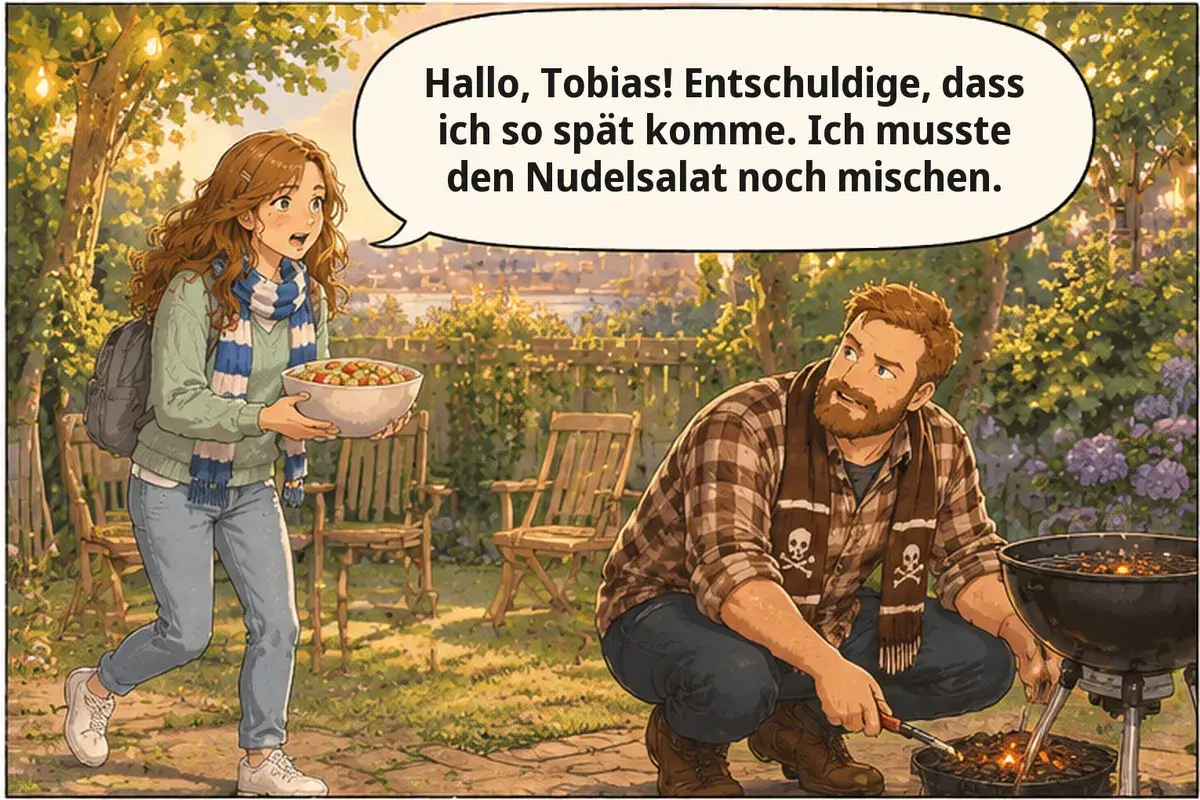
Hallo, Tobias! Entschuldige, dass ich so spät komme. Ich musste den Nudelsalat noch mischen.
Hi, Tobias! Sorry I'm so late. I still had to mix the pasta salad.

- Tobias
Moin! Stell die Schüssel irgendwo auf den Tisch. Die Kohle ist schon heiß.
Hi! Put the bowl anywhere on the table. The charcoal is already hot.

- Katja
Soll ich das Brot schneiden? Ich weiß nur nicht, wie viele Scheiben jeder isst.
Should I slice the bread? I just don't know how many slices everyone eats.
- Tobias
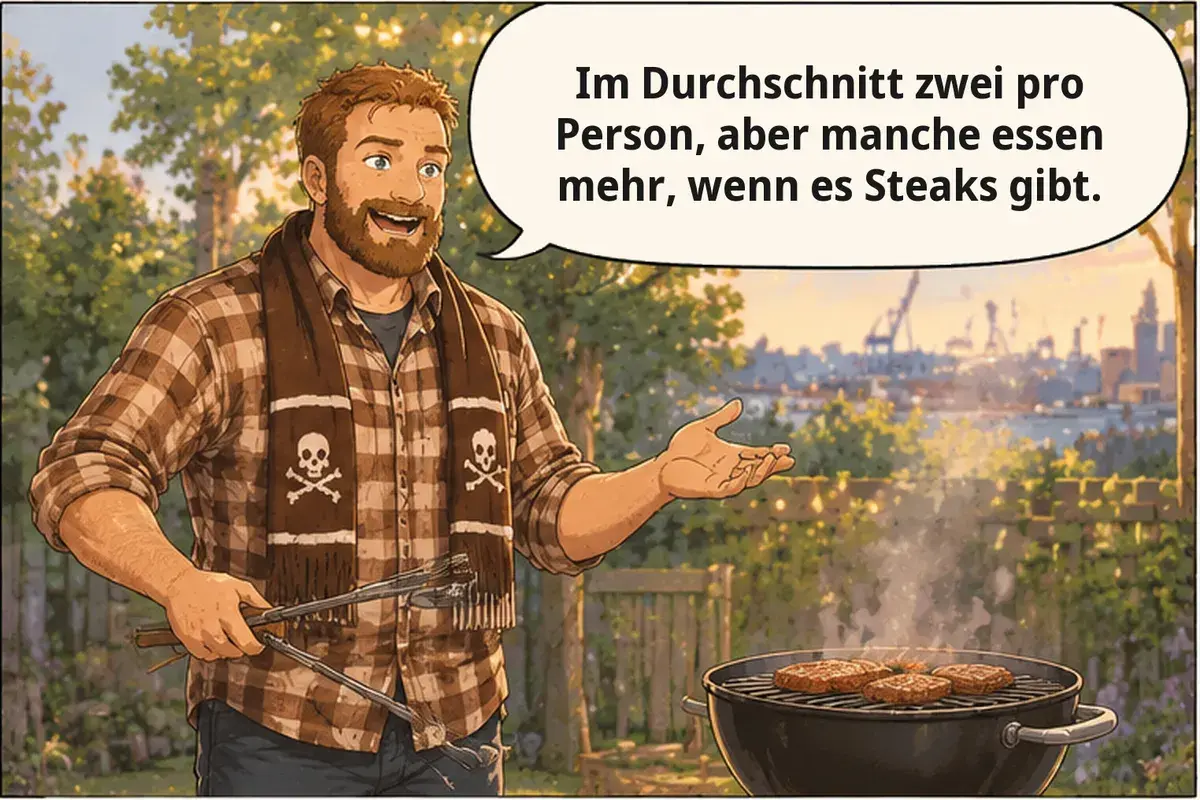
Im Durchschnitt zwei pro Person, aber manche essen mehr, wenn es Steaks gibt.
On average, two per person, but some people eat more when there are steaks.
- Katja
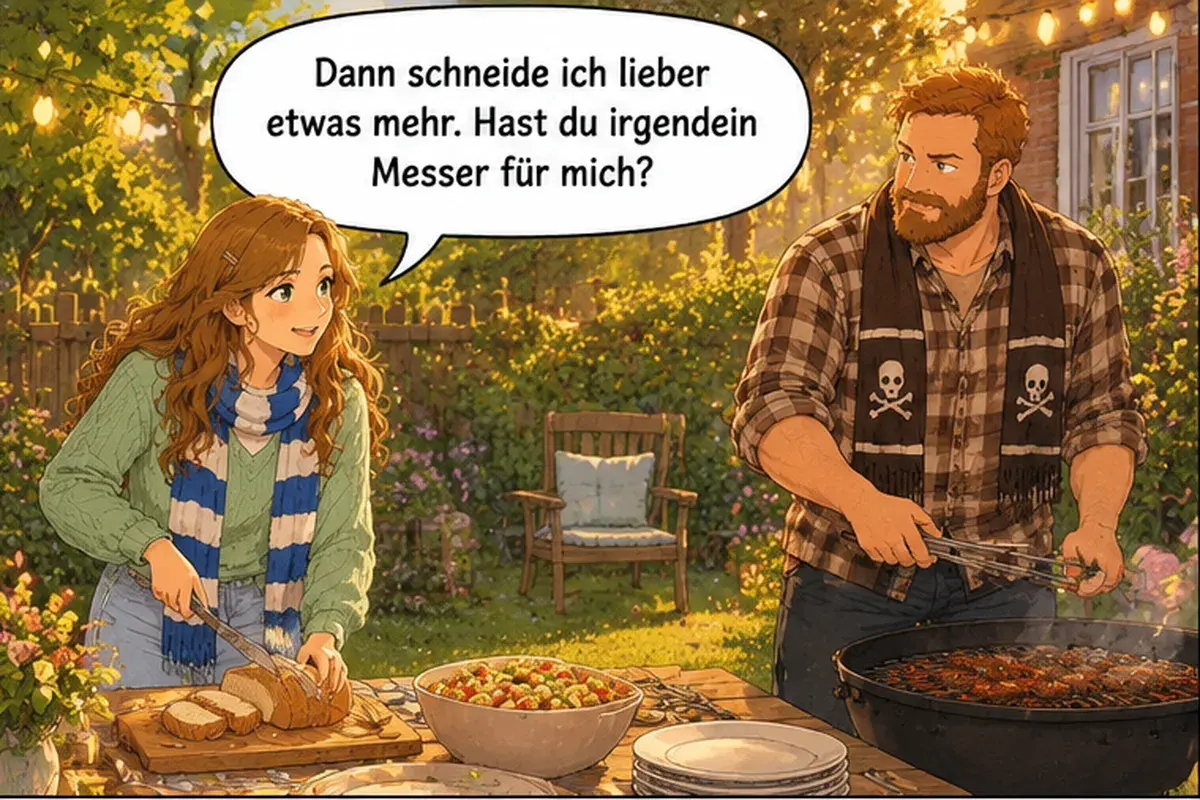
Dann schneide ich lieber etwas mehr. Hast du irgendein Messer für mich?
Then I'd better cut a bit more. Do you have any kind of knife for me?

- Tobias
Messer, Gabeln und Löffel liegen dort im Korb.
Knives, forks, and spoons are over there in the basket.

- Nachbar
Entschuldigung, ich wohne nebenan. Könntest du mir sagen, ob der Nudelsalat vegan ist?
Excuse me, I live next door. Could you tell me if the pasta salad is vegan?

- Katja
Ja, ganz ohne Ei. Die Soße ist mit Zitrone, deshalb ist sie etwas sauer.
Yes, no egg at all. The dressing has lemon in it, so it's a little sour.

- Nachbar
Danke! Dieses Jahr gibt es so viele Mücken, dass man draußen nicht in Ruhe sitzen kann.
Thanks! There are so many mosquitoes this year that you can't sit outside in peace.

- Tobias
Ja, leider. Ich habe mehrere Kerzen angezündet, aber manche Mücken kümmern sich nicht darum.
Yeah, unfortunately. I lit several candles, but some mosquitoes don't care.

- Katja
Setzen wir uns auf den Rasen? Die Stühle sind alle besetzt, und dort ist mehr Platz.
Shall we sit on the lawn? The chairs are all taken, and there's more room over there.
- Tobias
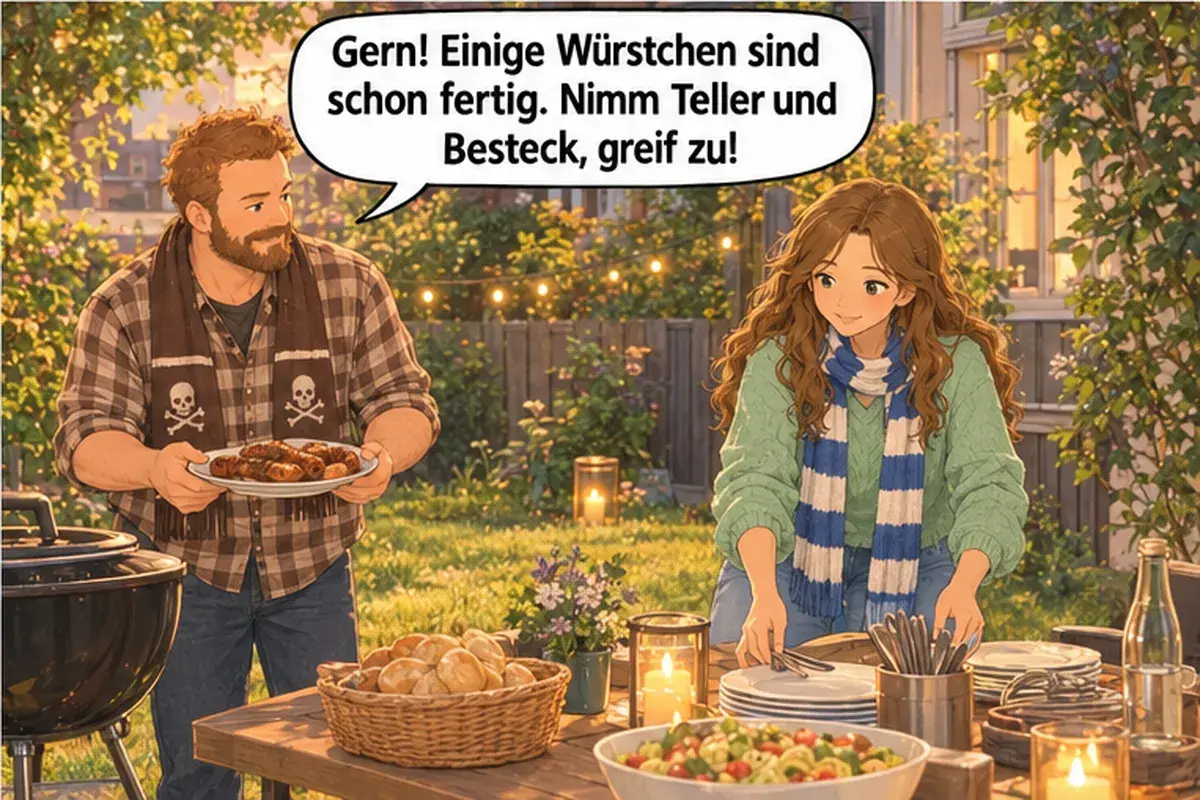
Gern! Einige Würstchen sind schon fertig. Nimm Teller und Besteck, greif zu!
Sure! A few sausages are already done. Take a plate and silverware, help yourself!

- Nachbar
Lass es dir schmecken! Pfeffer und Ketchup stehen hinten auf dem Tisch.
Enjoy your meal! Pepper and ketchup are at the back of the table.

- Katja
Sieh mal, von meinem Nudelsalat ist schon die Hälfte weg, obwohl ich noch nichts gegessen habe!
Look, half of my pasta salad is already gone, even though I haven't eaten anything yet!

- Tobias
Dann hat er allen geschmeckt! Ich würde die Musik gern lauter machen, wenn es niemanden stört.
Then everyone liked it! I'd like to turn the music up, if it doesn't bother anyone.

- Nachbar
Meinetwegen ruhig lauter! Ich bin ja hier und nicht zu Hause.
Fine with me, go ahead and turn it up! After all, I'm here and not at home.
Grammar for this text
- Stell die Schüssel irgendwo auf den Tisch. —
irgendwomeans "somewhere, it doesn't matter where." But in Hast du irgendein Messer für mich?irgendeinchanges likeein:das Messerstaysirgendein Messerin the accusative. - Ich weiß nur nicht, wie viele Scheiben jeder isst. — an indirect question: after
wie vielethe verb goes to the end (isst). - Messer, Gabeln und Löffel liegen dort im Korb. —
MesserandLöffeldon't change in the plural, butGabelgets-n. - Könntest du mir sagen, ob der Nudelsalat vegan ist? —
könntestis the polite form (the Konjunktiv II (would-form)) ofkönnen: "could you."obmeans "if" or "whether," with the verb at the end. Same idea in Ich würde die Musik gern lauter machen, wenn es niemanden stört. —würde+machenis "I would make";niemandenis "no one" (störentakes the accusative). - Dieses Jahr gibt es so viele Mücken, dass man draußen nicht in Ruhe sitzen kann. —
so viele …, dass …is "so many …, that …"; the verbs go to the end:sitzen kann.manis "you" or "people" in general, andin Ruheis "in peace." - Ich habe mehrere Kerzen angezündet, aber manche Mücken kümmern sich nicht darum. —
angezündetis the past participle ofanzünden: thegegoes between the prefix and the stem.sich kümmern umis "to care about," anddarumis "about it": the mosquitoes don't care about the candles. - Sieh mal, von meinem Nudelsalat ist schon die Hälfte weg, obwohl ich noch nichts gegessen habe! —
die Hälfteis "half."obwohlis "although," with the verb at the end (gegessen habe).
Words and grammar of the unit: Go to a barbecue at a friend's place.
Learn the words from the texts with flashcards
In the app, you can tap any word in a text to see its translation, forms and examples, and new words stick with flashcards. 15 minutes a day.
Start for freeEverything is open for free. No card needed to sign up.