

German dialogue with translation · B1 · 14 lines
Was ist eigentlich Abseits? What is offside, anyway?
Comic · 14 panels
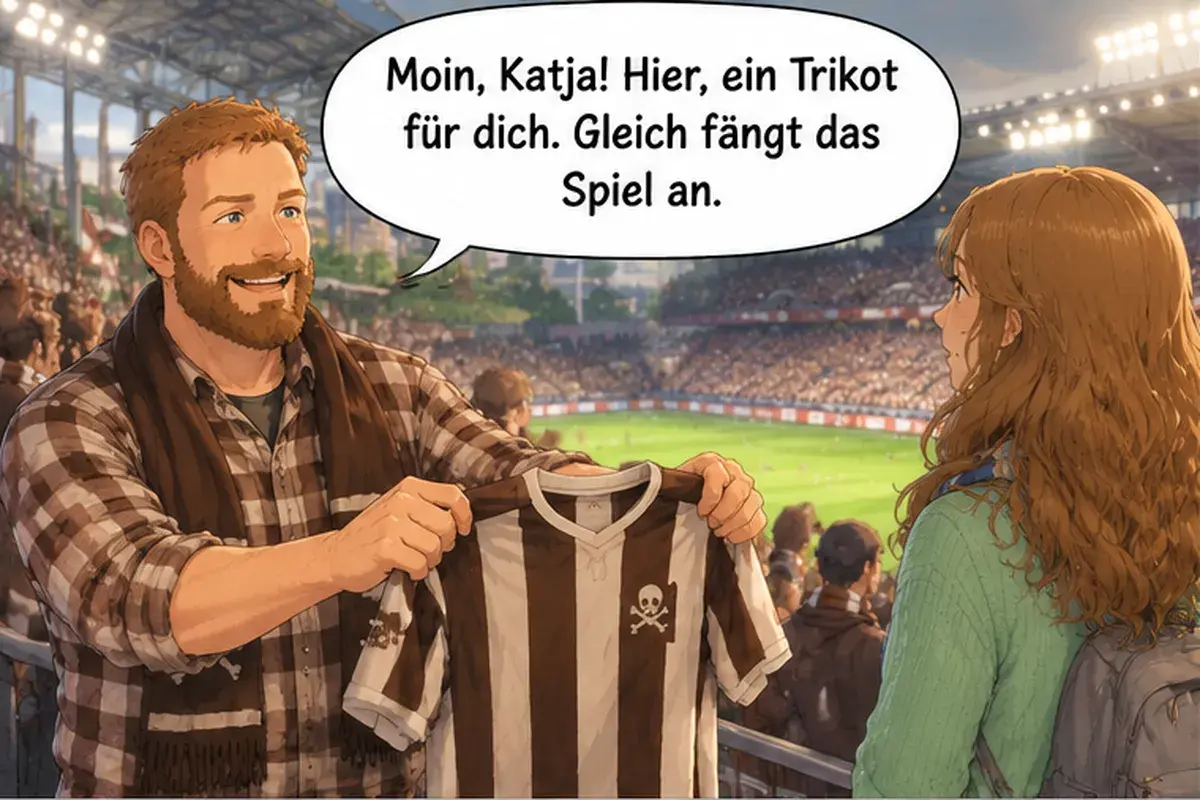
- Tobias
Moin, Katja! Hier, ein Trikot für dich. Gleich fängt das Spiel an.
Hi, Katja! Here, a jersey for you. The game's about to start.
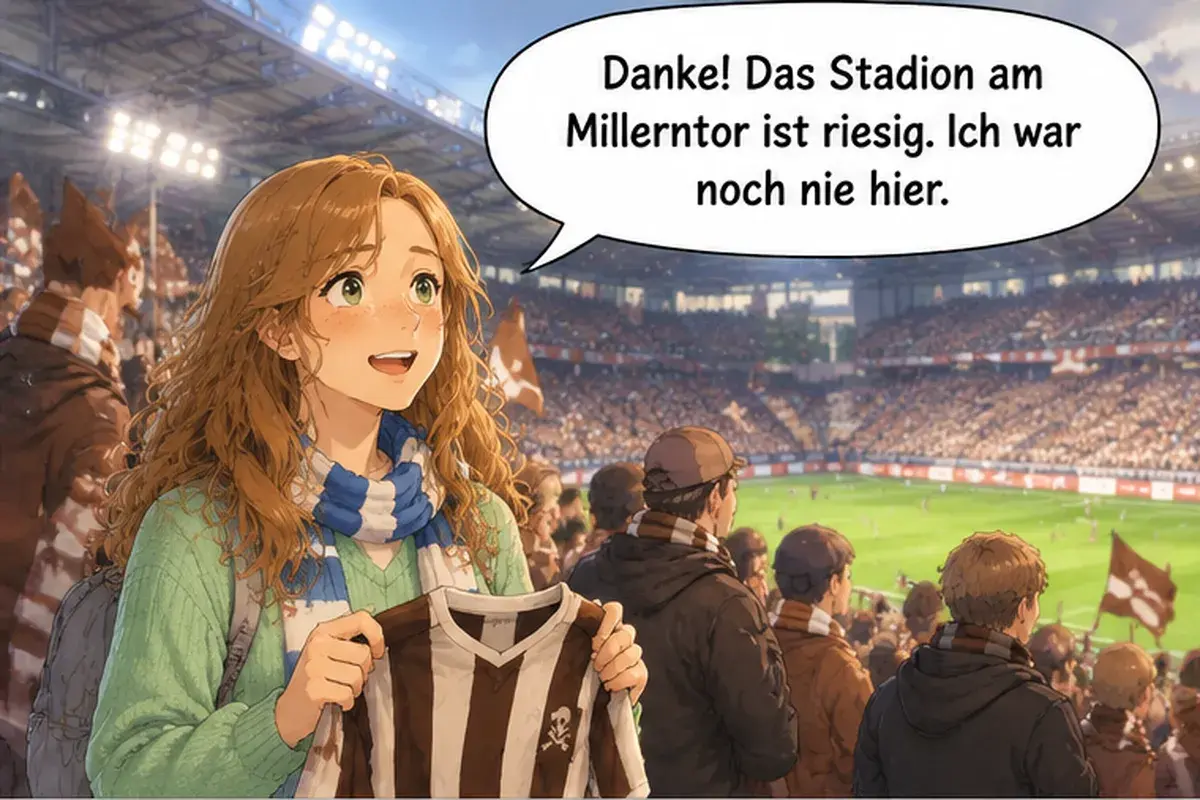
- Katja
Danke! Das Stadion am Millerntor ist riesig. Ich war noch nie hier.
Thanks! The stadium at Millerntor is huge. I've never been here before.
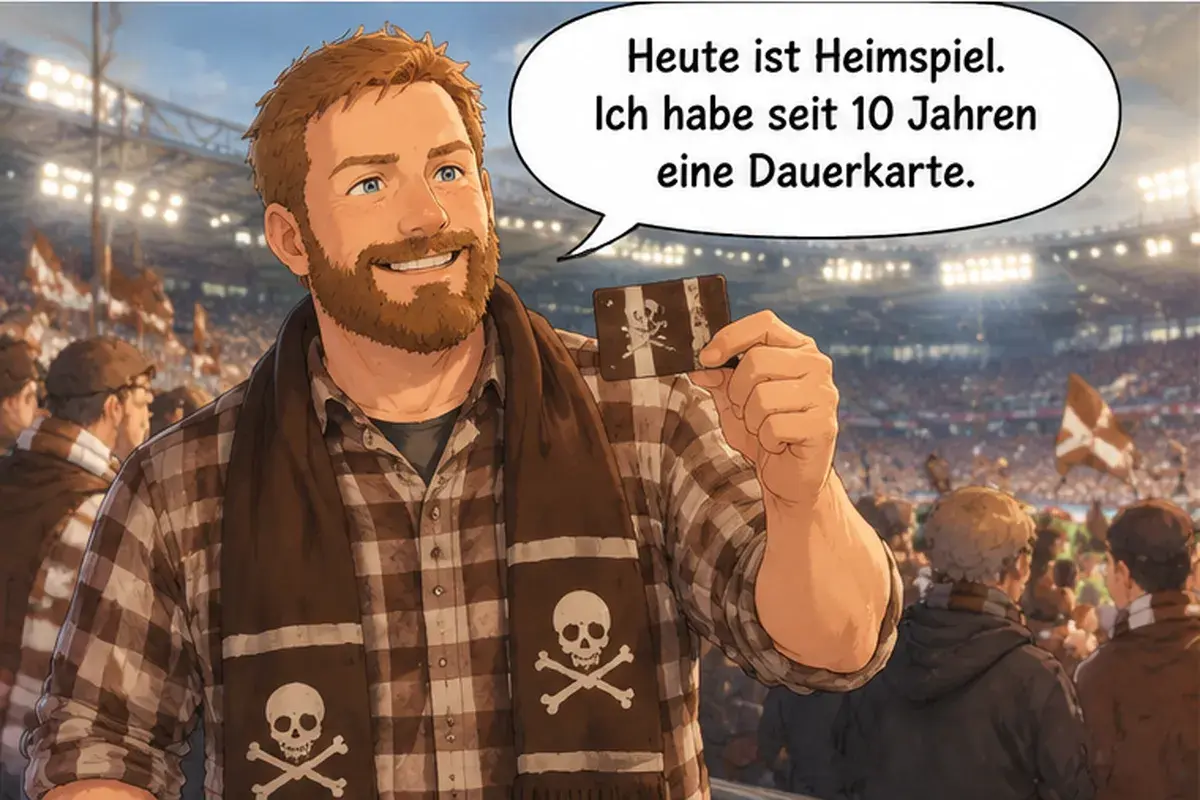
- Tobias
Heute ist Heimspiel. Ich habe seit 10 Jahren eine Dauerkarte.
Today is a home game. I've had a season ticket for 10 years.

- Katja
10 Jahre! Du bist wirklich ein treuer Fan von St. Pauli.
10 years! You're a really loyal fan of St. Pauli.
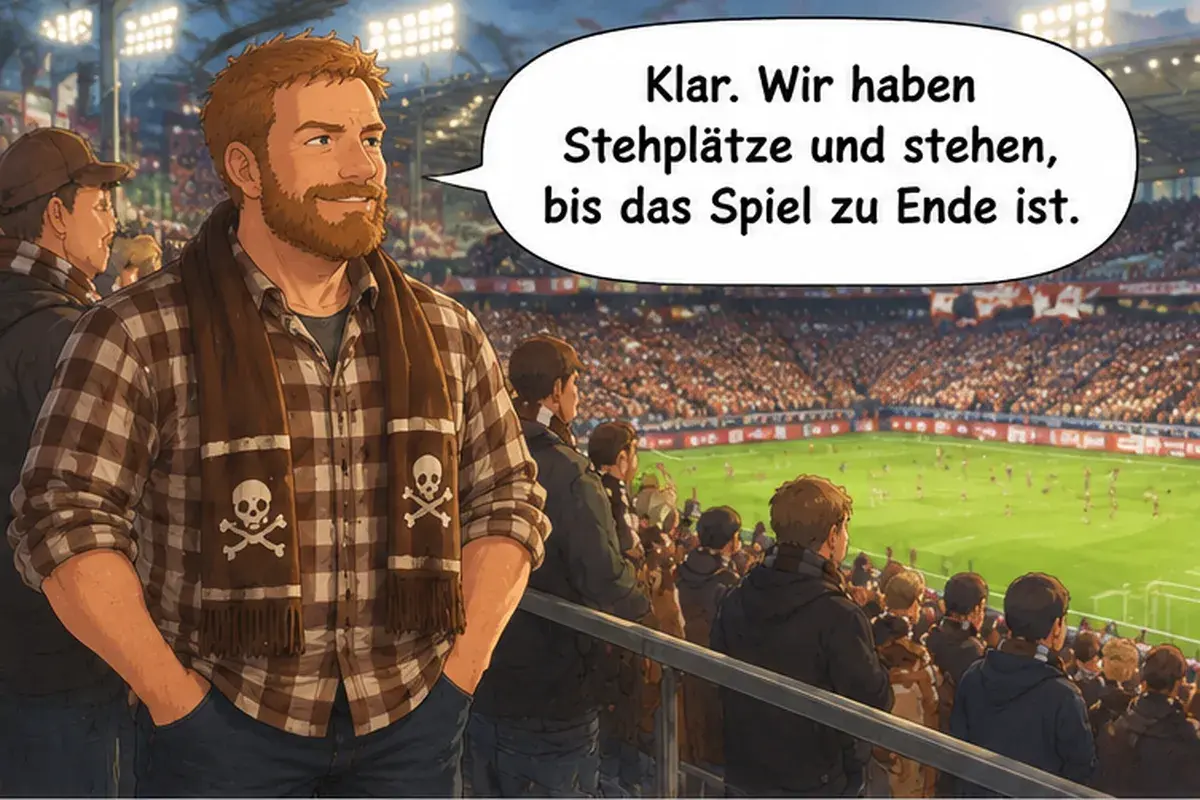
- Tobias
Klar. Wir haben Stehplätze und stehen, bis das Spiel zu Ende ist.
Sure. We have standing-room spots, and we stand until the game is over.
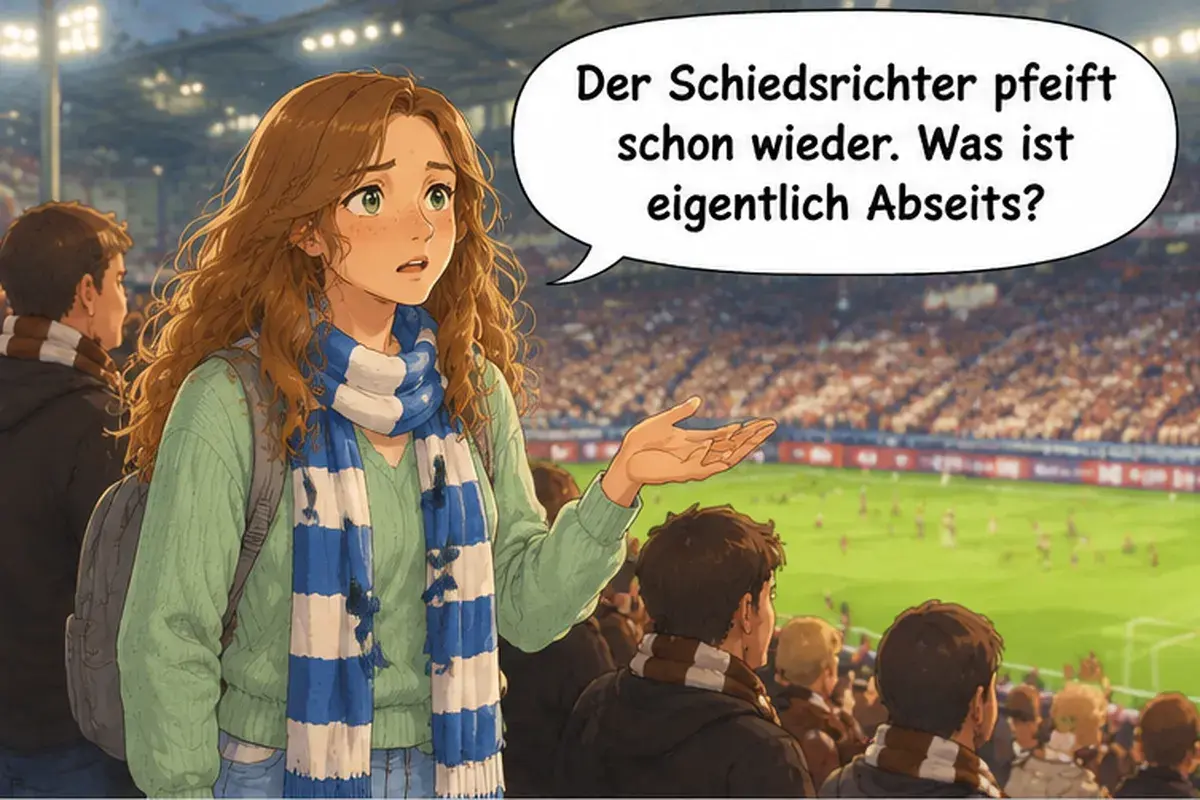
- Katja
Der Schiedsrichter pfeift schon wieder. Was ist eigentlich Abseits?
The referee is blowing the whistle again. What is offside, anyway?
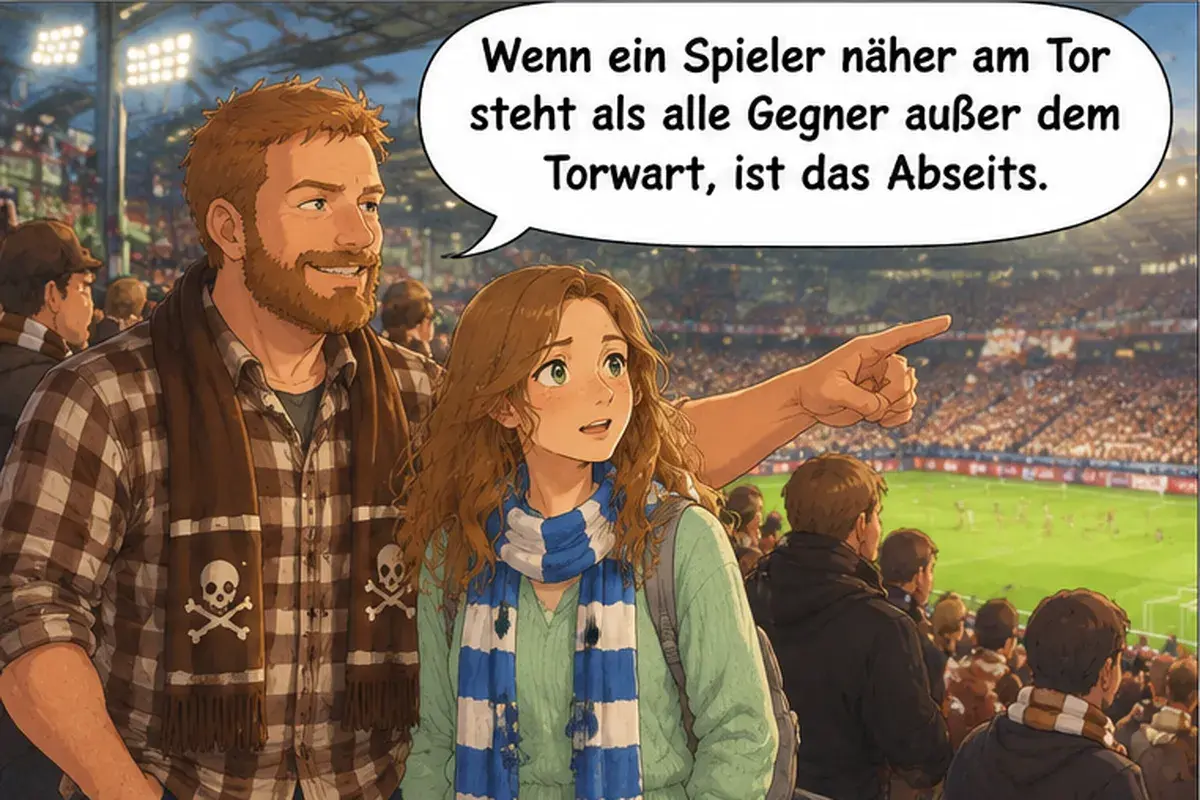
- Tobias
Wenn ein Spieler näher am Tor steht als alle Gegner außer dem Torwart, ist das Abseits.
If a player is closer to the goal than all the opponents except the goalkeeper, that's offside.
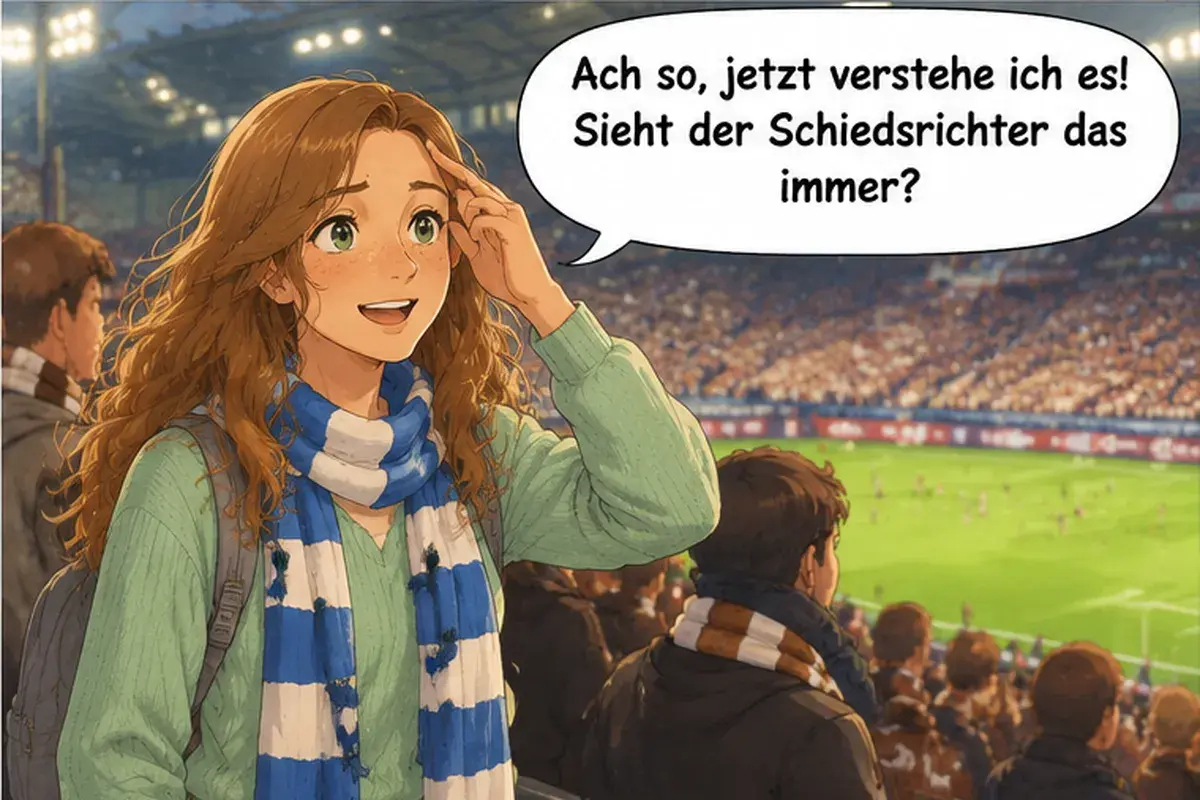
- Katja
Ach so, jetzt verstehe ich es! Sieht der Schiedsrichter das immer?
Oh, I see, now I get it! Does the referee always see that?
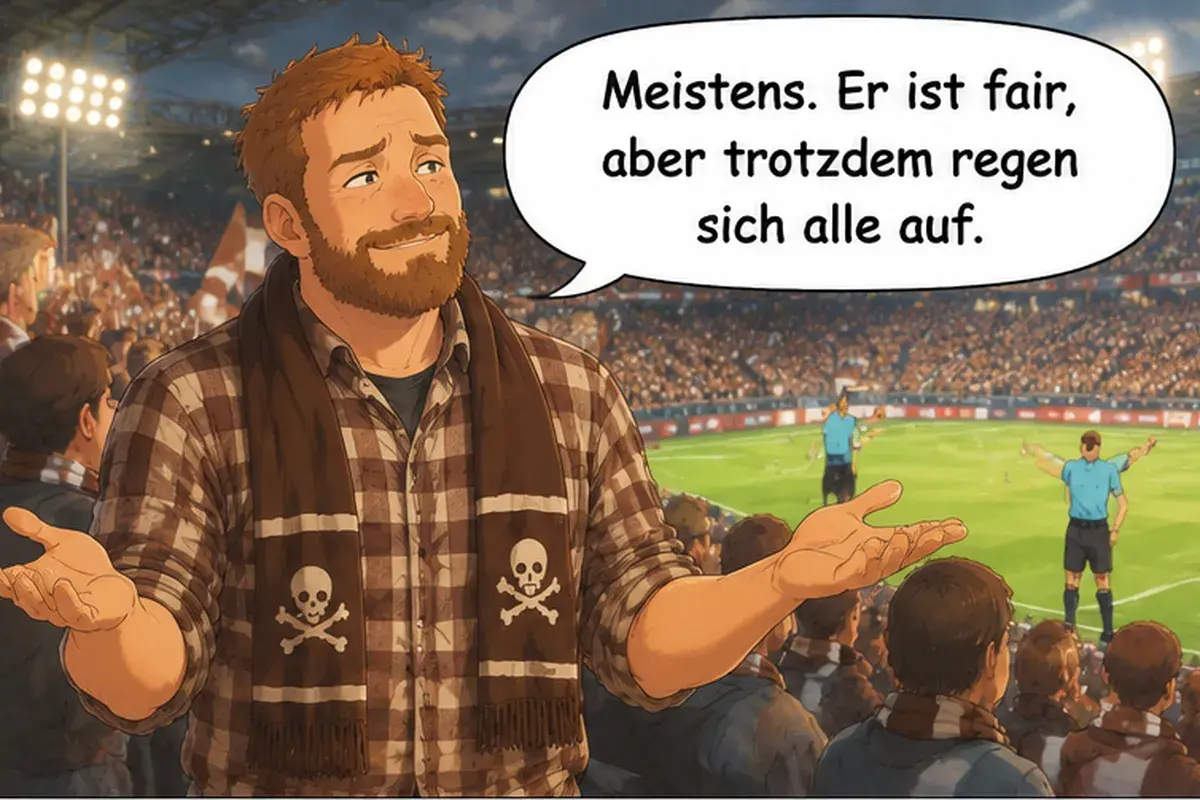
- Tobias
Meistens. Er ist fair, aber trotzdem regen sich alle auf.
Mostly. He's fair, but everyone gets upset anyway.
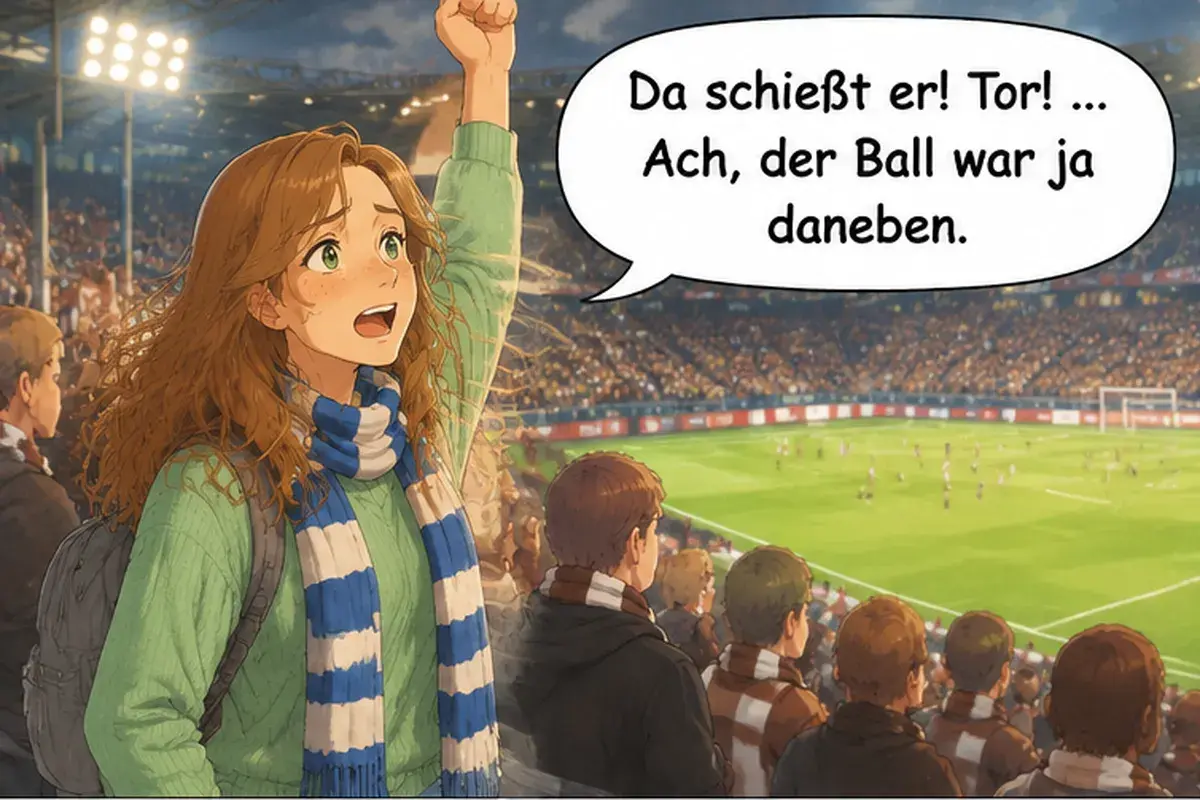
- Katja
Da schießt er! Tor! … Ach, der Ball war ja daneben.
There he shoots! Goal! ... Oh, the ball went wide.
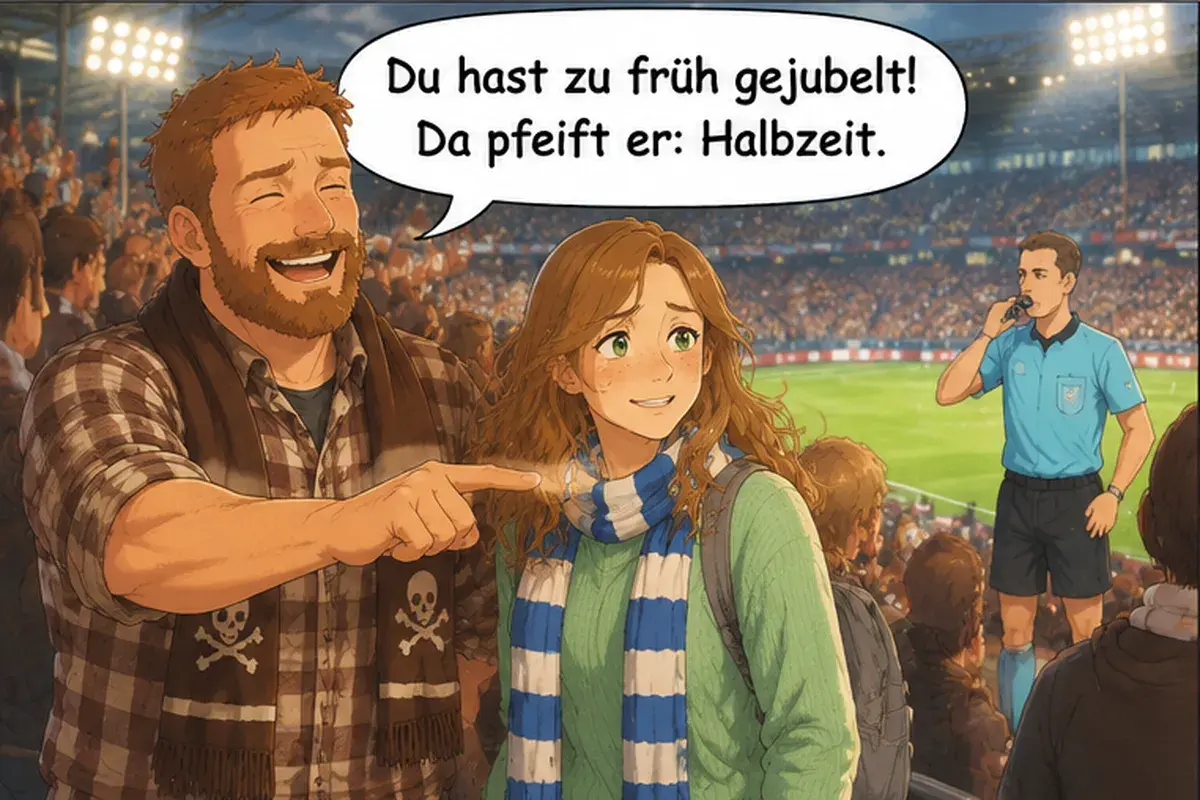
- Tobias
Du hast zu früh gejubelt! Da pfeift er: Halbzeit.
You cheered too early! There he blows the whistle: halftime.
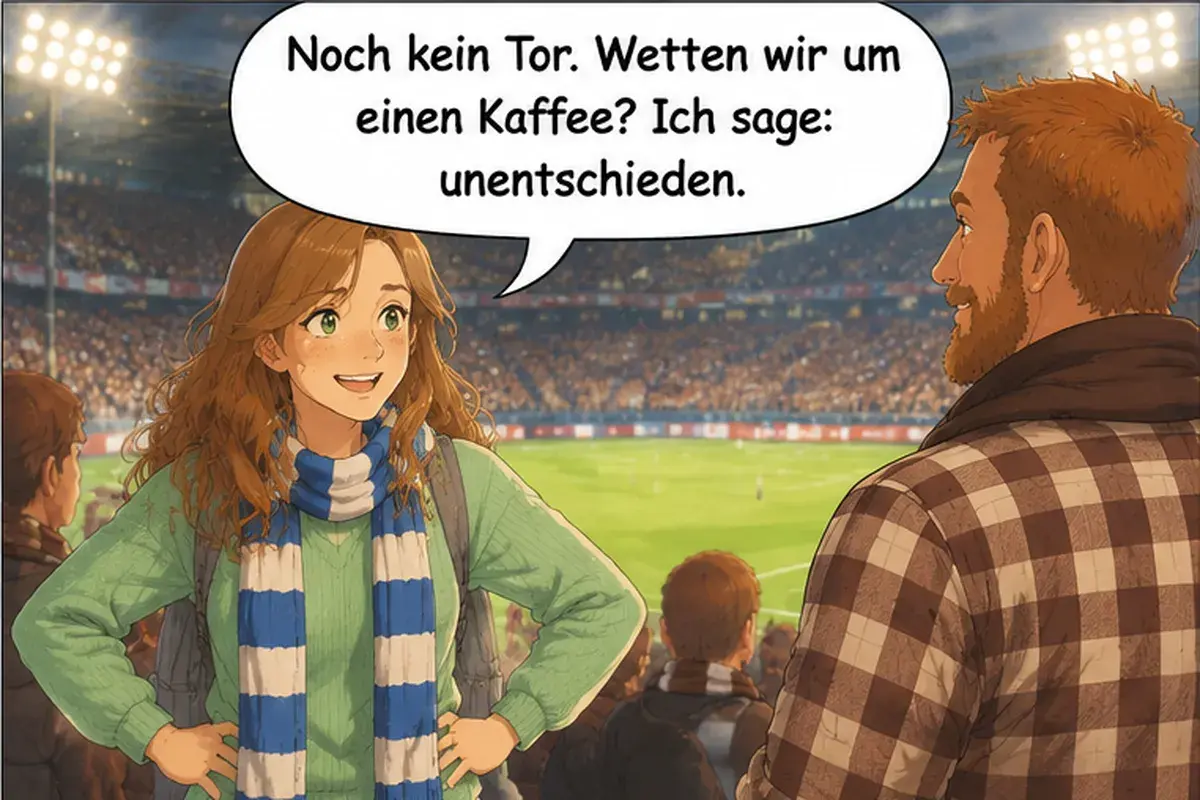
- Katja
Noch kein Tor. Wetten wir um einen Kaffee? Ich sage: unentschieden.
Still no goal. Want to bet a coffee on it? I say: a tie.
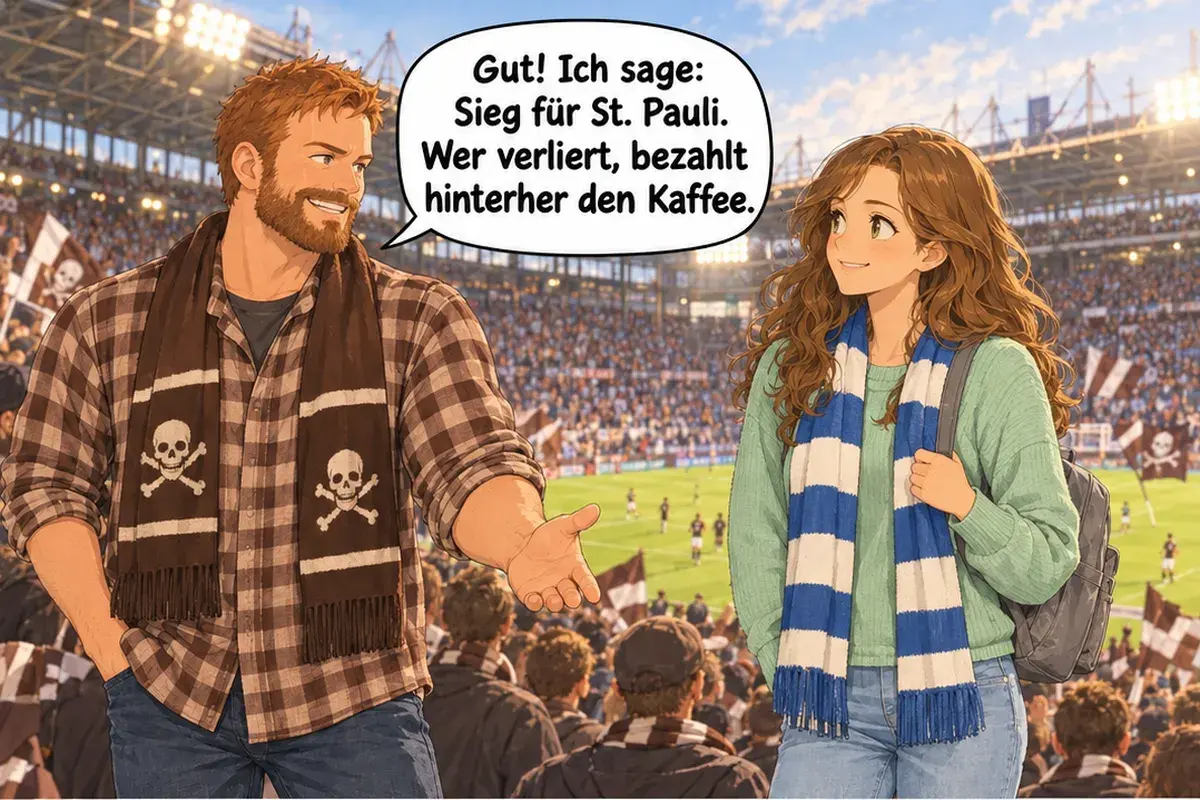
- Tobias
Gut! Ich sage: Sieg für St. Pauli. Wer verliert, bezahlt hinterher den Kaffee.
Good! I say: a win for St. Pauli. Whoever loses pays for the coffee afterward.
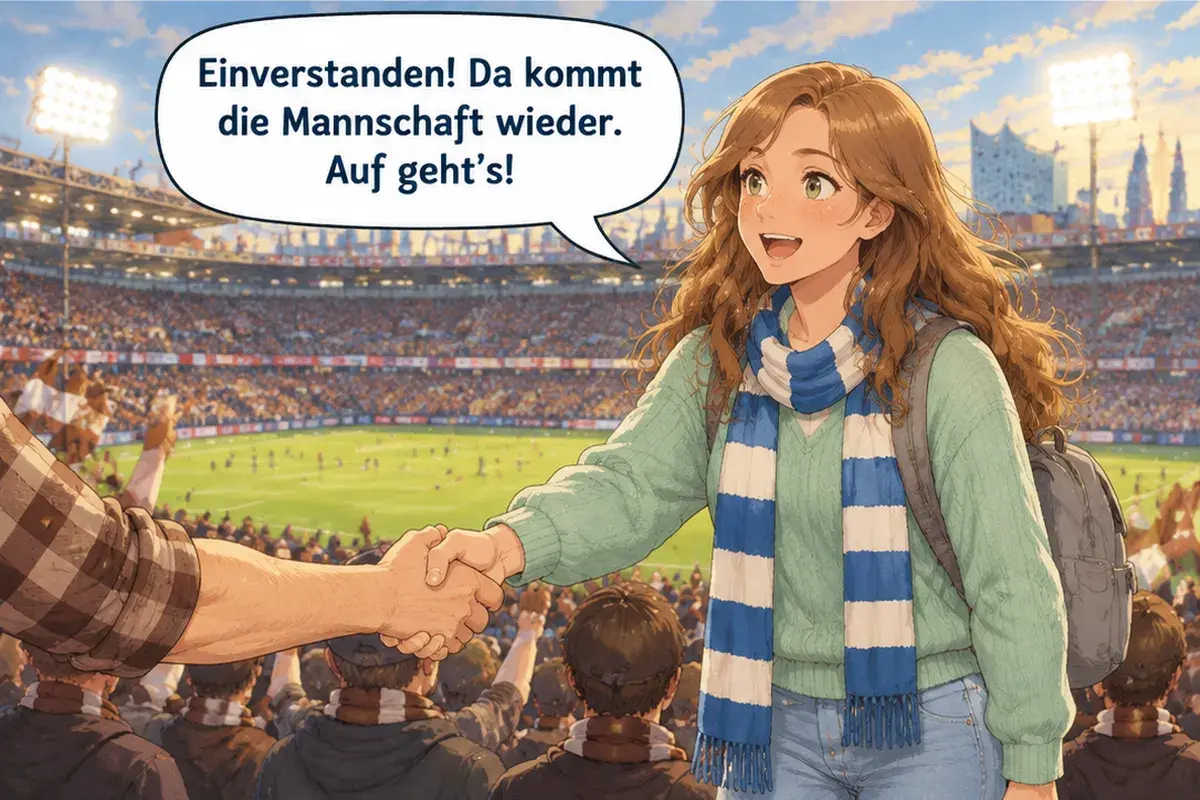
- Katja
Einverstanden! Da kommt die Mannschaft wieder. Auf geht's!
Agreed! Here comes the team again. Let's go!
Grammar for this text
- Ich habe seit 10 Jahren eine Dauerkarte — after
seitcomes the dative (10 Jahren), and the verb is in the present tense, because the action is still going on. English uses the present perfect here: "I've had a season ticket for 10 years." - Wir haben Stehplätze und stehen, bis das Spiel zu Ende ist —
bisis a conjunction here, "until", soistgoes to the end. There is no "not" in the German part, just like in English: "until the game is over." - Wenn ein Spieler näher am Tor steht als alle Gegner außer dem Torwart, ist das Abseits —
wennmeans "if": the rule is always true, and the verbstehtgoes to the end.näheris the comparative ofnah("closer").alsmeans "than" here, not "when";außer dem Torwartmeans "except the goalkeeper", andaußertakes the dative. This is simplified: in real games they look at where the player stands when the ball is passed. - Meistens. Er ist fair, aber trotzdem regen sich alle auf —
sich aufregen("to get upset") is a separable verb:regen … auf, andsichstands before the subjectalle. - Du hast zu früh gejubelt — the Perfekt (spoken past) of
jubeln:hast+gejubelt.zu frühmeans "too early". - Wetten wir um einen Kaffee? — the verb comes first, then
wir: this is a "let's" sentence. You bet on something withwetten um+ accusative.Einverstanden!means "Agreed!". - Auf geht's! — a set phrase,
geht'sis short forgeht es: "Let's go!" More about it in the unit grammar.
Words and grammar of the unit: Go to a soccer game.
Learn the words from the texts with flashcards
In the app, you can tap any word in a text to see its translation, forms and examples, and new words stick with flashcards. 15 minutes a day.
Start for freeEverything is open for free. No card needed to sign up.