

German dialogue with translation · A2 · 14 lines
Wir möchten Ihnen die Stelle anbieten We'd like to offer you the job
Comic · 14 panels
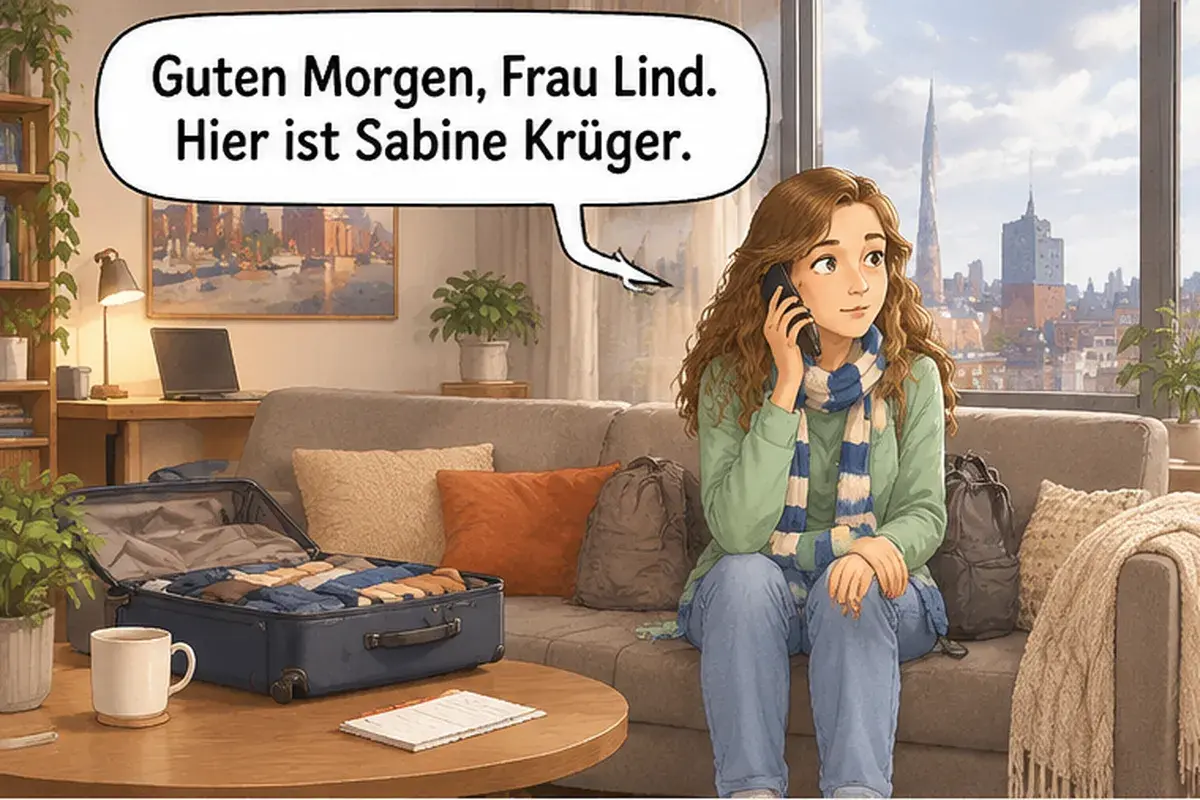
- Sabine
Guten Morgen, Frau Lind. Hier ist Sabine Krüger.
Good morning, Frau Lind. This is Sabine Krüger.
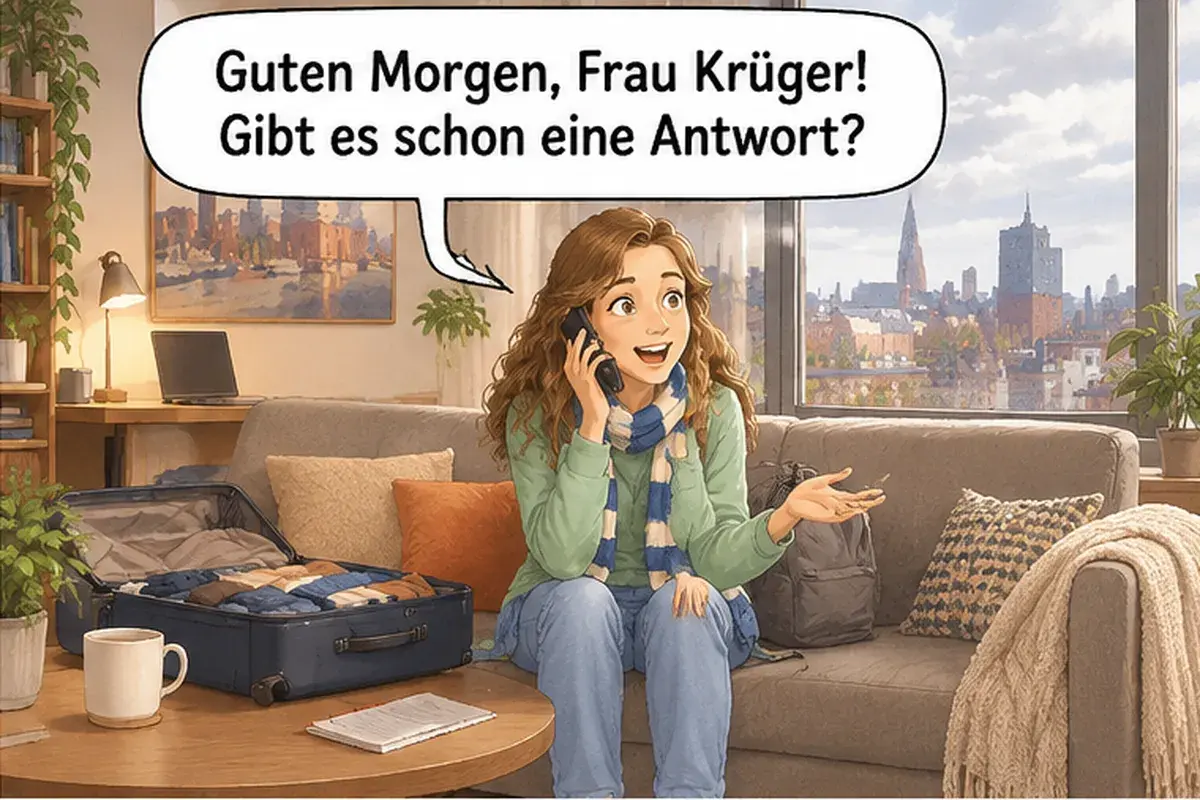
- Katja
Guten Morgen, Frau Krüger! Gibt es schon eine Antwort?
Good morning, Frau Krüger! Is there an answer yet?
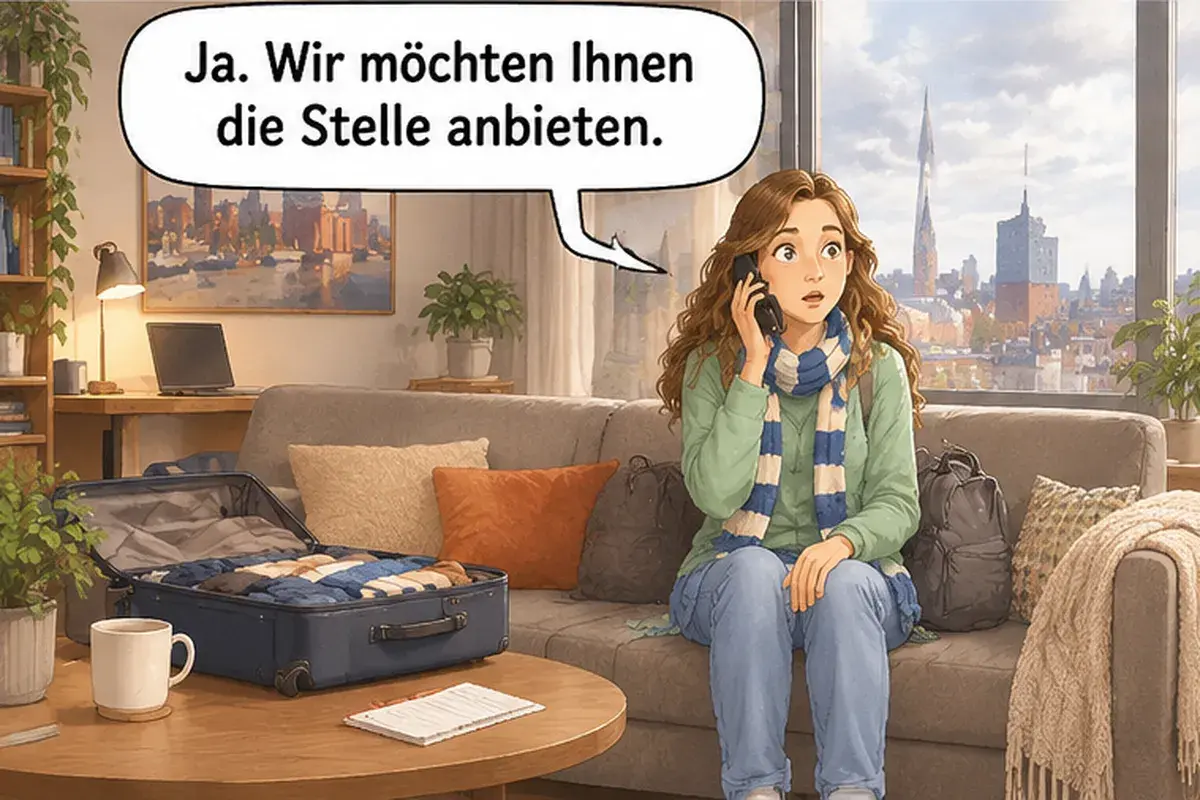
- Sabine
Ja. Wir möchten Ihnen die Stelle anbieten.
Yes. We'd like to offer you the job. (formal)
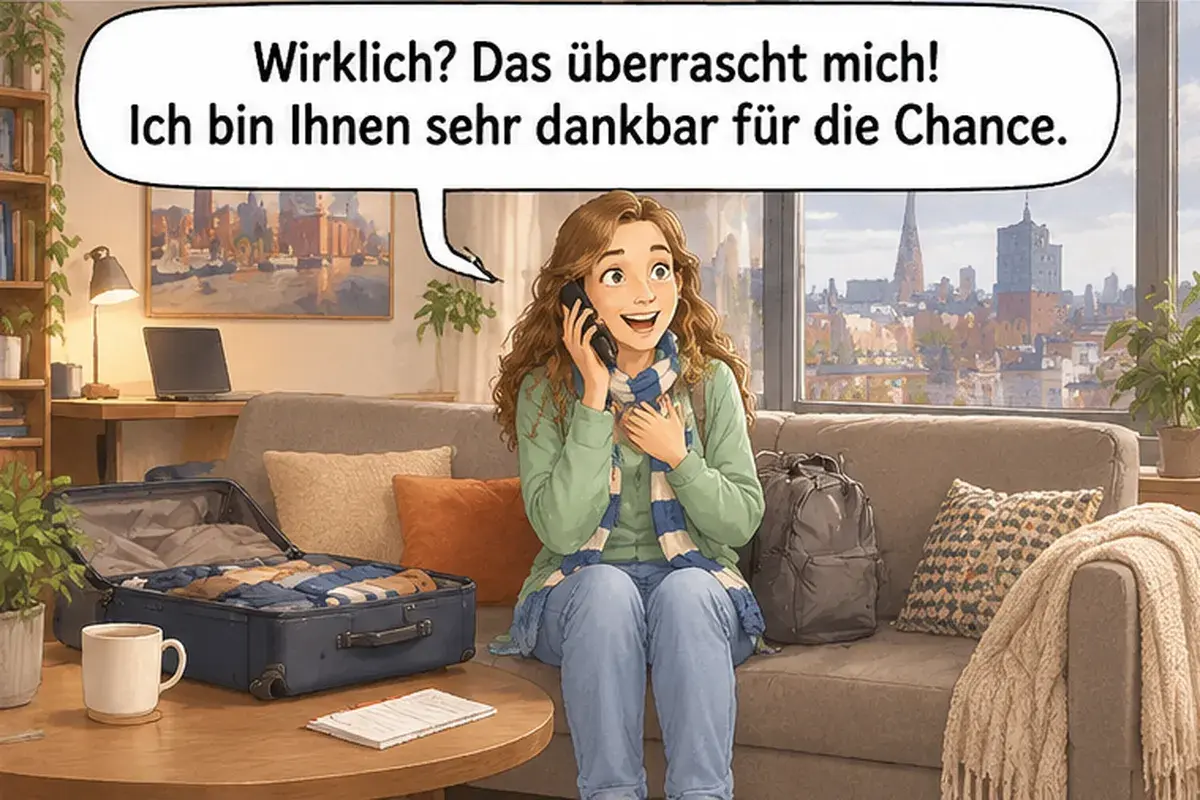
- Katja
Wirklich? Das überrascht mich! Ich bin Ihnen sehr dankbar für die Chance.
Really? That surprises me! I'm very grateful to you for the chance. (formal)
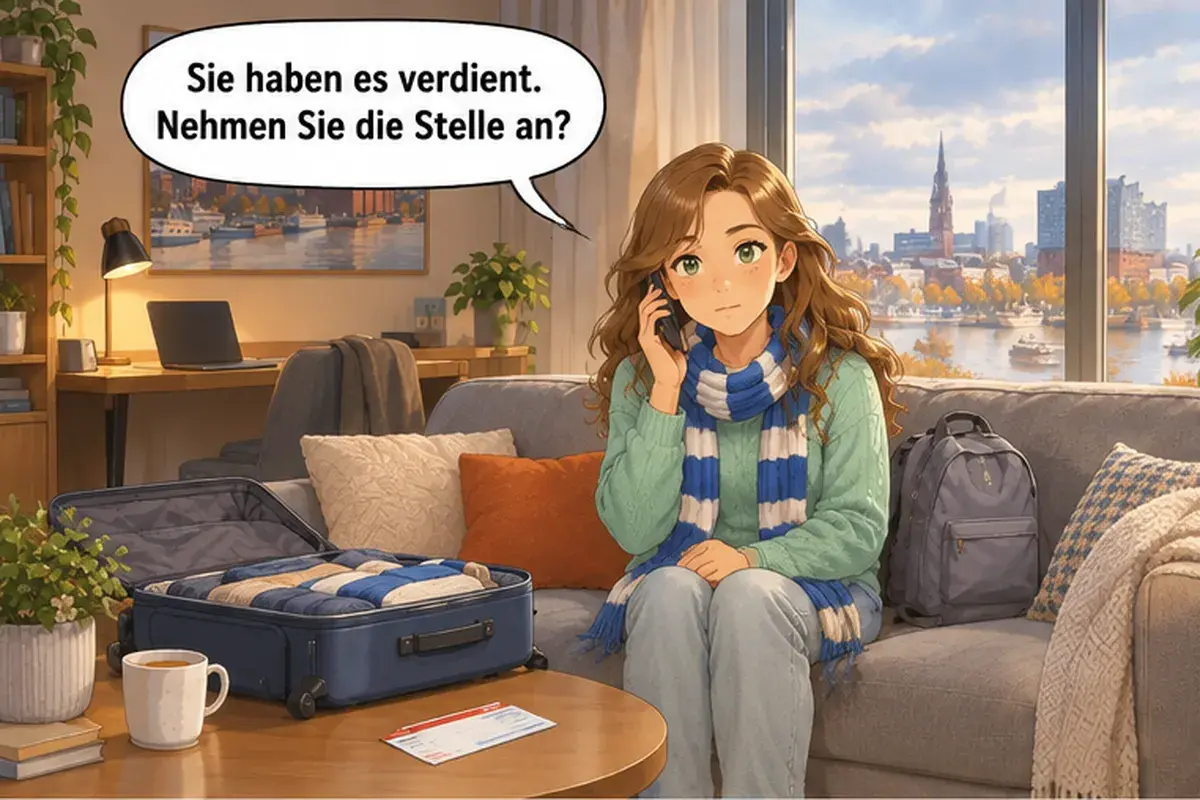
- Sabine
Sie haben es verdient. Nehmen Sie die Stelle an?
You've earned it. Are you accepting the job? (formal)

- Katja
Ja, ich nehme die Stelle sehr gern an!
Yes, I'm very happy to accept the job!
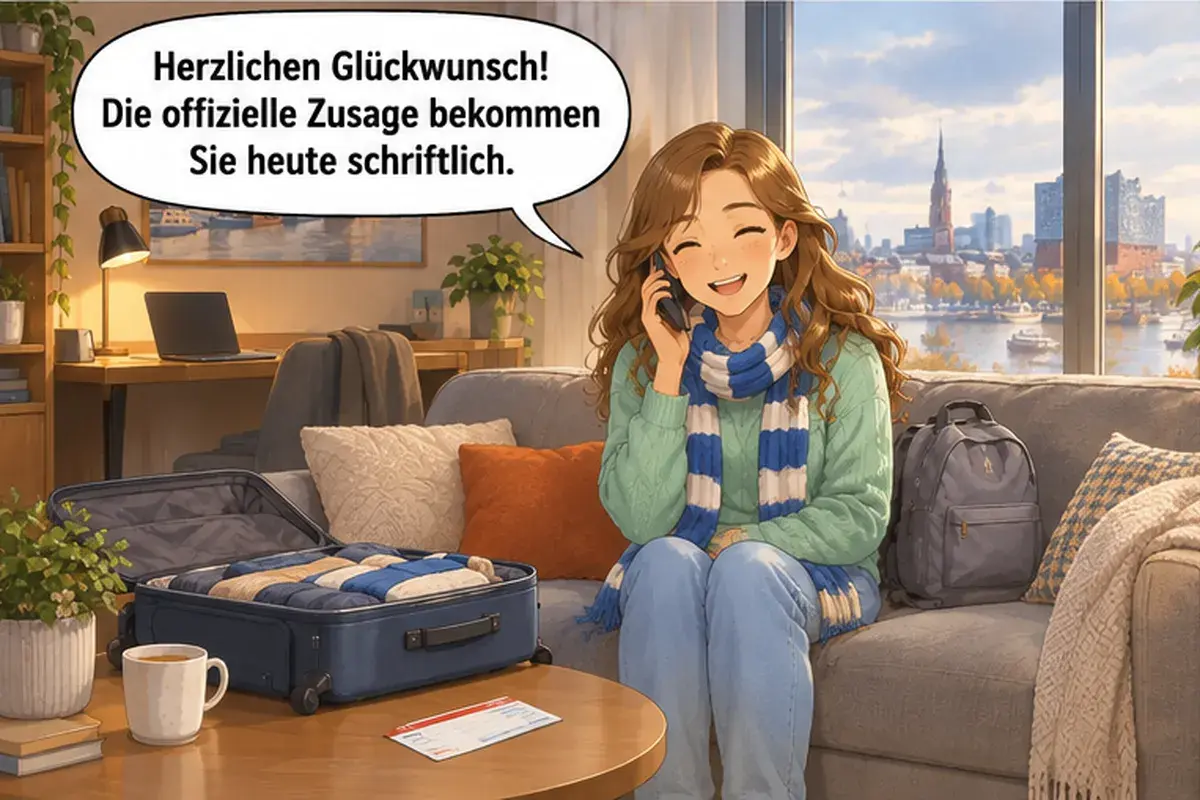
- Sabine
Herzlichen Glückwunsch! Die offizielle Zusage bekommen Sie heute schriftlich.
Congratulations! You'll get the official yes in writing today. (formal)

- Katja
Danke! Und der Vertrag? Muss ich ihn gleich unterschreiben?
Thanks! And the contract? Do I have to sign it right away?

- Sabine
Nein. Der Brief mit dem Vertrag kommt mit der Post.
No. The letter with the contract is coming by mail.
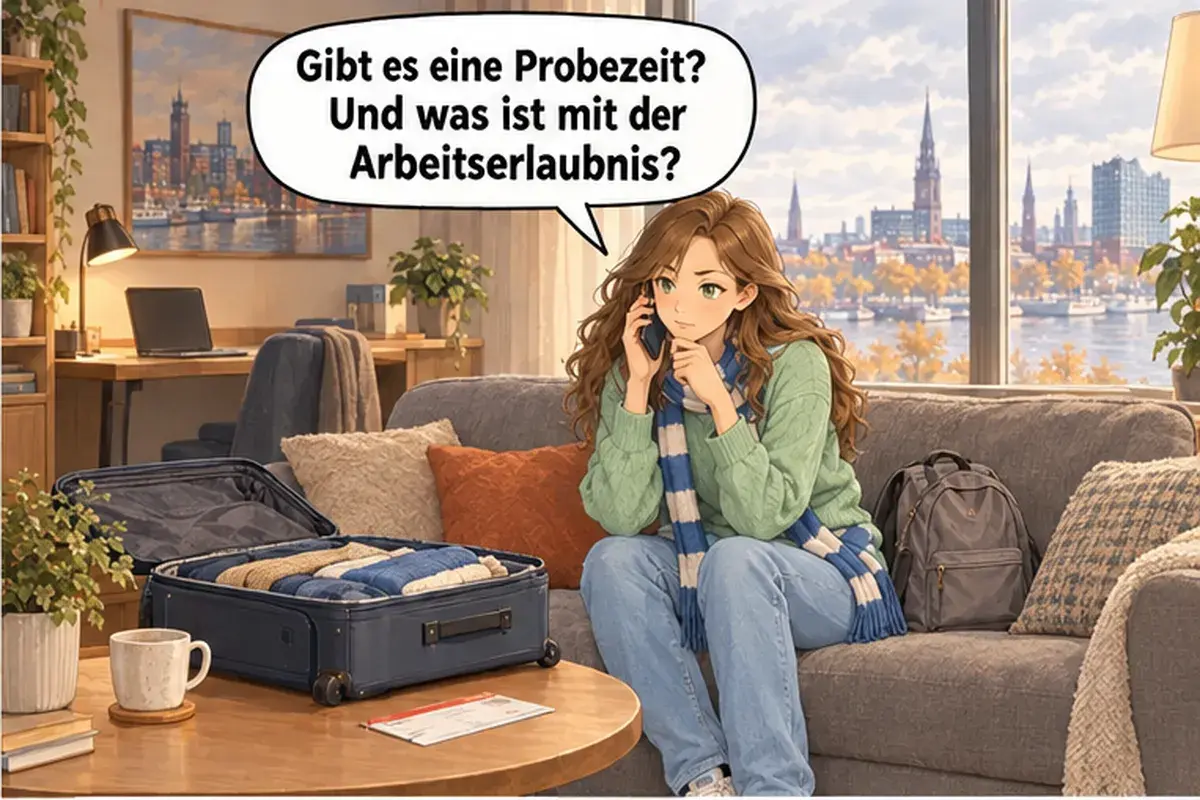
- Katja
Gibt es eine Probezeit? Und was ist mit der Arbeitserlaubnis?
Is there a probation period? And what about the work permit?
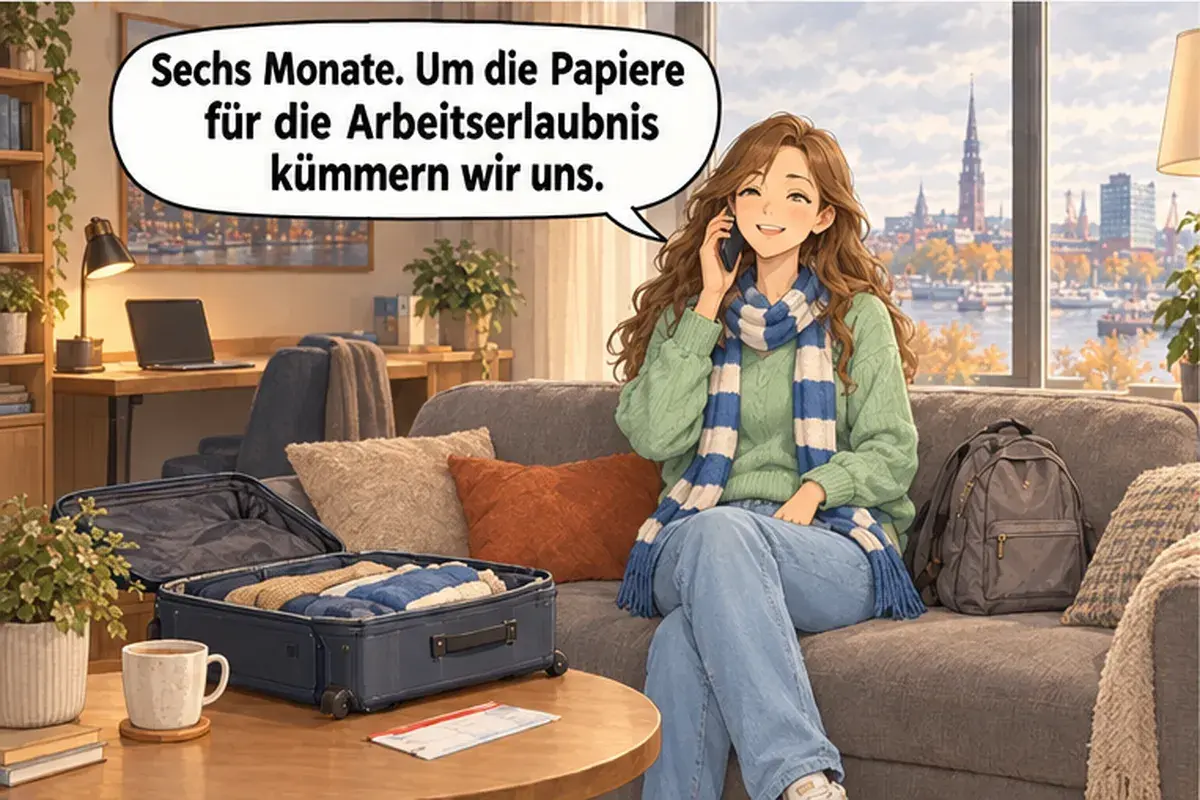
- Sabine
Sechs Monate. Um die Papiere für die Arbeitserlaubnis kümmern wir uns.
Six months. We'll take care of the papers for the work permit.
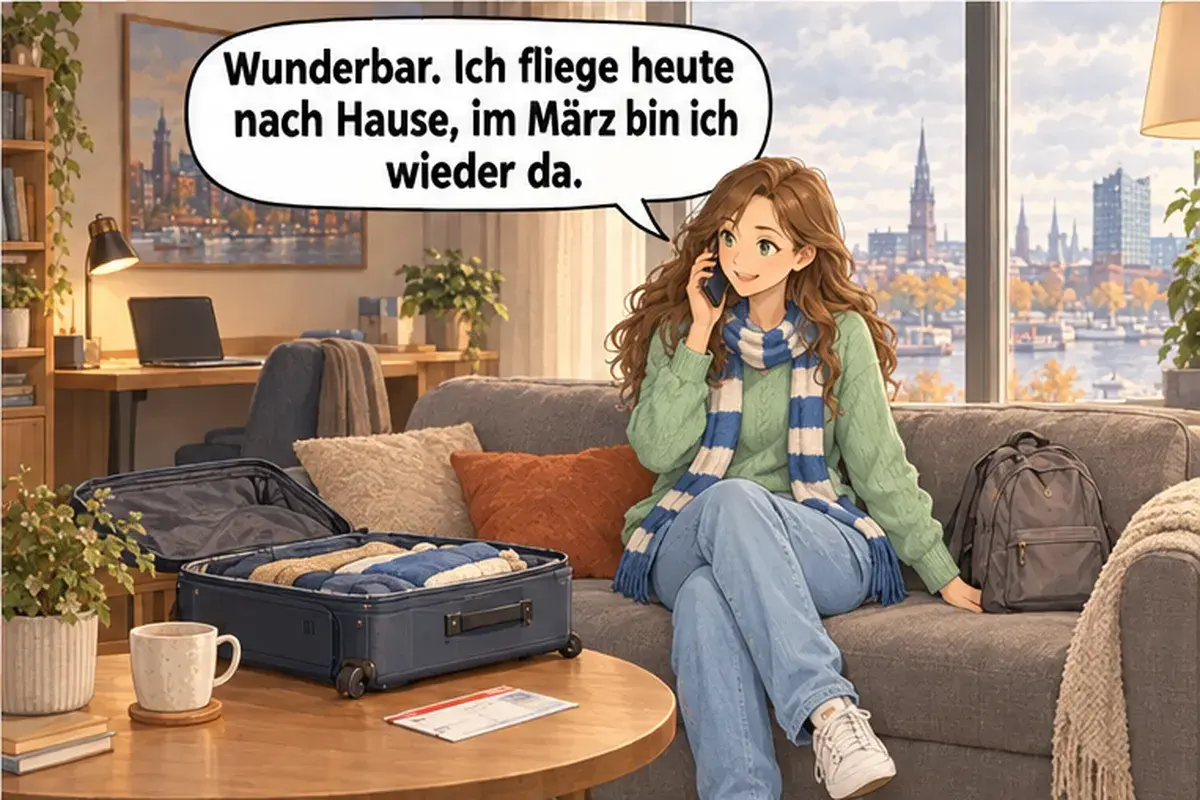
- Katja
Wunderbar. Ich fliege heute nach Hause, im März bin ich wieder da.
Wonderful. I'm flying home today, and in March I'll be back.

- Sabine
Kommen Sie gut nach Hause, Frau Lind! Bis März.
Get home safe, Frau Lind! See you in March. (formal)

- Katja
Danke, Frau Krüger! Auf Wiederhören!
Thank you, Frau Krüger! Goodbye!
Grammar for this text
- Hier ist Sabine Krüger — this is how you give your name on the phone: not
Ich bin …butHier ist …("this is …"), then your name. English does the same: "This is Sabine." - Wir möchten Ihnen die Stelle anbieten —
möchtenis the polite "would like" (A1, unit 4), soanbietengoes to the very end.Ihnenmeans "(to) you": the dative ofSie(unit 5), the person you offer something to. - Sie haben es verdient —
verdientis the past participle ofverdienen(to deserve).haben … verdientis the Perfekt (spoken past) (unit 1): "you've earned it".verdienenhas the inseparable prefixver-, so the participle has noge-.esmeans "it". - Nehmen Sie die Stelle an? —
annehmen(to accept) splits:nehmencomes first in the question, andangoes to the end. The same withich:ich nehme die Stelle sehr gern an. - Herzlichen Glückwunsch! — a set phrase for "Congratulations!", word for word "heartfelt wish of happiness". The
-enending never changes here: learn the phrase as one piece. To add the reason:Herzlichen Glückwunsch zur Zusage. - Um die Papiere für die Arbeitserlaubnis kümmern wir uns —
sich kümmern ummeans "to take care of":um+ the thing. The sentence starts with what they'll take care of, but the verbkümmernis still second, andwir unscome after it.Arbeitserlaubnis=Arbeit+Erlaubnis, and the gender comes from the last part:die. - Kommen Sie gut nach Hause — the wish for someone you call
Sie: the verb comes first, thenSie. To a friend you say it differently, see text 2.
Words and grammar of the unit: Accept a job offer and share the news.
Learn the words from the texts with flashcards
In the app, you can tap any word in a text to see its translation, forms and examples, and new words stick with flashcards. 15 minutes a day.
Start for freeEverything is open for free. No card needed to sign up.