

German dialogue with translation · A2 · 13 lines
Sie sind wieder da! You're back! (formal)
Comic · 13 panels
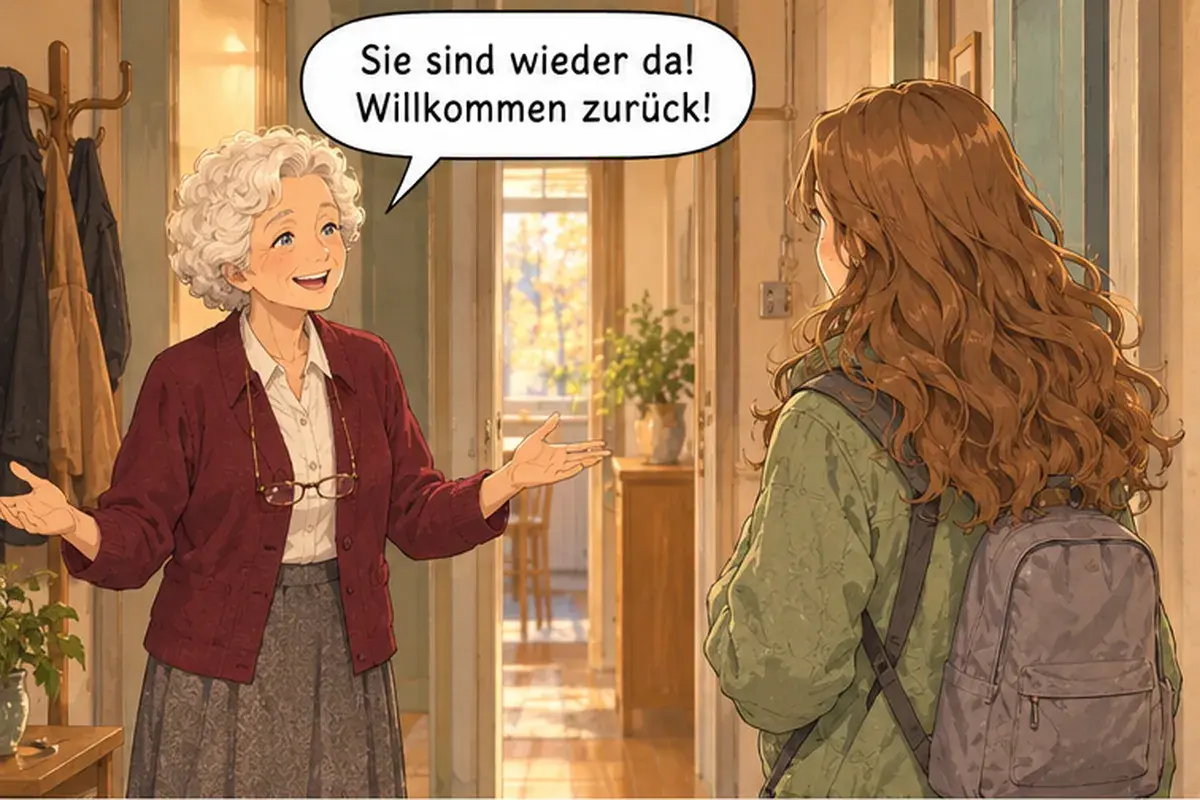
- Frau Brandt
Sie sind wieder da! Willkommen zurück!
You're here again! Welcome back! (formal)

- Katja
Guten Tag, Frau Brandt! Ja, wie versprochen.
Hello, Frau Brandt! Yes, as promised.
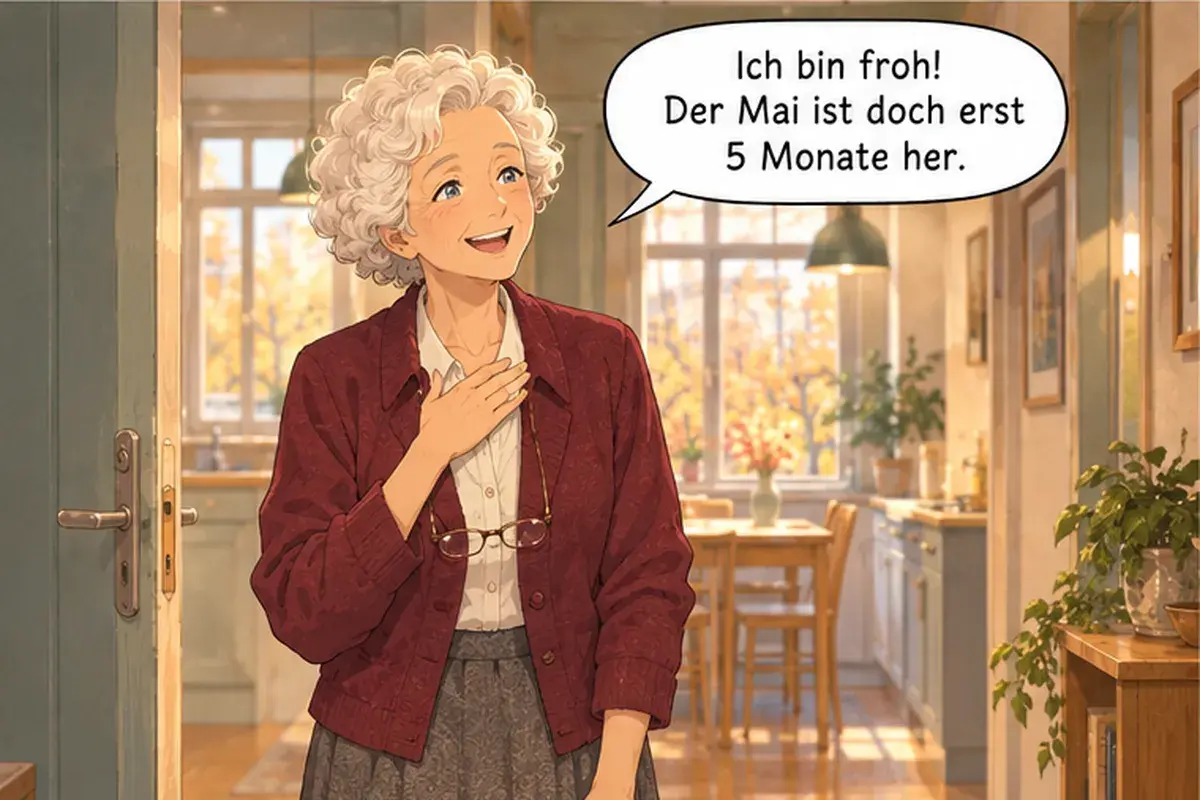
- Frau Brandt
Ich bin froh! Der Mai ist doch erst 5 Monate her.
I'm glad! After all, May was only 5 months ago.

- Katja
Ich habe den Sommer genossen. Aber ich hatte Heimweh – nach Berlin!
I enjoyed the summer. But I was homesick — for Berlin!
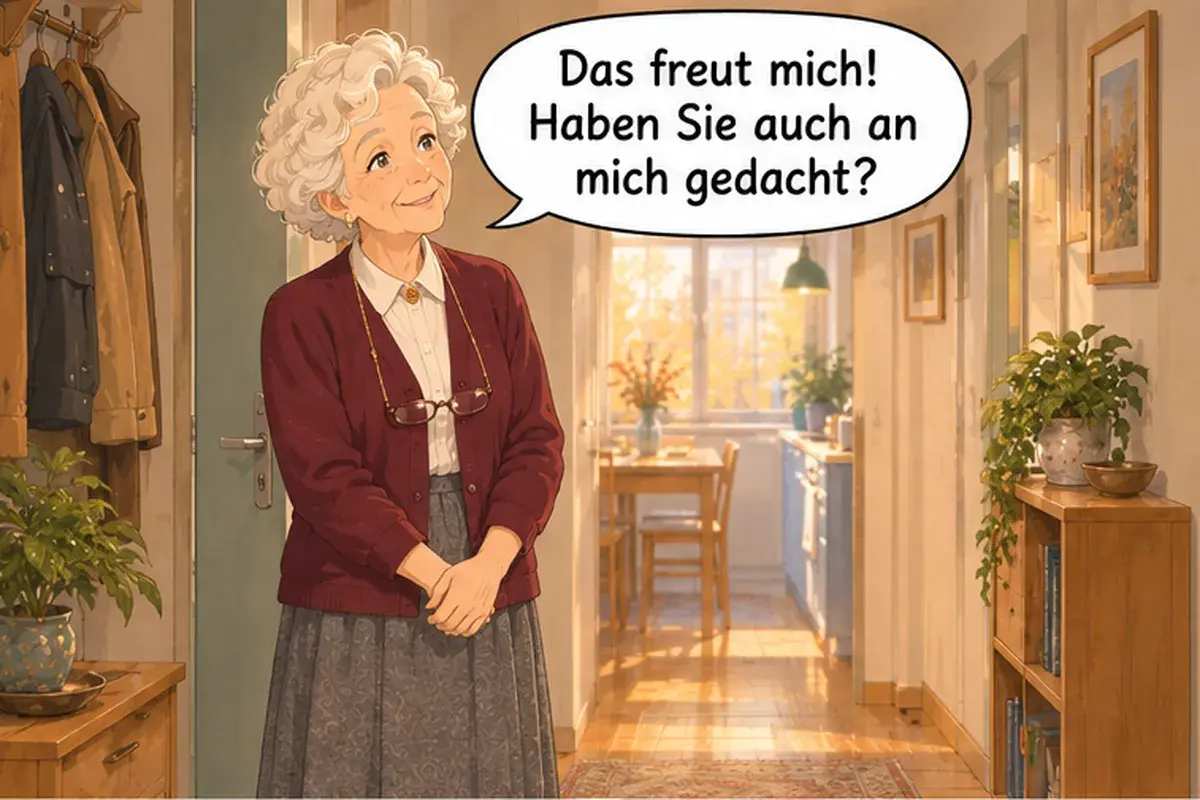
- Frau Brandt
Das freut mich! Haben Sie auch an mich gedacht?
That makes me happy! Did you think of me too? (formal)
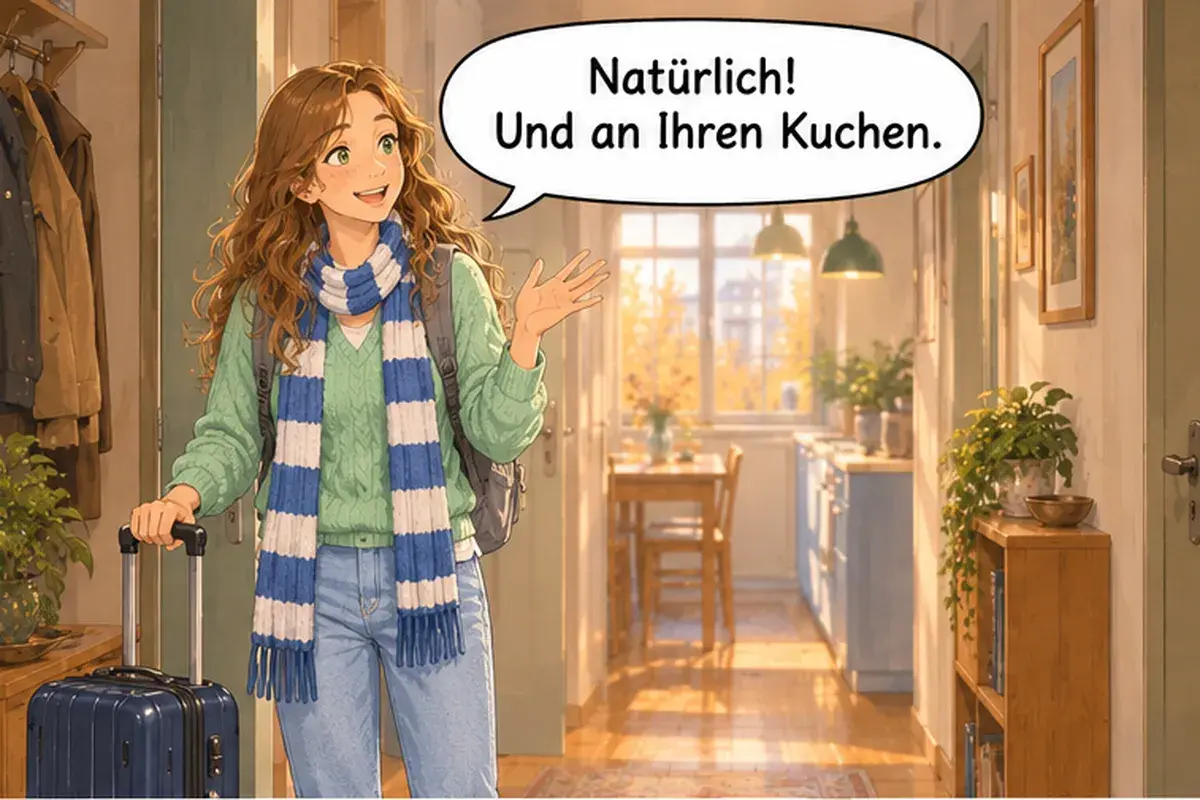
- Katja
Natürlich! Und an Ihren Kuchen.
Of course! And of your cake. (formal)
- Frau Brandt
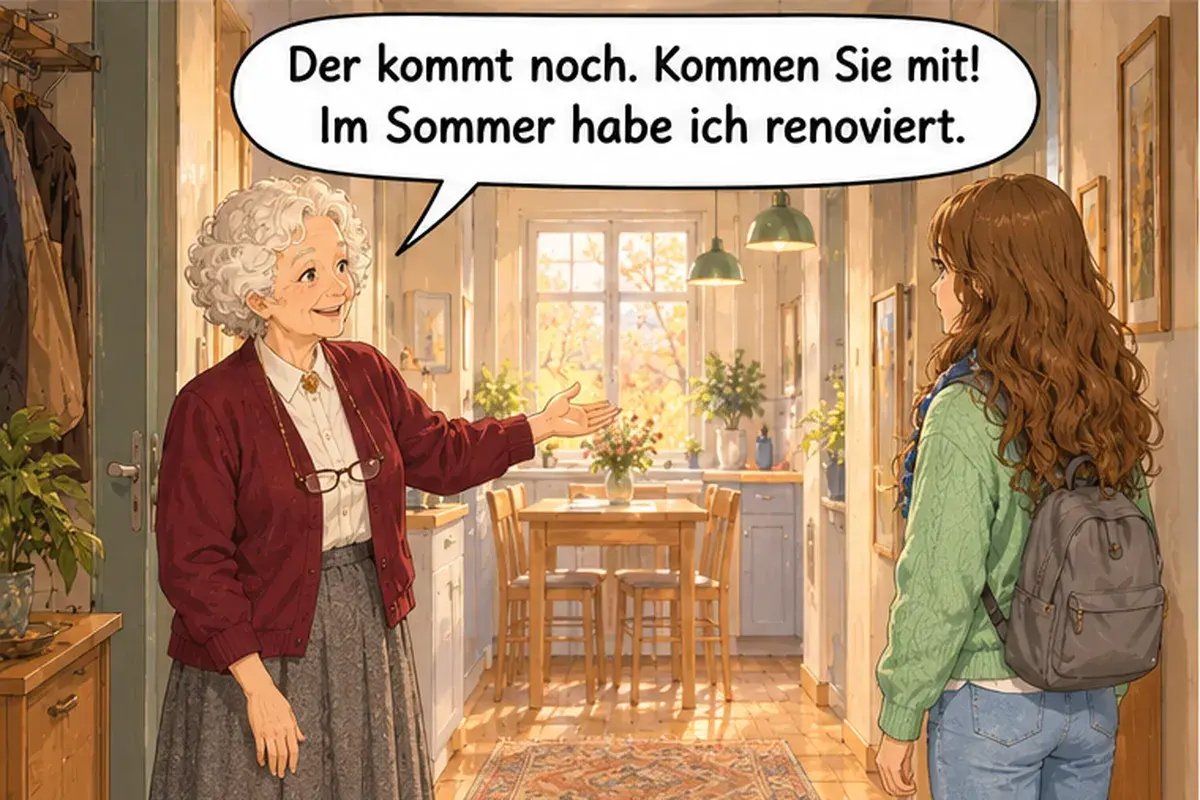
Der kommt noch. Kommen Sie mit! Im Sommer habe ich renoviert.
That comes later. Come along! (formal) I renovated in the summer.

- Katja
Die Küche ist ja ganz anders!
The kitchen is completely different!
- Frau Brandt
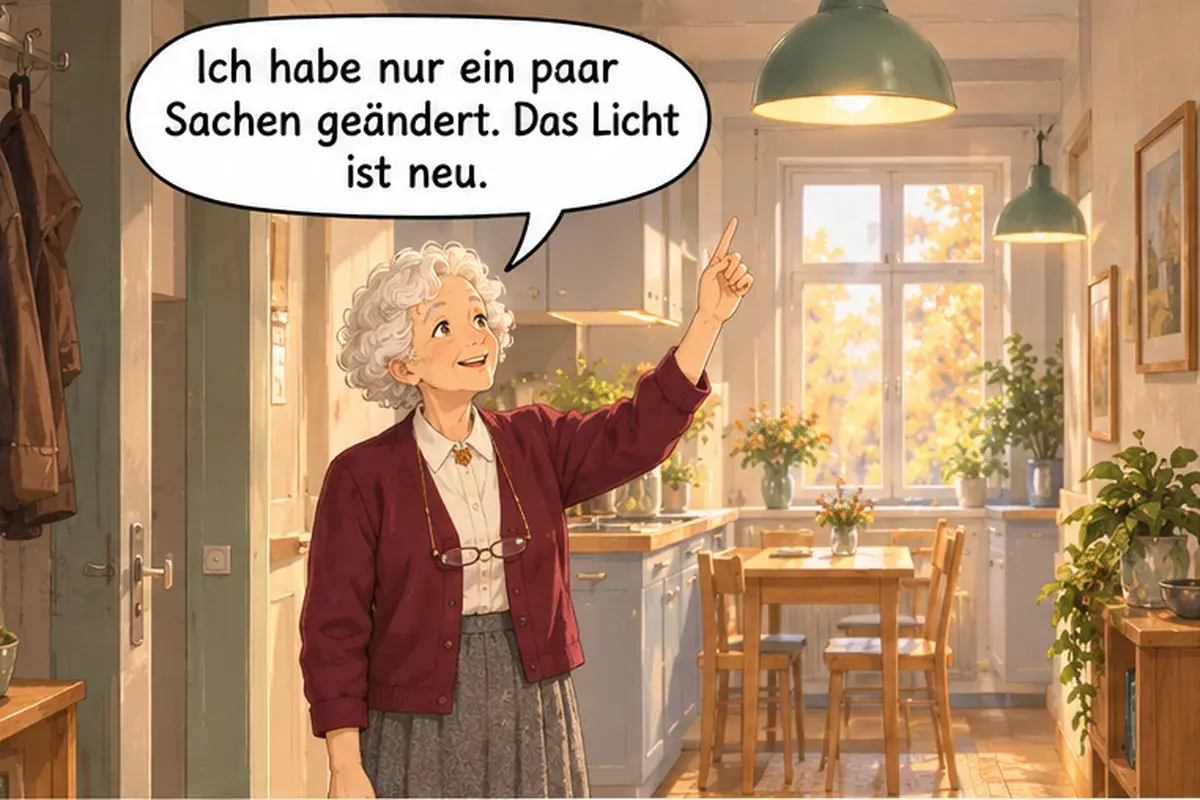
Ich habe nur ein paar Sachen geändert. Das Licht ist neu.
I only changed a few things. The lighting is new.

- Katja
Schön! Ich bleibe nur bis Donnerstag. Dann fahre ich nach Hamburg.
Nice! I'm only staying until Thursday. Then I'm going to Hamburg.
- Frau Brandt
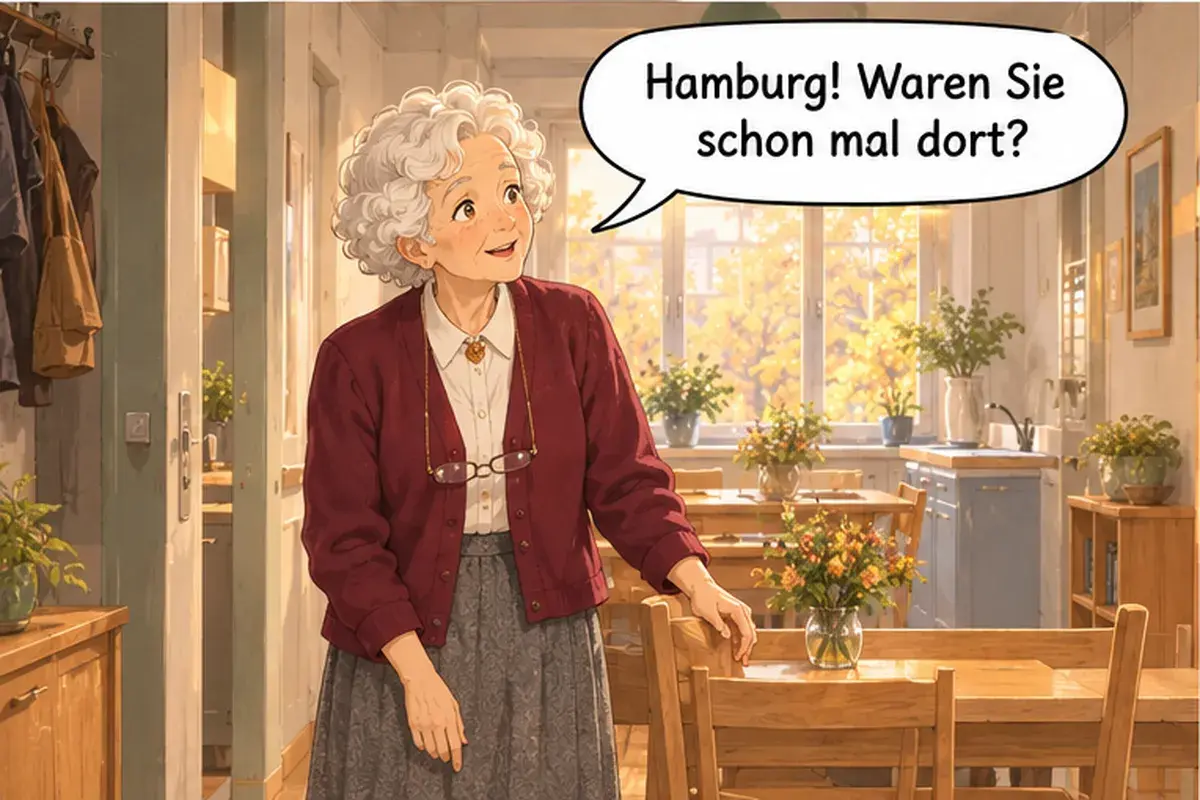
Hamburg! Waren Sie schon mal dort?
Hamburg! Have you ever been there? (formal)

- Katja
Nein, noch nie. Aber Lukas hat einen Plan.
No, never. But Lukas has a plan.
- Frau Brandt
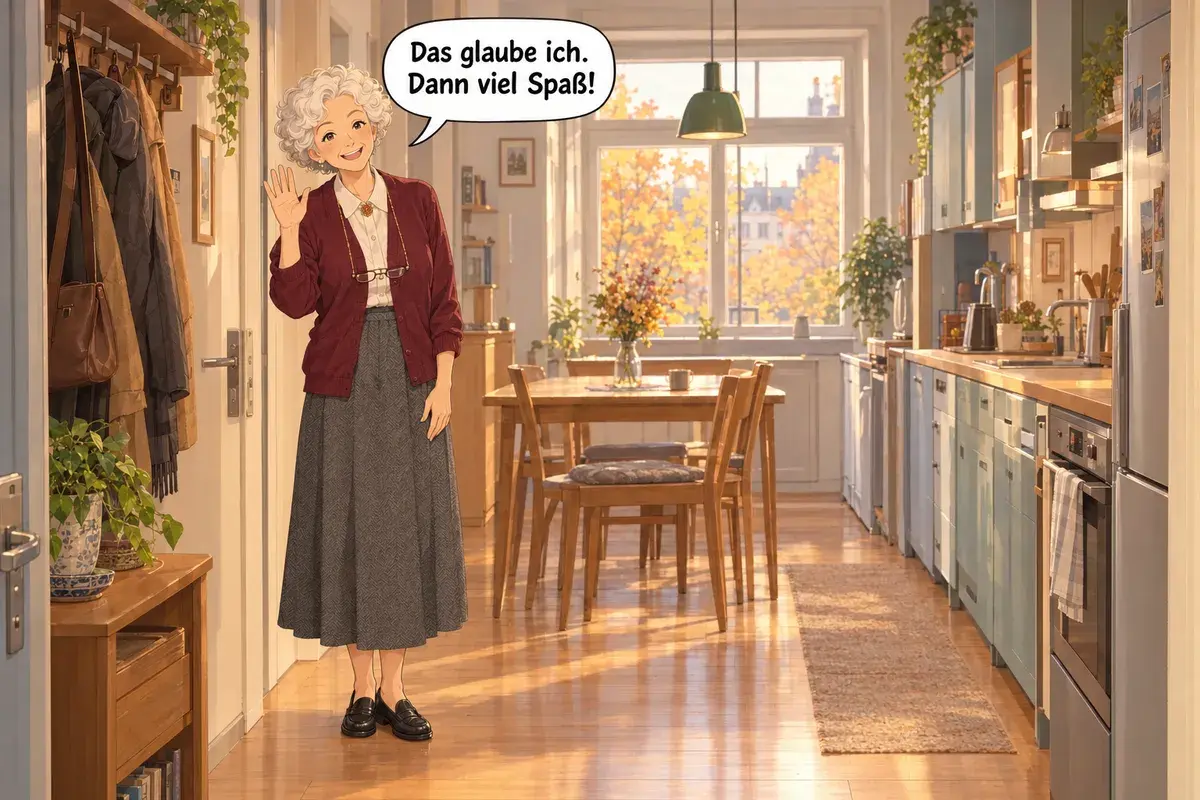
Das glaube ich. Dann viel Spaß!
I believe it. Have fun, then!
Grammar for this text
- Sie sind wieder da —
Siewith a capital letter is the formal "you": Katja and Frau Brandt saySieto each other. At the start of a sentence a capital letter proves nothing, so look at the meaning: "they are" would also besie sind. Willkommen zurück — "welcome back". - Der Mai ist doch erst 5 Monate her — after a length of time,
hermeans "ago": "5 months ago".dochhere adds "after all", anderstmeans "only". - Ich habe den Sommer genossen —
genossencomes fromgenießen: an irregular past participle. There's no extrage-: it's already at the start of the verb (ge-nießen). - Ich hatte Heimweh – nach Berlin —
hatteis the Präteritum (narrative past) ofhaben(A1, unit 19:ich hatte).Heimweh nach— "homesick for". - Haben Sie auch an mich gedacht? —
denken anmeans "to think of / about" (an mich— "of me").gedachtis a mixed past participle: it ends in-tlike a regular one, but the vowel changes (denk-→-dach-), like English think — thought. - Im Sommer habe ich renoviert —
renovierthas noge-:-ierenverbs never take it (A1, unit 19). The time comes first,habesecond, andichright after it. Ich habe … geändert —geändertis regular, fromändern. - Kommen Sie mit —
mitkommen(to come along):mitgoes to the end. Waren Sie schon mal dort? —warenis the Präteritum ofsein: "were you".schon malmeans "ever"; the answer "never" isnoch nie.
Words and grammar of the unit: Tell what you did over the summer.
Learn the words from the texts with flashcards
In the app, you can tap any word in a text to see its translation, forms and examples, and new words stick with flashcards. 15 minutes a day.
Start for freeEverything is open for free. No card needed to sign up.