

German story with translation · A1 · 12 lines
Falsche Richtung! Wrong direction!
Comic · 12 panels

Ich habe die Karte für 24 Stunden – am Gleis entwerten, nicht vergessen!
I have the ticket for 24 hours – validate it on the platform, don't forget!

Zuerst nehme ich die U-Bahn von Moritzplatz bis Alexanderplatz.
First I take the subway from Moritzplatz to Alexanderplatz.

Dort steige ich um und fahre zu Lukas.
There I change trains and go to Lukas's place.

Der Zug steht schon da – ich vergesse alles und steige ein.
The train is already standing there – I forget everything and get on.

Der Zug fährt ab. Die Durchsage? Ich verstehe nur ein Wort.
The train leaves. The announcement? I only understand one word.

Ich sage zu einer Frau: „Entschuldigung, wohin fährt der Zug?“
I say to a woman: "Excuse me, where is the train going?"

Sie sagt: „Nicht zum Alexanderplatz. Falsche Richtung!“
She says: "Not to Alexanderplatz. Wrong direction!"

Bei der nächsten Station steige ich aus.
I get off at the next station.

Ich suche das richtige Gleis, aber ich finde nur den Ausgang.
I look for the right platform, but I only find the exit.
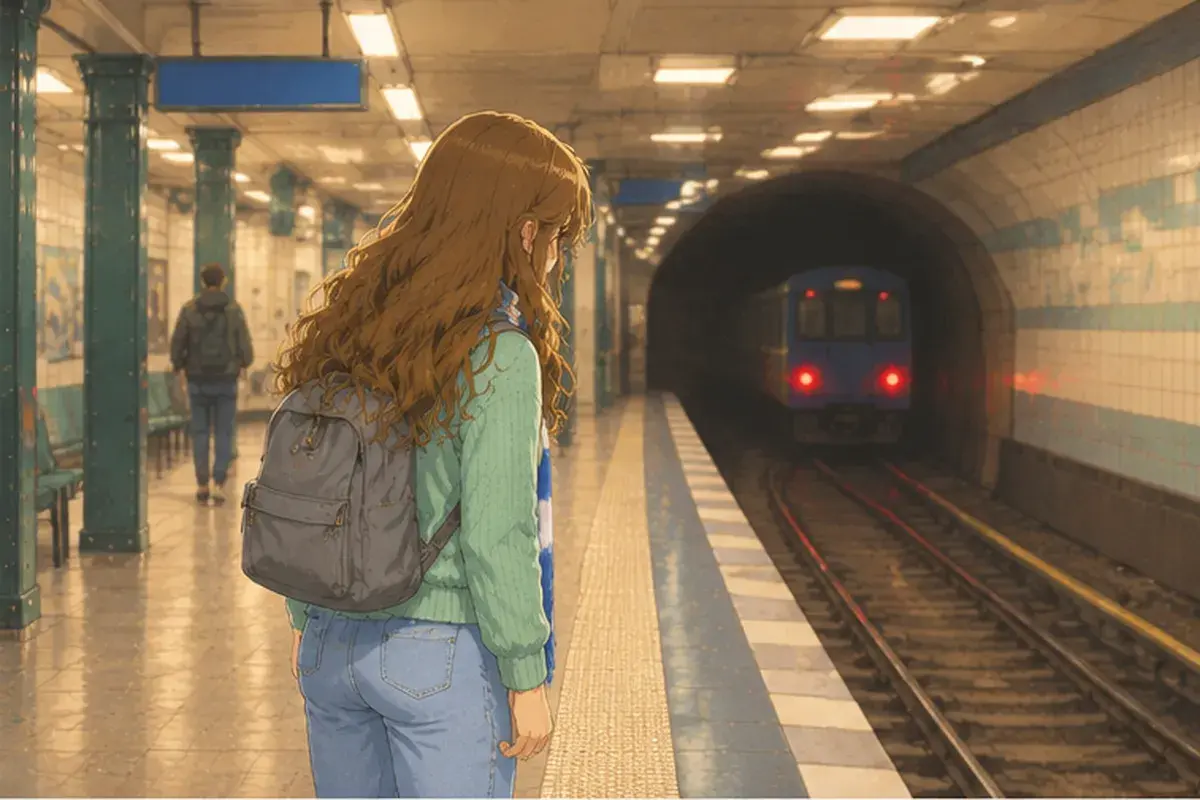
Dann finde ich das Gleis – und der Zug ist weg!
Then I find the platform – and the train is gone!

Ich warte nicht lange, dann steige ich wieder ein.
I don't wait long, then I get on again.

Plötzlich steht ein Kontrolleur da. Nein, die Karte!
Suddenly a ticket inspector is standing there. Oh no, the ticket!
Grammar for this text
- am Gleis entwerten, nicht vergessen — Katja reminds herself: an infinitive without ich sounds like a short command ("validate it on the platform, don't forget!").
- Ich vergesse alles und steige ein — und joins two actions with one ich. The prefix ein (from einsteigen) goes to the end.
- Der Zug fährt ab — abfahren: fährt is the er / sie / es form of fahren (a → ä, unit 4), and the prefix ab is at the end.
- Ich sage zu einer Frau: „Entschuldigung, wohin fährt der Zug?“ — sagen zu means "to say to someone" (for now, learn einer as part of the phrase). wohin means "where to": wo is where, woher is where from, wohin is where to. It asks about direction.
- Sie sagt — here it's "she" (a woman is talking), not the formal "you": the capital S is there only because it starts the sentence. Falsche Richtung — a line without a verb, "Wrong direction!"; the ending is -e because Richtung is feminine (die).
- Bei der nächsten Station steige ich aus — the sentence doesn't start with ich, but the verb is still second: steige, then ich, and aus (from aussteigen) at the end. bei der nächsten Station means "at the next station".
- Dann finde ich das Gleis — after dann it's also "verb, then ich". Der Zug ist weg — ist is from sein, and weg is casual for "gone".
Words and grammar of the unit: Ride the subway.
Learn the words from the texts with flashcards
In the app, you can tap any word in a text to see its translation, forms and examples, and new words stick with flashcards. 15 minutes a day.
Start for freeEverything is open for free. No card needed to sign up.