

German dialogue with translation · A1 · 14 lines
Und? Was hast du gemacht? So? What did you do?
Comic · 14 panels
- Lukas
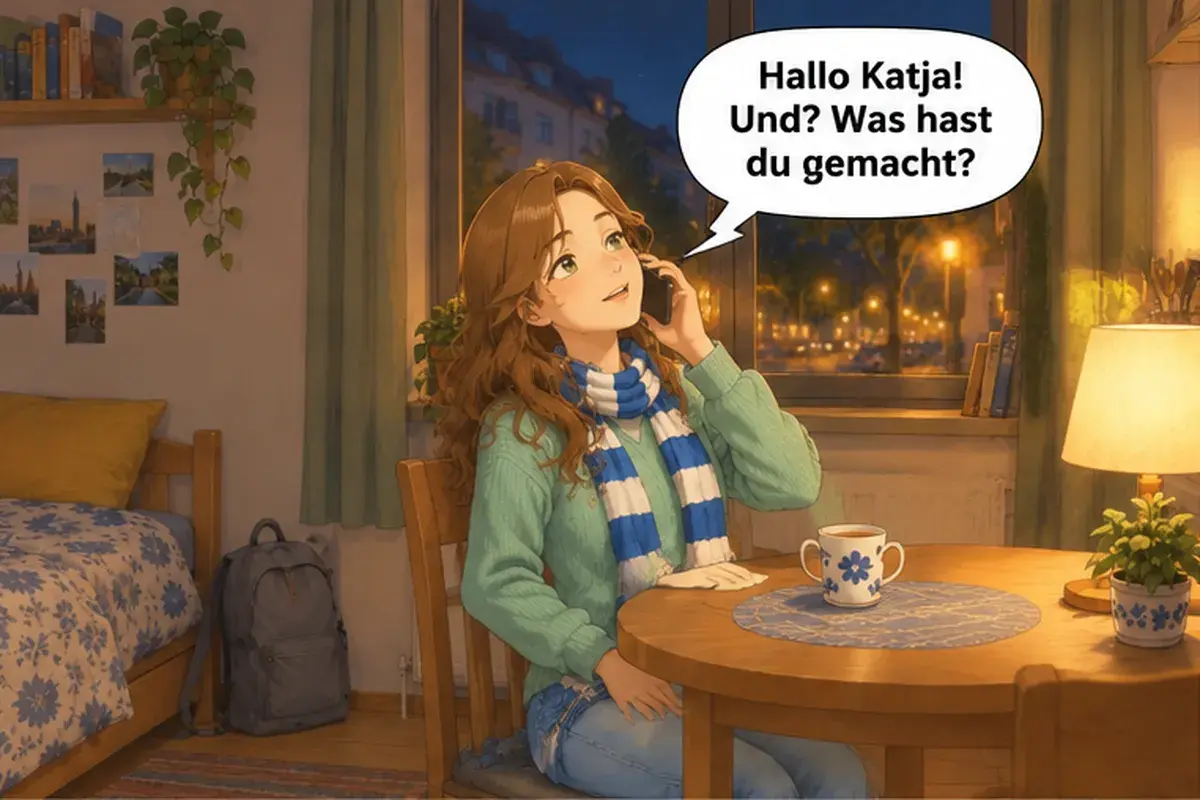
Hallo Katja! Und? Was hast du gemacht?
Hi Katja! So? What did you do?

- Katja
Hallo Lukas! Ich habe das Schloss gesehen und Eis gegessen.
Hi Lukas! I saw the palace and ate ice cream.

- Lukas
Super! Und wie war's?
Great! And how was it?
- Katja
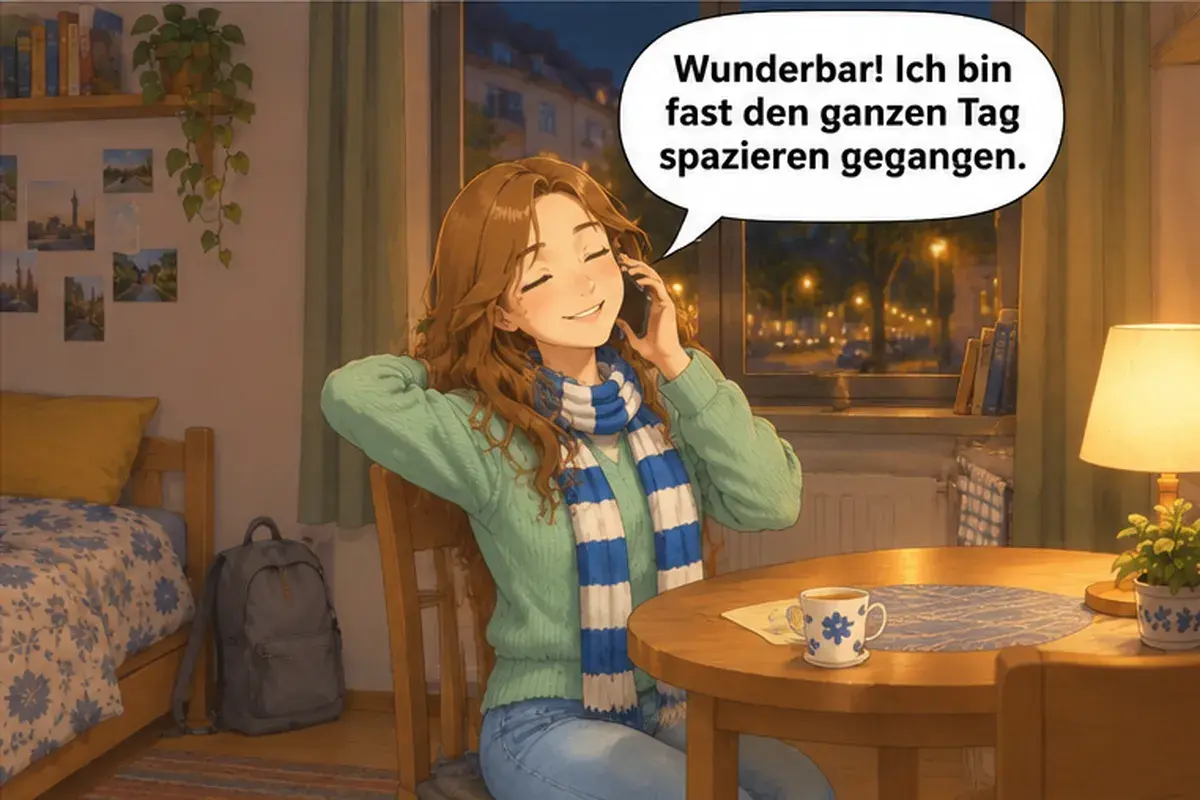
Wunderbar! Ich bin fast den ganzen Tag spazieren gegangen.
Wonderful! I went walking almost all day.
- Lukas
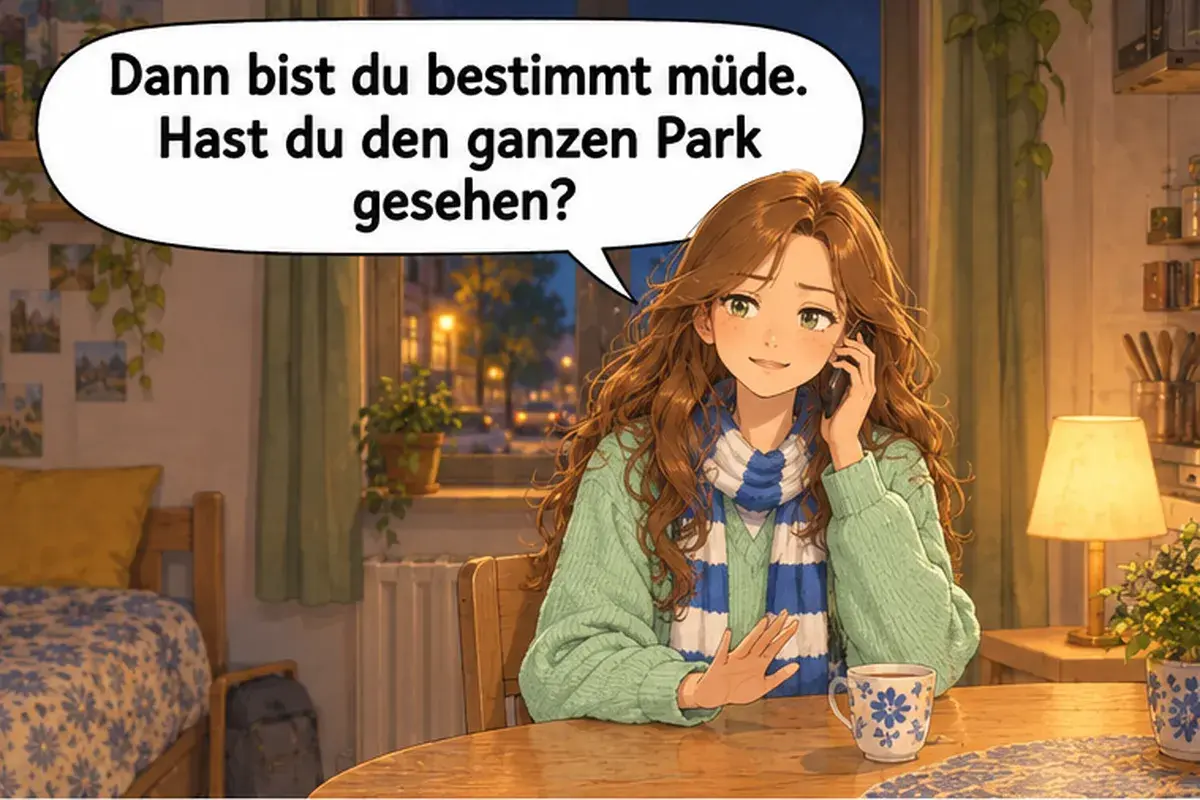
Dann bist du bestimmt müde. Hast du den ganzen Park gesehen?
Then you must be tired. Did you see the whole park?

- Katja
Nein, das ist an einem Tag nicht möglich.
No, that's not possible in one day.

- Lukas
Stimmt. Und wie war die Fahrt?
True. And how was the trip?

- Katja
Kurz, aber der Zug hatte Verspätung.
Short, but the train was late.
- Lukas
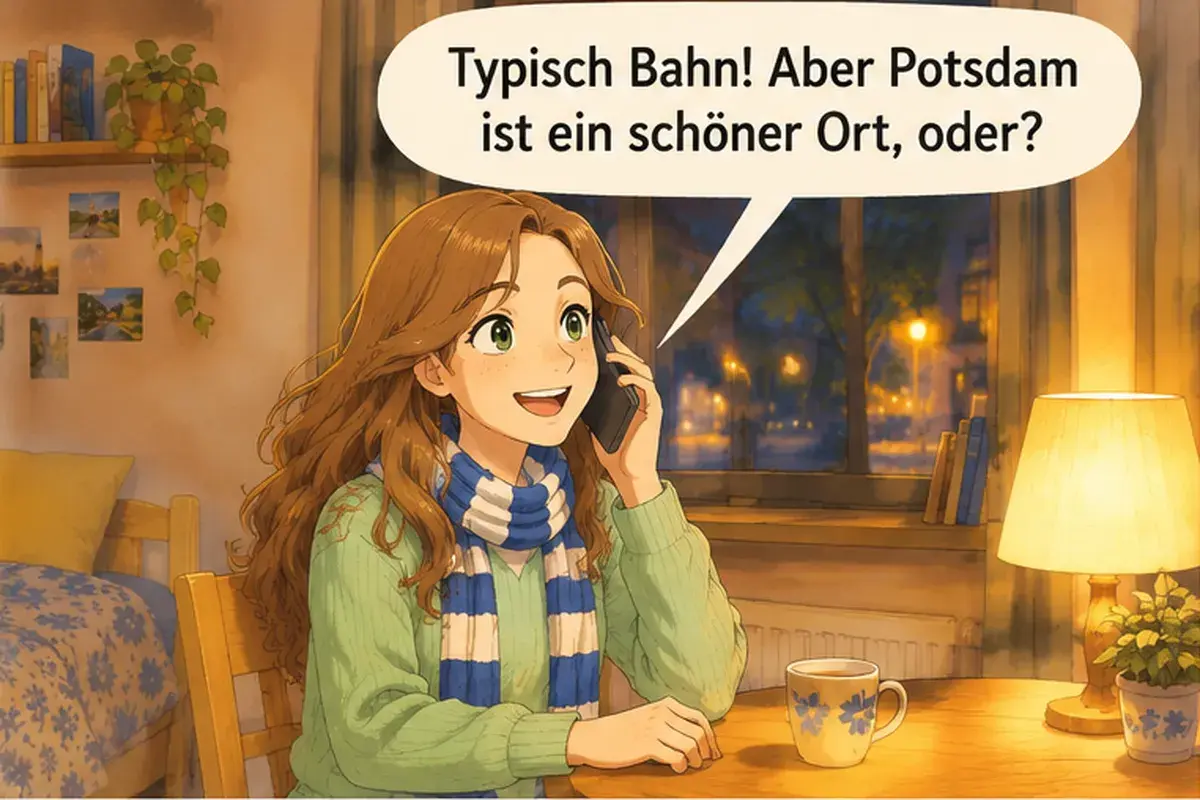
Typisch Bahn! Aber Potsdam ist ein schöner Ort, oder?
Typical Deutsche Bahn! But Potsdam is a beautiful place, right?

- Katja
Ja! Viel Wald und Wasser. Im Park sind Menschen aus der ganzen Welt.
Yes! Lots of forest and water. There are people from all over the world in the park.

- Lukas
Das glaube ich! Hast du Fotos gemacht? Schickst du mir ein paar?
I believe it! Did you take pictures? Will you send me a few?

- Katja
Sicher! Ich schicke sie dir gerade.
Sure! I'm sending them to you right now.

- Lukas
Super, danke! Schlaf gut, Katja!
Great, thanks! Sleep well, Katja!

- Katja
Danke, du auch! Tschüss, Lukas.
Thanks, you too! Bye, Lukas.
Grammar for this text
- Und? Was hast du gemacht? — the question "What did you do?":
hastis the du form ofhaben, and the participlegemachtis at the end. The answer uses the same bracket: Ich habe das Schloss gesehen und Eis gegessen.gesehencomes fromsehen,gegessenfromessen: inisst(unit 4) the vowel changes, but in the participle it goes back to the vowel of the infinitive. - Super! Und wie war's? —
Wie war's?means "How was it? How did it go?" (esis shortened to's).waris the past ofsein, the er / sie / es form (as inWie war der Flug?, unit 1). The answer can be one word:Wunderbar!,Super!,Gut!. - Wunderbar! Ich bin fast den ganzen Tag spazieren gegangen. —
spazieren gehen— to go for a walk; in the Perfektgehentakessein:bin … gegangen. The participle is irregular: the stemgehbecomesgang.fast— almost (a false friend: not "quick");den ganzen Tag— all day (a set phrase; the rule comes in A2). - Nein, das ist an einem Tag nicht möglich. —
an einem Tag— in one day (a set phrase),nicht möglich— not possible. There's no Perfekt here, justist. - Kurz, aber der Zug hatte Verspätung. —
kurzmeans "short", here about the trip.hatte Verspätung— was late (text 1).Typisch Bahn!is a joke about late trains.…, oder?at the end means "…, right?". - Sicher! Ich schicke sie dir gerade. —
Sicher!as an answer to a request means "Sure!".sie— them (the photos),dir— (to) you: for now, learn them as a set pair (the rule comes in A2).gerade— right now. - Schlaf gut, Katja! — the du command (unit 15): from
schlafenonlySchlafis left. It's what people usually say before bed.
Words and grammar of the unit: Talk about a day trip.
Learn the words from the texts with flashcards
In the app, you can tap any word in a text to see its translation, forms and examples, and new words stick with flashcards. 15 minutes a day.
Start for freeEverything is open for free. No card needed to sign up.