

German dialogue with translation · A1 · 14 lines
Können Sie das buchstabieren? Can you spell that?
Comic · 14 panels
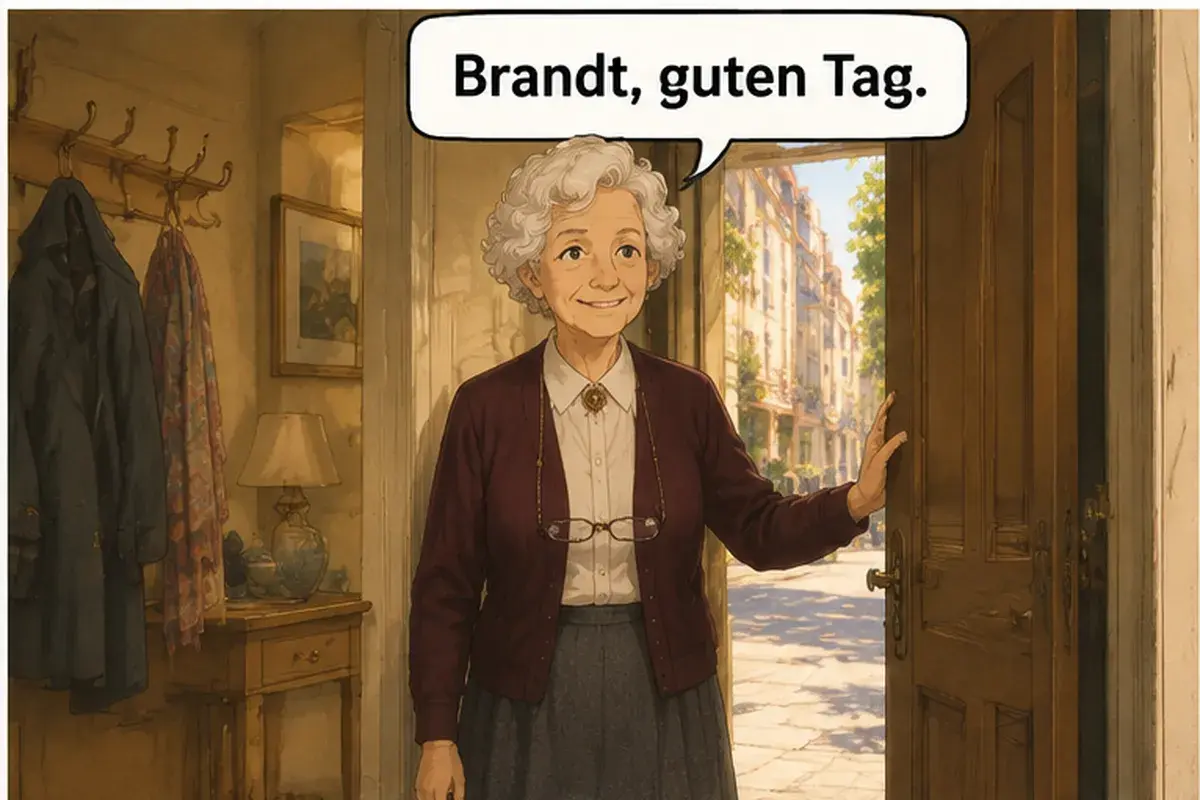
- Frau Brandt
Brandt, guten Tag.
Brandt speaking, hello.
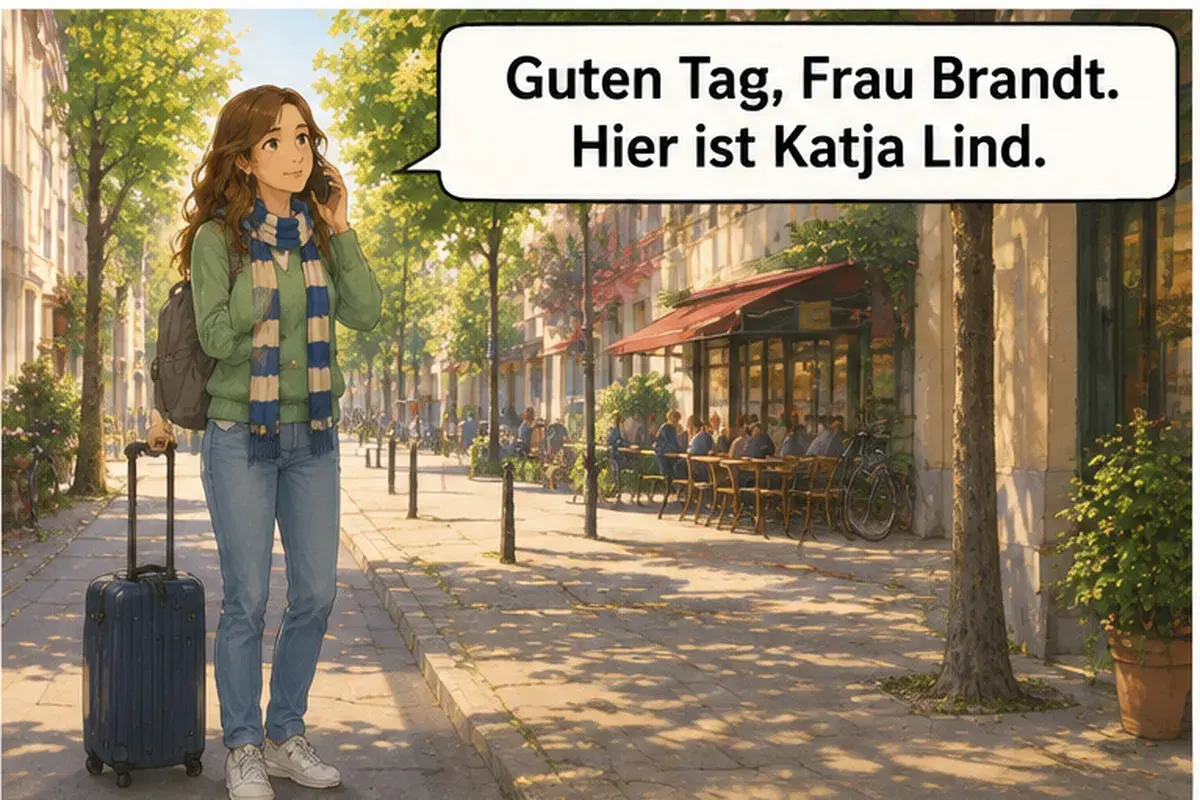
- Katja
Guten Tag, Frau Brandt. Hier ist Katja Lind.
Hello, Frau Brandt. This is Katja Lind.
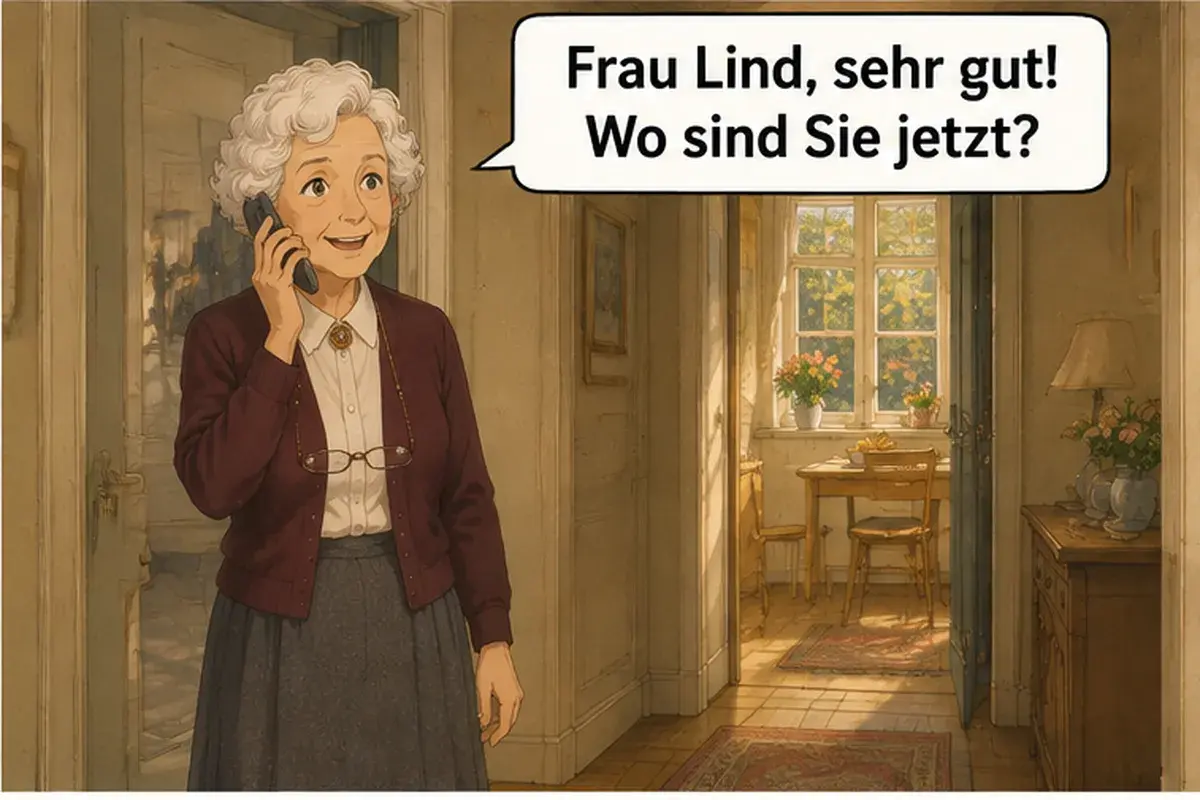
- Frau Brandt
Frau Lind, sehr gut! Wo sind Sie jetzt?
Frau Lind, very good! Where are you now? (formal)
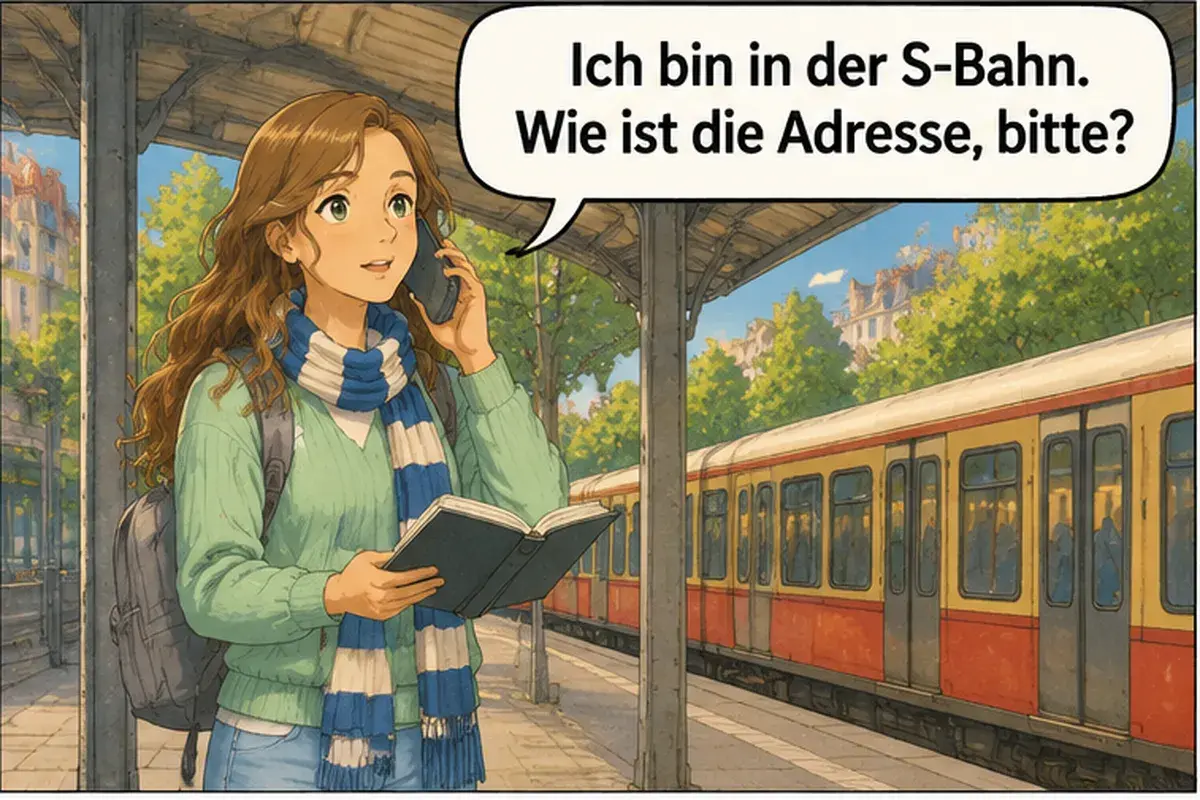
- Katja
Ich bin in der S-Bahn. Wie ist die Adresse, bitte?
I'm on the S-Bahn. What's the address, please?
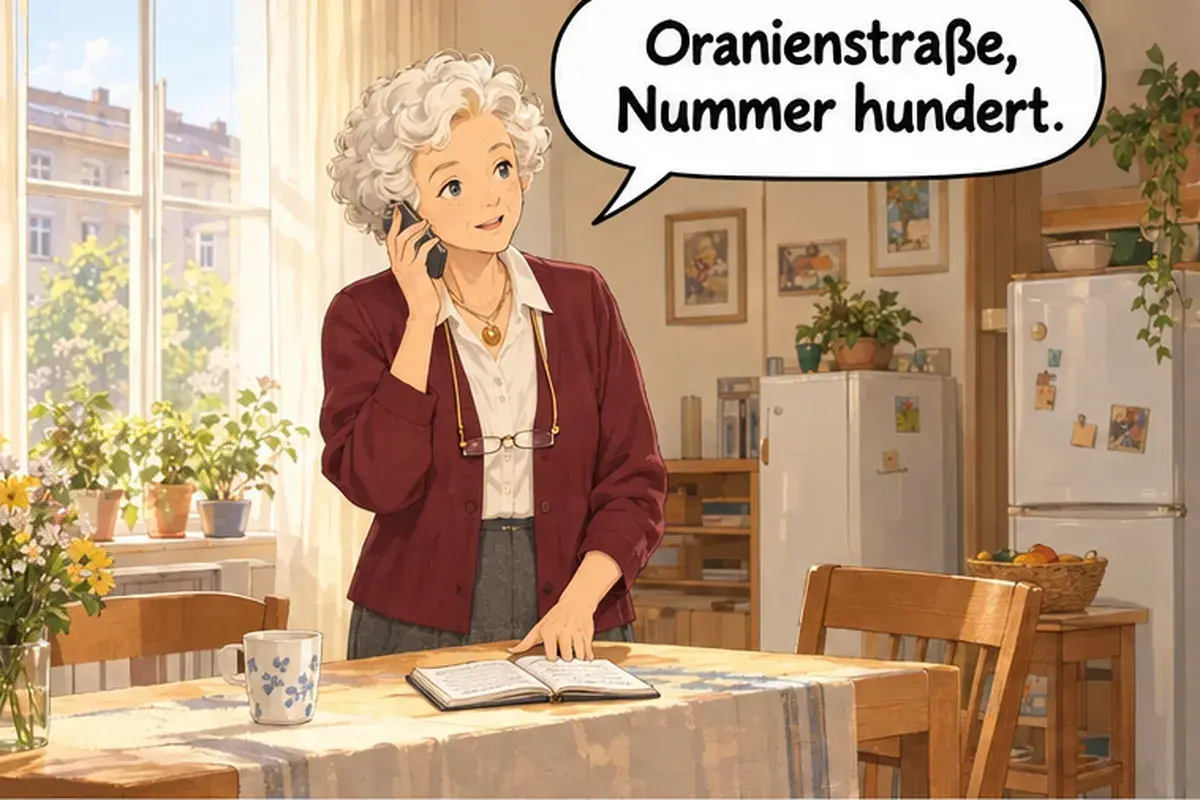
- Frau Brandt
Oranienstraße, Nummer hundert.
Oranienstraße, number one hundred.
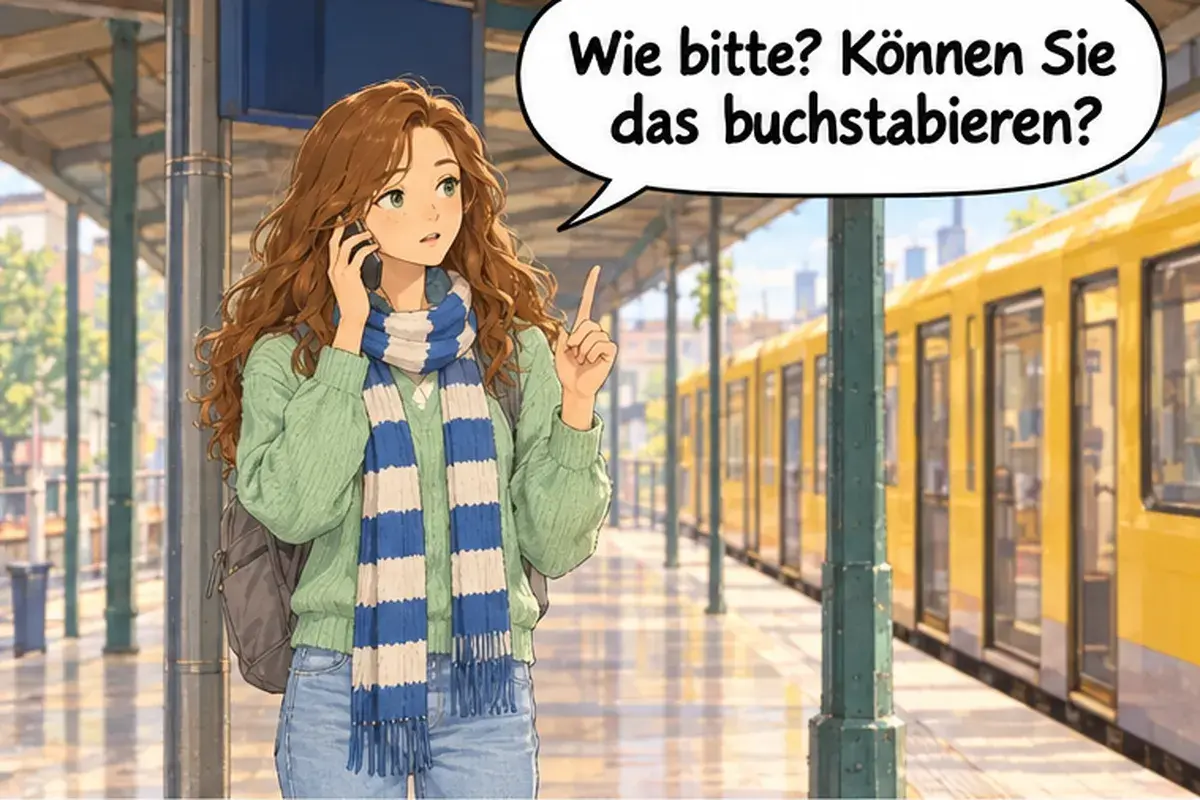
- Katja
Wie bitte? Können Sie das buchstabieren?
Sorry? Can you spell that? (formal)
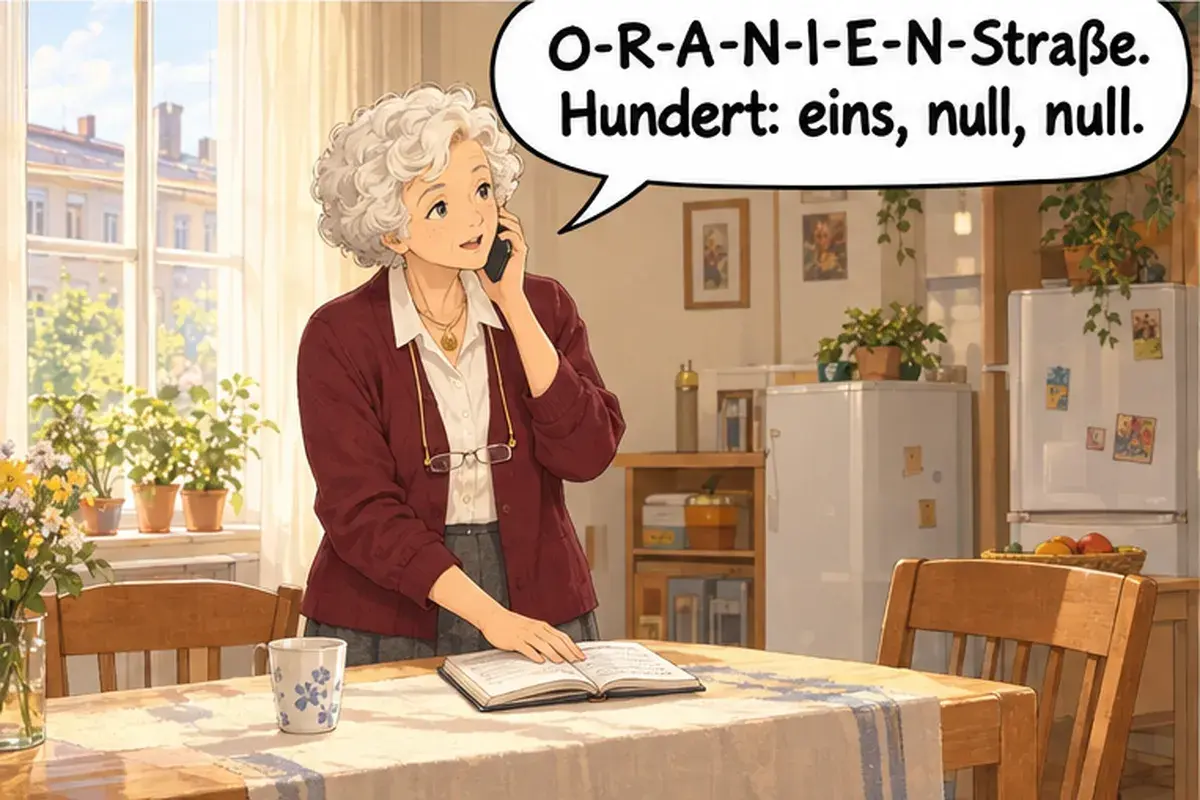
- Frau Brandt
O-R-A-N-I-E-N-Straße. Hundert: eins, null, null.
O-R-A-N-I-E-N-Straße. One hundred: one, zero, zero.
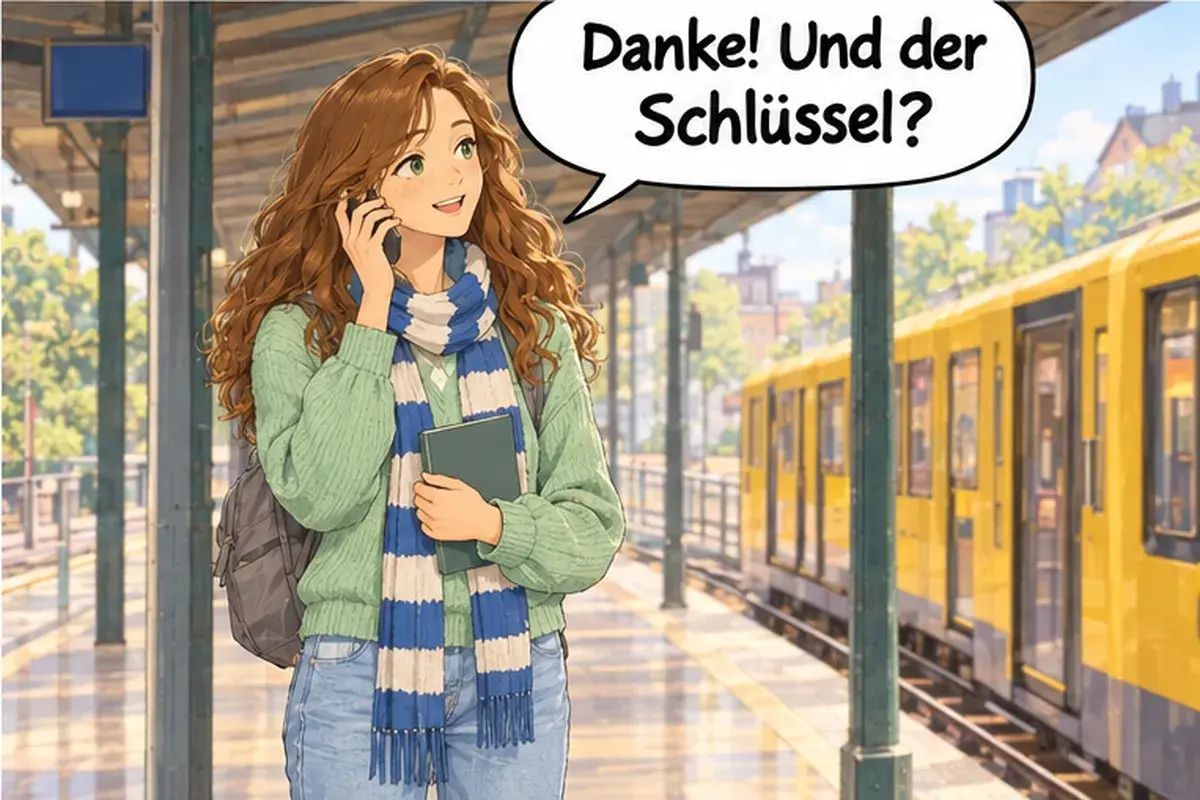
- Katja
Danke! Und der Schlüssel?
Thanks! And the key?
- Frau Brandt
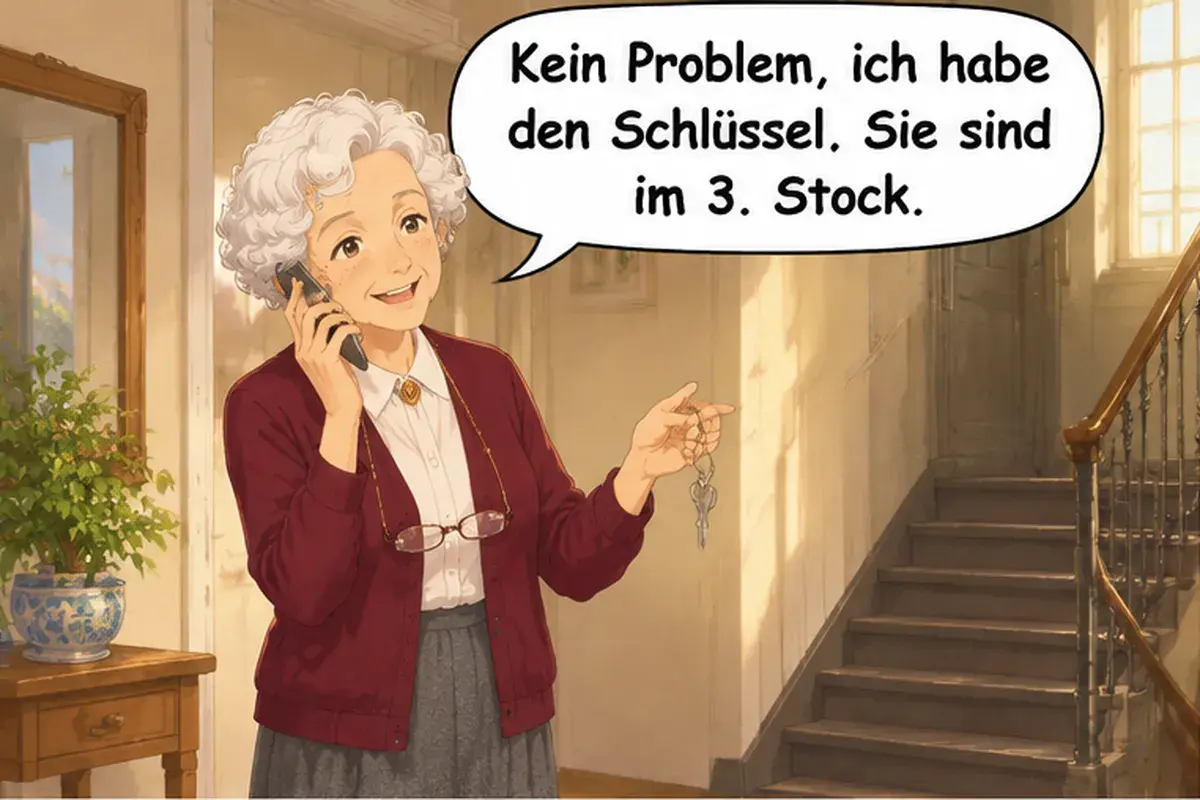
Kein Problem, ich habe den Schlüssel. Sie sind im 3. Stock.
No problem, I have the key. You're on the third floor (formal).
- Katja
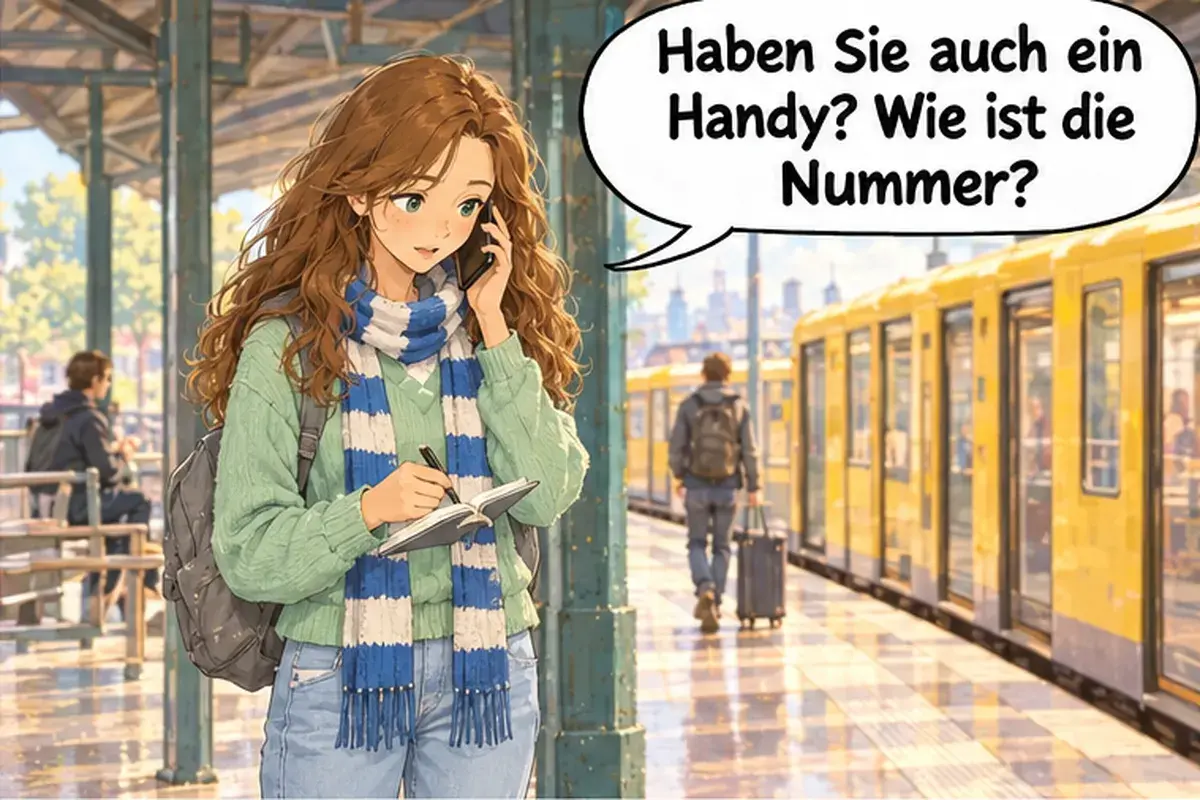
Haben Sie auch ein Handy? Wie ist die Nummer?
Do you have a cell phone too? What's the number? (formal)
- Frau Brandt
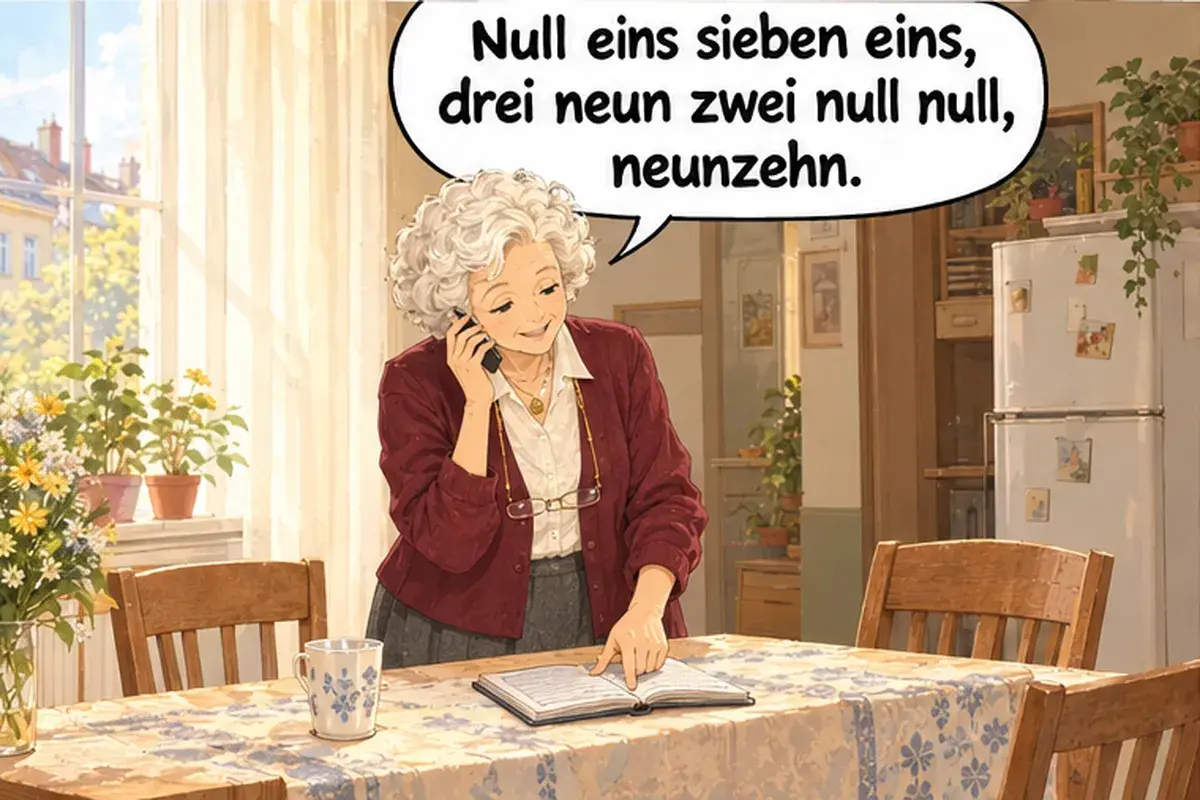
Null eins sieben eins, drei neun zwei null null, neunzehn.
Zero one seven one, three nine two zero zero, nineteen.
- Katja
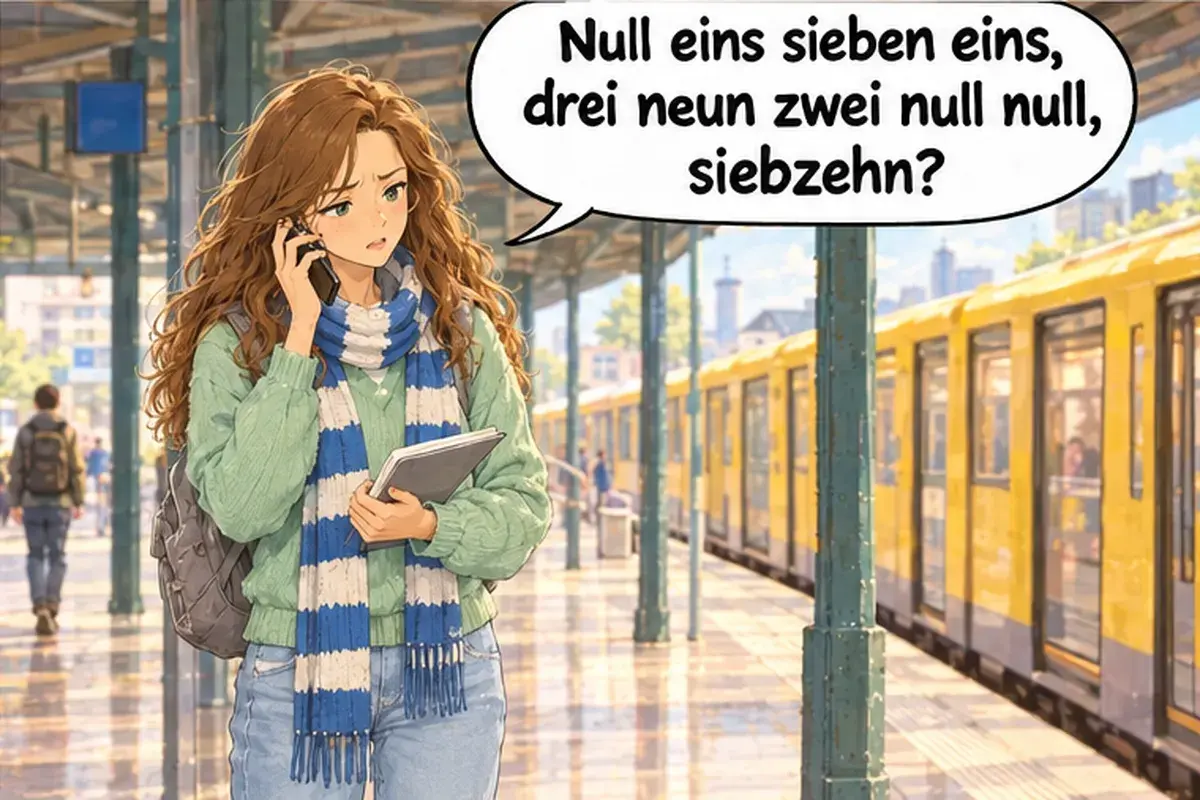
Null eins sieben eins, drei neun zwei null null, siebzehn?
Zero one seven one, three nine two zero zero, seventeen?
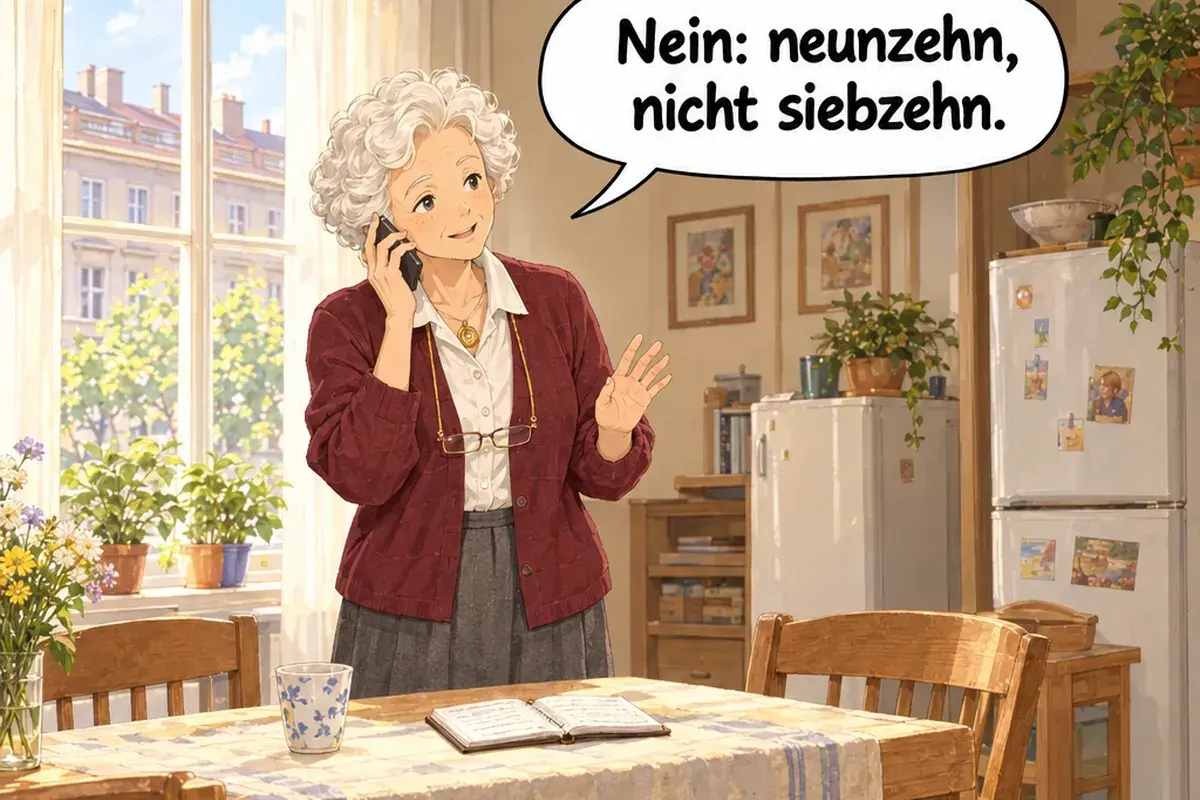
- Frau Brandt
Nein: neunzehn, nicht siebzehn.
No: nineteen, not seventeen.
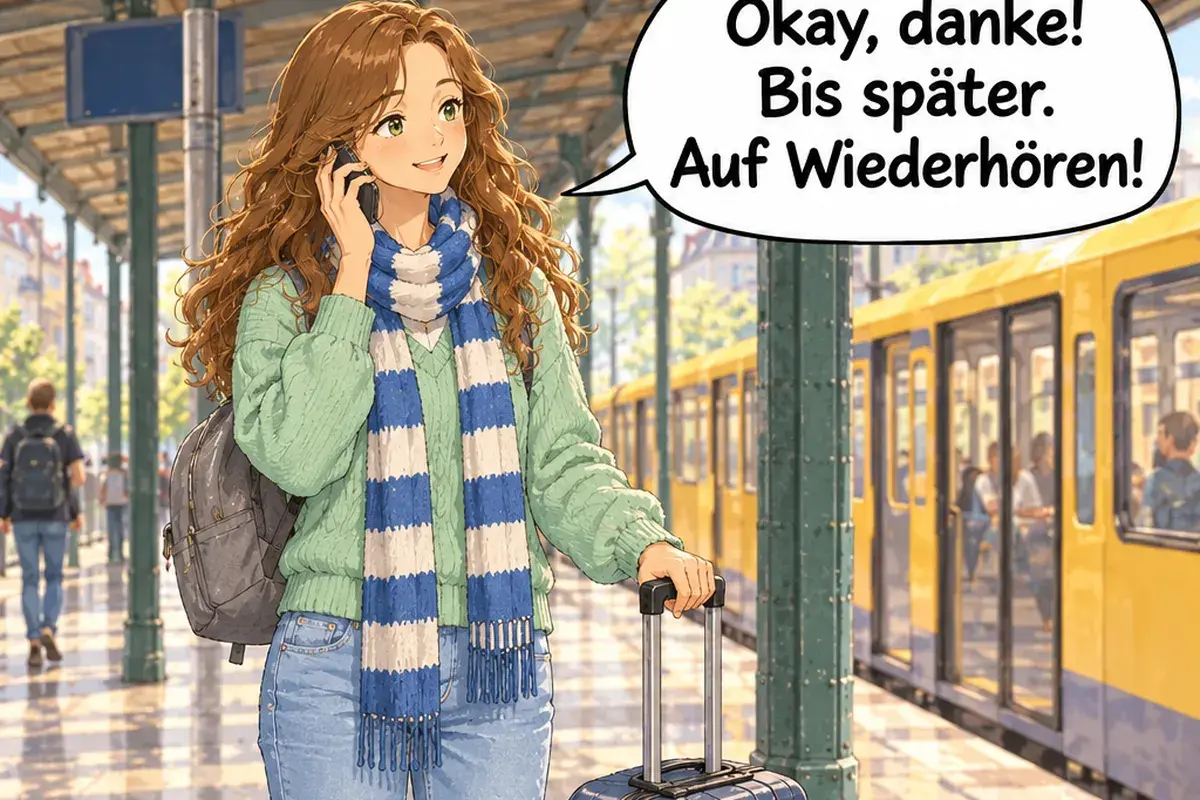
- Katja
Okay, danke! Bis später. Auf Wiederhören!
Okay, thanks! See you later. Goodbye!
Grammar for this text
- Können Sie das buchstabieren? — a set phrase for a polite request: "Can you …?" to someone you call
Sie. You'll learn the verbkönnenin unit 8; for now remember the whole phrase.das— that,buchstabieren— to spell. Letters are said the German way:Olike "oh",Rlike "air",Alike "ah",Nlike "en",Ilike "ee",Elike "ay". - Oranienstraße, Nummer hundert — the street name is one word, with
Straße(street) inside it. The house number comes after the street name, not before it as in English.hundert(a hundred) has noein; then she gives it again digit by digit: eins, null, null. - Kein Problem, ich habe den Schlüssel —
kein Problemis a set phrase: no problem.habeis fromich habe(I have): I have the key.denis a special form of the article; you'll learn it in unit 5. - Sie sind im 3. Stock — capital
Sieis the formal you, andsindis its form ofsein(to be).3.with a period means "third". German counts floors from theErdgeschoss(ground floor), soim 3. Stockis three levels above the ground floor: the fourth floor in American counting.imisin dem(on the); the case comes at A2. - Null eins sieben eins, drei neun zwei null null, neunzehn — a phone number is said digit by digit, and the last two digits are often said as one number. Watch the endings:
neunzehn(19) andsiebzehn(17) sound alike.neunzehnisneun+zehn: nine + teen. - Bis später. Auf Wiederhören! —
Bis spätermeans see you later.Auf Wiederhörenmeans goodbye, but only on the phone (hören— to hear); in person people sayTschüssorAuf Wiedersehen.
Words and grammar of the unit: Find your way from the airport.
Learn the words from the texts with flashcards
In the app, you can tap any word in a text to see its translation, forms and examples, and new words stick with flashcards. 15 minutes a day.
Start for freeEverything is open for free. No card needed to sign up.