
Portuguese story with translation · B1 · 18 lines
Hoje eu já penso em português. Today I already think in Portuguese.
Comic · 12 panels

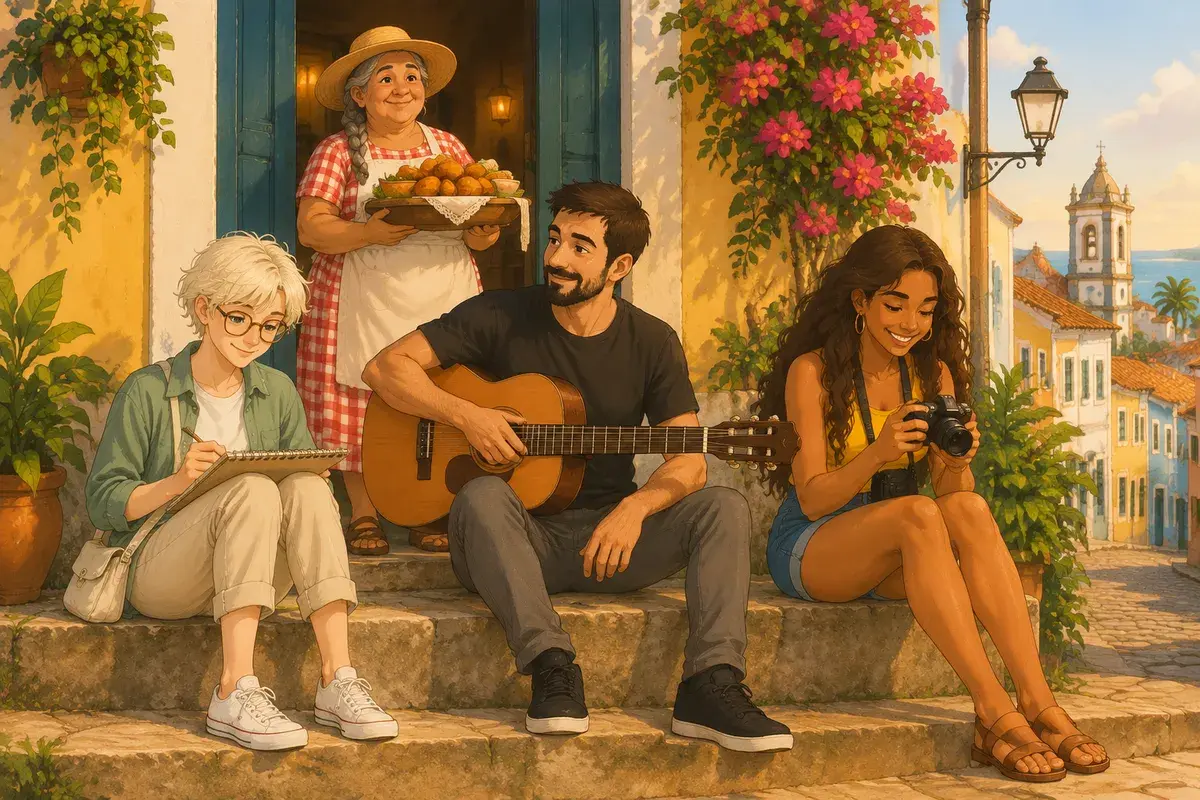
Faz dez meses que cheguei ao Brasil. Depois da videochamada com a minha mãe, abri o caderno.
It's been ten months since I arrived in Brazil. After the video call with my mom, I opened my notebook.
Quero escrever o que mudou.
I want to write down what has changed.

Hoje eu já penso em português.
Today I already think in Portuguese.
Meu português tem evoluído. Ainda não sou fluente, mas, aos poucos, tenho feito progresso.
My Portuguese has been improving. I'm not fluent yet, but little by little I've been making progress.

Às vezes eu travo, como a conexão do hotel, mas as pessoas esperam.
Sometimes I freeze up, like the hotel's connection, but people wait.

Eu me adaptei ao calor e à chuva de todas as tardes.
I adapted to the heat and to the rain every afternoon.
E me acostumei a acordar cedo e a viajar devagar.
And I got used to waking up early and traveling slowly.

Sou mais independente do que antes. Não tenho emprego, mas tenho uma rotina: café, desenho e estrada.
I'm more independent than before. I don't have a job, but I have a routine: coffee, drawing, and the road.

A liberdade é boa, mas às vezes traz solidão.
Freedom is good, but sometimes it brings loneliness.
Nessas noites, a insônia chega e eu fico olhando o teto.
On those nights, insomnia arrives and I lie there looking at the ceiling.

Ontem tive até um pesadelo em português: o Léo lia as contas da viagem, e eu entendia tudo.
Yesterday I even had a nightmare in Portuguese: Léo was reading the trip bills, and I understood everything.

Nos dias sem ânimo, eu desenho o café da manhã e passa.
On days with no energy, I draw breakfast and it passes.

Com a Bia, tenho comido mais legumes e de forma mais saudável. Isso me faz bem.
With Bia, I've been eating more vegetables and in a healthier way. That's good for me.
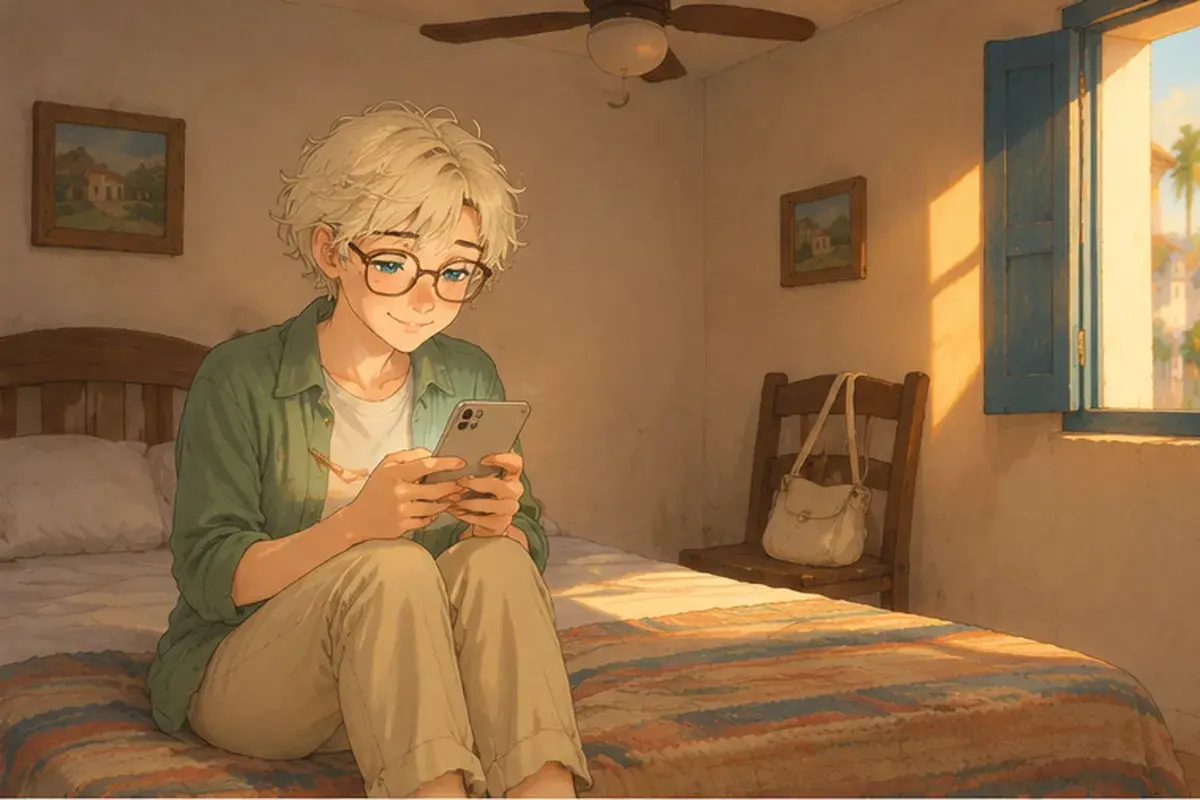
Minha família está distante, mas hoje ela coube na tela do celular.
My family is far away, but today it fit on my phone screen.

A minha avó tem feito tricô todas as noites. Mandou pelo correio, para a casa da Regina, no Rio, uma encomenda com meias de lã.
My grandmother has been knitting every night. She mailed a package with wool socks to Regina's house in Rio.
No Nordeste ninguém usa meia de lã, mas para a minha avó todo lugar tem frio de rachar.
In the Northeast nobody wears wool socks, but for my grandmother everywhere has bitter cold.

Cada cidade é um aprendizado, e a minha curiosidade cresce cada vez mais.
Every city is a learning experience, and my curiosity grows more and more.
Dez meses atrás eu não sabia pedir um café. Hoje escrevo tudo isto em português.
Ten months ago I didn't know how to order a coffee. Today I write all of this in Portuguese.
Grammar for this text
- Meu português tem evoluído —
tem evoluído=ter("has") + the participleevoluído(fromevoluir, withí). It means "has been developing for a while". - tenho feito progresso — "I've been making progress" (not "I made").
- Eu me adaptei ao calor —
adaptar-se ameans to adjust yourself to new conditions. The verb is reflexive:megoes before it. - me acostumei a acordar cedo —
acostumar-se ameans to get used to what is already there. Also reflexive, withmebefore the verb. - Às vezes eu travo —
travaris what people say about a connection that freezes; Nina jokes about herself when she speaks. - Ontem tive até um pesadelo —
tivemeans "I had" (past ofter, A2);atéhere means "even". - Ela coube na tela —
coubemeans "it fit" (past ofcaber, A2). - Eu desenho o café da manhã e passa —
passawith no subject means "it passes" (the bad mood). - meias de lã — here
meiameans "sock" (not "half"). - frio de rachar — casual for "bitter cold"; people say it at home and with friends.
- cada vez mais — "more and more".
- aos poucos — "little by little, step by step".
Words and grammar of the unit: Tell your mom how you've been.
Learn the words from the texts with flashcards
In the app, you can tap any word in a text to see its translation, forms and examples, and new words stick with flashcards. 15 minutes a day.
Start for freeEverything is open for free. No card needed to sign up.