

Portuguese story with translation · B1 · 17 lines
Embora eu não saiba dançar, eu sei seguir comandos Although I can't dance, I know how to follow commands
Comic · 9 panels

Na segunda noite de festa, o marcador grita: «Hoje tem casamento caipira!»
On the second night of the festival, the caller shouts: “Today there's a country wedding!”
Santo Antônio é o santo casamenteiro, por isso a festa tem sempre uma brincadeira de casamento.
Santo Antônio is the matchmaking saint, so the festival always has a wedding game.
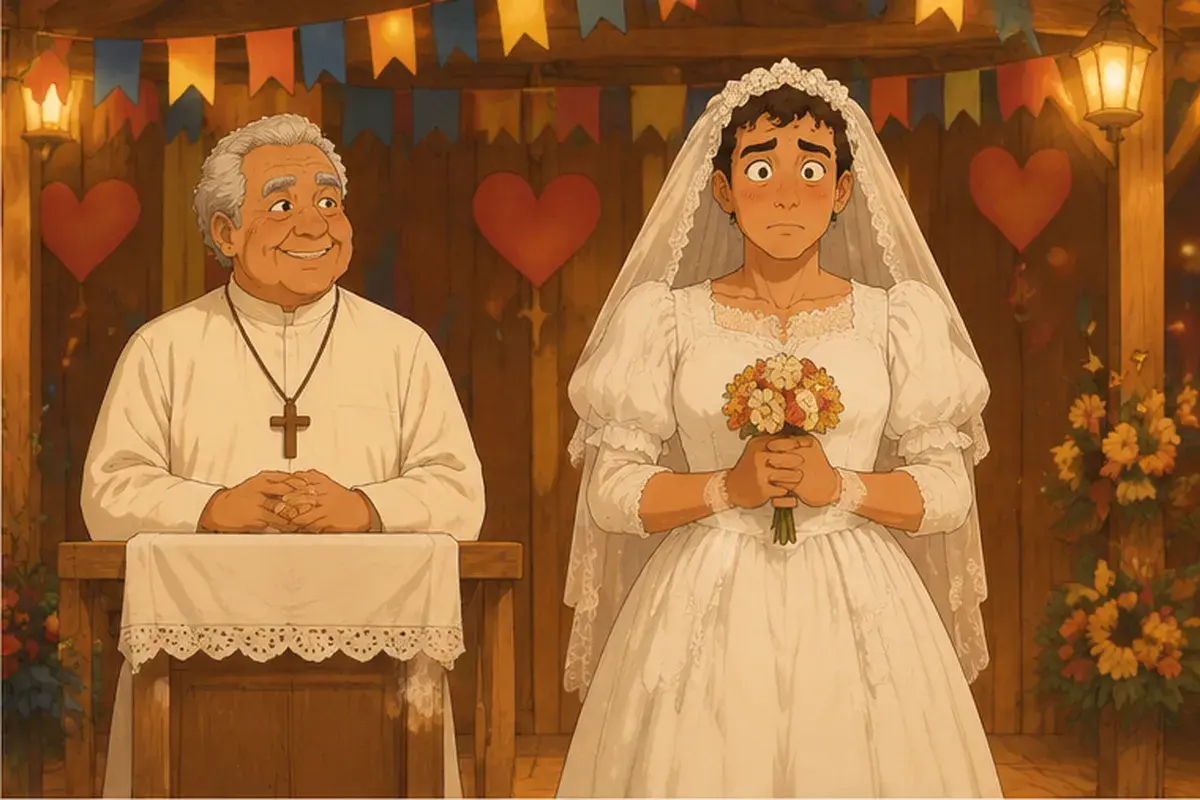
A cena mostra o jeito caipira de casar no campo, com padre, padrinho e madrinha.
The scene shows the country-style way of getting married in the countryside, with a priest, a best man, and a maid of honor.
O padre é um senhor daqui, e a noiva é um rapaz de vestido.
The priest is an older local gentleman, and the bride is a guy in a dress.
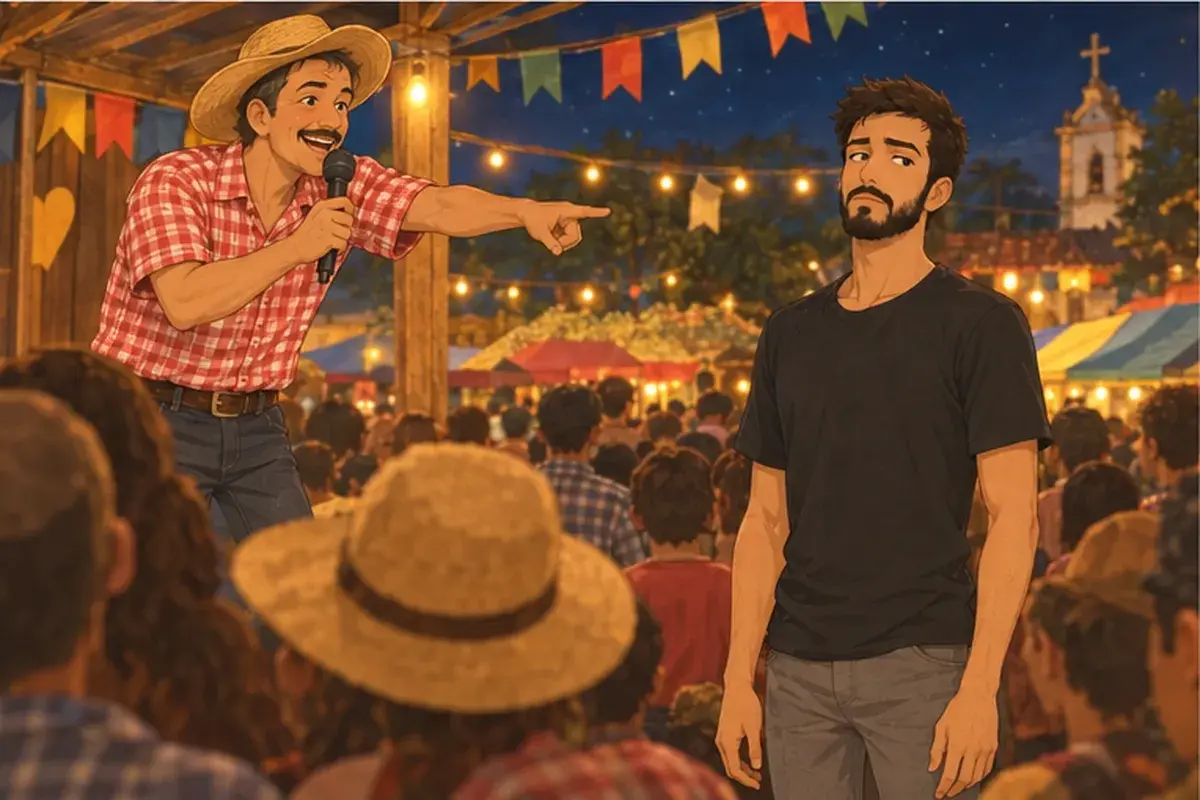
Em cima da hora, falta o noivo, e o marcador olha para o Léo: «Você, o alto!»
At the last minute, the groom is missing, and the caller looks at Léo: “You, the tall one!”
O Léo mantém a calma e responde: «Eu não danço, eu só assisto.»
Léo keeps calm and answers: “I don't dance, I only watch.”

A Bia, com a câmera na mão, grita: «Já que você veio, agora você casa!»
Bia, with the camera in her hand, shouts: “Since you came, now you're getting married!”
Mesmo assim, o Léo tenta fugir, mas a Dona Socorro, a madrinha de hoje, segura o braço dele.
Even so, Léo tries to run away, but Dona Socorro, today's maid of honor, holds his arm.
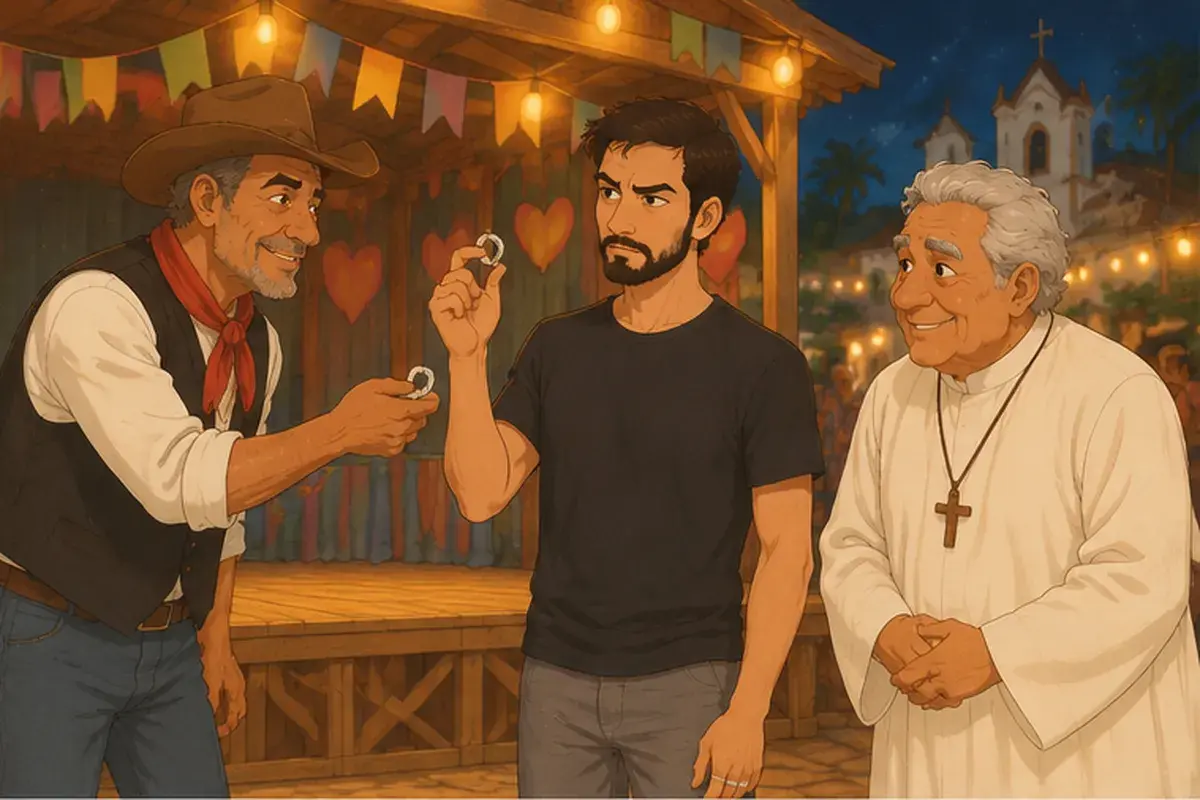
O padrinho entrega uma aliança de papel ao noivo.
The best man hands the groom a paper wedding ring.
O Léo olha a aliança e fala para o padre: «Eu preciso ler o contrato primeiro.»
Léo looks at the ring and tells the priest: “I need to read the contract first.”

O padre responde: «Aqui o contrato é a palavra, meu filho!»
The priest answers: “Here the contract is the word, my son!”
A praça inteira ri, e a celebração continua: os pares entram, e o marcador grita os comandos.
The whole square laughs, and the celebration goes on: the couples come in, and the caller shouts the commands.
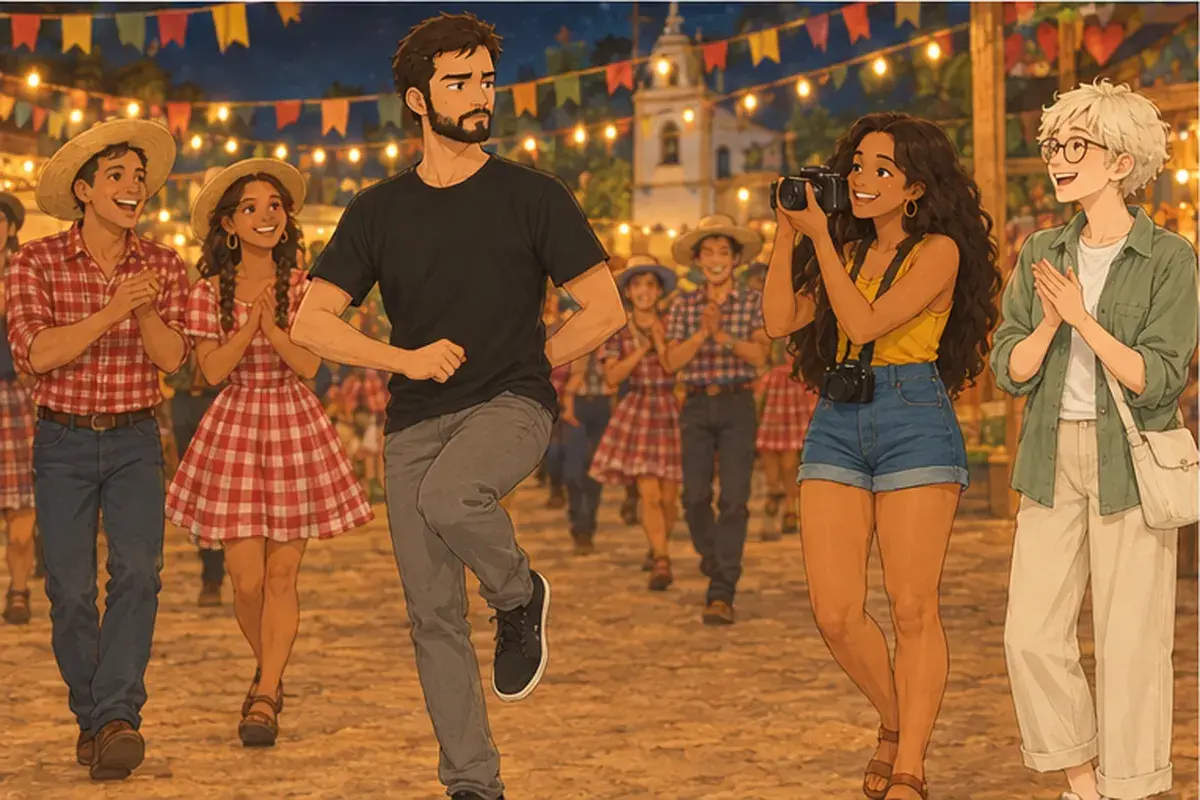
Embora o Léo diga que não sabe dançar, ele faz tudo certo: o balancê, o caracol e até o anarriê.
Although Léo says he doesn't know how to dance, he does everything right: the balancê, the caracol, and even the anarriê.
No fim, o Léo acaba dançando até o último comando; todo mundo aplaude, e ele agradece, sério como sempre.
In the end, Léo ends up dancing until the last command; everybody applauds, and he says thank you, serious as always.

Eu falo: «Você dançou muito bem!», e ele responde sem sorrir:
I say: “You danced really well!” and he answers without smiling:
«Embora eu não saiba dançar, eu sei seguir comandos.»
“Although I can't dance, I know how to follow commands.”

Mais tarde, a Bia mostra o vídeo no celular. O Léo olha e diz: «Esse vídeo é falso.»
Later, Bia shows the video on her phone. Léo looks and says: “This video is fake.”
Grammar for this text
- Santo Antônio é o santo casamenteiro —
casamenteirocomes fromcasamento+-eiro: someone who arranges weddings. In Brazil Saint Anthony is the matchmaking saint. Before a vowel people usually writeSanto, before a consonantSão(São João). - O Léo mantém a calma —
mantémmeans “he keeps (calm)”, the ele form ofmanter(it works liketer:tem→mantém; the eles form ismantêm). - Já que você veio, agora você casa —
já quemeans “since” and takes a normal verb;veiomeans “came”, the past ofvir.casahere is not “house”: it iscasar, “to get married”, the você form. - Mesmo assim, o Léo tenta fugir —
mesmo assimmeans “even so”;fugirmeans “to run away”. - a madrinha de hoje — at a wedding
madrinhais the “maid of honor” (in church it can also mean “godmother”), andpadrinhois the “best man”. - Embora o Léo diga que não sabe dançar —
digais the subjunctive ofdizer(digo→ drop-o, add-a:diga). Only theemborapart takes the subjunctive;que não sabestays normal, because that is howdizer queworks. - Embora eu não saiba dançar —
saibais the same subjunctive, fromsaber. The joke: Léo still “follows commands”, like a computer program. - Em cima da hora — “at the last minute”, casual.
- acaba dançando —
acabar+ gerund means “ends up dancing”, even though he did not plan to.
Words and grammar of the unit: Celebrate São João like a local.
Learn the words from the texts with flashcards
In the app, you can tap any word in a text to see its translation, forms and examples, and new words stick with flashcards. 15 minutes a day.
Start for freeEverything is open for free. No card needed to sign up.