

Portuguese dialogue with translation · B1 · 18 lines
Quando a gente chegou, a bilheteria já tinha encerrado When we got there, the ticket office had already closed
Comic · 17 panels
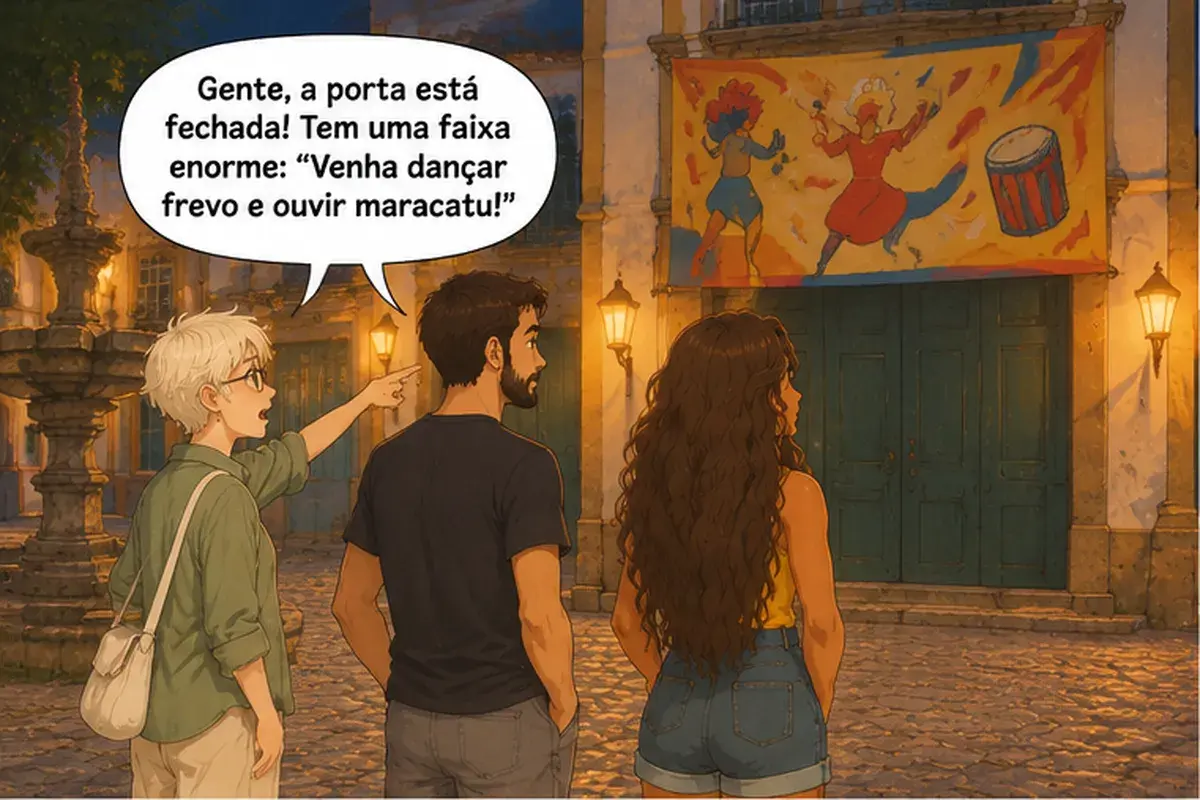
- Nina
Gente, a porta está fechada! Tem uma faixa enorme: “Venha dançar frevo e ouvir maracatu!”
Guys, the door is closed! There's a huge banner: “Come dance frevo and hear maracatu!”
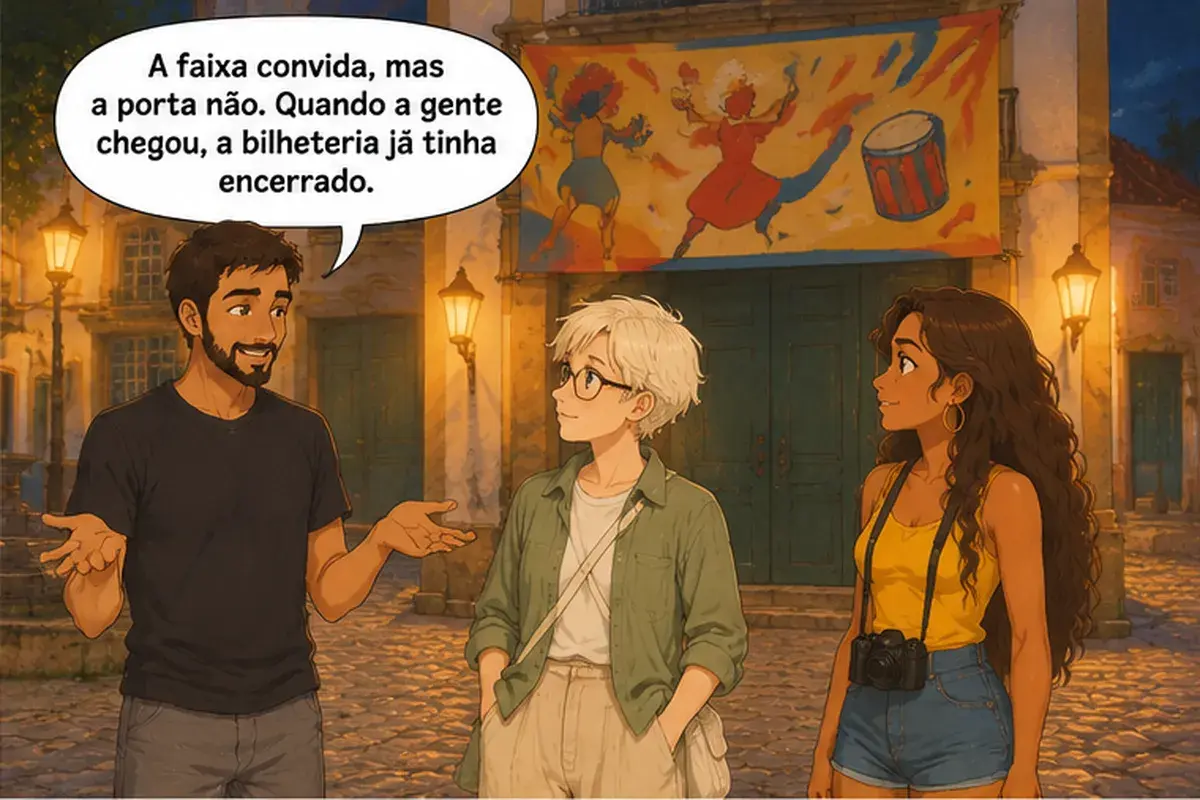
- Léo
A faixa convida, mas a porta não. Quando a gente chegou, a bilheteria já tinha encerrado.
The banner invites us, but the door doesn't. When we got there, the ticket office had already closed.
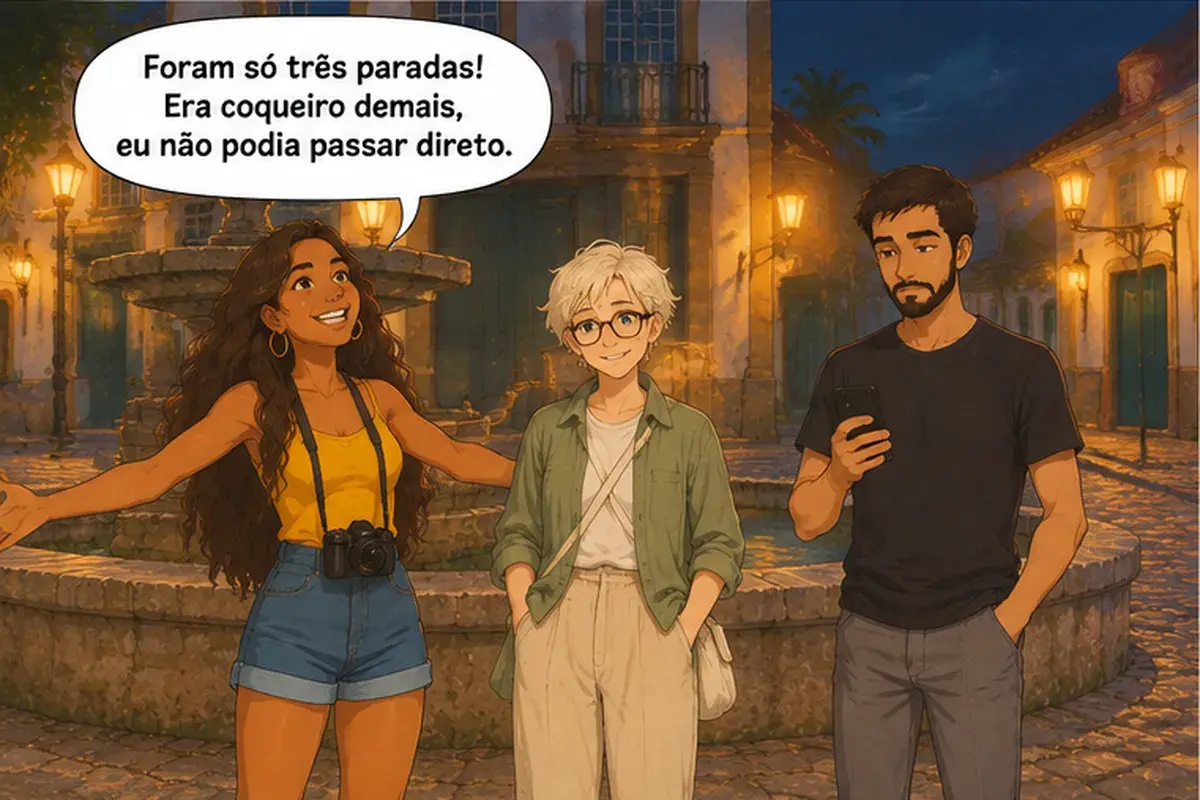
- Bia
Foram só três paradas! Era coqueiro demais, eu não podia passar direto.
It was only three stops! There were way too many coconut palms, I couldn't just pass by.
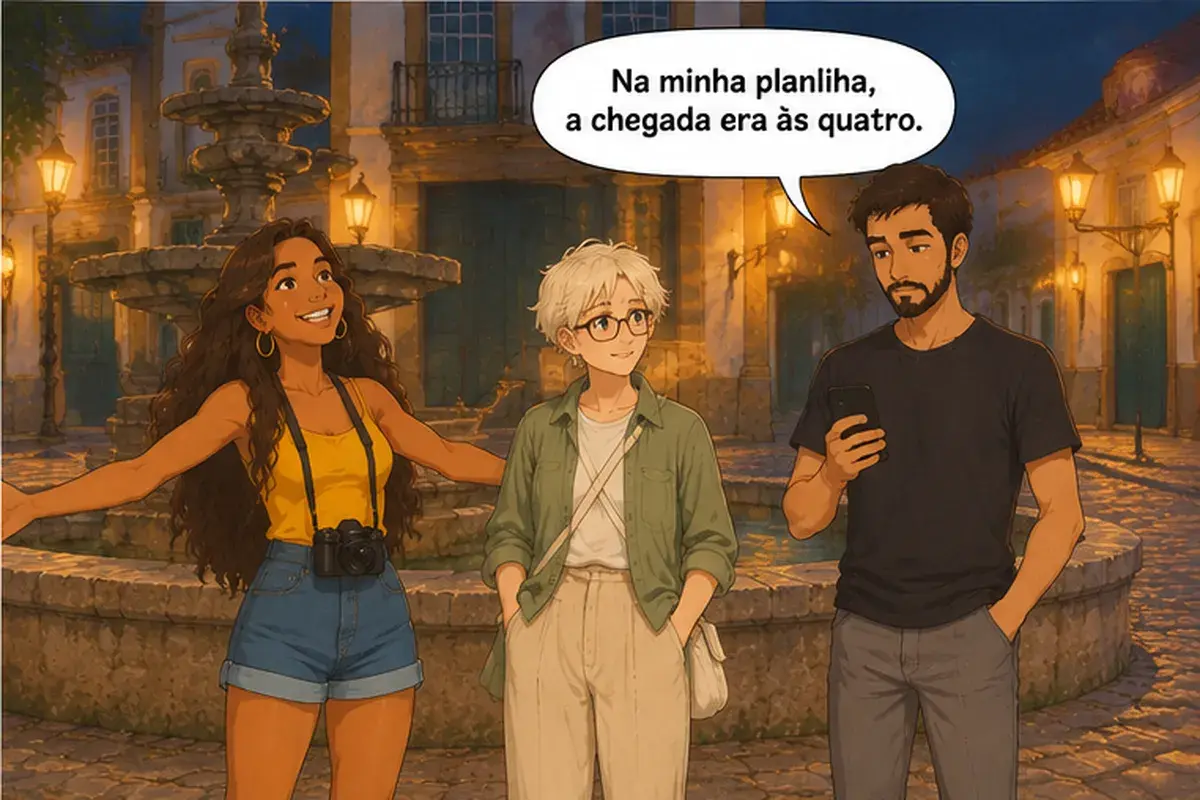
- Léo
Na minha planilha, a chegada era às quatro.
In my spreadsheet, the arrival was at four.
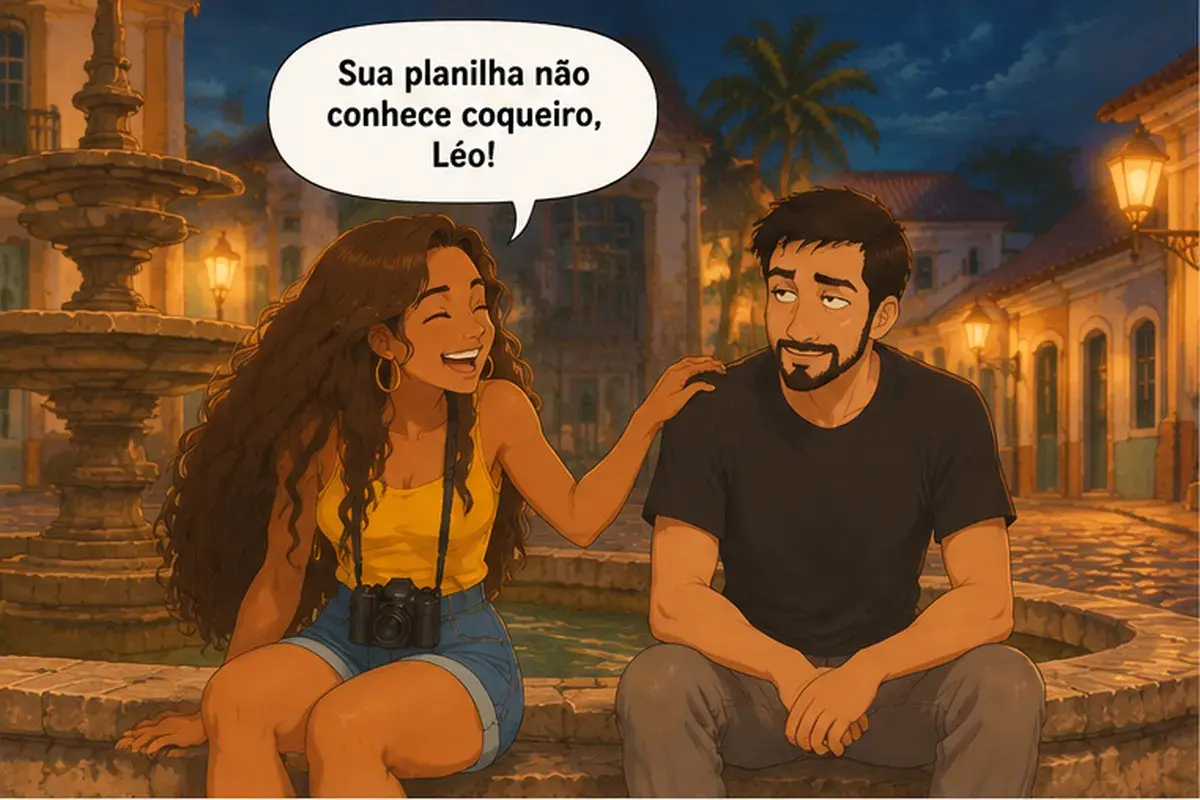
- Bia
Sua planilha não conhece coqueiro, Léo!
Your spreadsheet doesn't know about coconut palms, Léo!
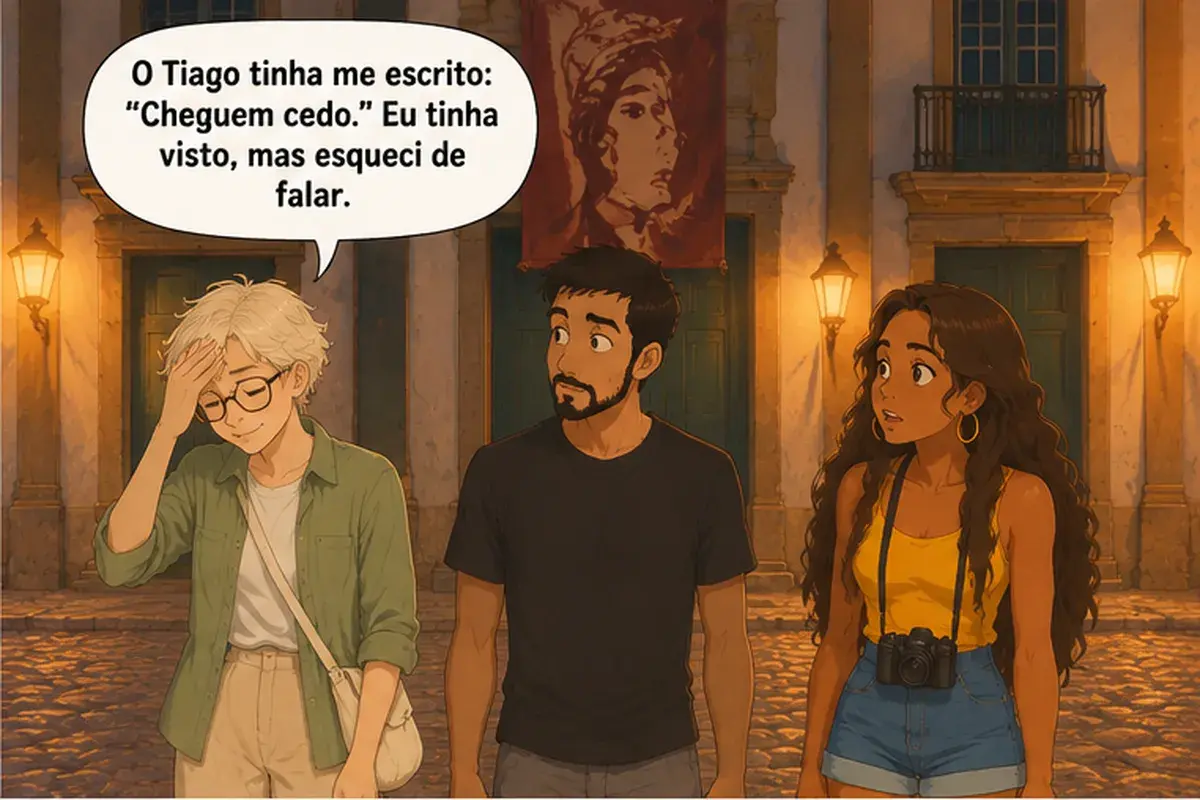
- Nina
O Tiago tinha me escrito: “Cheguem cedo.” Eu tinha visto, mas esqueci de falar.
Tiago had written to me: “Get there early (to several people).” I had seen it, but I forgot to mention it.
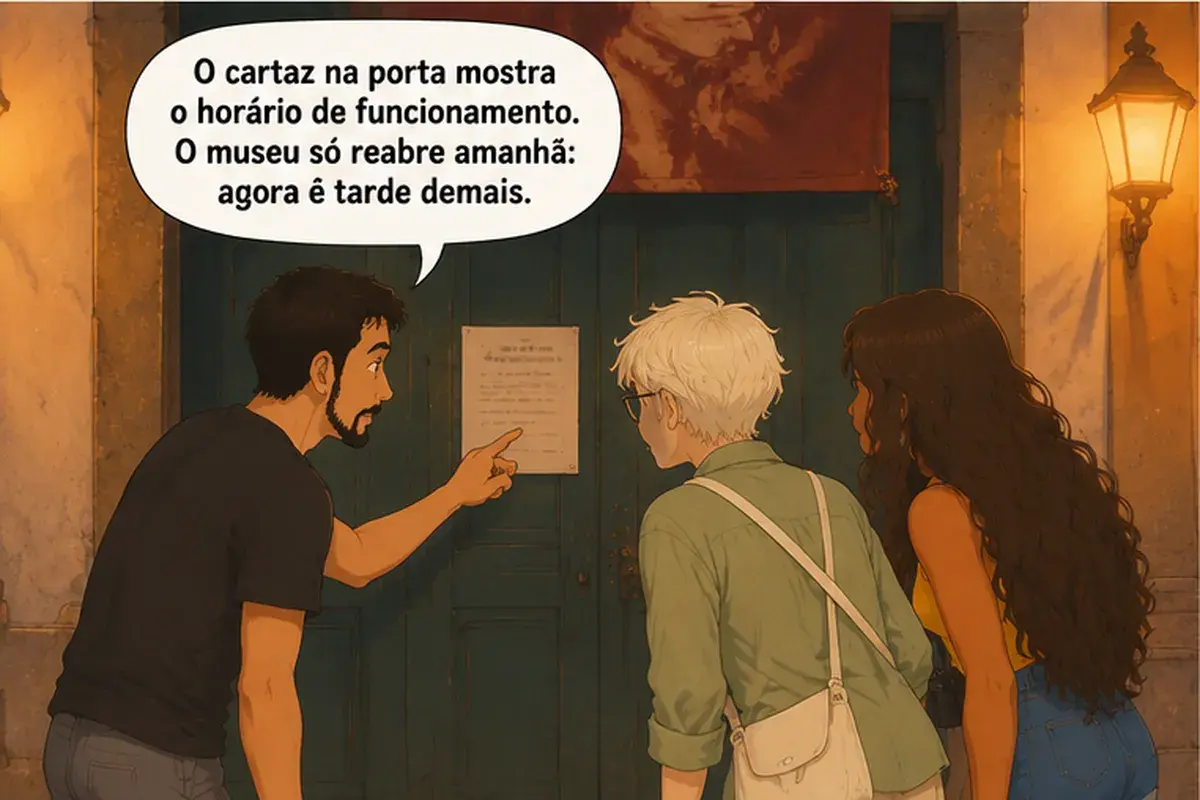
- Léo
O cartaz na porta mostra o horário de funcionamento. O museu só reabre amanhã: agora é tarde demais.
The notice on the door shows the hours of operation. The museum only reopens tomorrow: now it's too late.
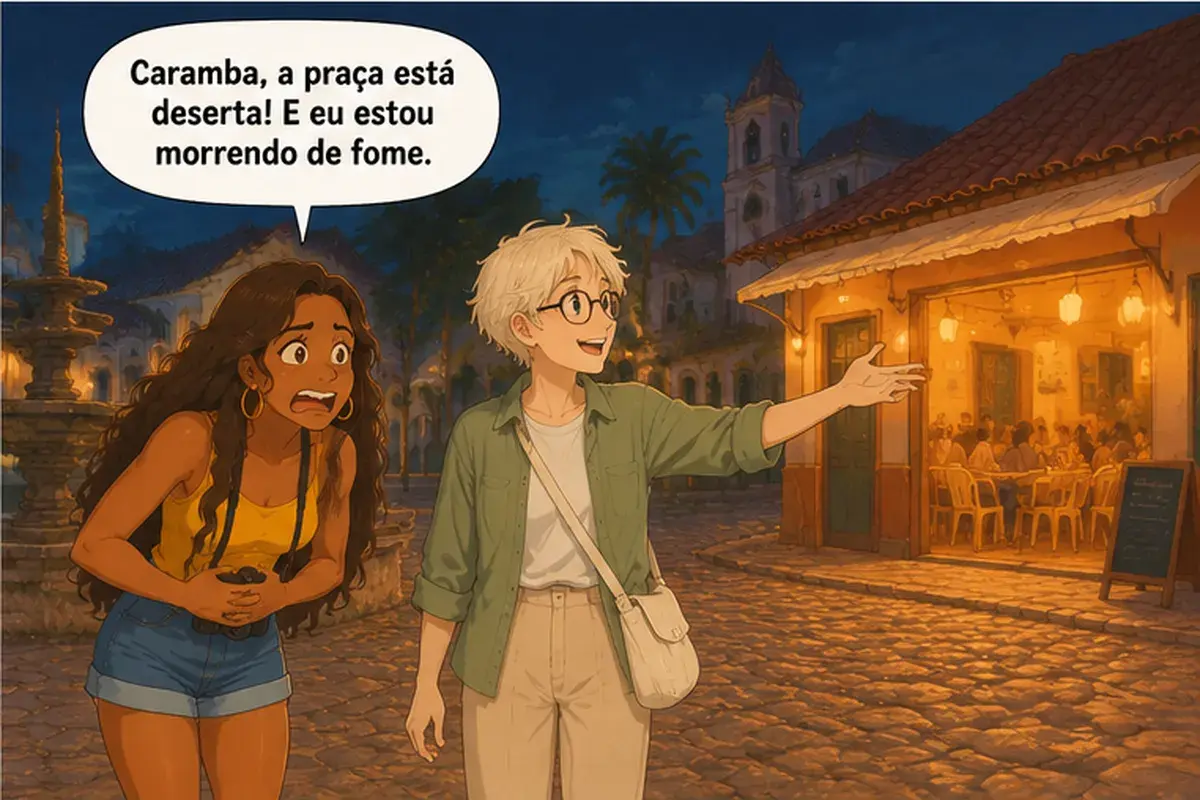
- Bia
Caramba, a praça está deserta! E eu estou morrendo de fome.
Wow, the square is deserted! And I'm starving.
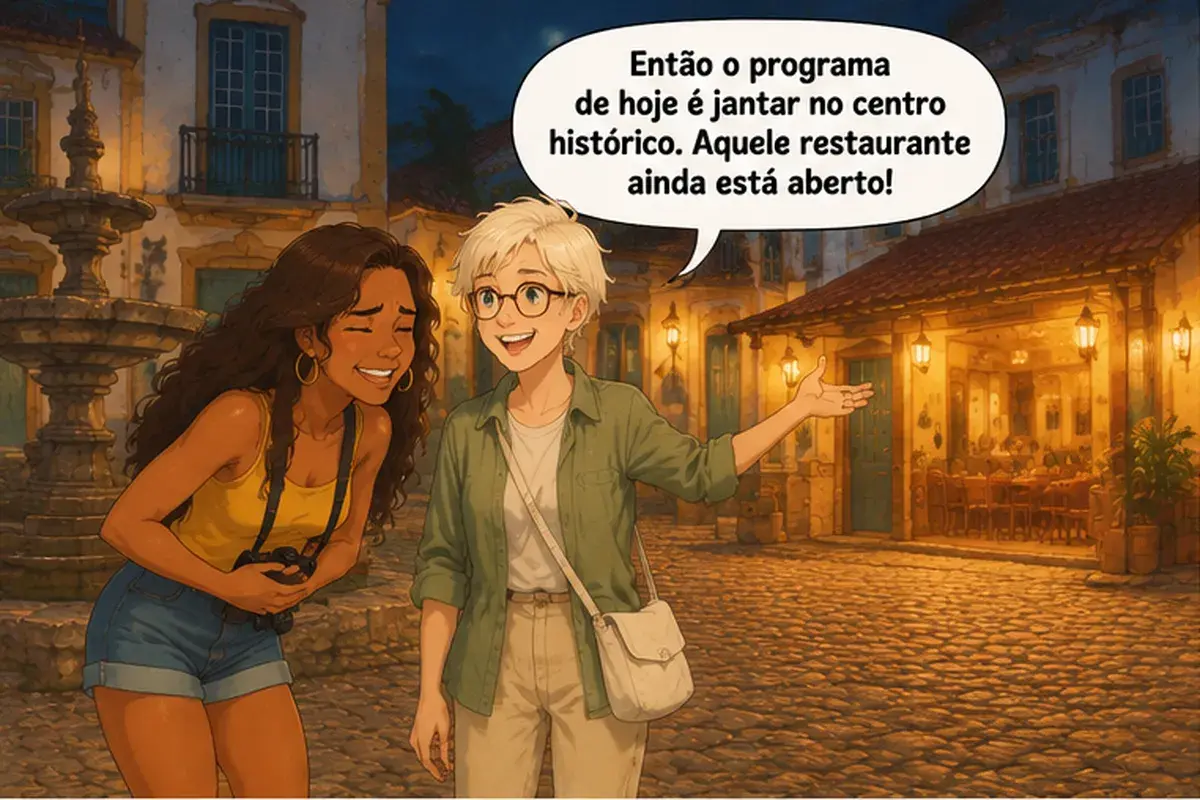
- Nina
Então o programa de hoje é jantar no centro histórico. Aquele restaurante ainda está aberto!
So tonight's plan is dinner in the historic center. That restaurant is still open!
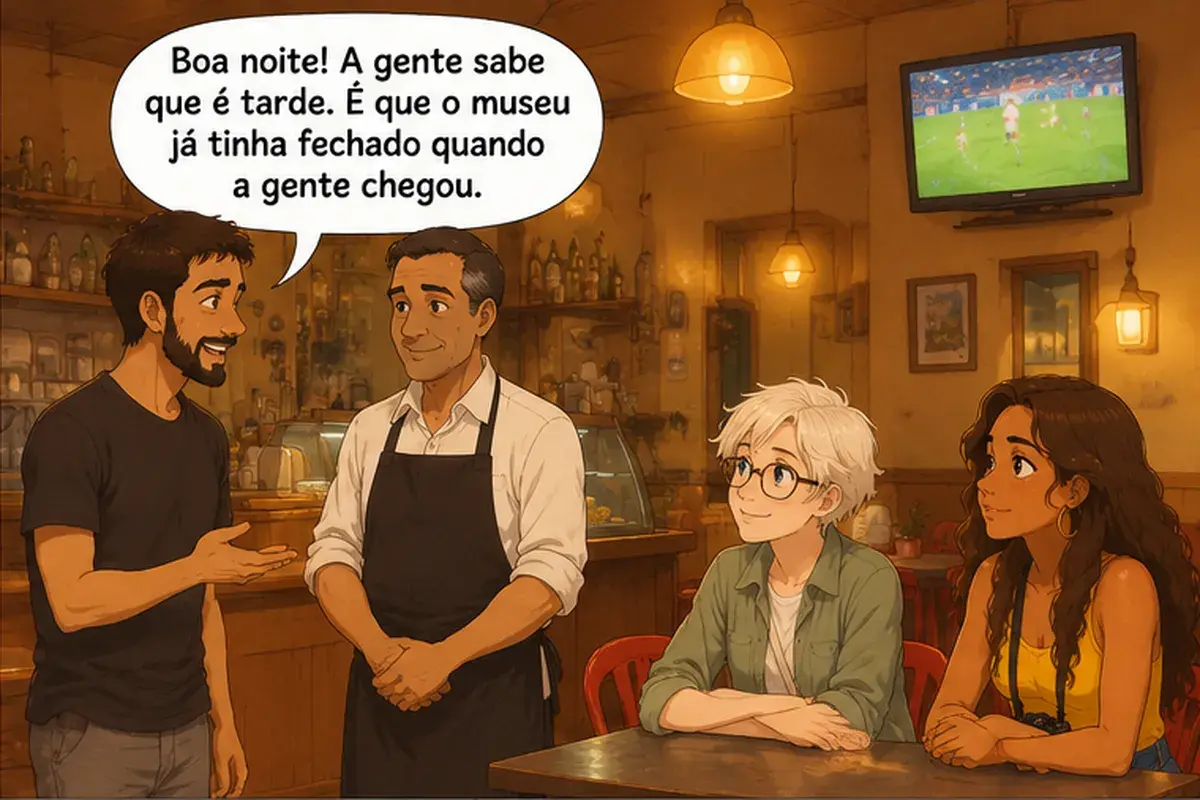
- Léo
Boa noite! A gente sabe que é tarde. É que o museu já tinha fechado quando a gente chegou.
Good evening! We know it's late. It's just that the museum had already closed when we got there.
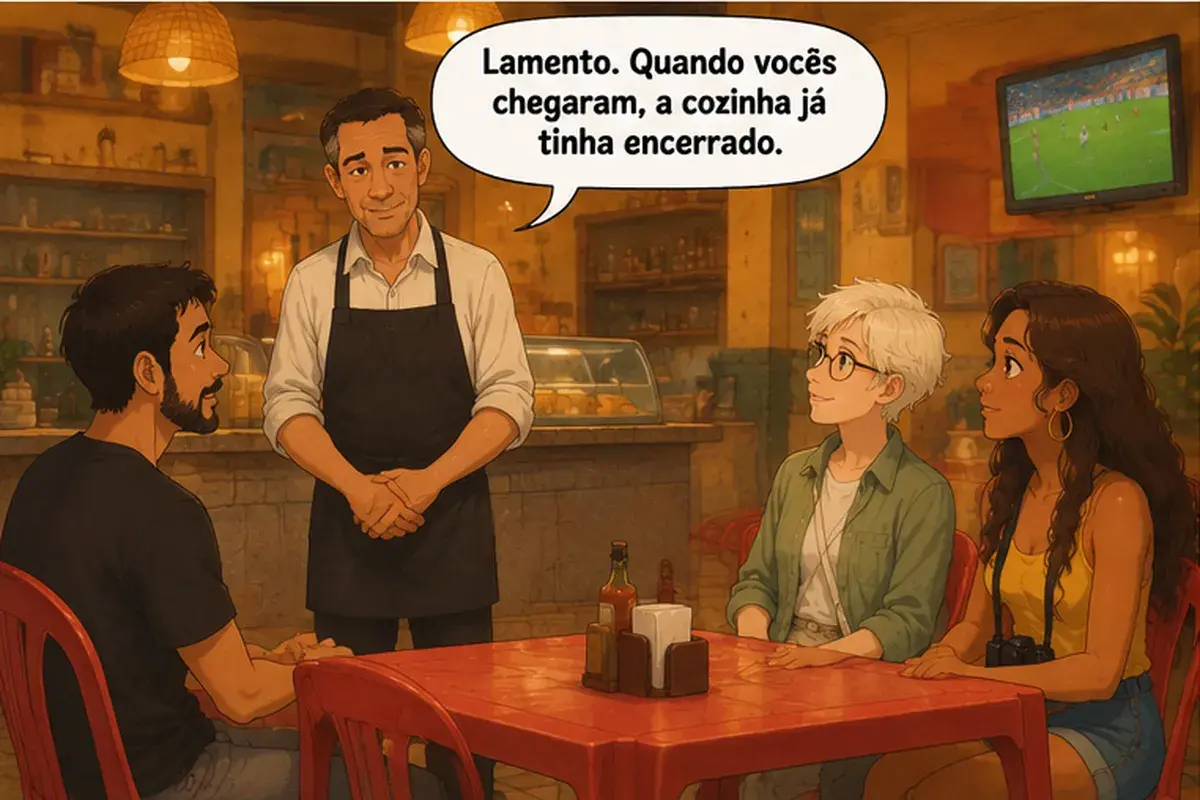
- Garçom
Lamento. Quando vocês chegaram, a cozinha já tinha encerrado.
I'm sorry. When you got here, the kitchen had already closed (to several people).
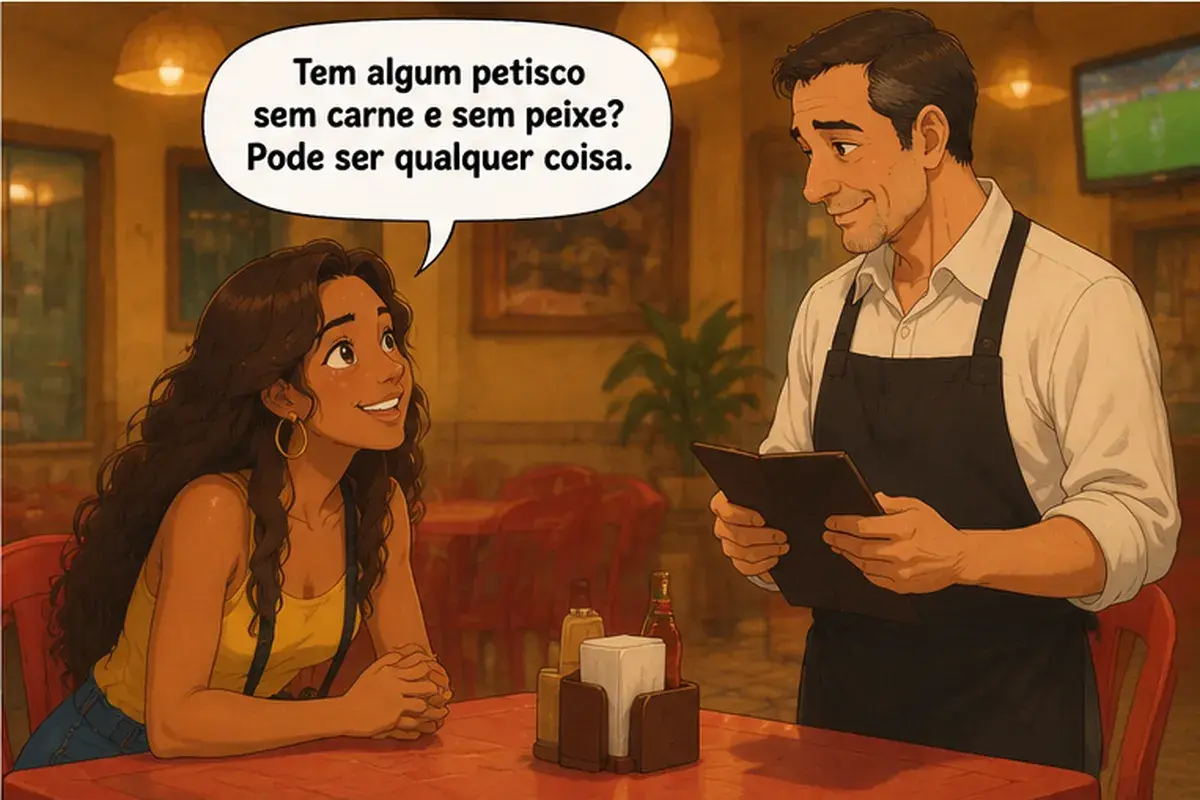
- Bia
Tem algum petisco sem carne e sem peixe? Pode ser qualquer coisa.
Is there a bar snack without meat and without fish? Anything is fine.
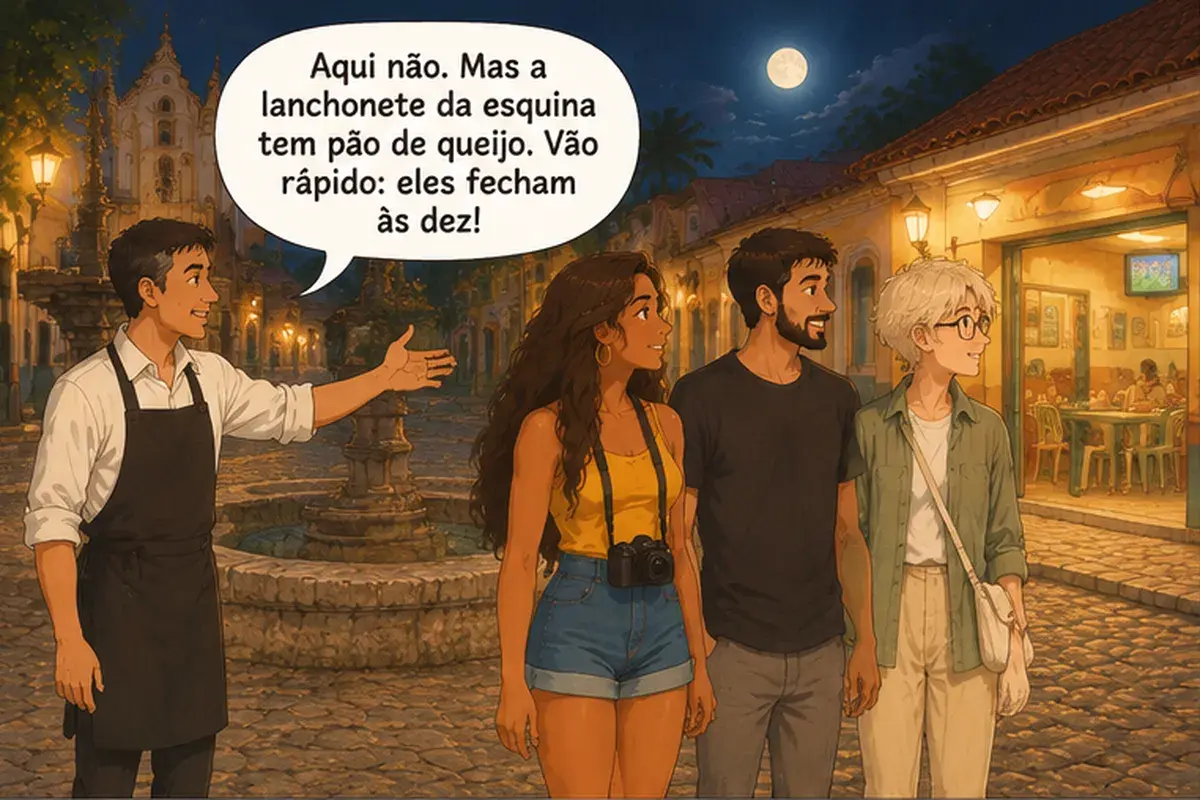
- Garçom
Aqui não. Mas a lanchonete da esquina tem pão de queijo. Vão rápido: eles fecham às dez!
Not here. But the snack bar on the corner has pão de queijo. Go quickly (to several people): they close at ten!
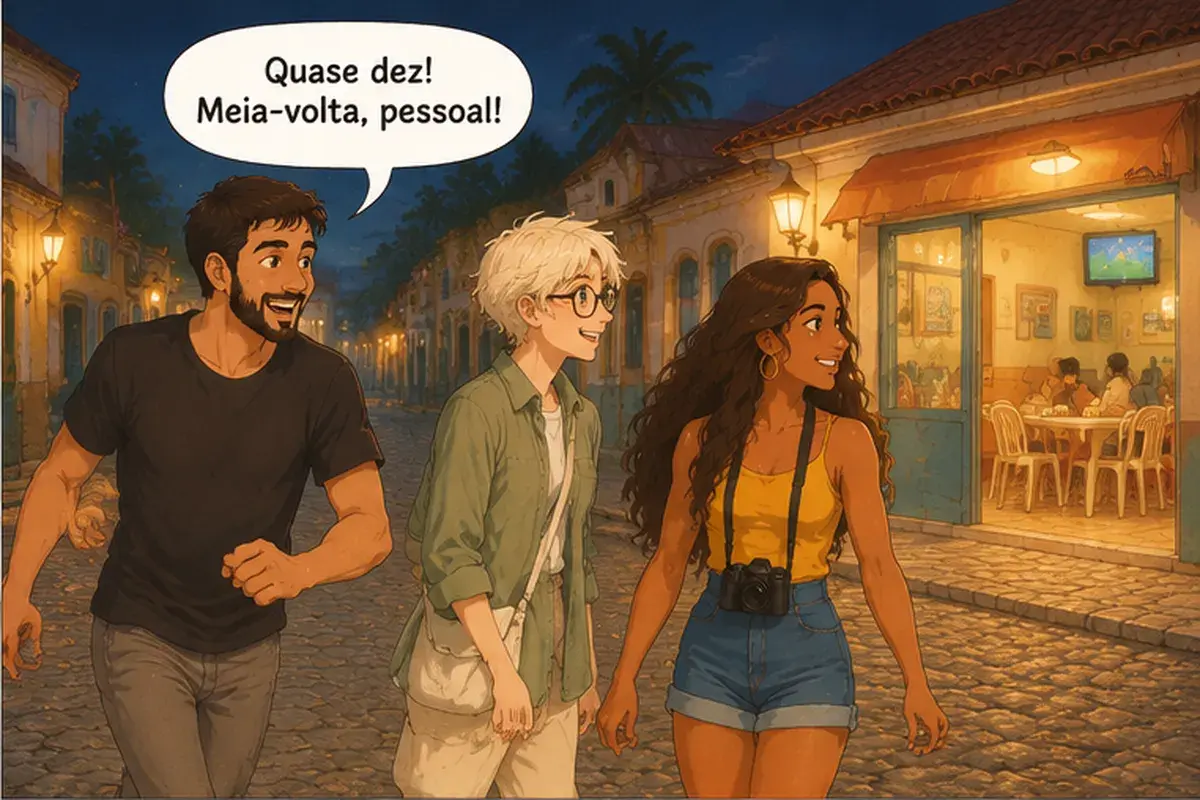
- Léo
Quase dez! Meia-volta, pessoal!
Almost ten! Let's turn around, everyone!
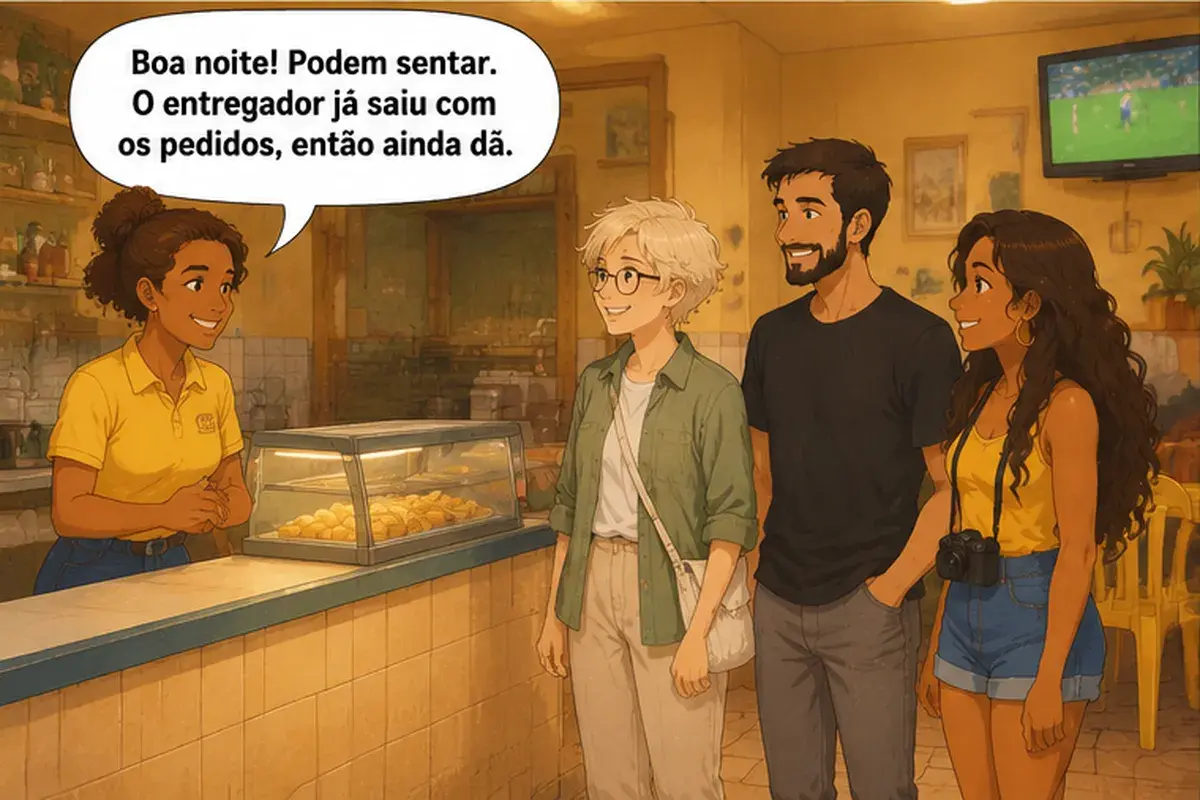
- Atendente
Boa noite! Podem sentar. O entregador já saiu com os pedidos, então ainda dá.
Good evening! You can sit down (to several people). The delivery person has already left with the orders, so there's still time.
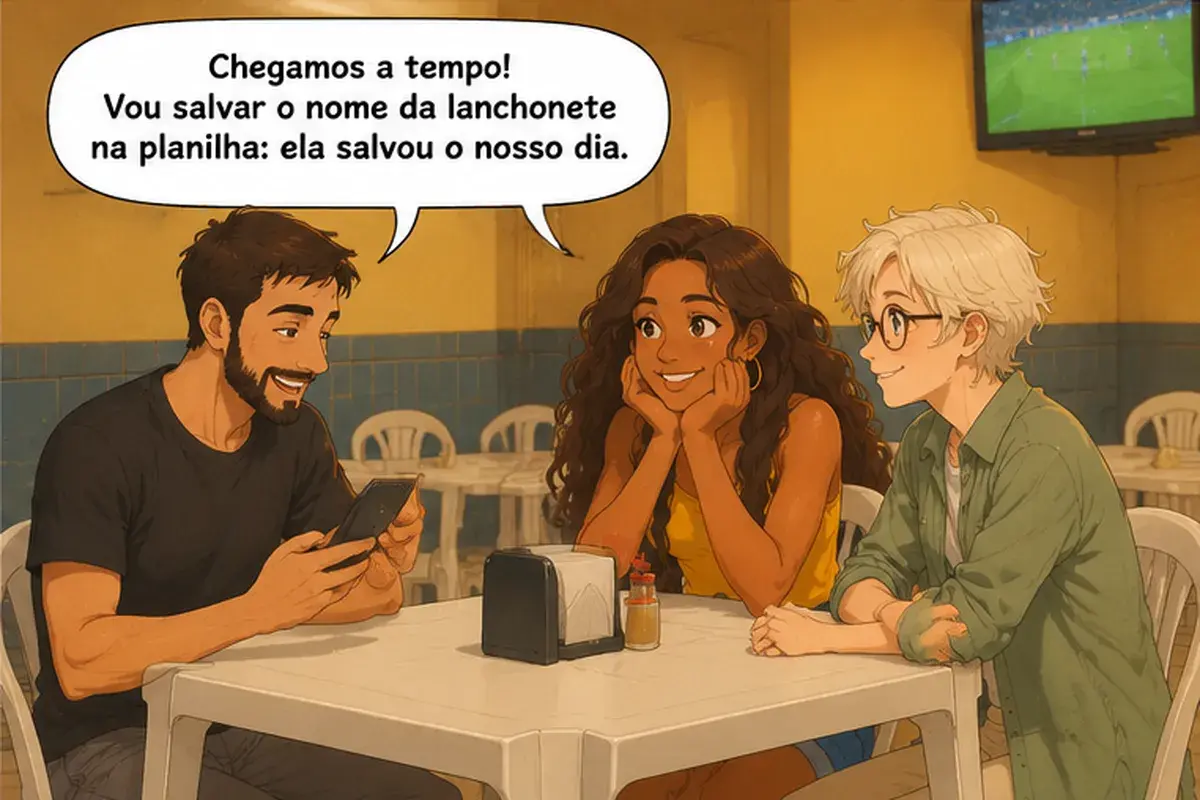
- Léo
Chegamos a tempo! Vou salvar o nome da lanchonete na planilha: ela salvou o nosso dia.
We made it in time! I'm going to save the snack bar's name in the spreadsheet: it saved our day.
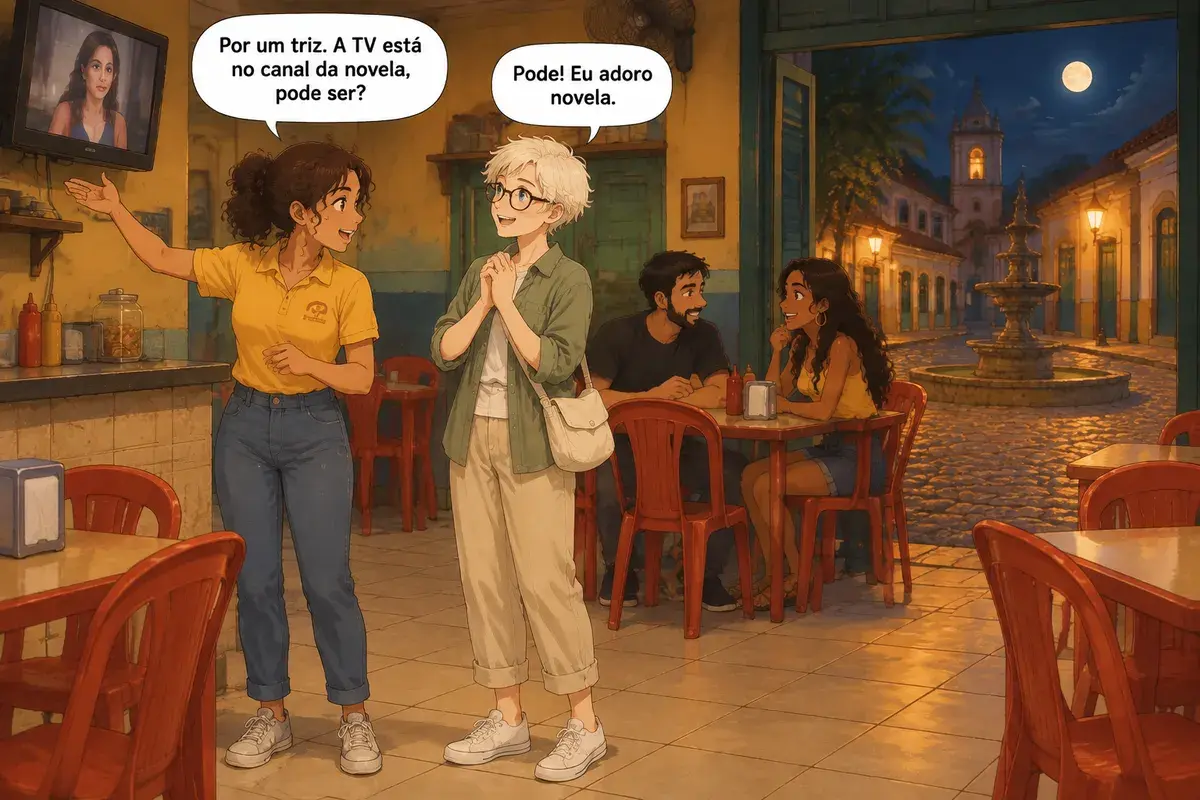
- Atendente
Por um triz. A TV está no canal da novela, pode ser?
Just barely. The TV is on the soap opera channel, is that OK?
- Nina
Pode! Eu adoro novela.
Sure! I love soap operas.
Grammar for this text
- a bilheteria já tinha encerrado —
tinha encerrado:tinha(the imperfect ofter, A2) + the past participleencerrado(fromencerrar). The form says the ticket office closed before we got there. The rule is in the unit's grammar. - O Tiago tinha me escrito, Eu tinha visto —
escrito(fromescrever) andvisto(fromver) are irregular participles; learn them as words: notescrevido, notvido. The pronounmesits betweentinhaand the participle, which is fine in everyday speech. - Caramba, a praça está deserta! —
carambameans "wow!", a mild exclamation of surprise, not rude. Friends say it; you wouldn't say it to a clerk or a boss. - Lamento — "I'm sorry": the
euform oflamentar. This is how waiters and clerks politely say no; friends sayque pena. - Vão rápido —
vãois the command form ofir("go", to several people). - Eles fecham às dez — "they close at ten": this is how the waiter hints that they need to hurry.
- Chegamos a tempo!, Por um triz —
a tempomeans "in time";por um trizmeans "barely, by a hair". - Meia-volta, pessoal! — a command with no verb: "let's turn around!", like "about-face!" in English.
Words and grammar of the unit: Explain why you're late.
Learn the words from the texts with flashcards
In the app, you can tap any word in a text to see its translation, forms and examples, and new words stick with flashcards. 15 minutes a day.
Start for freeEverything is open for free. No card needed to sign up.