

Portuguese dialogue with translation · B1 · 18 lines
Pra mim, sem camarão, por favor For me, no shrimp, please
Comic · 13 panels

- Nina
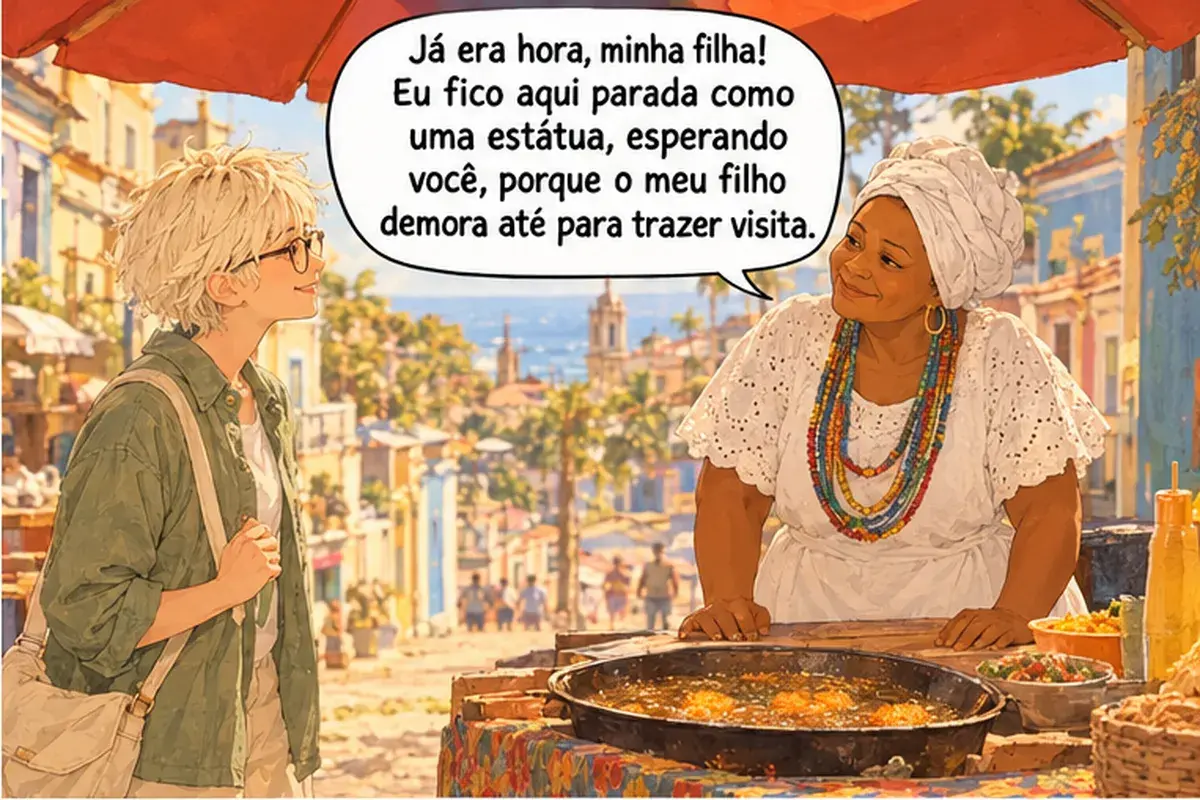
Dona Cida, o cheiro do tabuleiro da senhora é tão bom que eu parei no meio da rua. Finalmente vou provar o acarajé!
Dona Cida, the smell of your stall is so good that I stopped in the middle of the street (formal). I'm finally going to try acarajé!
- Dona Cida
Já era hora, minha filha! Eu fico aqui parada como uma estátua, esperando você, porque o meu filho demora até para trazer visita.
About time, dear! I stand here like a statue waiting for you (woman speaking), because my son takes forever even to bring visitors.

- Nina
Tudo isso é exótico para mim. O que tem dentro do bolinho? Estou com fome, hoje eu comeria três!
All of this is exotic to me. What's inside the fritter? I'm hungry, today I'd eat three!
- Tiago
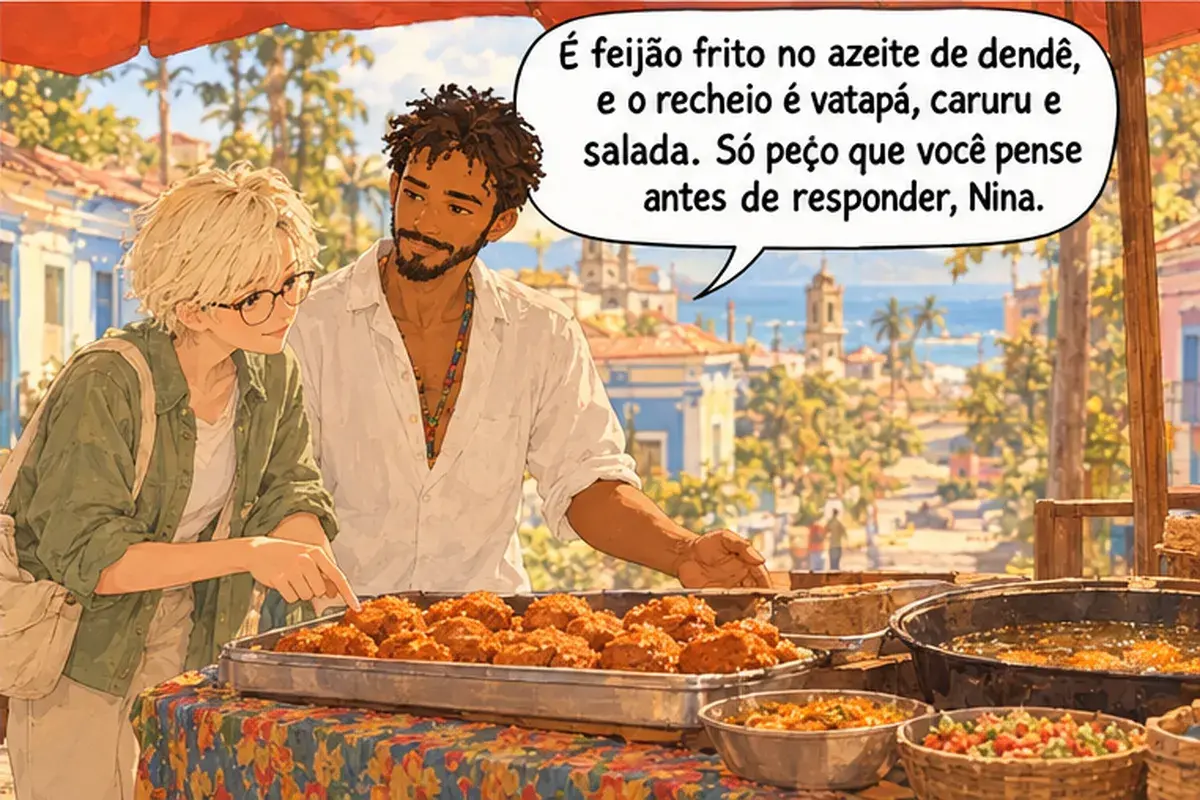
É feijão frito no azeite de dendê, e o recheio é vatapá, caruru e salada. Só peço que você pense antes de responder, Nina.
It's beans fried in dendê oil, and the filling is vatapá, caruru and salad. I'm only asking you to think before you answer, Nina.
- Dona Cida
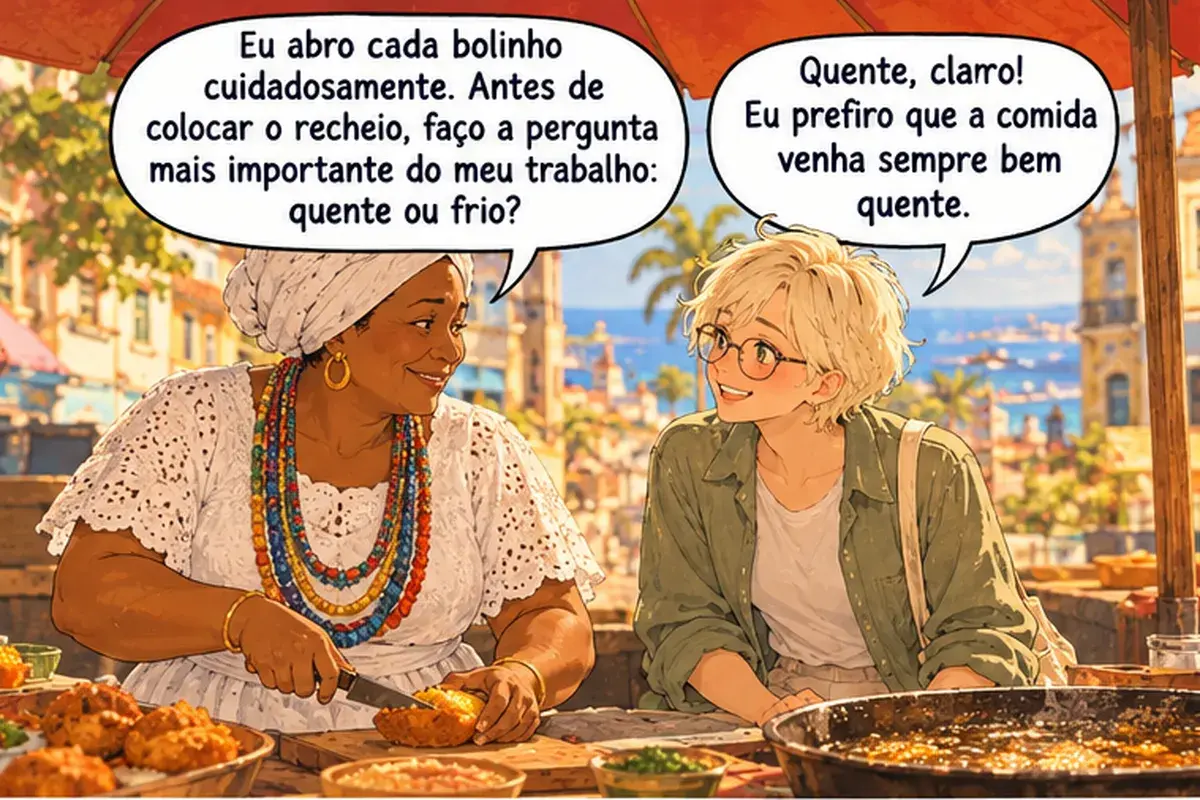
Eu abro cada bolinho cuidadosamente. Antes de colocar o recheio, faço a pergunta mais importante do meu trabalho: quente ou frio?
I open each fritter carefully. Before I put in the filling, I ask the most important question of my job: hot or cold?
- Nina
Quente, claro! Eu prefiro que a comida venha sempre bem quente.
Hot, of course! I prefer the food to always come nice and hot.
- Dona Cida
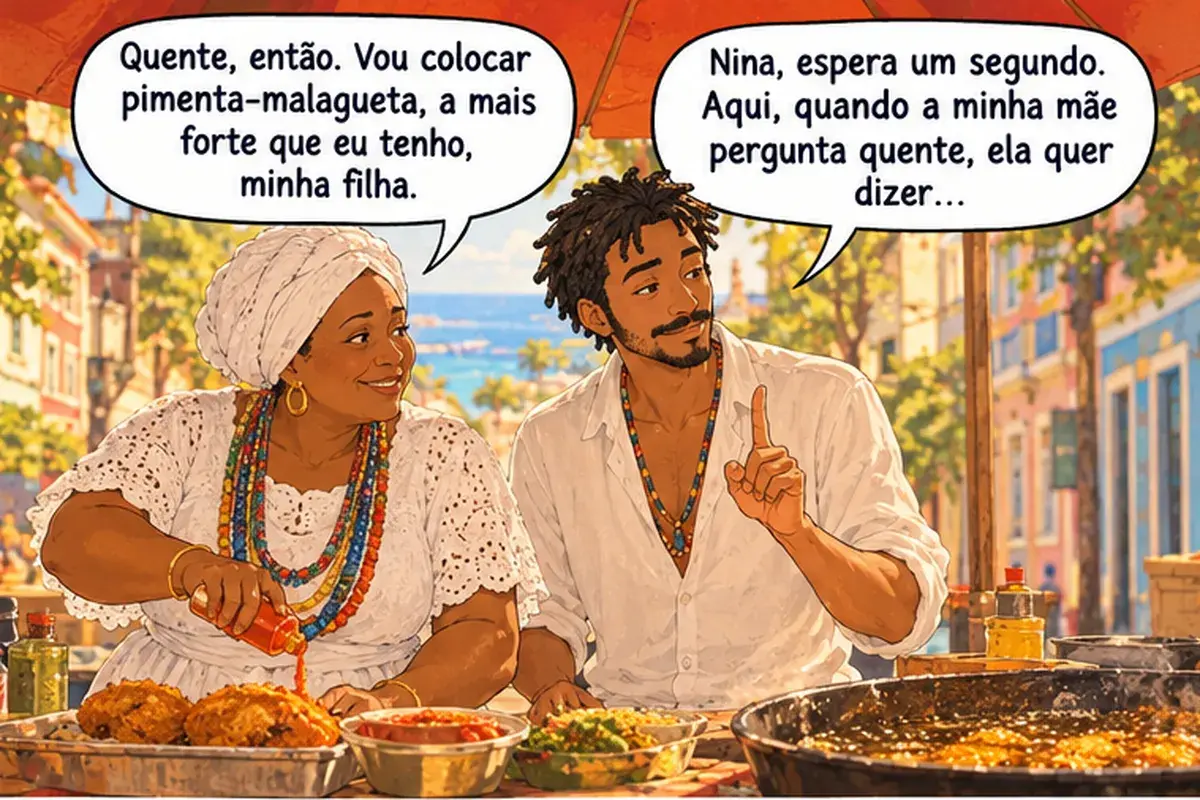
Quente, então. Vou colocar pimenta-malagueta, a mais forte que eu tenho, minha filha.
Hot, then. I'll put in malagueta pepper, the strongest one I have, dear.
- Tiago
Nina, espera um segundo. Aqui, quando a minha mãe pergunta quente, ela quer dizer…
Nina, wait a second. Here, when my mom asks "hot", she means...
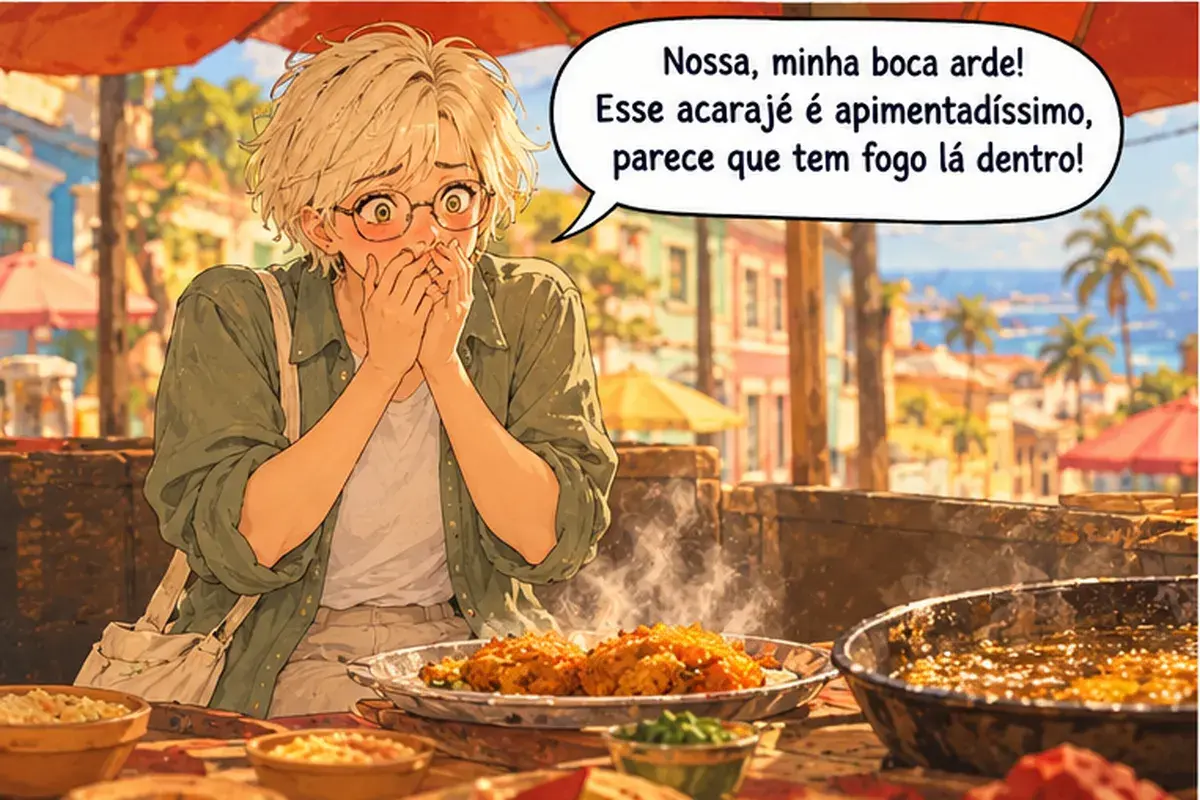
- Nina
Nossa, minha boca arde! Esse acarajé é apimentadíssimo, parece que tem fogo lá dentro!
Wow, my mouth is burning! This acarajé is incredibly spicy, it's like there's fire inside!
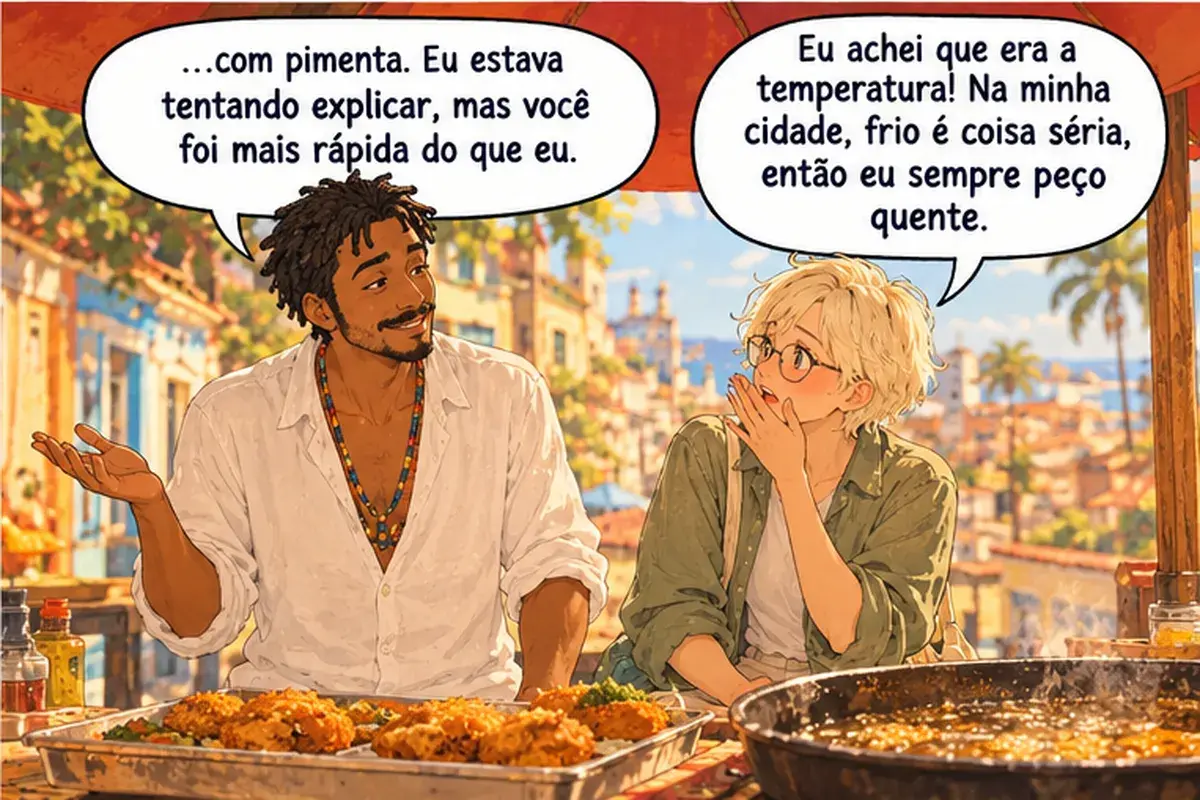
- Tiago
…com pimenta. Eu estava tentando explicar, mas você foi mais rápida do que eu.
...with pepper. I was trying to explain, but you were faster than me. (to a woman)
- Nina
Eu achei que era a temperatura! Na minha cidade, frio é coisa séria, então eu sempre peço quente.
I thought it was the temperature! In my city, cold is serious business, so I always ask for hot.

- Dona Cida
Há trinta anos eu sou baiana de acarajé, e todo turista acha que é a temperatura. Quente é com pimenta e frio é sem pimenta.
I've been an acarajé vendor for thirty years, and every tourist thinks it's the temperature. Hot is with pepper, and cold is without pepper.
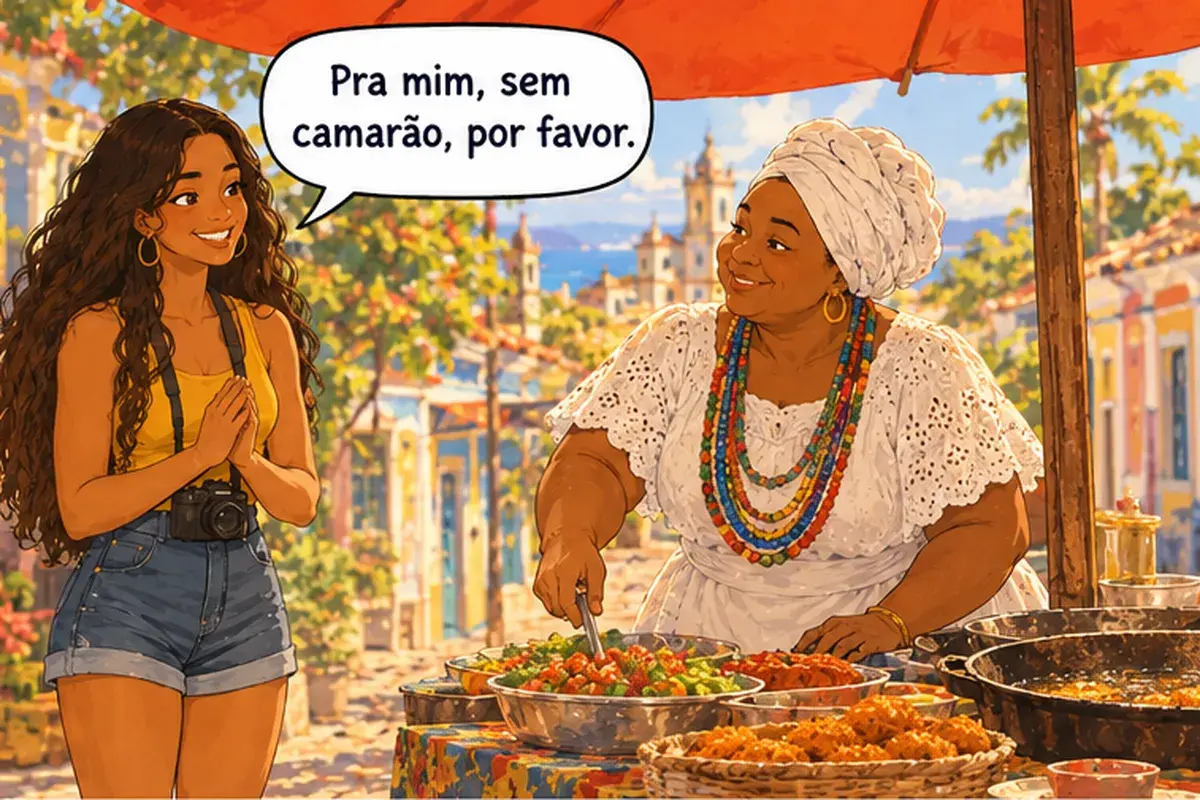
- Bia
Pra mim, sem camarão, por favor.
For me, no shrimp, please.
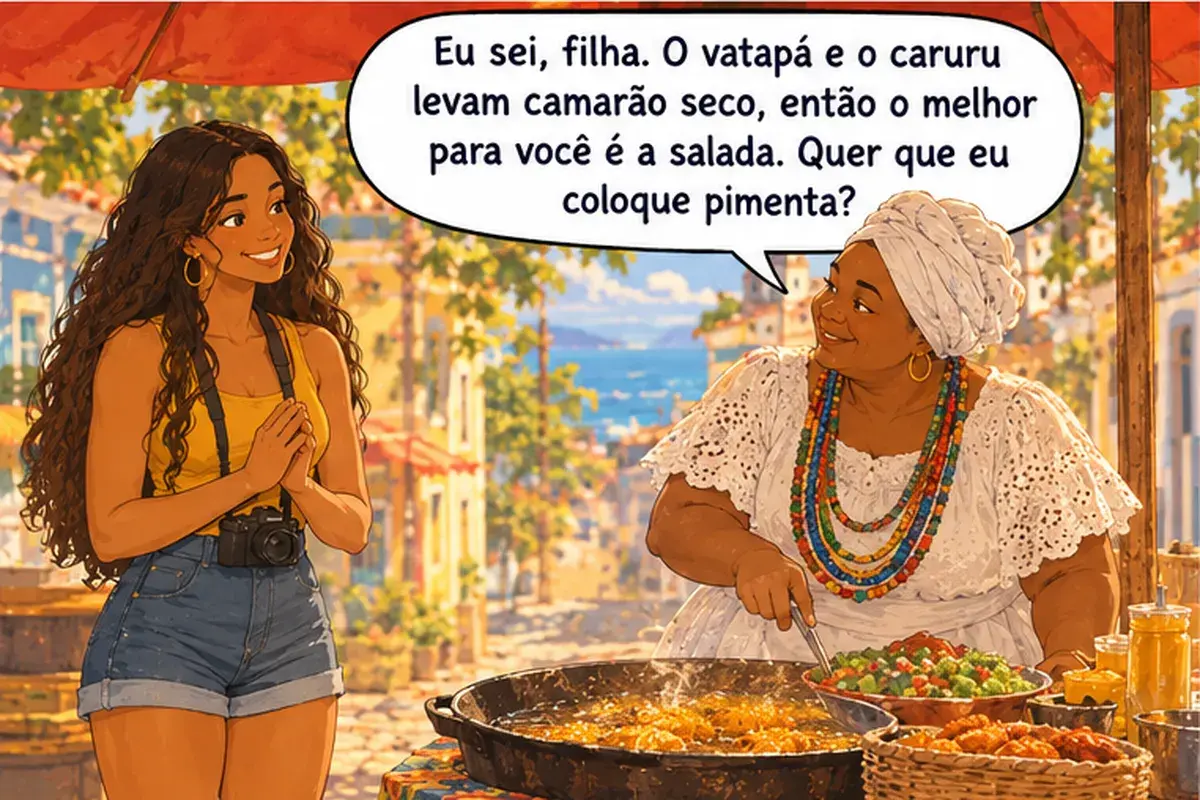
- Dona Cida
Eu sei, filha. O vatapá e o caruru levam camarão seco, então o melhor para você é a salada. Quer que eu coloque pimenta?
I know, dear. The vatapá and the caruru have dried shrimp in them, so the best thing for you is the salad. Do you want me to put in pepper?
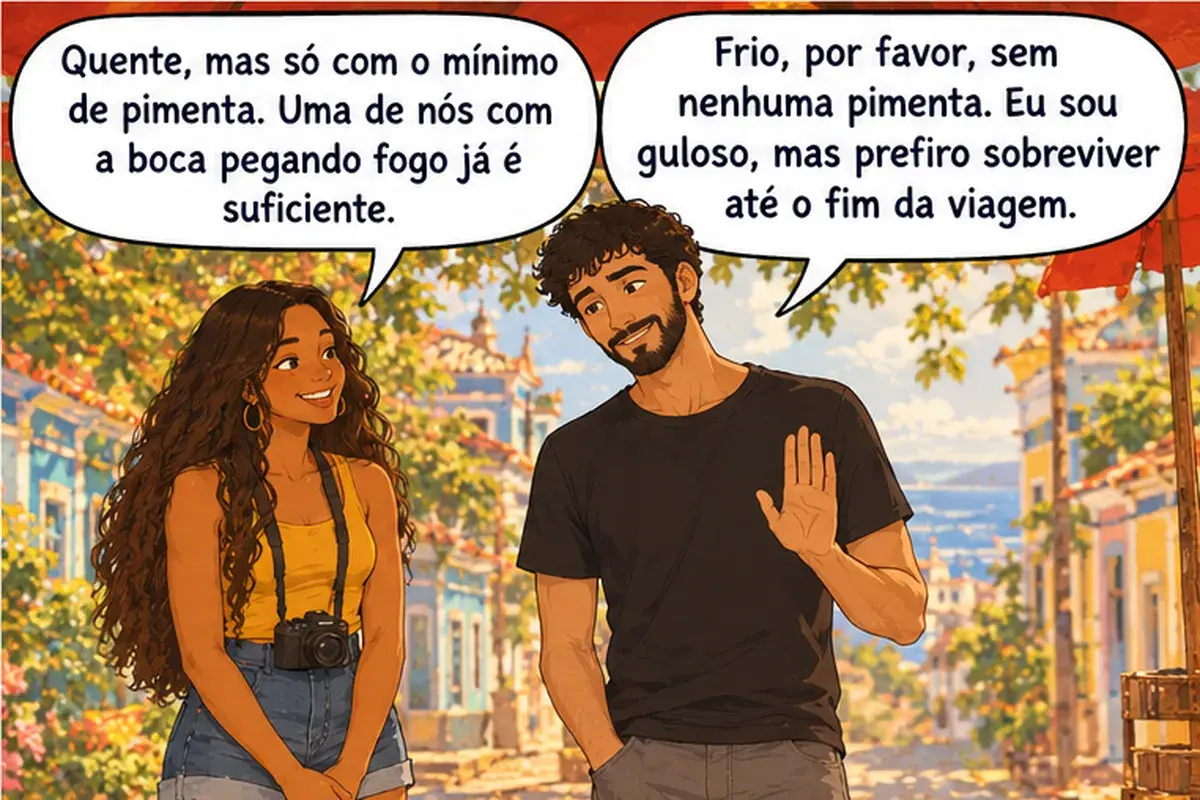
- Bia
Quente, mas só com o mínimo de pimenta. Uma de nós com a boca pegando fogo já é suficiente.
Hot, but with just the minimum of pepper. One of us with her mouth on fire is already enough.
- Léo
Frio, por favor, sem nenhuma pimenta. Eu sou guloso, mas prefiro sobreviver até o fim da viagem.
Cold, please, with no pepper at all. I'm a foodie, but I'd rather survive until the end of the trip. (man speaking)

- Tiago
Frio? Que frescura, Léo! Um acarajé sem pimenta é só um bolinho de feijão.
Cold? What a fuss, Léo! An acarajé without pepper is just a bean fritter.
- Nina
Já aprendi! Dona Cida, a senhora poderia me dar outro, mas frio?
Lesson learned! Dona Cida, could you give me another one, but cold? (formal)
Grammar for this text
- quente ou frio? — at an acarajé stall in Salvador, this question isn't about temperature but about pepper: quente — with pepper, frio — without. Nina takes it literally, and that's the joke. Just like English "hot", quente can mean both. ela quer dizer... — querer dizer means "to mean"; Tiago doesn't get to finish.
- é tão bom que eu parei no meio da rua — tão... que: "so... that" (unit 3). parei — "I stopped", from parar.
- Só peço que você pense antes de responder — after peço que, prefiro que, quer que the verb is in the subjunctive (unit 4): take the eu form, drop the -o and add the "opposite" vowel: penso → pense, coloco → coloque (c before e is spelled qu). English has no such form; it says "I'm asking you to think".
- hoje eu comeria três! and a senhora poderia me dar outro — the conditional (unit 2): comeria — "I would eat"; poderia — a polite request, "could you". me dar — "give me".
- a pergunta mais importante do meu trabalho, a mais forte que eu tenho — the superlative (this unit): after it comes either de ("in, of") or a whole clause with que ("that I have"). apimentadíssimo — apimentado + -íssimo: "incredibly spicy".
- Pra mim, sem camarão, por favor — pra = para, the way friends talk. levam camarão seco — in recipes levar means "to have in it, to contain". com a boca pegando fogo — pegar fogo means "to catch fire".
- Que frescura, Léo! — slang, among friends: "what a fuss!", about being picky; you wouldn't say it to an older person. prefiro sobreviver — Léo's joke: "I'd rather stay alive".
Words and grammar of the unit: Show a guest around a city and praise the best.
Learn the words from the texts with flashcards
In the app, you can tap any word in a text to see its translation, forms and examples, and new words stick with flashcards. 15 minutes a day.
Start for freeEverything is open for free. No card needed to sign up.