

Portuguese dialogue with translation · B1 · 18 lines
O que eu mais gostei foi do queijo What I liked most was the cheese
Comic · 18 panels
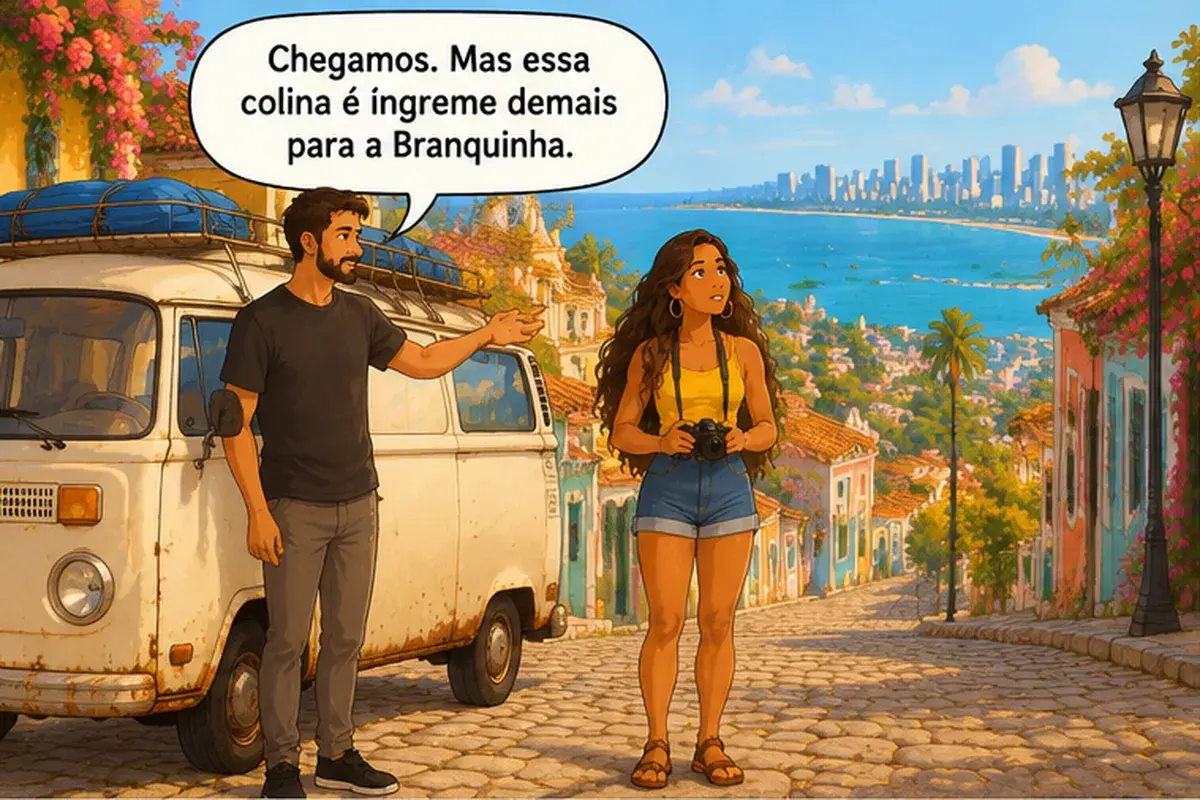
- Léo
Chegamos. Mas essa colina é íngreme demais para a Branquinha.
We're here. But this hill is too steep for Branquinha.
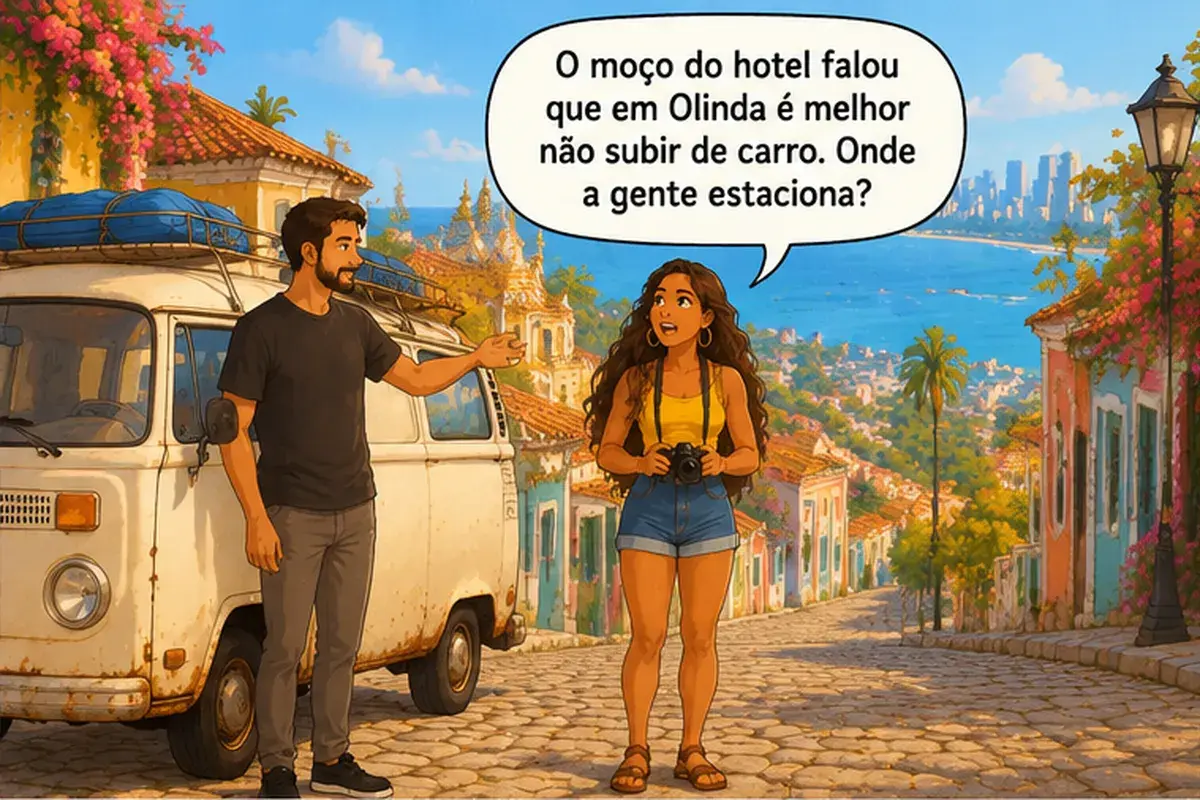
- Bia
O moço do hotel falou que em Olinda é melhor não subir de carro. Onde a gente estaciona?
The guy at the hotel said that in Olinda it's better not to go up by car. Where do we park?
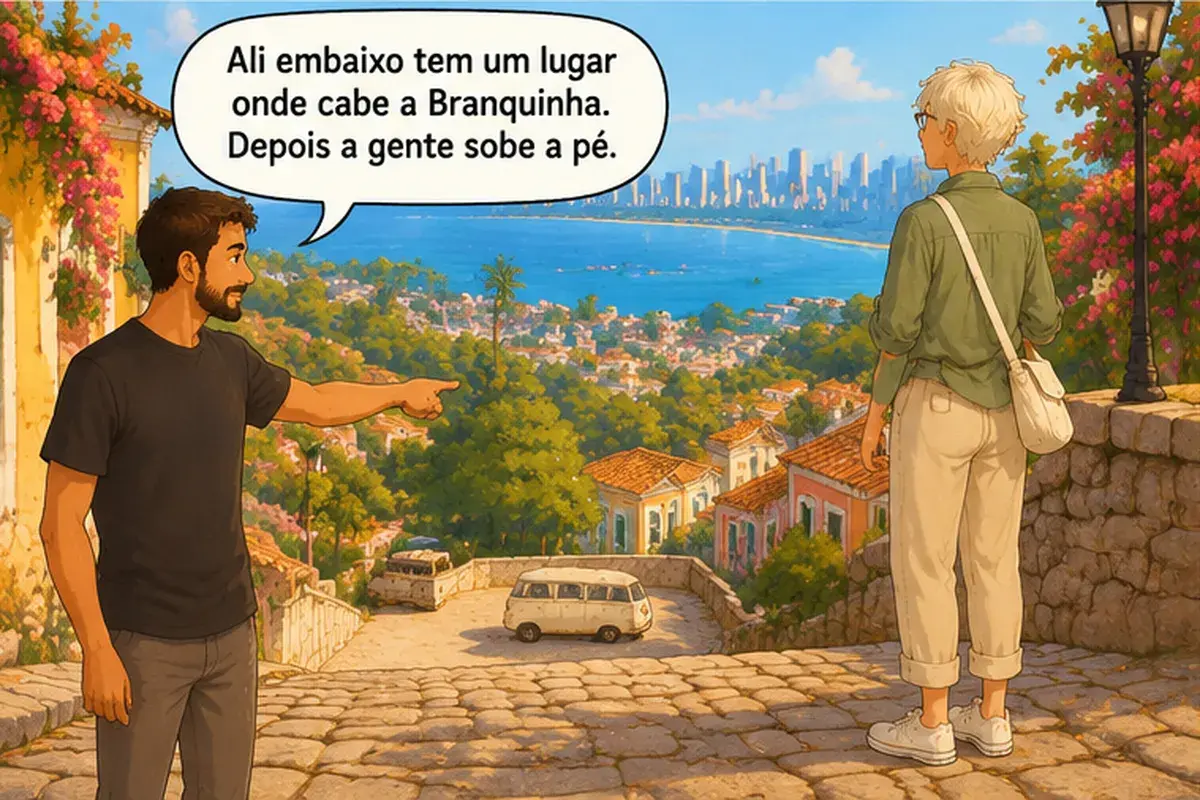
- Léo
Ali embaixo tem um lugar onde cabe a Branquinha. Depois a gente sobe a pé.
There's a spot down there where Branquinha fits. Then we'll walk up.
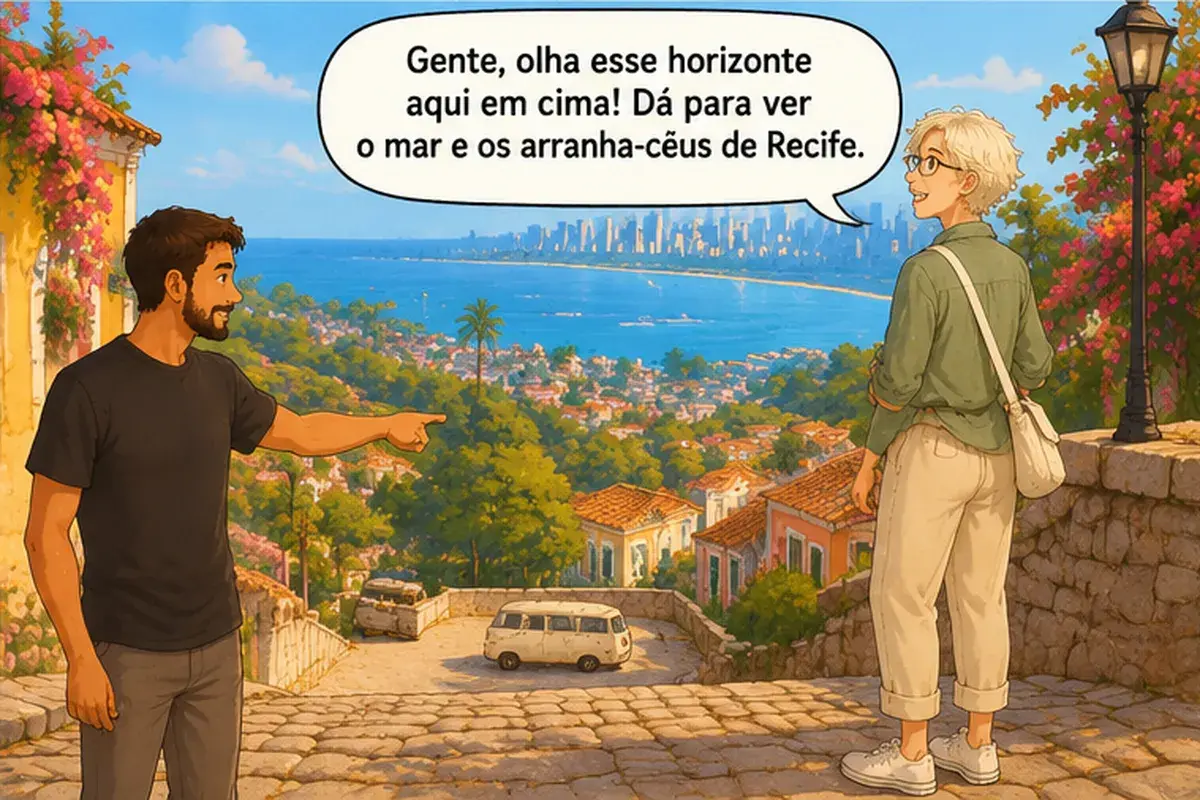
- Nina
Gente, olha esse horizonte aqui em cima! Dá para ver o mar e os arranha-céus de Recife.
Guys, look at this horizon up here! You can see the sea and the skyscrapers of Recife.

- Bia
A vista panorâmica é linda, especialmente com essa brisa. Eu vou ficar aqui uma hora.
The panoramic view is beautiful, especially with this breeze. I'm going to stay here for an hour.
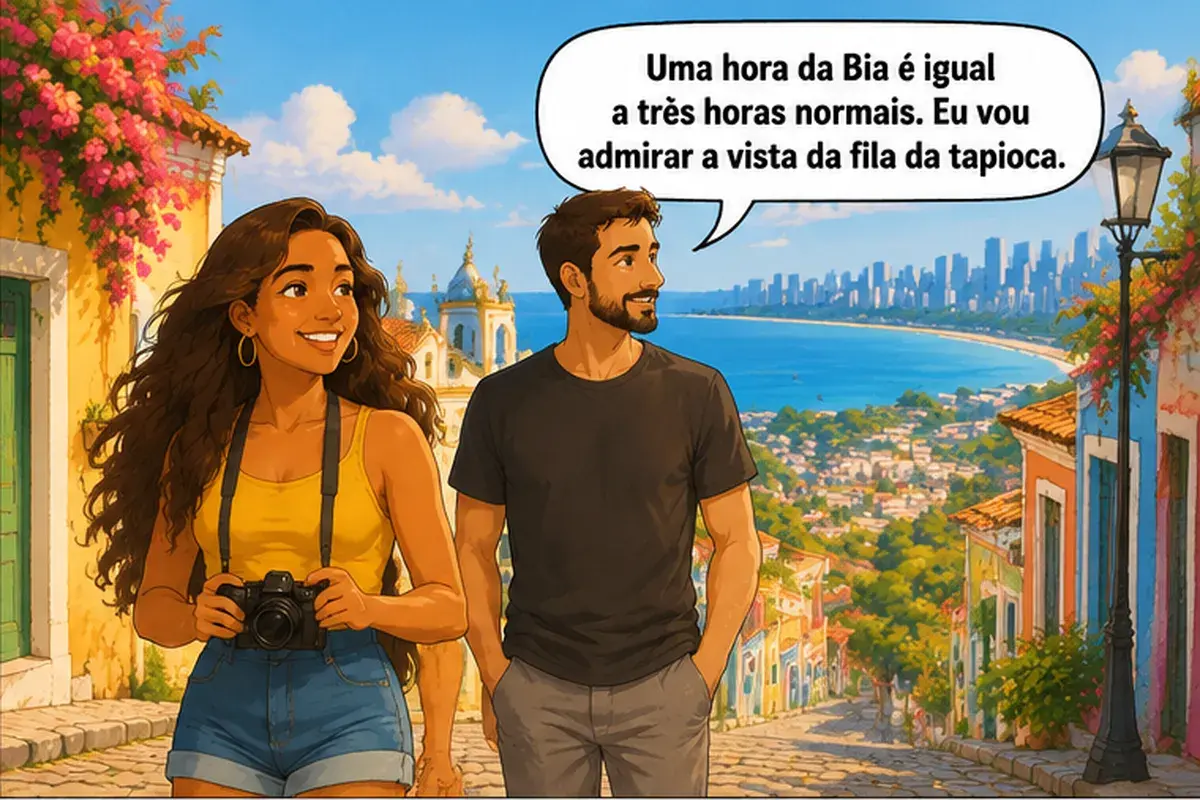
- Léo
Uma hora da Bia é igual a três horas normais. Eu vou admirar a vista da fila da tapioca.
An hour for Bia is the same as three normal hours. I'm going to admire the view from the tapioca line.
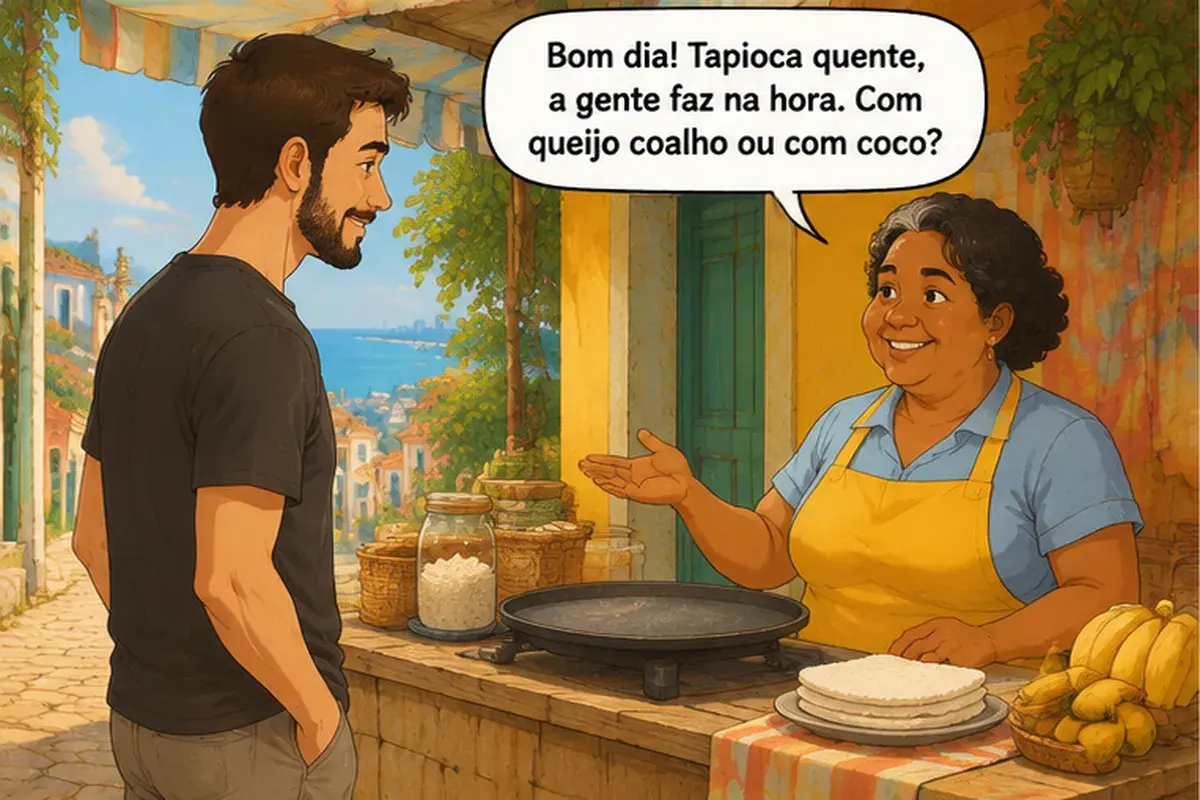
- Vendedora
Bom dia! Tapioca quente, a gente faz na hora. Com queijo coalho ou com coco?
Good morning! Hot tapioca, we make it on the spot. With coalho cheese or with coconut?
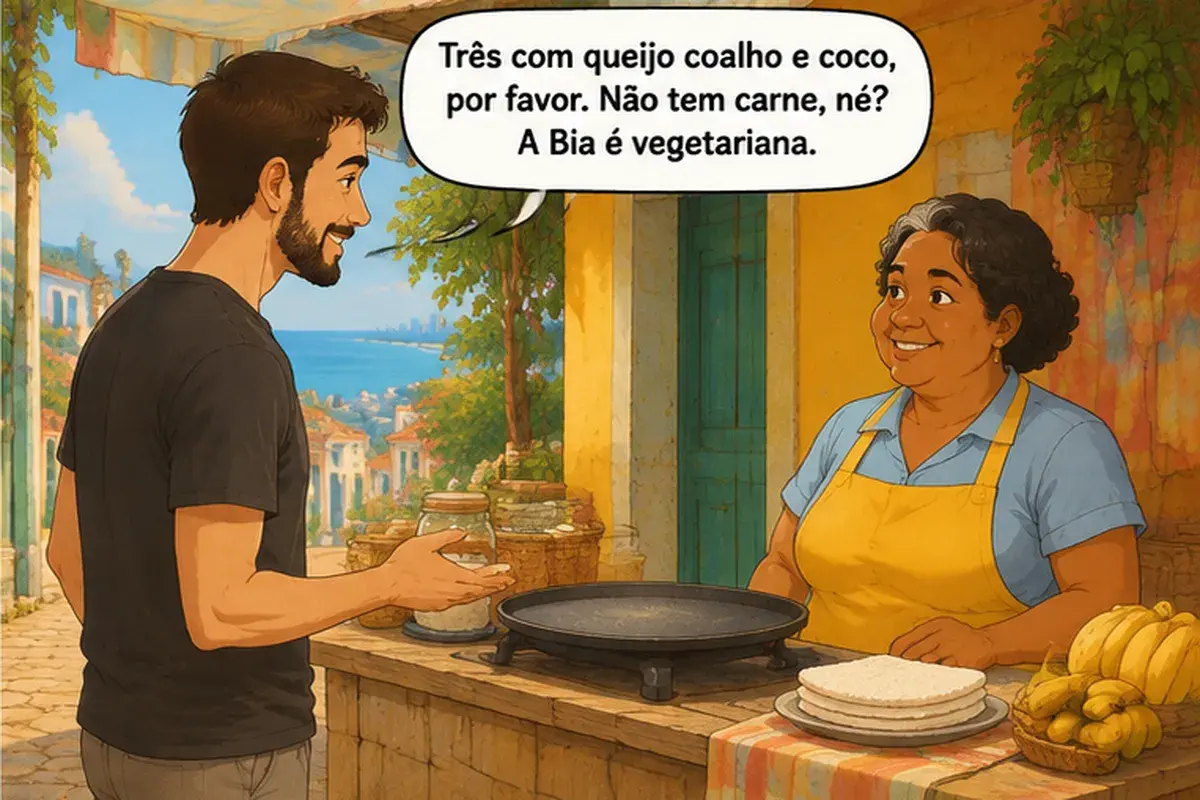
- Léo
Três com queijo coalho e coco, por favor. Não tem carne, né? A Bia é vegetariana.
Three with coalho cheese and coconut, please. There's no meat, right? Bia is a vegetarian.
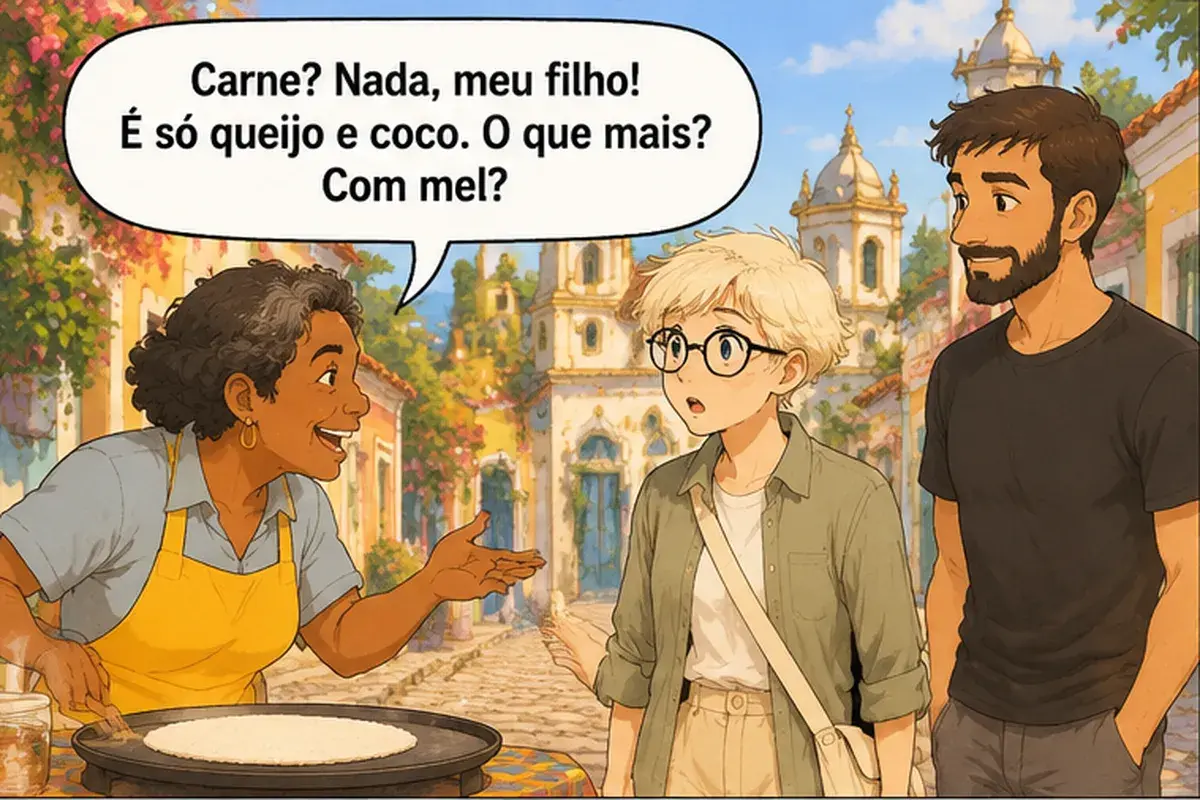
- Vendedora
Carne? Nada, meu filho! É só queijo e coco. O que mais? Com mel?
Meat? Not at all, dear! It's just cheese and coconut. What else? With honey?
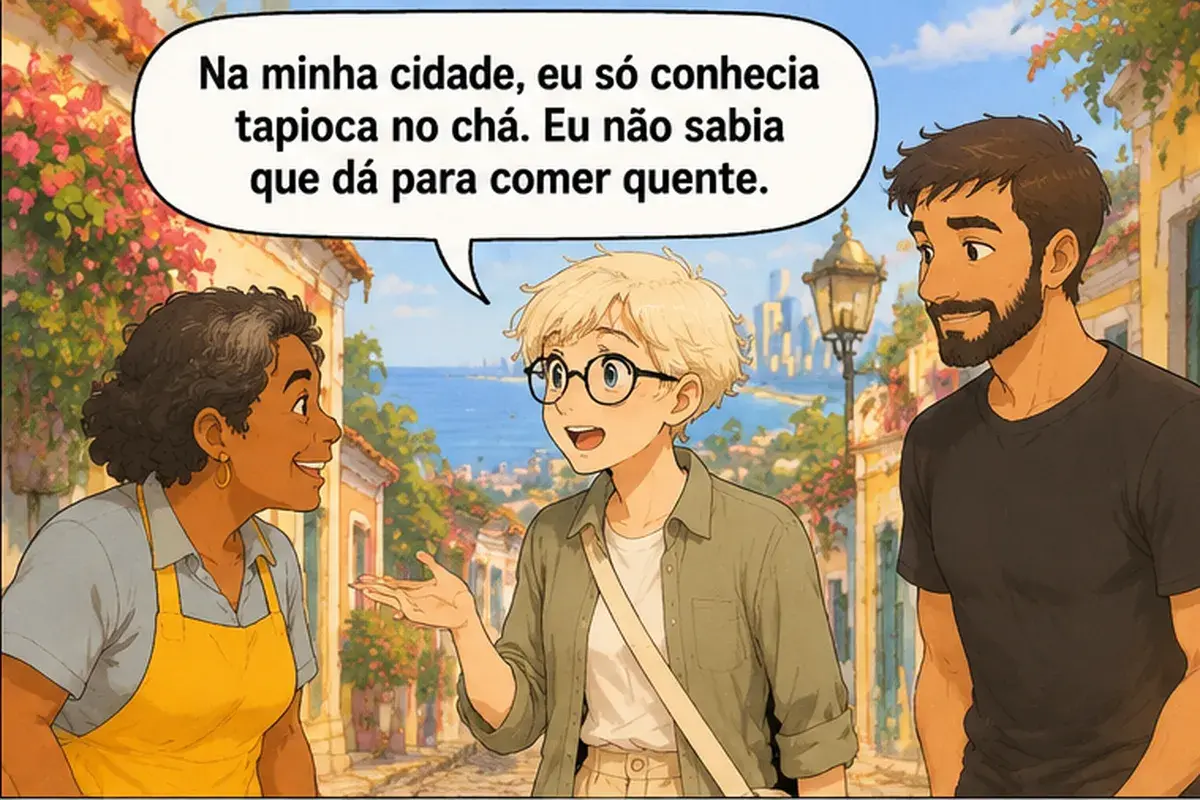
- Nina
Na minha cidade, eu só conhecia tapioca no chá. Eu não sabia que dá para comer quente.
In my city, I only knew tapioca in tea. I didn't know that you can eat it hot.
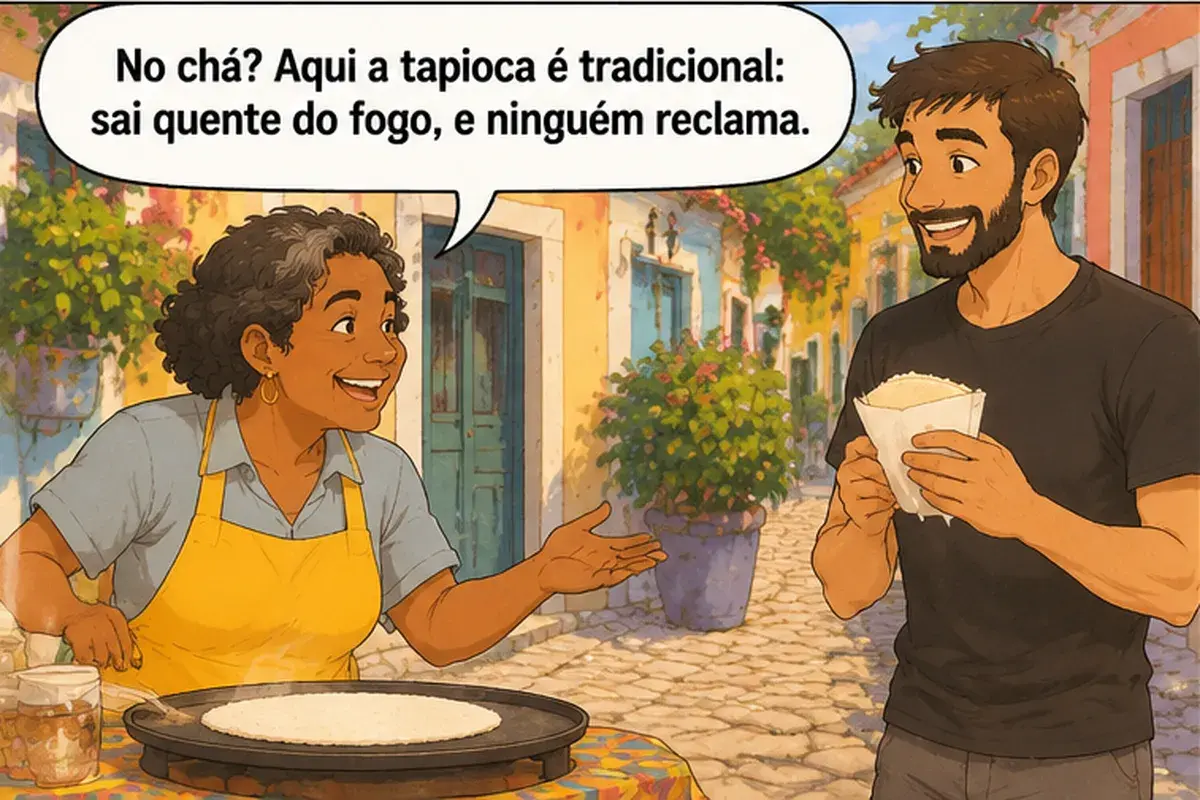
- Vendedora
No chá? Aqui a tapioca é tradicional: sai quente do fogo, e ninguém reclama.
In tea? Here tapioca is traditional: it comes out hot, right off the fire, and no one complains.
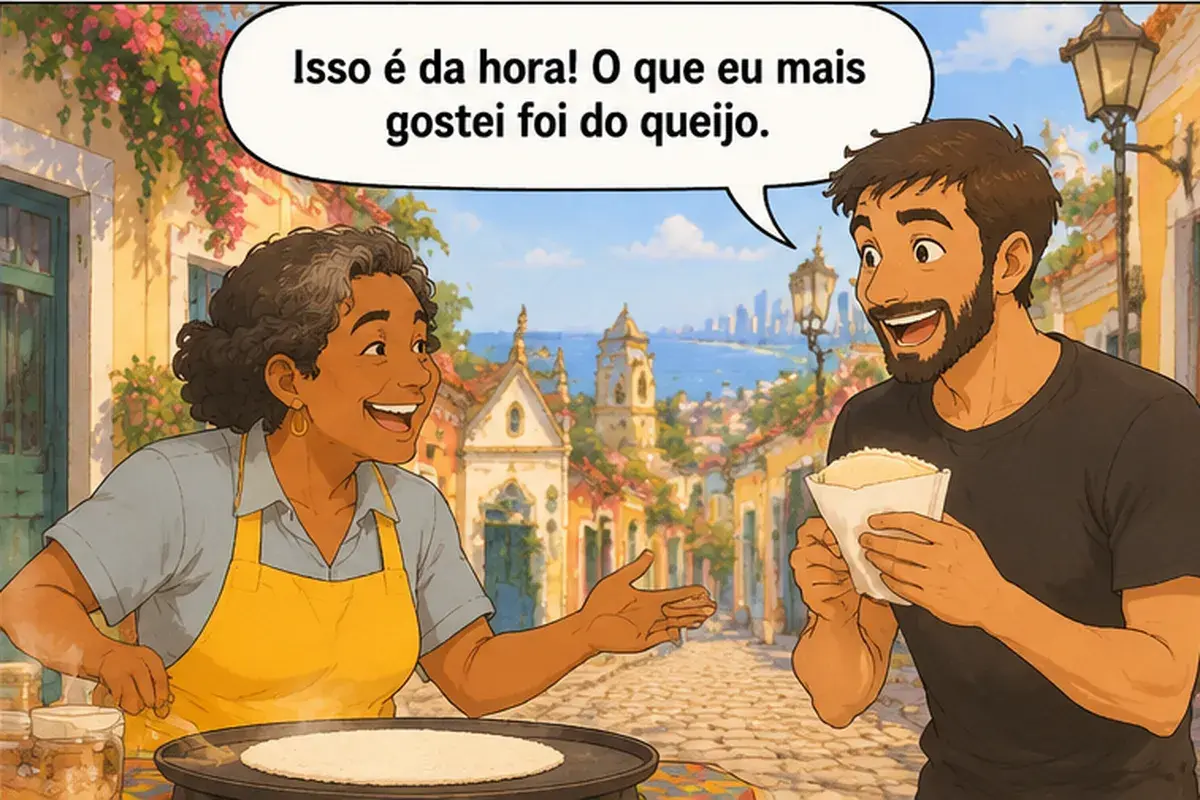
- Léo
Isso é da hora! O que eu mais gostei foi do queijo.
That's awesome! What I liked most was the cheese.
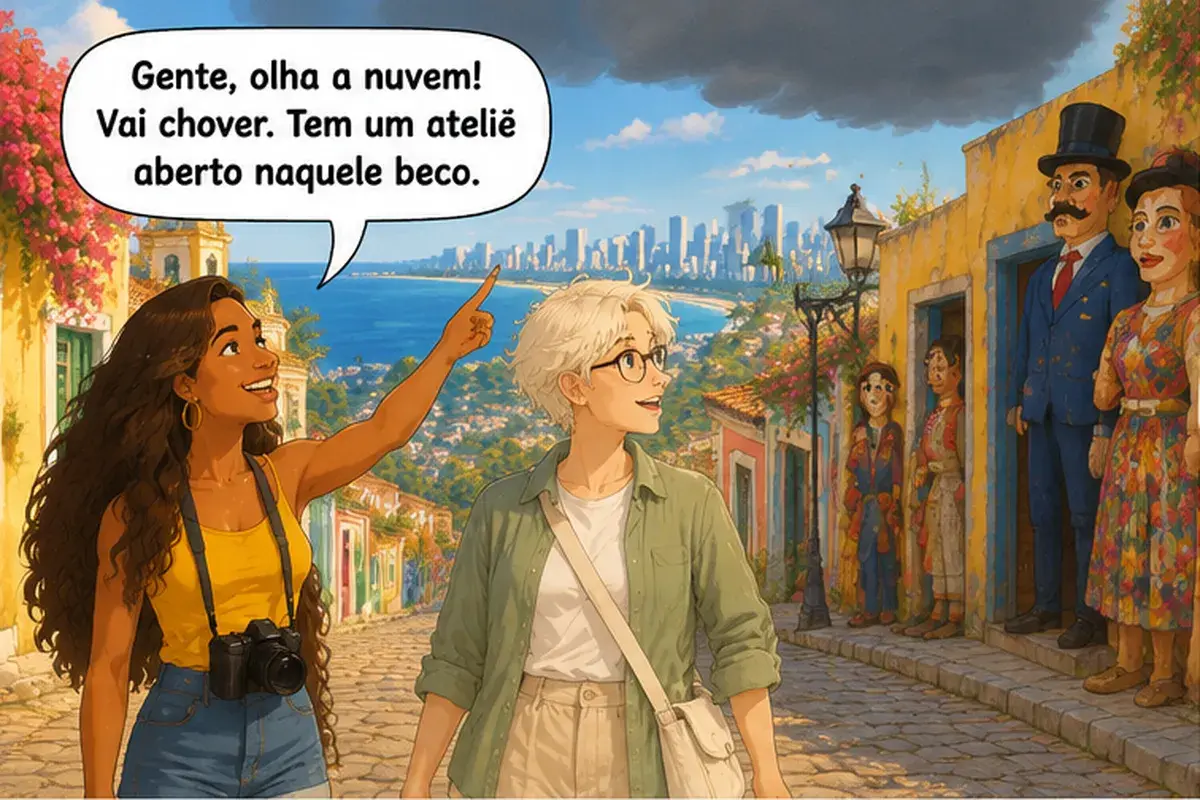
- Bia
Gente, olha a nuvem! Vai chover. Tem um ateliê aberto naquele beco.
Guys, look at the cloud! It's going to rain. There's a workshop open in that alley.
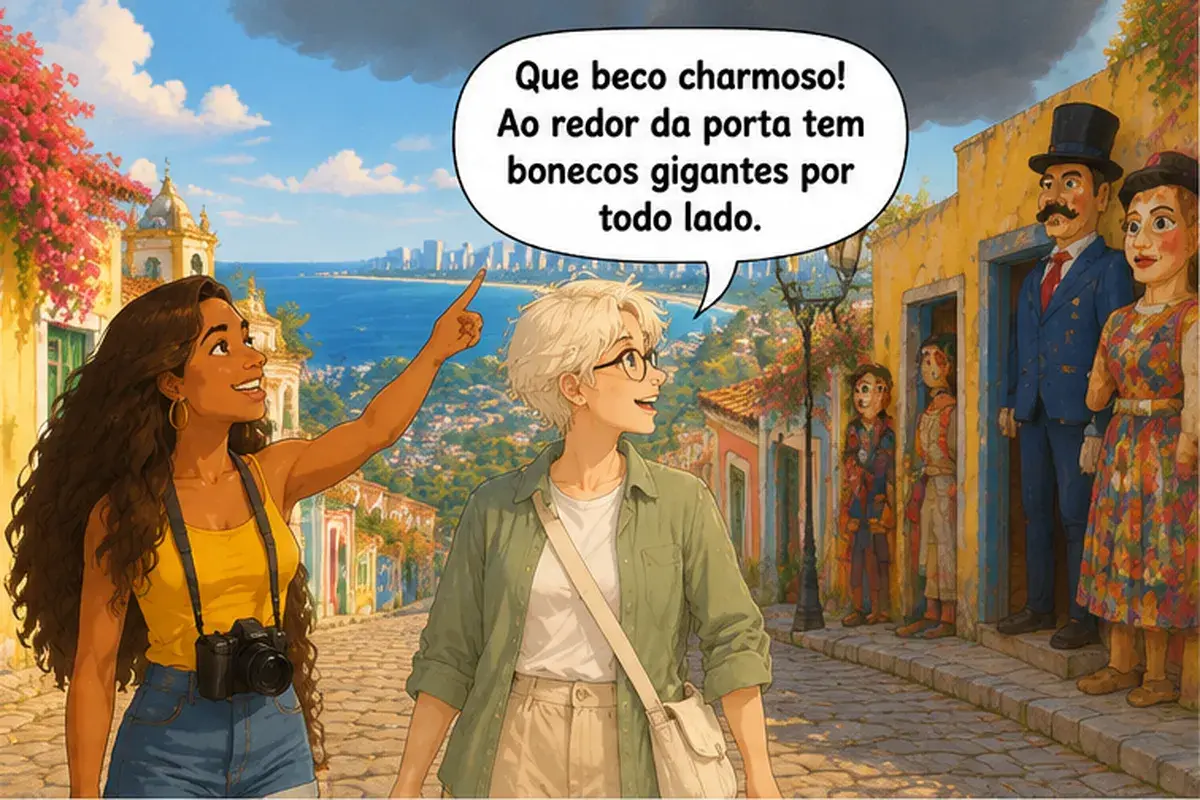
- Nina
Que beco charmoso! Ao redor da porta tem bonecos gigantes por todo lado.
What a charming alley! Around the door there are giant dolls everywhere.
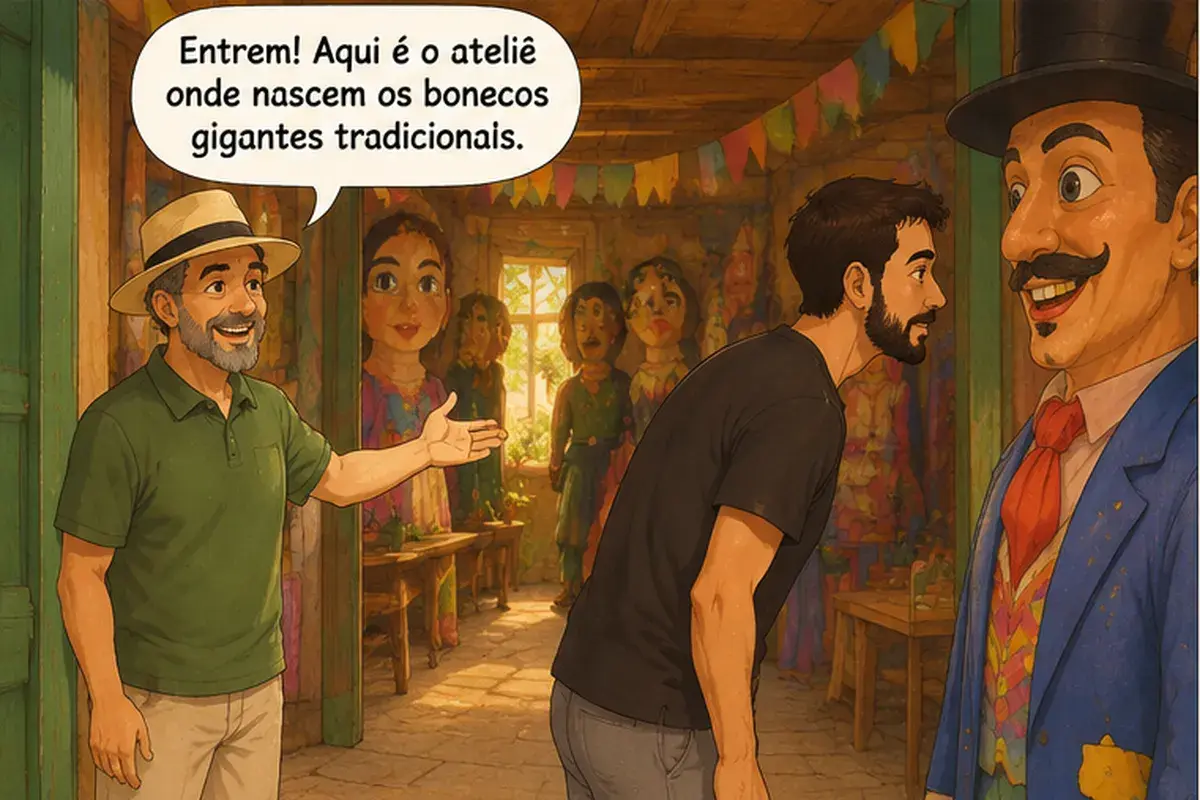
- Guia
Entrem! Aqui é o ateliê onde nascem os bonecos gigantes tradicionais.
Come in! (to several people) This is the workshop where the traditional giant dolls are made.
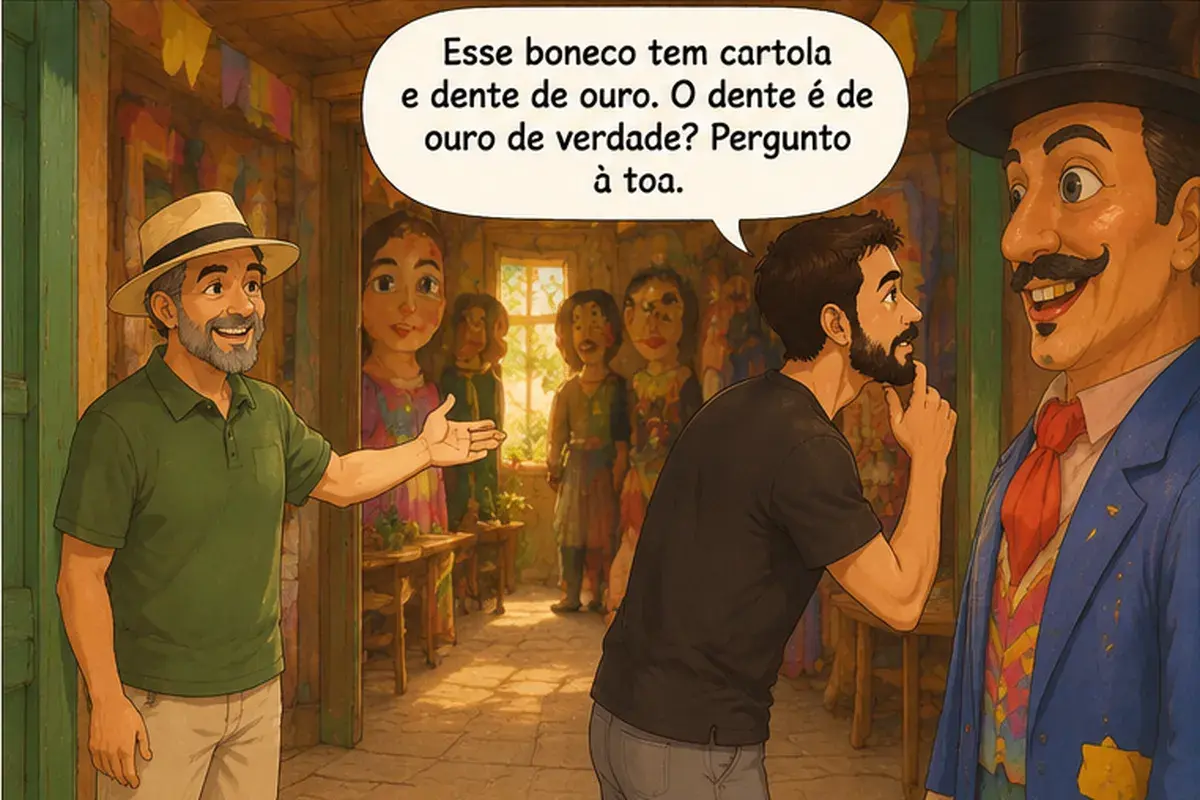
- Léo
Esse boneco tem cartola e dente de ouro. O dente é de ouro de verdade? Pergunto à toa.
This doll has a top hat and a gold tooth. Is the tooth really gold? Just asking.
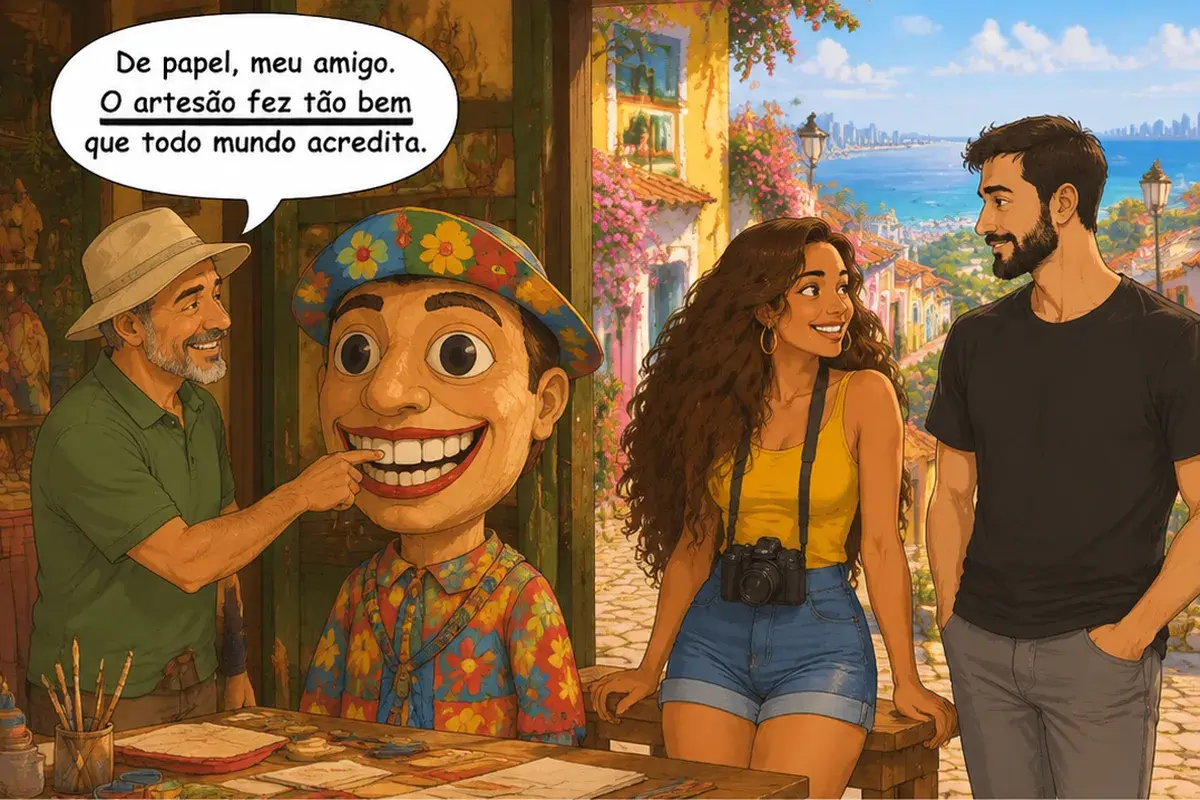
- Guia
De papel, meu amigo. O artesão fez tão bem que todo mundo acredita.
Paper, my friend. The craftsman made it so well that everybody believes it.
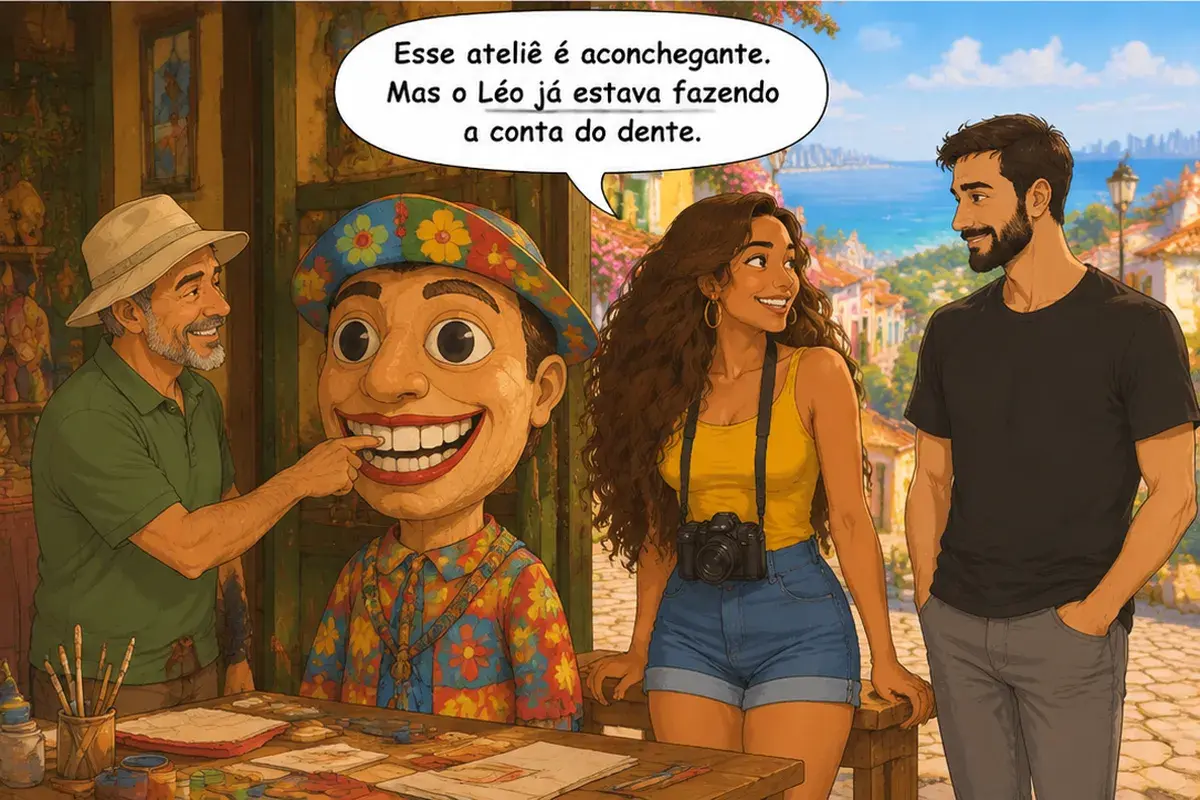
- Bia
Esse ateliê é aconchegante. Mas o Léo já estava fazendo a conta do dente.
This workshop is cozy. But Léo was already doing the math on the tooth.
Grammar for this text
- um lugar onde cabe a Branquinha —
ondeafter a place word means "where": "a place where Branquinha fits." The same pattern is in o ateliê onde nascem os bonecos — "the workshop where the dolls are made." The rule is in the unit grammar. - Uma hora da Bia é igual a três horas normais — Léo is joking about Bia always being late;
é igual ameans "is equal to." - Eu vou admirar a vista da fila da tapioca —
admirarhere means "to look at and enjoy";da fila da tapiocaisde + a fila de + a tapioca: "from the tapioca line." - Na minha cidade, eu só conhecia tapioca no chá — in many countries tapioca is known mostly as the little pearls in tea, but in the Northeast it is a hot flatbread made from tapioca flour with a filling. That is why the saleswoman is surprised and says "In tea?"
- a gente faz na hora — "we make it on the spot, right away."
- sai quente do fogo — "it comes out hot, right off the fire."
- O que eu mais gostei foi do queijo —
o quehere means "the thing that," not a question: "the thing I liked most was the cheese." Aftergostaryou needde, so it isdo queijo(de + o). - O que mais? Com mel? — "What else? With honey?" Here
o que maismeans "what else?" - Isso é da hora! —
da horais casual for "cool" and is what people say in São Paulo. You can say it to a friend, but not to a clerk or a guide. - O artesão fez tão bem que todo mundo acredita —
tão … quemeans "so … that" (unit 3). - de verdade — "for real, really."
Words and grammar of the unit: Talk about a place you've visited.
Learn the words from the texts with flashcards
In the app, you can tap any word in a text to see its translation, forms and examples, and new words stick with flashcards. 15 minutes a day.
Start for freeEverything is open for free. No card needed to sign up.