

Portuguese dialogue with translation · B1 · 18 lines
Você sabe o que é um xote? Do you know what a xote is?
Comic · 16 panels
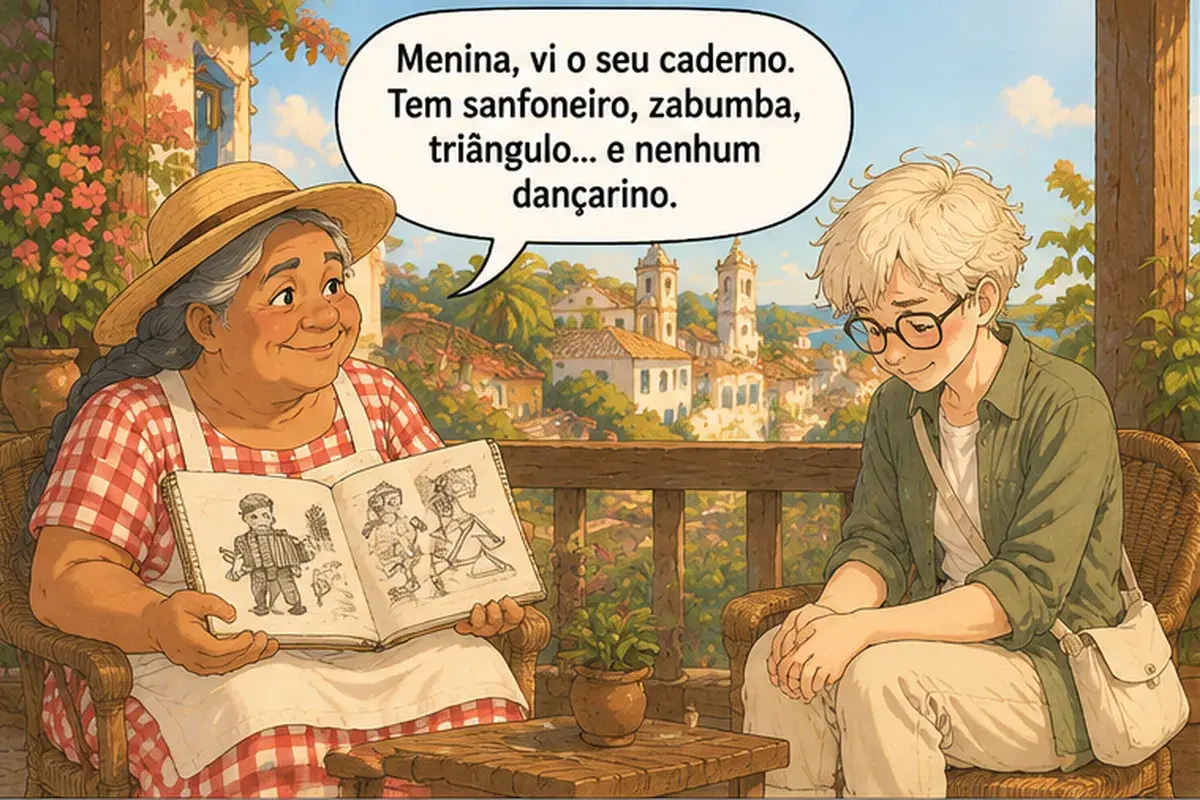
- Dona Socorro
Menina, vi o seu caderno. Tem sanfoneiro, zabumba, triângulo... e nenhum dançarino.
Girl, I saw your notebook. It has an accordion player, a big drum, a triangle... and not one dancer.
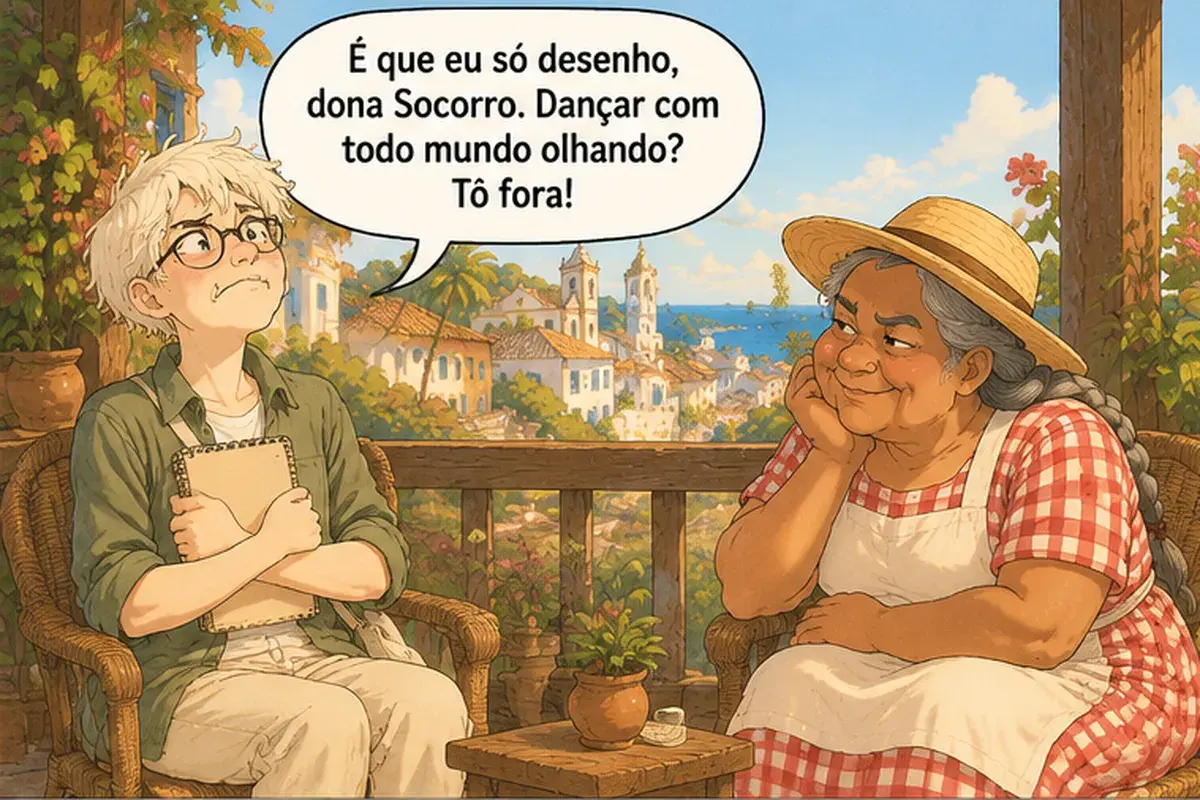
- Nina
É que eu só desenho, dona Socorro. Dançar com todo mundo olhando? Tô fora!
It's just that I only draw, Dona Socorro. Dance with everybody watching? I'm out!
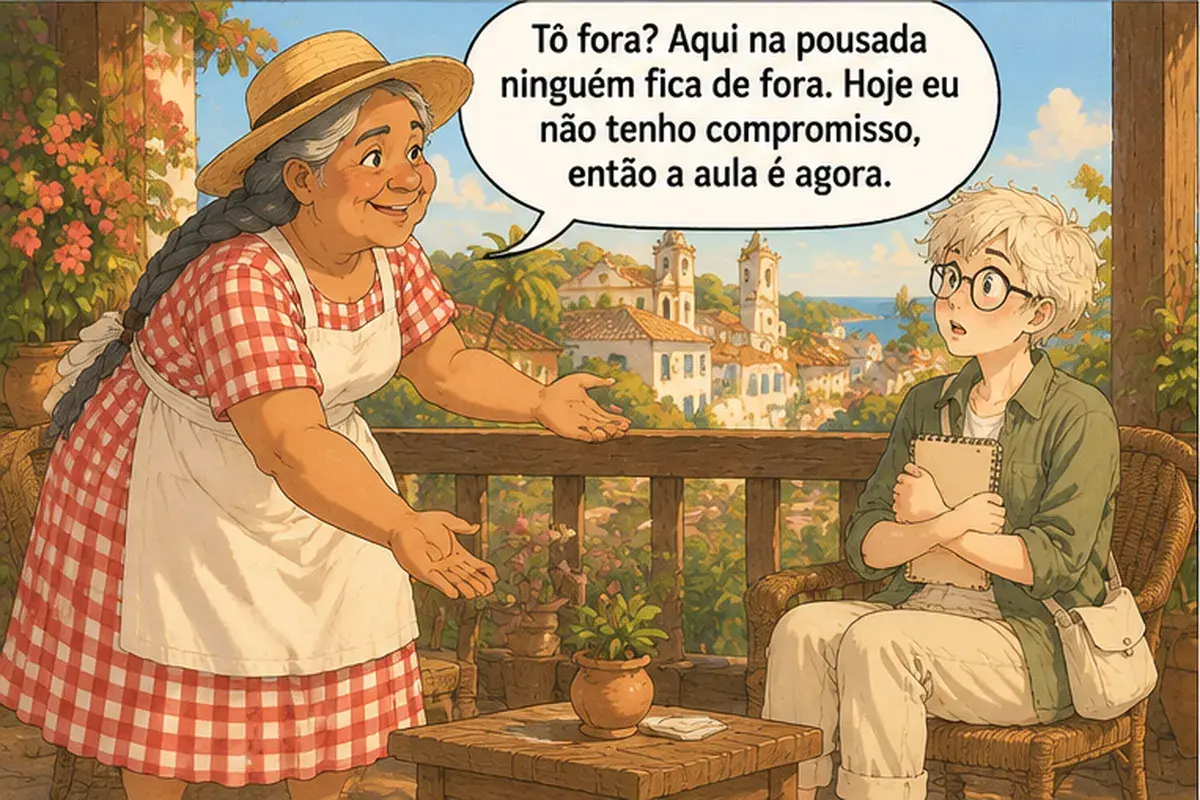
- Dona Socorro
Tô fora? Aqui na pousada ninguém fica de fora. Hoje eu não tenho compromisso, então a aula é agora.
I'm out? Here at the guesthouse nobody stays out. Today I don't have any appointments, so the lesson is now.
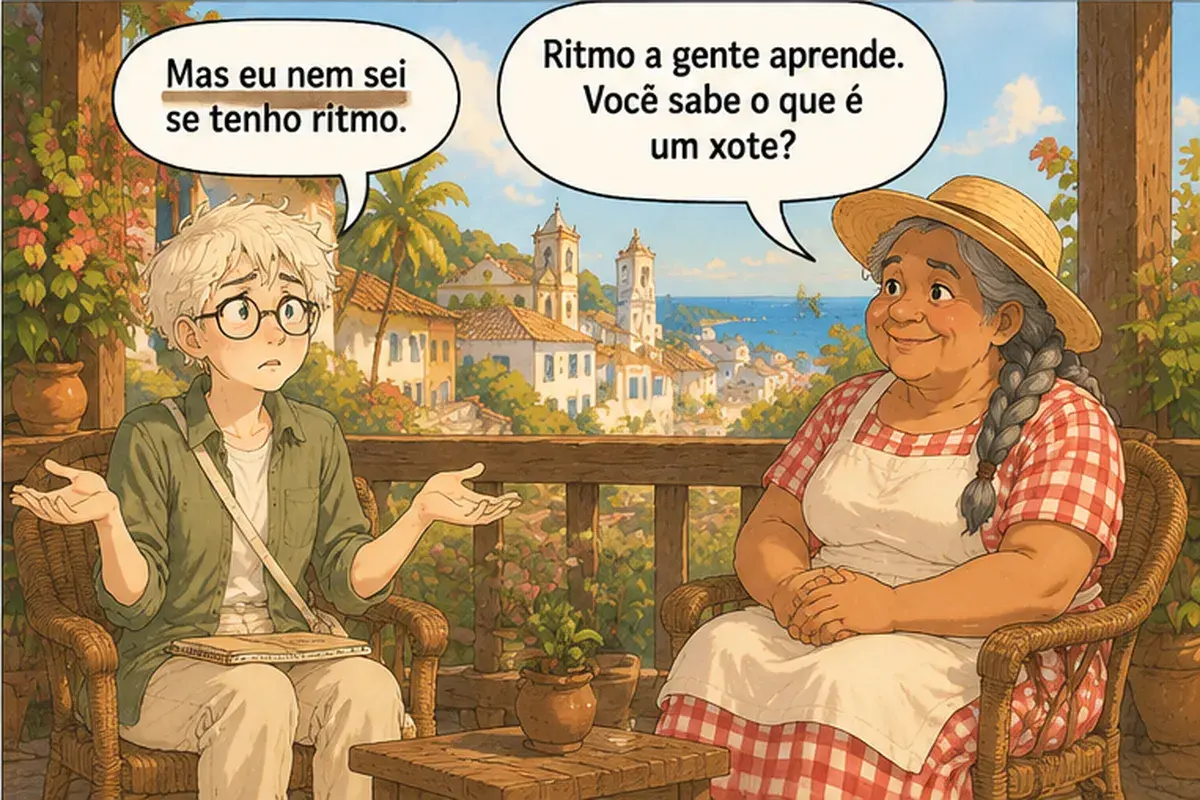
- Nina
Mas eu nem sei se tenho ritmo.
But I don't even know if I have rhythm.
- Dona Socorro
Ritmo a gente aprende. Você sabe o que é um xote?
We learn rhythm. Do you know what a xote is?
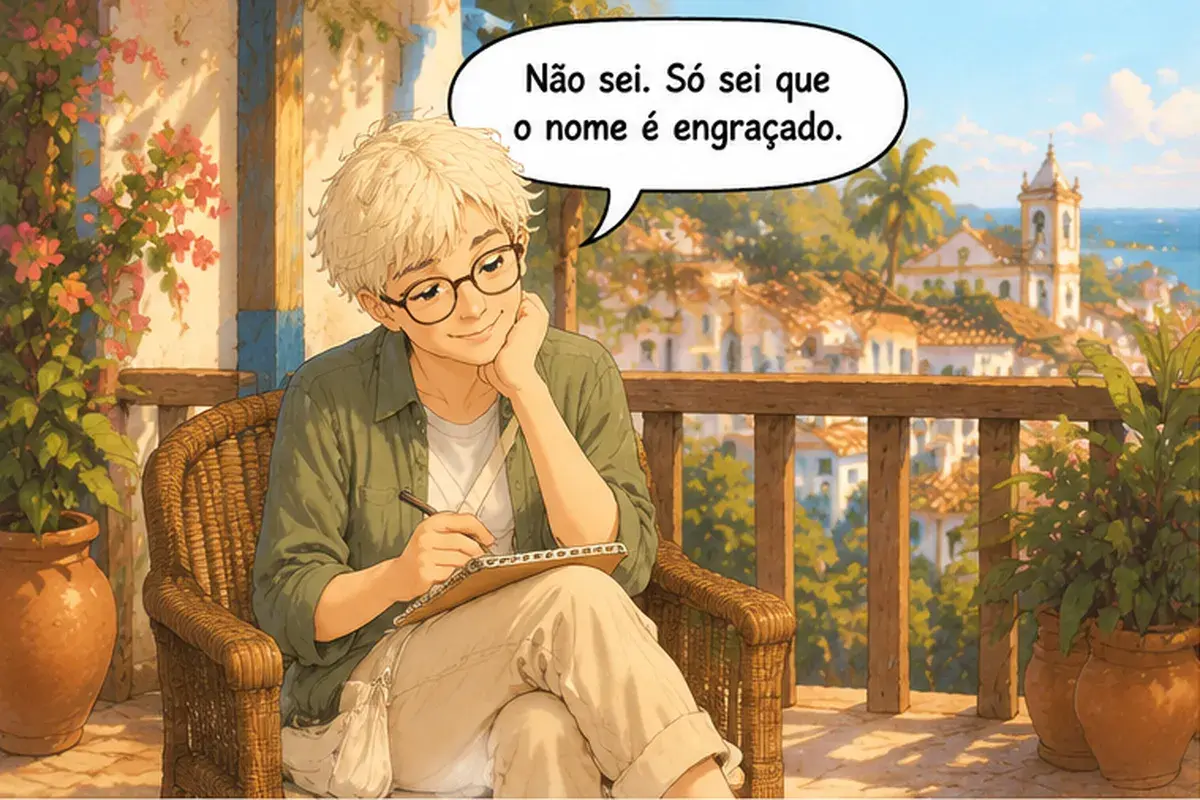
- Nina
Não sei. Só sei que o nome é engraçado.
I don't know. I only know the name is funny.
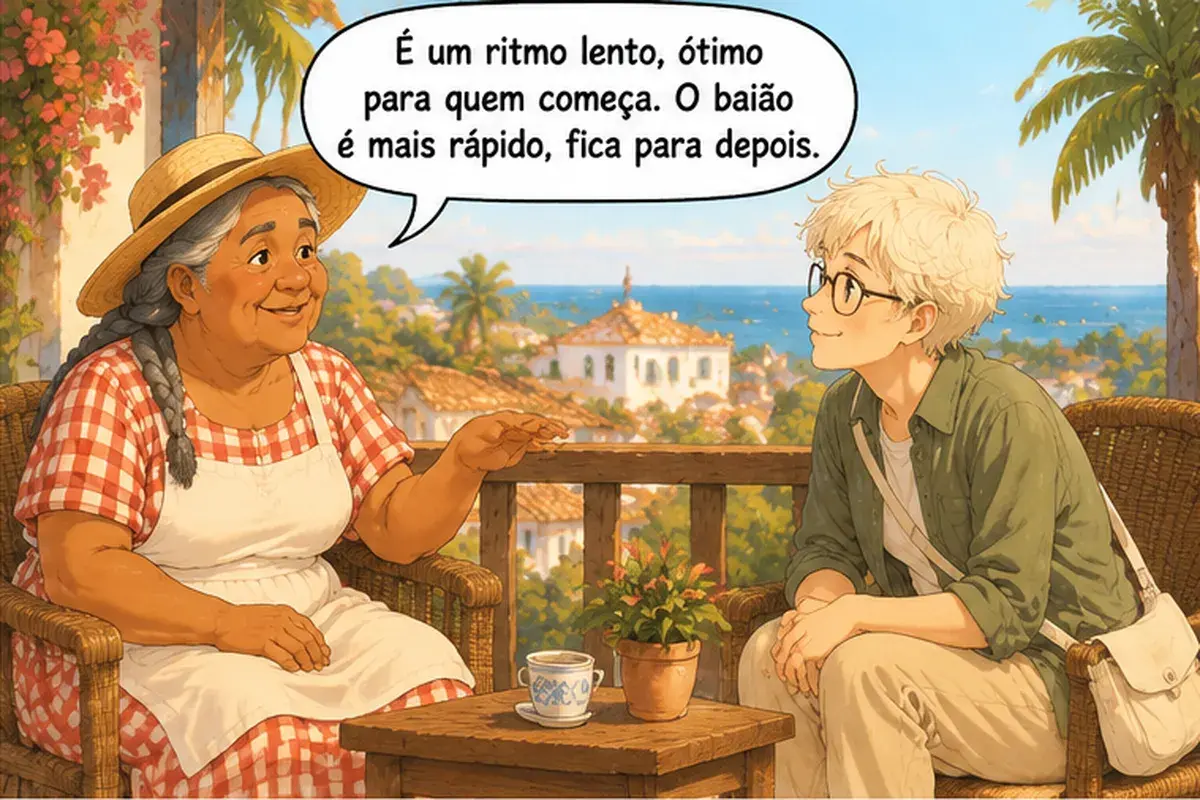
- Dona Socorro
É um ritmo lento, ótimo para quem começa. O baião é mais rápido, fica para depois.
It's a slow rhythm, great for beginners. The baião is faster, that's for later.
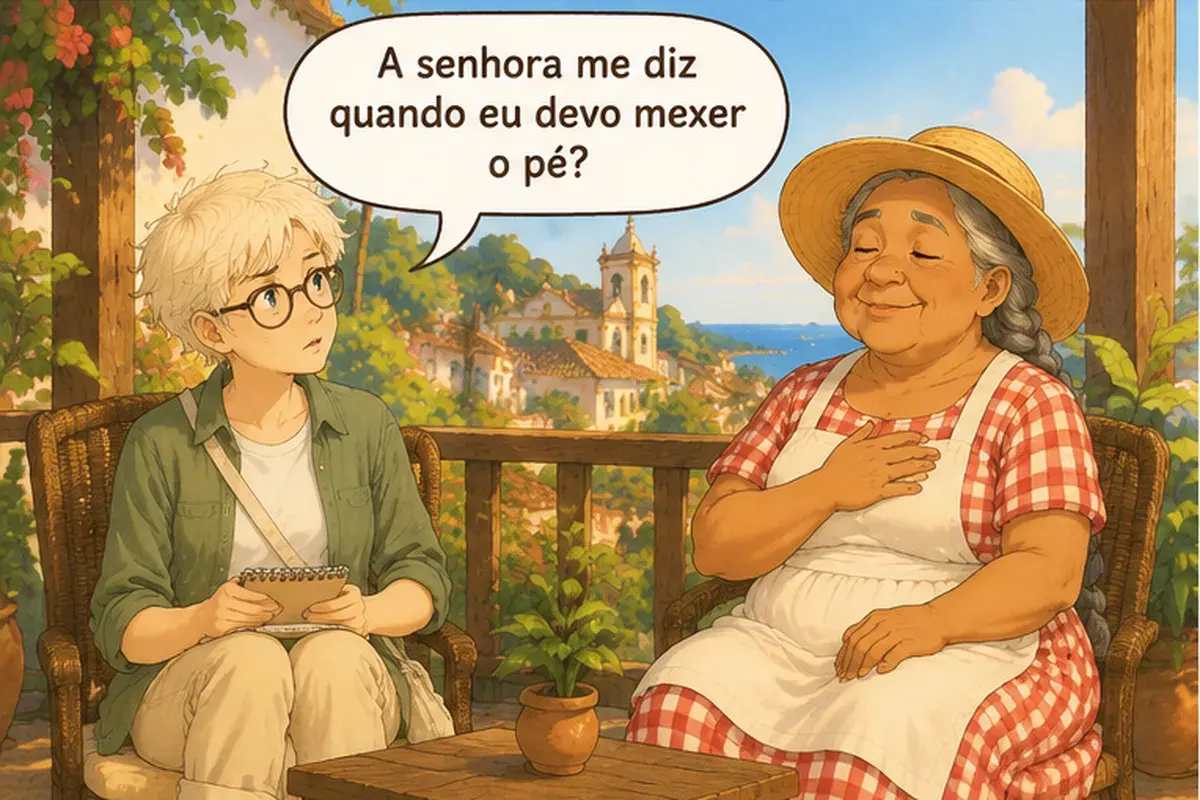
- Nina
A senhora me diz quando eu devo mexer o pé?
Will you tell me when I should move my foot? (formal)
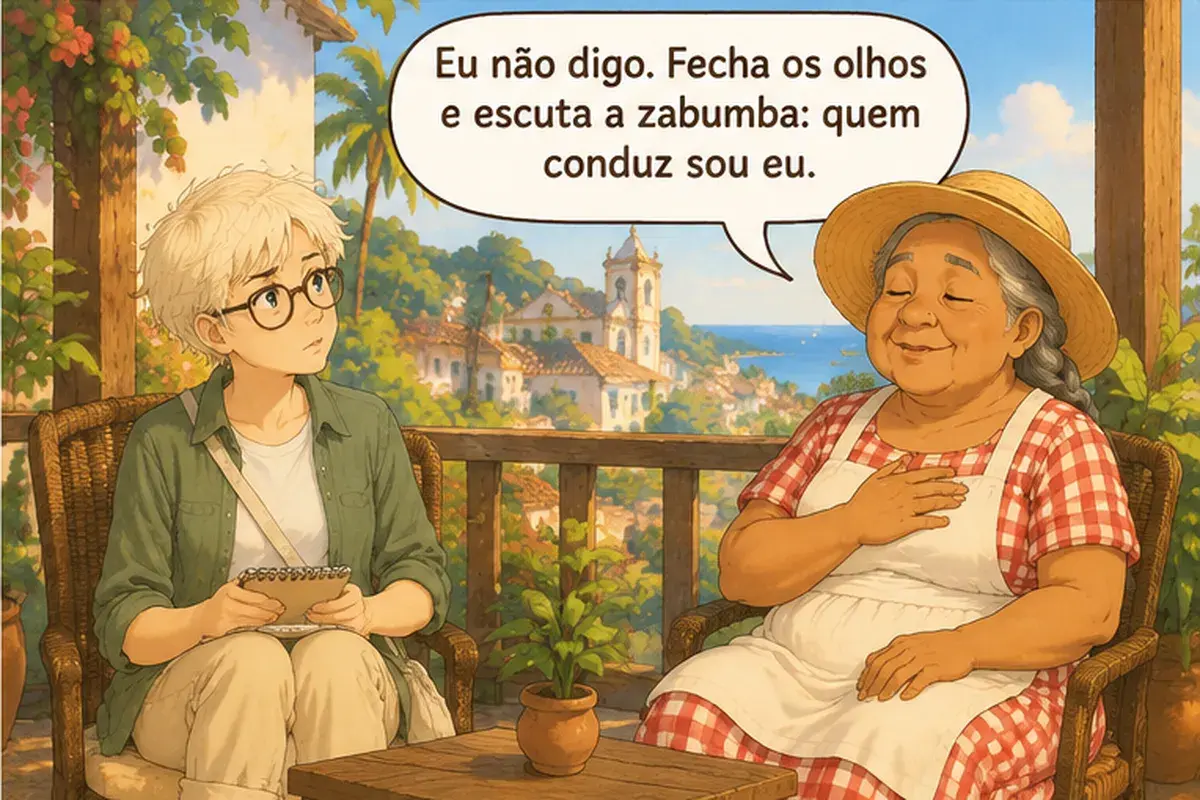
- Dona Socorro
Eu não digo. Fecha os olhos e escuta a zabumba: quem conduz sou eu.
I won't tell you. Close your eyes and listen to the big drum: I'm the one leading.
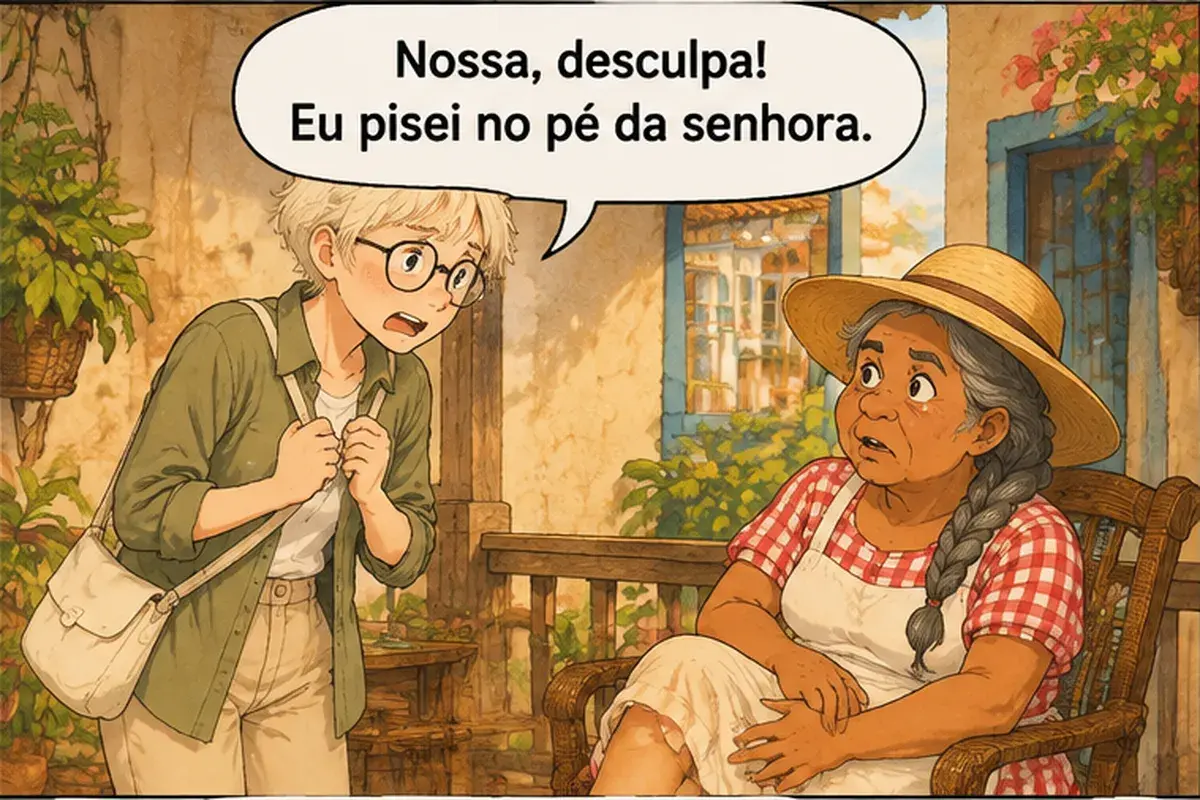
- Nina
Nossa, desculpa! Eu pisei no pé da senhora.
Oh, sorry! I stepped on your foot (formal).
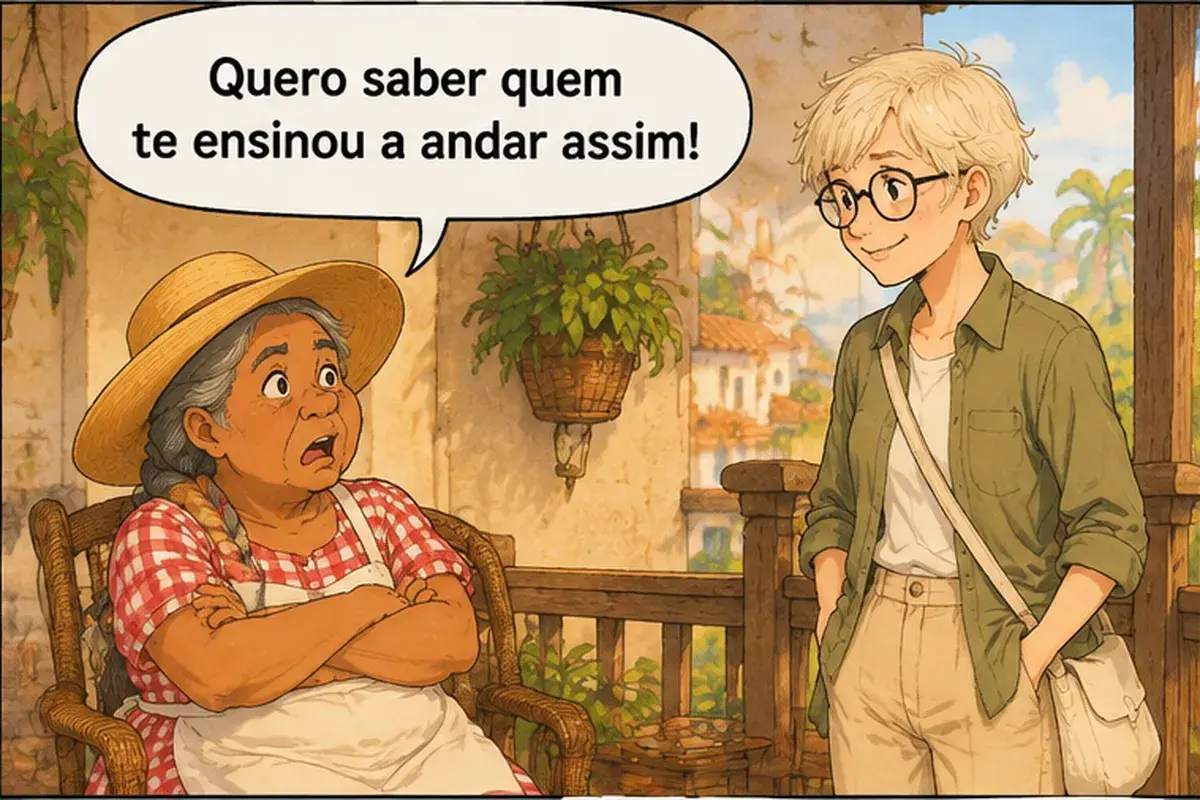
- Dona Socorro
Quero saber quem te ensinou a andar assim!
I want to know who taught you to walk like that!
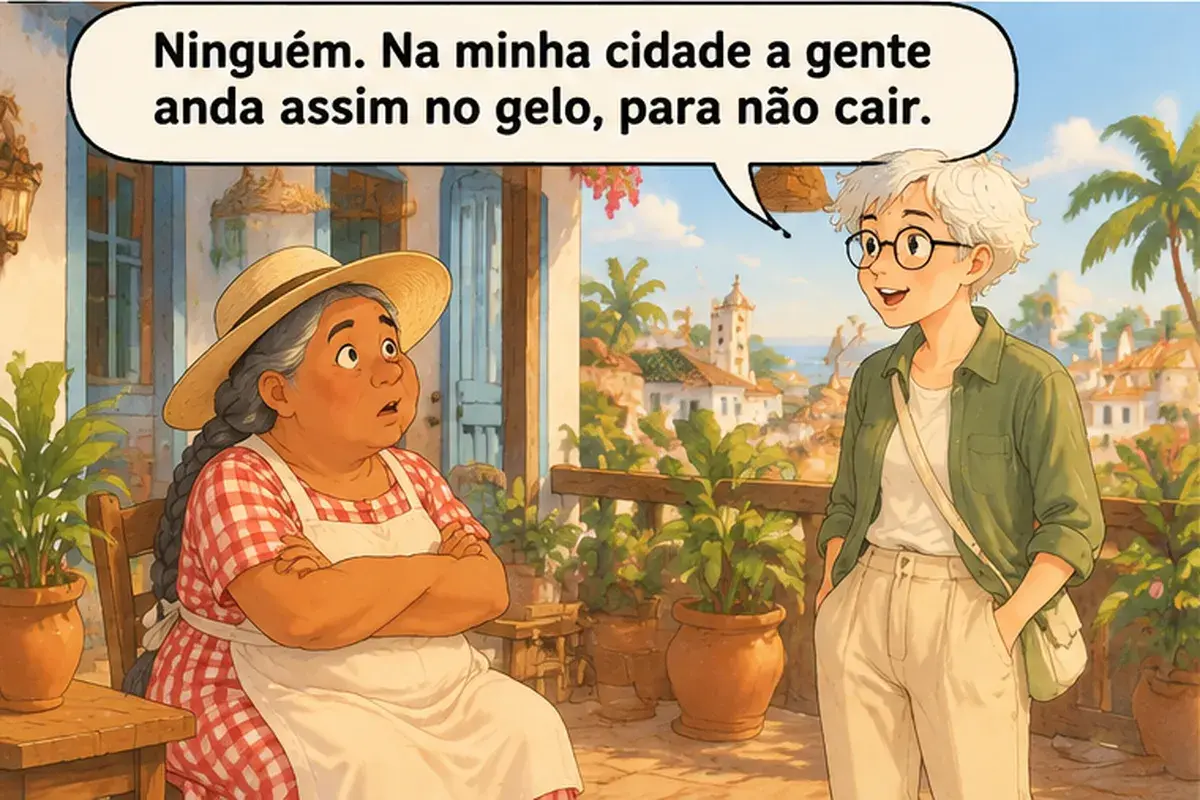
- Nina
Ninguém. Na minha cidade a gente anda assim no gelo, para não cair.
Nobody. In my city we walk like this on ice, so we don't fall.
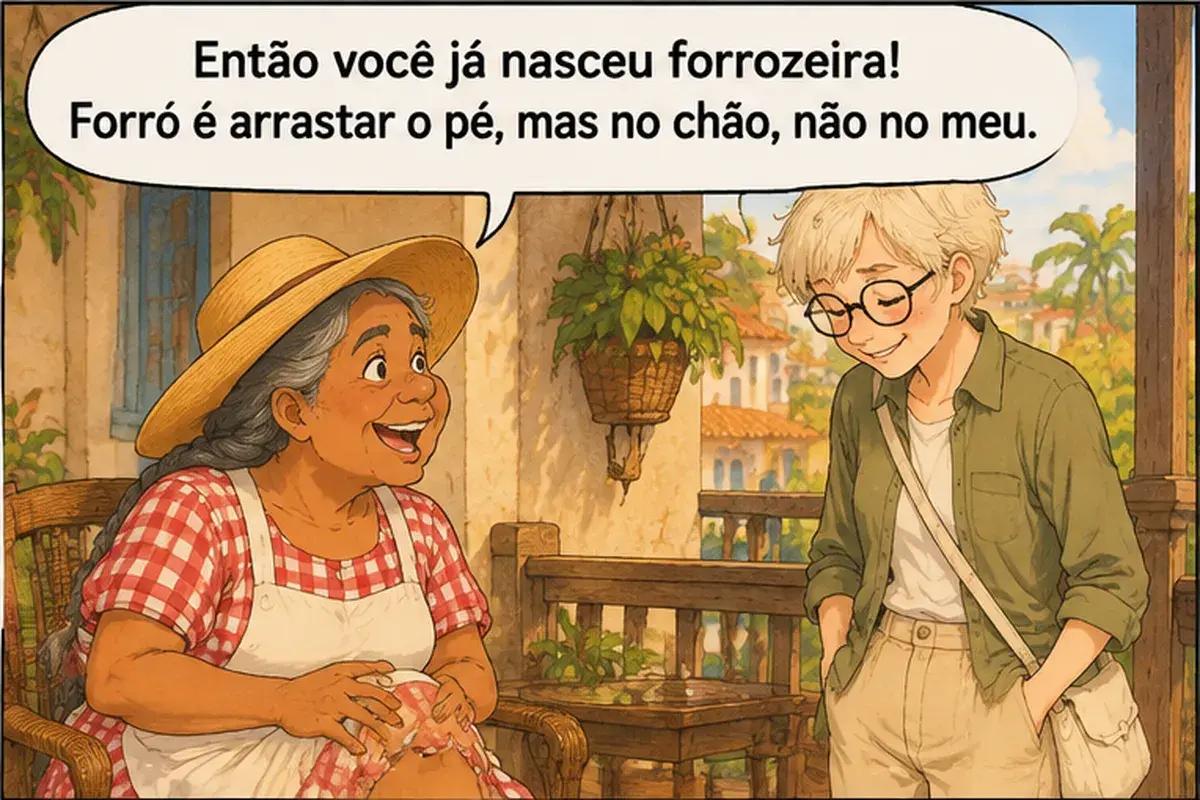
- Dona Socorro
Então você já nasceu forrozeira! Forró é arrastar o pé, mas no chão, não no meu.
So you were born a forró dancer! (to a woman) Forró is dragging your feet, but on the floor, not on mine.
- Bia
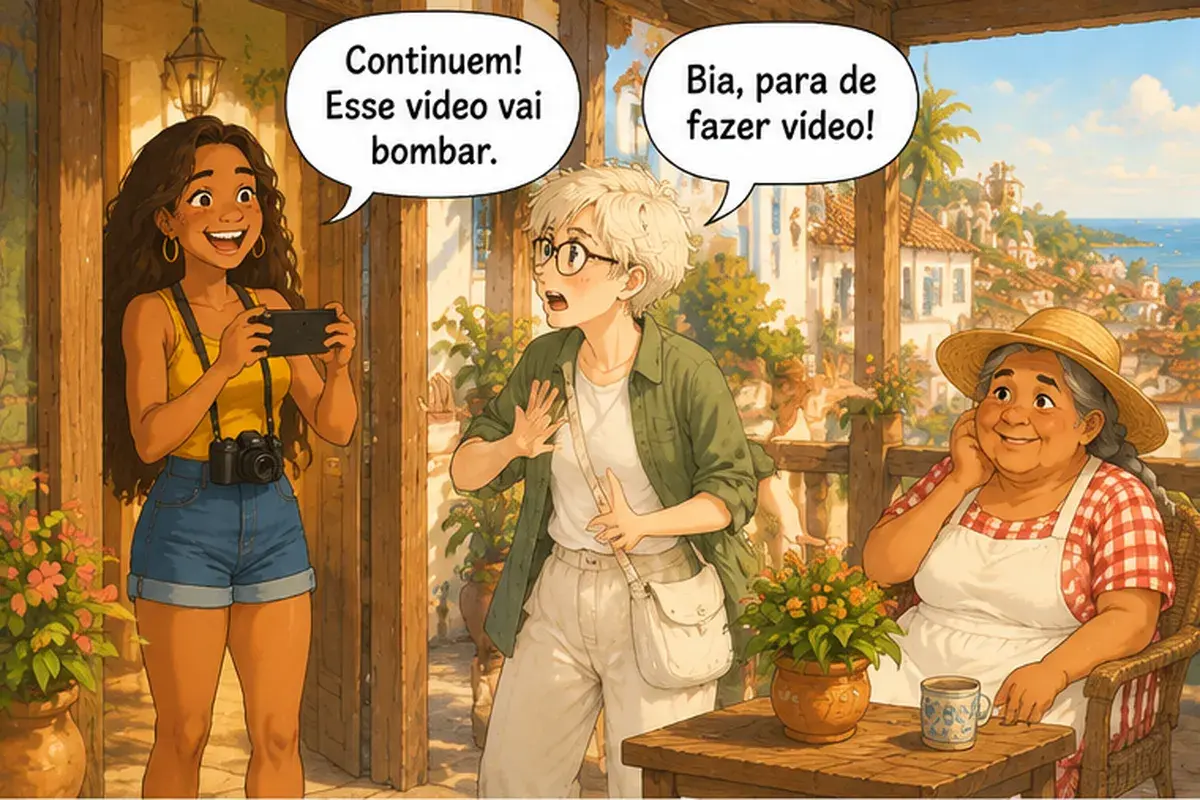
Continuem! Esse vídeo vai bombar.
Keep going! (to several people) This video is going to blow up.
- Nina
Bia, para de fazer vídeo!
Bia, stop making videos!
- Bia
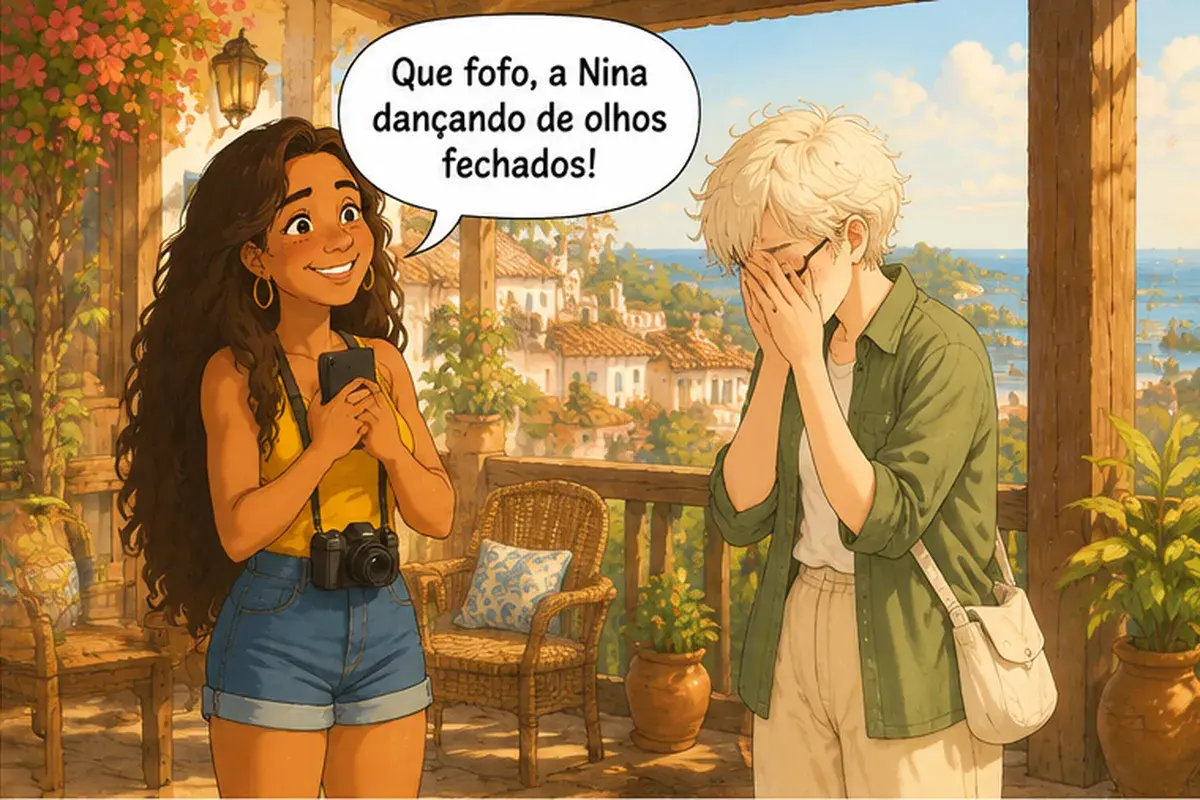
Que fofo, a Nina dançando de olhos fechados!
How cute, Nina dancing with her eyes closed!
- Dona Socorro
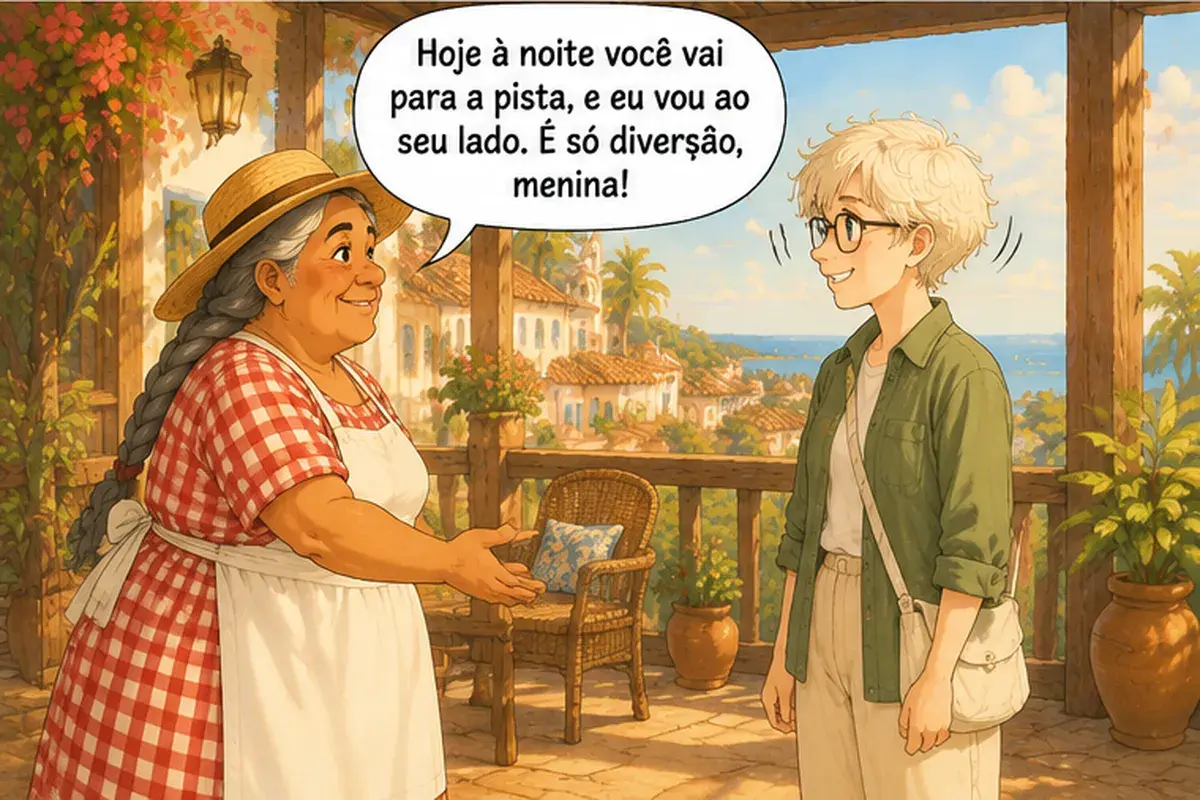
Hoje à noite você vai para a pista, e eu vou ao seu lado. É só diversão, menina!
Tonight you're going to the dance floor, and I'll be right beside you. It's all fun, girl!
- Nina
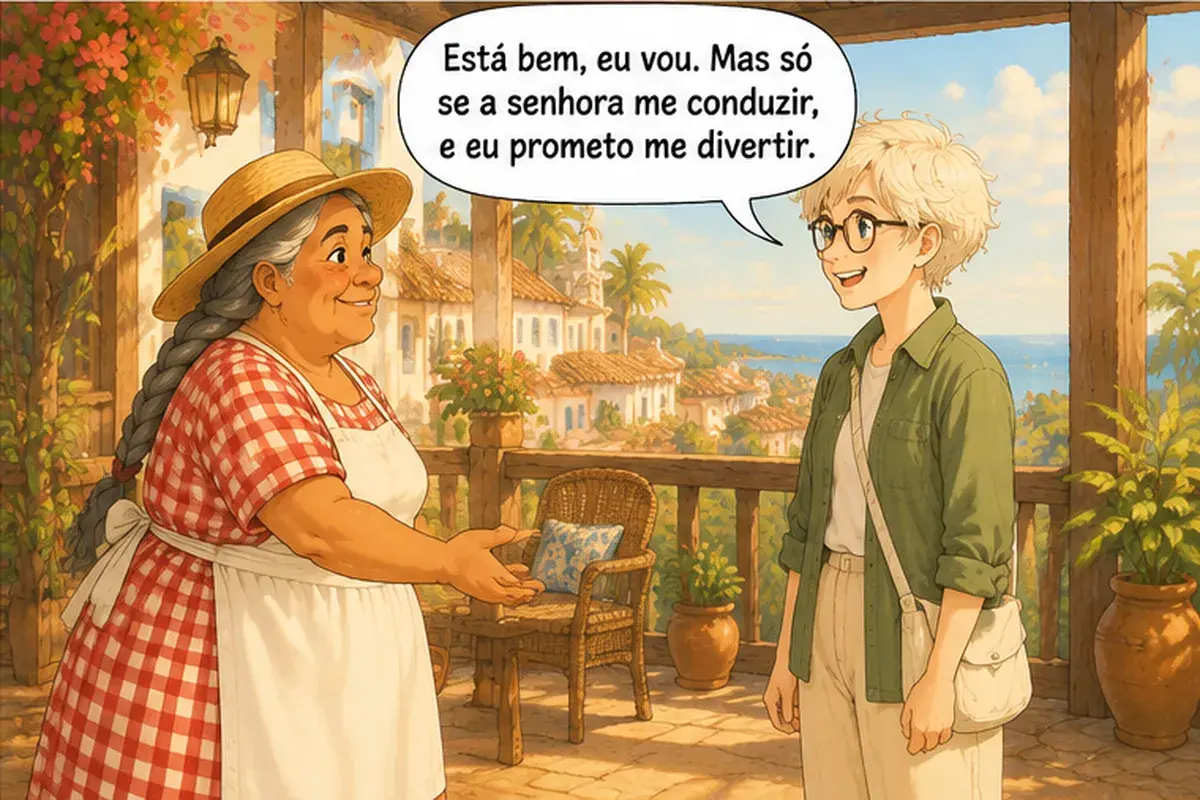
Está bem, eu vou. Mas só se a senhora me conduzir, e eu prometo me divertir.
OK, I'll go. But only if you lead me (formal), and I promise to have fun.
Grammar for this text
- Você sabe o que é um xote? —
sabe o que éis a question inside a sentence: "do you know what it is?" The word order is the same as in a statement, like Quero saber quem te ensinou. Here o que means "what." - A senhora me diz quando eu devo mexer o pé? —
me diz quando+ present: "will you tell me when I should move my foot?" It asks "at what moment," and it is notquandomeaning "as soon as" (unit 9). Nina saysa senhora, the respectful "you." - Tô fora! — a friends' word: "I'm out, I'm not taking part" (
estou fora). Nina tries it, and Dona Socorro playfully throws it back: ninguém fica de fora — "nobody stays out." Don't say it to older people or clerks. - arrastar o pé — a joking way to say "to dance forró," literally "to drag your foot." There is a joke here: Nina says that back home people shuffle their feet on ice so they don't fall.
- Continuem! — a command to several people (
vocês): it looks like the subjunctive form (unit 4),continuabecomescontinuem. To one person you would saycontinua. - vai bombar, Que fofo — Bia's words with friends:
bombarmeans "to become a hit, to blow up online," andfofomeans "cute." Don't use them with older people or clerks.
Words and grammar of the unit: Make plans in a group chat.
Learn the words from the texts with flashcards
In the app, you can tap any word in a text to see its translation, forms and examples, and new words stick with flashcards. 15 minutes a day.
Start for freeEverything is open for free. No card needed to sign up.