

Portuguese dialogue with translation · B1 · 18 lines
Pode falar um pouco sobre você? Can you talk a little about yourself?
Comic · 18 panels
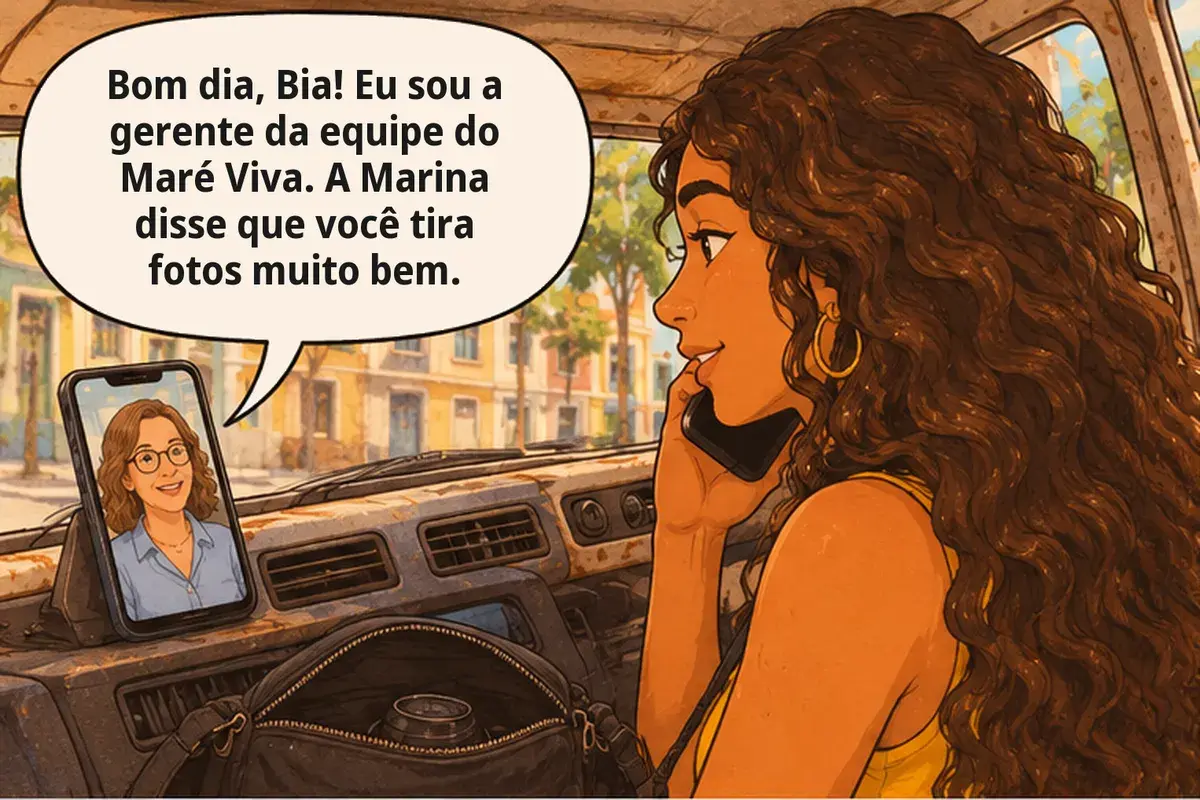
- Gerente
Bom dia, Bia! Eu sou a gerente da equipe do Maré Viva. A Marina disse que você tira fotos muito bem.
Good morning, Bia! I'm the manager of the Maré Viva team. Marina said you take great photos.
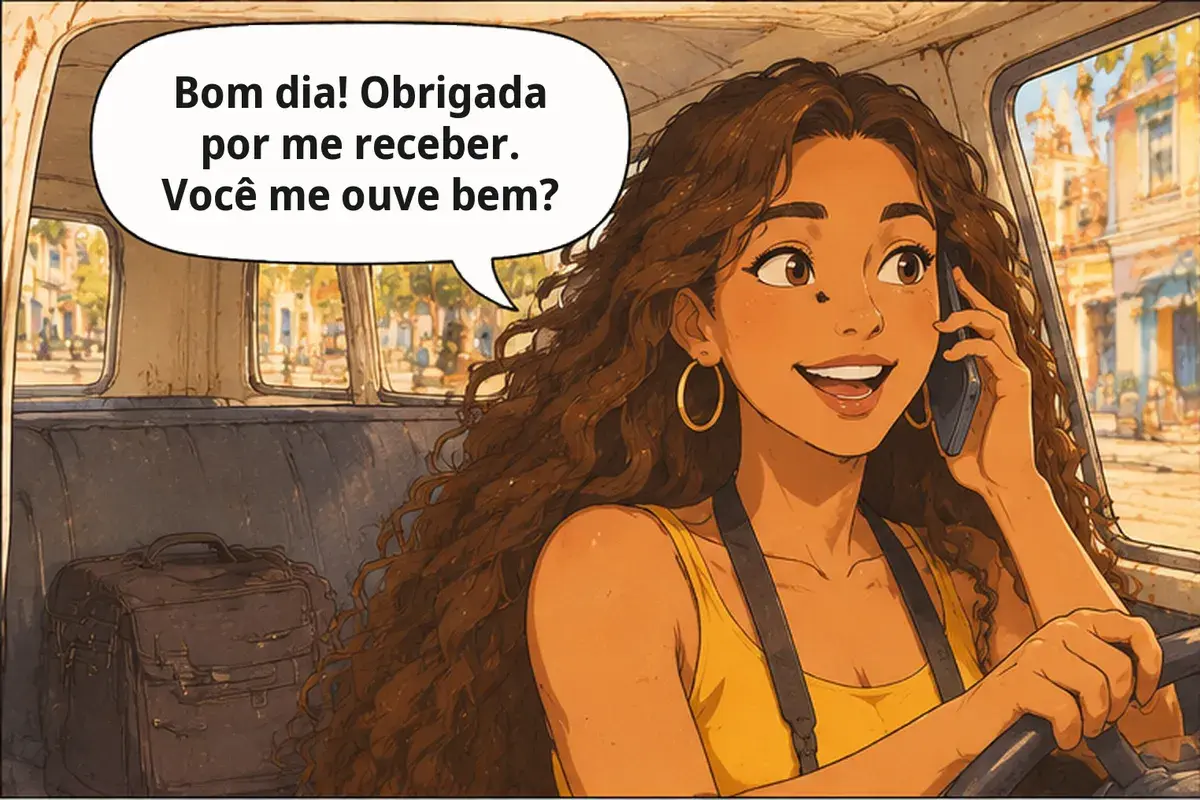
- Bia
Bom dia! Obrigada por me receber. Você me ouve bem?
Good morning! Thank you for having me. Can you hear me well?

- Gerente
Ouço muito bem. Estamos contratando uma fotógrafa para a cobertura do evento de São João, em Caruaru. Pode falar um pouco sobre você?
I hear you very well. We're hiring a photographer to cover the São João event in Caruaru. Can you talk a little about yourself?

- Bia
Claro. Sou do Rio e comecei a minha carreira tirando fotos de festas e shows. Já mandei o meu currículo por e-mail.
Sure. I'm from Rio, and I started my career taking photos at parties and shows. I already sent my résumé by email.
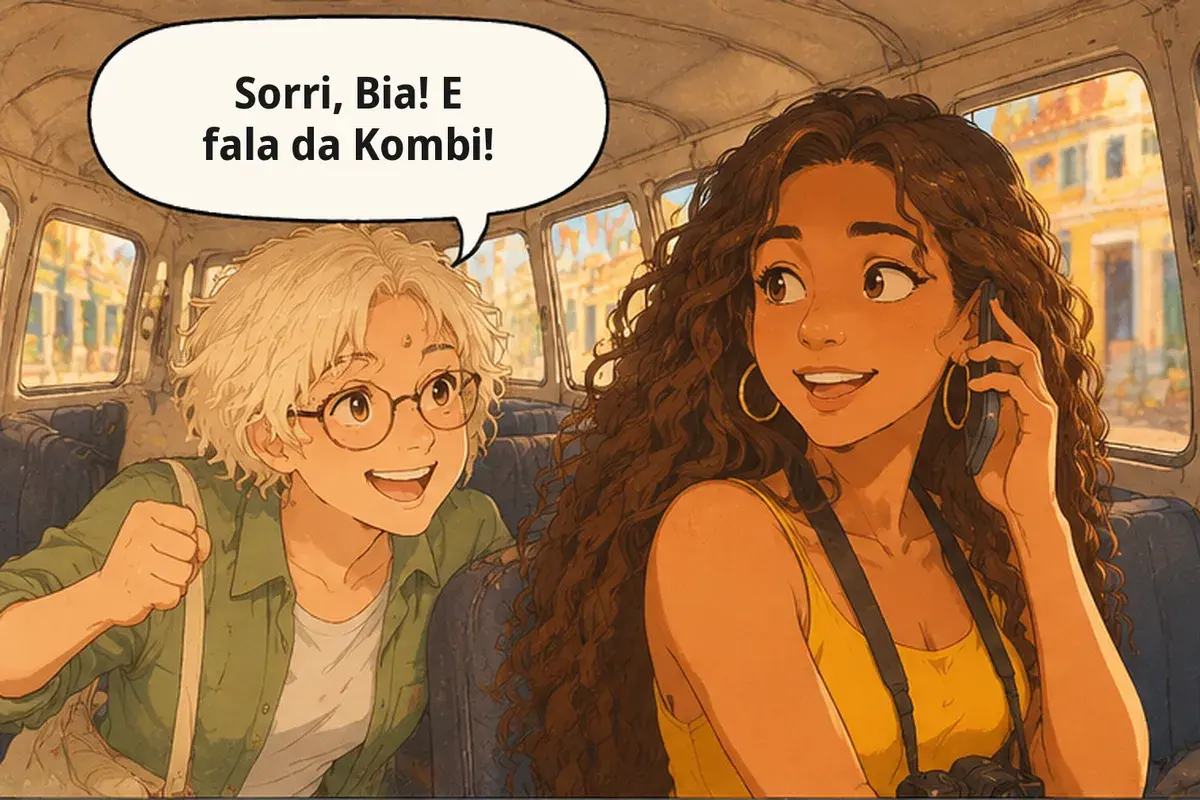
- Nina
Sorri, Bia! E fala da Kombi!
Smile, Bia! And talk about the Kombi!

- Gerente
Desculpe, ouvi uma voz. Tem mais alguém aí? E por que você quer esta vaga?
Sorry, I heard a voice. Is someone else there? And why do you want this job?

- Bia
É a minha equipe: dois amigos que falam demais. Eu quero a vaga porque o São João é uma festa cheia de gente e de cor, e eu quero tirar fotos de tudo de perto.
That's my team: two friends who talk too much. I want the job because São João is a party full of people and color, and I want to take photos of everything up close.

- Gerente
A sua função vai ser tirar e editar as fotos no mesmo dia. Você tem essa habilidade?
Your role will be taking and editing the photos on the same day. Do you have that skill?
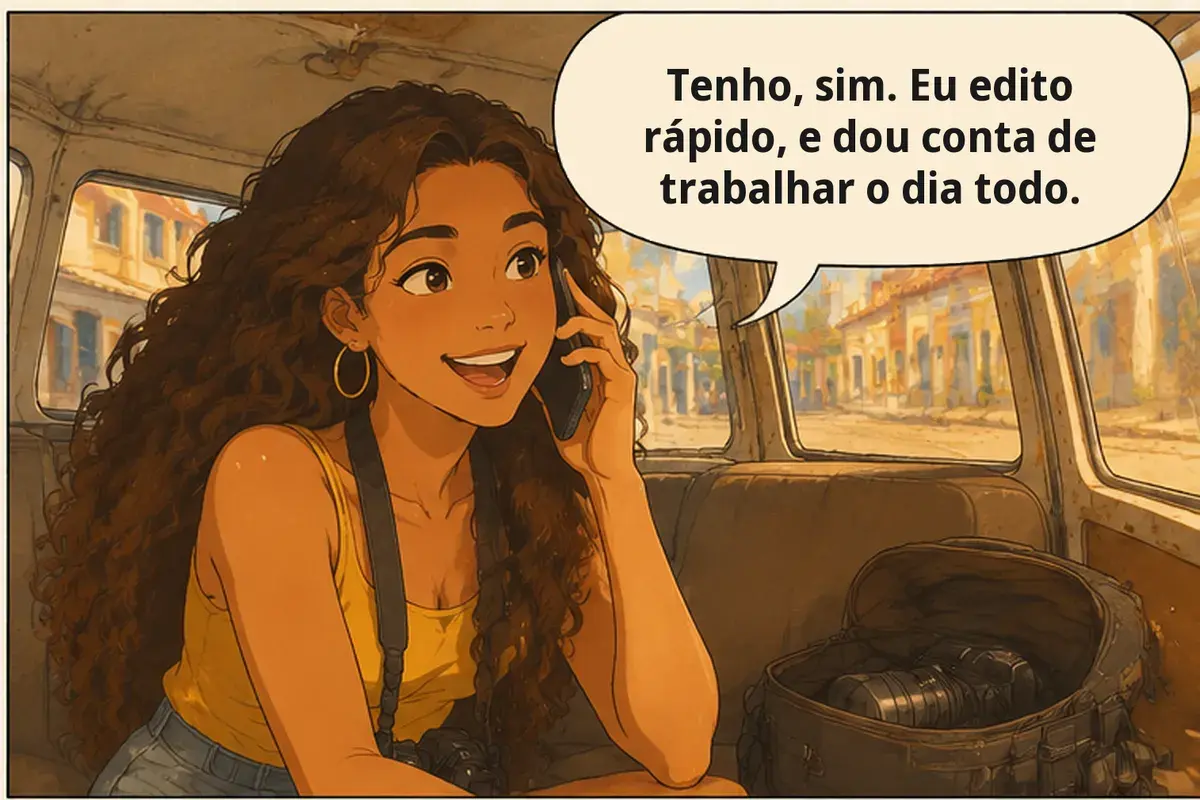
- Bia
Tenho, sim. Eu edito rápido, e dou conta de trabalhar o dia todo.
Yes, I do. I edit fast, and I can handle working all day.
- Gerente
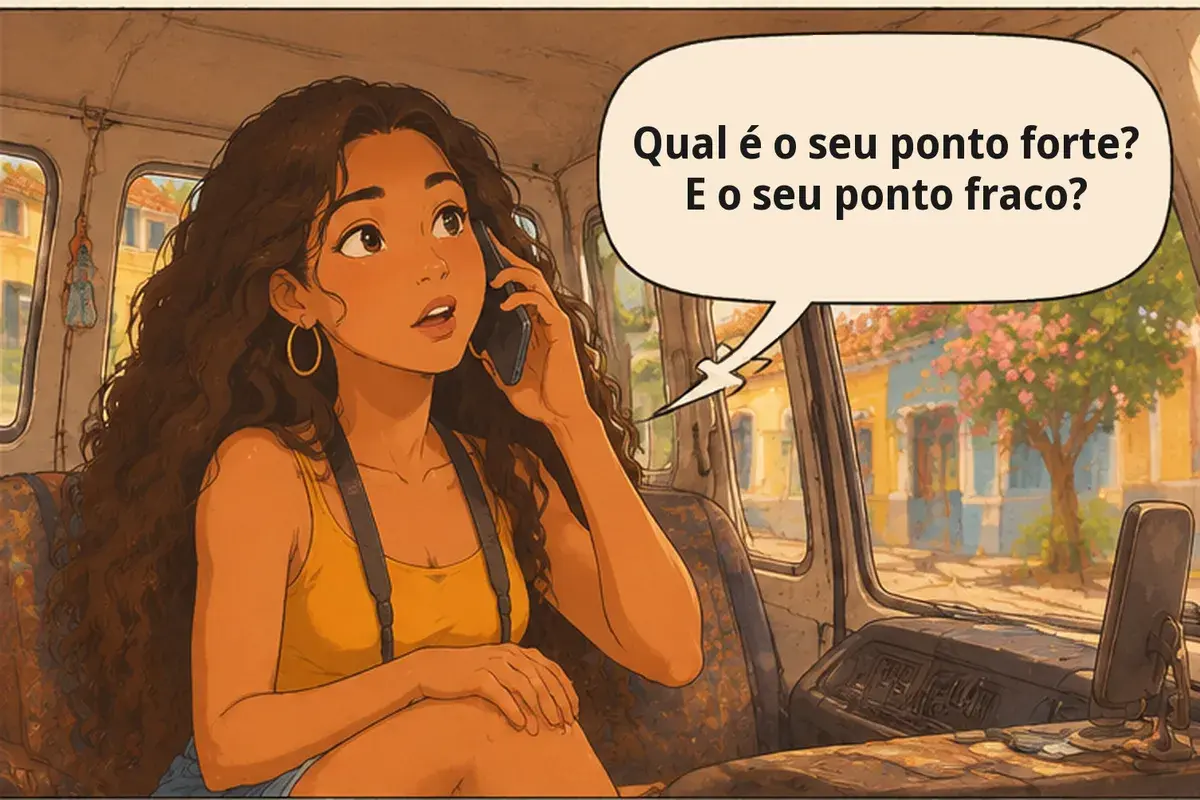
Qual é o seu ponto forte? E o seu ponto fraco?
What's your strength? And your weakness?
- Bia
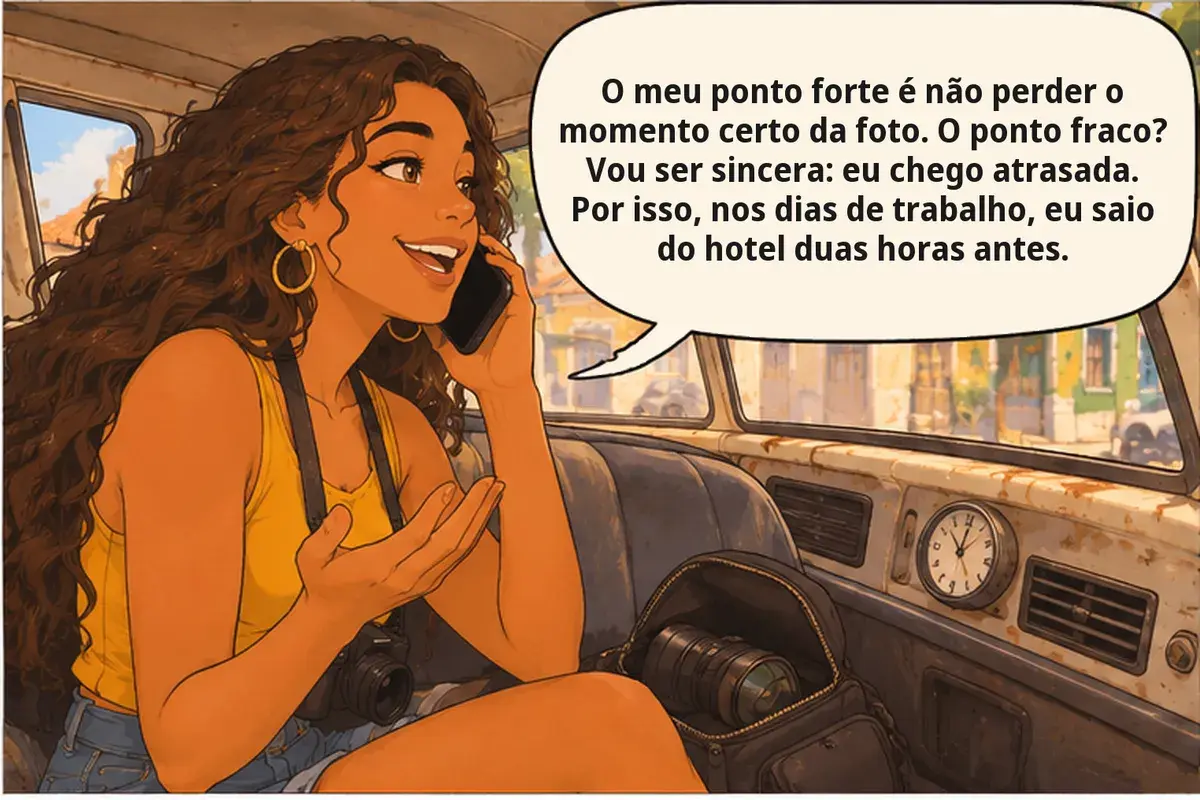
O meu ponto forte é não perder o momento certo da foto. O ponto fraco? Vou ser sincera: eu chego atrasada. Por isso, nos dias de trabalho, eu saio do hotel duas horas antes.
My strength is not missing the right moment for the photo. My weakness? I'll be honest: I show up late (woman speaking). That's why, on work days, I leave the hotel two hours early.

- Gerente
Obrigada por ser sincera. Você tem como começar na semana que vem? A folga é na...
Thank you for being honest (to a woman). Can you start next week? The day off is on...
- Bia
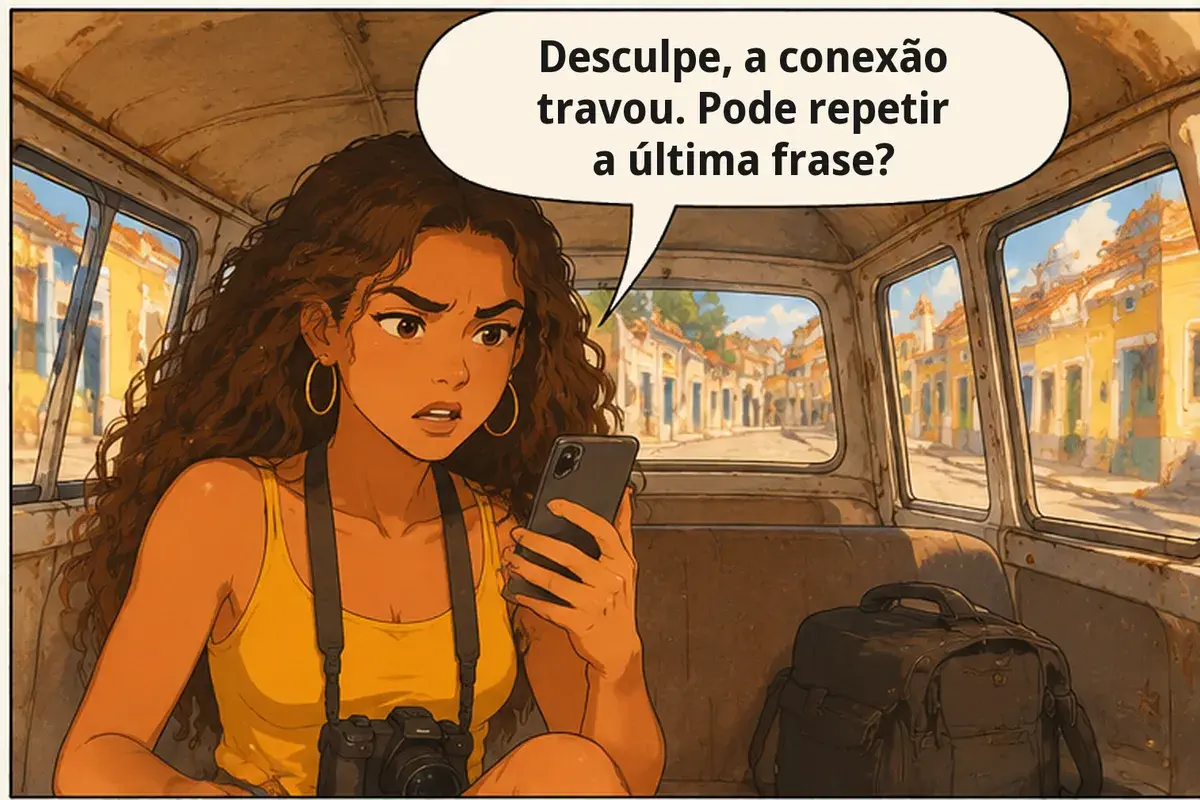
Desculpe, a conexão travou. Pode repetir a última frase?
Sorry, the connection froze. Can you repeat the last sentence?
- Gerente
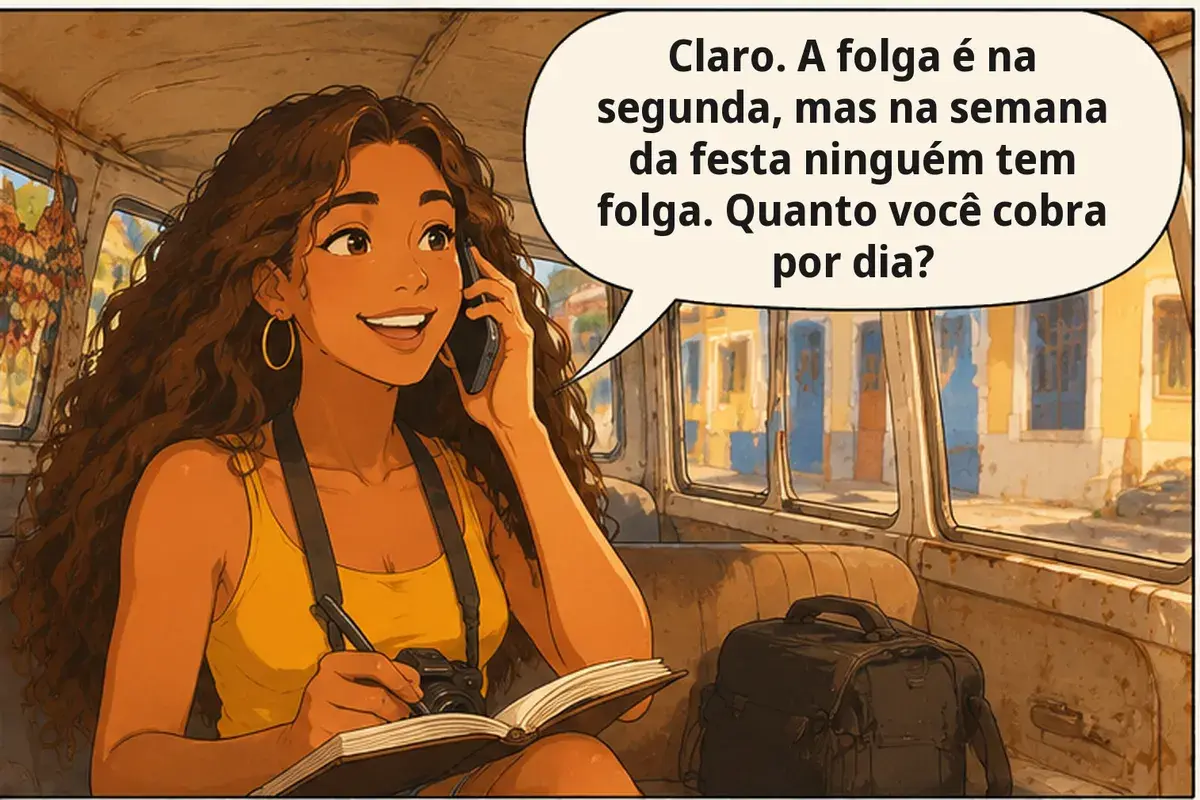
Claro. A folga é na segunda, mas na semana da festa ninguém tem folga. Quanto você cobra por dia?
Of course. The day off is on Monday, but the week of the festival nobody gets a day off. How much do you charge per day?
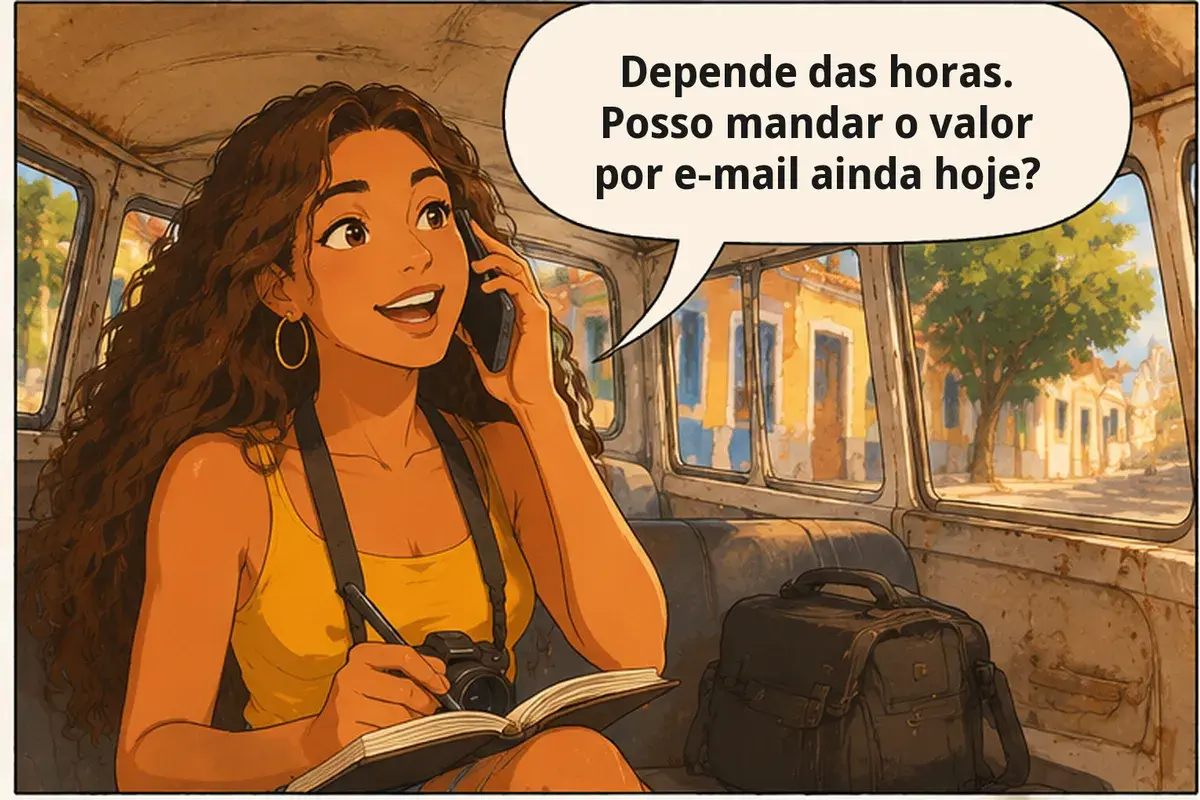
- Bia
Depende das horas. Posso mandar o valor por e-mail ainda hoje?
It depends on the hours. Can I send the amount by email later today?
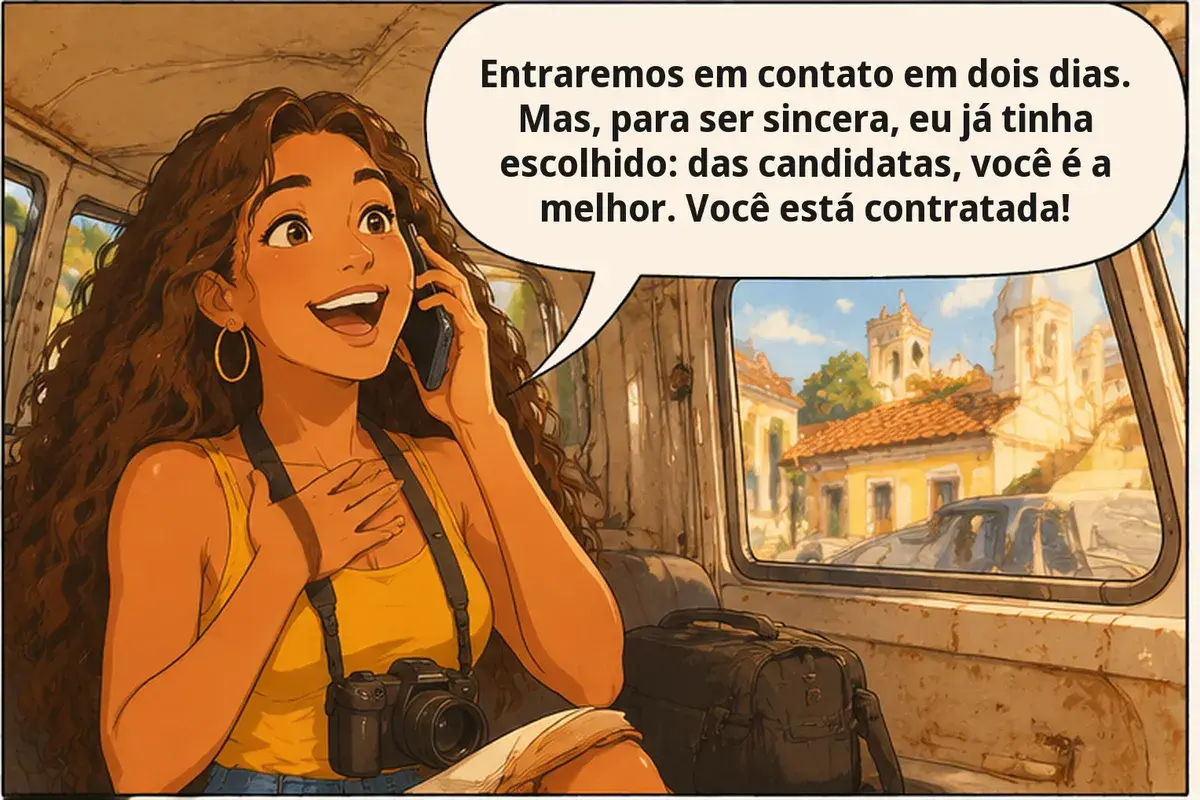
- Gerente
Entraremos em contato em dois dias. Mas, para ser sincera, eu já tinha escolhido: das candidatas, você é a melhor. Você está contratada!
We'll be in touch in two days. But, to be honest (woman speaking), I had already chosen: of the candidates, you're the best. You're hired! (to a woman)
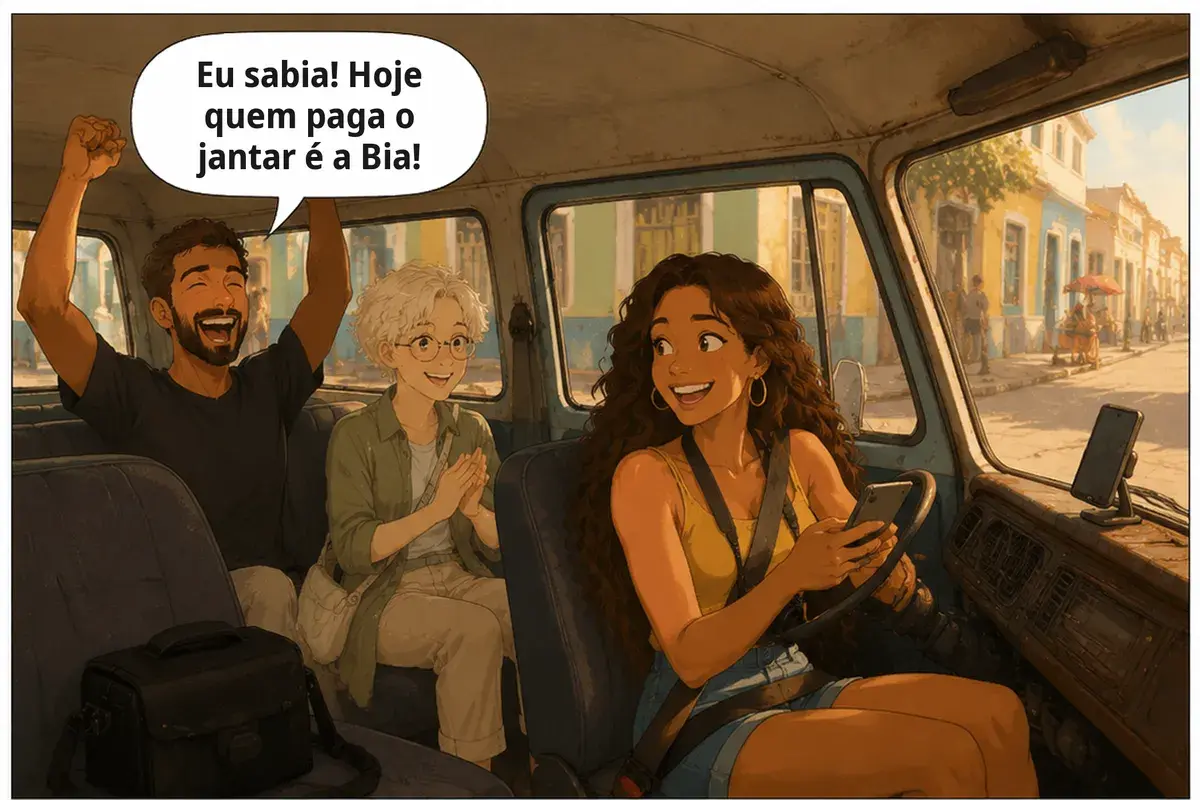
- Léo
Eu sabia! Hoje quem paga o jantar é a Bia!
I knew it! Tonight Bia's the one paying for dinner!
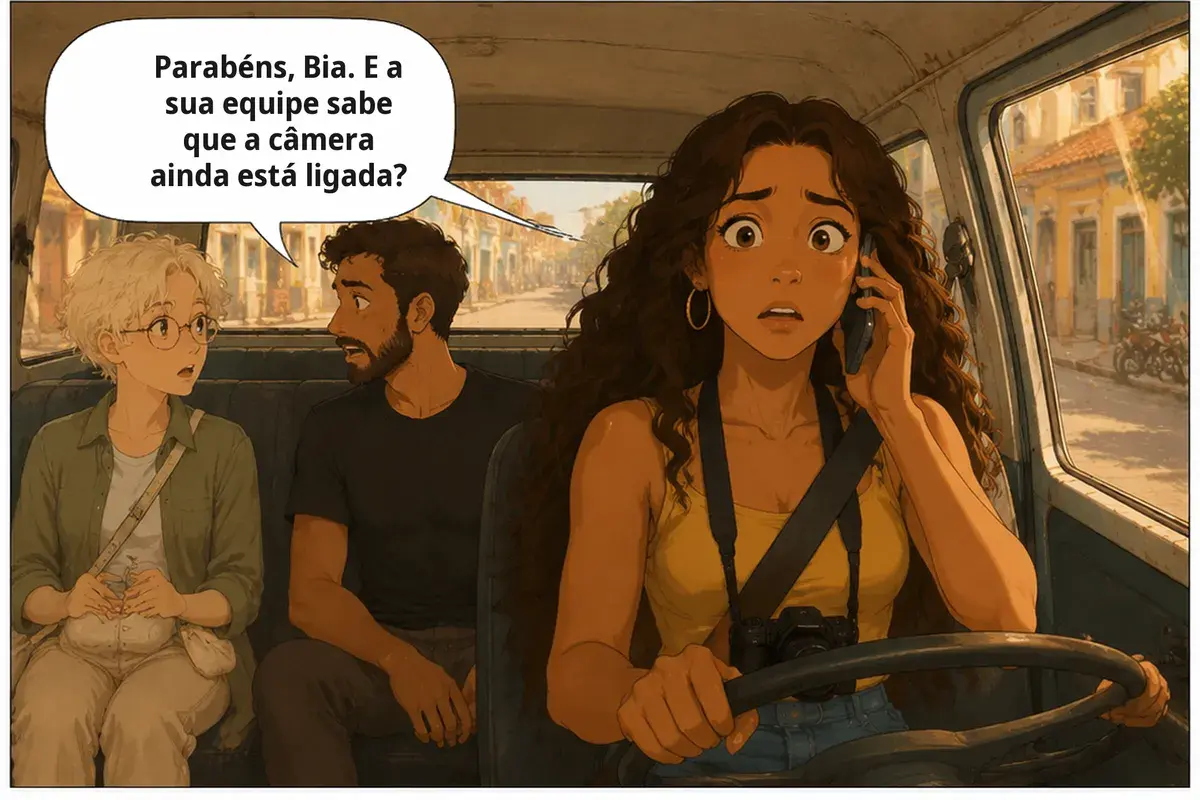
- Gerente
Parabéns, Bia. E a sua equipe sabe que a câmera ainda está ligada?
Congratulations, Bia. And does your team know the camera is still on?
Grammar for this text
- Estamos contratando uma fotógrafa para a cobertura do evento —
contratarmeans “to hire”, andestamos contratandois “we're hiring” right now (present progressive). Herecoberturameans news coverage of an event, not “roof” or “coverage” as in insurance. - Pode falar um pouco sobre você? — a polite request:
pode+ infinitive, “can you…?”. It's the first question of almost every interview, so learn it as a whole. The manager saysvocê, which is just “you” in English. - Você tem essa habilidade? —
habilidademeans “skill”. - dou conta de trabalhar o dia todo —
dar conta demeans “to manage, to handle”, not “to give an account”. - Qual é o seu ponto forte? E o seu ponto fraco? — “What's your strength? And your weakness?” A short, honest answer is normal.
- Você tem como começar na semana que vem? —
ter como+ infinitive means “to have a way to, to be able to”.folgais a regular day off of the week; don't confuse it withferiado, a public holiday for everyone. - Quanto você cobra por dia? —
cobrarmeans “to charge”. The formcobralooks like the word for “snake” (unit 9), but here it's a verb. - Entraremos em contato —
entraremosis the simple future ofentrar(unit 18): “we'll be in touch”. The manager uses it as a promise; in casual speech people would use the present orir+ infinitive instead. - Eu já tinha escolhido —
tinha escolhido(unit 14) is “I had already chosen”, that is, before this moment.
Words and grammar of the unit: Get through a simple job interview and save your files.
Learn the words from the texts with flashcards
In the app, you can tap any word in a text to see its translation, forms and examples, and new words stick with flashcards. 15 minutes a day.
Start for freeEverything is open for free. No card needed to sign up.