

Portuguese dialogue with translation · B1 · 18 lines
Se eu gostar, eu fico If I like it, I'll stay
Comic · 18 panels

- Bia
Cheguei às quatro pra pegar o melhor lugar. Para o pôr do sol, eu chego cedo!
I got here at four to get the best spot. For the sunset, I come early!
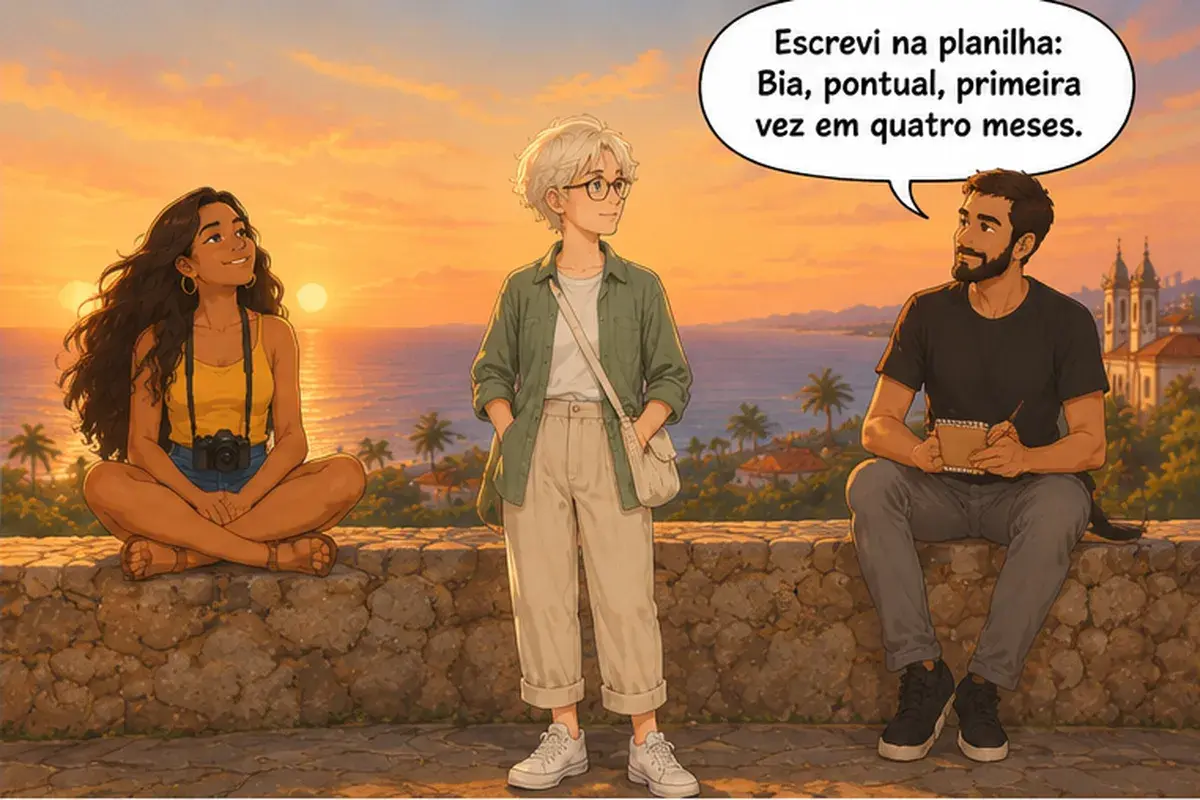
- Léo
Escrevi na planilha: Bia, pontual, primeira vez em quatro meses.
I wrote in the spreadsheet: Bia, on time, first time in four months.
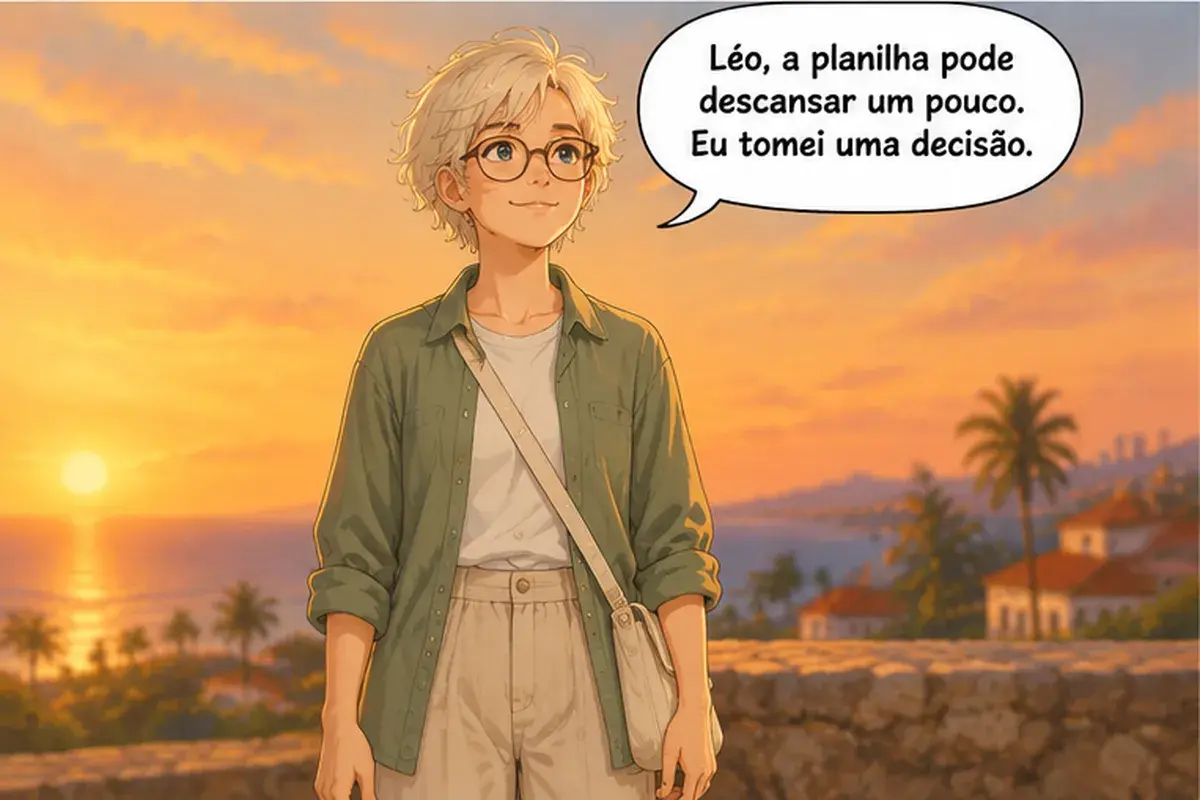
- Nina
Léo, a planilha pode descansar um pouco. Eu tomei uma decisão.
Léo, the spreadsheet can rest for a bit. I made a decision.
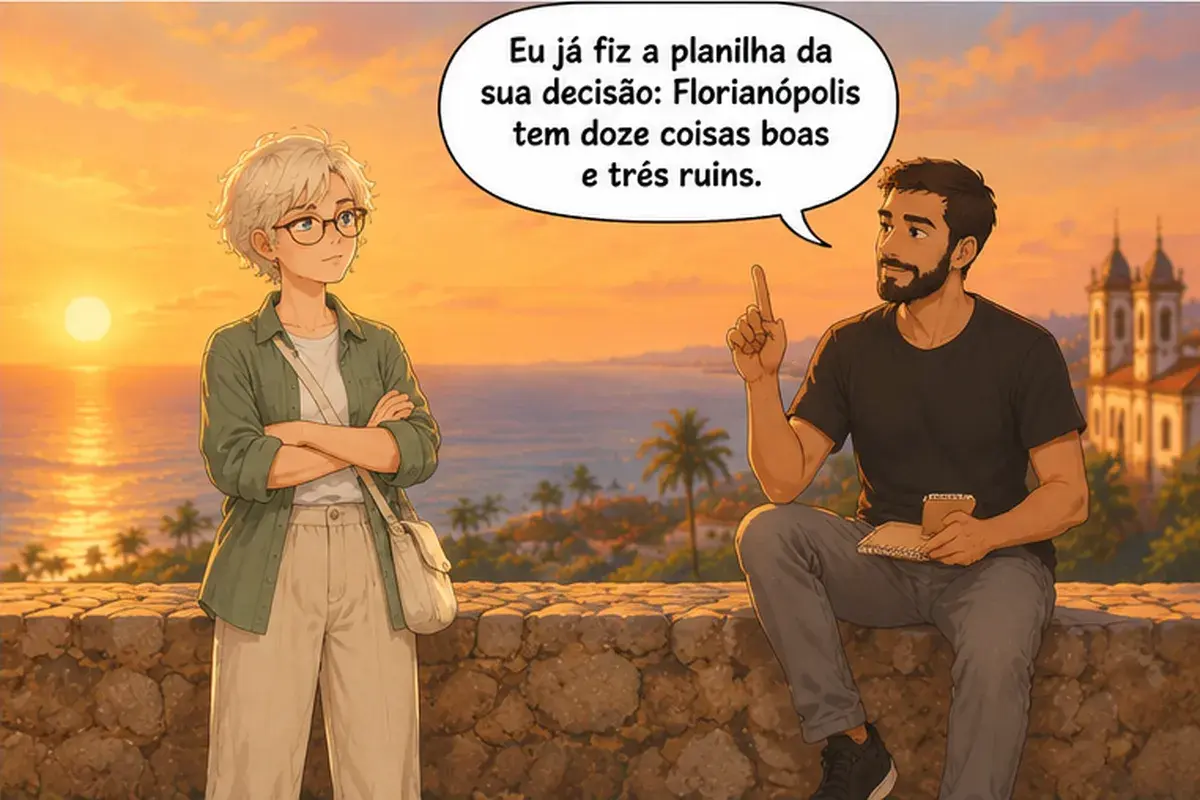
- Léo
Eu já fiz a planilha da sua decisão: Florianópolis tem doze coisas boas e três ruins.
I already made the spreadsheet for your decision: Florianópolis has twelve good things and three bad ones.

- Nina
Léo, a minha vida não é uma despesa!
Léo, my life isn't an expense!
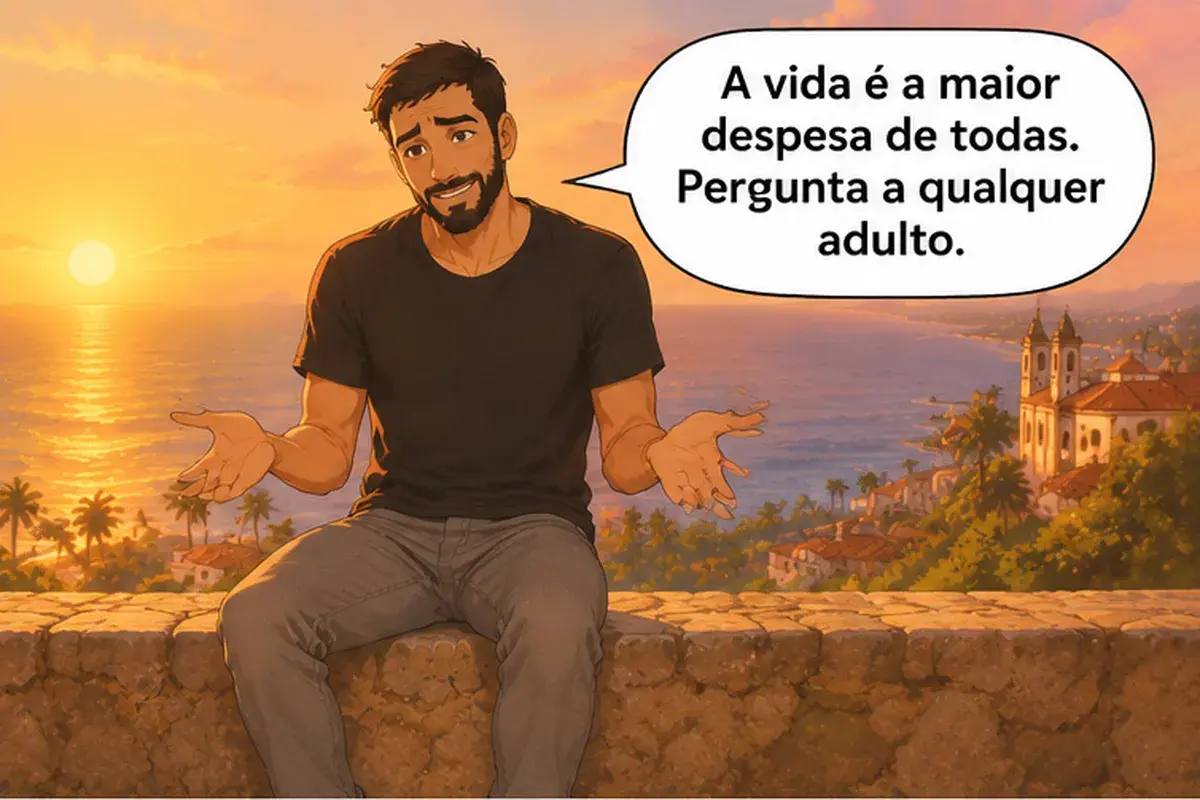
- Léo
A vida é a maior despesa de todas. Pergunta a qualquer adulto.
Life is the biggest expense of all. Ask any adult.

- Nina
Eu vou a Florianópolis ver a cidade. O voo é na semana que vem, passagem só de ida.
I'm going to Florianópolis to see the city. The flight is next week, one-way ticket.
- Léo
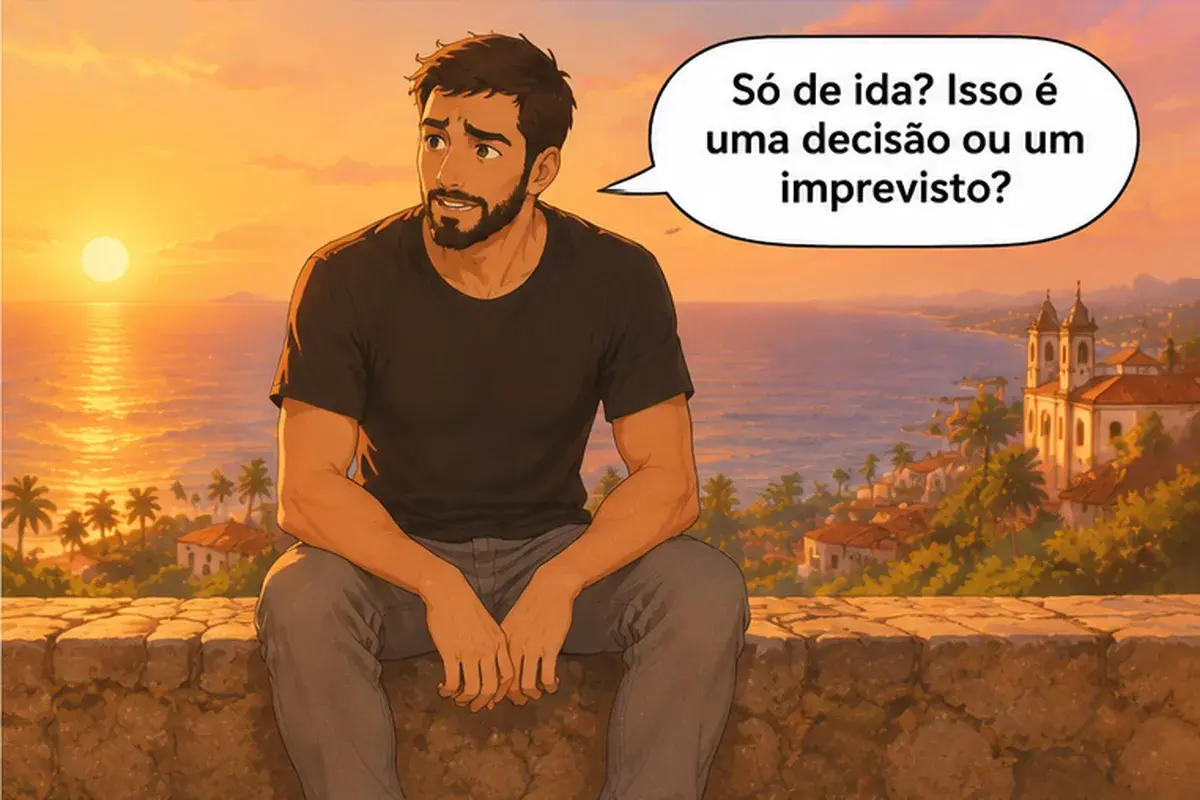
Só de ida? Isso é uma decisão ou um imprevisto?
One-way? Is this a decision or an unexpected event?

- Nina
Quem sabe os dois. Se eu gostar, eu fico. Se eu mudar de ideia, eu volto.
Maybe both. If I like it, I'll stay. If I change my mind, I'll come back.
- Léo
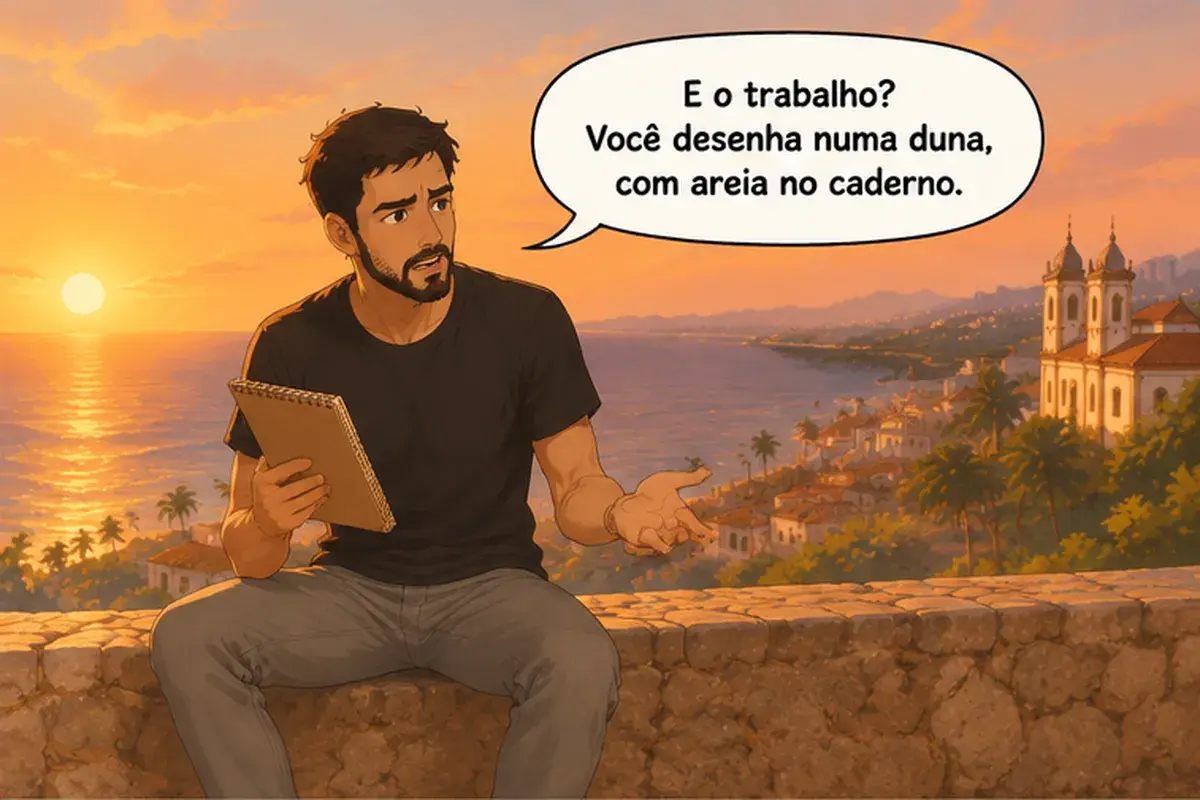
E o trabalho? Você desenha numa duna, com areia no caderno.
And work? You draw on a dune, with sand in your notebook.
- Nina
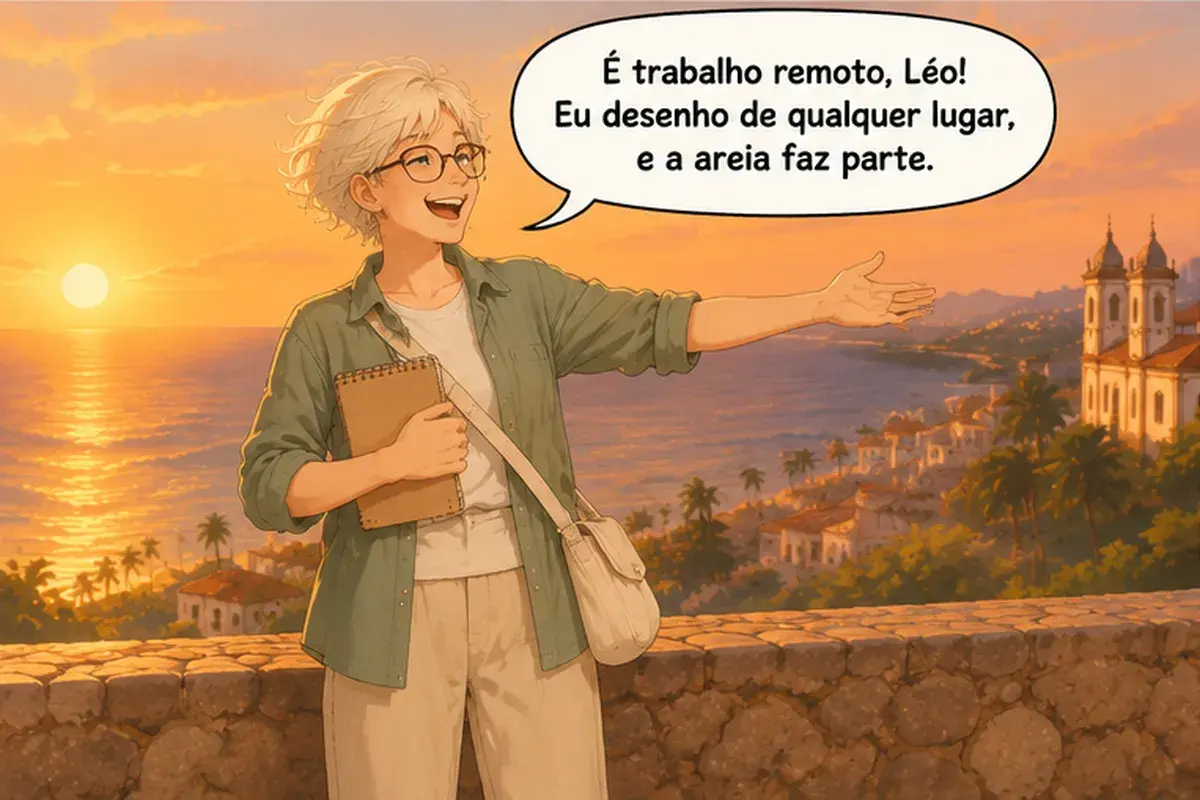
É trabalho remoto, Léo! Eu desenho de qualquer lugar, e a areia faz parte.
It's remote work, Léo! I draw from anywhere, and the sand is part of it.

- Bia
Duvido que você se arrependa. Você fala dessa ilha há semanas!
I doubt you'll regret it. You've been talking about that island for weeks!

- Nina
Tem muita incerteza, eu sei. Mas este país é o meu lugar no mundo. Faz sentido?
There's a lot of uncertainty, I know. But this country is my place in the world. Does that make sense?
- Léo
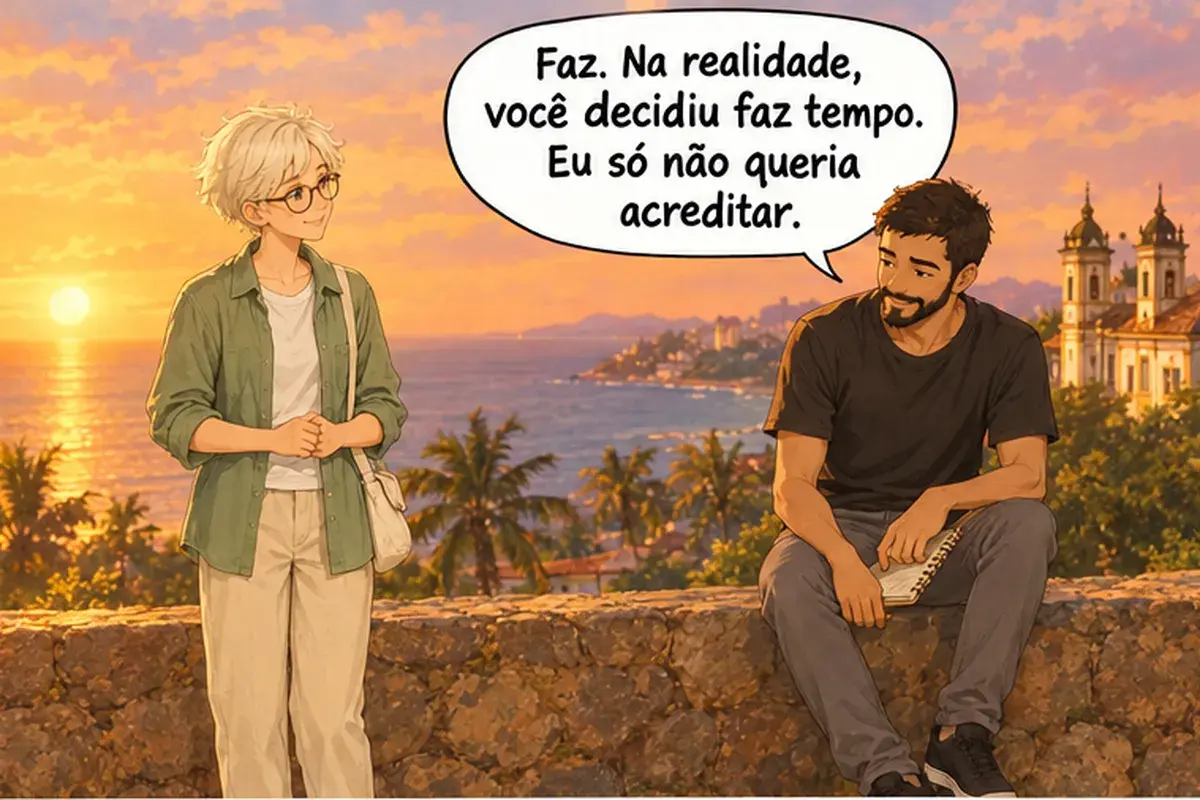
Faz. Na realidade, você decidiu faz tempo. Eu só não queria acreditar.
It does. In reality, you decided a long time ago. I just didn't want to believe it.

- Nina
Quero que vocês venham me ver quando eu estiver lá. Se eu pudesse, levaria vocês na mala!
I want you all to come see me when I'm there (to several people). If I could, I'd take you all with me in my suitcase! (to several people)

- Bia
E depois venha à minha exposição, no Rio, quando eu chegar lá. Vai ter um retrato seu na galeria.
And then come to my exhibition in Rio, when I get there. There'll be a portrait of you in the gallery.
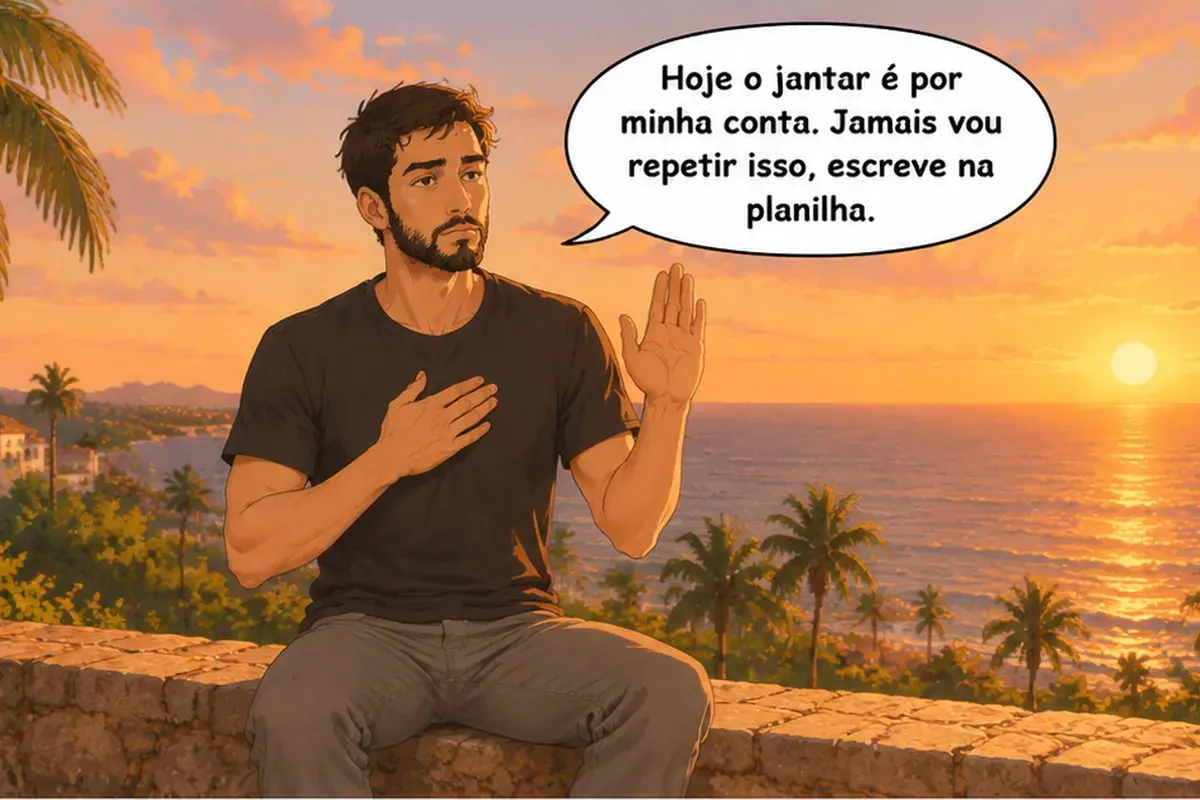
- Léo
Hoje o jantar é por minha conta. Jamais vou repetir isso, escreve na planilha.
Dinner's on me tonight. I'll never do this again, write it in the spreadsheet.
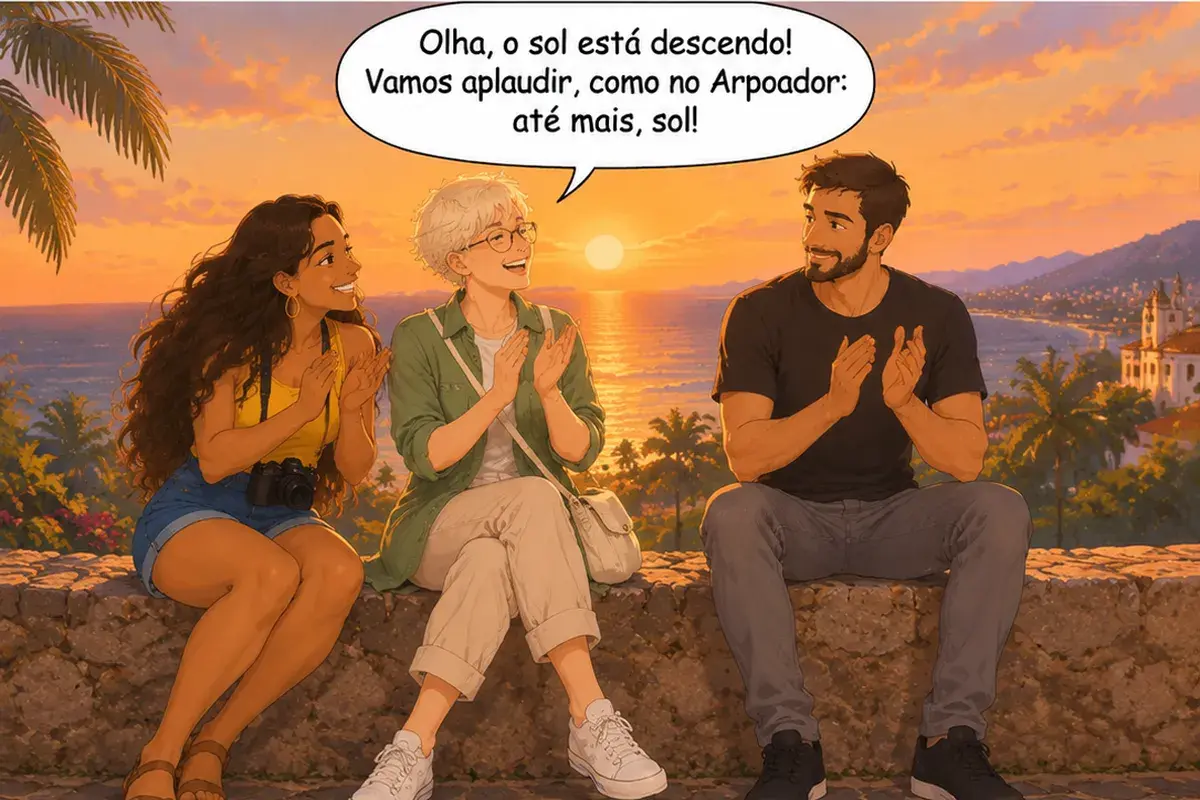
- Nina
Olha, o sol está descendo! Vamos aplaudir, como no Arpoador: até mais, sol!
Look, the sun is going down! Let's applaud, like at Arpoador: see you later, sun!
Grammar for this text
- Se eu pudesse, levaria vocês na mala — a set phrase:
pudesseis the past subjunctive ofpoder. The rule comes in B2, so for now learn the whole phrase: "if I could..." about something that can't happen. After it always comes the conditional ("would"):levaria(fromlevar, unit 2). - Quero que vocês venham me ver quando eu estiver lá — two special forms in one sentence.
venhamis the present subjunctive ofvirafterquero que(unit 4).estiveris the future subjunctive ofestarafterquando: "when I'm there" hasn't happened yet (unit 9). English uses the plain present here. - Quando eu chegar lá — "when I get there": the same pattern.
- Se eu gostar, eu fico — after
seabout the future, Portuguese also uses the future subjunctive. Forgostarit looks like the infinitive. English says "if I like it". You can't sayse eu gostohere. - Se eu mudar de ideia, eu volto — "if I change my mind, I'll come back": the same pattern.
- Duvido que você se arrependa —
duvido que+ present subjunctive (unit 11).arrepender-semeans "to regret":segoes before the verb. - Quem sabe os dois —
quem sabemeans "maybe". - Isso é uma decisão ou um imprevisto? —
imprevistois something unexpected (deu um imprevisto). Léo asks whether the one-way ticket is a real decision or just something that happened. - Faz tempo — "a long time ago" (as in A2). In Léo's other answer,
fazrepeats the verb offazer sentido, "to make sense": "It does." - Jamais vou repetir isso —
jamaismeans "never ever": stronger and more formal thannunca. Léo says it with a straight face, which is why it's funny. - Hoje o jantar é por minha conta — "dinner's on me tonight".
Words and grammar of the unit: Deciding where to live next.
Learn the words from the texts with flashcards
In the app, you can tap any word in a text to see its translation, forms and examples, and new words stick with flashcards. 15 minutes a day.
Start for freeEverything is open for free. No card needed to sign up.