

Portuguese dialogue with translation · B1 · 18 lines
É importante que a gente converse It's important that we talk
Comic · 18 panels

- Nina
Léo? São duas da manhã! O que você faz aí no escuro?
Léo? It's two in the morning! What are you doing there in the dark?

- Léo
Escuto o motor da Branquinha: não consigo dormir. De manhã a gente volta para Salvador, para buscar as coisas e se despedir da Dona Cida.
I'm listening to Branquinha's engine: I can't sleep. In the morning we're going back to Salvador to pick up our things and say goodbye to Dona Cida.
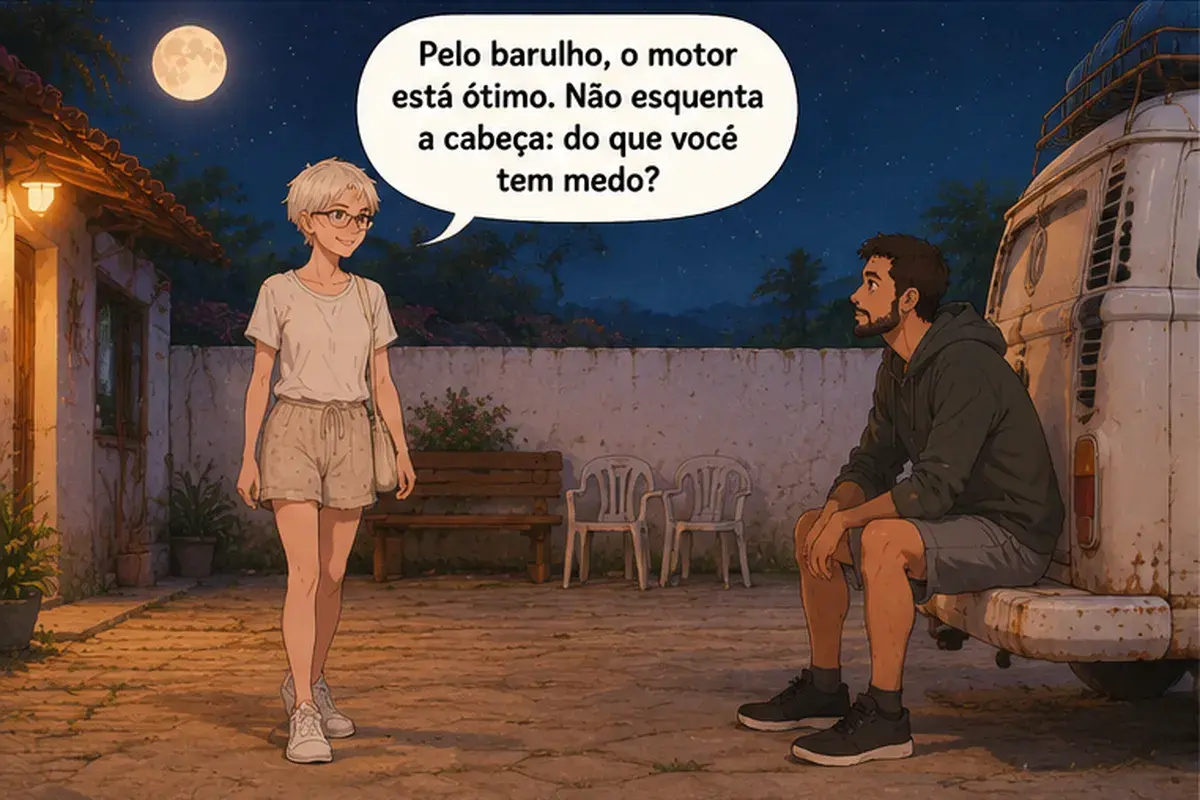
- Nina
Pelo barulho, o motor está ótimo. Não esquenta a cabeça: do que você tem medo?
By the sound of it, the engine is great. Don't stress: what are you afraid of?

- Léo
Admito: estou inseguro. Se ela quebrar na estrada, eu sou o culpado.
I admit it: I'm feeling insecure. If she breaks down on the road, I'm the one to blame (man speaking).
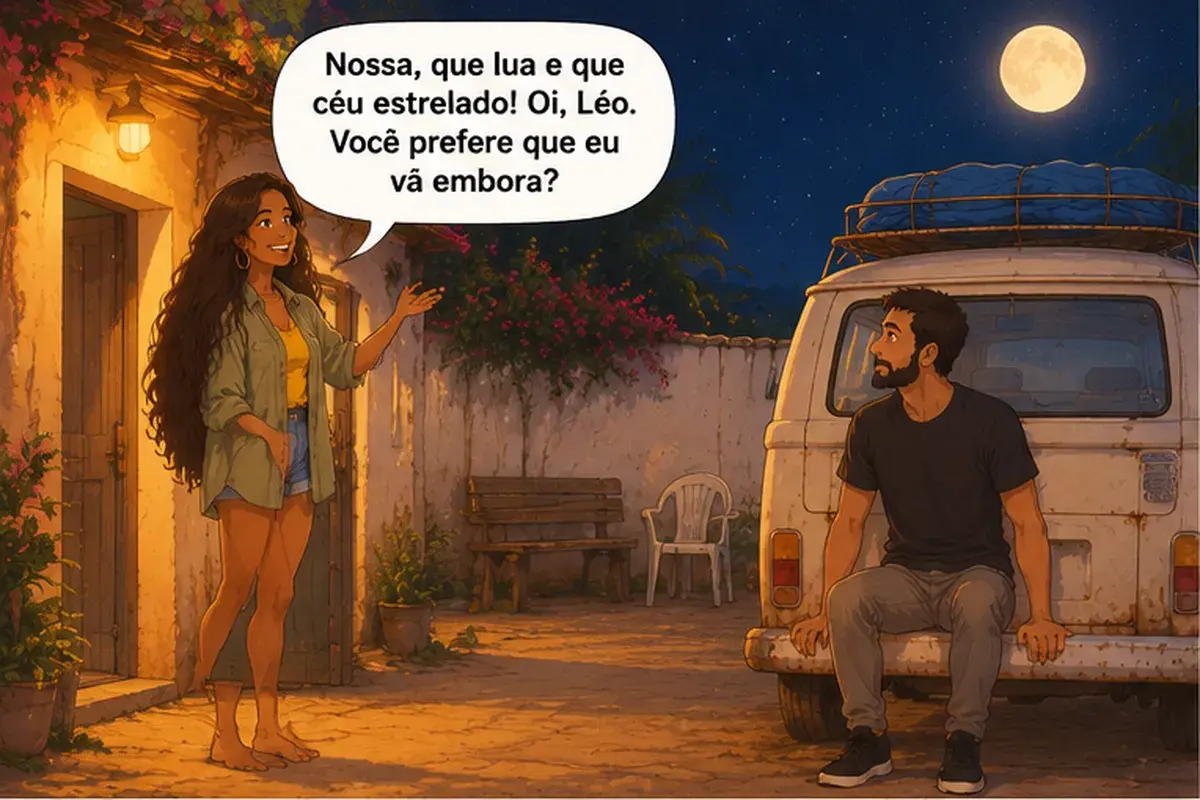
- Bia
Nossa, que lua e que céu estrelado! Oi, Léo. Você prefere que eu vá embora?
Wow, what a moon and what a starry sky! Hi, Léo. Would you rather I leave?

- Léo
Não. Fica. Eu preciso desabafar, e vocês escutam melhor do que um motor.
No. Stay. I need to vent, and you guys listen better than an engine.
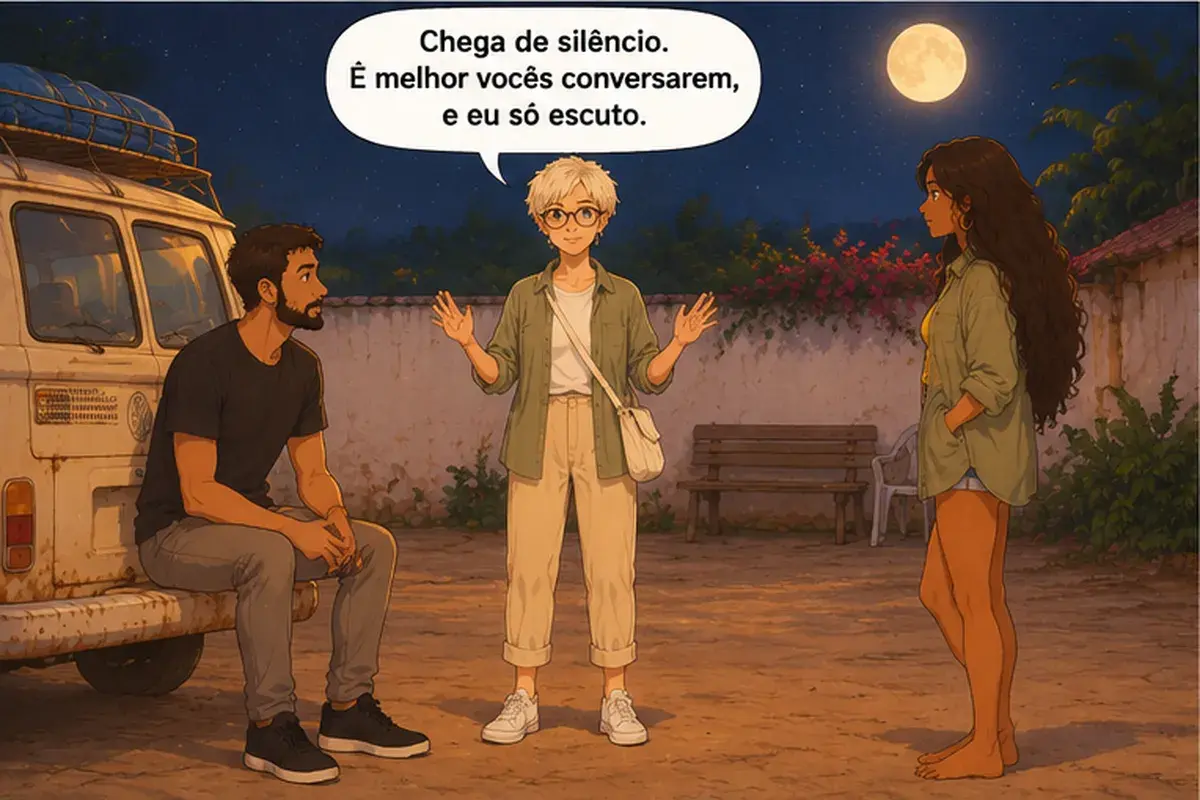
- Nina
Chega de silêncio. É melhor vocês conversarem, e eu só escuto.
Enough silence. You two had better talk, and I'll just listen.

- Bia
Eu começo: peço perdão pelo atraso. Não foi minha intenção magoar você.
I'll start: I ask for forgiveness for being late. It wasn't my intention to hurt you.

- Léo
Eu também me desculpo. Reconheço que fui chato.
I apologize too. I recognize that I was annoying (man speaking).
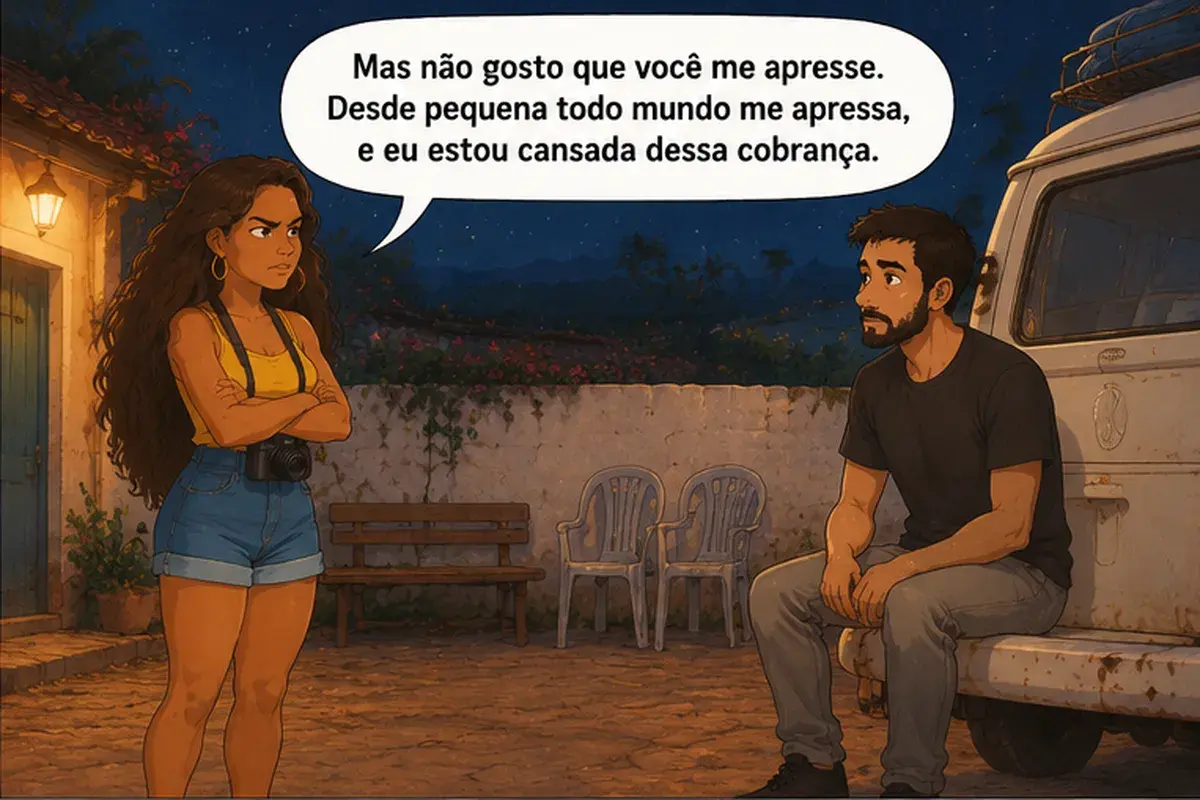
- Bia
Mas não gosto que você me apresse. Desde pequena todo mundo me apressa, e eu estou cansada dessa cobrança.
But I don't like it when you rush me. Ever since I was little, everyone has rushed me, and I'm tired of this pressure (woman speaking).

- Léo
Entendo. Eu gosto que tudo esteja combinado: é assim que eu lido com o medo.
I understand. I like it when everything is agreed on: that's how I deal with fear.
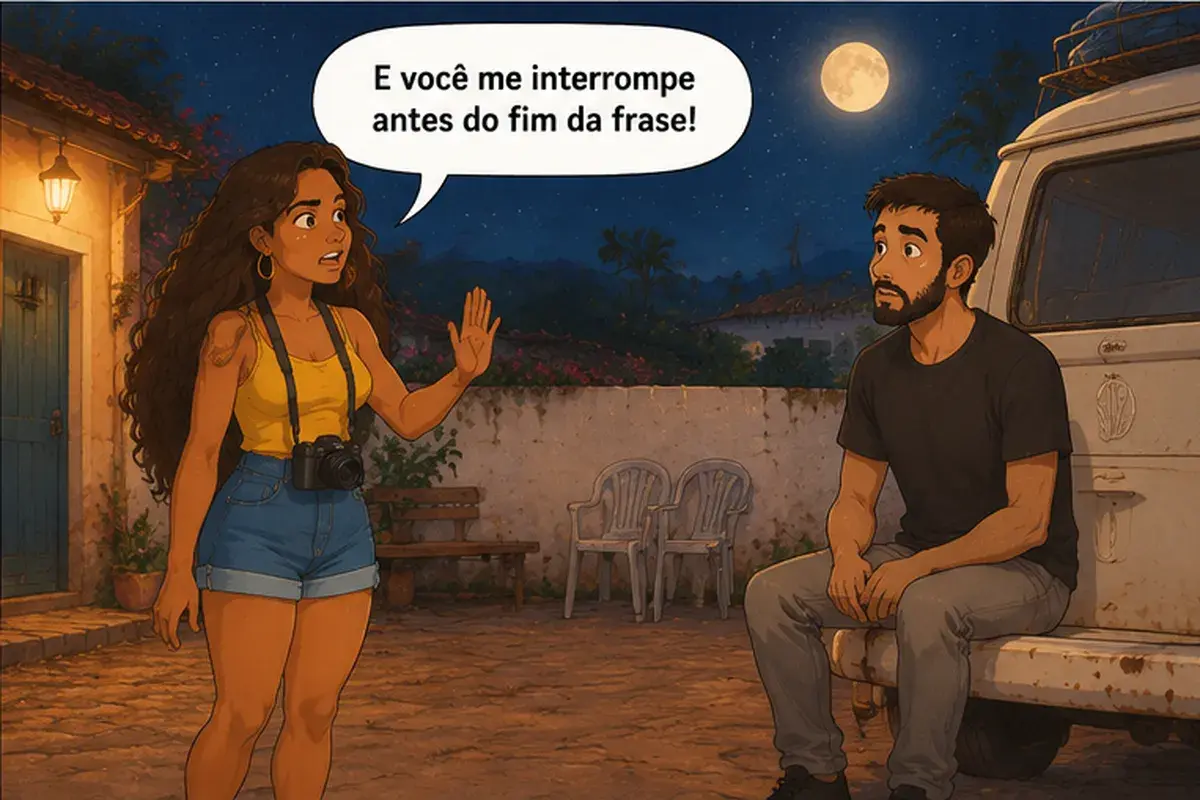
- Bia
E você me interrompe antes do fim da frase!
And you interrupt me before the end of the sentence!

- Léo
É verdade. De agora em diante, escuto até o fim.
That's true. From now on, I'll listen until the end.
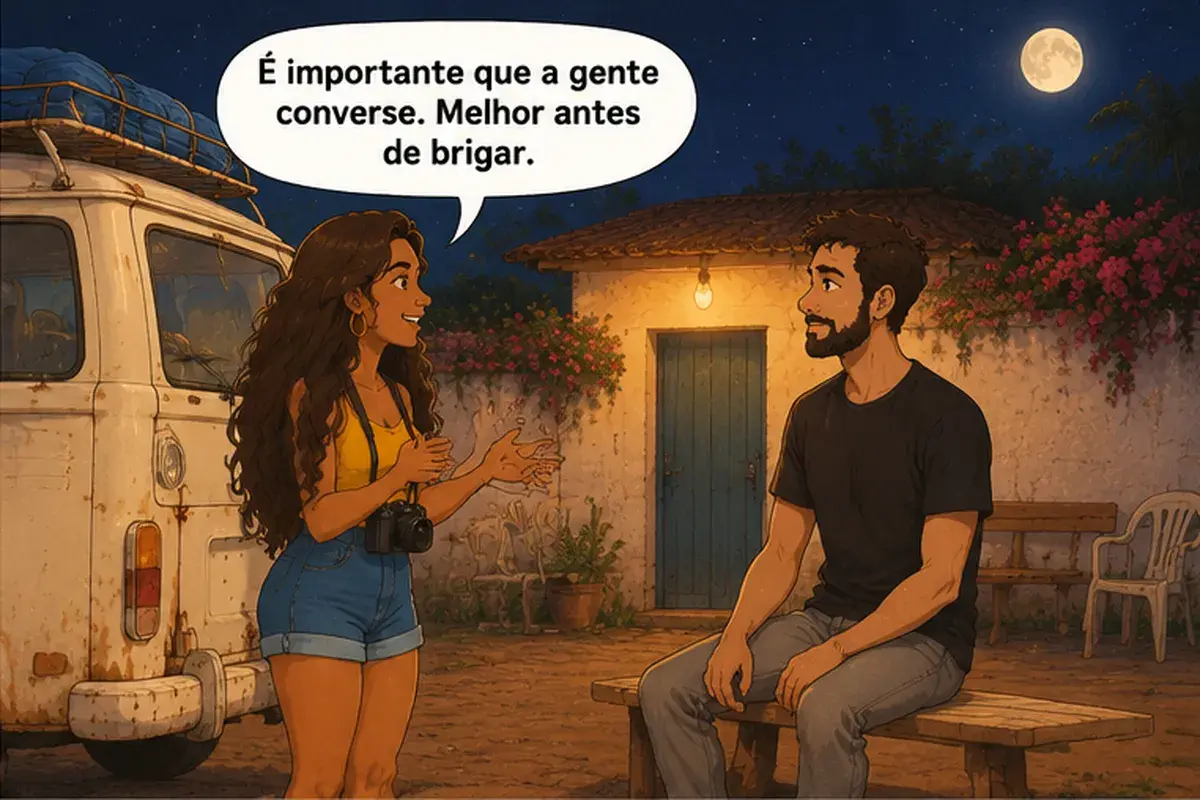
- Bia
É importante que a gente converse. Melhor antes de brigar.
It's important that we talk. Better before we fight.

- Nina
Então vamos escrever a regra: de manhã dirige o Léo, depois do almoço dirige a Bia.
Then let's write down the rule: in the morning Léo drives, after lunch Bia drives.

- Bia
Eu vou cumprir! Às oito em ponto estou no carro.
I'm going to keep it! At eight sharp I'm in the car.

- Léo
Escrevo na planilha: oito em ponto, horário da Bia. Quer dizer, nove.
I'm writing it in the spreadsheet: eight sharp, Bia time. I mean, nine.

- Nina
Ele fez piada! Então vocês fizeram as pazes.
He made a joke! So you two made up.
Grammar for this text
- É melhor vocês conversarem — a set phrase: "you'd better talk" (to several people). conversarem is conversar + -em: an infinitive with its own person (here vocês). It is called the personal infinitive; the rule comes at B2, so for now learn the phrase as a whole. It does not mean "when you talk", even though the form is the same as the future subjunctive.
- não gosto que você me apresse and Eu gosto que tudo esteja combinado — after gosto que / não gosto que the verb takes the subjunctive: apresse (from apressar: apresso → apresse), esteja (from estar, an irregular form from unit 4). English says "I (don't) like it when...".
- É importante que a gente converse — after é importante que the subjunctive again: converse (converso → converse). a gente means "we", but the verb takes the ele / ela form.
- Não esquenta a cabeça — casual "don't stress" (literally "don't heat up your head"). Fine with a friend, not with your boss or an older person.
- Eu também me desculpo — desculpar-se means "to apologize"; me goes before the verb. Don't confuse it with desculpa — "sorry".
- oito em ponto, horário da Bia. Quer dizer, nove — Léo's deadpan joke: "Bia time" is always an hour later than the real time.
Words and grammar of the unit: Make up and say what matters.
Learn the words from the texts with flashcards
In the app, you can tap any word in a text to see its translation, forms and examples, and new words stick with flashcards. 15 minutes a day.
Start for freeEverything is open for free. No card needed to sign up.