

Portuguese story with translation · B1 · 18 lines
Se vier chuva à tarde, a gente sobe de manhã If rain comes in the afternoon, we'll climb in the morning
Comic · 13 panels

Hoje escrevo no caderno o plano de três dias na Chapada Diamantina, que tem um grande parque nacional.
Today I'm writing the three-day plan for Chapada Diamantina in my notebook; it has a big national park.
O nome vem de diamante: antigamente, as pessoas vinham aqui procurar diamante. Nós viemos procurar cachoeira.
The name comes from "diamond": in the old days, people came here to look for diamonds. We came to look for waterfalls.

No primeiro dia, vamos ao Morro do Pai Inácio, no fim da tarde. A subida é curta, e a entrada custa uns vinte reais por pessoa.
On the first day, we're going to Morro do Pai Inácio in the late afternoon. The climb is short, and entry costs about twenty reais per person.
O morro tem mais de mil metros. Quando a gente chegar ao cume, vamos ficar para ver o sol descer.
The hill is over a thousand meters high. When we get to the summit, we're going to stay and watch the sun go down.

O Léo avisou que, se ficar sem fôlego na subida, vai dizer que está olhando a vista.
Léo warned us that if he gets out of breath on the climb, he's going to say he's looking at the view.
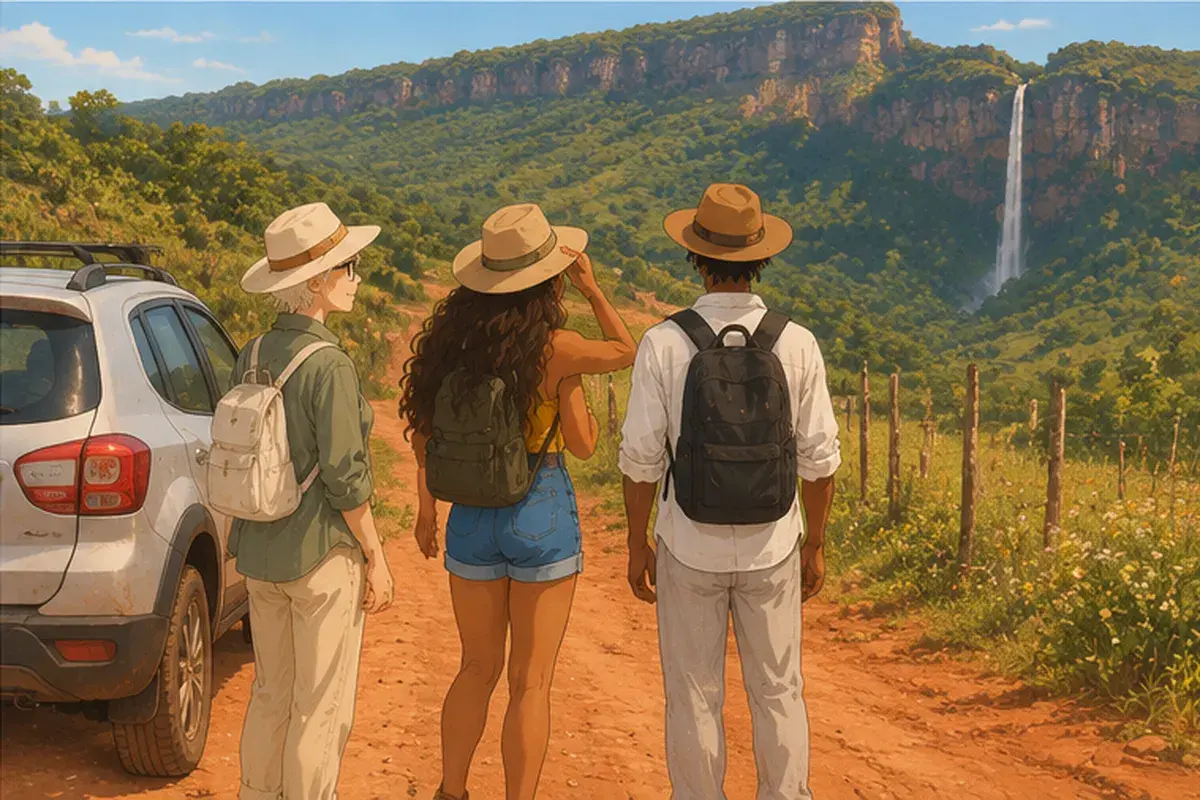
No segundo dia, vamos à cachoeira da Fumaça. A trilha não começa em Lençóis, mas no Vale do Capão.
On the second day, we're going to the Fumaça waterfall. The trail doesn't start in Lençóis, but in Vale do Capão.
Fica a uns oitenta quilômetros, e parte do caminho é estrada de terra.
It's about eighty kilometers away, and part of the way is dirt road.
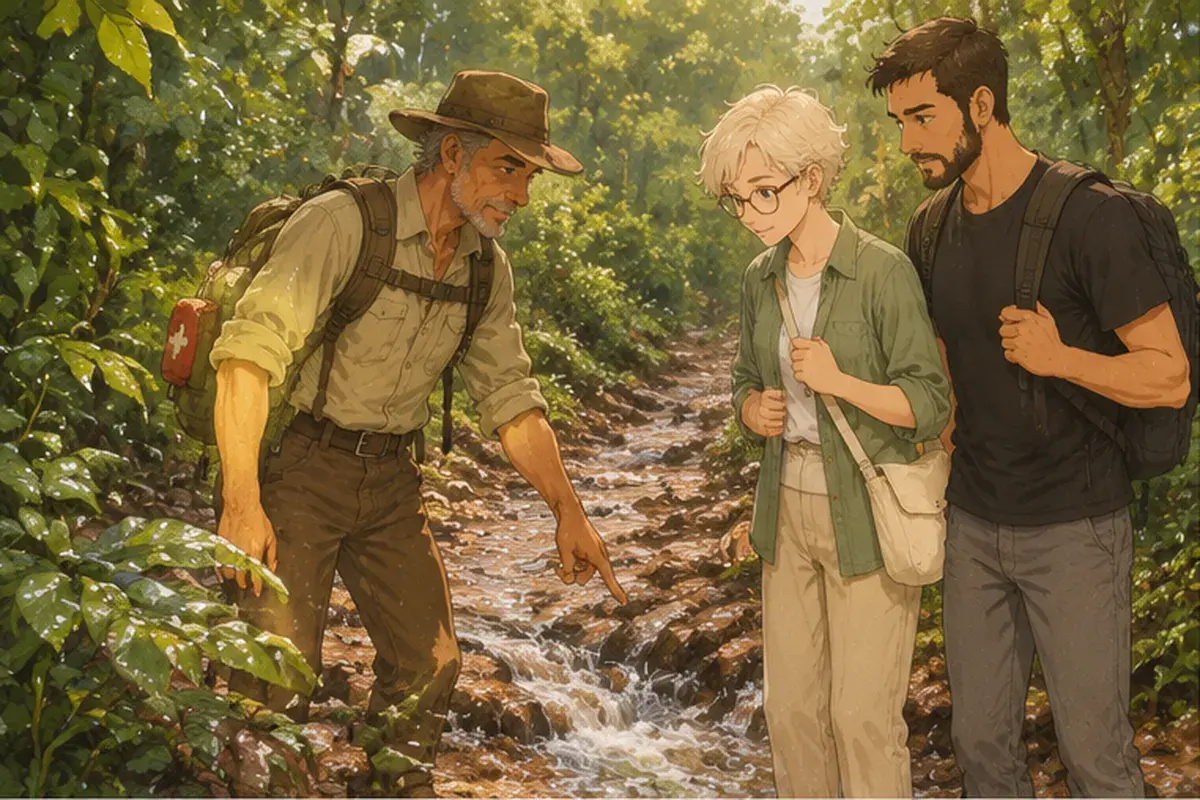
O Damião diz que a trilha tem nível médio. A dificuldade é a lama e a correnteza do riacho, quando chove.
Damião says the trail is medium level. The difficulty is the mud and the stream's current when it rains.

Se vier chuva à tarde, a gente sobe de manhã. As condições do tempo mudam tudo.
If rain comes in the afternoon, we'll climb in the morning. The weather conditions change everything.
O Damião diz que é responsável por nós, não pelo relógio. Se ele disser que não é dia de ir, a gente não vai.
Damião says he's responsible for us, not for the clock. If he says it's not a day to go, we won't go.

A entrada é gratuita, mas os bombeiros do Vale do Capão aceitam uma contribuição. Eu vou dar com prazer.
Entry is free, but the Vale do Capão firefighters accept a contribution. I'll give one gladly.
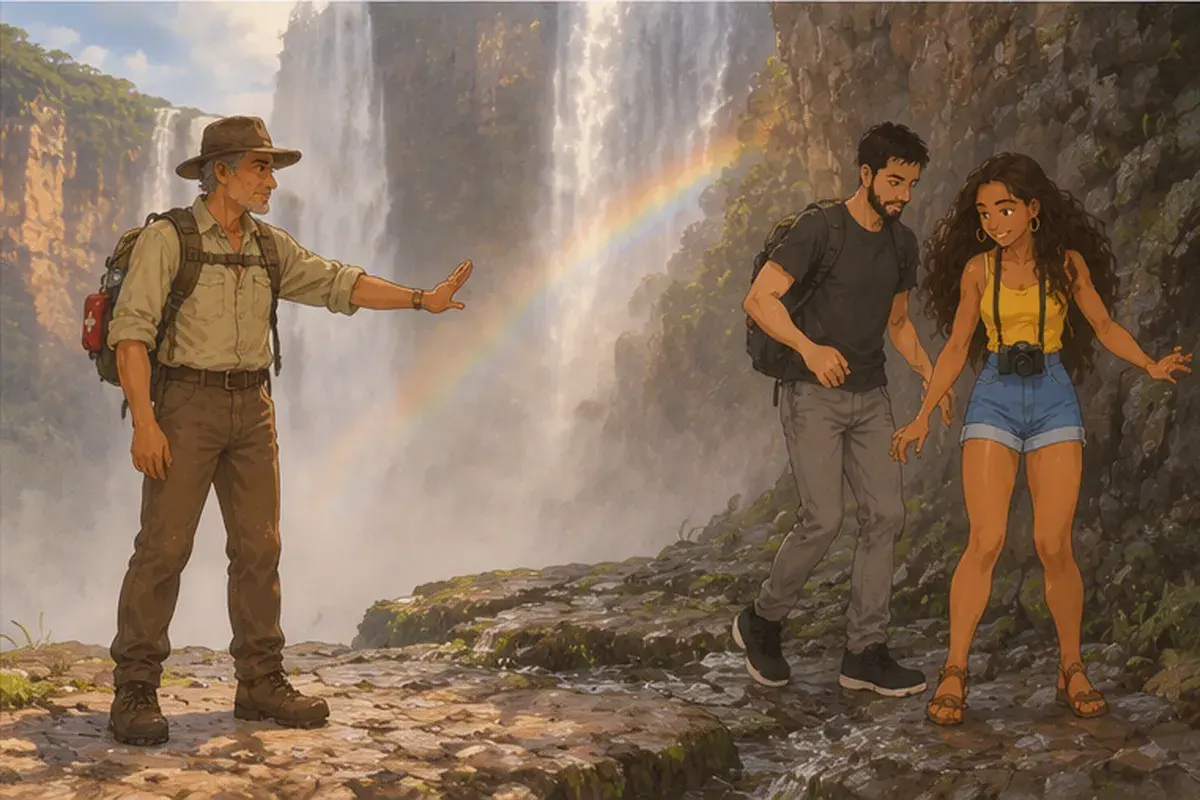
Quando a gente chegar à cachoeira, o Damião quer que todo mundo fique longe do paredão.
When we get to the waterfall, Damião wants everyone to stay away from the rock wall.

No terceiro dia, vamos ao Poço Azul, que fica dentro de uma gruta. Lá dentro, a luz é natural, e o colete salva-vidas é obrigatório.
On the third day, we're going to Poço Azul, which is inside a cave. Inside, the light is natural, and a life jacket is required.
Se tiver um raio de luz entrando na gruta, a gente tem sorte. Se não tiver, a água azul já é um presente.
If there's a ray of light coming into the cave, we're lucky. If there isn't, the blue water is already a gift.
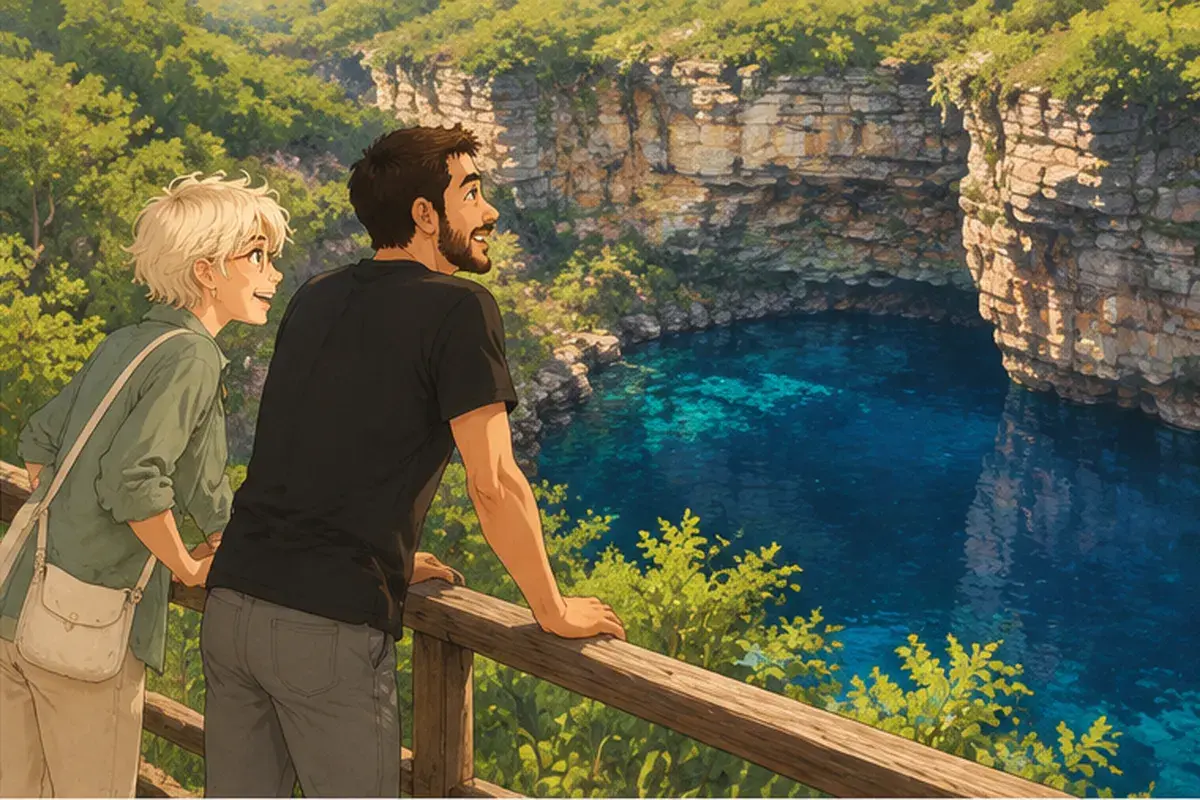
O Poço Encantado fica mais longe, e lá ninguém pode nadar. Esse a gente só olha.
Poço Encantado is farther away, and no one can swim there. That one we'll only look at.

O Damião falou de uma travessia de vários dias, mas acampar é para gente experiente. Para nós, a travessia já foi a BR-101.
Damião told us about a trek of several days, but camping is for experienced people. For us, the trek was already the BR-101.

O Tiago vai com a gente e diz que não tem pressa. Se der tempo, eu desenho as plantas da serra.
Tiago is coming with us and says he's in no hurry. If there's time, I'll draw the plants of the mountains.

O Léo fez a lista do plano, e a Bia, a lista de fotos. Eu desenhei o Léo fazendo a lista.
Léo made the list for the plan, and Bia the list of photos. I drew Léo making the list.
Grammar for this text
- Quando a gente chegar ao cume — a gente takes the ele form, so it's chegar (the rule is in the unit grammar). cume — summit; ao = a + o.
- se ficar sem fôlego — ficar sem fôlego means "to get out of breath". The subject (Léo) is clear from the start of the sentence, so it isn't repeated.
- Se vier chuva à tarde — vier comes from vir (to come): vieram → vier. Literally "if rain comes"; the same as se chover.
- Se ele disser que não é dia de ir — disser comes from dizer: disseram → disser. After disser que comes the normal present.
- Se tiver um raio de luz — tiver comes from ter (tiveram → tiver); here ter means "there is", like tem. raio is not only "lightning" but also "ray".
- quer que todo mundo fique longe do paredão — after querer que comes the present subjunctive (fique, unit 4): "wants everyone to stay away".
Words and grammar of the unit: Plan a hike with a guide.
Learn the words from the texts with flashcards
In the app, you can tap any word in a text to see its translation, forms and examples, and new words stick with flashcards. 15 minutes a day.
Start for freeEverything is open for free. No card needed to sign up.