

Portuguese dialogue with translation · A2 · 16 lines
Quem é quem? Who's who?
Comic · 16 panels
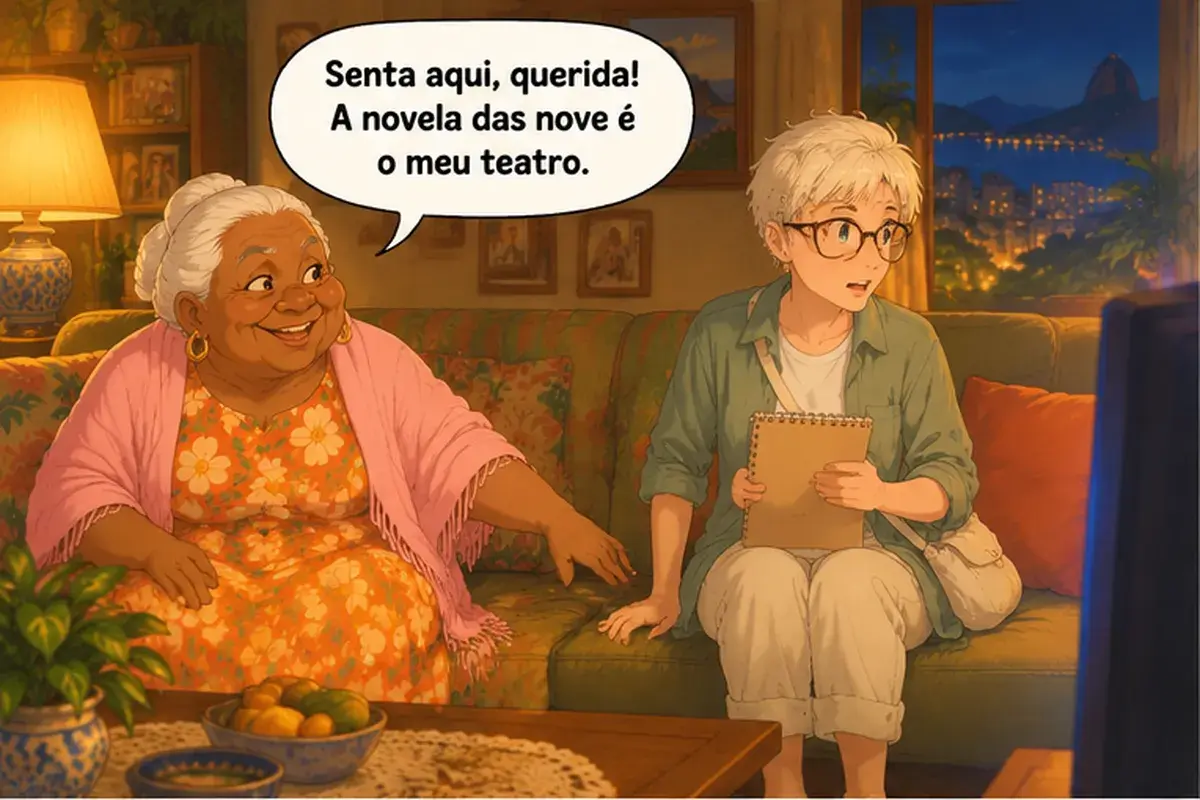
- Dona Zezé
Senta aqui, querida! A novela das nove é o meu teatro.
Sit here, dear! The nine o'clock soap opera is my theater.
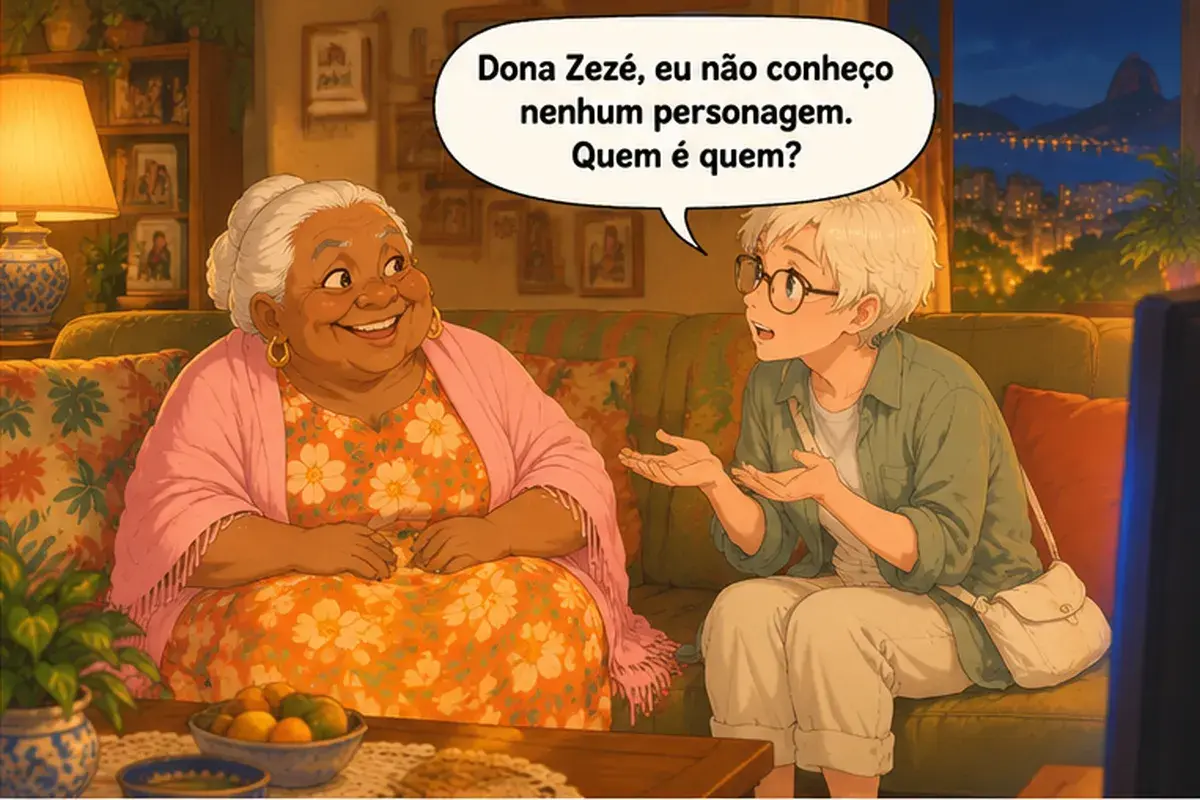
- Nina
Dona Zezé, eu não conheço nenhum personagem. Quem é quem?
Dona Zezé, I don't know any of the characters. Who's who?
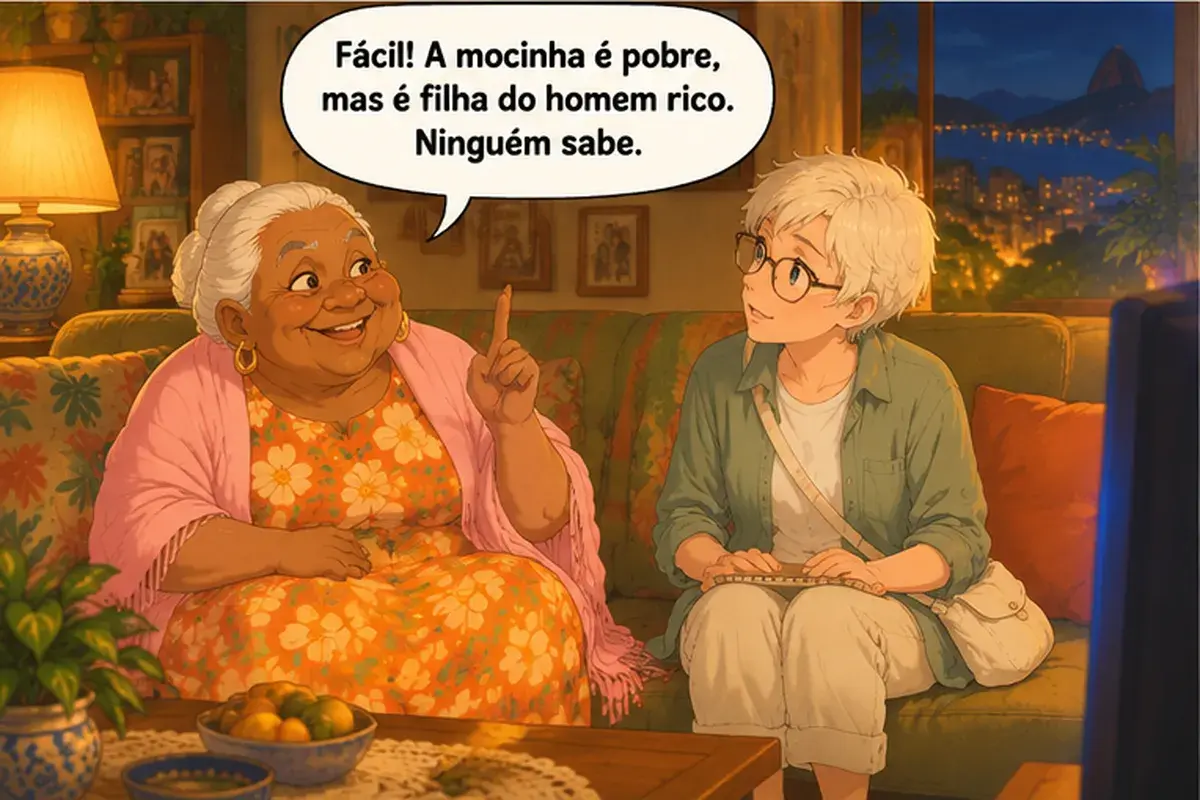
- Dona Zezé
Fácil! A mocinha é pobre, mas é filha do homem rico. Ninguém sabe.
Easy! The heroine is poor, but she's the rich man's daughter. Nobody knows.
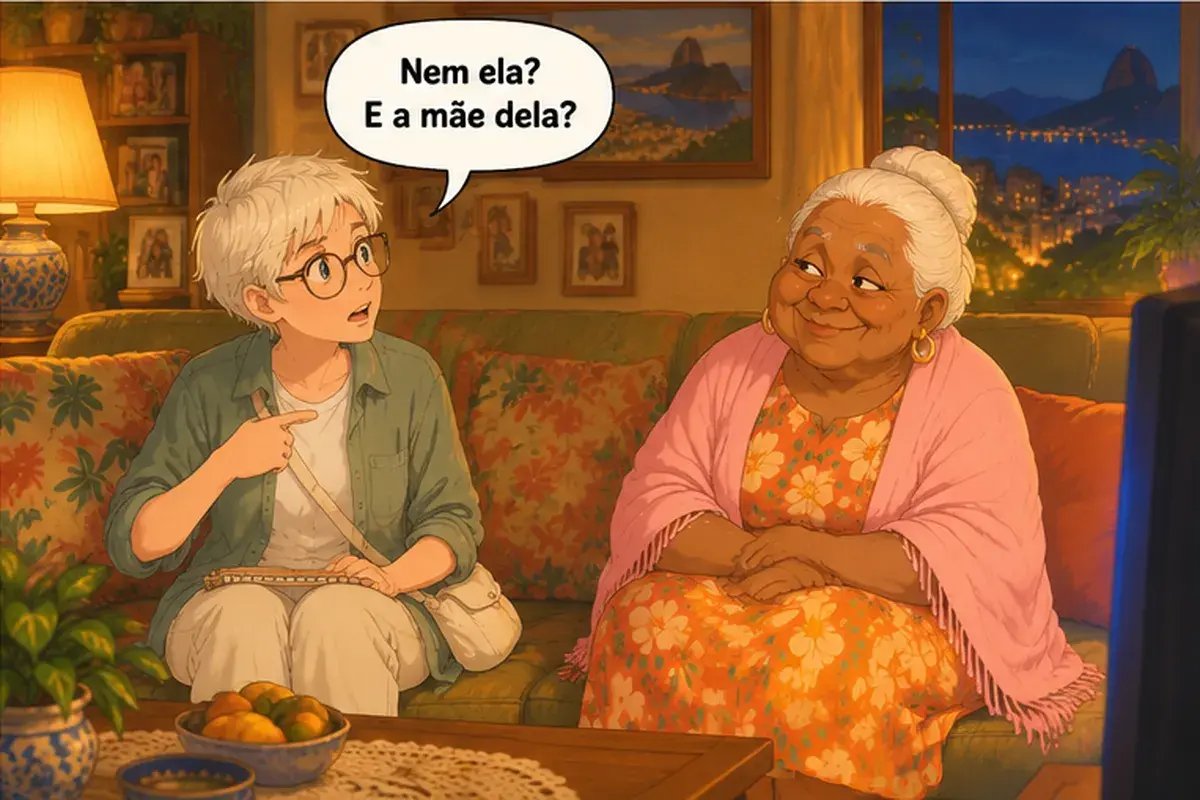
- Nina
Nem ela? E a mãe dela?
Not even her? And her mother?
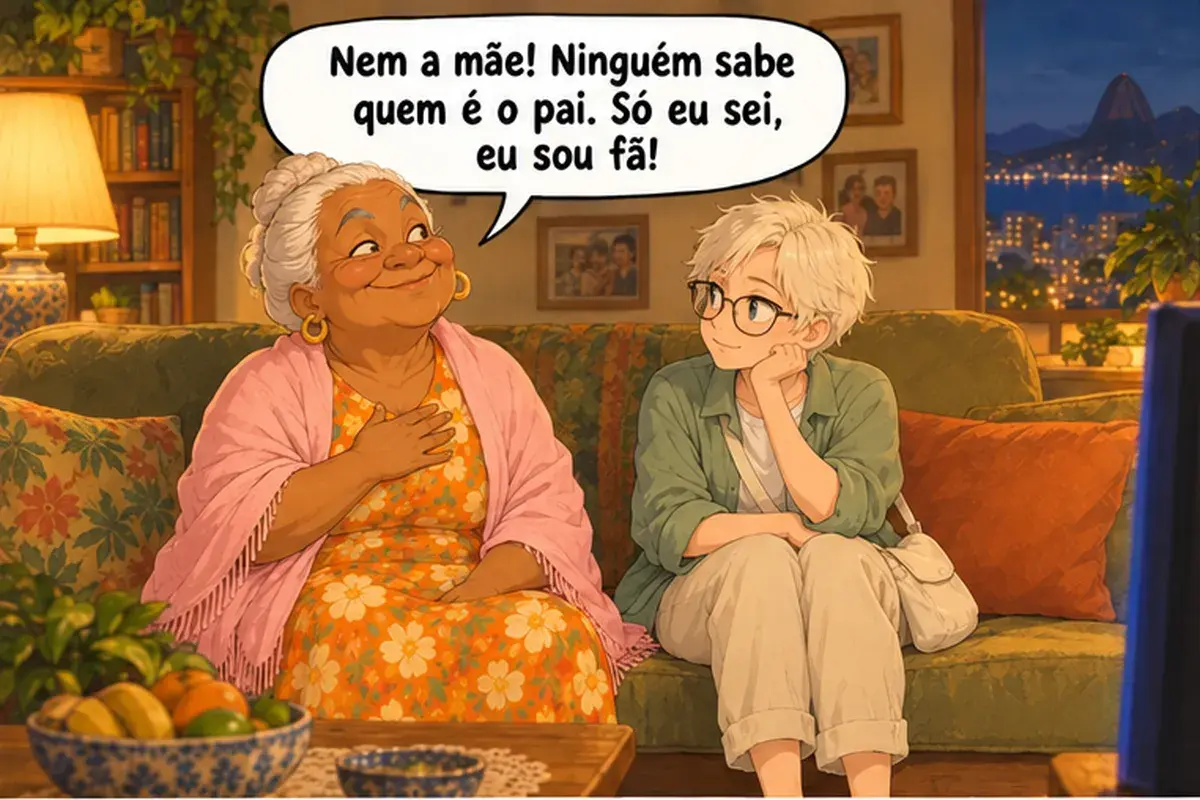
- Dona Zezé
Nem a mãe! Ninguém sabe quem é o pai. Só eu sei, eu sou fã!
Not even the mother! Nobody knows who the father is. Only I know, I'm a fan!
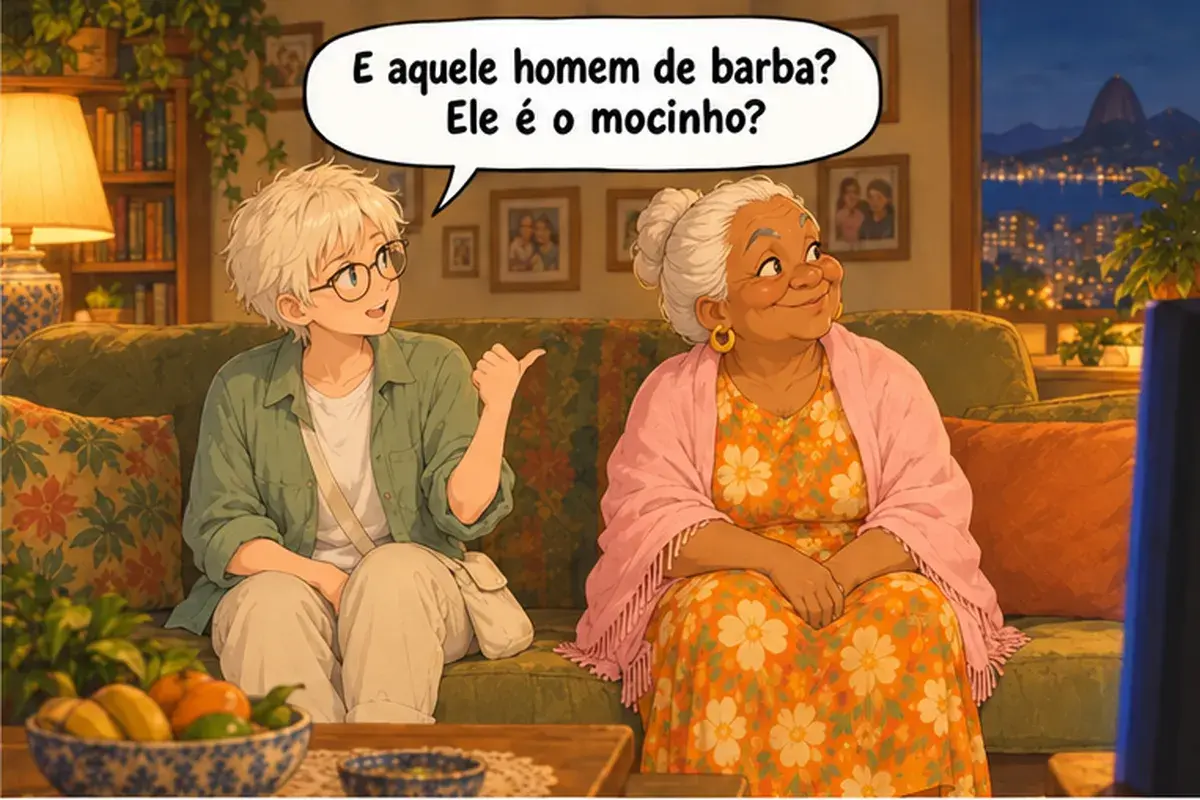
- Nina
E aquele homem de barba? Ele é o mocinho?
And that man with the beard? Is he the hero?
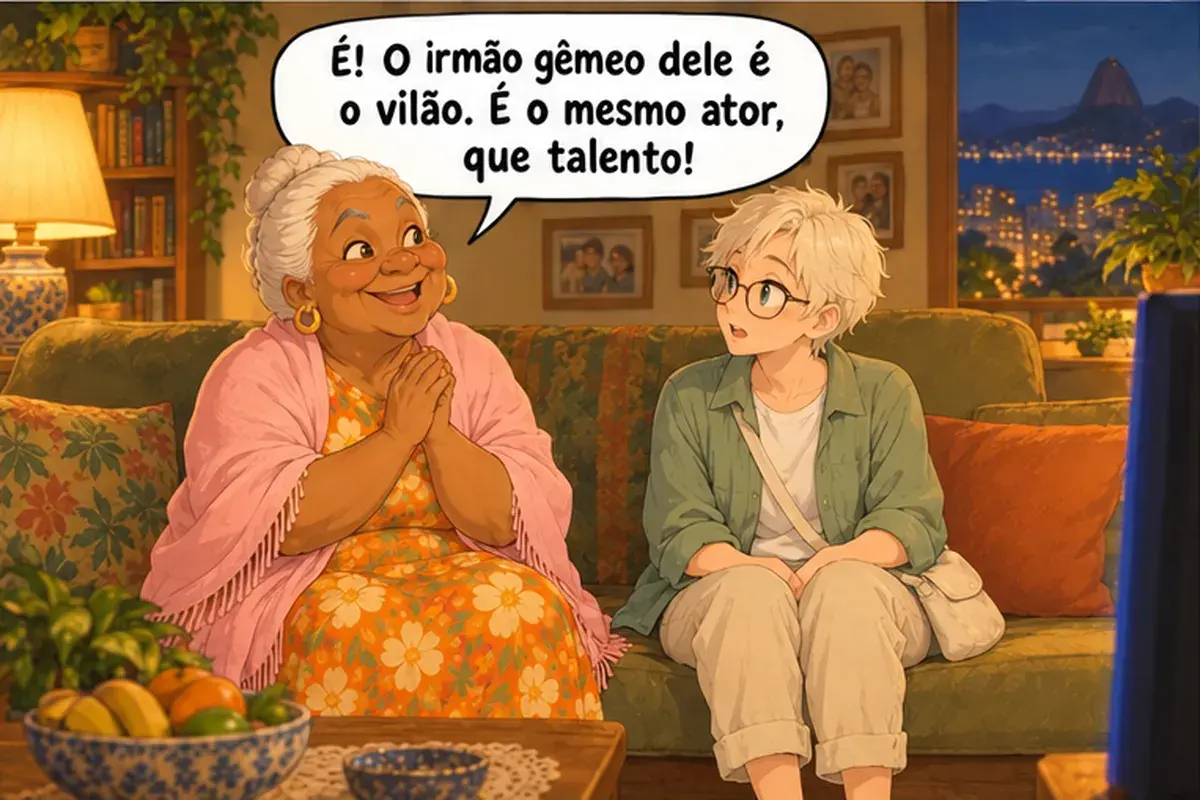
- Dona Zezé
É! O irmão gêmeo dele é o vilão. É o mesmo ator, que talento!
Yes! His twin brother is the villain. It's the same actor, what talent!
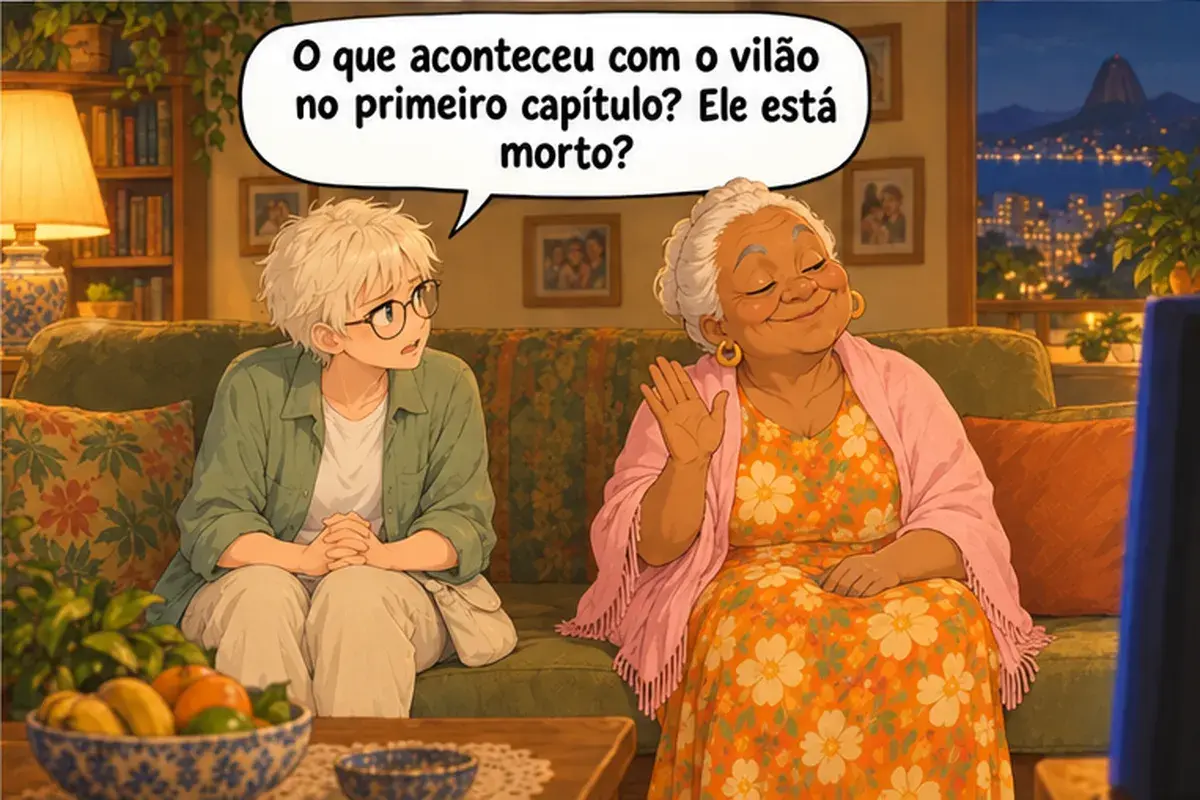
- Nina
O que aconteceu com o vilão no primeiro capítulo? Ele está morto?
What happened to the villain in the first episode? Is he dead?
- Dona Zezé
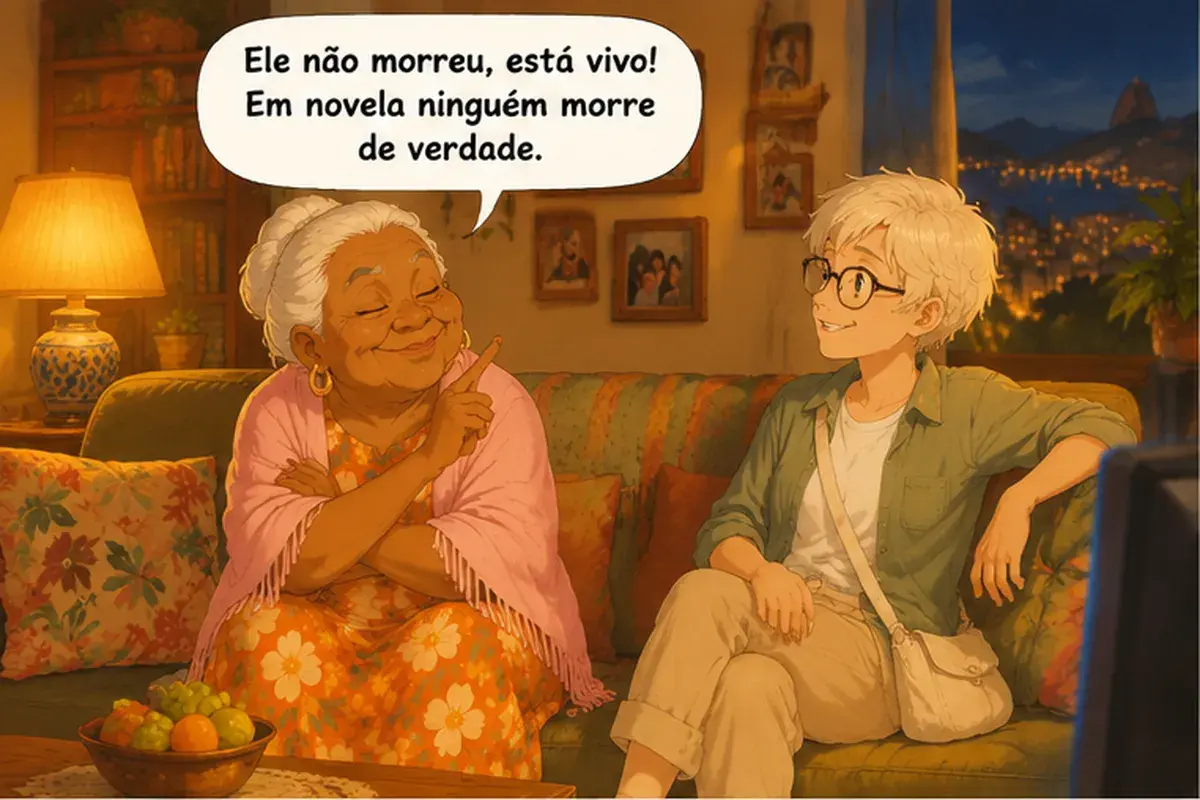
Ele não morreu, está vivo! Em novela ninguém morre de verdade.
He didn't die, he's alive! In soap operas, nobody really dies.
- Nina
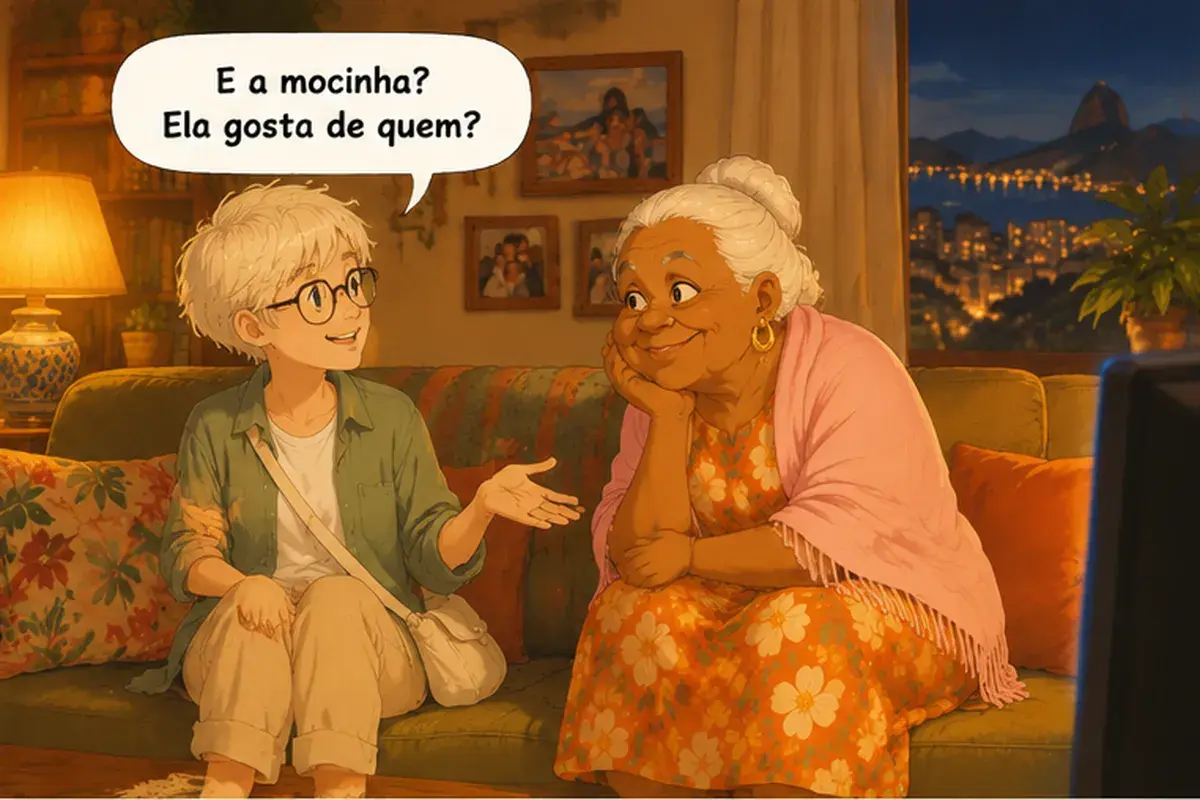
E a mocinha? Ela gosta de quem?
And the heroine? Who does she like?
- Dona Zezé
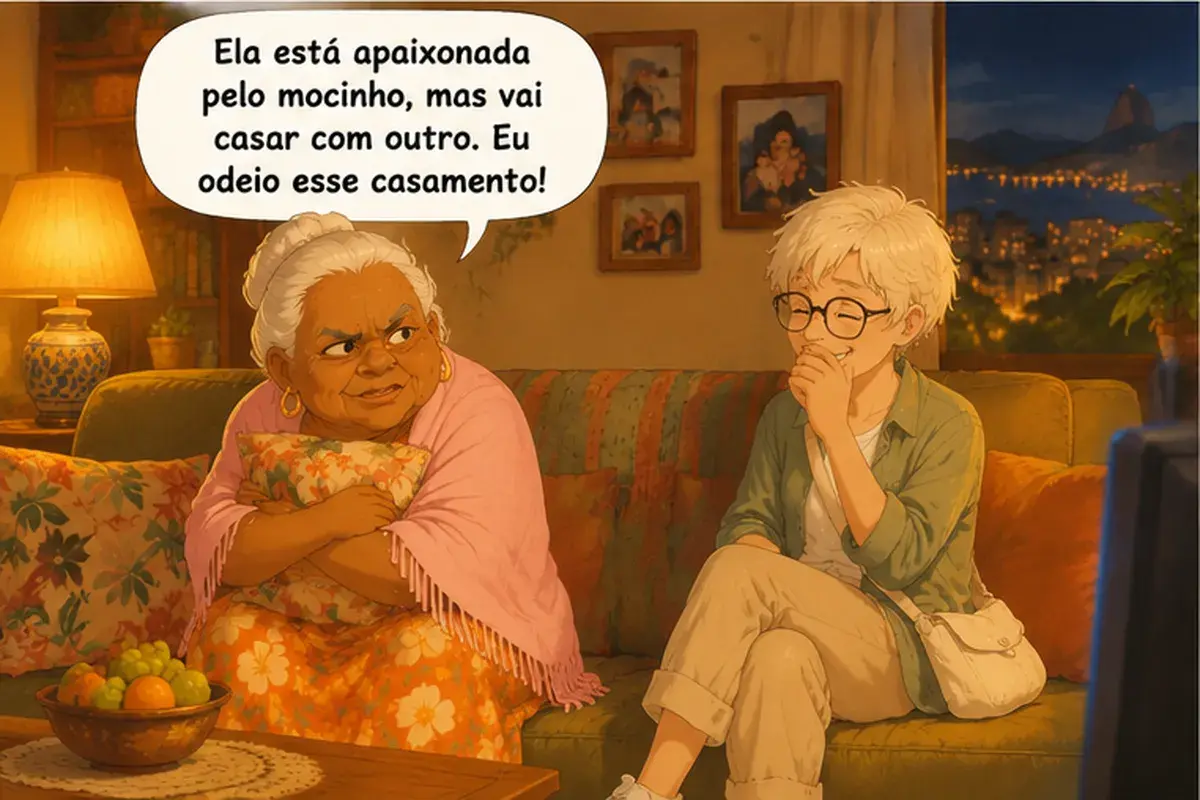
Ela está apaixonada pelo mocinho, mas vai casar com outro. Eu odeio esse casamento!
She's in love with the hero, but she's going to marry someone else. I hate this wedding!
- Nina
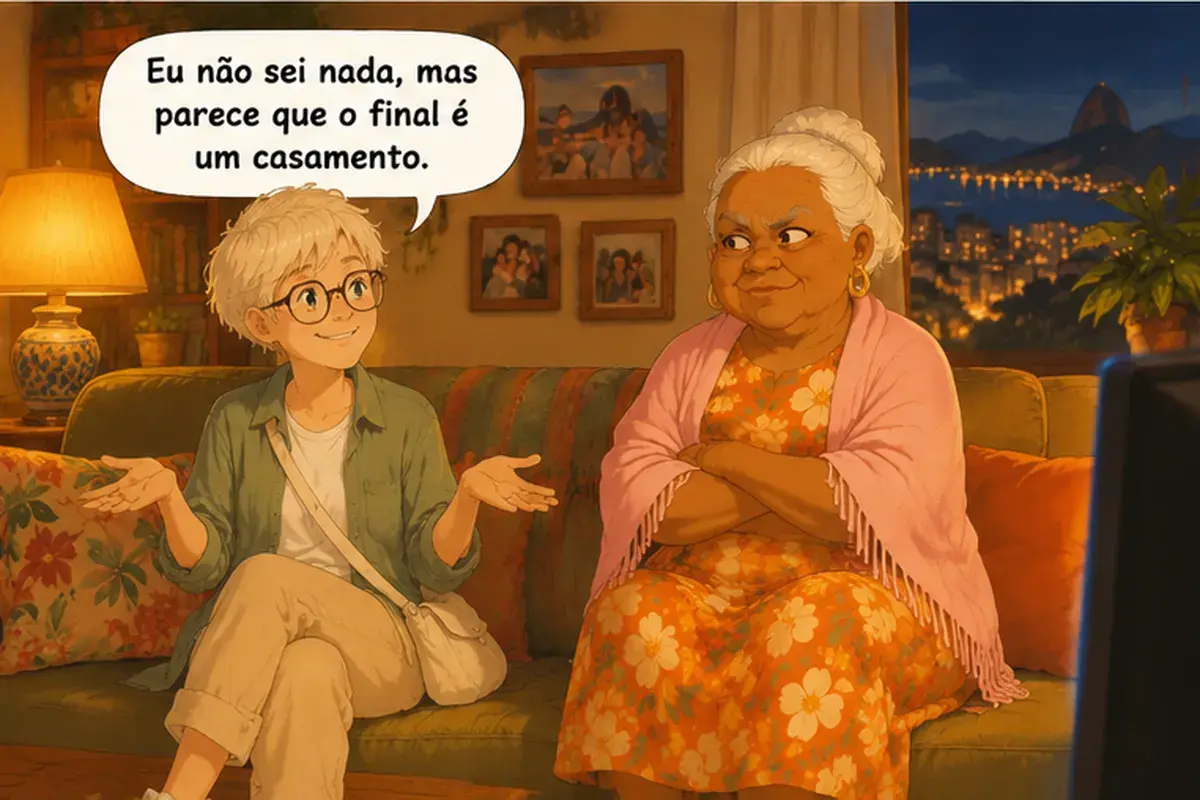
Eu não sei nada, mas parece que o final é um casamento.
I don't know anything, but it seems the ending is a wedding.
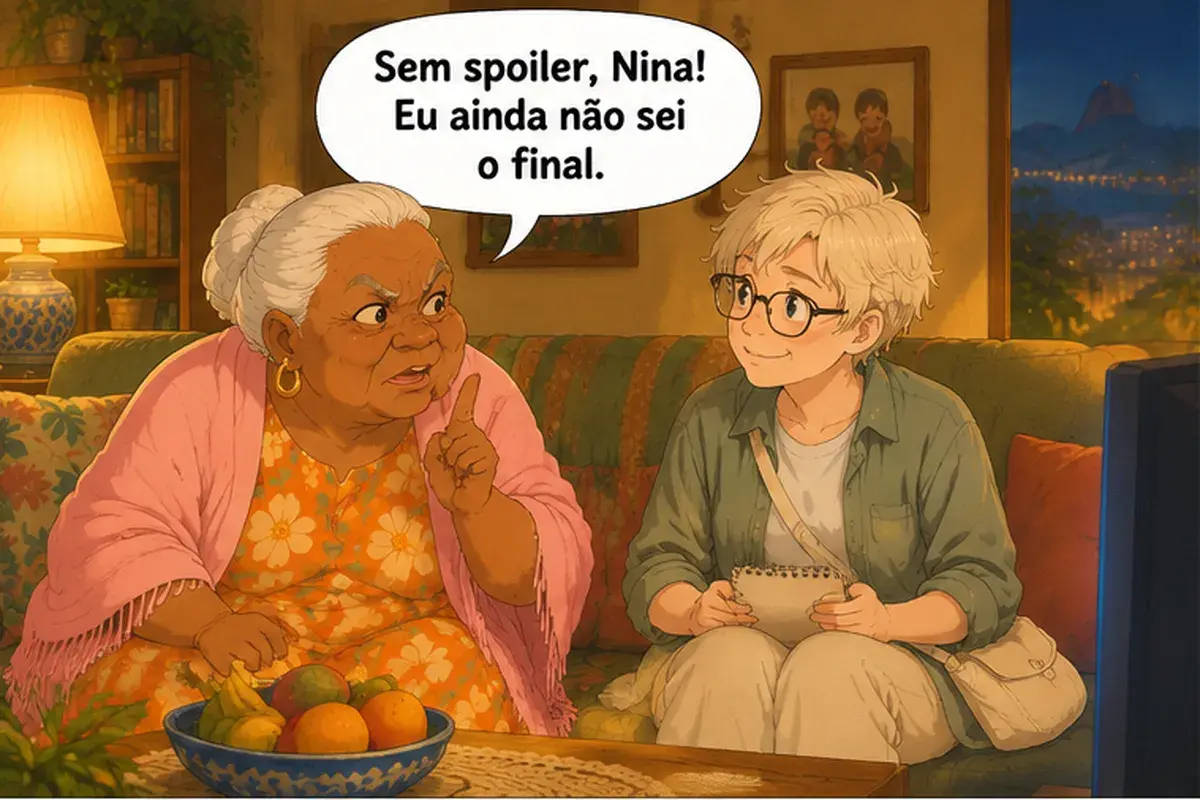
- Dona Zezé
Sem spoiler, Nina! Eu ainda não sei o final.
No spoilers, Nina! I don't know the ending yet.
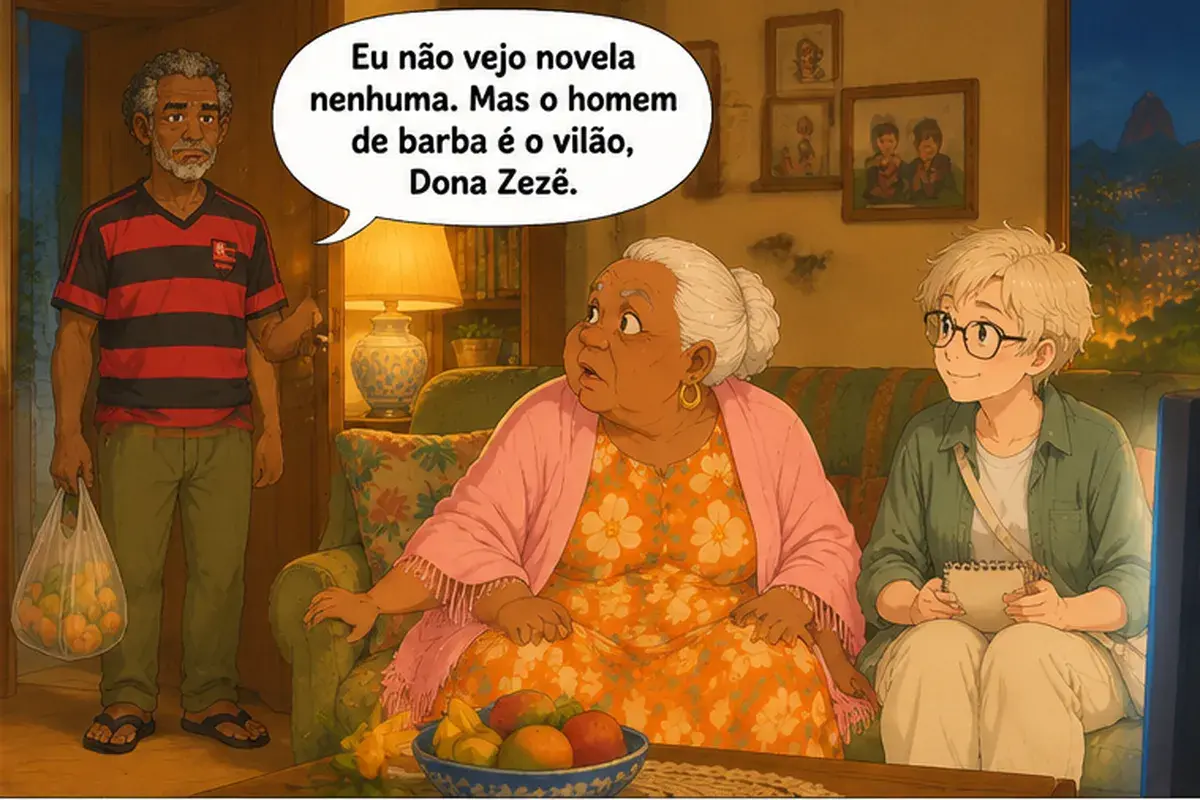
- Jorge
Eu não vejo novela nenhuma. Mas o homem de barba é o vilão, Dona Zezé.
I don't watch any soap operas at all. But the man with the beard is the villain, Dona Zezé.
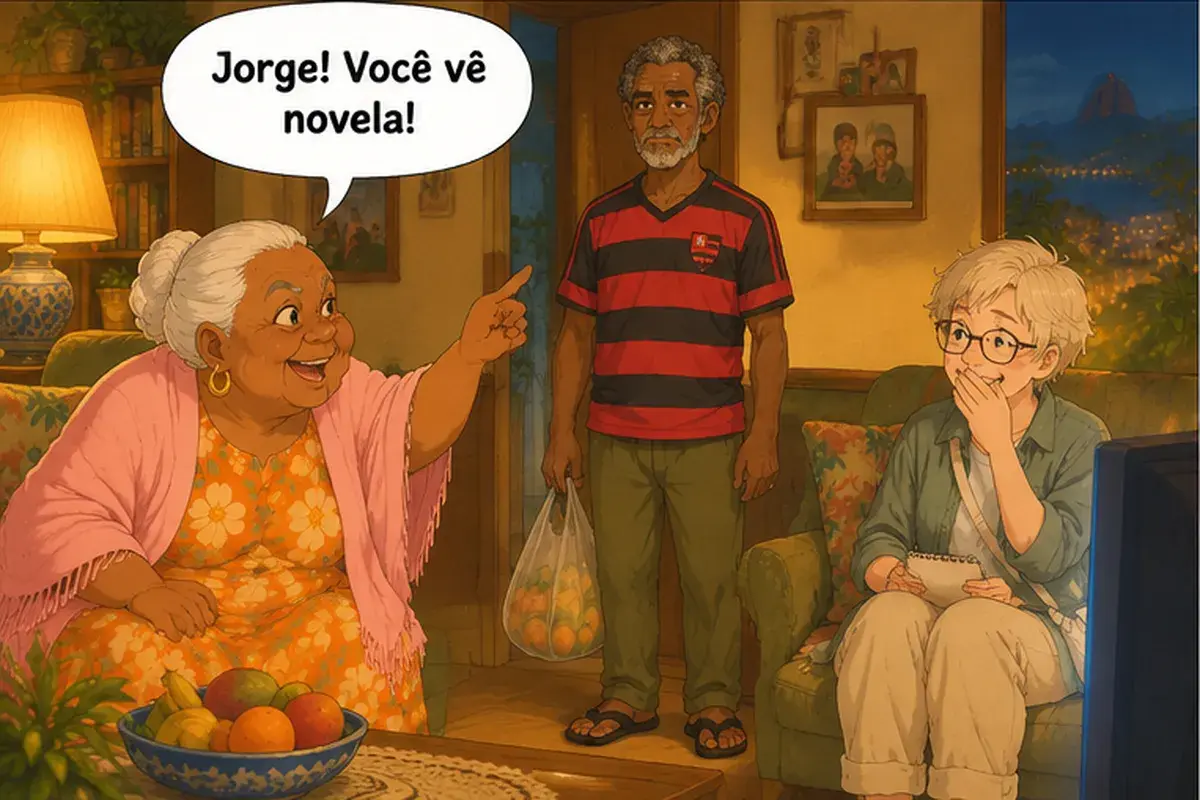
- Dona Zezé
Jorge! Você vê novela!
Jorge! You watch soap operas!
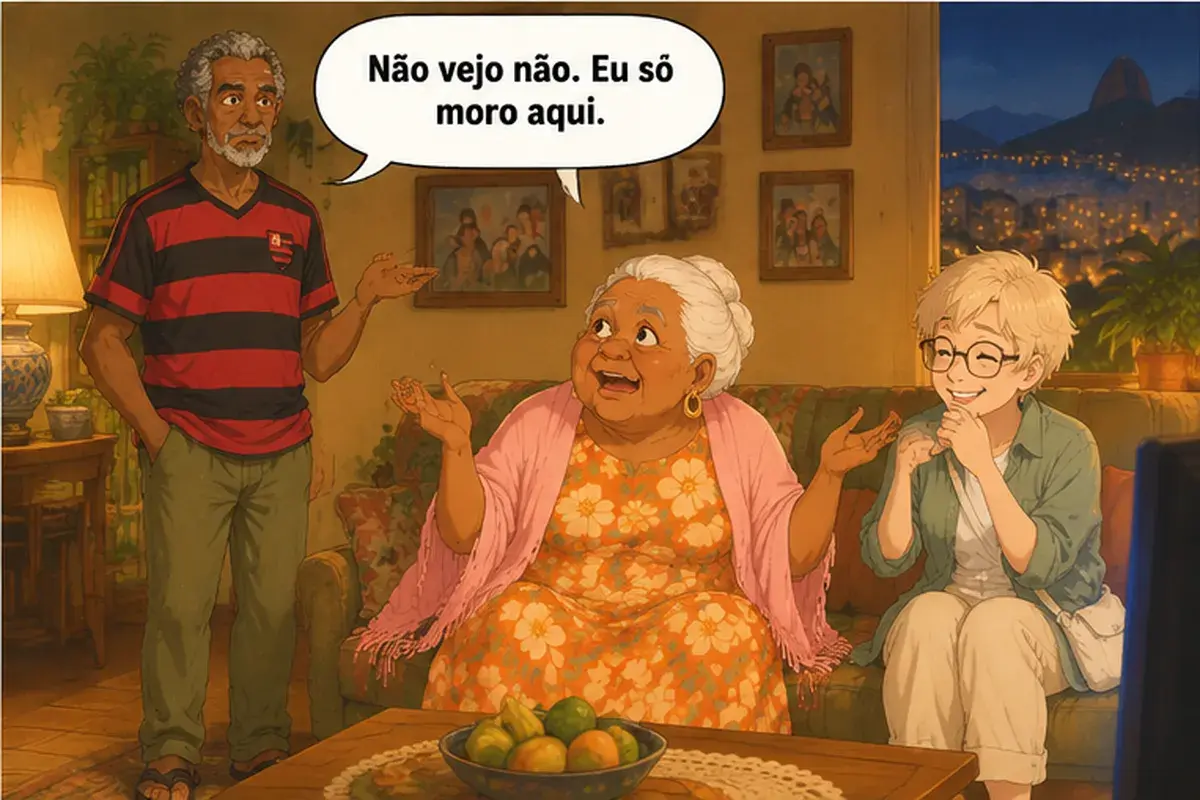
- Jorge
Não vejo não. Eu só moro aqui.
I really don't. I just live here.
Grammar for this text
- A novela das nove — das = de + as. TV shows are named by the time they air: "the nine (o'clock) soap opera"; the word horas isn't needed.
- Eu não conheço nenhum personagem — não goes before the verb and nenhum after it: two negatives, and the sentence stays negative ("I don't know any of the characters"). Personagem is usually masculine (o personagem), so it's nenhum, not nenhuma.
- Ninguém sabe quem é o pai — ninguém starts the sentence, so there's no não. quem é o pai is a question inside a sentence; the word order stays normal. Nem a mãe! — nem here means "not even": the mother doesn't know either.
- O que aconteceu com o vilão no primeiro capítulo? — aconteceu is the preterite of acontecer (to happen); acontecer com — to happen to someone. In a soap opera, an episode is a capítulo.
- vai casar com outro — casar com — to marry someone. apaixonada pelo mocinho — pelo = por + o; "in love with" is apaixonado por, not em.
- Parece que o final é um casamento — parece que + a whole sentence: "it seems (that)..." (see the grammar block below).
- Eu não vejo novela nenhuma — here nenhuma comes after the noun: that makes the "no" stronger, "no soap operas at all". não still goes before the verb.
- Em novela ninguém morre de verdade — em novela has no article: "in soap operas in general"; de verdade — "really, for real". ninguém comes before the verb, so there's no não.
- Não vejo não — the second não at the end softens it: "I really don't." Casual, only with family and friends.
Words and grammar of the unit: Talk about a series and its plot.
Learn the words from the texts with flashcards
In the app, you can tap any word in a text to see its translation, forms and examples, and new words stick with flashcards. 15 minutes a day.
Start for freeEverything is open for free. No card needed to sign up.