

Portuguese dialogue with translation · A2 · 16 lines
Eu estou totalmente sem tempo I'm totally out of time
Comic · 12 panels

- Nina
Oi, Léo! Tudo bem? Você parece cansado.
Hi, Léo! How are you? You look tired (to a man).
- Léo
Cansado, não. Eu estou totalmente sem tempo.
Tired, no (man speaking). I'm totally out of time.
- Nina
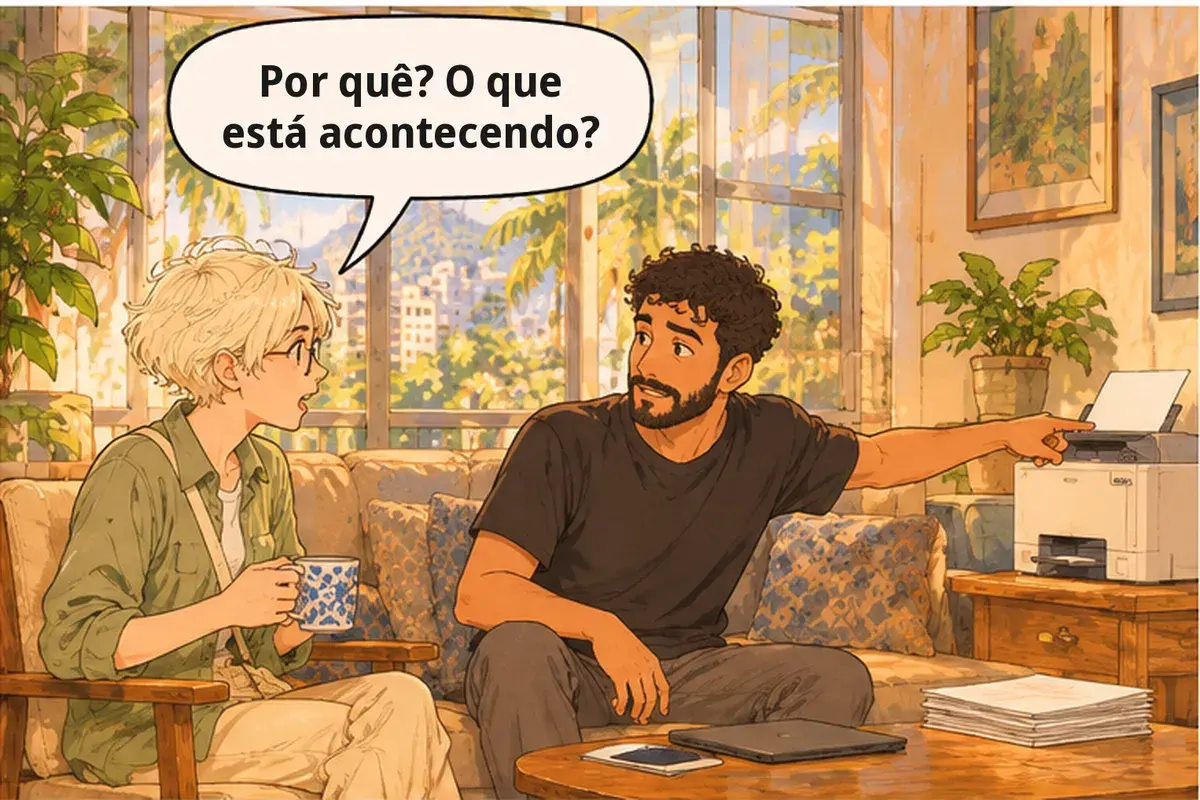
Por quê? O que está acontecendo?
Why? What's going on?
- Léo
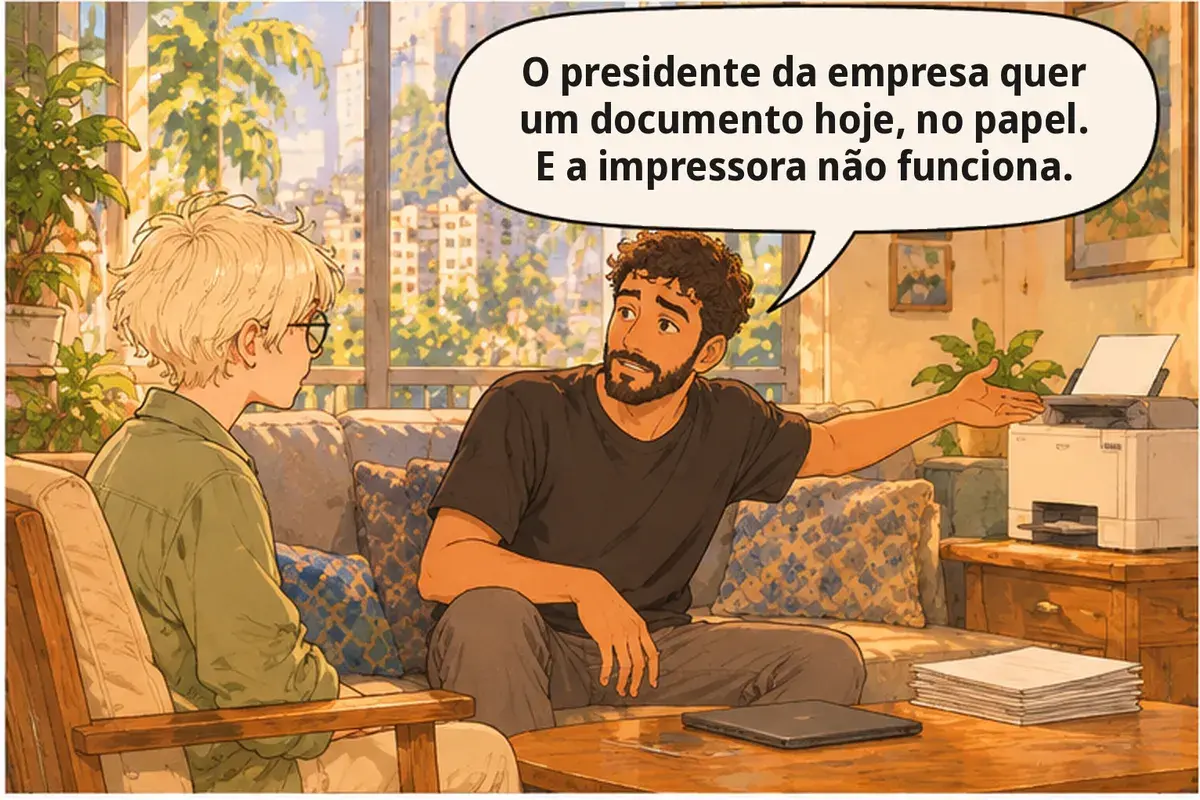
O presidente da empresa quer um documento hoje, no papel. E a impressora não funciona.
The company president wants a document today, on paper. And the printer doesn't work.

- Nina
Manda por e-mail!
Send it by email!
- Léo
Ele nunca lê e-mail. Ele só lê papel.
He never reads email. He only reads paper.

- Nina
E quem é o responsável pela impressora?
And who's responsible for the printer?
- Léo
Eu. Ela está de folga hoje. Eu, não.
Me. It has the day off today. I don't.
- Nina
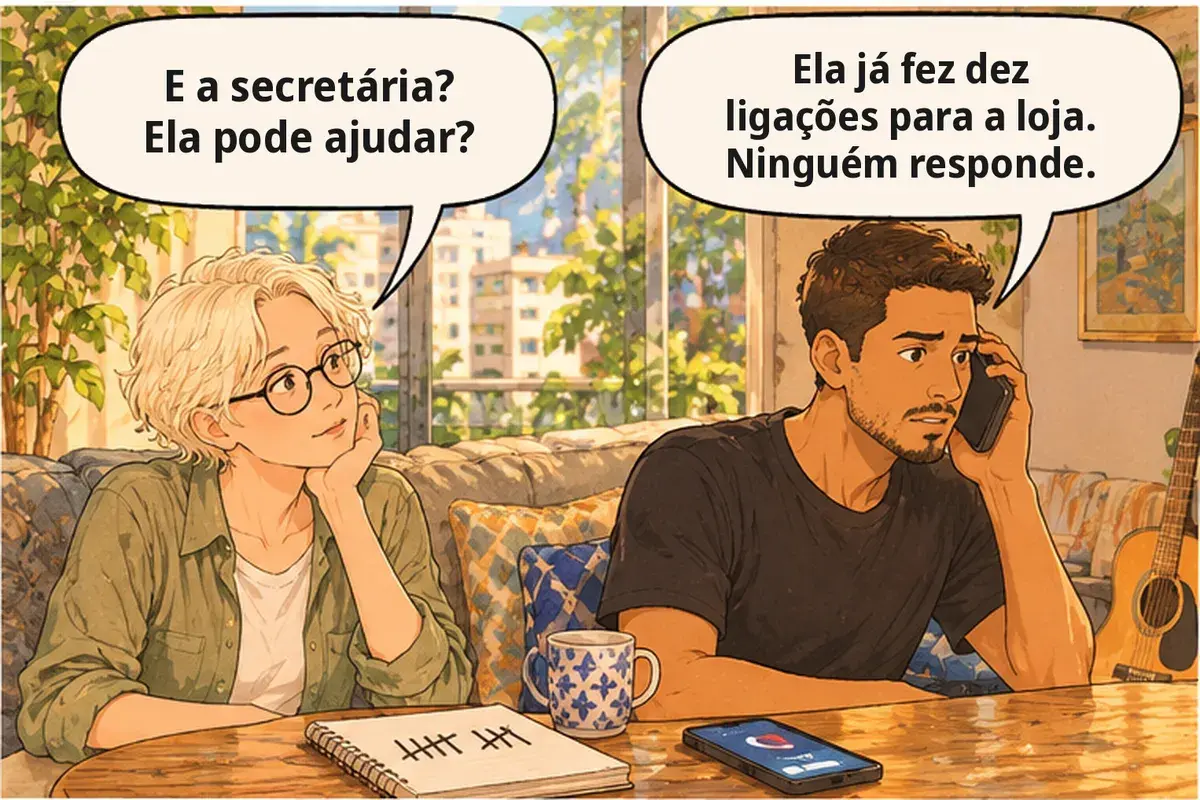
E a secretária? Ela pode ajudar?
And the secretary? Can she help?
- Léo
Ela já fez dez ligações para a loja. Ninguém responde.
She already made ten calls to the store. Nobody answers.

- Nina
E você não é capaz de resolver? Você é programador!
And aren't you able to fix it? You're a programmer! (to a man)

- Léo
Sou capaz de resolver qualquer problema no computador. Na impressora, não.
I'm able to fix any problem on the computer. On the printer, no.

- Nina
Então o negócio é esperar a impressora voltar da folga.
Then the thing to do is wait for the printer to come back from its day off.
- Léo
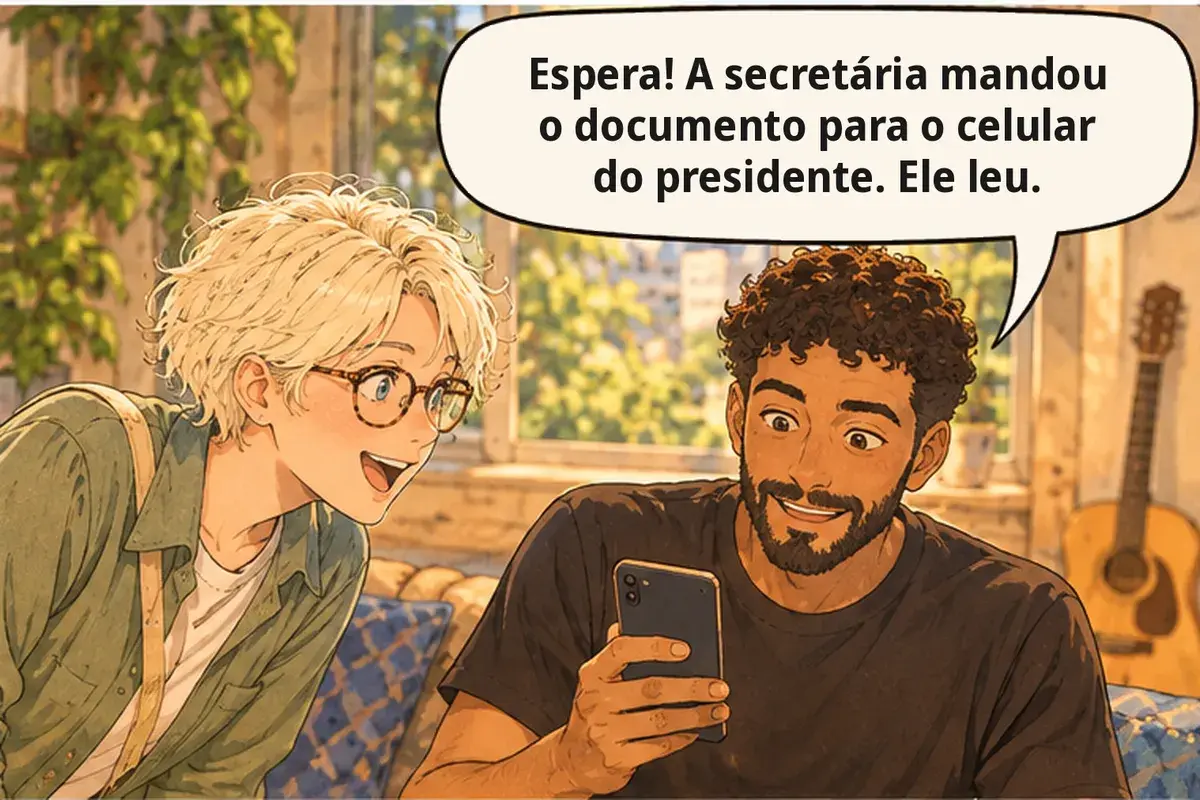
Espera! A secretária mandou o documento para o celular do presidente. Ele leu.
Wait! The secretary sent the document to the president's cell phone. He read it.

- Nina
Mas ele só lê papel!
But he only reads paper!

- Léo
Pois é. Ele chamou o celular de papel pequeno.
Exactly. He called the cell phone small paper.
Grammar for this text
- Você parece cansado —
pareceis "look(s)" fromparecer(A1):parecer+ adjective, like "you look tired". - Cansado, não. Eu estou totalmente sem tempo. — Léo repeats Nina's word and says no: it's not about being tired, it's about time.
totalmente=total+-mente: like English -ly, "totally". - Ela está de folga hoje. Eu, não. —
estar de folgameans "to have the day off". It's funny about a printer: it has a day off.Eu, nãomeans "not me"; the verb isn't repeated. - Ela já fez dez ligações —
fazer uma ligaçãomeans "to make a call";fezis "made" fromfazer. - Sou capaz de resolver qualquer problema —
ser capaz de+ infinitive means "to be able to".Soucomes withouteu: the verb already shows the person. - Então o negócio é esperar —
o negócio é+ infinitive is casual for "the thing to do is…". - voltar da folga —
da=de+a. - Ele chamou o celular de papel pequeno —
chamar A de Bmeans "to call A B";chamouis "called".
Words and grammar of the unit: Delivering Work on Time.
Learn the words from the texts with flashcards
In the app, you can tap any word in a text to see its translation, forms and examples, and new words stick with flashcards. 15 minutes a day.
Start for freeEverything is open for free. No card needed to sign up.