

Portuguese story with translation · A2 · 15 lines
Hoje já me sinto bem Today I already feel good
Comic · 12 panels

Fiquei doente no sábado. Voltamos do pronto-socorro de madrugada, e eu fiquei dois dias na cama.
I got sick on Saturday. We came back from the ER in the middle of the night, and I stayed in bed for two days.
Para a médica, o problema não é grave. Para a Regina, é uma emergência.
For the doctor, the problem isn't serious. For Regina, it's an emergency.
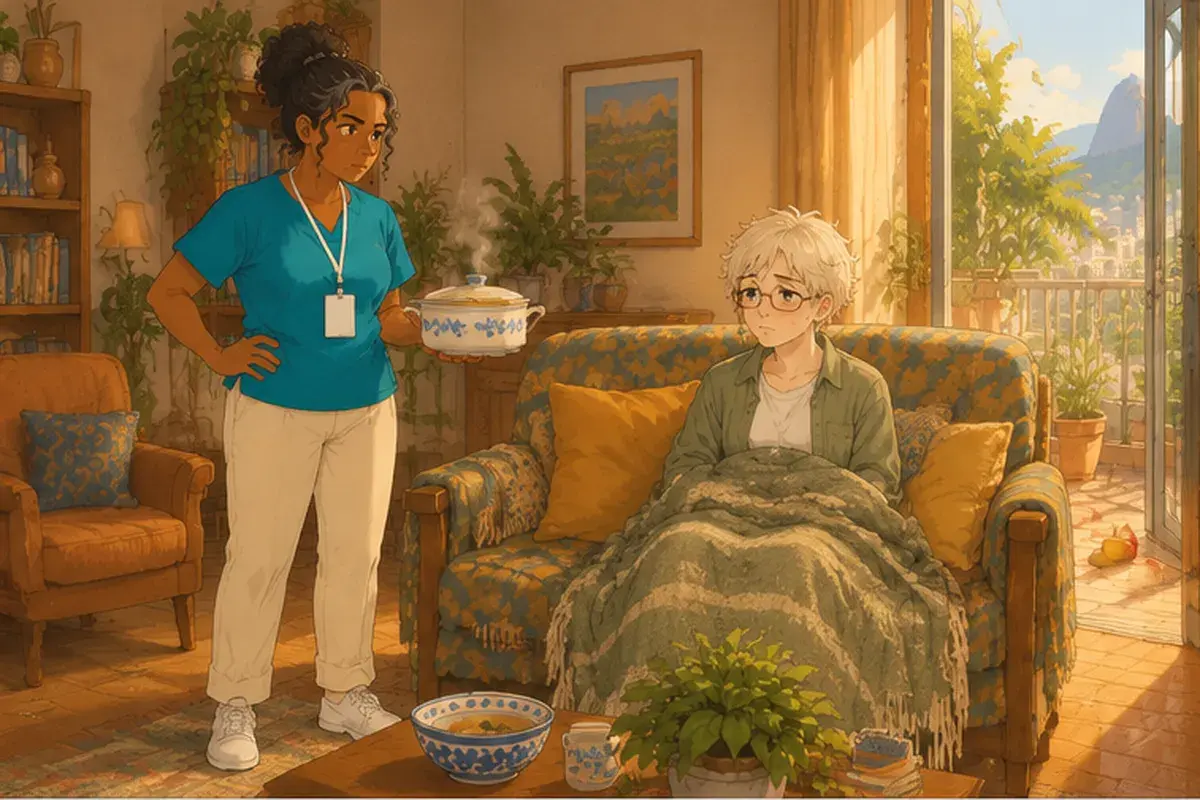
A Regina trabalha no posto de saúde, mas em casa ela cura todo mundo: com sopa, chá e bronca.
Regina works at the health clinic, but at home she cures everyone: with soup, tea and scolding.

Na primeira noite a tontura piorou. Eu suei tanto que a Regina trocou o lençol duas vezes.
On the first night the dizziness got worse. I sweated so much that Regina changed the sheet twice.

No domingo o enjoo passou, mas me senti fraca, sem força nem para pegar o lápis.
On Sunday the nausea went away, but I felt weak, with no strength even to pick up the pencil (woman speaking).

“Na minha casa, paciente obedece”, disse a Regina. “Soro, sopa, chá: nada de praia, nada de camarão.”
"In my house, patients obey," said Regina. "Rehydration drink, soup, tea: no beach, no shrimp."

Quando eu não tomei a sopa, ela olhou para mim: “Se você não toma a sopa, tem injeção.”
When I didn't have the soup, she looked at me: "If you don't have the soup, you get a shot."
Eu tenho medo de injeção. Tomei duas xícaras!
I'm afraid of shots. I had two cups!

Enfermeira em casa é pior do que médico no hospital.
A nurse at home is worse than a doctor in the hospital.

À tarde, a Dona Zezé fez chá e ficou comigo. Ela contou a novela das nove, do início ao fim.
In the afternoon, Dona Zezé made tea and stayed with me. She retold the nine o'clock soap opera, from beginning to end.
Entendi só metade da novela, mas gostei do chá. “Força, minha filha!”, disse ela.
I understood only half of the soap opera, but I liked the tea. "Hang in there, dear!" she said.
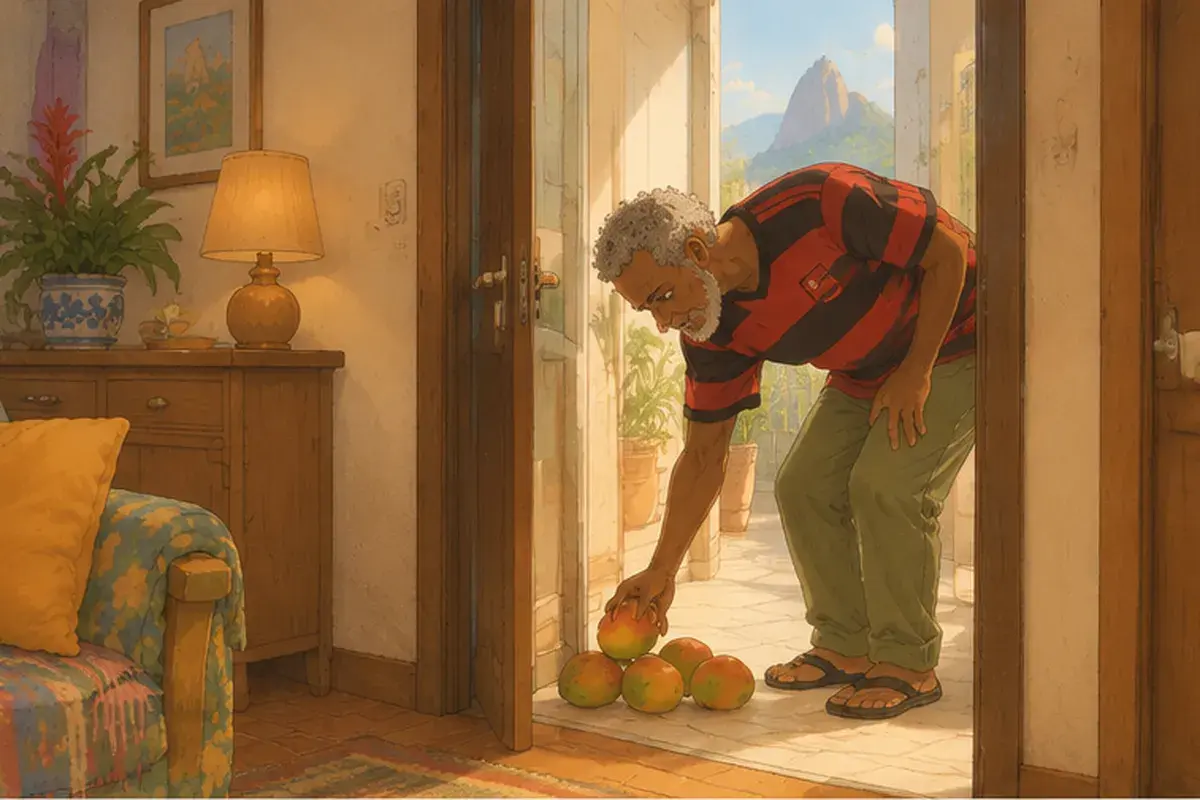
O Seu Jorge não disse nada. Só deixou uma manga na porta, de manhã e de tarde: quatro mangas em dois dias.
Seu Jorge didn't say anything. He just left a mango at the door, in the morning and in the afternoon: four mangoes in two days.

Na segunda, a Bia foi à praia e mandou uma foto: mar azul, sol e gente feliz.
On Monday, Bia went to the beach and sent a photo: blue sea, sun and happy people.

A Regina viu a foto e ficou brava. Mandou uma mensagem para a Bia: “Hoje você janta sopa!”
Regina saw the photo and got mad. She sent Bia a message: "Today you're having soup for dinner!"

Na terça fiquei melhor. Hoje já me sinto bem, mas a Regina ainda me chama de paciente.
On Tuesday I got better. Today I already feel good, but Regina still calls me a patient.
Grammar for this text
- Fiquei doente no sábado — ficar + adjective: "I got sick" (a change). But fiquei dois dias na cama — "I stayed in bed" (a place comes after the verb). The same way: ficou brava — "she got mad", Na terça fiquei melhor — "On Tuesday I got better".
- Hoje já me sinto bem and me senti fraca — me sinto (now) and me senti (then): the eu form of the reflexive verb sentir-se; me senti is the preterite, with the ending -i, like saí.
- Eu suei tanto que a Regina trocou o lençol duas vezes — suei is the eu preterite of suar (to sweat): the stem su- + -ei. tanto que — "so much that".
- nada de praia, nada de camarão — nada de + noun: "no beach at all". Se você não toma a sopa, tem injeção — se + present tense: an everyday threat, like "If you don't eat your soup, you get a shot".
- Ela contou a novela das nove — a novela das nove is the evening soap opera at nine; contou is the preterite of contar: "she retold".
- Enfermeira em casa é pior do que médico no hospital — pior do que means "worse than" (unit 4). No article before the jobs here: it's about any nurse and any doctor.
- a Bia foi à praia — foi is the ele / ela preterite of ir ("went"), not of ser; à = a + a. A Regina viu a foto — viu means "she saw", from ver. me chama de paciente — chamar ... de means "to call someone something".
Words and grammar of the unit: Tell the doctor what's wrong.
Learn the words from the texts with flashcards
In the app, you can tap any word in a text to see its translation, forms and examples, and new words stick with flashcards. 15 minutes a day.
Start for freeEverything is open for free. No card needed to sign up.