

Portuguese dialogue with translation · A2 · 16 lines
Topa fazer esse livro comigo? Are you up for making this book with me?
Comic · 16 panels

- Bia
Nina, olha isso: a minha foto e o seu desenho. É o mesmo lugar!
Nina, look at this: my photo and your drawing. It's the same place!
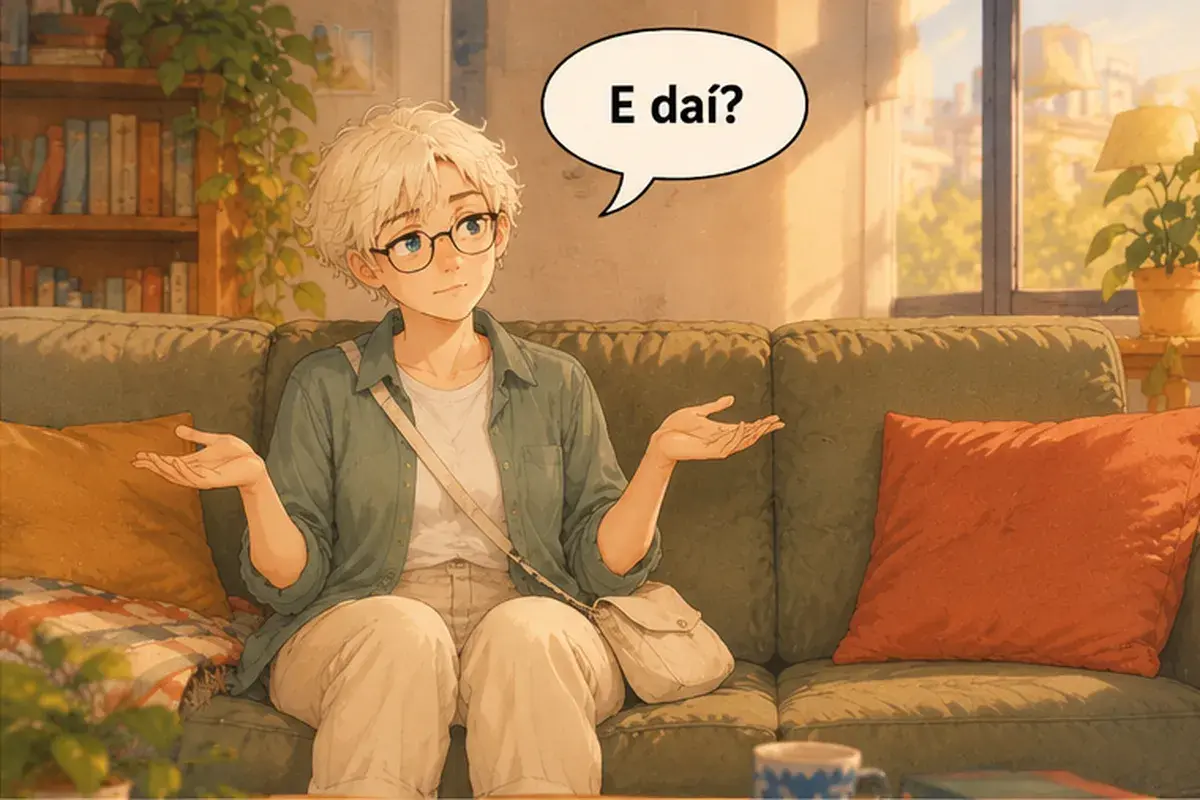
- Nina
E daí?
So what?

- Bia
E daí que isso é um livro! Um guia para quem chega ao Brasil.
So this is a book, that's what! A guidebook for people who arrive in Brazil.
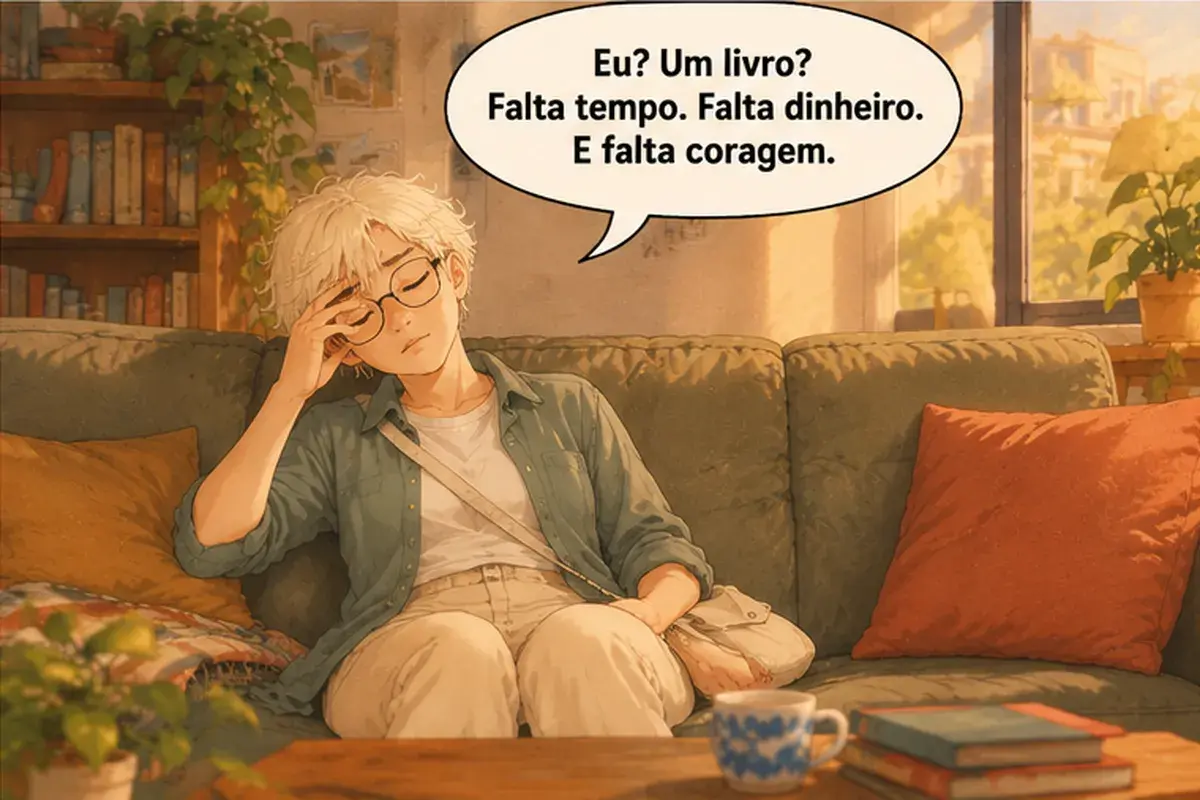
- Nina
Eu? Um livro? Falta tempo. Falta dinheiro. E falta coragem.
Me? A book? There isn't enough time. There isn't enough money. And there isn't enough courage.

- Bia
Tempo? Você fez vinte desenhos em dois dias, doente na cama!
Time? You made twenty drawings in two days, sick in bed!

- Nina
São só rascunhos, Bia.
They're just sketches, Bia.

- Bia
Rascunhos? Olha esta página: a padaria Estrela, em aquarela. O leitor sente o cheiro do café!
Sketches? Look at this page: the Estrela bakery, in watercolor. The reader can smell the coffee!

- Nina
Pode dar errado, Bia. Ninguém conhece a gente.
It might go wrong, Bia. Nobody knows us.

- Bia
Pode dar certo também! O que é que falta, então? Você tem talento, eu tenho a câmera.
It might work out, too! So what's missing? You have talent, I have the camera.

- Nina
E o dinheiro?
And the money?

- Bia
A gente divide tudo: metade, metade. Quem não arrisca, não ganha.
We split everything: half and half. If you don't take risks, you don't win.

- Nina
Você pensou em tudo, né? E a coragem?
You thought of everything, didn't you? And the courage?

- Bia
Coragem eu tenho por nós duas. Só falta a sua resposta. Topa fazer esse livro comigo?
I have courage for both of us (woman speaking, to a woman). All that's missing is your answer. Are you up for making this book with me?

- Nina
Tá bom. Eu topo.
OK. I'm in.

- Bia
Perfeito! O nome do livro é “Brasil para quem chega”.
Perfect! The name of the book is “Brazil for People Who Arrive”.

- Nina
Então o primeiro capítulo é sobre a Bia. Ela sempre chega atrasada.
Then the first chapter is about Bia. She always arrives late.
Grammar for this text
- E daí que isso é um livro! — daí = de + aí, literally "from there". E daí? means "so what?", but E daí que… means "well, the thing is…": that's how you start an answer that changes everything.
- para quem chega ao Brasil — here quem means "people who": "for people who come". The verb is singular, like quem itself; ao = a + o.
- Falta tempo. — faltar talks about what is missing; falta is the ele / ela form because the subject here is the thing, not the person (the rule is in the unit grammar).
- O que é que falta, então? — é que just makes the question stronger: "so what's missing?" (unit grammar).
- A gente divide tudo: metade, metade. — metade, metade — "half and half". After a gente the verb is in the ele / ela form.
- Pode dar errado — pode + infinitive: "it might"; dar errado — "to go wrong", the opposite of dar certo. And in Quem não arrisca, não ganha, arrisca is the ele / ela form of arriscar ("to take a risk") and ganha comes from ganhar ("to win").
- Topa fazer esse livro comigo? — topar is casual "to be up for, to say yes": topa is the você form, topo is the eu form. That's how friends talk. comigo — "with me" (a special word: com + mim merged, like conosco).
Words and grammar of the unit: Pitch an idea and win a friend over.
Learn the words from the texts with flashcards
In the app, you can tap any word in a text to see its translation, forms and examples, and new words stick with flashcards. 15 minutes a day.
Start for freeEverything is open for free. No card needed to sign up.