
Portuguese story with translation · A2 · 16 lines
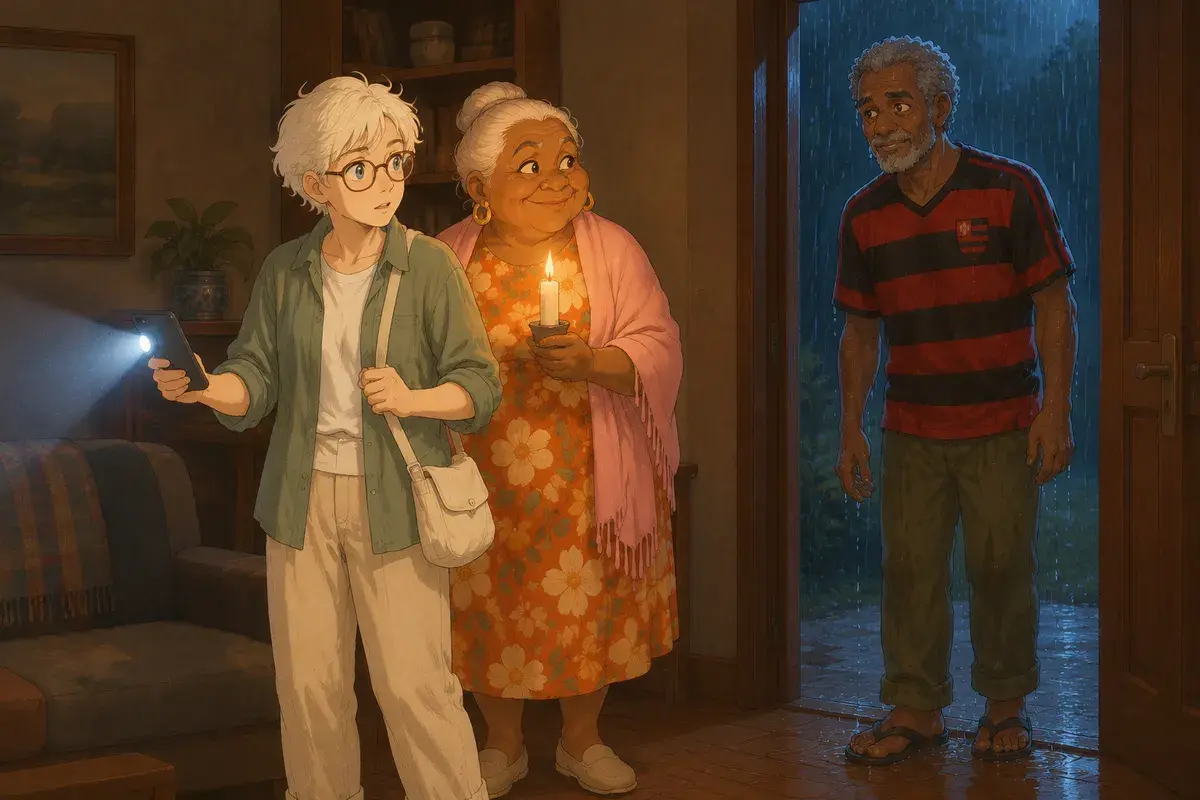
Sou eu. Esqueci a chave. It's me. I forgot the key.
Comic · 8 panels
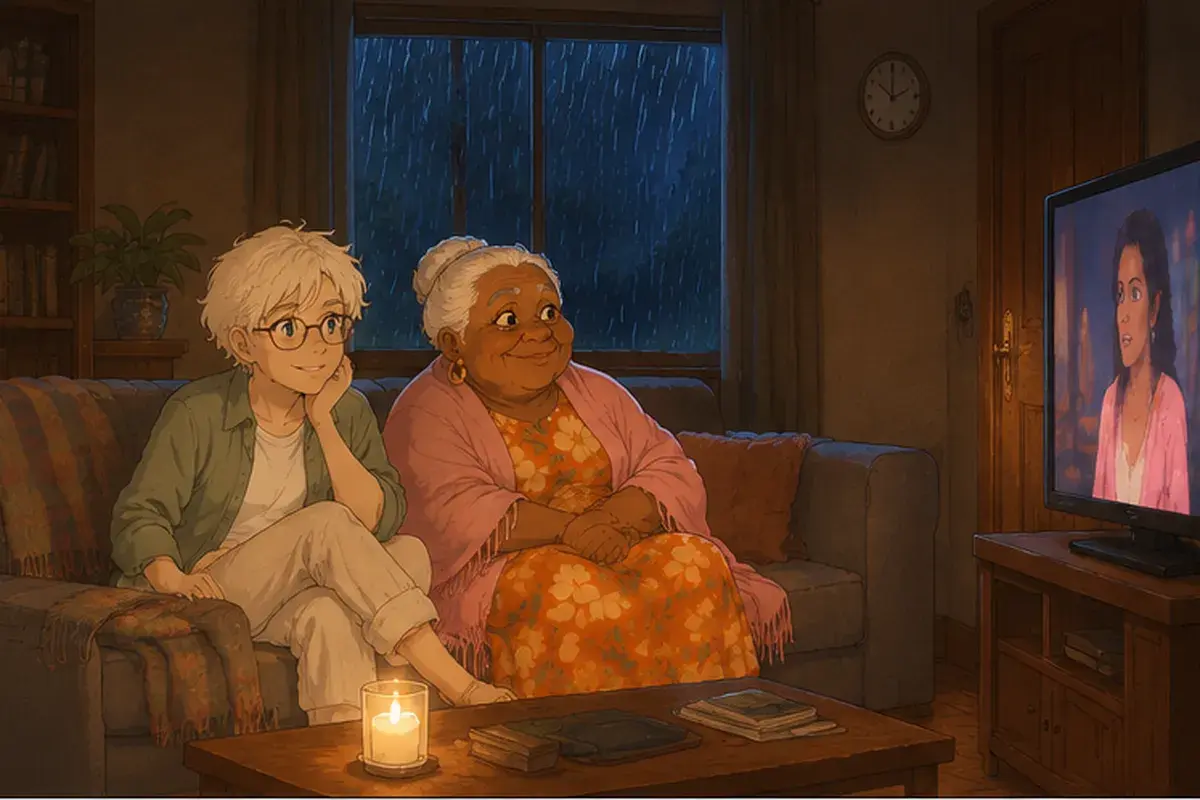
No começo da noite, estava chovendo muito. Era uma tempestade de verão.
At the beginning of the evening, it was raining hard. It was a summer storm.
Sozinhas em casa, a Dona Zezé e eu estávamos assistindo ao último capítulo da novela.
Home alone, Dona Zezé and I were watching the last episode of the soap opera (women speaking).
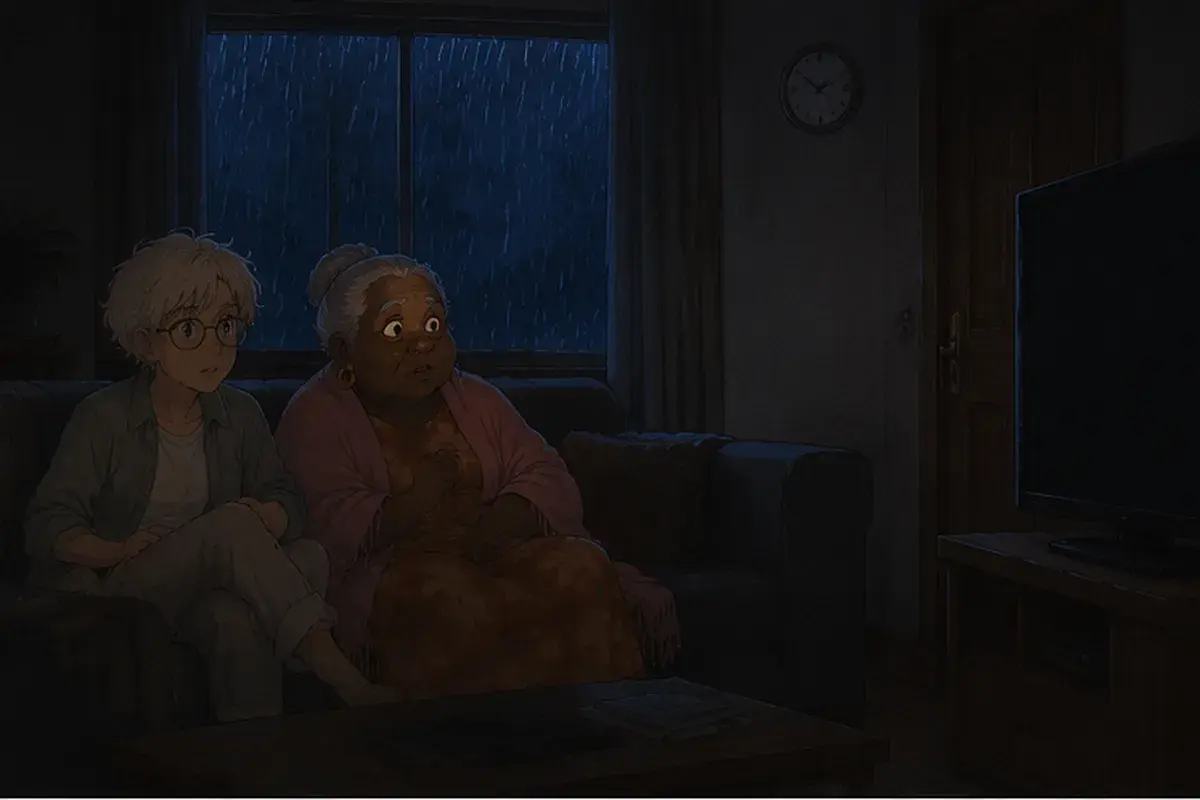
Enquanto um homem na novela contava um segredo, a luz apagou.
While a man in the soap opera was telling a secret, the light went out.
Escuridão total! A energia caiu no bairro todo.
Total darkness! The power went out in the whole neighborhood.
A Dona Zezé gritou — não por causa da escuridão, mas por causa do capítulo.
Dona Zezé screamed — not because of the darkness, but because of the episode.
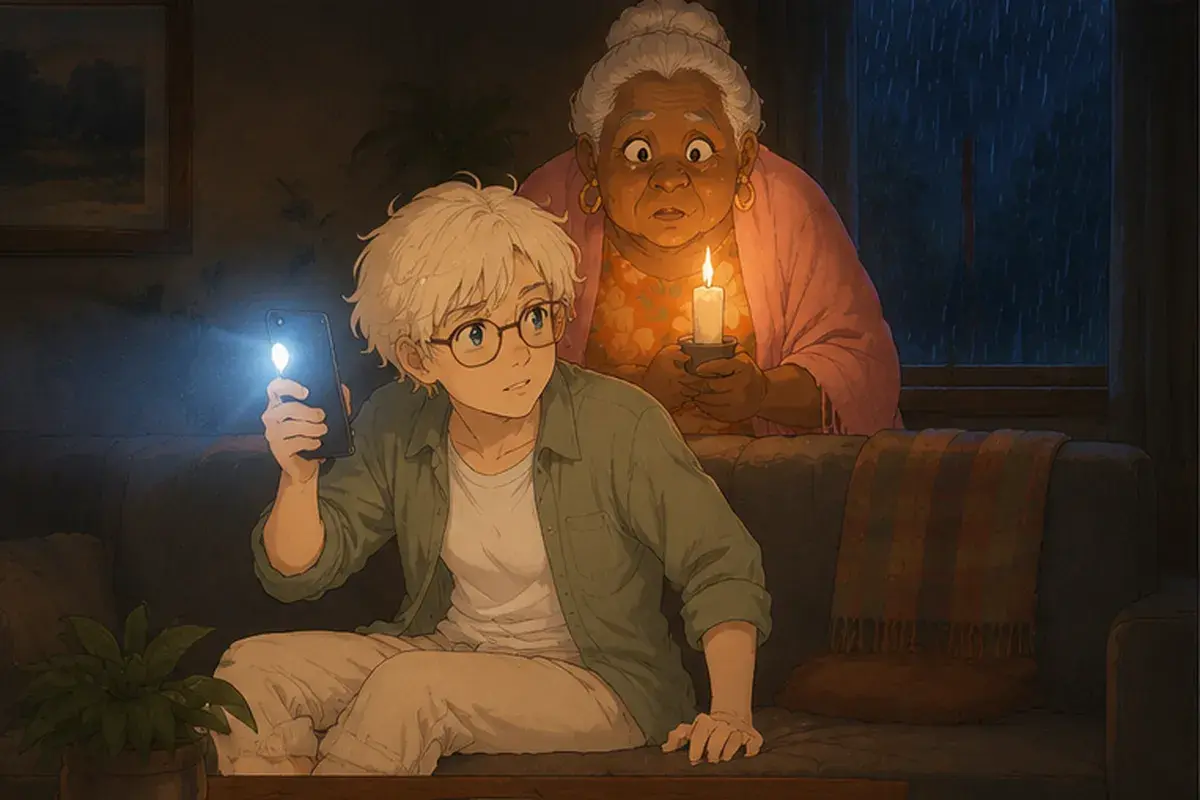
Felizmente, meu celular tinha bateria, e eu acendi a lanterna. A Dona Zezé acendeu uma vela e se escondeu atrás de mim.
Fortunately, my phone had battery, and I turned on the flashlight. Dona Zezé lit a candle and hid behind me.
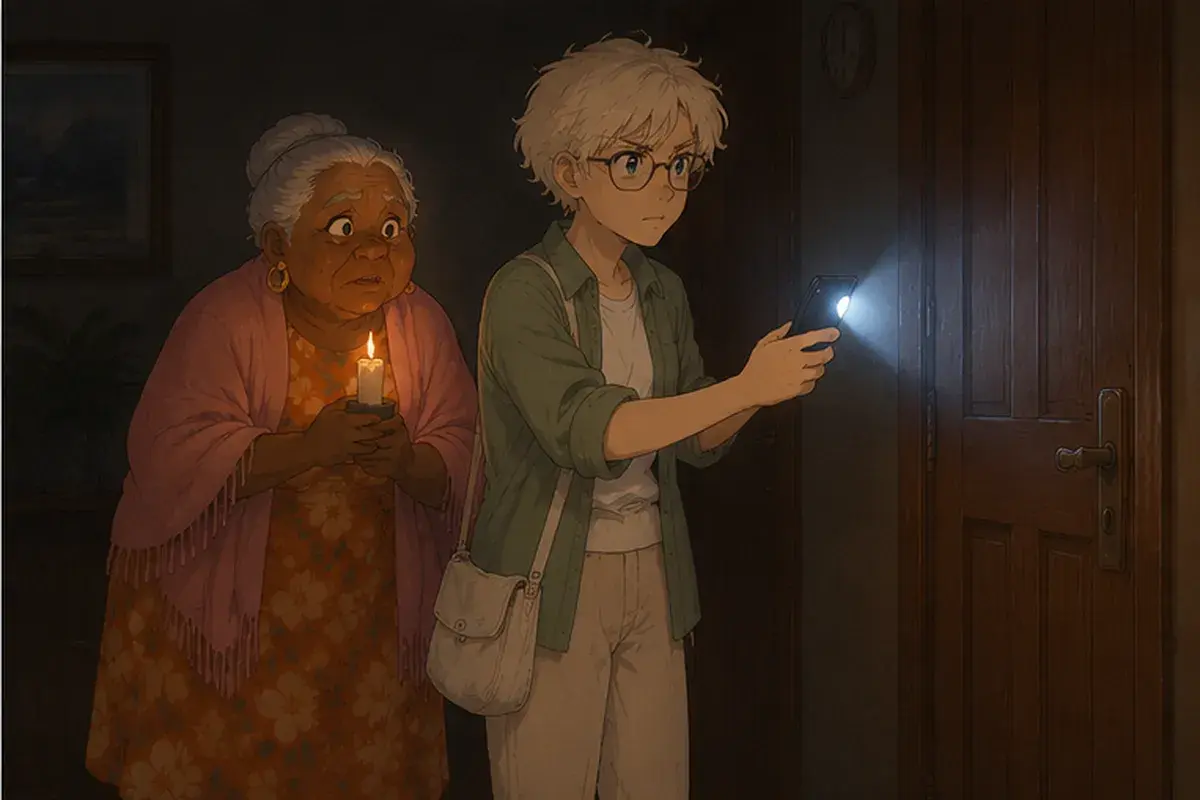
De repente, alguém bateu na porta, e a Dona Zezé se assustou de novo.
Suddenly, someone knocked on the door, and Dona Zezé got scared again.
Eu desconfiei e perguntei: “Quem é?” Silêncio.
I got suspicious and asked: “Who is it?” Silence.
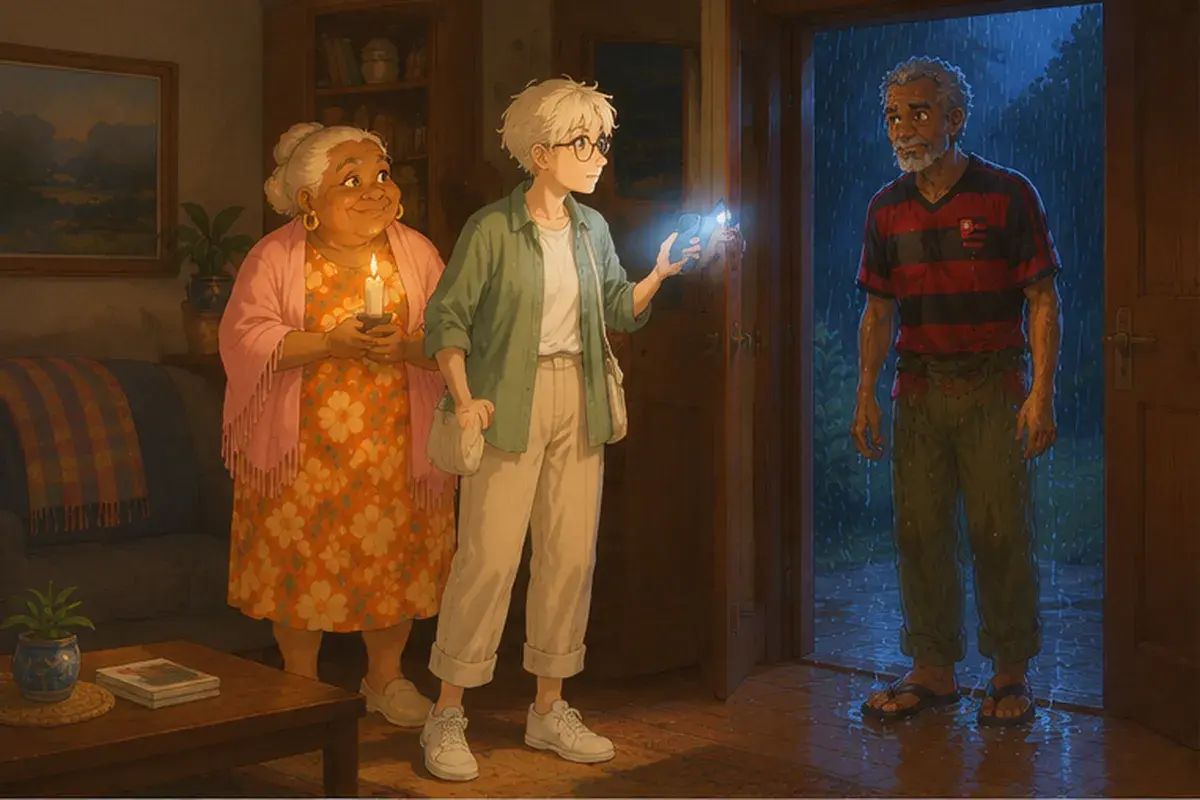
Depois, alguém respondeu bem baixo: “Sou eu. Esqueci a chave.”
Then someone answered very quietly: “It's me. I forgot the key.”
Abri a porta, e apareceu o Seu Jorge, encharcado e sem capa de chuva.
I opened the door, and Seu Jorge appeared, soaked and without a raincoat.
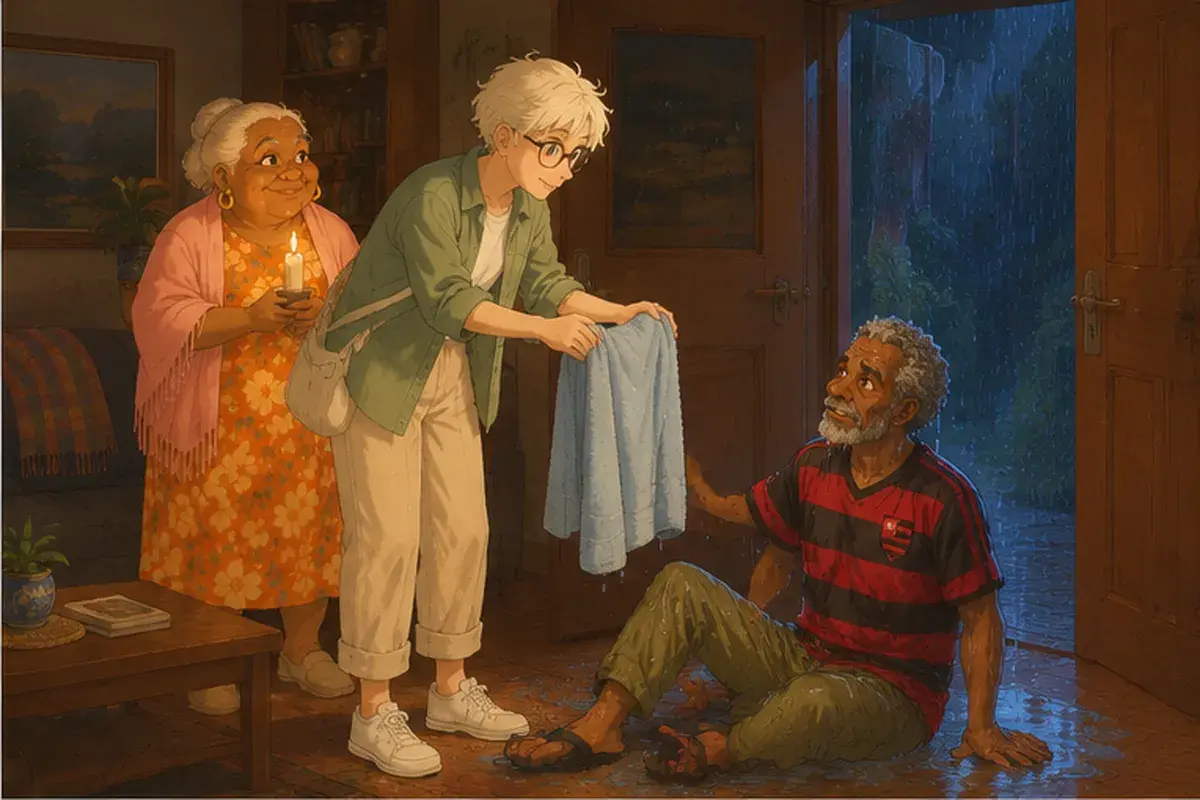
Ele escorregou na poça que ele mesmo fez e molhou a sala toda. Por sorte, não se machucou.
He slipped in the puddle he made himself and got the whole living room wet. Luckily, he didn't get hurt.
Foi coincidência: ele chegou logo depois que a luz apagou. Dei uma toalha seca para ele.
It was a coincidence: he arrived right after the light went out. I gave him a dry towel.
Um detalhe: aquela foi a única coisa que o Seu Jorge falou na noite toda.
One detail: that was the only thing Seu Jorge said all night.
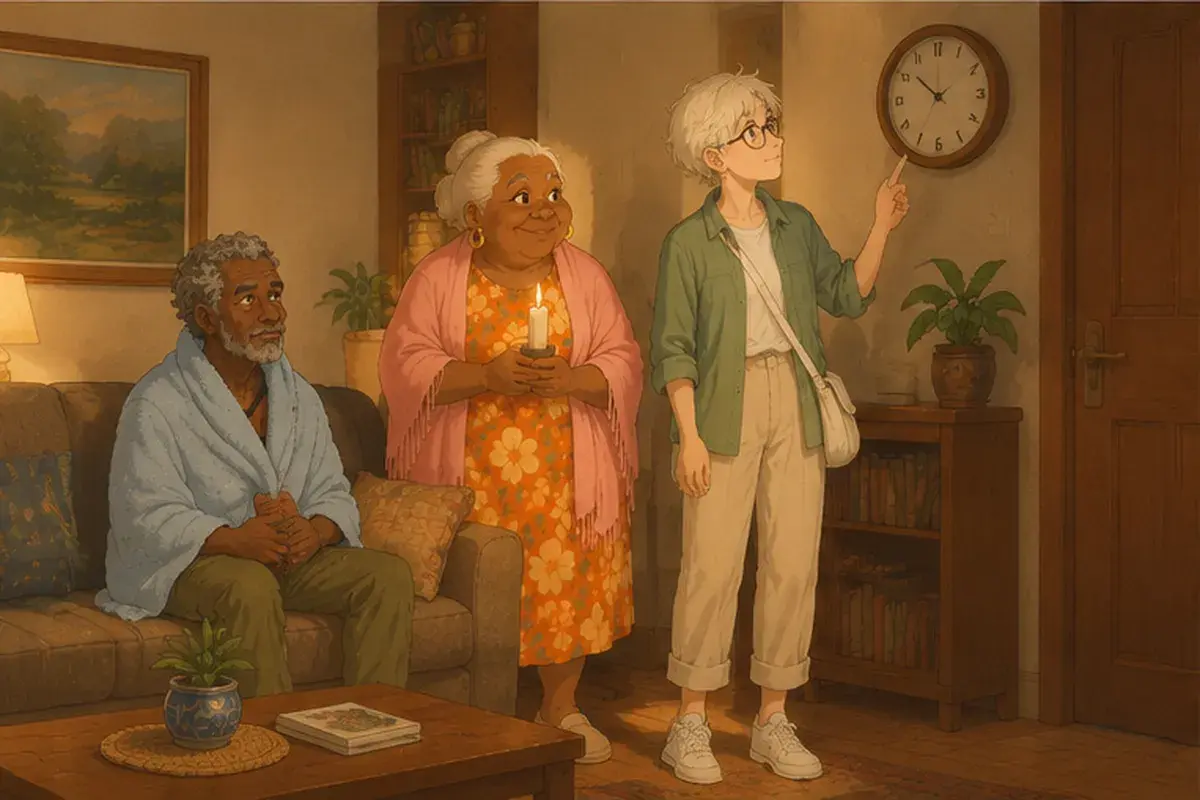
Enfim, a energia voltou. No relógio da sala, eram dez e meia.
Finally, the power came back. On the living room clock, it was ten thirty.
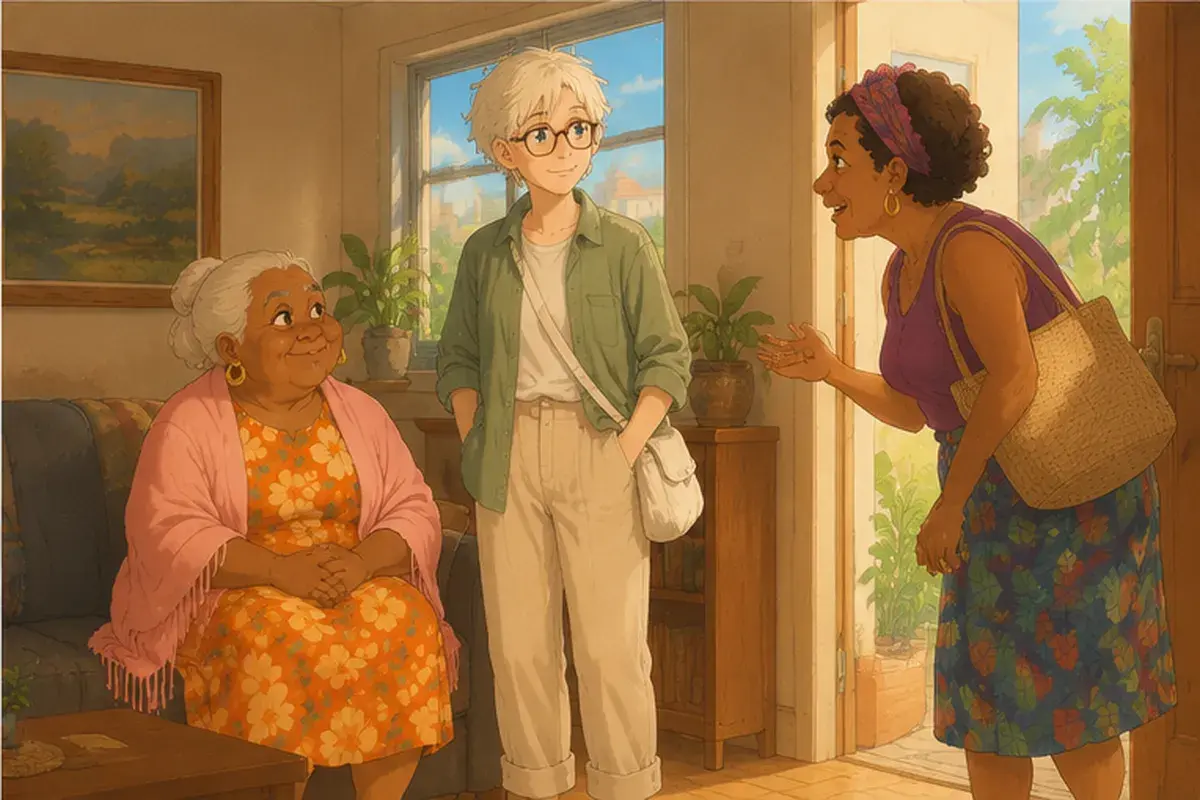
Infelizmente, ninguém viu o fim da novela. Só de manhã a vizinha contou para a Dona Zezé como tudo acabou.
Unfortunately, no one saw the end of the soap opera. Only in the morning did the neighbor tell Dona Zezé how it all ended.
Resumindo, sem exagerar: a pior parte da noite foi perder o capítulo.
To sum up, without exaggerating: the worst part of the night was missing the episode.
Grammar for this text
- Estava chovendo muito — estava chovendo — "it was raining (at that moment)": estava (the imperfect of estar) + the gerund. Era uma tempestade — era — "it was", the imperfect of ser: a description, the background.
- estávamos assistindo ao último capítulo da novela — the nós form of estar in the imperfect (estávamos) + assistindo: "we were watching (at that moment)"; ao = a + o, because the verb is assistir a — "to watch". A novela is a soap opera that families watch every night. Against this background, events happen: a luz apagou, A Dona Zezé gritou — the preterite.
- Enquanto um homem na novela contava um segredo, a luz apagou — after enquanto comes what went on (contava, imperfect), then the event apagou. English does the same: "while a man was telling a secret, the light went out".
- Felizmente, meu celular tinha bateria — tinha is the imperfect of ter: "had". But acendi, acendeu, se escondeu, se assustou are events, so they're in the preterite: "I turned on", "she lit", "she hid", "she got scared".
- Eu desconfiei e perguntei — desconfiei — "I got suspicious" (desconfiar); Quem é? at the door — "Who is it?".
- Ele escorregou na poça que ele mesmo fez — que — "that", ele mesmo — "he himself", fez — the preterite of fazer.
- Foi coincidência and aquela foi a única coisa — here it's foi, not era: the narrator sums up a closed fact. eram dez e meia — telling time in the past always uses era / eram.
- ninguém viu o fim da novela — ninguém viu — "no one saw" (no não, because ninguém comes before the verb).
Words and grammar of the unit: Tell a story in order.
Learn the words from the texts with flashcards
In the app, you can tap any word in a text to see its translation, forms and examples, and new words stick with flashcards. 15 minutes a day.
Start for freeEverything is open for free. No card needed to sign up.