

Portuguese dialogue with translation · A2 · 16 lines
Quem é aquele cara que está tocando cavaquinho? Who's that guy who's playing the cavaquinho?
Comic · 16 panels

- Nina
Bia, eu nunca vi uma roda de samba na laje! E não conheço ninguém!
Bia, I've never seen a samba circle on a rooftop! And I don't know anyone!
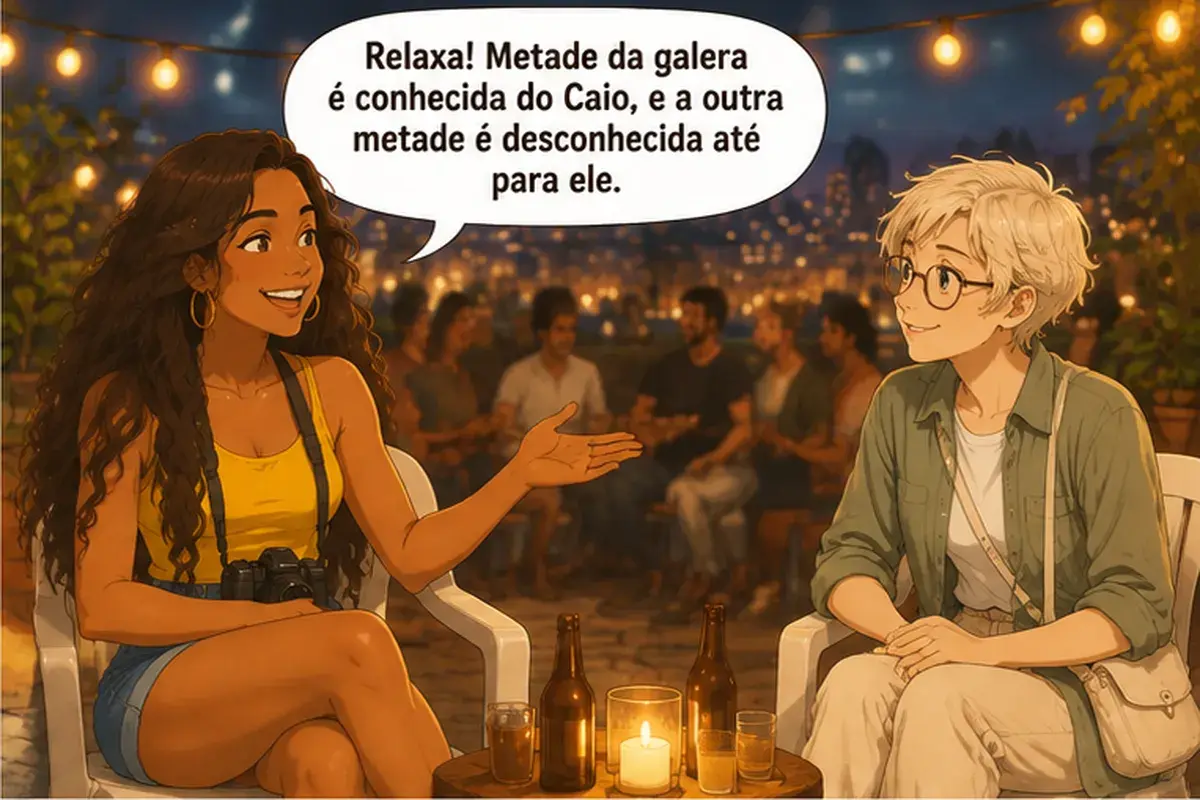
- Bia
Relaxa! Metade da galera é conhecida do Caio, e a outra metade é desconhecida até para ele.
Relax! Half the gang are Caio's acquaintances, and the other half are strangers even to him.
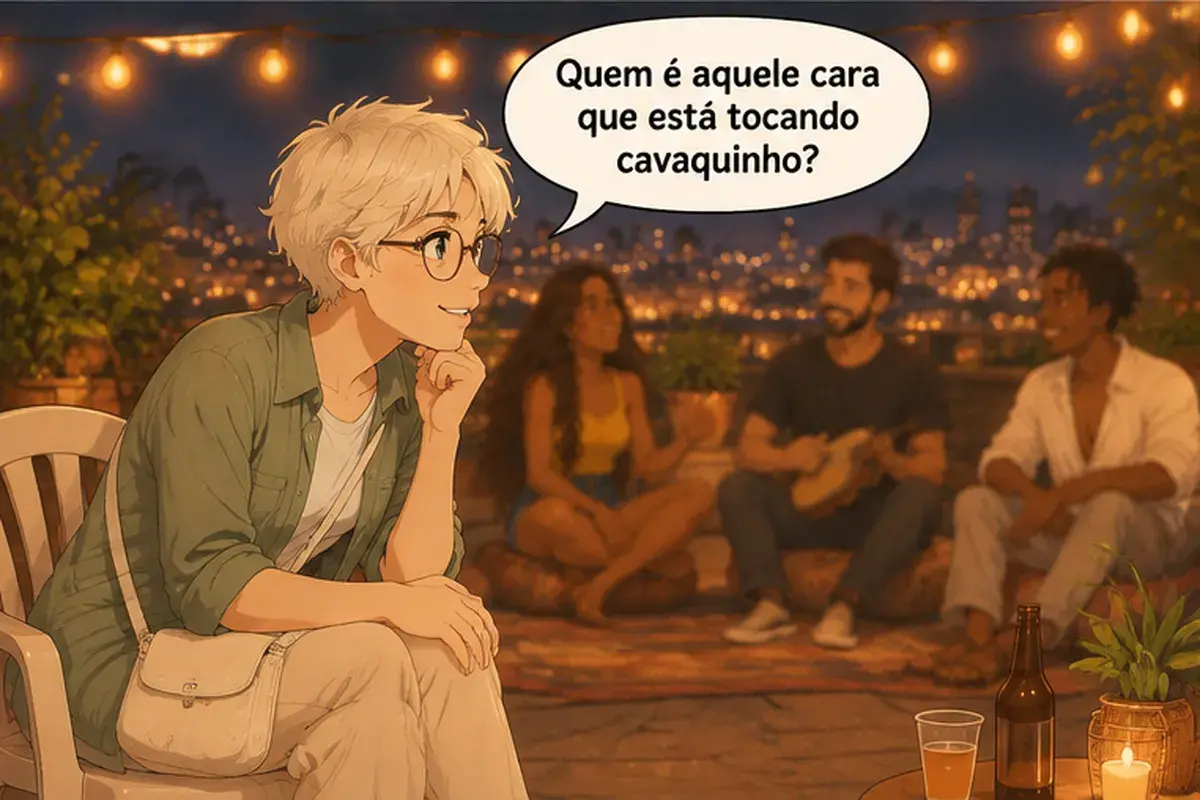
- Nina
Quem é aquele cara que está tocando cavaquinho?
Who's that guy who's playing the cavaquinho?
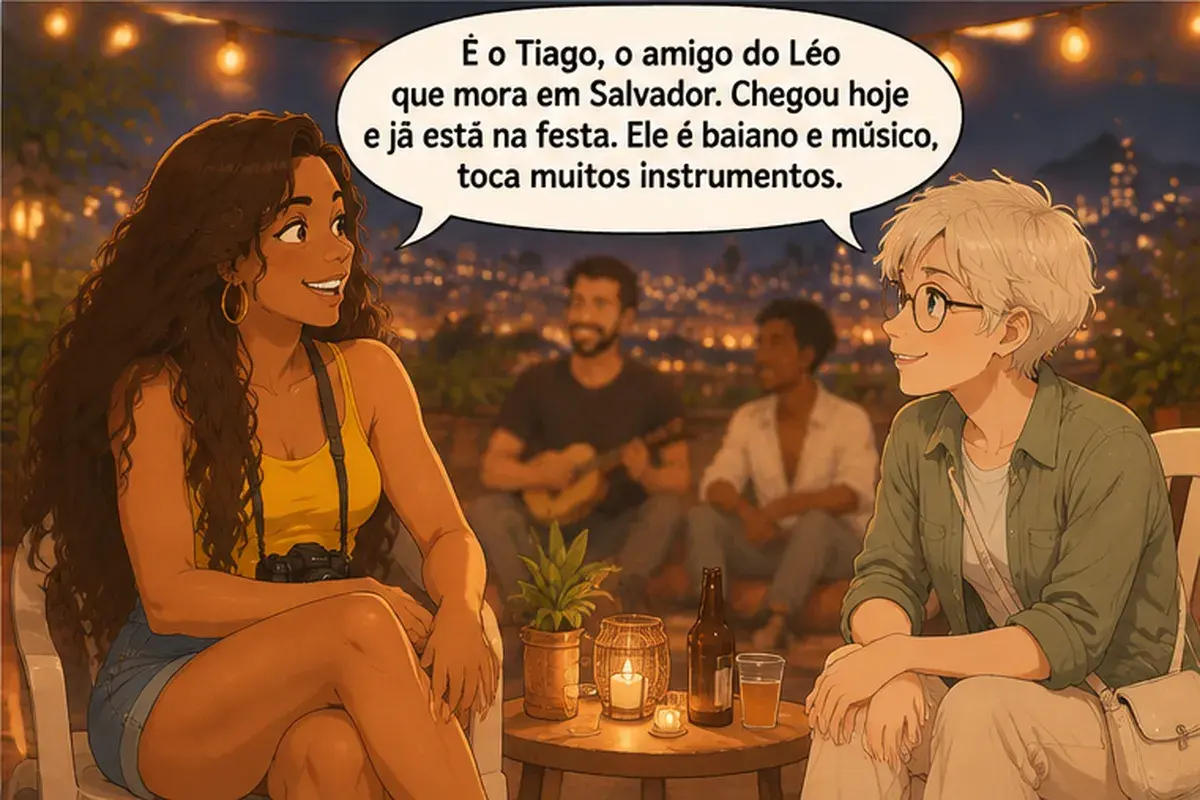
- Bia
É o Tiago, o amigo do Léo que mora em Salvador. Chegou hoje e já está na festa. Ele é baiano e músico, toca muitos instrumentos.
That's Tiago, Léo's friend who lives in Salvador. He got here today and he's already at the party. He's from Bahia and a musician, and he plays a lot of instruments.
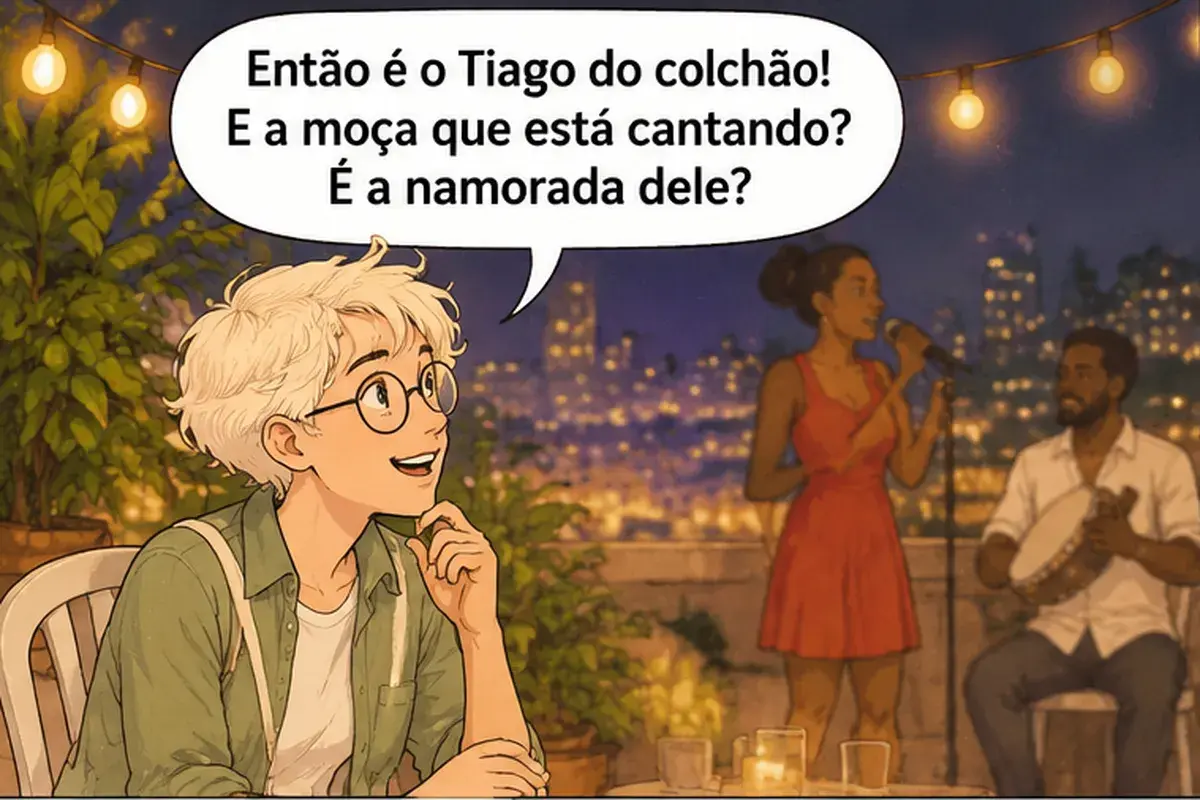
- Nina
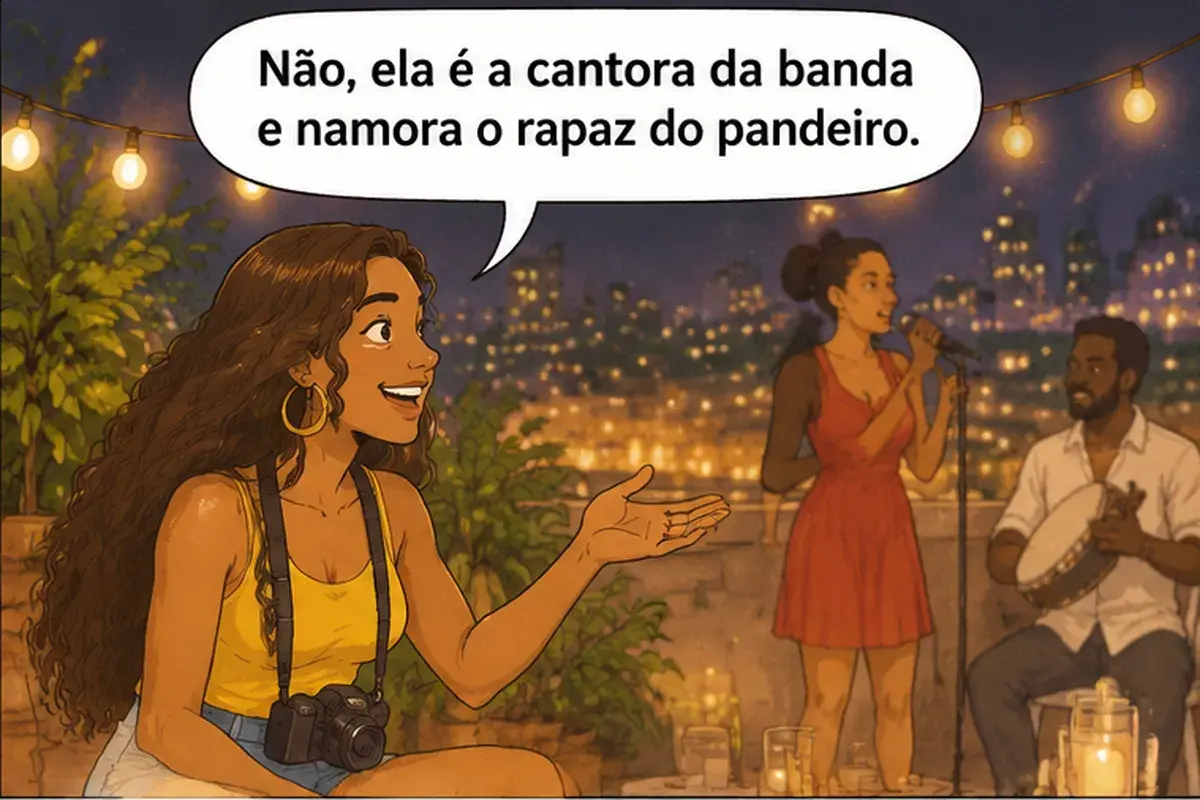
Então é o Tiago do colchão! E a moça que está cantando? É a namorada dele?
So it's Tiago from the mattress! And the girl who's singing? Is she his girlfriend?
- Bia
Não, ela é a cantora da banda e namora o rapaz do pandeiro.
No, she's the band's singer, and she's dating the guy with the pandeiro.
- Léo
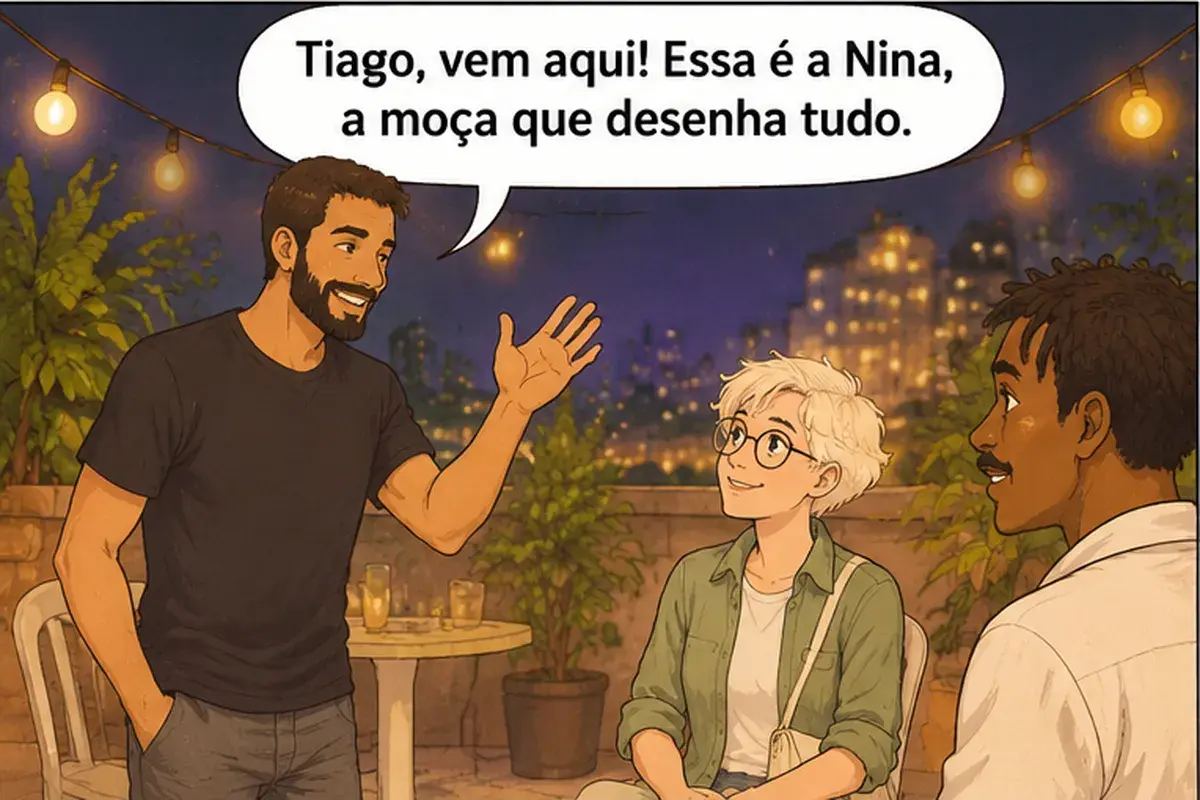
Tiago, vem aqui! Essa é a Nina, a moça que desenha tudo.
Tiago, come here! This is Nina, the girl who draws everything.
- Tiago
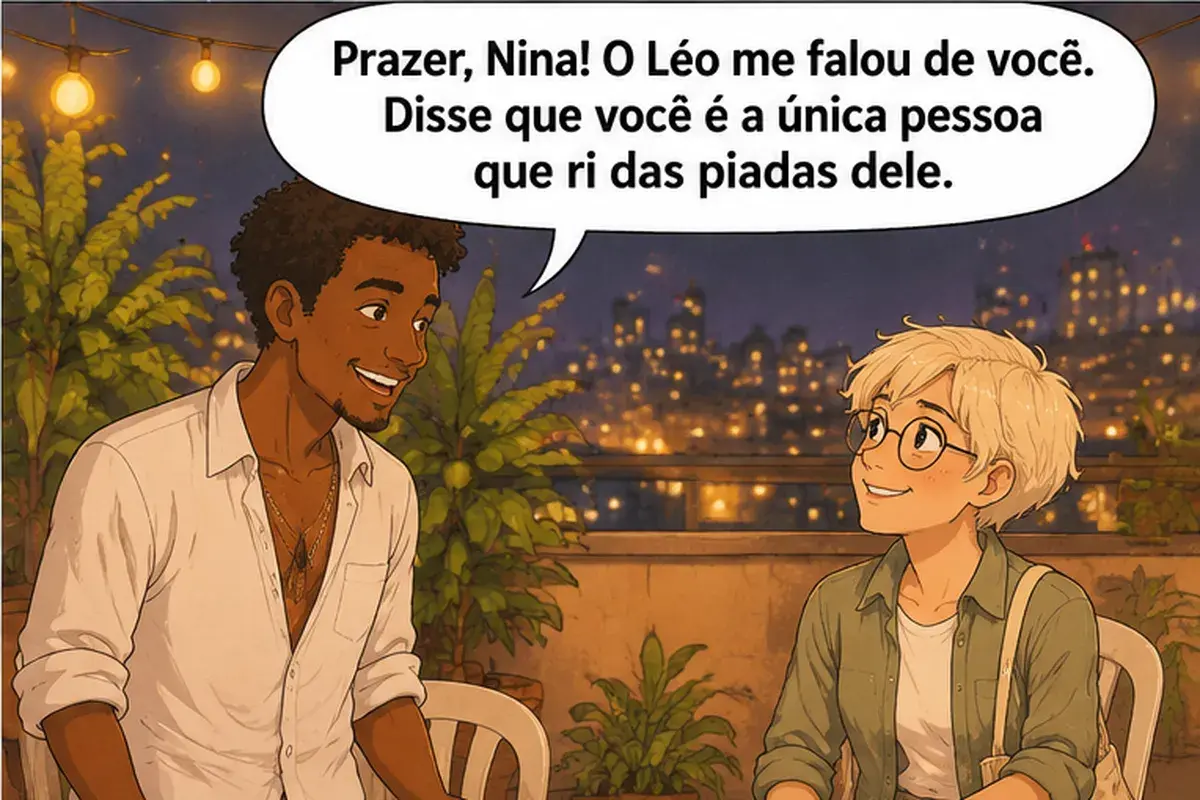
Prazer, Nina! O Léo me falou de você. Disse que você é a única pessoa que ri das piadas dele.
Nice to meet you, Nina! Léo told me about you. He said you're the only person who laughs at his jokes.
- Nina
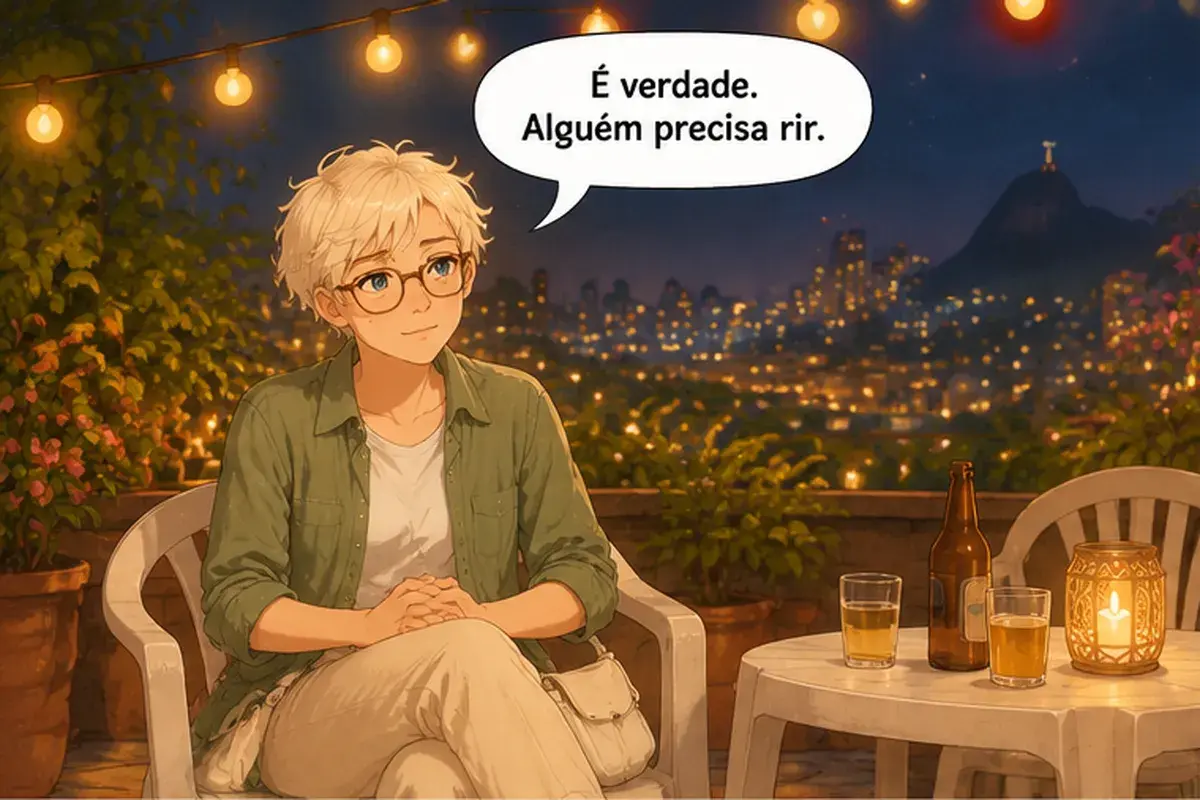
É verdade. Alguém precisa rir.
It's true. Someone needs to laugh.
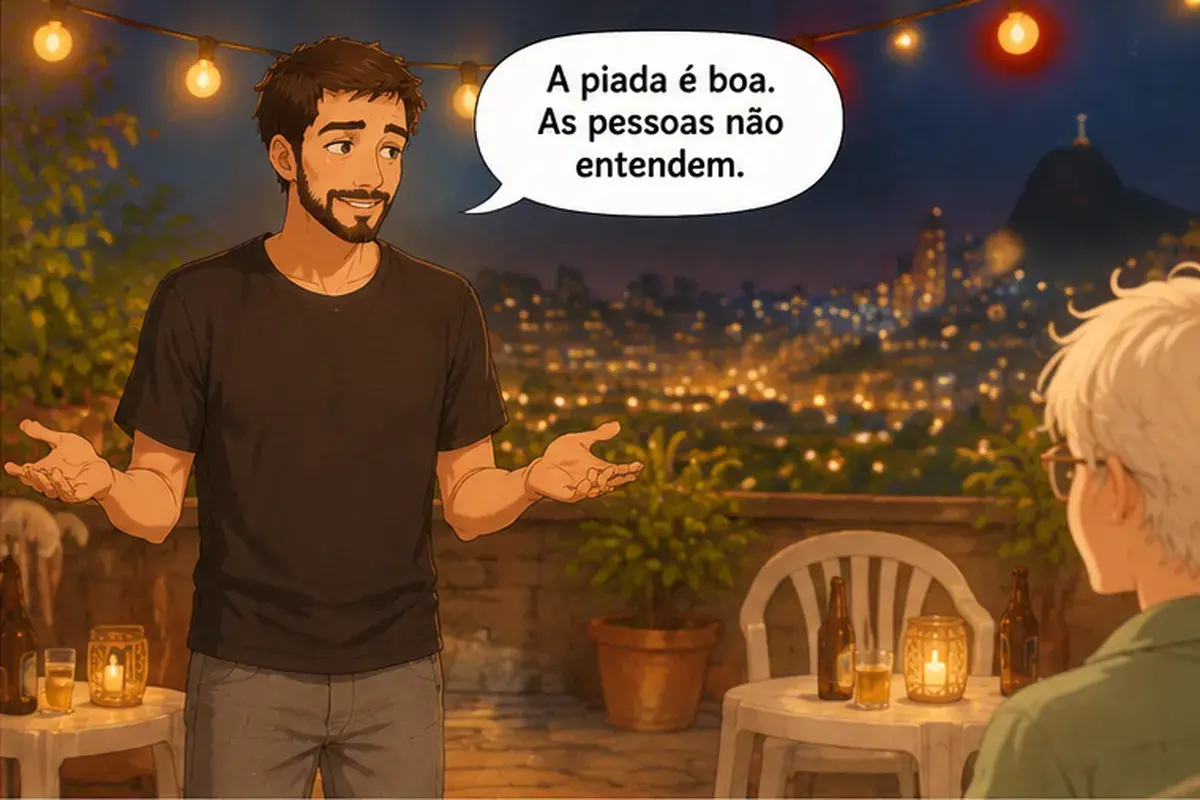
- Léo
A piada é boa. As pessoas não entendem.
The joke is good. People don't understand.
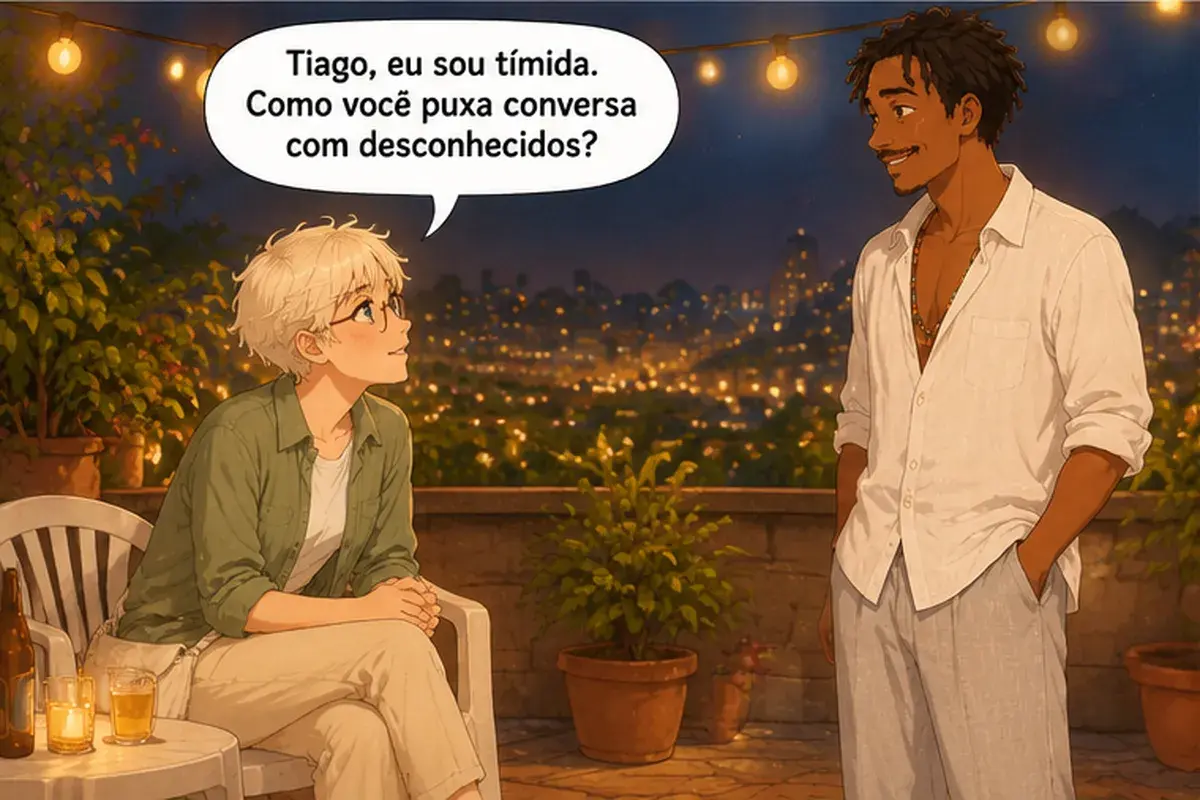
- Nina
Tiago, eu sou tímida. Como você puxa conversa com desconhecidos?
Tiago, I'm shy (woman speaking). How do you start a conversation with strangers?
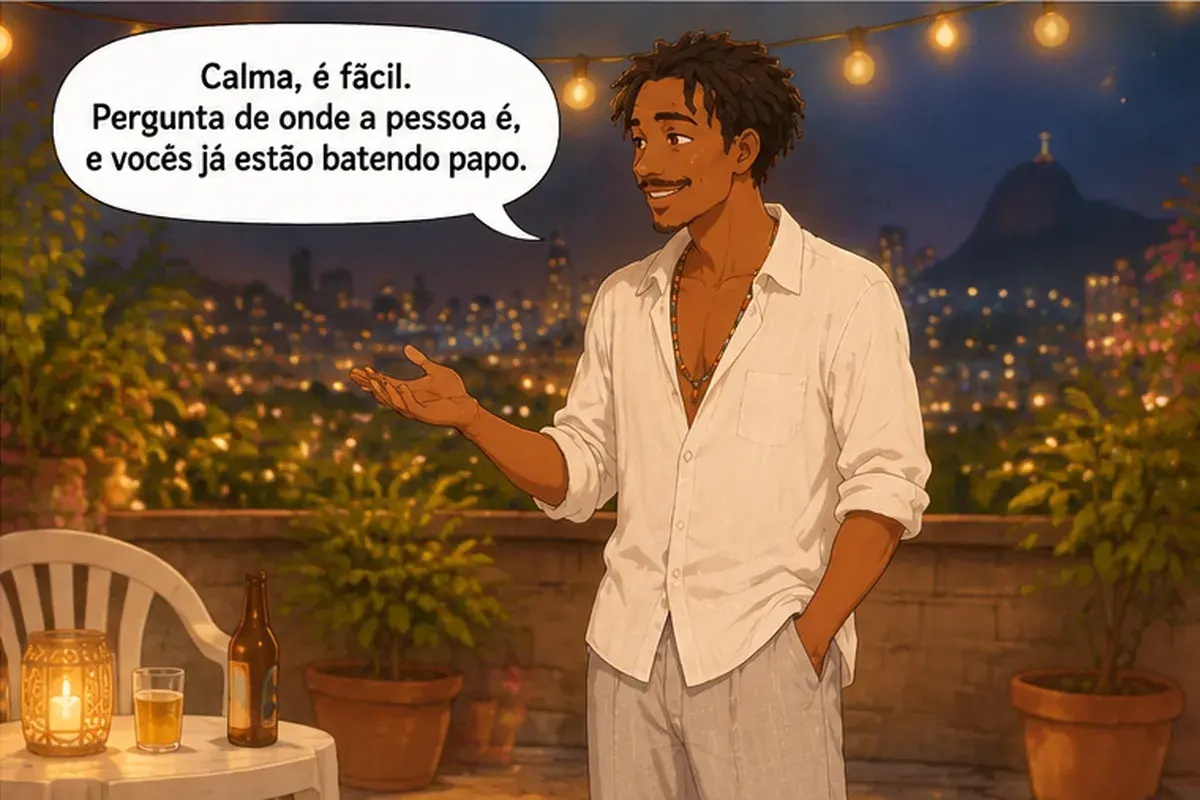
- Tiago
Calma, é fácil. Pergunta de onde a pessoa é, e vocês já estão batendo papo.
Calm down, it's easy. Ask where the person is from, and you two are already chatting.
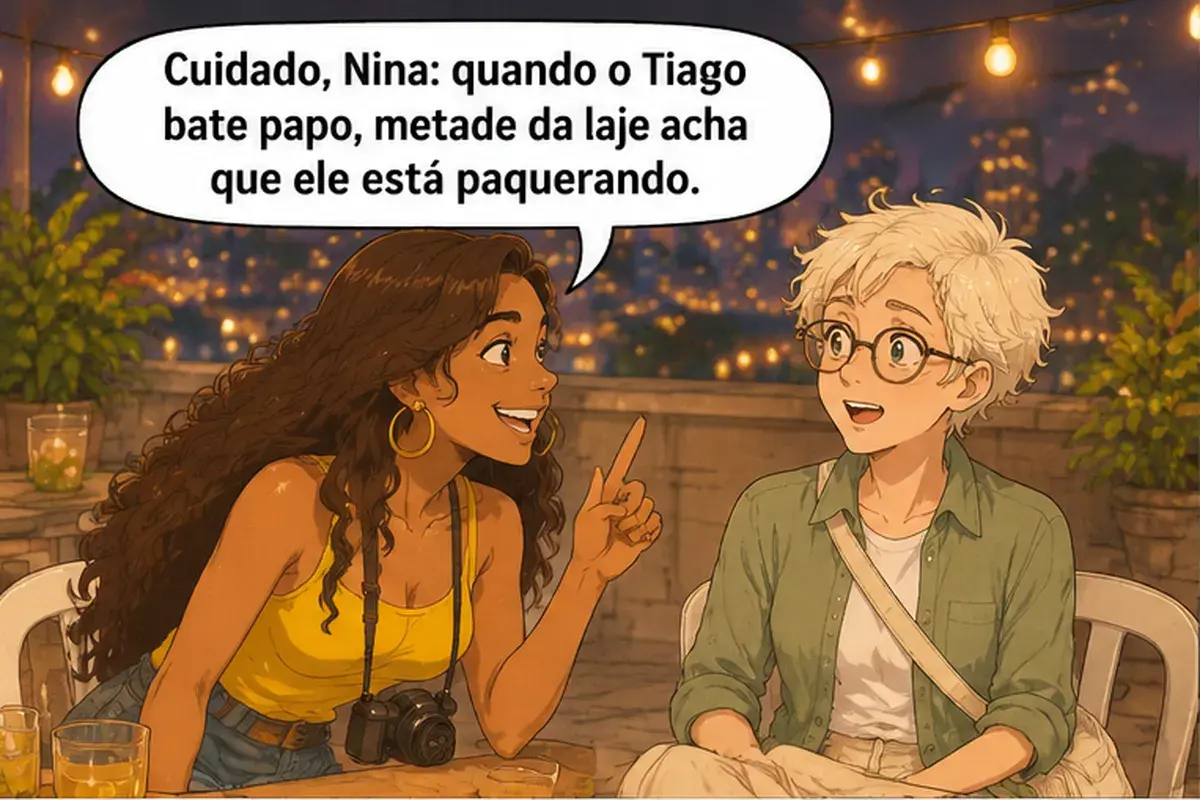
- Bia
Cuidado, Nina: quando o Tiago bate papo, metade da laje acha que ele está paquerando.
Careful, Nina: when Tiago chats, half the rooftop thinks he's flirting.
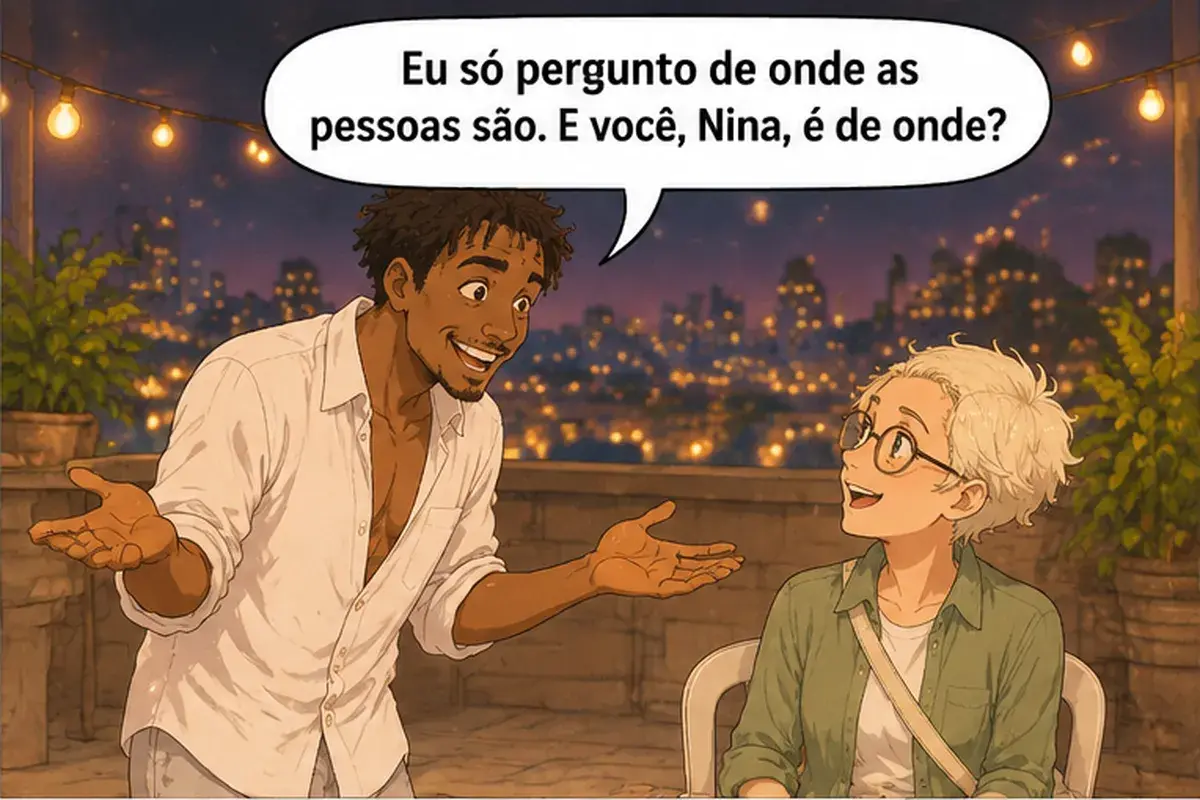
- Tiago
Eu só pergunto de onde as pessoas são. E você, Nina, é de onde?
I just ask where people are from. And you, Nina, where are you from?
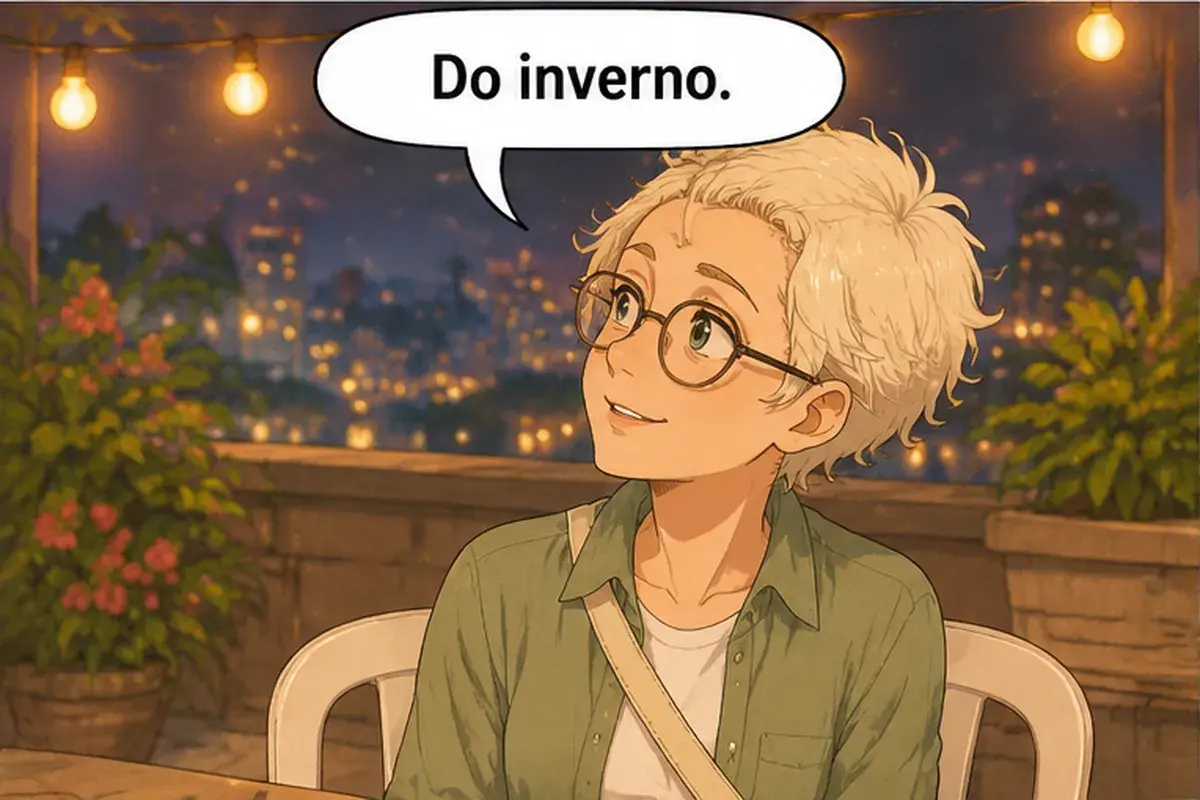
- Nina
Do inverno.
From winter.
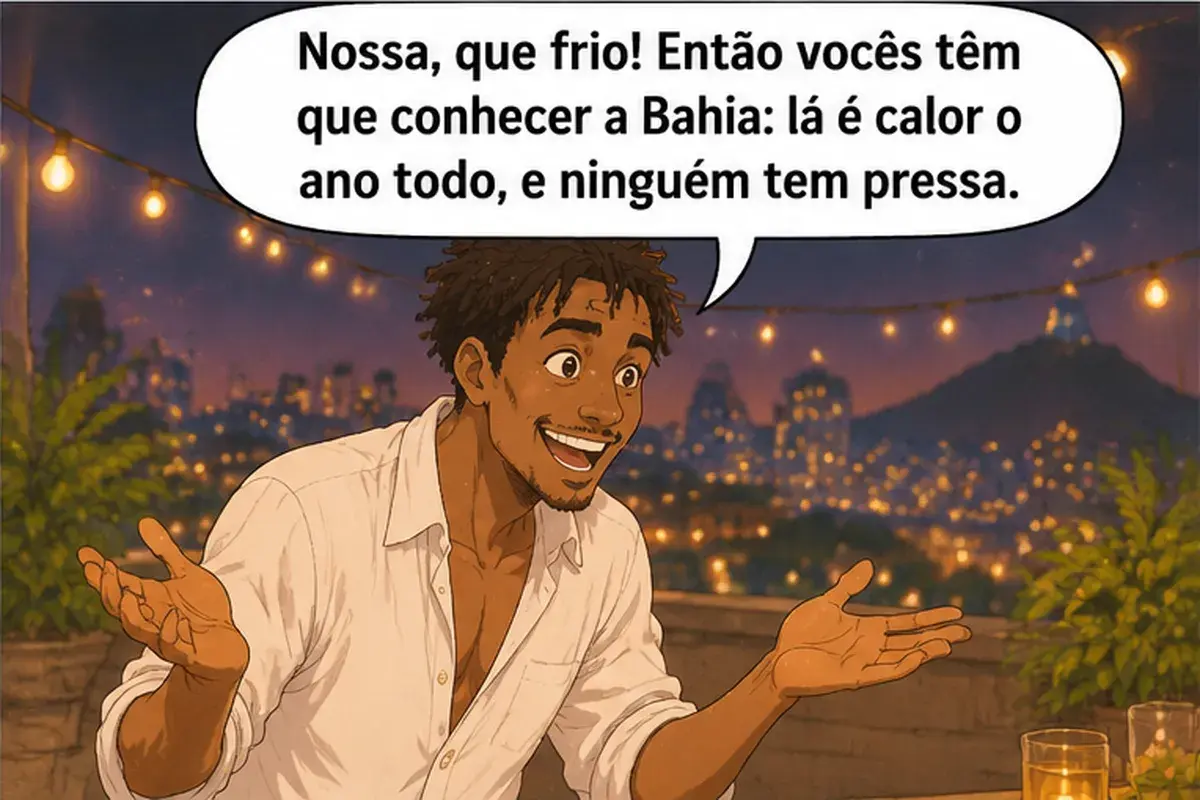
- Tiago
Nossa, que frio! Então vocês têm que conhecer a Bahia: lá é calor o ano todo, e ninguém tem pressa.
Wow, that's cold! Then you have to visit Bahia: it's hot there all year round, and nobody's in a hurry. (to several people)
Grammar for this text
- Quem é aquele cara que está tocando cavaquinho? Here que means "who": "that guy who is playing". cara is casual for "guy, dude". It works the same way in a moça que está cantando and a moça que desenha tudo: que is the same for men and women (see the unit grammar).
- o amigo do Léo que mora em Salvador: do = de + o. English says "Léo's friend"; Portuguese puts de before the owner: o amigo do Léo.
- Disse que você é a única pessoa que ri das piadas dele: disse is "he said", from dizer. There's no subject, but it's clear that Léo said it. ri is "laughs", from rir; rir de means "to laugh at", so das = de + as.
- Então é o Tiago do colchão! Nina remembers unit 18: Léo and Tiago slept on mattresses in the living room.
- Como você puxa conversa com desconhecidos? — here como simply means "how", not "since". puxar conversa means "to start a conversation"; desconhecidos means "strangers": the prefix des- gives the opposite of conhecidos, like un- in English.
- Pergunta de onde a pessoa é, e vocês já estão batendo papo: pergunta is a casual "ask!" (the você form of perguntar used as a command); bater papo means "to chat".
- Nossa, que frio! nossa means "wow!". In vocês têm que conhecer a Bahia, têm is the vocês form, written with ^ to tell it apart from tem (the ele form); ter que + infinitive means "to have to".
Words and grammar of the unit: Meet new people at a party.
Learn the words from the texts with flashcards
In the app, you can tap any word in a text to see its translation, forms and examples, and new words stick with flashcards. 15 minutes a day.
Start for freeEverything is open for free. No card needed to sign up.