

Portuguese dialogue with translation · A2 · 16 lines
Qual é o feminino? What's the feminine?
Comic · 16 panels
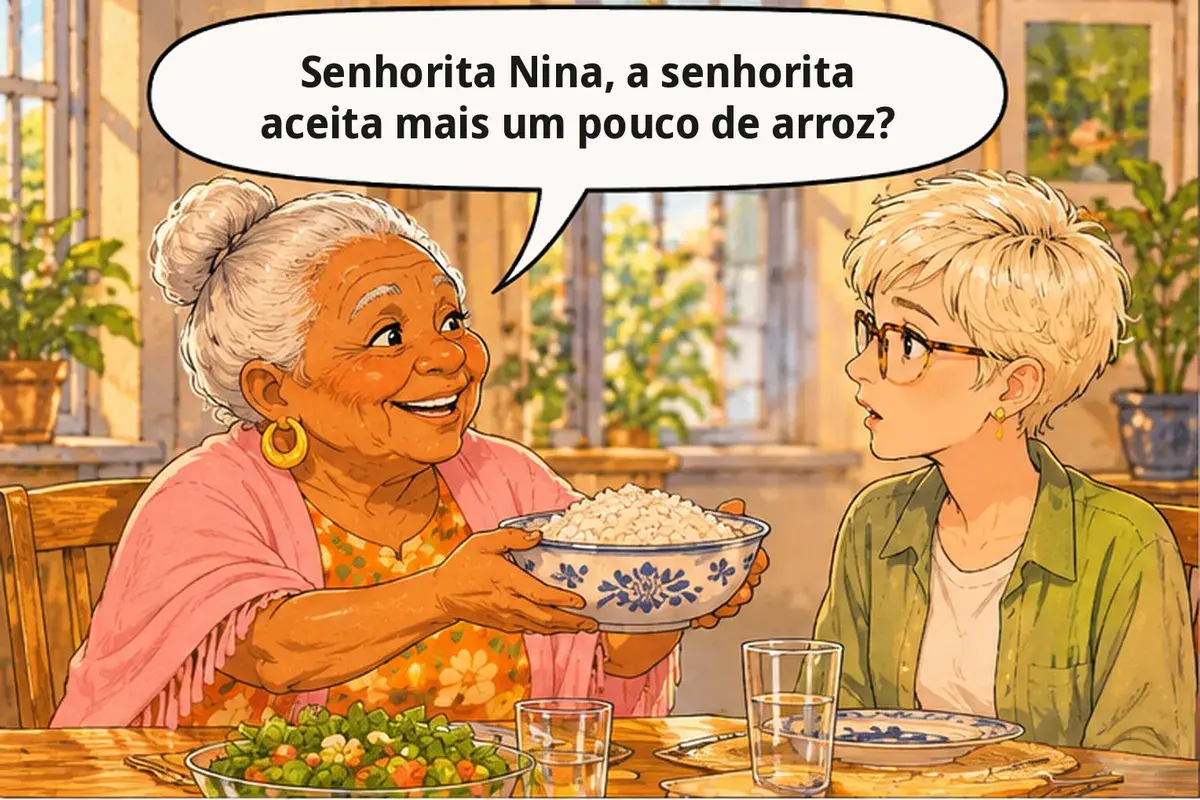
- Dona Zezé
Senhorita Nina, a senhorita aceita mais um pouco de arroz?
Miss Nina, would you like a little more rice, miss? (formal)
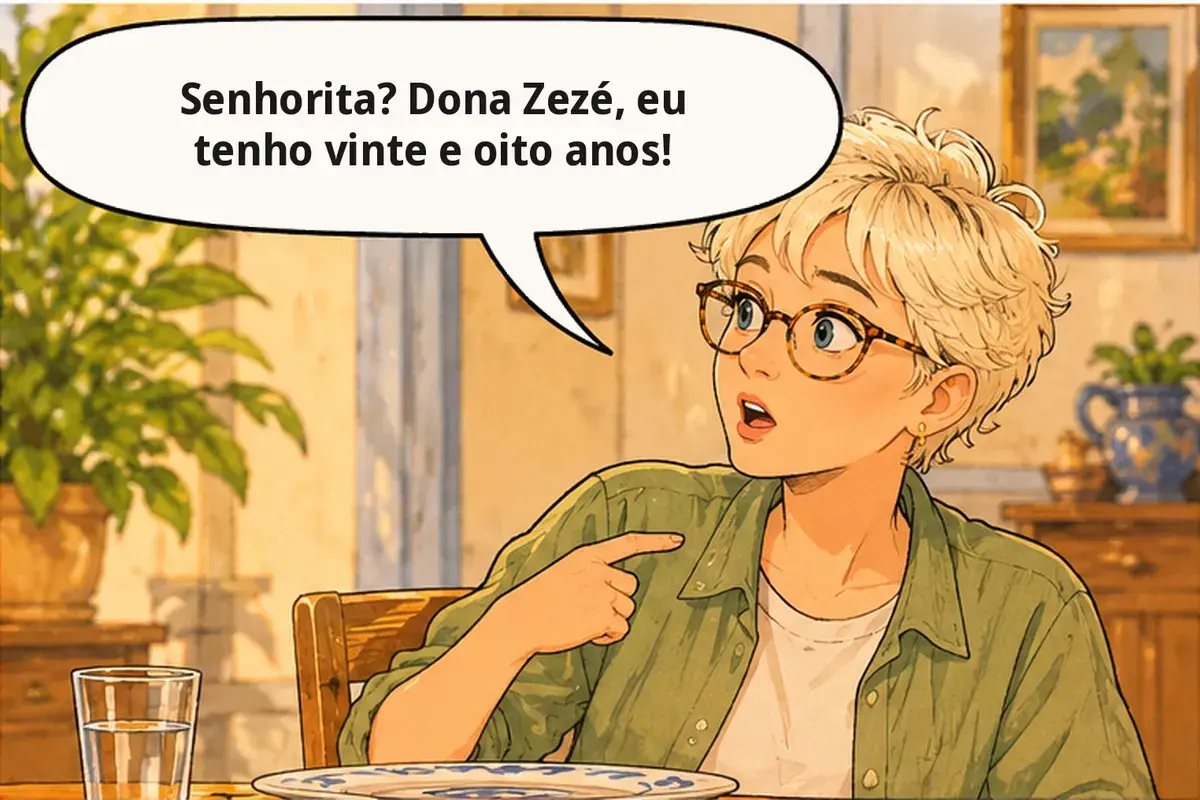
- Nina
Senhorita? Dona Zezé, eu tenho vinte e oito anos!
Miss? Dona Zezé, I'm twenty-eight years old!
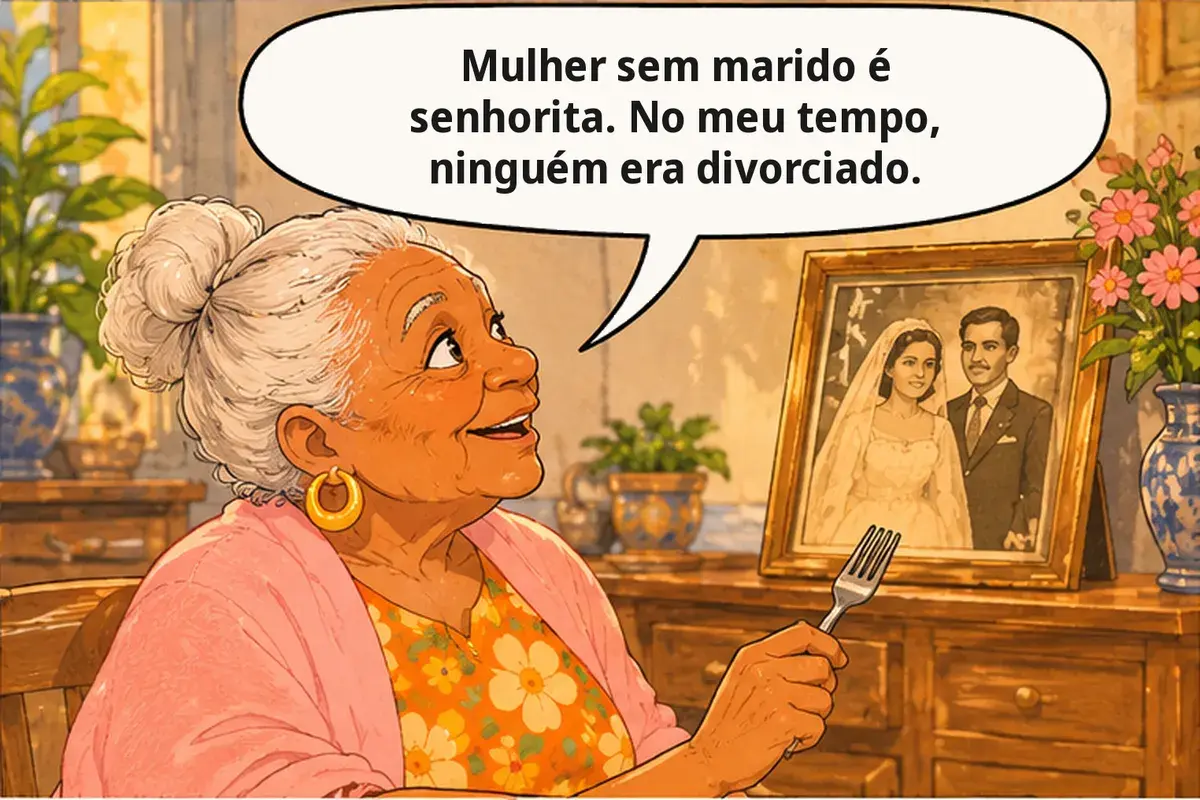
- Dona Zezé
Mulher sem marido é senhorita. No meu tempo, ninguém era divorciado.
A woman without a husband is a miss. In my day, nobody was divorced.
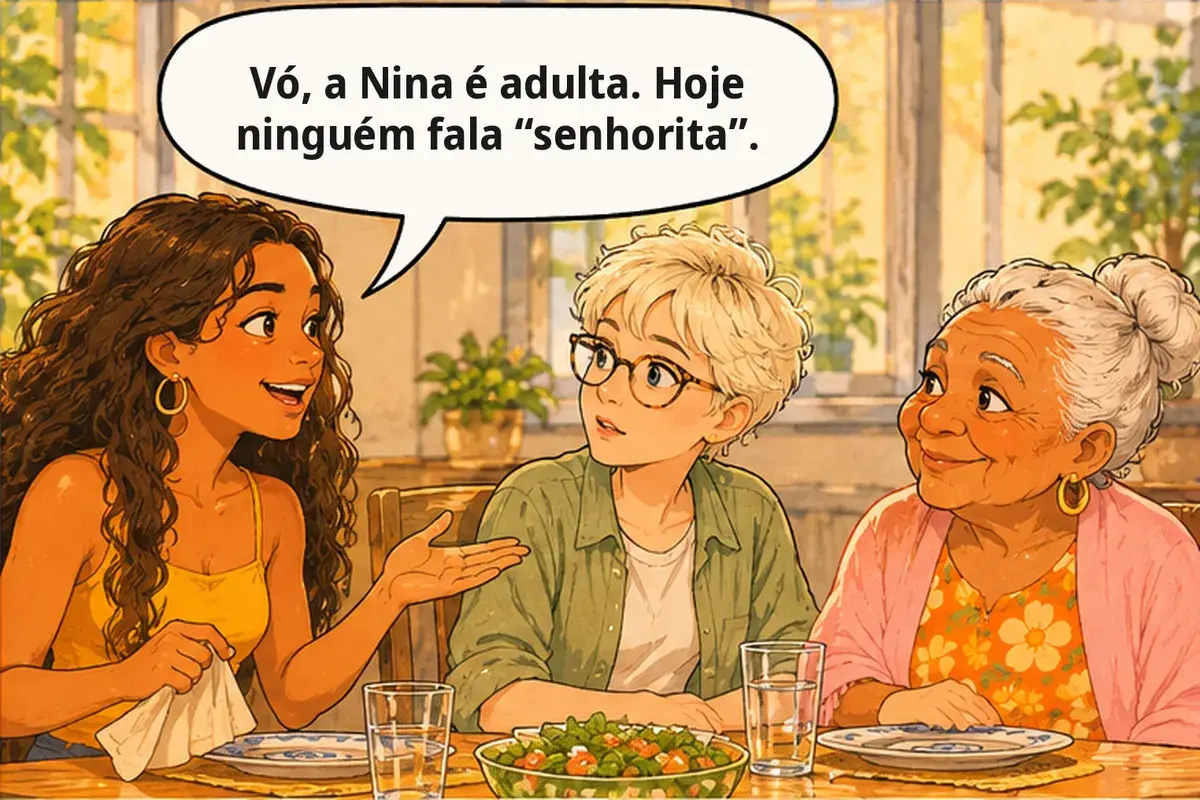
- Bia
Vó, a Nina é adulta. Hoje ninguém fala “senhorita”.
Grandma, Nina is an adult. Nobody says “senhorita” today.
- Jorge
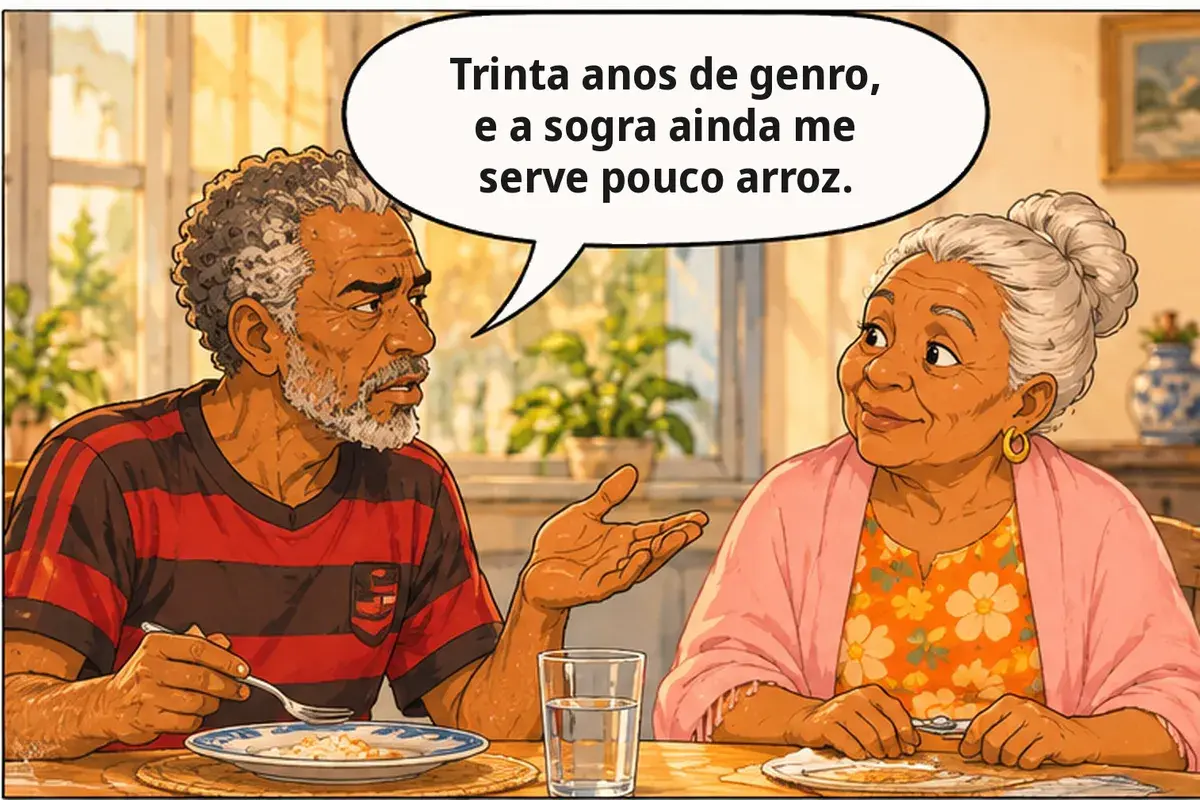
Trinta anos de genro, e a sogra ainda me serve pouco arroz.
Thirty years as a son-in-law, and my mother-in-law still serves me so little rice.
- Dona Zezé
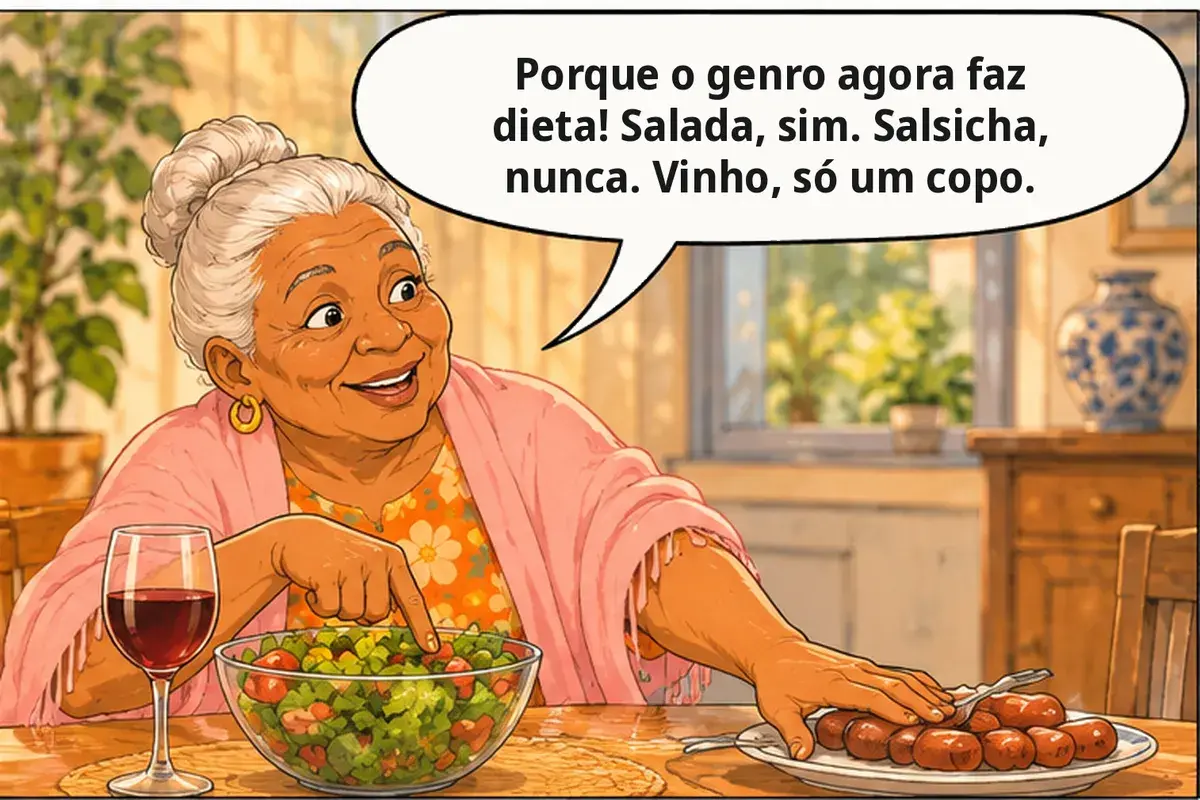
Porque o genro agora faz dieta! Salada, sim. Salsicha, nunca. Vinho, só um copo.
Because the son-in-law is on a diet now! Salad, yes. Sausage, never. Wine, just one glass.
- Nina
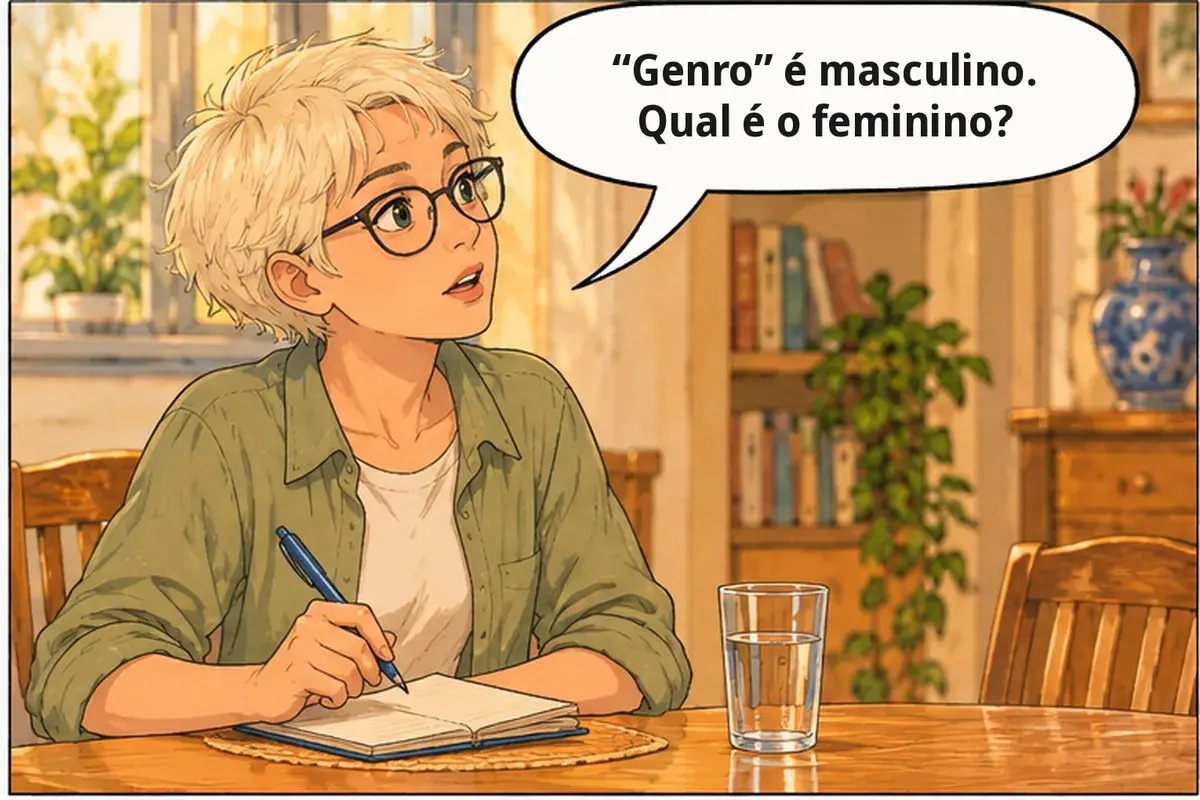
“Genro” é masculino. Qual é o feminino?
“Genro” is masculine. What's the feminine?
- Dona Zezé
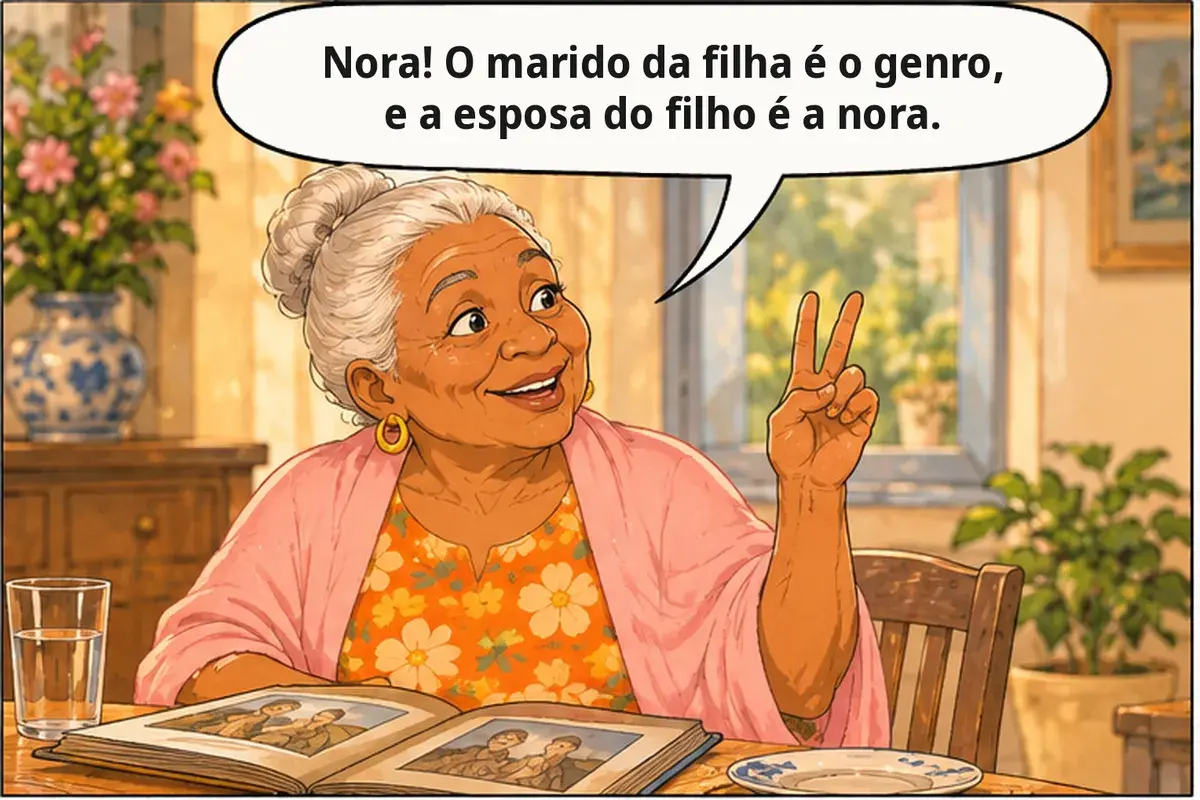
Nora! O marido da filha é o genro, e a esposa do filho é a nora.
Nora! The daughter's husband is the son-in-law, and the son's wife is the daughter-in-law.
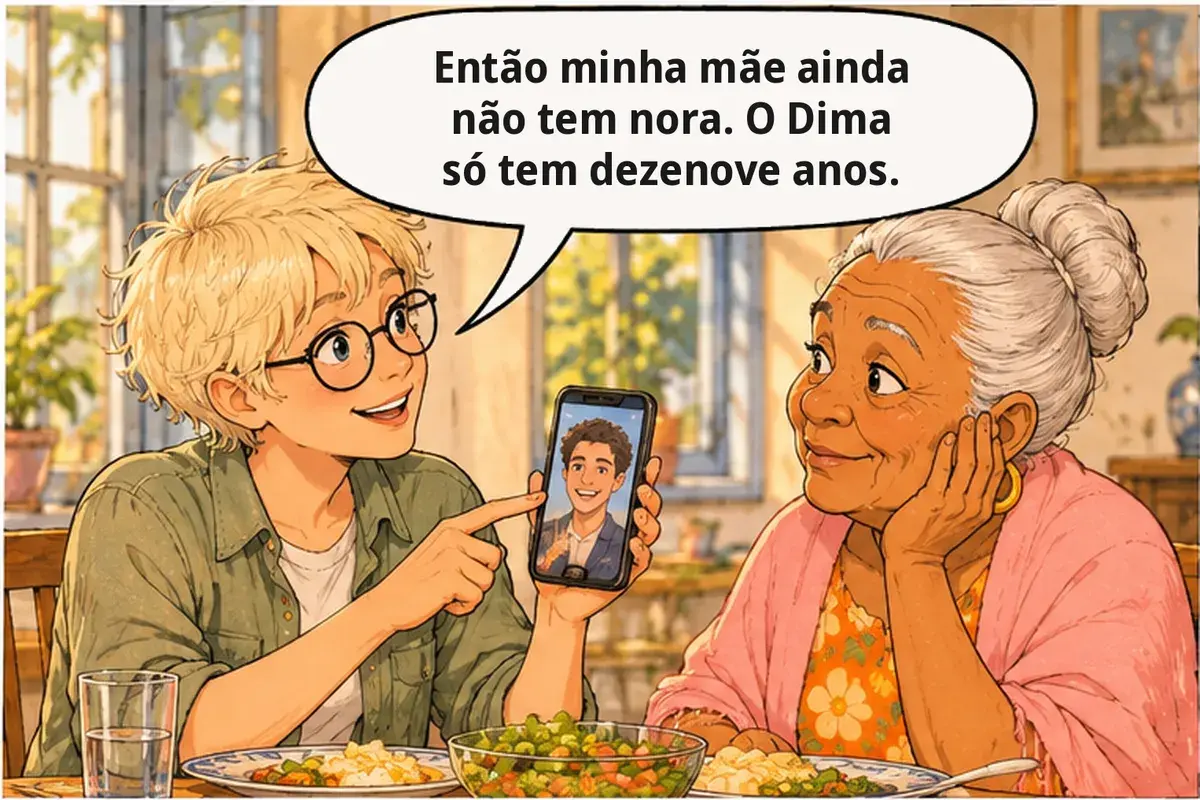
- Nina
Então minha mãe ainda não tem nora. O Dima só tem dezenove anos.
So my mom doesn't have a daughter-in-law yet. Dima is only nineteen.
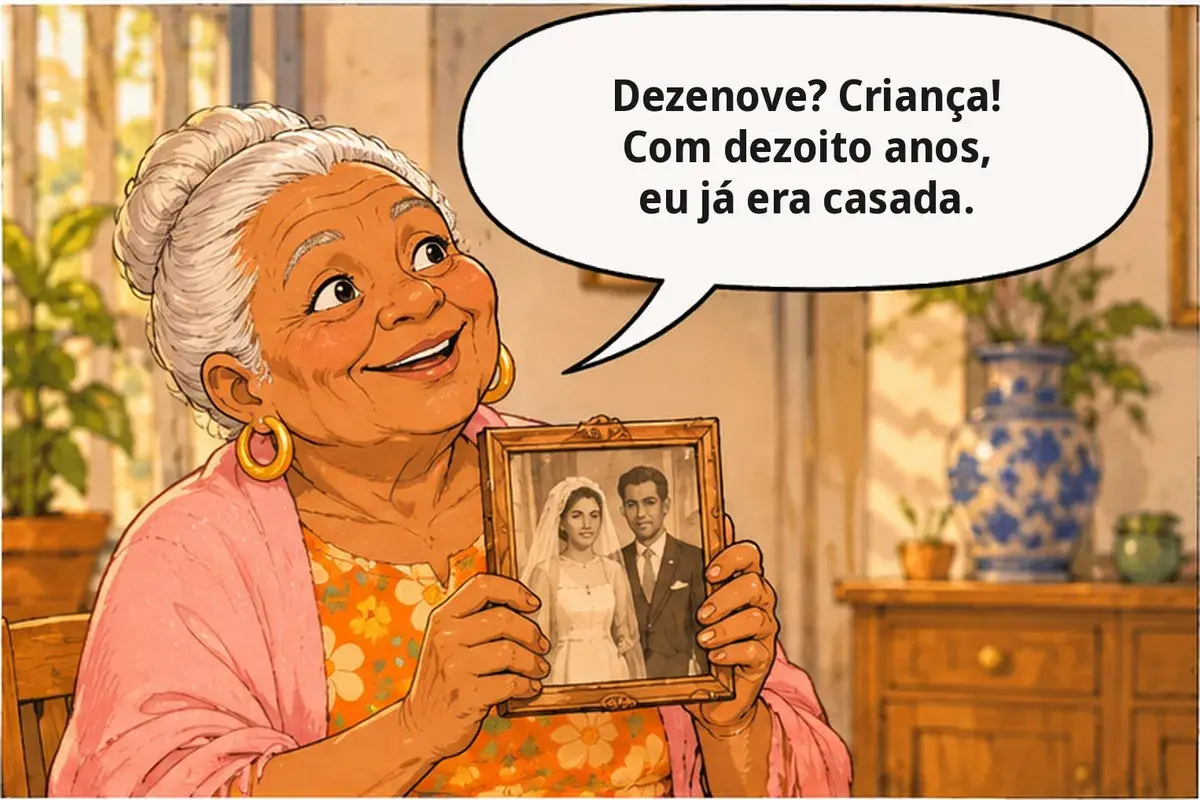
- Dona Zezé
Dezenove? Criança! Com dezoito anos, eu já era casada.
Nineteen? A child! At eighteen, I was already married (woman speaking).
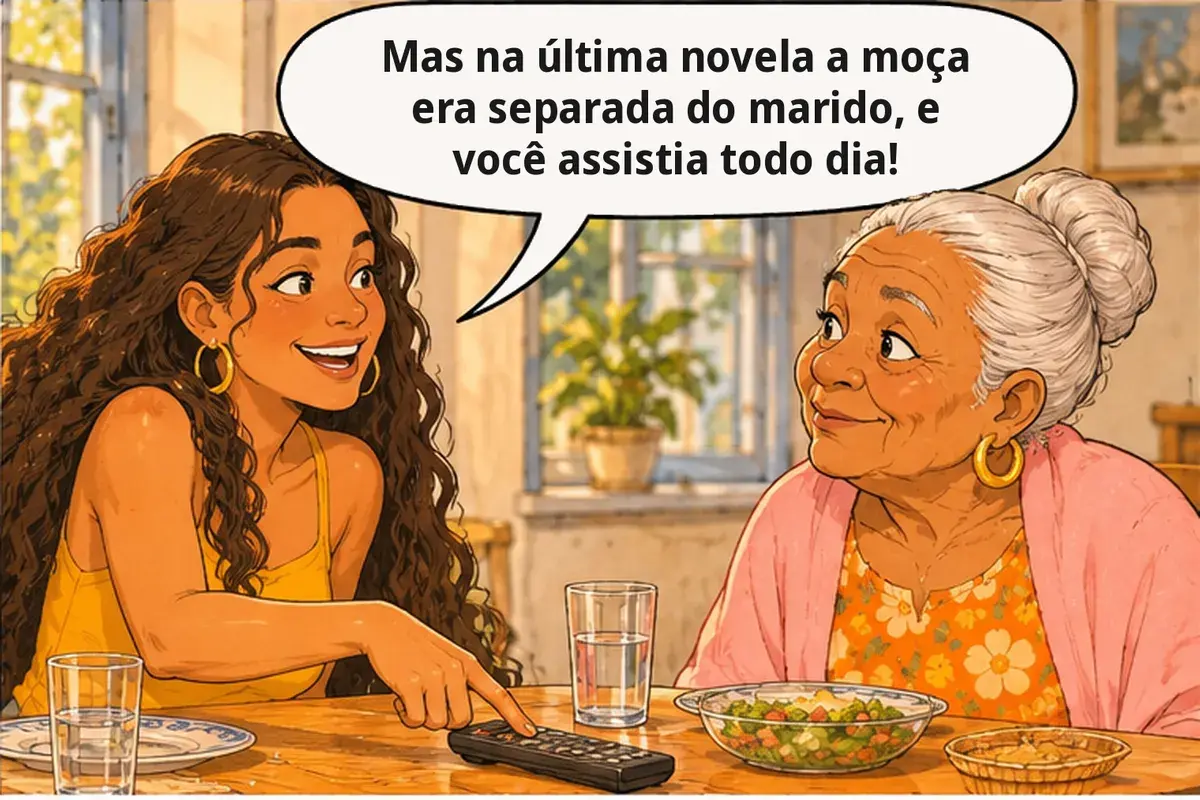
- Bia
Mas na última novela a moça era separada do marido, e você assistia todo dia!
But in the last soap opera the young woman was separated from her husband, and you watched it every day!
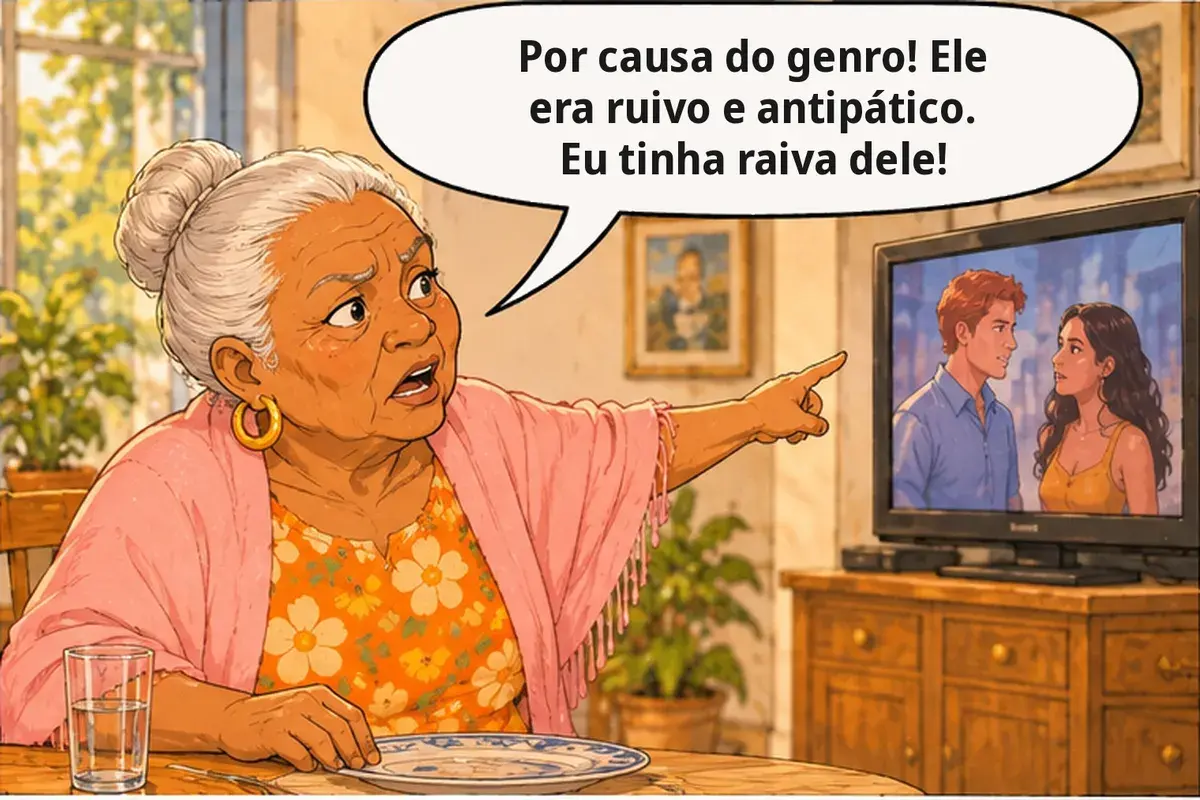
- Dona Zezé
Por causa do genro! Ele era ruivo e antipático. Eu tinha raiva dele!
Because of the son-in-law! He was a redhead and unfriendly. I was angry at him!
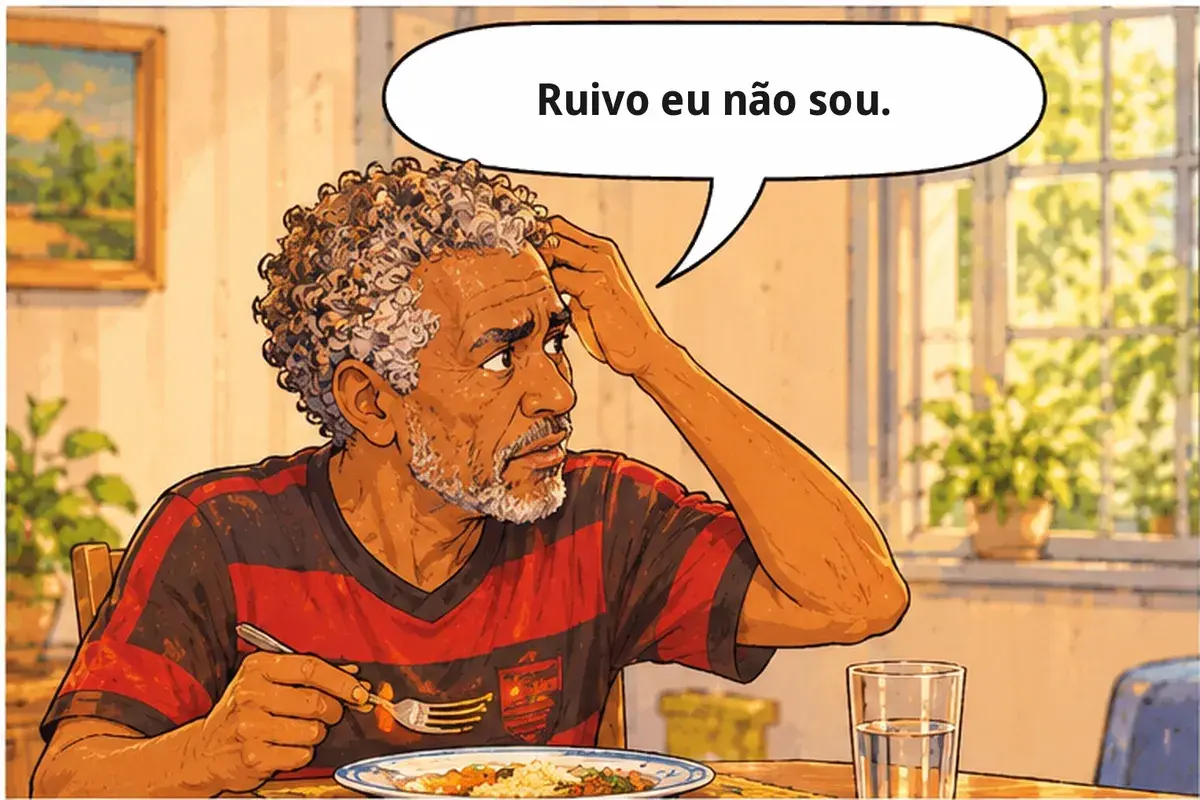
- Jorge
Ruivo eu não sou.
A redhead, I'm not.
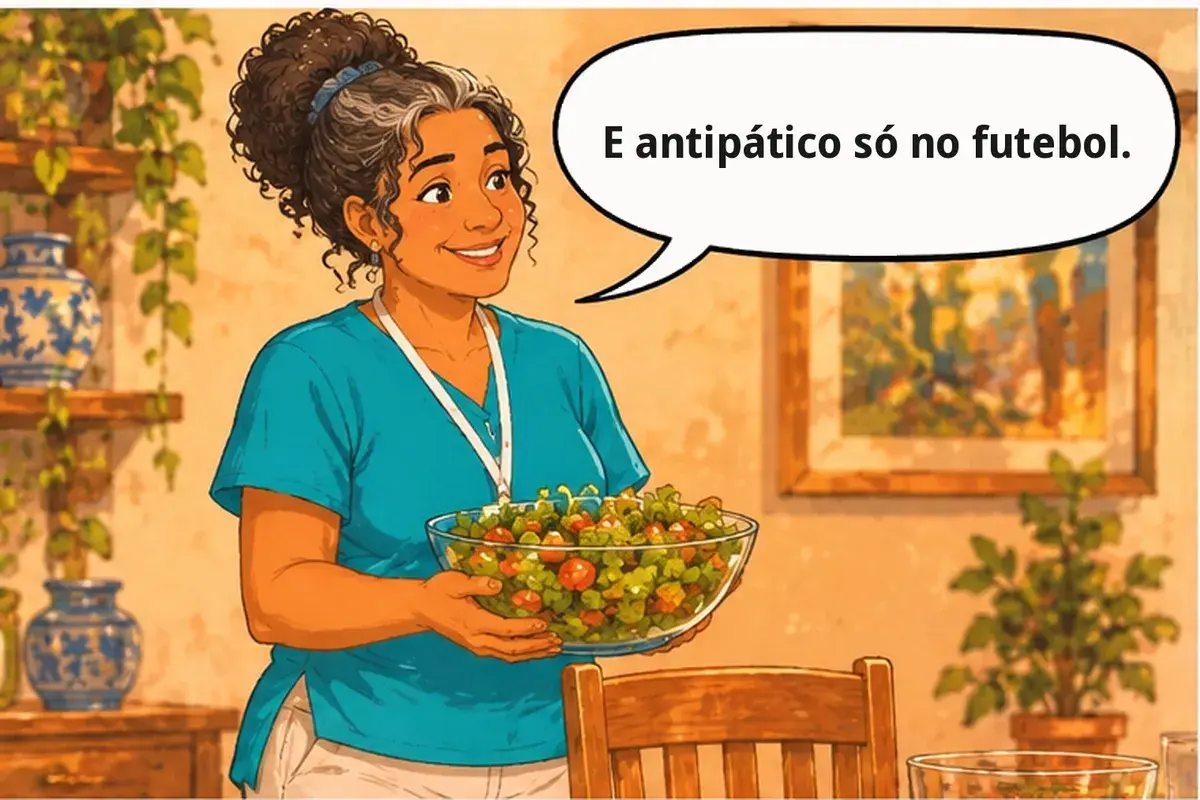
- Regina
E antipático só no futebol.
And unfriendly only at soccer.
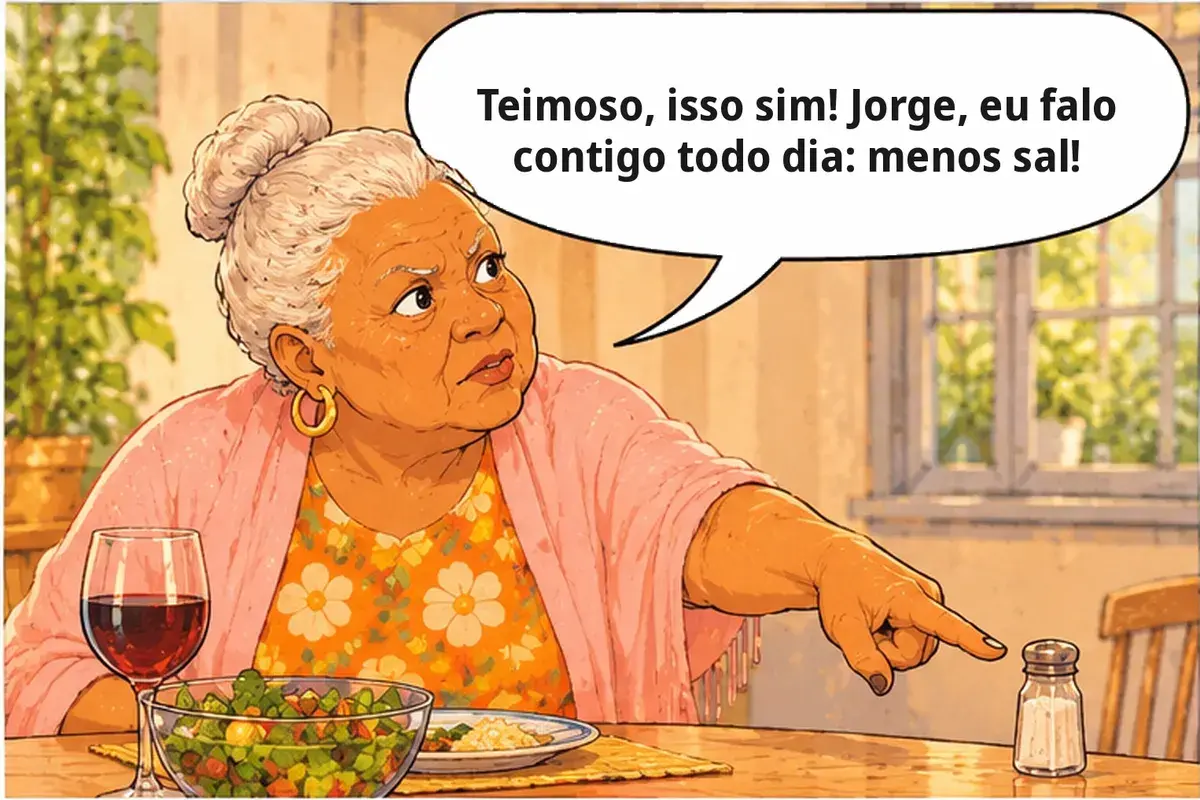
- Dona Zezé
Teimoso, isso sim! Jorge, eu falo contigo todo dia: menos sal!
Stubborn, that's for sure! Jorge, I talk to you every day: less salt!
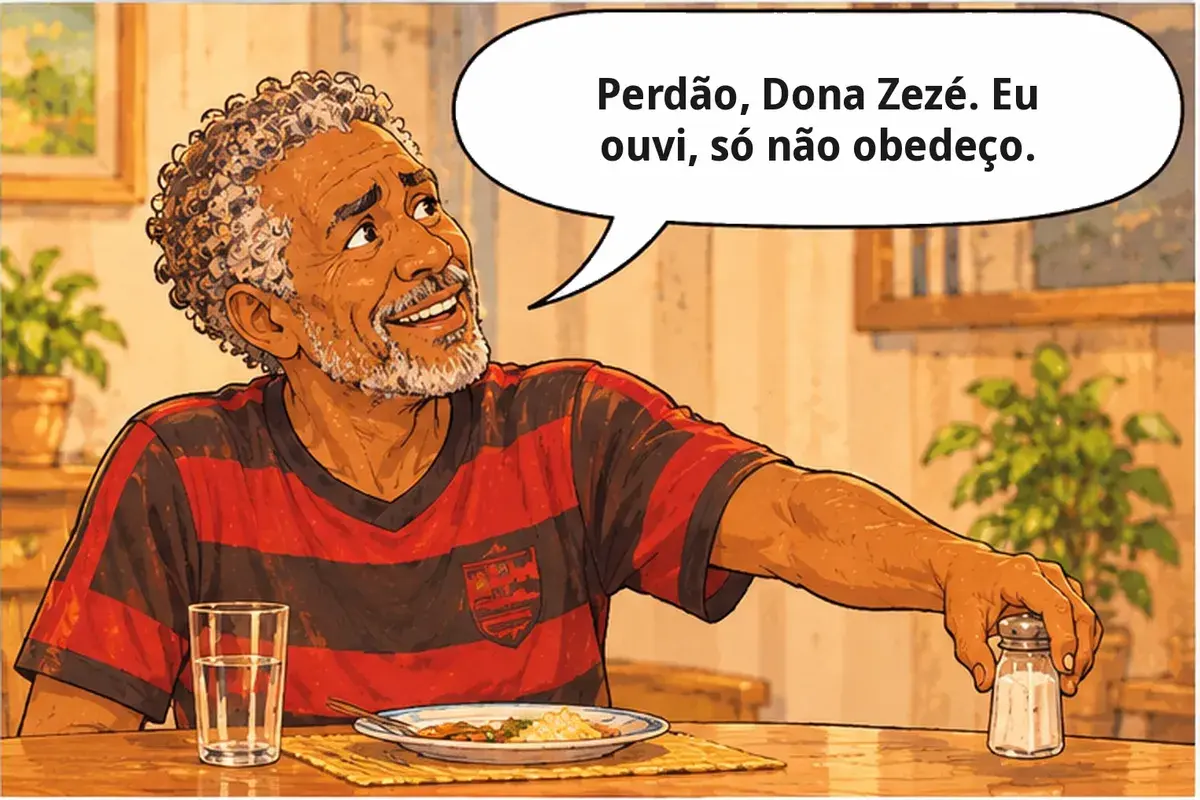
- Jorge
Perdão, Dona Zezé. Eu ouvi, só não obedeço.
Pardon me, Dona Zezé. I heard, I just don't obey.
Grammar for this text
- Senhorita Nina, a senhorita aceita mais um pouco de arroz? —
senhoritais an old-fashioned "miss, young lady" (an unmarried young woman): grandmothers say it, and today it is almost a joke.aceitahere means "would you like, will you take": it is how you offer seconds. - ninguém era divorciado —
erais the imperfect ofser: "was", used to describe how things used to be.ninguémcomes before the verb, so nonãois needed. - Trinta anos de genro —
de genromeans "as a son-in-law": the word has no article, like a job title. - “Genro” é masculino. Qual é o feminino? —
masculinoandfemininomean "masculine" and "feminine".genrohas no pair made with an ending: the feminine is a different word,nora(see the block on gender pairs that are two different words). - Com dezoito anos, eu já era casada — you give your age with
com: "at eighteen".casadois for a man andcasadafor a woman: "married". - eu falo contigo —
contigoiscom+ti, "with you". In Brazil people usually saycom você;contigois heard from older people, like Dona Zezé. - Perdão, Dona Zezé. Eu ouvi, só não obedeço. —
Perdãois a polite "pardon me".ouvimeans "I heard", fromouvir.obedeçomeans "I obey": before-othe lettercis writtençto keep the s sound.
Words and grammar of the unit: Convince someone to see a doctor.
Learn the words from the texts with flashcards
In the app, you can tap any word in a text to see its translation, forms and examples, and new words stick with flashcards. 15 minutes a day.
Start for freeEverything is open for free. No card needed to sign up.